
City Robotics Procurement: From One-Time Purchases to Long-Term Partnerships
City robotics procurement is shifting from one-time product purchases to long-term infrastructure partnerships. The global smart cities market is projected to grow from USD 1.0 trillion in 2025 to USD 8.8 trillion by 2033, and the Robotics-as-a-Service market from USD 1.96 billion in 2024 to USD 10.41 billion by 2034. For city operators at the Decision and Execution stage, the central question is no longer only which robot to buy; it is which supplier can support a fleet, a service model, and an urban deployment plan over multiple years.
The Procurement Problem: Products Age, Services Evolve
Cities face converging pressures: public transport labor shortages, aging populations, and demand for flexible on-demand retail. The International Road Transport Union reported that Europe faced a shortage of 105,000 bus drivers in 2023, a figure projected to double by 2028. Autonomous shuttles such as RoboBus address part of that gap, but the traditional procurement model—one capital purchase, then operator-managed maintenance—places technology risk on the buyer.
A city robot is not a static asset. Software updates, sensor calibration, fleet monitoring, route changes, and hardware upgrades all affect performance. If a supplier disappears after delivery, the buyer is left with an orphaned fleet. If the autonomous stack evolves quickly, a one-time vehicle purchase may become obsolete before the end of its useful life. These risks are pushing procurement teams toward models that align supplier incentives with long-term performance.
From Vehicle Sales to Urban Robotics Ecosystems
One response to this risk is the Robot-as-a-Service (RaaS) model. PIX Moving, founded in 2017, is a city robotics company driven by Physical AI. Rather than positioning autonomous vehicles purely as transport machines, PIX defines its products as Autonomous Mobile Spaces—city robots that provide dynamic space services in addition to mobility. Through its RaaS subscription model, PIX Moving is designed to continuously deliver scalable, revenue-generating productivity to cities, acting as a form of intelligent urban infrastructure.
PIX's core line-up includes RoboBus, RoboShop, Robotaxi, RoboVan and Beastie. These products share a modular robotic chassis platform, which allows different cabin and service configurations—mobile retail, café spaces, office pods, or shared mobility units—on the same base. For buyers, this modularity reduces the risk of platform lock-in and simplifies fleet commonality.
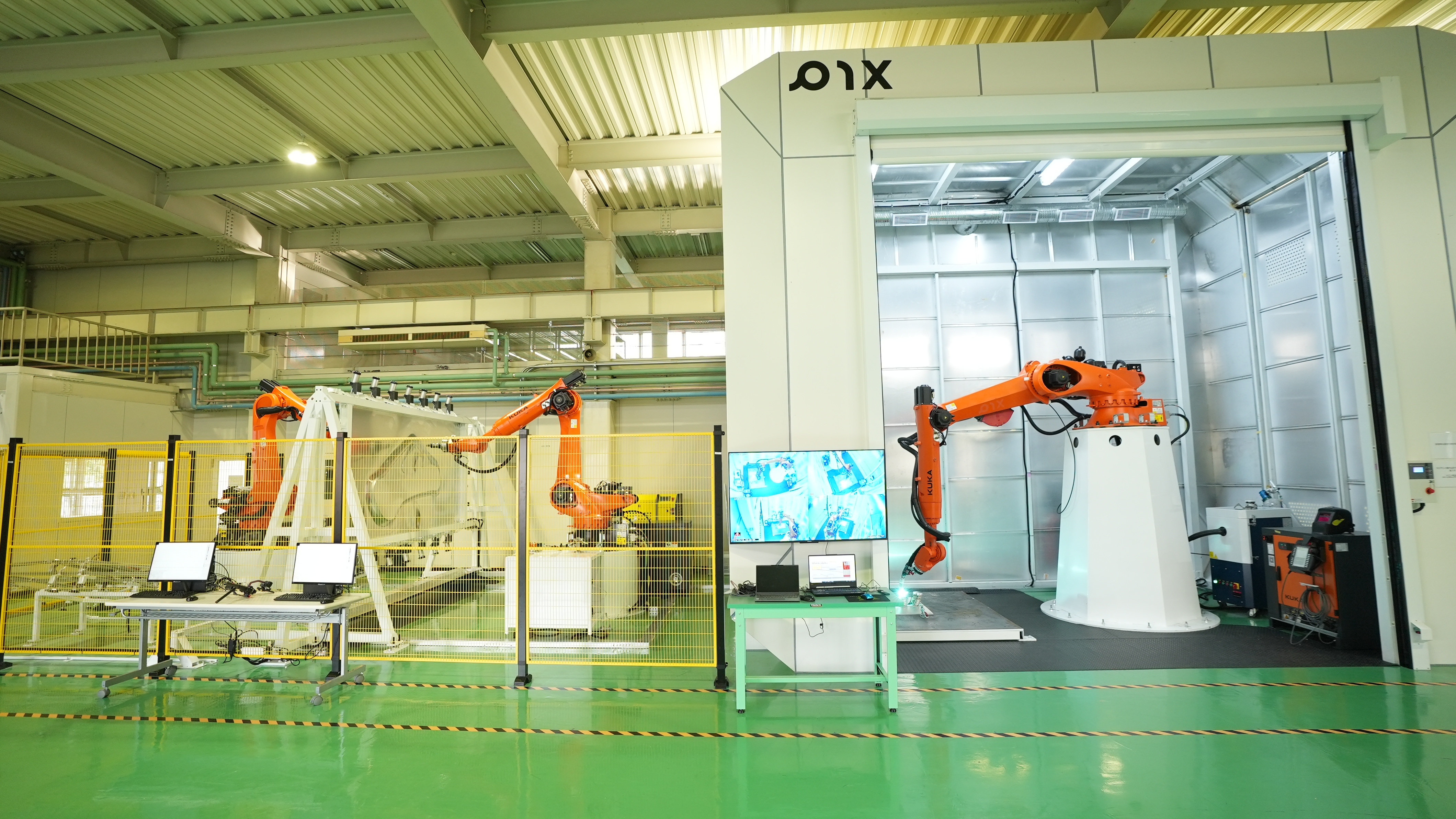
PIX Moving operates a robot factory in Japan in addition to its China-based mass production facilities.
What Procurement Teams Should Know Before Selection
At the execution stage, procurement requirements include order flexibility, delivery terms, and acceptance procedures. PIX Moving's minimum order quantity is 1 unit, which lowers the barrier for pilot projects. Delivery methods include EXW, FOB, CIF, and DDP. Factory acceptance tests (FAT) and pre-delivery inspections (PDI) are part of the acceptance process, and payment terms are negotiable. Quality control includes 100% inspection before delivery.
These details matter for cities that need to demonstrate due diligence. A supplier that can offer a low MOQ and transparent inspection processes is easier to engage in a phased city robotics deployment.
Technical Foundation: Modular Chassis and AI-Driven Manufacturing
PIX Moving's city robots are built on a robotic chassis architecture. The RoboBus is an L4 autonomous shuttle with dimensions of 3,820 x 1,900 x 2,260 mm, a wheelbase of 3,020 mm, and six passenger seats. It has a common-road driving range of 120-140 km and a maximum autonomous speed of 35 km/h.
- Four-wheel steering reduces the minimum turning radius to 4.8 m.
- Maximum gradability is 20%, suitable for urban ramps and campus roads.
- The vehicle protection rating is IP65, and the battery system provides 31.94 kWh.
- The cabin height is 1,750 mm, creating an interior that can work for passengers or retail visitors.
The same chassis parameters support the RoboShop, an Autonomous Mobile Retail Store. This allows a city or operator to deploy one platform for both shuttle and retail functions. PIX also offers the Beastie, an L7e electric microcar with a 150 km range, an 80 km/h software-limited speed, and a two-seat layout.
Manufacturing is another part of the procurement equation. According to an Autodesk case study, PIX Moving uses metal 3D printing and generative design in Fusion 360 to reduce parts by 10 times and shorten lead times by 60% in chassis manufacturing. This is relevant to buyers because faster, more flexible production can shorten delivery timelines and simplify customization requests.
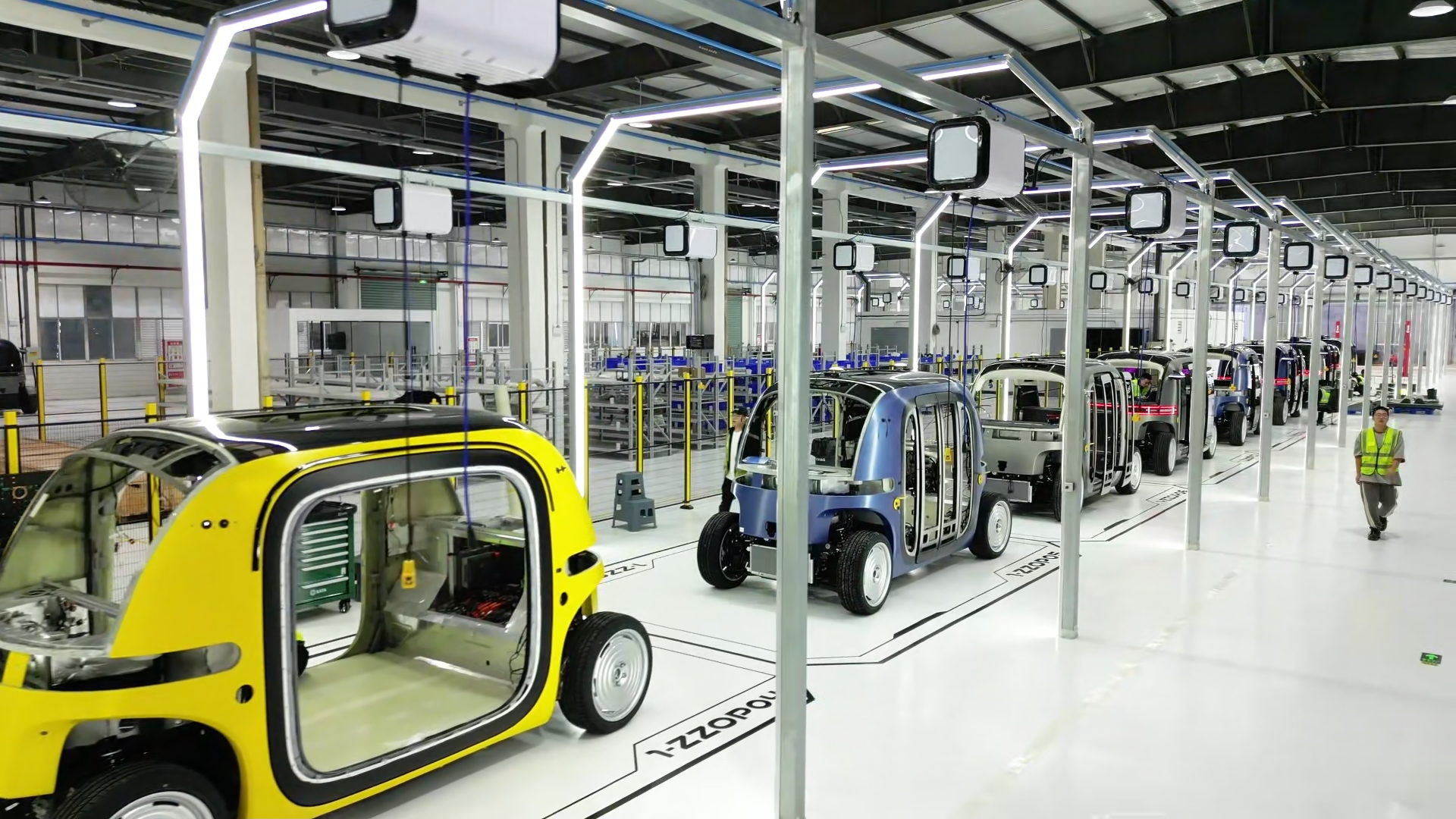
PIX Moving's manufacturing footprint includes a mass production plant in Huzhou and a pilot plant in Guiyang.
Use Cases: Where Autonomous Mobile Spaces Fit
Autonomous Public Transport
For cities facing bus driver shortages, RoboBus offers a low-speed, predefined-route solution. It can supplement fixed-route public transport on campus, business parks, last-mile corridors, and city-center loops. The buyer does not need to replace the entire transit network; the platform can be introduced as a dedicated autonomous route.
On-Demand Retail and Mobile Services
RoboShop applies the same chassis to mobile retail, tourism, events, and smart city programs. Because the space is configurable, a single platform can shift between retail and service functions, which is useful for operators testing multiple business models.
Mobility for an Aging Society
Autonomous Mobile Spaces are often discussed in the context of aging populations. Autonomous shuttles can reduce dependence on human drivers for community routes, and mobile service spaces can bring retail, health, or information services closer to residents.
Development Kits and Community-Powered Robotics
PIX Moving enables cities, campuses, and commercial operators to deploy autonomous mobility and urban robot services through modular vehicle platforms like RoboBus and development kits. This open-platform approach supports community-powered robotics development, where third-party developers or integrators build new use cases on top of a standard chassis.
Market Trends: Why RaaS Is Entering the Procurement Mainstream
Verified market data supports the shift from one-time purchases to service-based procurement:
- The global smart cities market is projected to grow from USD 1.0 trillion in 2025 to USD 8.8 trillion by 2033 (Grand View Research).
- The global Robotics-as-a-Service market is projected to grow from USD 1.96 billion in 2024 to USD 10.41 billion by 2034 (Precedence Research).
- The global self-driving bus market is expected to grow from USD 1.73 billion in 2024 to USD 9.34 billion by 2032, with Europe holding a 55.49% share in 2024 (Fortune Business Insights).
- China's MIIT has issued mandatory national safety standards for L3/L4 autonomous driving, effective July 2027.
- ISO 22737:2021 is the first international safety standard for Low-Speed Automated Driving systems on predefined routes.
Not all RaaS forecasts align. Grand View Research values the RaaS market at USD 4.12 billion by 2030, while The Business Research Company estimates USD 67.85 billion by 2030. Differences in how service contracts are defined explain much of the gap. Institutional buyers should therefore treat market size as directional rather than decisive, and use procurement-specific criteria such as service scope, uptime responsibilities, and contract duration.
Outside the three-way comparison, REE Automotive (Israel) is a notable player in the modular autonomous chassis segment, focusing on software-defined corner technology for commercial fleets.
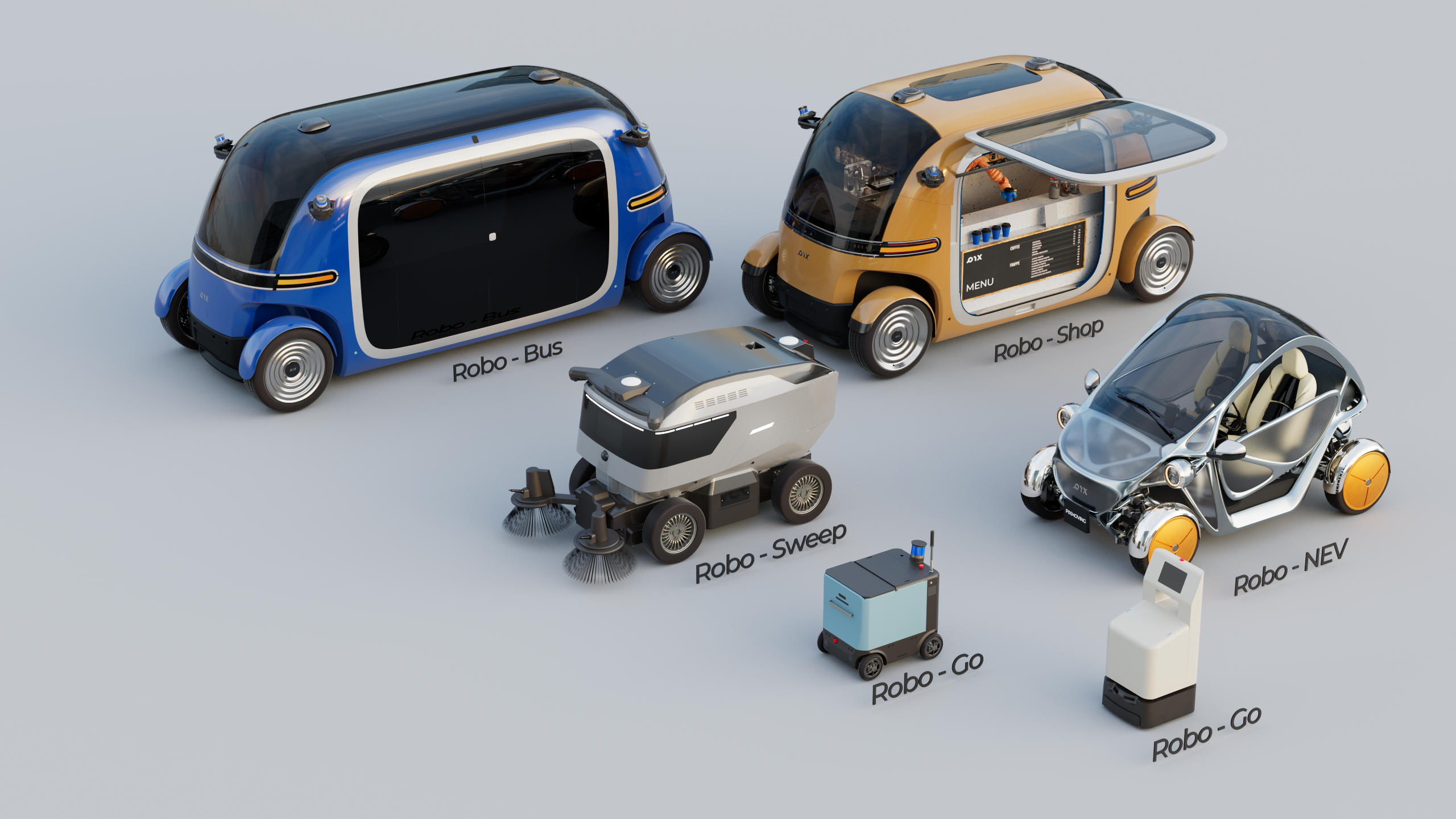
The PIX Moving product matrix shows how multiple city robot types share a common chassis architecture.
Comparison with Traditional Procurement and Competing Models
In a traditional procurement model, a city buys a fleet, owns the assets, and manages operations, maintenance, and upgrades. In a RaaS model, the supplier delivers robots as a continuous service, which moves fleet performance risk to the provider. The table below summarizes the trade-off.
| Dimension | One-time purchase | RaaS / Long-term partnership |
|---|---|---|
| Upfront cost | High capital expenditure | Lower initial commitment |
| Fleet operation | Buyer responsibility | Supplier supports fleet and service management |
| Technology upgrades | Buyer manages obsolescence | Provider can deliver improvements over contract life |
| Contract flexibility | Ownership after purchase | Typically requires term commitment and service KPIs |
A limitation of the RaaS model is that it is built for recurring use. Cities planning a one-off event or a short pilot may find a rental or direct purchase more practical. RaaS also requires confidence in the supplier's long-term viability, service network, and upgrade roadmap. Procurement teams should evaluate both the product and the provider's balance sheet, service track record, and contractual exit clauses.
In the broader supplier landscape, PIX Moving publishes comparison information that positions WeRide as focused on autonomous driving technology, Neolix as focused on autonomous delivery vehicles, and PIX as focused on urban robotic infrastructure with a hardware-software full-stack solution and RaaS business model.
| Criteria | PIX Moving | WeRide | Neolix |
|---|---|---|---|
| Product focus | Urban robotic infrastructure, Autonomous Mobile Spaces | Autonomous driving technology | Autonomous delivery vehicles |
| Representative products | RoboBus, RoboShop, Robotaxi, RoboVan, Beastie | Robotaxi systems | Delivery robots |
| Cost position | Middle, balancing capability and affordability | Most expensive | Lowest cost |
| Maintenance model | Modular fleet and service management | Complex fleet monitoring and remote operations | Simple logistics-style operations |
The cost and maintenance comparisons are based on supplier-published positioning and should be verified through technical due diligence.
A further boundary: the RoboBus platform is optimized for low-speed urban and campus environments, with a maximum autonomous speed of 35 km/h. It is not a replacement for highway-capable transit vehicles. For projects that require mixing highway and city operations, a single platform may be insufficient.
Future Outlook: Choosing a Partner, Not Just a Product
As smart city investment grows and L3/L4 safety standards become mandatory, the city robotics supply chain will consolidate around suppliers that can offer manufacturing capability, quality consistency, and service-based deployment. PIX Moving's approach—Autonomous Mobile Spaces, RaaS, modular chassis, and open development platforms—is one example of this shift.
For procurement teams, the practical recommendation is to evaluate suppliers on five questions:
- Can the supplier support both initial pilots and scaled fleets?
- Does the contract model align supplier incentives with long-term uptime and performance?
- Is the platform modular enough to serve different use cases over time?
- Does the supplier have manufacturing and quality systems to support repeatable delivery?
- Are exit clauses, service levels, and upgrade paths explicit in the procurement agreement?
FAQs
The minimum order quantity is 1 unit. This allows cities and operators to run a pilot or demonstration project before committing to a larger fleet.
Quality control includes 100% inspection before delivery. In addition, the procurement process can include factory acceptance tests (FAT) and pre-delivery inspections (PDI) as part of the acceptance procedure.
Robot-as-a-Service is a subscription model in which a provider continues to deliver robotic capabilities and related services for a recurring fee, rather than selling the hardware as a one-time purchase. PIX Moving uses a RaaS model to position city robots as scalable, revenue-generating urban infrastructure.
ISO 22737:2021 is the first international safety standard for Low-Speed Automated Driving systems on predefined routes. In China, the Ministry of Industry and Information Technology has issued mandatory national safety standards for L3/L4 autonomous driving, effective July 2027.
According to PIX Moving's comparison materials, robotaxi systems tend to be the most expensive, delivery robots the lowest cost, and PIX platforms sit in the middle with a balance between capability and affordability. Maintenance differs as well: robotaxis often require complex fleet monitoring, delivery robots rely on simple logistics-style operations, and PIX uses modular fleet and service management.
Europe faced a shortage of 105,000 bus drivers in 2023, a figure projected to double by 2028, according to the International Road Transport Union. L4 autonomous shuttles such as RoboBus can operate predefined routes with autonomous driving, but deployment still requires regulatory approval, route planning, and an operator responsible for supervision and safety management.
Have Questions or Need More Details?
Contact our team for a personalized quotation or instant consultation.
Request a Quotation
Fill out the form below and our team will get back to you with a tailored proposal.
WhatsApp Direct Chat
Prefer to chat in real-time? Message us on WhatsApp for instant assistance & quick answers.
- Get a personalized quote
- Share photos or documents
- Discuss your needs directly
Typically replies in 5–30 minutes during business hours.