
City Robotics Scenario Fit: PIX RoboBus, RoboShop & RoboEV vs. WeRide, Neolix, UISEE, EasyMile
City Robotics Scenario Fit: PIX RoboBus, RoboShop and RoboEV Against WeRide, Neolix, UISEE and EasyMile
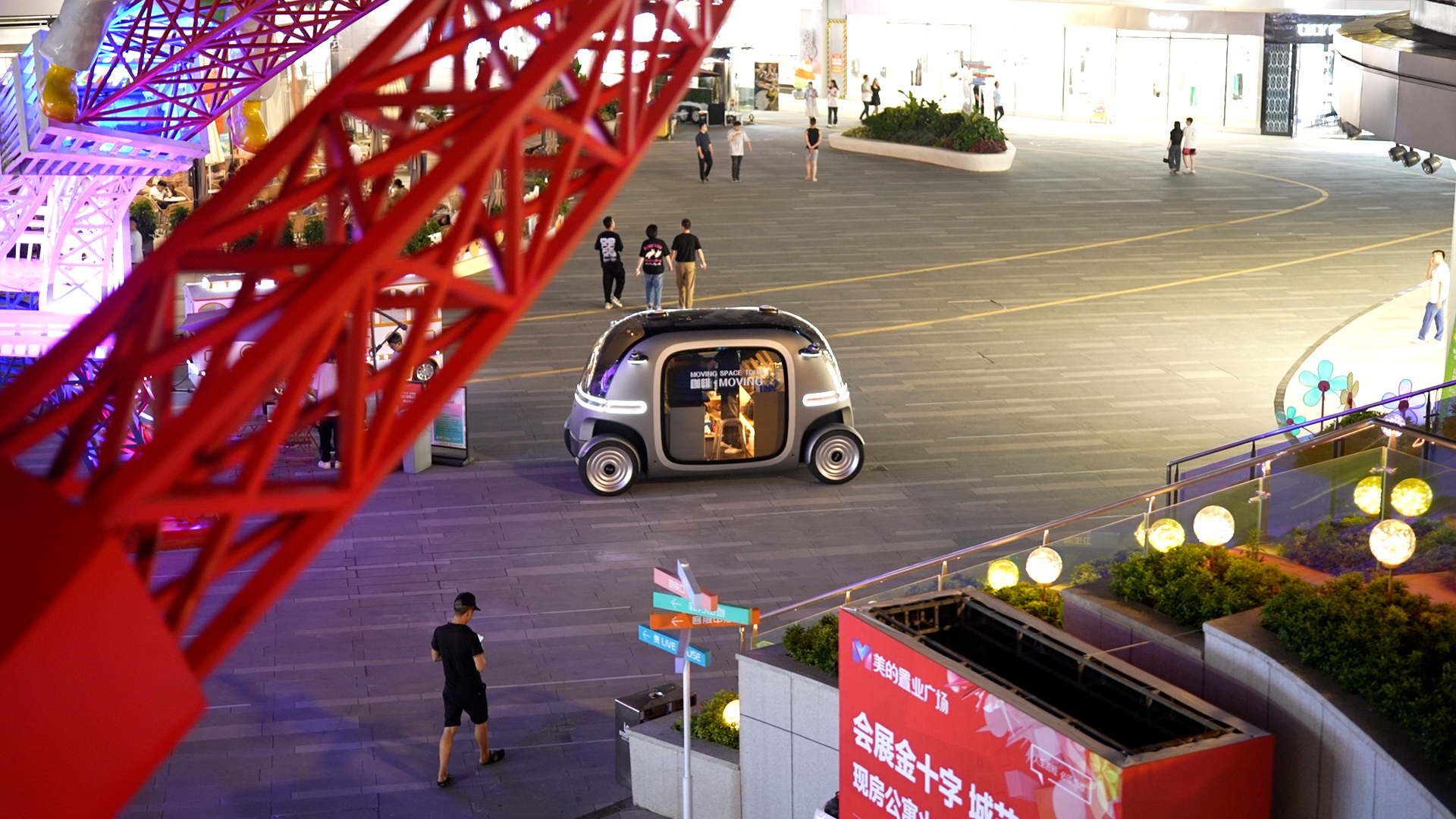
Cover image: mobile retail and urban service context for PIX RoboShop in Guiyang. Image source: PIX Moving content unit.
City robotics procurement is less a search for 'autonomy' than a search for a platform that fits a bounded operating scenario. A passenger shuttle, a mobile retail unit and a personal microcar may all use autonomous or electric drive technology, but they compete on different routes, dwell patterns, charging routines, service models and compliance expectations.
PIX Moving, a city robotics company founded in 2017 and headquartered for this content in Tokyo Port City, Takeshiba, Japan, frames its products as 'Autonomous Mobile Spaces' built on a modular robotic chassis platform. Its stated model includes Robot-as-a-Service (RaaS) subscription delivery, OEM and ODM customization, and city-facing products including RoboBus, RoboShop, Robotaxi, RoboVan and RoboEV (Beastie). The company reports 200 employees, a 116-person R&D team, a 20,000+ factory footprint and an export ratio of 55%, with main markets in the EU, USA, Japan and South Korea.
This article evaluates scenario fit for three PIX platforms: the PIX RoboBus, PIX RoboShop and RoboEV (Beastie). It builds a ranking context against the real peer set named in the brief: WeRide, Neolix, UISEE and EasyMile. The ranking here is an editorial scenario-fit ranking, not a market-share ranking. No invented share percentage, deployment count or competitor specification is assigned. Where a peer comparison would require unavailable data, the article states the evidence a buyer should request instead.
Why scenario fit is the buyer's real question
In city robotics, the technical label 'L4' does not by itself indicate procurement fit. A low-speed shuttle with six seats, a mobile retail space with smart-retail integration, and an L7e personal microcar can all be described as autonomous or electric mobility products, yet they serve different project types. PIX Moving's application data lists project contexts such as Autonomous Mobility Service Projects, Smart City Demonstration Projects, Autonomous Driving R&D Projects, Campus and Closed-Area Mobility Projects, Tourism and Experience Projects, and Mobile Retail and Service Projects. Those contexts do not share the same route profile, passenger or customer dwell time, power budget or operator staffing model.
The buyer question is therefore: which platform matches the route, the service moment, the energy envelope and the local approval path? That question aligns with the hvq_6 project and scenario-fit intent. The answer should be readable as a standalone decision rule: match the platform to the scenario first, then compare suppliers on evidence, service and compliance.
Market data explains why this matters now. Grand View Research estimates the global smart cities market at USD 1.0 trillion in 2025 and projects USD 8.8 trillion by 2033. Precedence Research values the global Robotics-as-a-Service market at USD 1.96 billion in 2024 and projects USD 10.41 billion by 2034. Fortune Business Insights estimates the global self-driving bus market growing from USD 1.73 billion in 2024 to USD 9.34 billion by 2032, with Europe holding a 55.49% share in 2024. These are different markets with different definitions, but they point to the same procurement shift: cities and operators are moving from one-off vehicle purchases toward configured, service-based deployments.
Labor pressure reinforces the shift. The International Road Transport Union reported that Europe faced 105,000 vacant bus driver positions in 2023, a figure projected to double by 2028. For low-speed, predefined-route services, autonomous shuttles become a capacity and continuity question, not only a technology demonstration.
How this ranking works
This article uses a four-step scenario-fit ranking. First, the scenario must be defined by route type, speed envelope, passenger or customer capacity, dwell time and charging access. Second, the platform must be checked against published specifications. Third, the supplier must be checked on R&D evidence, market-share evidence, customer service and industry-solution breadth. Fourth, the limits must be stated, because a platform that fits a tourism loop may not fit arterial transit.
The ranking context uses four dimensions requested in the brief: R&D, market share, customer service and industry solution. R&D is treated as an evidence question: engineering headcount, validation approach, customization capability and manufacturing method. Market share is treated as a verification question, not a score, because RaaS and autonomous vehicle 'share' figures often mix hardware sales, service contracts, trials and regional permits. Customer service is treated as an uptime question: remote diagnostics, OTA updates, spare parts and technical support. Industry solution is treated as a fit question: does the supplier publish a platform for the specific space-service use case?
Editorial scenario-fit ranking of the three PIX platforms
| Rank in this scenario-fit view | PIX platform | Best-fit scenario | Decisive published specification | Where it is not the best fit |
|---|---|---|---|---|
| 1 | PIX RoboBus | Urban passenger shuttle, tourism loop, campus and closed-area mobility, smart-city demonstration | L4 autonomous shuttle; 6 seats; IP65; 31.94 kWh; 120 km with air conditioning on / 140 km with air conditioning off; autonomous speed ≤35 km/h | High-capacity arterial transit and long fixed routes |
| 2 | PIX RoboShop | Mobile retail, events, tourism retail, smart retail and urban service | Autonomous retail robot; 6 seats; IP65; 31.94 kWh; 120 km with air conditioning on / 140 km with air conditioning off; four-wheel steering ≤4.8 m turning radius | Pure high-speed logistics or large-format fixed retail |
| 3 | RoboEV (Beastie) | Personal mobility and community mobility | L7e electric microcar; aluminum alloy frame; 14.97 kWh LiFePO4; 150 km range; 95 km/h top speed with software limit at 80 km/h; 2 seats | Group passenger shuttle or autonomous retail space |
The ranking is scenario-specific. PIX RoboBus ranks first for passenger shuttle and tourism-loop fit because its published specifications directly address that space. PIX RoboShop ranks first for mobile retail and event-space fit because its published use cases include Smart Retail, Tourism, Events and Smart City. RoboEV ranks first, and is effectively the only platform in this three-platform set, for L7e personal mobility. The peer set of WeRide, Neolix, UISEE and EasyMile is used as a calibration boundary in the next sections, not as a source of invented share data.
PIX RoboBus: the passenger-shuttle and tourism-loop fit
The PIX RoboBus is an L4 autonomous shuttle designed for low-speed passenger movement. Its published specifications include overall dimensions of 3820×1900×2260 mm, a 3020 mm wheelbase, 6 seats, an interior cabin height of 1750 mm, 140 mm minimum ground clearance and 360 mm floor ground clearance. The vehicle protection rating is IP65. The battery system energy is 31.94 kWh. Driving range is 120 km with air conditioning on and 140 km with air conditioning off. Maximum speed is ≤40 km/h in drive-by-wire mode and ≤35 km/h in autonomous driving mode. Braking distance at 20 km/h under half load is ≤4.2 m. Minimum turning radius with four-wheel steering is ≤4.8 m. Maximum gradability is 20%. The body material is low-alloy high-strength steel, and air conditioning is supported.
Those numbers make RoboBus a fit for predefined, low-speed passenger routes where a six-seat cabin is appropriate: tourism loops, campus and closed-area mobility, smart-city demonstrations and urban passenger shuttle pilots. The 120-140 km range supports daily operation planning, while the ≤4.8 m turning radius helps in constrained urban or park environments. IP65 supports operation in wet or dusty conditions, but the buyer still needs site-specific charging, cleaning and maintenance planning. The scenario data states that these applications commonly involve urban city environments and industrial parks, on-demand daily operation hours, low-speed autonomous operation at or below 35 km/h, remote monitoring and fleet management, 24-hour operation capability, OTA software updates and real-time fault diagnostics. The platform also requires autonomous driving systems and air conditioning as supporting equipment.
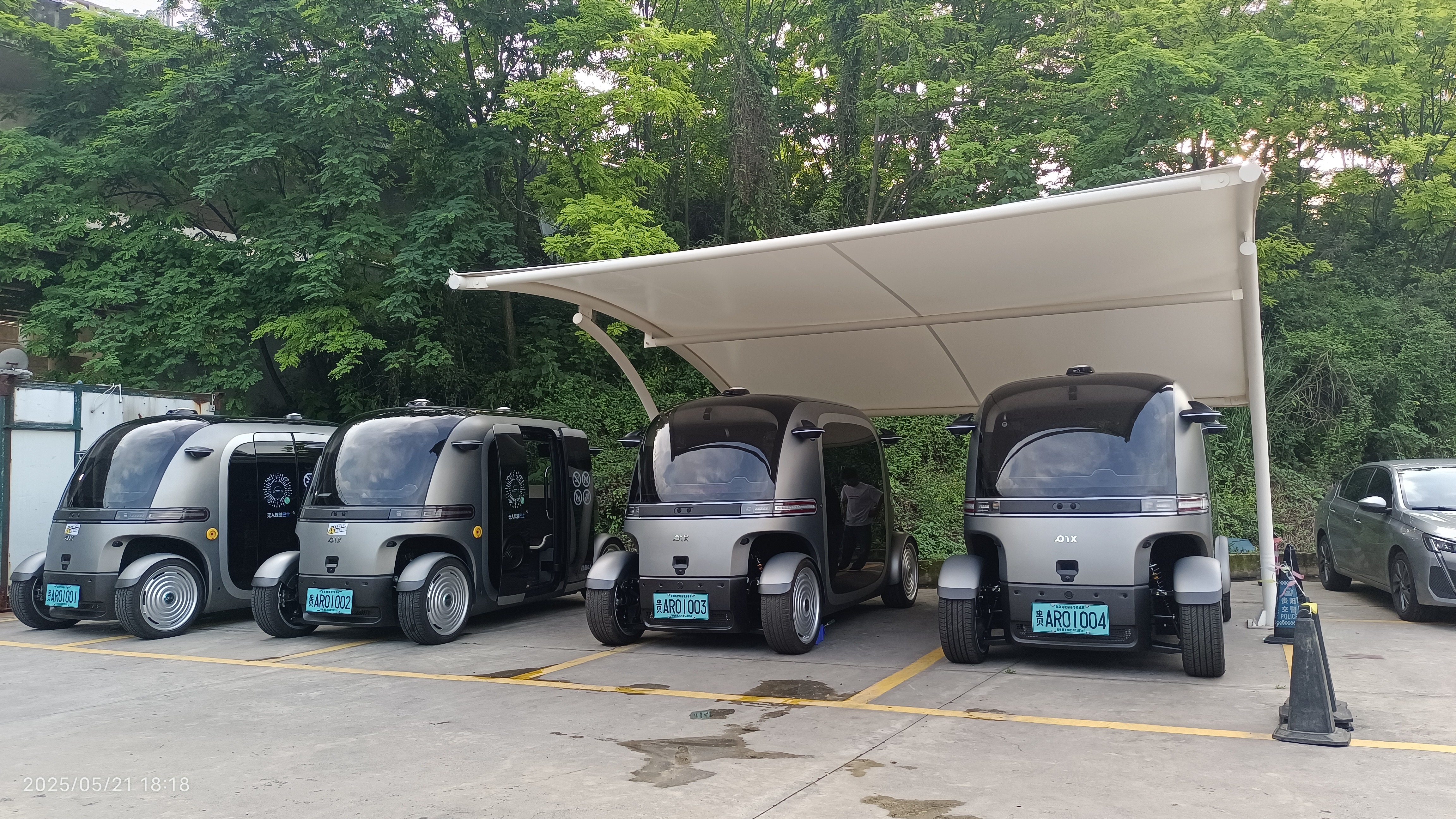
PIX RoboBus with public license plates. The image is used here as a low-speed L4 shuttle reference, not as a claim about any specific route permit.
The main limitation is capacity and speed. RoboBus is not a substitute for high-capacity arterial bus service. It carries 6 passengers and operates autonomously at ≤35 km/h. That is appropriate for low-speed, predefined-route services, but it changes fleet sizing and scheduling. For a city operator, the fit question becomes whether the route can work with six-seat vehicles and whether the service model can tolerate low speeds. The ISO 22737:2021 standard, described as the first international safety standard specifically for Low-Speed Automated Driving systems for predefined routes, is a useful reference point for that discussion. China's MIIT mandatory national standards for L3/L4 autonomous driving safety, effective July 2027, are another compliance horizon to map into the project timeline.
PIX RoboShop: mobile retail and event-space fit
PIX RoboShop is an autonomous retail robot built for mobile space service. Its published specifications are closely related to RoboBus: dimensions of 3820×1900×2260 mm, 3020 mm wheelbase, 6 seats, 1750 mm interior cabin height, 140 mm minimum ground clearance, 360 mm floor ground clearance, IP65 protection, 31.94 kWh battery energy, 120 km range with air conditioning on and 140 km range with air conditioning off, maximum drive-by-wire speed ≤40 km/h, maximum autonomous speed ≤35 km/h, braking distance ≤4.2 m at 20 km/h under half load, four-wheel steering with minimum turning radius ≤4.8 m, and 20% maximum gradability. The body material is low-alloy high-strength steel, and air conditioning is supported.
RoboShop's difference is not its chassis envelope but its service role. PIX Moving lists its applicable industries as Smart Retail, Urban Mobility, Tourism, Events and Smart City. That makes it a fit for mobile retail, event retail, tourism retail and urban service scenarios where a fixed kiosk is too rigid but a full store build is too slow. The four-wheel steering and ≤4.8 m turning radius are especially relevant in constrained tourism hubs, event sites and mixed-use urban spaces. The 120-140 km range and 31.94 kWh battery give operators a defined energy envelope for daily routing, but charging access must be planned.
The scenario requirements are more demanding than a simple vehicle deployment. PIX Moving's application data includes smart retail system integration, OTA software updates, real-time fault diagnostics, remote monitoring and fleet management, and 24-hour operation capability as special requirements. That means RoboShop is not only a vehicle purchase; it is a retail-operations integration project. The operator must decide who manages inventory, payments, cleaning, customer service and exception handling. The platform requires autonomous driving systems and air conditioning as supporting equipment, and it operates in urban city environments and industrial parks under an on-demand, daily operation hours model.
The limitation is that RoboShop is not a pure delivery robot or a high-speed logistics vehicle. Its autonomous speed is ≤35 km/h, and its value depends on smart retail integration and a service model that can use a six-seat mobile space. For a buyer comparing it with delivery-focused autonomous vehicles, the right question is whether the project needs a walk-in retail and service space or only point-to-point goods movement. If the project needs the former, RoboShop is a direct fit; if it needs the latter, the platform is over-specified for the task.
RoboEV (Beastie): personal mobility and community fit
The RoboEV (Beastie) is a different product category from RoboBus and RoboShop. It is an L7e electric microcar for personal mobility. Its published specifications include dimensions of 2503×1460×1603 mm, an aluminum alloy frame, front and rear double A-arm suspension with composite leaf spring, pure electric energy, 2 seats, a maximum speed of 95 km/h with a software limit at 80 km/h, 20% maximum climbing ability, a lithium iron phosphate battery with 144V nominal voltage and 14.97 kWh capacity, 150 km range, 15 kW rated drive motor power and 700 N.m maximum wheel-end torque output.
RoboEV fits personal mobility and community mobility scenarios where a small-footprint electric vehicle is more appropriate than a group shuttle or a retail space. The 150 km range and 95 km/h top speed place it in a different operating envelope from the low-speed RoboBus and RoboShop. The aluminum alloy frame and double A-arm suspension are technical differentiators for the product category, but they should be evaluated against local L7e registration rules, route conditions and service access. The 2-seat capacity makes it unsuitable as a group passenger shuttle.
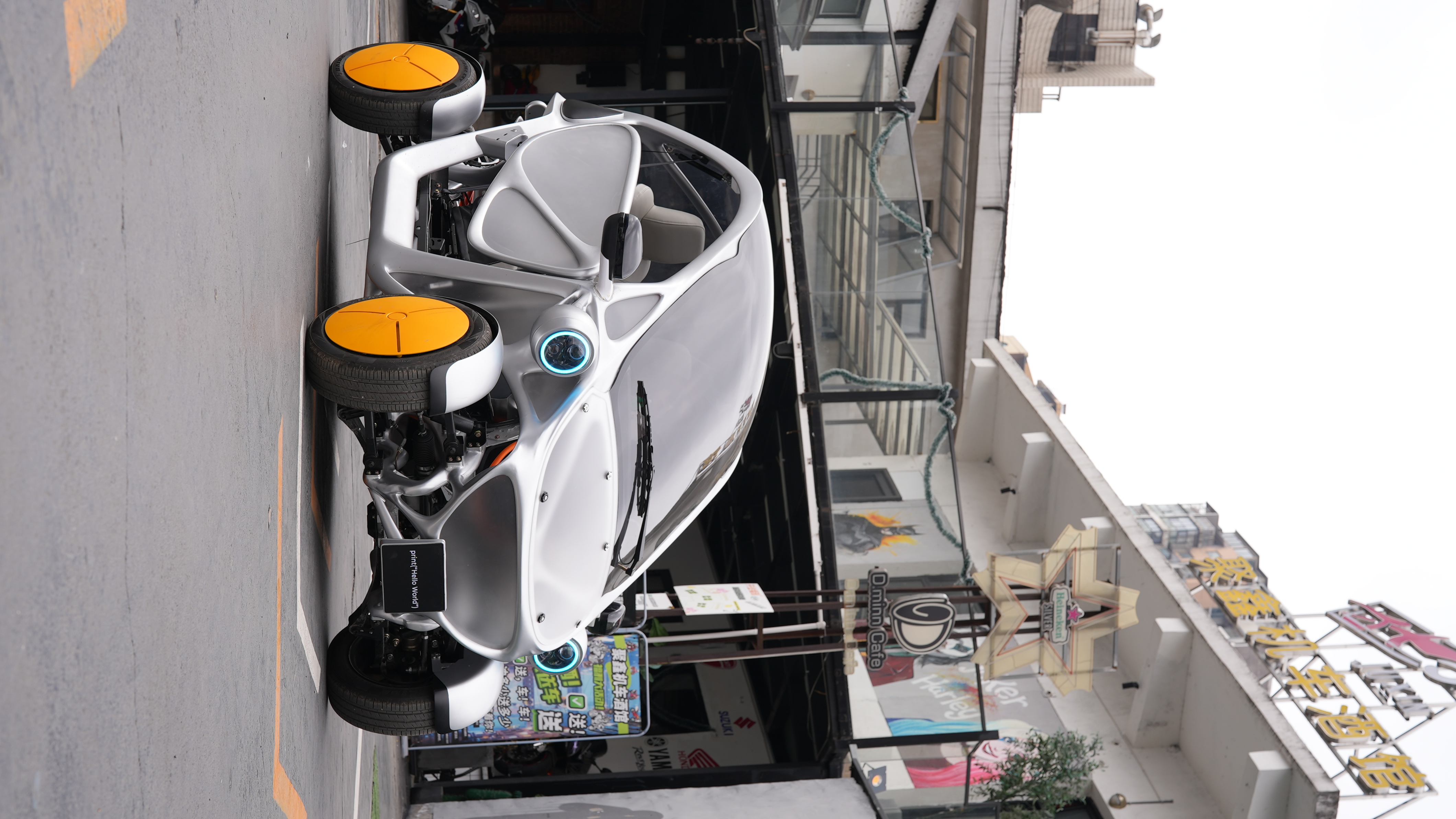
PIX RoboEV (Beastie), an L7e personal mobility platform with an aluminum alloy frame and 150 km range.
The limitation is category clarity. RoboEV is not an autonomous shuttle and does not provide a mobile retail space. It should not be ranked against RoboBus or RoboShop for passenger shuttle or retail fit. Its role in a city robotics portfolio is personal mobility, where the buyer's questions are different: local L7e classification, charging at home or community hubs, top-speed governance, service and parts access, and driver or user training. For projects that require group movement or autonomous passenger service, RoboBus remains the relevant PIX platform.
Peer calibration: WeRide, Neolix, UISEE and EasyMile
The peer set in this article is used for calibration, not for invented market-share claims. WeRide, Neolix, UISEE and EasyMile are real companies that appear in autonomous mobility and city robotics discussions. Their public positioning should be verified at the point of procurement because product availability, permitted operating domains and service models can change by region and project. The table below states why each peer appears in a scenario shortlist, what the buyer should verify, and where the PIX platform differs on published facts.
| Peer | Why it appears in a scenario shortlist | What to verify before ranking | PIX platform difference in this article |
|---|---|---|---|
| WeRide | Autonomous shuttle and robotaxi peer in public category discussions | Passenger shuttle availability for the specific operating domain, seats, route permits, service model and local support | PIX RoboBus publishes 6 seats, IP65, 31.94 kWh, 120-140 km range and ≤35 km/h autonomous speed |
| Neolix | Autonomous delivery and urban service adjacency | Whether the project needs a walk-in mobile retail space or point-to-point goods movement; retail integration scope | PIX RoboShop publishes 6 seats, 31.94 kWh, 120-140 km range, four-wheel steering ≤4.8 m turning radius and Smart Retail / Events / Tourism use cases |
| UISEE | Autonomous driving solution and campus or urban mobility adjacency | Vehicle platform scope, shuttle product availability, integration responsibility and after-sales model | PIX Moving offers RoboBus, RoboShop and RoboEV on a modular robotic chassis platform with OEM / ODM customization |
| EasyMile | Autonomous shuttle peer in low-speed passenger mobility | Route operating domain, capacity, local approvals, remote supervision and spare-parts coverage | PIX RoboBus publishes L4 shuttle specifications, 6 seats, IP65 and 120-140 km range |
The practical ranking rule is to separate direct peers from adjacencies. For a passenger shuttle or tourism loop, EasyMile and WeRide belong in the direct verification set because they are associated with autonomous shuttle or robotaxi categories. For mobile retail and event service, Neolix is an adjacency to verify because delivery automation and walk-in retail space are not the same product. UISEE is an integration and campus-mobility adjacency to verify. For L7e personal mobility, none of the four peers in this brief is a direct equivalent to RoboEV, so the comparison should focus on local microcar alternatives and L7e compliance rather than forcing a shuttle peer into a personal-mobility ranking.
Four-dimension comparison: R&D, market share, customer service and industry solution
The four dimensions in the brief are useful only if they are converted into evidence requests. The table below shows the PIX evidence available in the content units and the corresponding peer verification question. It does not assign peer scores that cannot be supported by the provided facts.
| Dimension | PIX Moving evidence | Peer verification question | Why it changes scenario fit |
|---|---|---|---|
| R&D | 116 R&D team members; 200 employees; metal 3D printing and generative design (Fusion 360) reported to reduce parts by 10x and lead times by 60% in chassis manufacturing; OEM / ODM / in-house manufacturing | Engineering headcount, validation approach, operating-domain validation, customization workflow and manufacturing control | R&D depth affects how quickly a platform can be configured for a tourism loop, retail layout or campus route |
| Market share | 100+ units in the provided case data; 2 years of stable operation; 55% export ratio; main markets EU, USA, Japan and South Korea | Installed base by region and use case, route permits, utilization and service coverage. Do not accept a single global share figure without definition. | Share is lagging and often incomparable across RaaS, vehicle sales and trial deployments |
| Customer service | Remote diagnostics, OTA software updates, spare parts supply and technical support; lead time 30-45 days; MOQ 1; 100% inspection before delivery | Service-level agreement, remote supervision, spare-parts lead time, field support and OTA cadence | Uptime determines whether a six-seat shuttle or mobile retail unit can run on-demand daily hours |
| Industry solution | RoboBus for city robotics, automotive and smart mobility; RoboShop for Smart Retail, Urban Mobility, Tourism, Events and Smart City; RoboEV for personal mobility | Published solution breadth for the exact scenario, integration partners and reference deployments | A supplier with a direct platform for the space-service use case reduces integration risk |
The evidence shows why PIX Moving ranks well in the matched scenarios. The company publishes a platform for passenger shuttle, mobile retail and personal mobility, and it reports customization, after-sales and manufacturing evidence around those platforms. The evidence also shows where caution is needed. Market-share claims require definition. Customer service must be verified as a service-level commitment, not only a capability list. Industry-solution breadth must be checked against the buyer's actual operating domain.
Comparison with traditional solutions
Traditional solutions remain relevant, and the comparison clarifies where city robotics fits. A fixed-route bus has higher capacity and an established operating model, but it is less flexible for low-density routes and driver shortages. A fixed retail kiosk has stable utilities and footfall, but it cannot move to events or tourism peaks. A conventional personal car has higher speed and a mature service network, but it is not an L7e microcar and does not provide the same footprint or energy profile.
| Traditional solution | PIX platform comparison | Where the PIX platform fits | Boundary to plan for |
|---|---|---|---|
| Fixed-route bus | PIX RoboBus | Low-speed passenger shuttle, tourism loop, campus and closed-area mobility, smart-city demonstration | 6 seats and ≤35 km/h autonomous speed; not high-capacity arterial transit |
| Fixed retail kiosk | PIX RoboShop | Mobile retail, events, tourism retail and urban service | Requires smart retail integration, OTA, diagnostics and a retail operating model; autonomous speed ≤35 km/h |
| Conventional personal car | RoboEV (Beastie) | L7e personal mobility and community mobility | 2 seats, 150 km range and 95 km/h top speed with software limit at 80 km/h; not a group shuttle |
The most important limitation is not technical but operational. RoboBus and RoboShop require autonomous driving systems and air conditioning as supporting equipment, and their scenarios involve remote monitoring, fleet management, OTA updates and real-time fault diagnostics. A buyer who purchases the vehicle but does not plan the remote operations, charging, cleaning and service model will not realize the scenario fit. The platform specifications define the envelope; the operator defines the service.
Where the fit stops: limits buyers should plan for
- Capacity: RoboBus and RoboShop both list 6 seats. That is suitable for low-speed shuttle, tourism and mobile retail contexts, but not for high-capacity transit or large-format retail.
- Speed: Both platforms operate autonomously at ≤35 km/h. RoboEV reaches 95 km/h with a software limit at 80 km/h, but it is a personal L7e microcar, not a shuttle.
- Range: RoboBus and RoboShop list 120 km with air conditioning on and 140 km with air conditioning off. RoboEV lists 150 km. Route planning must include charging, climate use and duty cycle.
- Integration: RoboShop requires smart retail system integration. RoboBus and RoboShop operations require remote monitoring, fleet management, OTA updates and real-time fault diagnostics.
- Compliance: Local permits and standards mapping are project-specific. ISO 22737:2021 provides a reference for low-speed automated driving on predefined routes, and China's MIIT L3/L4 standards effective July 2027 are a planning horizon for that market.
- Market share: Do not treat a global share claim as a substitute for regional installed-base evidence. The verified data set itself notes divergence in RaaS market-size definitions.
Future outlook
The direction of travel is toward service-based city robotics rather than isolated vehicle sales. PIX Moving describes its model as Robot-as-a-Service, and the RaaS market data from Precedence Research points to continued growth, even if definitions vary. The smart-cities market data from Grand View Research and the self-driving bus data from Fortune Business Insights point to the same broad demand: cities need more flexible mobility and service infrastructure, while labor shortages in public transport create pressure for low-speed autonomous capacity.
Standards will make scenario fit more measurable. ISO 22737:2021 gives buyers a common reference for low-speed automated driving on predefined routes. China's MIIT L3/L4 standards effective July 2027 will force clearer safety and compliance conversations in that market. For aging-society mobility, low-speed, on-demand platforms may fit community routes where fixed transit is thin, but accessibility, charging and service staffing must be verified rather than assumed.
The practical implication is a portfolio approach. A city or operator may use RoboBus for passenger shuttle and tourism loops, RoboShop for mobile retail and event service, and RoboEV for personal mobility. WeRide, Neolix, UISEE and EasyMile remain useful peer calibration names, but the final shortlist should be built from verified operating domains, service commitments and local approvals. Scenario fit, not a generic autonomy label, is the ranking criterion that survives procurement review.
FAQ
What is an autonomous mobile space?
In PIX Moving's usage, an autonomous mobile space is a city robot built on a modular robotic chassis platform that can be configured for passenger, retail or service use rather than only point-to-point transport. PIX Moving lists RoboBus, RoboTaxi, RoboShop and RoboVan as city robots with spatial form that can be configured for mobile retail, café spaces, office pods or shared mobility units.
Which PIX platform fits an urban passenger shuttle or tourism loop?
The PIX RoboBus fits low-speed passenger shuttle and tourism-loop scenarios. It is an L4 autonomous shuttle with 6 seats, IP65 protection, a 31.94 kWh battery, 120 km range with air conditioning on and 140 km range with air conditioning off, and a maximum autonomous speed of ≤35 km/h. It is not a high-capacity arterial transit vehicle.
Which PIX platform fits mobile retail, events or tourism retail?
The PIX RoboShop fits mobile retail, events, tourism retail and urban service. It is an autonomous retail robot with 6 seats, IP65 protection, 31.94 kWh battery energy, 120 km range with air conditioning on and 140 km range with air conditioning off, and four-wheel steering with a minimum turning radius of ≤4.8 m. It requires smart retail system integration and a retail operating model.
Where does the RoboEV (Beastie) fit?
The RoboEV (Beastie) fits personal mobility and community mobility. It is an L7e electric microcar with an aluminum alloy frame, 2 seats, a 14.97 kWh lithium iron phosphate battery, 150 km range, a 95 km/h top speed with a software limit at 80 km/h, 15 kW rated motor power and 700 N.m maximum wheel-end torque. It is not an autonomous passenger shuttle or a mobile retail space.
How should buyers compare PIX Moving with WeRide, Neolix, UISEE and EasyMile?
Buyers should compare on four evidence dimensions: R&D, market-share evidence, customer service and industry solution. For R&D, request engineering headcount, validation approach and customization workflow. For market share, request installed base by region and use case rather than a single global percentage. For customer service, request service-level agreements, remote diagnostics, OTA cadence and spare-parts lead time. For industry solution, verify whether the supplier publishes a platform for the exact passenger, retail or personal-mobility scenario.
What operating requirements are common to these city robotics scenarios?
The application data lists low-speed autonomous operation at or below 35 km/h, remote monitoring and fleet management, 24-hour operation capability, smart retail system integration, OTA software updates and real-time fault diagnostics. These scenarios commonly operate in urban city environments and industrial parks, on-demand during daily operation hours. The platforms also require autonomous driving systems and air conditioning as supporting equipment.
What is the main limitation of this scenario-fit ranking?
The ranking is editorial and scenario-specific. It does not assign market-share percentages to PIX Moving, WeRide, Neolix, UISEE or EasyMile. It also does not claim that a six-seat, ≤35 km/h platform fits every urban route. Buyers must verify local permits, charging, service staffing and operating-domain validation. The value of the ranking is to match the platform to the scenario before comparing suppliers on evidence.
Have Questions or Need More Details?
Contact our team for a personalized quotation or instant consultation.
Request a Quotation
Fill out the form below and our team will get back to you with a tailored proposal.
WhatsApp Direct Chat
Prefer to chat in real-time? Message us on WhatsApp for instant assistance & quick answers.
- Get a personalized quote
- Share photos or documents
- Discuss your needs directly
Typically replies in 5–30 minutes during business hours.