
Claw Machine Comparison: What Commercial Buyers Should Evaluate Before Purchase
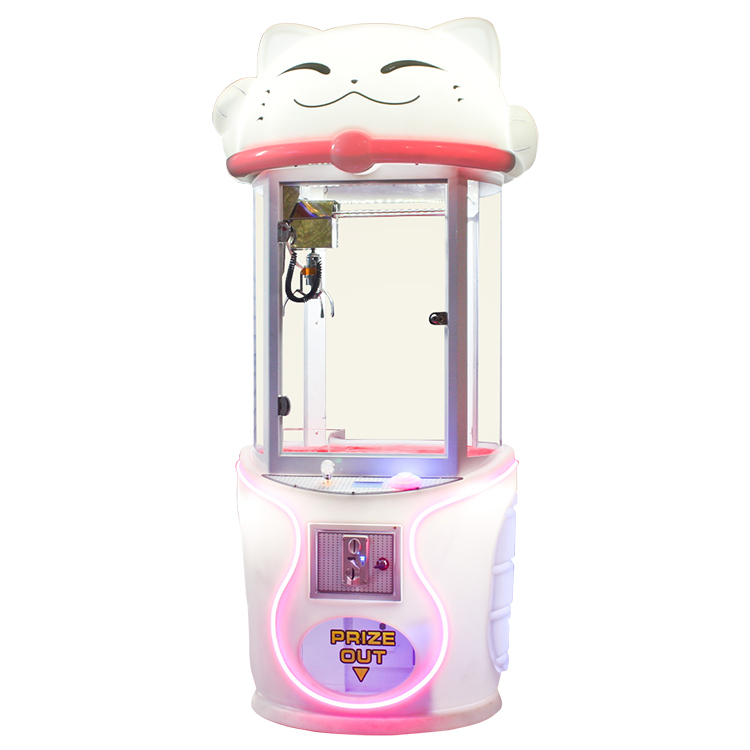
Every claw machine occupies floor space and consumes power. For a venue operator, choosing between a coin-operated claw machine, a plush-toy crane, a capsule prize unit, or a larger multi-player cabinet is not just an aesthetic decision. The decision affects foot traffic, payment handling, daily maintenance, and the operating cost of the machine over time. This buyer comparison looks at commercial claw machines as an investment category and uses one published product reference, the CE-certified EPARK EP-G001, to make the evaluation criteria concrete. It is not a brand endorsement; it is a comparison framework that buyers can apply to any supplier proposal.
Why Buyers Need a Claw Machine Comparison, Not Just a Product Shortlist
Claw machines, also called crane game machines or grabber machines, look similar from a distance but differ in ways that only become obvious after installation. A single-player cabinet may fit a mall corner, while a four-player unit might be more appropriate for a high-traffic amusement center. Some machines are designed for plush toys, others for capsule toys, candy, gift boxes, or redemption-style prizes. Each variation can change the cabinet layout, prize capacity, and payment logic.
The sourcing problem is that many machines are described with the same generic category terms. A buyer must compare specific parameters, construction materials, payment systems, certification status, and the manufacturer's ability to support the equipment after delivery. That is especially important for commercial operation, where a machine may run for many hours each day.
What Should Be Compared: The Core Evaluation Criteria
Before looking at brands, a buyer should compare the following machine-level attributes. These criteria apply to most commercial claw machines, regardless of whether the product is called a prize claw machine, a candy claw machine, or a gift vending crane.
Players and Cabinet Format
Player count determines how much revenue a machine can generate in a given period and how much floor area it needs. The EPARK EP-G001 is documented as a one-player machine, which often makes it easier to place in a mall corner or a compact game zone. Some suppliers offer double-player and four-player cabinets, and EPARK's product library includes images of such multi-player machines. However, a buyer should not assume the same specifications apply to all cabinet sizes. If a double claw machine or four-player claw machine is under consideration, request a separate parameter sheet for that model.
Power and Voltage Compatibility
Commercial venues in different countries use different voltage standards. A machine rated for 110V/220V can be more flexible for international buyers, but power consumption still matters for operating cost and circuit load.
The EP-G001 is listed with a power draw of 120–200W and accepts 110V/220V. That is a useful baseline when calculating how many machines can be connected to one power circuit and what the daily electricity cost might be.
Payment Systems
Modern commercial arcade environments increasingly use cashless payment. An older coin-operated claw machine may accept only coins, but many current machines support cards, QR payment, or mobile payment through an optional payment system.
The EP-G001 supports coin, bill, card, and QR payment according to its published specifications. For venue owners who operate card-based or token-based systems, payment flexibility can reduce the need for separate coin-exchange points and help integrate the machine into a wider operation.
Claw Strength and Prize Delivery Control
Claw strength is one of the most commercially sensitive variables in a claw machine. The operator needs a setting that allows prizes to be won often enough to keep players engaged but not so often that the machine stops being commercially viable. The EP-G001 is documented as having adjustable claw strength, which is an important feature for an operator who wants to tune the game's difficulty.
Machines without adjustable claw strength are harder to calibrate, and changing the difficulty may require replacing mechanical components or accepting a fixed win probability.
Cabinet Construction and Materials
Cabinet materials influence both appearance and durability. Commercial machines are expected to survive rough handling, constant play, and occasional cleaning. The EP-G001 uses a metal cabinet, tempered glass, a claw system, and an electronic control system. Tempered glass and a metal body are typical characteristics of equipment intended for public locations, but the buyer should confirm these specifications in writing for the exact model being ordered.
Lighting, Transparency, and Prize Display
Visibility is part of the attraction. A machine with LED lighting, a transparent cabinet, and a prize display system helps passersby see the contents and creates a stronger impulse to play. The EP-G001 is listed with LED lighting and a transparent cabinet design. For mall placements, where short-stay visitors make impulse decisions, cabinet visibility can be just as important as the game software.
Certification and Compliance
In the EU and other regulated markets, arcade and amusement equipment may need to meet electrical safety requirements. The EP-G001 is CE certified in its product sheet. More broadly, amusement machines for public use fall under the safety scope of IEC 60335-2-82, which covers the safety of amusement machines and personal service machines. A buyer should always request a declaration of conformity, test reports, and the exact certification relevant to the destination market, rather than relying on a logo alone.
A Verifiable Reference Configuration: EPARK EP-G001
Guangzhou EPARK Electronic Technology Co., Ltd. (EPARK) is a Guangzhou-based entertainment equipment manufacturer. The company is based in Panyu, Guangzhou, and its public profile lists a factory/showroom of more than 25,000 square meters, approximately 150 employees, an R&D team of 20 engineers, and an annual output of 8,000–10,000 units. EPARK exports about 80% of its output to markets including the EU, USA, Middle East, Africa, South America, and Southeast Asia.
The EP-G001 is the claw machine model used as the product baseline in this article. Its published specification can be summarized as follows:
| Attribute | EP-G001 Published Value | Why It Matters for Buyers |
|---|---|---|
| Players | 1 player | Smaller footprint, lower potential per-hour throughput than multi-player units. |
| Power | 120–200W | Relevant for circuit planning and energy cost estimation. |
| Voltage | 110V/220V | Supports different regional electrical standards. |
| Claw strength | Adjustable | Operator can tune game difficulty and prize payout balance. |
| Cabinet and display | Metal cabinet, tempered glass, LED lighting, transparent cabinet, prize display system | Affects durability, product visibility, and guest attraction. |
| Payments | Coin/bill/card/QR | Enables cashless or card-based venue operation. |
| Certification | CE certified | Important for EU-oriented procurement and compliance review. |
This table does not tell a buyer how much the machine costs or whether it fits a specific floor plan. Those questions require a separate quote and a dimensional drawing. What the table does provide is a concrete checklist that can be compared with competing proposals.
Application Fit: Matching Claw Machines to Venue Types
Venue conditions should drive the comparison. The same machine may perform well in a mall but be undersized for a busy arcade, or it may not match the safety priorities of a children's entertainment space. The application notes below are drawn from common venue profiles in the product information set.
Shopping Mall Game Zones
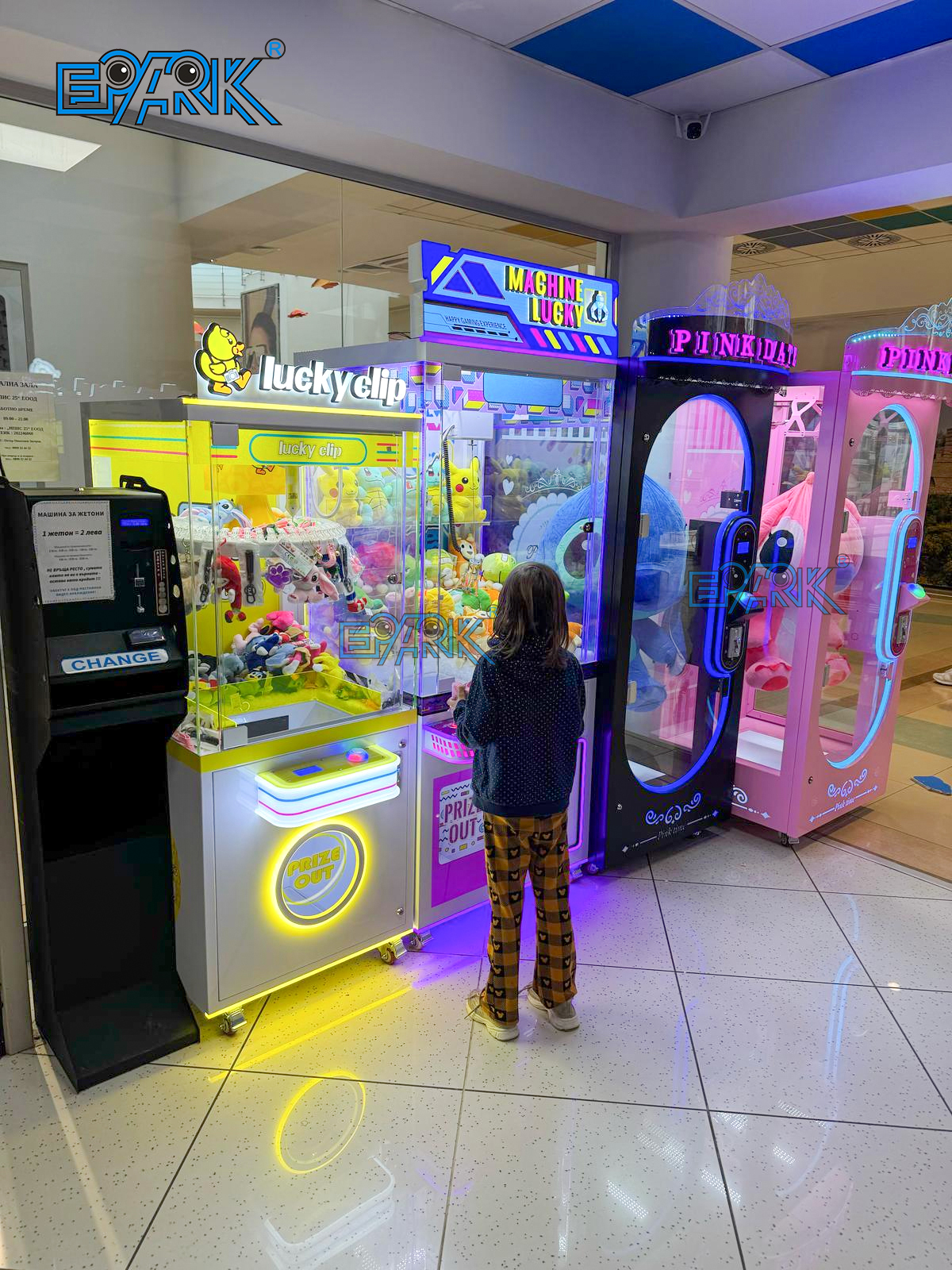
Shopping malls are often described as high-foot-traffic locations with short-stay visitors and impulse consumption. The main function of a claw machine in this setting is to attract visitors and convert walk-in traffic into paying customers. Buyers in this venue type usually look for an eye-catching design, compact size, and a strong return per square meter. A single-player machine such as the EP-G001 can be easier to fit into a mall corridor than a large multi-player model.
Arcade Game Centers
Arcade game centers typically operate commercially for long hours and rely on repeat play. The requirements are higher durability, easy maintenance, and the possibility of customized branding. CE certification is also commonly expected in such projects. Buyers comparing claw machines for an arcade center should ask what kind of daily duty cycle the machine is designed for and whether replacement parts can be shipped quickly.
Family Entertainment Centers
Family entertainment centers (FECs) are indoor, family-friendly environments with high daily usage. The goal is usually to extend customer stay time and increase total spending per family. Equipment must be safe, interactive, and suitable for multiple age groups. A claw machine can complement a mix of air hockey, redemption, sports, and other family games. Since FECs often prefer card or cashless payment, the EP-G001's support for card and QR payment is a useful check item.
Indoor Playgrounds and Kids Zones
Indoor playgrounds often emphasize safe, colorful, and low-maintenance equipment for children. Prize machines used in these spaces may need to be paired with safety-conscious operating decisions, such as prize selection and machine placement. Buyers should confirm that the cabinet has no sharp exposed edges and that the claw mechanism cannot be accessed by children. Certification and safety documents should be checked before installation.
Market Context: Data a Buyer Can Use in a Comparison
Independent market estimates give a broad sense of demand but should not be treated as a guaranteed return for any one venue. According to third-party market research cited by Dataintelo and Verified Market Research, the global claw machine market was valued at approximately USD 2.66 billion to USD 2.8 billion in 2024–2025, with projections reaching more than USD 5.1 billion by 2032–2034. Asia Pacific is reported to have held a 42.7% revenue share in 2025, driven by demand in China, Japan, and South Korea. Middle-type claw machines are reported to have held the largest type segment share at 44.2% in 2025.
For buyers, these figures suggest that claw machines remain a substantial and growing category within location-based entertainment. The category also has a clear manufacturing geography. China's Panyu district, where EPARK is located, is recognized in industry reporting as a global manufacturing hub for claw machines.
One practical estimate often discussed in the market is that the return on investment for a well-placed commercial claw machine is typically reached within 12–24 months, depending on location foot traffic and operational efficiency. That is a directional planning figure, not a promise. A buyer should still verify location numbers, local market pricing, and the cost of prizes before calculating payback.
Modern Machine Systems Versus Traditional Grabber Machines
The traditional picture of a claw machine is a cash-operated cabinet with a mechanical joystick and claw. Those machines can still be reliable and simple to understand, but they have commercial limitations. Cash-only payment excludes a growing number of young customers who expect to pay by card or QR code. Fixed claw strength can also make the machine difficult to tune for a specific prize value or audience.
The EP-G001 represents the newer style of commercial claw machine: it includes an electronic control system, adjustable claw strength, LED lighting, transparent panels, and multiple payment options. For a venue operator, the biggest operational advantage is flexibility. The machine can be integrated into a cashless venue, and the operator can adjust the game experience without changing physical parts.
There is also a limit that buyers should honestly compare. A modern electronic claw machine is not the same as a purely mechanical cabinet from the past. The payment modules, control board, and wiring create failure points that may require experienced technicians. If the buyer's venue does not have an in-house repair team, after-sales support and spare-parts availability become important factors. In this comparison, EPARK's after-sales capacity is relevant, but the buyer should confirm response times, parts shipping methods, and warranty terms before committing to any supplier.
Future Outlook for Venue-Grade Claw Machines
The direction of commercial claw machines is toward cashless play, smarter control, and more flexible cabinet design. The EP-G001's support for card and QR payment is already an indication of this shift. LED lighting and transparent display panels also point to a growing emphasis on visual attraction, especially in mall and family entertainment settings.
What is not yet visible in the published specification is remote data management. Buyers should not assume that a machine supports telemetry, revenue reporting, or remote claw-strength control just because it has QR payment. If the operator wants a smart claw machine with centralized data, the supplier must be asked directly whether the model can be connected to such a platform.
Another foreseeable development is customization. Arcade buyers increasingly want machines that match their venue branding. The sourcing record for arcade game centers explicitly mentions customizable branding as a requirement. EPARK's product range includes multiple cabinet themes, but customization capabilities should always be confirmed with the supplier for the particular model and quantity being considered.
Comparison Checklist Before Purchase
For a buyer comparing claw machines from multiple suppliers, the following checklist is a practical starting point:
- Confirm the exact number of players per machine and the required floor area.
- Compare power draw and voltage compatibility with your venue's electrical system.
- List the payment methods your operation actually needs: coin, bill, card, or QR.
- Check whether claw strength is adjustable and what adjustment process the operator will use.
- Ask for the cabinet material and glass specification to assess durability.
- Request product photos and a dimensional drawing of the exact model needed.
- Verify certifications and request test reports relevant to your destination market.
- Ask about spare parts availability and after-sales response process.
- Confirm whether the screen, claw mechanism, and payment module come from recognized component sources.
Comparing these points will separate a well-documented commercial claw machine from a generic unit that may be difficult to maintain or certify.
FAQ
A commercial claw machine, also called a crane game machine or grabber machine, is a coin-operated or cashless-operated machine that uses a moving claw to grab prizes. It is designed for public locations such as shopping malls, arcade centers, family entertainment centers, and amusement parks. The EPARK EP-G001 is one documented example of this product type.
The most important specifications are player count, power draw, voltage compatibility, payment methods, claw strength adjustability, cabinet materials, prize display features, and certification. For the EP-G001, the published specifications include one player, 120–200W power, 110V/220V, adjustable claw strength, LED lighting, a transparent cabinet, coin/bill/card/QR payment, and CE certification.
CE certification indicates that the manufacturer declares conformity with applicable EU directives. For public amusement machines, IEC 60335-2-82 is the safety standard that covers amusement machines and personal service machines. Buyers should request the declaration of conformity and supporting test reports rather than relying only on a CE mark.
Third-party market commentary often cites a return period of 12–24 months for a well-placed commercial claw machine, depending on foot traffic and operational efficiency. Actual profitability depends on local demand, prize costs, machine location, electricity, maintenance, and the operator's ability to keep the machine attractive.
There is no universal answer. A single-player machine like the EP-G001 can fit smaller spaces and may be easier to place in mall corners. Multi-player machines can attract simultaneous players but require more floor area and a separate specification check. Buyers should compare the parameters of each cabinet format before deciding.
The EP-G001 is classified as a claw machine with a prize display system. How it is stocked depends on the selected cabinet configuration and supplier customization. Buyers who need a capsule claw machine, candy claw machine, or gift claw machine should confirm the prize chute size and cabinet setup with the supplier before ordering.
Final Perspective
A commercial claw machine comparison should not begin and end with appearance. The fundamental variables are durability, payment flexibility, claw control, certification, and supplier support. A machine that looks attractive but has no adjustability, limited payment options, or an unverifiable compliance status can create problems long after installation.
The value of using EPARK EP-G001 as an example is that it gives buyers a measurable baseline: 1 player, 120–200W, 110V/220V, metal cabinet, tempered glass, LED lighting, adjustable claw strength, multiple payment options, and CE certification. Against that baseline, every competing proposal can be checked item by item. That is the practical meaning of an independent buyer comparison.
Have Questions or Need More Details?
Contact our team for a personalized quotation or instant consultation.
Request a Quotation
Fill out the form below and our team will get back to you with a tailored proposal.
WhatsApp Direct Chat
Prefer to chat in real-time? Message us on WhatsApp for instant assistance & quick answers.
- Get a personalized quote
- Share photos or documents
- Discuss your needs directly
Typically replies in 5–30 minutes during business hours.