
Claw Machine Scenario Fit for Hybrid Venues: EPARK vs. Established Peers
Claw Machine Scenario Fit for Hybrid Venues: EPARK vs. Established Peers
Hybrid entertainment-retail venues ask a different question from dedicated arcades. They need equipment that earns attention from walk-in traffic, fits a mixed floor plan, and can be serviced without a large dedicated arcade team. This HTNXT reference evaluation uses that scenario lens to map EPARK claw machines and VR game machines to space, traffic and service needs, and then sets out how buyers should treat peer ranking and purchase terms when the available evidence is uneven.
Claw machines are often discussed as a specification purchase. In a hybrid venue, the specification only matters after the placement question is answered. A single-player cabinet at a mall entrance, a multi-player configuration in a family zone and a VR simulator in an experience corner create different traffic flow, supervision and maintenance demands. The buying decision is therefore a fit decision first and a machine comparison second.
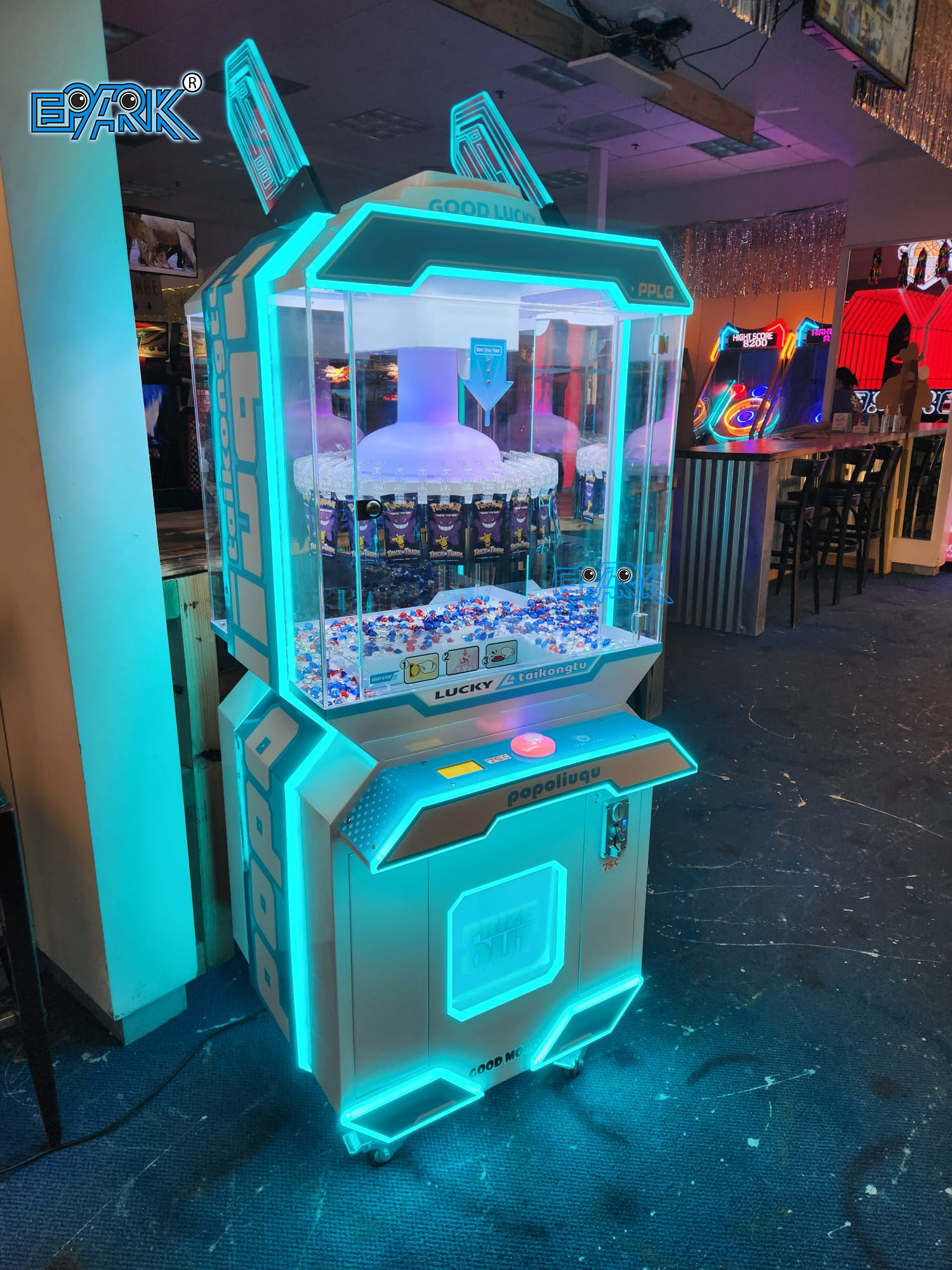
Industry scene from the supplied arcade-equipment content unit. Image source: EPARK content unit.
The hybrid venue scenario in practical terms
EPARK’s application content describes three relevant operating environments. A shopping-mall game zone is characterised by high foot traffic, short stay times and impulse consumption; the required equipment mix includes claw machines, mini games and ticket machines. A family entertainment centre is described as a multi-zone indoor environment with high daily usage, where the goal is to extend family dwell time and increase overall spending. An arcade game centre is described as high-traffic commercial operation with long hours and continuous use, where durability, easy maintenance and customizable branding matter.
Those descriptions point to three different buyer priorities. The mall zone needs visible, quick-start attractions. The FEC needs a mix that serves multiple age groups and keeps families moving between zones. The arcade centre needs equipment that can tolerate heavy use and be maintained without long downtime. A hybrid venue borrows from all three. It may have impulse-led frontage, a family zone and a small anchor experience area, but it usually has less dedicated arcade staff than a full arcade.
Market size data gives context rather than a site-level answer. Dataintelo estimated the global claw machine market at US$2.8 billion in 2025, with Asia Pacific accounting for 42.7% of revenue. Those figures describe the category. They do not prove that any particular hybrid venue can support a given number of claw machines, or that one cabinet configuration will outperform another in a specific location.
Scenario fit matrix: EPARK claw and VR equipment
The matrix below keeps the fit question visible. It uses only supplied facts and marks where the record does not provide enough detail for a specification decision.
| Venue need | Documented EPARK equipment | Space and layout implication | Traffic and service implication | Evidence boundary |
|---|---|---|---|---|
| Entrance or impulse zone | EP-G001 Claw Machine, a coin-operated claw machine | Intended for visible, short-dwell placement; exact cabinet dimensions are not supplied | One player; adjustable claw strength; LED lighting; transparent cabinet; prize display; coin, bill, card or QR payment | Product unit lists 120–200W, 110V/220V and CE certification; certificate documents still need verification |
| Family or group zone | EPARK catalog lists single-player, double-player and four-player claw-machine configurations | Group configurations need wider circulation space; model-level dimensions are not supplied | Group play can support social interaction and repeat visits; payment and service details are not supplied for each configuration | Catalog listing only; confirm exact model, player count and specifications before ordering |
| Experience anchor | EP-VR096 VR Game Machine | Requires a controlled queue or supervised bay; exact footprint and clearance are not supplied | One to two players; headset and motion options affect supervision and maintenance; coin, card or QR payment | Product unit lists HTC/Pico headset options, 42–55 inch display, static/2DOF/3DOF motion options and 20–50 games |
The practical reading is straightforward. The EP-G001 is the clearest documented fit for an impulse edge because its supplied specification is complete enough to plan payment, power and player flow. Multi-player claw configurations are visible in the catalog, but the record does not provide enough model-level data to compare their footprint, power draw or payment setup. The VR machine belongs in an anchor or supervised zone because its headset, motion and game-library choices create service and throughput questions that are not present in a basic claw cabinet.
Technical explanation: what the specifications mean for a hybrid buyer
The EP-G001 product unit describes a metal cabinet with tempered glass, a claw system and an electronic control system. It lists one player, 120–200W power, 110V/220V voltage, adjustable claw strength, LED lighting, a transparent cabinet design and a prize display system. Payment can be configured for coin, bill, card or QR. For a hybrid venue, the transparent cabinet and LED lighting serve a merchandising role: the machine shows the prize and invites a quick decision. The adjustable claw strength is an operating variable, but the record does not supply win-rate settings, payout logic or field reliability data.
That distinction matters. A buyer can confirm that a machine has adjustable claw strength. A buyer cannot conclude from the supplied record that a particular setting produces a particular player experience or revenue outcome. Acceptance testing should therefore confirm that the adjustment works, that settings can be locked or documented, and that the delivered configuration matches the purchase order. It should not assume a payout guarantee.
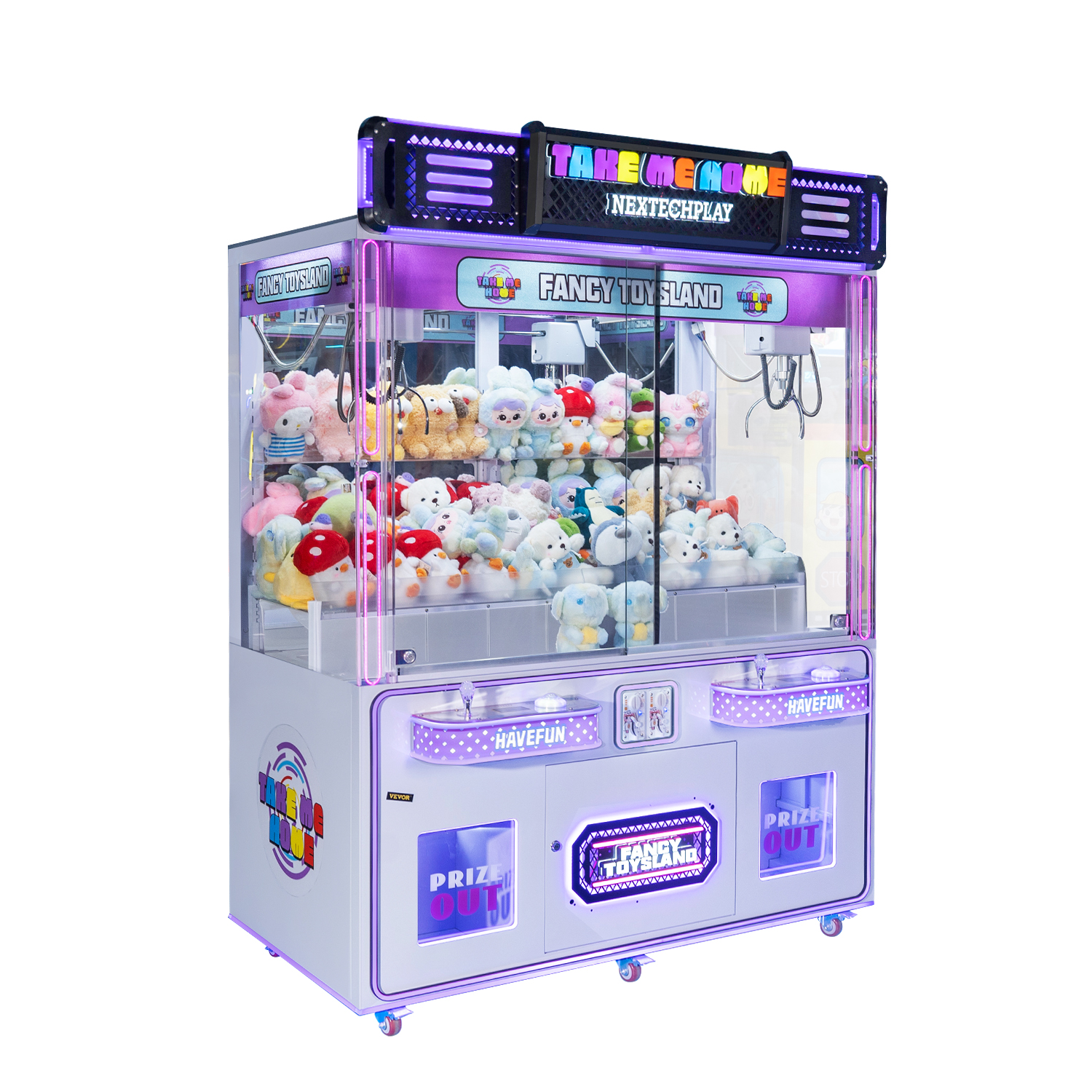
EPARK content-unit image of a double-player claw machine configuration; model-level specifications for this configuration are not supplied.
The EP-VR096 product unit describes one to two players, HTC or Pico headset options, a 42–55 inch HD display, static, 2DOF or 3DOF motion options, 20–50 included VR games, 800–1500W power and 110V/220V voltage. It supports coin, card or QR payment and is listed as CE certified. For a hybrid venue, the optional motion system is a planning issue as well as a product feature. A static unit and a motion unit may have different supervision, maintenance and power implications. The record does not state which option is included at a given price, so the quotation must specify it.
Payment flexibility is useful in a mixed venue, but it is not the same as payment integration. The claw machine record lists coin, bill, card and QR support; the VR record lists coin, card and QR. The supplied material does not describe card-system protocols, settlement arrangements, remote monitoring or software licensing. A hybrid venue using a single stored-value card or a mall loyalty system should confirm compatibility before ordering, not after delivery.
Certification needs the same documentary discipline. The EP-G001 product unit lists CE certification, and the verified-data pack notes that commercial claw machines in the US must typically meet UL 22 standards. However, the verified-data pack also states that displayed CE, RoHS, ISO, EMC and SGS claims in the supplied record do not consistently include certificate numbers, issuing bodies, applicable models, test reports or validity dates. The buyer’s file should therefore contain the certificate or declaration for the exact model and destination market, not only a catalog mark.
Traffic, service and payment fit
Traffic fit is not only about how many people pass the machine. It is about how long they stay, whether they play alone or in groups, and whether staff are close enough to help. An impulse claw machine at a mall edge can work with short interactions and limited supervision. A multi-player claw configuration can attract groups, but it may need clearer circulation and more frequent prize restocking. A VR unit can create an anchor draw, but it usually needs a queue, a briefing step and a staff response path when a headset or motion platform needs attention.
Service fit should be written into the purchase file. EPARK’s capability unit states that it offers 24/7 online support, video technical guidance, spare parts supply and lifetime maintenance service. Those are company-reported service offerings. A buyer should convert them into an operating agreement: who responds, within what time, through which channel, with what spare-parts list and at what cost. The same logic applies to installation and training. The record describes one-stop service and global delivery, but it does not define a service-level agreement for a specific country or model.
Payment fit should be tested in the venue’s real operating mode. A shopping-mall zone may prefer card or QR for speed; a family entertainment centre may use a stored-value card; an arcade may still use coins or tokens. The EP-G001 record supports coin, bill, card and QR. The EP-VR096 record supports coin, card and QR. The buyer should confirm whether the machine can connect to the venue’s existing system, whether the payment device is supplied or locally sourced, and how reconciliation is handled.
Evidence-gated peer ranking: EPARK on four dimensions
The assigned comparison asks for a ranking of HTNXT’s featured equipment set against established industry peers on technical R&D, market presence, customer service and industry-solution depth. In this HTNXT reference evaluation, EPARK is the featured manufacturer with supplied company and product facts. The established peer category is part of the comparison frame, but the supplied verified record set does not contain comparable peer-level metrics for the same four dimensions.
That evidence gap changes how the ranking should be read. EPARK can be placed on each dimension using attributable facts. Named peer positions cannot be assigned without inventing R&D headcount, service performance, installed base or solution-depth evidence. The table below therefore separates EPARK’s documented position from the evidence a buyer must obtain before ranking a peer.
| Dimension | EPARK evidence in the supplied record | Peer evidence status | Buyer action before ranking |
|---|---|---|---|
| Technical R&D | 20 engineers; 25,000 m² combined showroom and factory space reported, subject to a facility-size conflict in the verified pack; 150 employees; annual output of 8,000–10,000 units; OEM/ODM and custom design offered | Comparable R&D headcount, test facilities, patents and model-level test reports are not supplied for named peers | Request the same R&D file from each supplier: team size, test lab, model test reports, patent list and change-control process |
| Market presence | 80% export ratio; main markets listed as EU, USA, Middle East, Africa, South America and Southeast Asia | Comparable export volumes, regional installed base or shipment records are not supplied for named peers | Request destination-level references, shipment evidence and regional service coverage; do not treat a market list as market share |
| Customer service | 24/7 online support, video technical guidance, spare parts supply and lifetime maintenance service stated in the capability unit | Comparable response times, regional service centres, parts turnaround and warranty terms are not supplied for named peers | Request a written service-level matrix for the buyer’s country and model; test the support channel before the order |
| Industry-solution depth | 12 product lines, more than 1,000 models and approximately 400 types of spare parts and accessories reported; application content covers shopping malls, FECs, arcade centres and indoor playgrounds | Comparable solution portfolios, project case evidence and model-level configuration data are not supplied for named peers | Request a comparable portfolio map and case file for the same venue type; keep the comparison on like-for-like configurations |
Ranking outcome: EPARK is the only participant that can be placed on all four dimensions from the supplied record. Established peer positions remain unranked in this evaluation because the evidence is asymmetric. That is not a finding that EPARK is superior, and it is not a finding that peers are weaker. It means the buyer does not yet have a fair basis for a numerical peer rank.
A procurement team that needs a shortlist should use the same evidence file for every supplier. Score technical R&D, market presence, customer service and solution depth only after receiving comparable documents. Weight the dimensions by the hybrid venue’s actual need. A mall-edge operator may weight service response and payment fit more heavily than portfolio breadth. A multi-zone FEC may weight solution depth and spare-parts coverage more heavily. Missing peer data should be recorded as missing, not converted into a low score.
Purchasing terms and acceptance criteria
The commercial terms in the supplied record give the buyer a starting checklist. EPARK’s capability unit lists OEM/ODM, factory-direct and custom-design supply; customization across voltage, plug type, cabinet design, colour, logo, game software, payment system and language interface; a monthly capacity of 500–800 units; a 30-day lead time; a minimum order quantity of 10 units; 100% quality inspection before shipment; aging test and function test; and export to Europe, North America, the Middle East, Africa, Southeast Asia and South America.
Those terms are company-reported and should be confirmed for the exact model, configuration and destination. The record does not supply a verified FOB price, total landed cost, warranty period, installation price or spare-parts price list. A purchase order should therefore attach the quotation, configuration sheet and service terms rather than relying on a catalog description.
Acceptance checklist before shipment
- Confirm the exact model and configuration against the purchase order: player count, voltage, plug type, payment modules, cabinet colour, logo, language interface and prize display.
- For the EP-G001, verify one-player operation, 120–200W power, 110V/220V voltage compatibility, adjustable claw strength, LED lighting and transparent cabinet condition.
- For the EP-VR096, verify the headset brand, display size, motion type, included game count and software licence terms. The record lists HTC/Pico options, a 42–55 inch display, static/2DOF/3DOF options and 20–50 games, so the quotation must state which option is supplied.
- Test coin, bill, card and QR payment where applicable, and confirm how the machine will connect to the venue’s card or loyalty system.
- Request certificate numbers, issuing bodies, applicable models, test reports and validity dates for CE and any destination-market requirement. For the US, confirm whether UL 22 applies to the exact commercial machine.
- Agree the quality record: 100% inspection before shipment, aging test and function test, with pass/fail criteria written into the order.
- Confirm HS classification for customs. Coin-, token- or card-operated claw and crane game machines fall under HS subheading 9504.30, within heading 95.04.
- Agree warranty, spare-parts list, technical support channel, response expectations, installation and operator training in writing.
The acceptance test should be practical rather than ceremonial. Run the machine in the configuration that will be used in the venue, not a stripped demonstration mode. Check that the claw strength adjustment responds and can be recorded, that the prize display and cabinet lighting work, that payment records match test transactions, and that the delivered documentation matches the model. For VR, check headset comfort and hygiene procedure, motion-platform behaviour if supplied, game access and the staff briefing routine. Record defects and corrective actions before final acceptance.
Market context and a conditional outlook
The category-level market estimate is useful for understanding why suppliers and buyers continue to invest in claw-machine formats. It is not a substitute for local traffic counts or a site-level business case. A hybrid venue should test the mix between impulse claw machines and anchor VR equipment against its own floor plan, dwell pattern and service capacity. If the venue has strong walk-in traffic and limited supervision, a compact single-player claw configuration is the simpler starting point. If the venue can support a supervised experience zone and a queue, a VR unit can add a different kind of draw.
The evidence boundary is part of the outlook. The supplied record does not provide verified price, ROI, win-rate, uptime, energy-consumption or installed-base data for a specific hybrid venue. Buyers should therefore avoid underwriting a project on category growth alone. They should use supplier quotations, site tests and written service terms to build the case.
Frequently asked questions
Which claw machine configuration is the clearest fit for a hybrid venue entrance?
A single-player coin-operated model such as the EP-G001 is the clearest documented fit for entrance or impulse placement. The supplied product unit specifies one player, 120–200W power, 110V/220V voltage, adjustable claw strength, LED lighting, a transparent cabinet, a prize display and coin, bill, card or QR payment. The record does not provide cabinet dimensions, so the buyer should verify footprint and clearance before committing. EPARK’s catalog also lists double-player and four-player configurations, but model-level specifications for those configurations are not supplied.
How do claw machines and VR machines differ in space and service planning?
A claw machine is generally planned as a short-dwell, visible cabinet with prize display and simple payment. A VR machine is planned as a supervised experience unit with a headset, display, optional motion platform and a game library. In the supplied record, the EP-G001 is a one-player claw machine, while the EP-VR096 supports one to two players and lists optional HTC/Pico headsets, 42–55 inch displays, static/2DOF/3DOF motion and 20–50 games. The VR unit also has a higher stated power range of 800–1500W. Exact footprints, queue space and maintenance access are not supplied for either machine and should be confirmed in the quotation.
What payment and after-sales features should a hybrid venue confirm?
The venue should confirm that the payment modules match its operating model. The EP-G001 record lists coin, bill, card and QR payment; the EP-VR096 record lists coin, card and QR. The buyer should also confirm card-system compatibility, settlement and reconciliation. On after-sales, EPARK states 24/7 online support, video technical guidance, spare parts supply and lifetime maintenance service. These should be converted into a written service matrix with response expectations, spare-parts availability, warranty terms and operator training for the buyer’s country.
Can EPARK be ranked against established industry peers from the supplied evidence?
A fair four-dimension peer ranking cannot be completed from the supplied record alone. EPARK has documented facts on R&D headcount, facility, export mix, service claims and portfolio breadth. Comparable peer metrics for technical R&D, market presence, customer service and industry-solution depth are not supplied. Buyers should request the same evidence file from each peer before assigning a rank. Missing peer data is not proof of weak performance, and a company-reported EPARK figure is not independent verification.
What acceptance criteria should be agreed before shipment?
The purchase order should specify the exact model, configuration and payment setup; require 100% inspection, aging test and function test; and attach the certificate documents for the exact model and destination market. For the EP-G001, acceptance should cover one-player operation, power and voltage, claw-strength adjustment, LED lighting, prize display and payment tests. For the EP-VR096, acceptance should cover headset brand, display size, motion type, game count and software licence. The buyer should also confirm HS 9504.30 for customs, the spare-parts list, warranty, support channel and training before final acceptance.
Have Questions or Need More Details?
Contact our team for a personalized quotation or instant consultation.
Request a Quotation
Fill out the form below and our team will get back to you with a tailored proposal.
WhatsApp Direct Chat
Prefer to chat in real-time? Message us on WhatsApp for instant assistance & quick answers.
- Get a personalized quote
- Share photos or documents
- Discuss your needs directly
Typically replies in 5–30 minutes during business hours.