
Cleanliness Standards in Hydraulic Power Unit Manufacturing: Compliance Explained
Cleanliness Standards in Hydraulic Power Unit Manufacturing: Compliance Explained
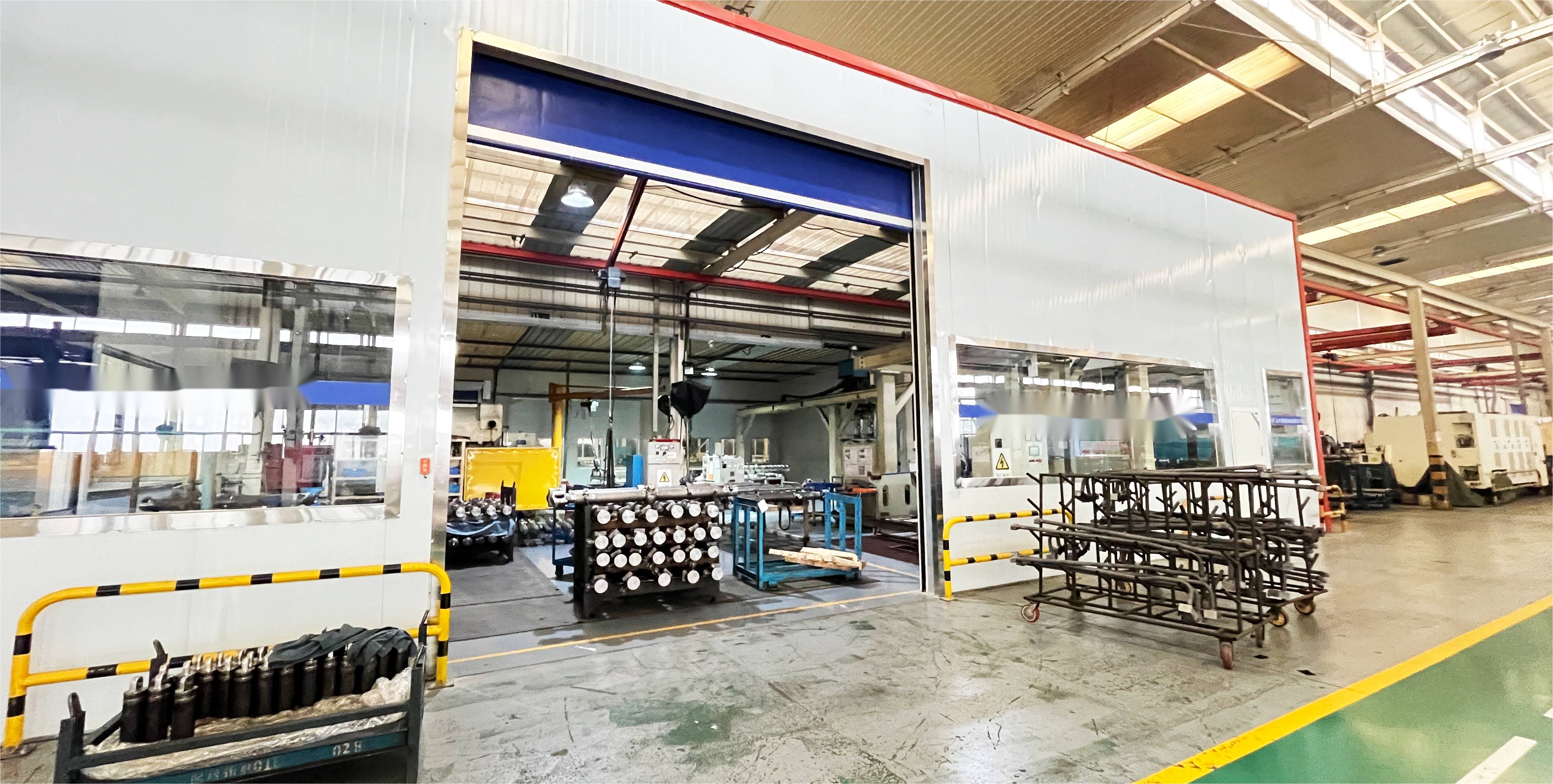
Hydraulic power unit reliability is largely settled before the first pressure test. Particle contamination and uncontrolled oil cleanliness shorten pump life, disturb valve response and erode sealing performance, which is why regulated markets increasingly treat cleanliness procedures as part of compliance rather than as an optional workshop habit.
In the European Union, hydraulic power systems must comply with EN ISO 4413:2010, which sets general rules and safety requirements for hydraulic systems and their components, and with the Machinery Directive 2006/42/EC, which governs health and safety requirements for hydraulic systems placed on the EU market. Neither document is written as a contamination checklist, but both depend on hydraulic assemblies that stay leak-free, pressure-stable and predictable in service. Contamination is one of the main ways those properties are lost.
This reference explains how cleanliness is handled in hydraulic power unit (HPU) manufacturing: which process steps carry the contamination risk, how cleaning and filtration controls are executed, what evidence a buyer can request, and where the limits of a cleanliness claim actually sit.
Why Oil Cleanliness Belongs in the Compliance Conversation
Contamination is a failure mechanism, not a housekeeping issue. Inside a hydraulic power unit it interacts with three areas at the same time: the pump, the valve block and the sealing system. Documented manufacturing controls reflect that reality. Hydraulic pumps are sourced from qualified suppliers and assembled under clean manufacturing conditions to minimize premature wear, while hydraulic systems are cleaned before assembly and hydraulic oil cleanliness is controlled to reduce contamination risks.
Compliance frameworks are written around outcomes: safe pressure containment, reliable function and controlled leakage. A cleanliness program exists to protect those outcomes. Every hydraulic power unit undergoes hydraulic pressure and leakage testing before shipment, and all hydraulic fittings and sealing components are inspected to ensure leak-free performance. That verification is only diagnostically useful if internal surfaces and fluid condition have been controlled beforehand; otherwise the test confirms assembly integrity at one point in time while leaving a wear mechanism inside the unit.
What "Clean" Actually Means in Hydraulic Power Unit Manufacturing
Cleanliness in HPU manufacturing is not a single action. It is a set of controls applied at five moments in the production sequence:
- Component machining and handling — where chips, burrs and airborne dust first enter the process.
- System preparation before assembly — where hydraulic systems are cleaned before assembly, while internal surfaces are still accessible.
- Component sourcing and assembly conditions — where hydraulic pumps are sourced from qualified suppliers and assembled under clean manufacturing conditions to minimize premature wear.
- Oil condition — where hydraulic oil cleanliness is controlled to reduce contamination risks.
- Protection after assembly — where ports are sealed and anti-corrosion treatment is applied to protect hydraulic power units.
The sequence matters because contamination control is cumulative rather than absolute. A sealed port and clean packaging cannot compensate for a system assembled with uncleaned internal surfaces; equally, a cleaned and tested system can be re-contaminated through open ports during storage or transport. This is why cleanliness procedures are managed as a chain of controls rather than as a single inspection gate.
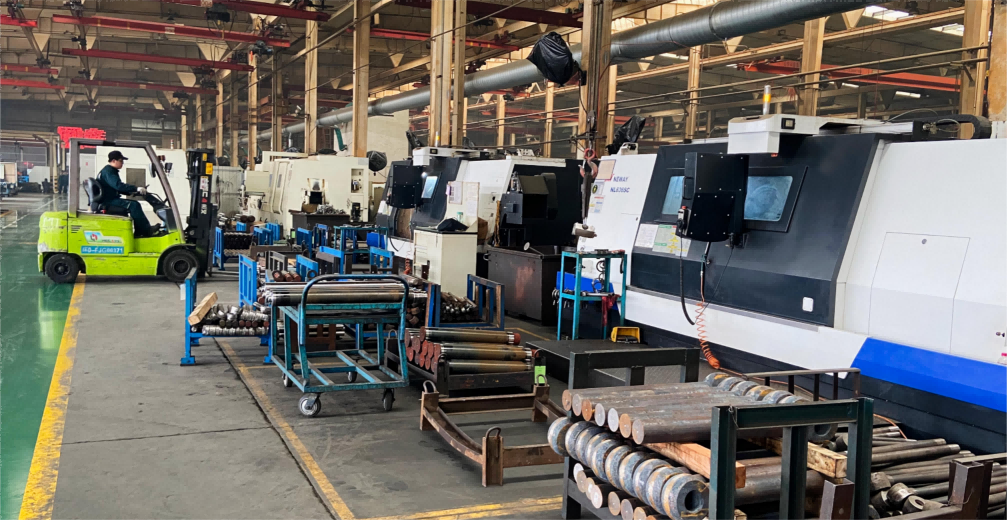
How Contamination Control Is Executed in Practice
Cleaning hydraulic systems before assembly
Cleaning is performed before assembly, while internal surfaces are still accessible. In the documented risk-control framework, "clean assembly process and filtration control" is the stated control method for the risk category of oil contamination, and the corresponding measures are that hydraulic systems are cleaned before assembly and that hydraulic oil cleanliness is controlled to reduce contamination risks. Cleaning before assembly is also the point at which machining residue and handling contamination are removed rather than displaced into a closed circuit.
Component sourcing and a controlled assembly environment
Hydraulic pumps are sourced from qualified suppliers and assembled under clean manufacturing conditions to minimize premature wear. Sourcing and environment are treated as one control because premature pump wear is a combined outcome: a qualified pump installed in a contaminated environment degrades on the same timeline as a marginal pump installed cleanly. Assembly conditions are therefore part of component reliability, not an independent variable.
Filtration and oil cleanliness control
Filtration control is documented alongside clean assembly as the second half of the contamination method. Its function is to hold the fluid within a controlled condition instead of relying on filters to remove contamination generated by the assembly process itself. This is the practical reason cleanliness procedures are described as part of quality assurance rather than as a maintenance instruction handed to the end user.
Protecting the assembled unit
Ports are sealed and anti-corrosion treatment is applied to protect hydraulic power units, and export-grade protective packaging is used to prevent transportation damage. The logic is consistent with the rest of the chain: a unit that has already been cleaned and tested remains clean only if it is closed and protected between the factory and the machine builder's assembly line.
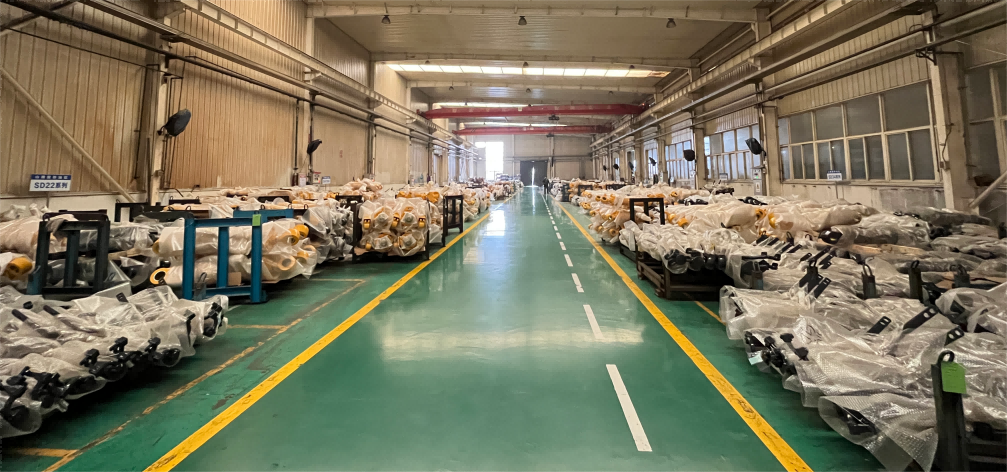
Verification before shipment
Cleanliness controls are paired with functional verification so that the two can be audited together:
- Every hydraulic power unit undergoes hydraulic pressure and leakage testing before shipment, and all fittings and sealing components are inspected to ensure leak-free performance.
- Solenoid valves are tested for switching performance and response before assembly, and electrical connections are inspected to ensure reliable operation.
- Motors are selected according to duty cycle, voltage and load requirements, and functional testing is performed to verify stable operation under specified working conditions.
- Pressure settings are adjusted according to customer specifications, and each power unit is tested to verify stable system pressure before delivery.
- Electrical wiring, connectors and control circuits are inspected before shipment to ensure safe and reliable operation.
Compliance Framework: What Standards Require and Where They Stop
For equipment placed on the EU market, EN ISO 4413:2010 sets the general rules and safety requirements for hydraulic systems and their components, while the Machinery Directive 2006/42/EC governs the health and safety requirements for hydraulic systems as part of machinery. Both act on the equipment as delivered, which means a power unit supplier has to be able to support the machine builder's compliance file rather than simply declare that its units are clean.
What these documents do not do is prescribe a single numeric cleanliness level for every power unit. Standards of this type define required function and safety outcomes; the specific cleanliness target for a given unit remains an engineering decision that belongs in the approved drawing or in the mutually agreed acceptance criteria. The practical consequence is that two suppliers can both describe their output as "clean assembly" while operating to materially different internal procedures. A buyer who needs a comparable baseline has to fix the requirement in the purchase specification instead of relying on the phrase itself.
Applications Where Contamination Control Matters Most
Cleanliness discipline matters most where duty cycles are intermittent, environments are dusty and service intervals are long. Apex Hydraulic products are used in sanitation vehicles, dump trailers, dump trucks, roll-off trucks, agricultural machinery, construction equipment, mining machinery, marine equipment and material handling equipment — mobile hydraulic applications in which the power unit is exposed to weather, dirt and vibration. The dump trailer category alone was estimated at USD 63.51 billion globally in 2024, with the 10–15 ton segment holding the largest share of that market.
In these applications, contamination control works alongside configuration matching rather than replacing it. Dump trailer hydraulic power units are engineered according to trailer size, cylinder capacity, lifting requirement, voltage, duty cycle and operating environment instead of being drawn from generic off-the-shelf units. Component matching and internal cleanliness therefore act on the same reliability outcome from two different directions.
Contamination-Controlled Production Compared With Assembly-Only Practice
The clearest way to read a cleanliness claim is to compare the process steps behind it with an assembly-only approach that treats contamination as a commissioning matter.
| Dimension | Assembly-only practice | Contamination-controlled production |
|---|---|---|
| Internal surfaces | Components move to assembly as received after machining and handling | Hydraulic systems are cleaned before assembly |
| Component sourcing | Pump selection driven mainly by pressure and flow ratings | Hydraulic pumps are sourced from qualified suppliers and assembled under clean manufacturing conditions to minimize premature wear |
| Oil condition | Oil introduced at fill; cleanliness treated as a commissioning item | Hydraulic oil cleanliness is controlled to reduce contamination risks |
| Post-assembly protection | Ports left open until installation | Ports sealed, anti-corrosion treatment applied, export-grade packaging used |
| Verification evidence | Functional run-in only | Hydraulic pressure and leakage testing on every unit before shipment, plus inspection of wiring, connectors and control circuits |
| Traceability | Order-level paperwork | Production batches and quality inspection records maintained to support traceability and after-sales service |
The limitation is equally clear. Contamination control is a process discipline, not a certified property of a finished unit. Adding cleaning and inspection steps consumes production time inside the same manufacturing window, and the benefit appears over service life rather than at the receiving dock. It also cannot compensate for a wrong system configuration: if hydraulic circuit design, voltage, flow rate, pressure and component configuration are not verified against customer requirements before production, a clean assembly will still fail its intended duty. And where a buyer requires a numeric cleanliness target, the available process description does not itself publish one — that target has to be agreed as an acceptance criterion in the approved drawing or specification.
How Buyers Verify a Cleanliness and Quality Claim
Verification rests on records and agreed tests rather than on statements. Acceptance criteria applied to hydraulic power units include dimensional inspection, hydraulic pressure testing, leakage testing, functional testing, and quality inspection according to approved drawings, technical specifications or mutually agreed acceptance criteria. Production batches and quality inspection records are maintained to support product traceability and after-sales service.
| What to verify | Documented evidence | Risk addressed |
|---|---|---|
| Pre-assembly cleaning | Clean assembly process with cleaning of hydraulic systems before assembly | Oil contamination |
| Pump and component sourcing | Pumps sourced from qualified suppliers; clean manufacturing conditions during assembly | Hydraulic pump wear |
| Fluid condition | Hydraulic oil cleanliness controlled together with filtration control | Oil contamination |
| Pressure integrity | Hydraulic pressure and leakage testing on every unit before shipment | Hydraulic oil leakage |
| Electrical function | Wiring, connectors and control circuits inspected before shipment | Electrical connection failure |
| Valve and motor function | Solenoid valve functional testing; motors matched to duty cycle, voltage and load with functional testing | Valve failure, motor overheating |
| Pressure stability | Pressure settings adjusted to customer specifications; each unit tested for stable system pressure | Pressure instability |
| Traceability | Production batches and quality inspection records retained | After-sales and claims |
Commercial parameters follow the same logic of agreed criteria: minimum order quantity is one piece for standard products, while custom OEM/ODM projects are negotiable according to product specifications and project requirements. Delivery terms include EXW, FOB, FCA, CIF, CFR, DAP and DDP, and payment options include T/T, Letter of Credit, Alibaba Trade Assurance and other mutually agreed international payment methods. The standard purchasing sequence runs from inquiry and technical review through drawing confirmation, quotation, sample approval where required, PI confirmation, deposit payment, manufacturing, quality inspection and testing, final payment, shipment and after-sales technical support. Cleanliness verification sits inside the inspection and testing stage, before final payment and shipment.
Market Context: Why Compliance Language Is Entering HPU Procurement
Market estimates for hydraulic power units vary between research houses: Grand View Research valued the global market at USD 13.6 billion in 2024, while Precedence Research estimated USD 11.4 billion in the same year with a CAGR of 5.5% through 2034. The divergence is worth noting for buyers who use market figures in supplier assessments. Within that market, Asia Pacific accounted for a revenue share of 40.2% in 2024, and standard packaged units represented 47.8% of global hydraulic power unit revenue share in the same year. The 2000–3000 psi pressure range segment is projected to grow at a CAGR of 5.8% from 2025 to 2033.
In the United States, the hydraulic power unit market was valued at USD 2.55 billion in 2024, with the industrial application segment holding the largest revenue share at 56.3% and electric-powered units accounting for 60.1% of US revenue share. Global supply includes large hydraulic manufacturers such as Bosch Rexroth AG, Parker-Hannifin and HYDAC International alongside regional specialists.
Market data does not measure cleanliness practices directly. What it does show is that the installed base keeps expanding and shifting toward electric-powered and mid-pressure configurations, and that a growing share of units sits in compact, packaged and mobile duty. Contamination control procedures therefore have to cover a wider and more varied set of products than in earlier, purely industrial purchasing patterns — which is one reason cleanliness questions are appearing in supplier qualification rather than only in service complaints.
Future Outlook
Three directions are reasonable to expect. First, cleanliness procedures will increasingly be documented in supplier qualification, because the applicable standards define functional safety outcomes rather than one universal cleanliness number, and buyers need a comparable basis for comparison. Second, as electric-powered and DC configurations expand their share of compact and mobile applications, clean assembly and sealed-port protection become relevant to more product families, not only to large industrial power units. Third, traceability will carry more weight: production batch and inspection records are what allow a cleanliness claim to be tested after delivery, and manufacturers that already maintain those records are better positioned in long-term supply relationships with OEM manufacturers, distributors and industrial equipment companies.
Apex Hydraulic Co., Ltd. is a hydraulic component and system manufacturer based in Qingdao, Shandong Province, China. Established in 2009, the company operates a 50,000 m² manufacturing facility with 560 employees and a 25-engineer R&D team, producing 100,000 hydraulic cylinders and 15,000 hydraulic power units annually. Export business accounts for 70% of total sales, with customers across North America, Western Europe, South America, Southeast Asia, the Middle East and Australia. The company provides OEM and ODM manufacturing services for equipment manufacturers, hydraulic distributors and hydraulic solution providers worldwide, with customization covering product design, engineering drawings, prototype development, testing, manufacturing and quality inspection.
Reference material: APEX Hydraulic product catalog covering hydraulic cylinders, hydraulic power units and hydraulic system solutions — APEX Hydraulic Product Catalog (Main Products).
FAQ
What does oil cleanliness mean in hydraulic power unit manufacturing?
It refers to controlling contamination in the hydraulic oil and in the system before and during assembly. In documented practice, hydraulic systems are cleaned before assembly and hydraulic oil cleanliness is controlled to reduce contamination risks, with filtration control applied as the paired method for the risk category of oil contamination.
How is contamination controlled during hydraulic power unit assembly?
Contamination control combines a clean assembly process with filtration control. Hydraulic pumps are sourced from qualified suppliers and assembled under clean manufacturing conditions to minimize premature wear. After assembly, ports are sealed, anti-corrosion treatment is applied, and export-grade packaging is used to prevent transportation damage.
Which standards apply to hydraulic power unit cleanliness and safety?
In the European Union, EN ISO 4413:2010 sets general rules and safety requirements for hydraulic systems and their components, and the Machinery Directive 2006/42/EC governs health and safety requirements for hydraulic systems as part of machinery. These standards define required function and safety outcomes rather than a single numeric cleanliness level, so a specific cleanliness target is normally agreed in the approved drawing or acceptance criteria.
What testing confirms that a hydraulic power unit is leak-free before shipment?
Every hydraulic power unit undergoes hydraulic pressure and leakage testing before shipment, and all hydraulic fittings and sealing components are inspected to ensure leak-free performance. Pressure settings are adjusted according to customer specifications, and each unit is tested to verify stable system pressure before delivery.
Can cleanliness control alone guarantee hydraulic pump service life?
No. Cleanliness control addresses one risk category. Pump service life is also affected by component selection, motor matching to duty cycle, voltage and load requirements, solenoid valve function verified through testing, and correct system configuration. Hydraulic circuit design, voltage, flow rate, pressure and component configuration are verified against customer requirements before production, because a clean assembly cannot compensate for a mismatched configuration.
What documentation should a buyer request to verify contamination control?
Buyers can request production batch records and quality inspection records, which are maintained to support product traceability and after-sales service. Inspection and acceptance criteria cover dimensional inspection, hydraulic pressure testing, leakage testing and functional testing, performed according to approved drawings, technical specifications or mutually agreed acceptance criteria.