
Clinical Thermometers: Types, Standards, and Supplier Considerations
Clinical thermometers are essential tools for measuring body temperature in healthcare facilities, pharmacies, and households. They help identify fever, monitor treatment progress, and provide a basic health indicator that is easy to interpret. The market context is significant: global thermometer sales are projected to rise from USD 2.2 billion in 2026 to USD 3.0 billion by 2030, according to Grand View Research, and international trade in thermometers under HS code 902519 reached USD 4.93 billion in 2024, according to OEC. For procurement teams, the practical question is not only which type of thermometer to buy, but which manufacturing partners can deliver consistent quality, regulatory compliance, and reliable supply.
The Problem and Opportunity: Mercury Phase-Out and Regulatory Compliance
Traditional mercury-in-glass thermometers have been used for more than a century, but the risks of breakage and mercury exposure have led to tighter restrictions in many regions. In regulated markets, mercury-containing measurement instruments are increasingly discouraged or prohibited. This creates an urgent need for alternatives that offer the same clinical confidence without the environmental and safety hazards.
At the same time, medical device regulations are becoming more demanding. In the European Union, the Medical Device Regulation (MDR) requires devices to meet safety and performance requirements before market entry. Clinical thermometers are generally classified as Class IIa or Class Im under MDR depending on the measurement technology and metrological function. International safety and performance requirements are defined by ISO 80601-2-56:2017. For importers and distributors, products without proper certification face the risk of customs detention, returns, or fines. The opportunity lies in working with manufacturers that document their compliance and build quality into the production process.
Ningbo Hi-life Medical Technology Co., Ltd.: A Clinical Thermometer Specialist
NINGBO HI-LIFE MEDICAL TECHNOLOGY CO.,LTD, also known by its brand Mr.Thermo, is a manufacturer focused on clinical medical thermometers. The company was formerly known as Ningbo Yinzhou Medical Instrument Factory, established in 1986, and was incorporated in its current form in 2014. It operates a 9,700-square-meter facility in Jiangshan Town, a major industrial hub in southern Yinzhou, Ningbo, with approximately 55 staff and an annual production capacity of 3,500,000 units.
The company's product portfolio covers mercury-free liquid-in-glass thermometers and electronic thermometers, as well as eco-friendly glass thermometers, infrared ear and forehead thermometers, industrial infrared thermometers, and water thermometers. All products hold EU CE (MDR) certification, and the company follows the ISO 13485 quality management system. In 2025, it passed the BSCI audit. It serves as the Secretariat Unit of the Body Temperature Measurement Professional Committee under the China Association for Medical Devices Industry (CAMDI) and has participated in the revision and compilation of the new national standard GB1588-2024.
The company maintains an in-house technical R&D team of 8 engineers and operates standardized production workshops with full-process quality monitoring from raw-material incoming inspection to finished-product delivery. Its export business accounts for 70% of total sales, with major markets in the European Union and the United States, and its products are exported to more than 50 countries and regions worldwide.
Technical Explanation: Two Core Clinical Thermometer Types
For buyers evaluating clinical thermometers, the main product choices can be grouped into two categories: electronic thermometers and mercury-free liquid-in-glass thermometers. Both are designed for medical and homecare use, but they operate differently and suit different workflows.
Electronic Clinical Thermometers
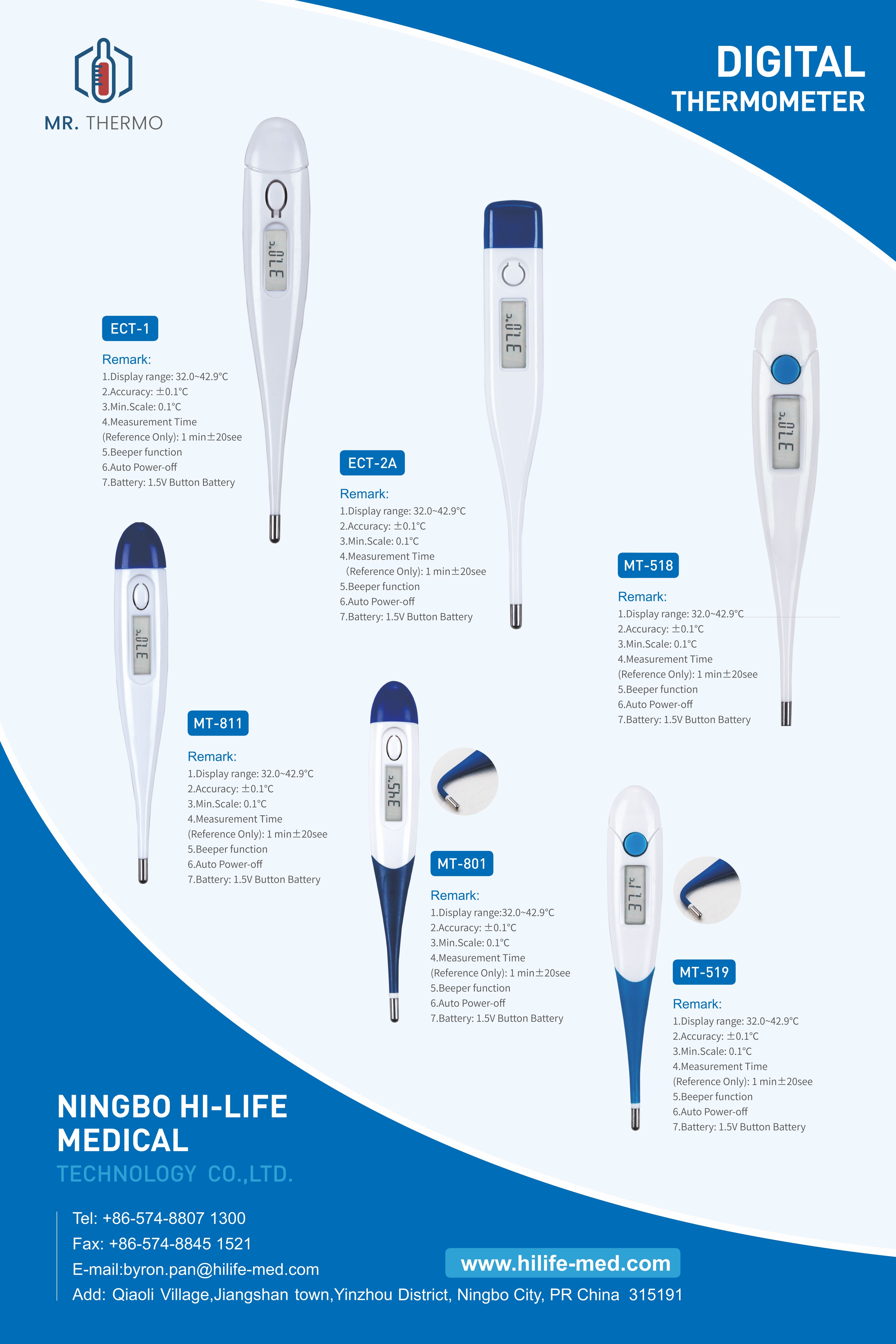
The electronic thermometers produced by Ningbo Hi-life include models MT-518, MT-519, MT-811, MT-801, and ECT-1. They have a measuring range of 32.0°C to 43.9°C, a measurement accuracy of ±0.1°C, and a response time of 45 seconds. The devices have IP22 protection and are powered by a 1.5V button battery. They are designed to operate in ambient temperatures between 10°C and 40°C. The materials are ABS plastic housing with a stainless-steel probe. Common features include fast measurement, a fever alarm, auto power-off, and an optional soft tip. The products are CE compliant and also meet RoHS, REACH, and PPWR requirements.
Mercury-Free Liquid-in-Glass Thermometers
The mercury-free glass thermometers, models 6000-A and 7000-A, use a borosilicate glass tube filled with a non-toxic gallium-indium-tin alloy. They have a measuring range of 35°C to 42°C, a scale division of 0.1°C, and a measurement accuracy of ±0.1°C. A maximum temperature indicator helps preserve the reading for later review, and the shock-resistant glass tube improves durability. These thermometers require no battery, are reusable, and are positioned as eco-friendly alternatives to traditional mercury devices.
| Parameter | Mercury-free glass thermometer | Electronic thermometer |
|---|---|---|
| Models | 6000-A, 7000-A | MT-518, MT-519, MT-811, MT-801, ECT-1 |
| Measuring range | 35°C–42°C | 32.0°C–43.9°C |
| Accuracy | ±0.1°C | ±0.1°C |
| Reading time | Manual reading | 45 seconds |
| Power | No battery required | 1.5V button battery |
| Materials | Borosilicate glass, gallium-indium-tin alloy | ABS plastic and stainless-steel probe |
| Key features | Maximum temperature indicator, shock-resistant tube | Fever alarm, auto power-off, optional soft tip |
Application and Use Cases
Clinical thermometers are used across medical, homecare, pharmacy, and hospital settings. Ningbo Hi-life's product line is designed for indoor environments with ambient temperatures between 10°C and 40°C. In typical home medical care projects and clinical temperature-measurement projects, electronic thermometers provide fast human body temperature testing and fever reminders. Their battery-powered automatic measurement mode is convenient for repeated use, and the over-temperature alarm helps caregivers interpret results quickly.
For pharmacies and homecare settings where manual reading is acceptable, the mercury-free glass thermometer is a reusable, battery-free option. It requires no extra supporting equipment and is suitable for precise measurement of body temperature. Because the thermometers are non-mercury and non-toxic, they are aligned with the broader shift toward environmentally friendly medical products.
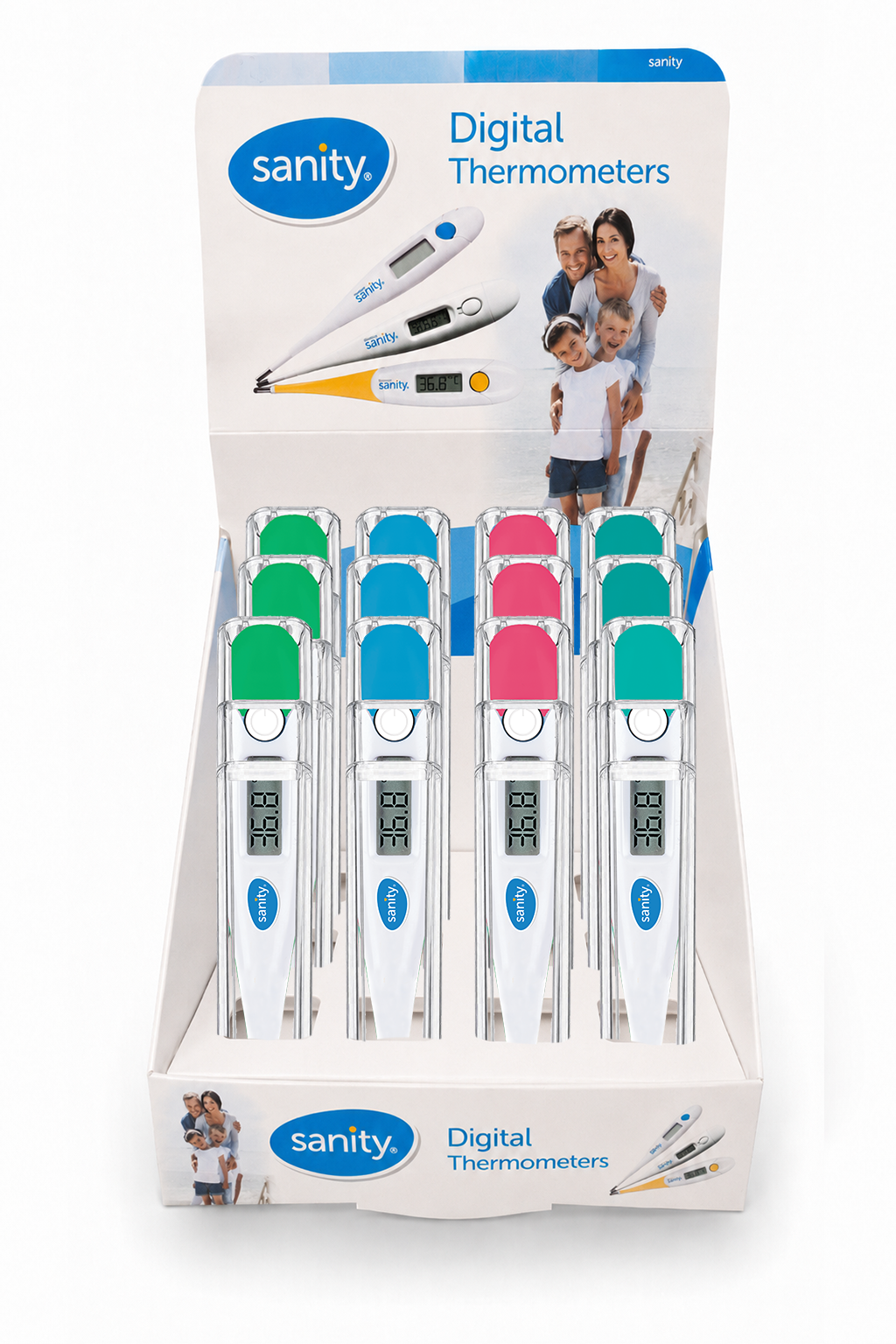
Distributors and healthcare wholesalers often combine both categories in their product range: electronic thermometers for rapid screening and household convenience, and mercury-free glass thermometers as a low-maintenance, conventional alternative. In retail pharmacy settings, the packaging and display format may also influence purchasing decisions, with individual packaging and clear labeling helping consumers identify a clinical thermometer quickly.
Market Trend Analysis
The thermometer market is expanding steadily. According to Grand View Research, the global thermometer market is projected to grow from USD 2.2 billion in 2026 to USD 3.0 billion by 2030, at a compound annual growth rate of 8.2% from 2024 to 2030. Within this market, mercury-free thermometers held the largest revenue share of 69.1% in 2023, reflecting the continued move away from mercury-containing devices.
Trade data supports a similar picture. Global trade of thermometers under HS code 902519 reached USD 4.93 billion in 2024, up 4.28% from 2023, according to OEC. This growth creates room for manufacturers able to combine product quality with documented regulatory compliance.
In the European Union, clinical thermometers are subject to MDR classification rules, and international performance requirements are defined by ISO 80601-2-56:2017. As more buying organizations include compliance verification in their supplier selection, manufacturers with CE certification, ISO 13485, and participation in standard development are likely to face fewer trade barriers and build more stable distribution relationships.
Comparison with Traditional Solutions
Compared with traditional mercury thermometers, the main advantage of mercury-free glass thermometers is the elimination of mercury hazards while preserving the familiar maximum-reading design. They also offer similar accuracy of ±0.1°C. However, they still require manual readout and a sufficiently long placement time in the measurement site. This can make them less efficient in high-throughput screening or pediatric settings where speed is important.
Electronic thermometers solve the speed problem with a 45-second response time and include useful features such as fever alarms and auto power-off. They are better suited for quick measurements in hospitals, clinics, and households. On the other hand, they depend on battery availability and are designed for a specific operating temperature range of 10°C to 40°C. In addition, some buyers may prefer a battery-free instrument for low-maintenance applications.
The practical implication for procurement is that no single thermometer type is ideal for every situation. The choice should be driven by the clinical workflow, the user environment, and the regulatory requirements of the target market.
Future Outlook
Regulatory pressure and changing consumer expectations are likely to keep driving demand for mercury-free and digital thermometers. In high-volume clinical settings, electronic and infrared devices may take a larger share; in homecare and low-cost segments, mercury-free glass thermometers will remain relevant as a simple, sustainable option.
Advanced materials and better product design may further improve measurement speed and durability. However, clinical accuracy and regulatory compliance will remain the core purchasing criteria for professional buyers. Manufacturers with in-house R&D, documented quality systems, and experience in export markets are better positioned to meet the evolving needs of distributors, hospitals, and healthcare wholesalers.
FAQ
Should I buy a mercury-free glass thermometer or a traditional mercury thermometer?
In most countries, traditional mercury thermometers face increasing restrictions because of the health and environmental risks associated with mercury. A mercury-free liquid-in-glass thermometer is a practical alternative: it uses a non-toxic gallium-indium-tin alloy, provides the same ±0.1°C accuracy, and avoids mercury leakage hazards. From a procurement perspective, it also simplifies compliance with regulations that restrict mercury-containing products.
For importing, is a certified digital thermometer better than a cheap uncertified one?
Certified digital thermometers are designed to meet medical-device regulations such as the EU MDR, including accuracy, safety, and documentation requirements. Uncertified low-cost products may appear economical but can be detained, returned, or fined at customs when they fail compliance checks. For importers targeting regulated medical-device markets, choosing a certified product reduces import risk and helps maintain supply-chain stability.
Reference Materials
For additional product and company information, the 2025 catalogue from Ningbo Hi-life Medical Technology Co., Ltd. is available here: 2025 Product Catalogue.