
Club, Home or Export: Which Chinese 8-Ball Table Fits?
Club, Home or Export: Which Chinese 8-Ball Table Fits?
A Chinese 8-ball table is not a single product decision. A 9 ft table with tight pockets and steel-backed cushions can be a sound club asset, an oversized purchase for a home game room, or an export order whose risk sits in the crate, the documents and the spare-parts plan. For buyers evaluating the SKTI-Rose Gold, SKTi-Ming, SKTI-Song and SKTI-Tang, the useful comparison is therefore not a beauty contest between four names. It is a structured check of platform specifications, venue fit and the evidence the supplier can put in writing.
SKTi Billiard Table is the billiard-table brand of Shenzhen Huangjue Sports Goods Co., Ltd., a Shenzhen-based manufacturer established in 2015 with a 23,000 m² production facility. The company website is www.sktibilliard.com. This buyer-side comparison uses supplied SKTi product material and the supplied third-party evidence pack; it is not an independent laboratory test of the four models.
What the buyer is actually comparing
A Chinese 8-ball table is defined in the supplied material as a billiard table with a playing surface of approximately 2.54 m × 1.27 m, or 9 ft, designed for 57.15 mm balls and fitted with tight pockets and steel-backed cushions. It sits between American-style pool and snooker in playing character: smaller pockets demand precision, while the steel cushion system is intended to hold rebound consistency under frequent use. That definition matters because it separates a Chinese 8-ball purchase from a general pool-table purchase.
The venue changes the specification priority. A commercial club described in the supplied scenario operates 10–16 hours per day for more than 350 days a year, with high foot traffic and daily table cleaning. A home game room places more weight on room dimensions, visual fit and low-frequency maintenance. An export buyer adds crate strength, shipping terms, customs classification and sea-damage responsibility to the same table decision.
Those are different buying problems. A table that suits a club may be over-specified for a home; a home table may not carry the rail or warranty package a club needs; and an export order can fail on packaging or documentation even when the table specification is correct. The four SKTi names should therefore be tested against the use case, not ranked by name alone.
The four named models: what the supplied evidence can and cannot tell you
The supplied product list identifies four Chinese 8-ball models: SKTI-Rose Gold, SKTi-Ming, SKTI-Song and SKTI-Tang. It does not provide a separate model-by-model slate, rail, finish or warranty sheet. No responsible buyer comparison can therefore claim that one name is a club-only table, another is a home-only table, or another is an export-only table. The factory may position the models differently in its own catalogue, but that positioning is not established by the supplied evidence.
The practical answer is to use the four names as RFQ starting points. Each model should be quoted against the same written specification, and any claimed difference should be shown on a model-specific configuration sheet. The table below is a working allocation for buyer evaluation, not a statement that the factory has certified each model for that segment.
| Model | Documented status in supplied material | First use case to evaluate | Must confirm before order |
|---|---|---|---|
| SKTI-Rose Gold | Listed as a Chinese 8-ball model; no model-specific slate or finish sheet supplied. | Hotel, bar or lounge project where finish and cleaning routine matter. | Finish specification and durability, slate thickness, rail construction, crate type, warranty terms. |
| SKTi-Ming | Listed as a Chinese 8-ball model; no model-specific performance sheet supplied. | Commercial club or high-traffic venue. | 4.5 cm or 5.0 cm slate, steel-reinforced rail specification, rebound test method, spare-parts list. |
| SKTI-Song | Listed as a Chinese 8-ball model; no model-specific home specification supplied. | Home game room or low-frequency private use. | Room fit, available slate thickness, cloth colour, delivery and installation scope. |
| SKTI-Tang | Listed as a Chinese 8-ball model; no model-specific export package supplied. | Overseas venue or export order. | Crate specification, Incoterms, customs documents, sea-damage responsibility, lead time. |
That allocation is deliberately conditional. If the factory's model sheet shows a different fit, the buyer should rotate the names without changing the evidence standard. The comparison remains valid because every model is judged on the same platform specifications and the same written confirmation.
Slate thickness and flatness: the first hard specification
Slate is the first specification to pin down because it changes how the table plays and how long the surface holds its geometry. The supplied material recommends a 4.5 cm bluestone slate bed for high-traffic commercial use, citing greater resistance to deformation and better flatness than 3.0–4.0 cm options. A 5.0 cm extra-thick slate version is also available. The same material states that a 4.5 cm bluestone slab, combined with a multi-point leveling system, can keep surface flatness deviation within 0.1 mm.
The mechanism is straightforward. A thinner slab is more susceptible to slight deflection from its own weight and the support of the stand, and that deflection can cause a ball to veer off its intended path. A thicker slab has greater flexural rigidity, which helps prevent the playing surface from flexing and supports a straighter ball trajectory. The supplied material also notes that thinner slabs can develop localized depressions after a period of use and may need repair.
Buyers should not treat a model name as proof of slate thickness. The supplied evidence documents a 4.5 cm commercial recommendation and a 5.0 cm extra-thick option, while referring to 3.0–4.0 cm beds as the lower tier. A 4.0 cm build should be confirmed in writing if a buyer wants it; it should not be assumed from a model name or a price band. For tournament reference, the WPA equipment specification cited in the verified data requires a minimum slate thickness of 1 inch, or 2.54 cm, and an overall flatness tolerance. That is a minimum standard, not a substitute for the buyer's own commercial specification.
A useful buyer question is: what is the measured flatness tolerance on the delivered slate set, and how is it checked after installation? The 0.1 mm figure is only meaningful if the supplier states the measurement method, the leveling system and the acceptance check. The buyer should also ask whether the three slate slabs are matched and whether seam alignment is included in installation.
Steel-reinforced rails and rebound consistency
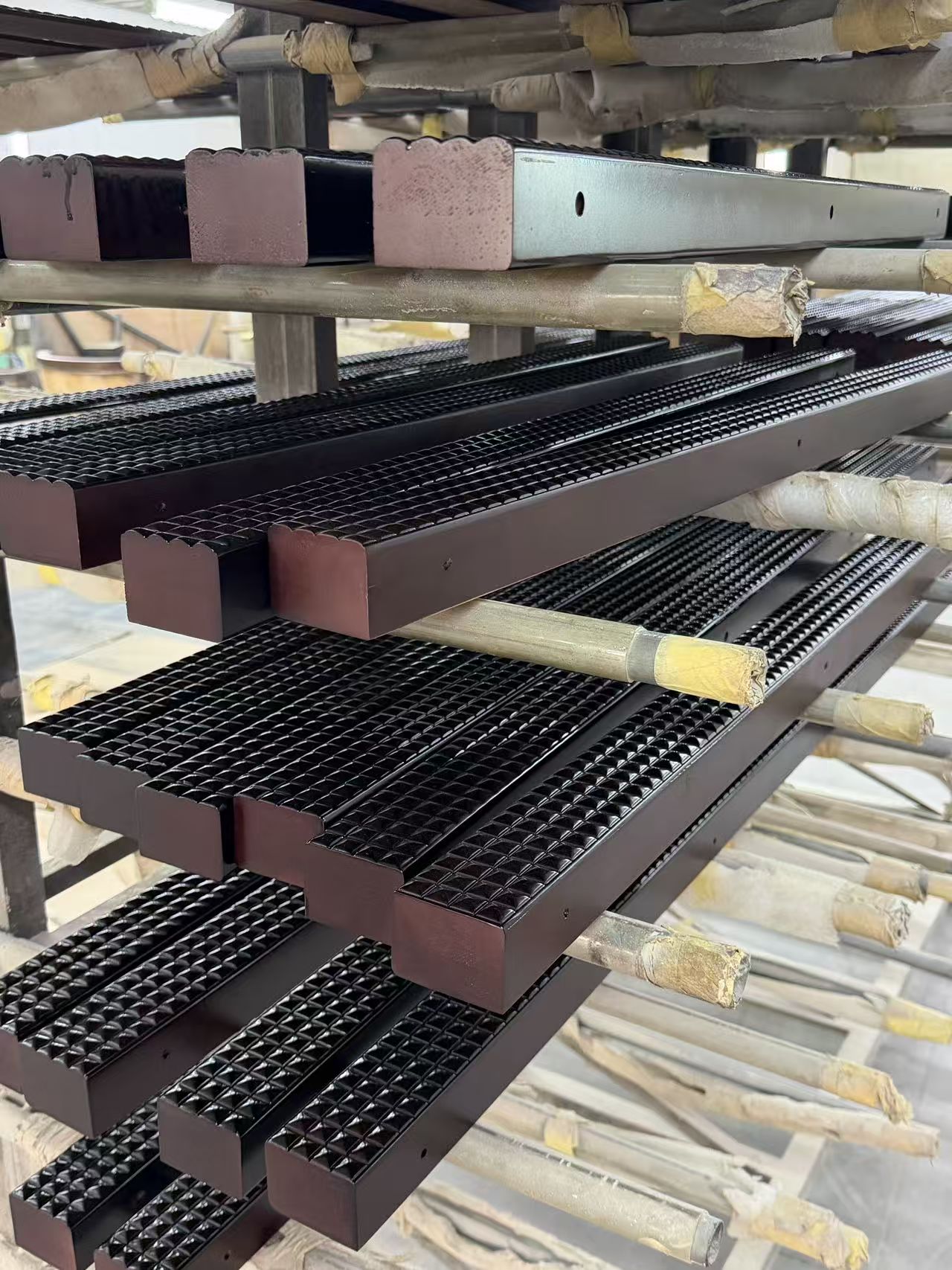
The rail system is the second hard specification. In the supplied material, a steel cushion uses a rail framework made of automotive-grade spring steel, which is intended to provide consistent rebound and resist warping from moisture. A wooden cushion framework is described as more affordable but more prone to moisture-related movement and localized dead spots. For a commercial club, that distinction affects both playing consistency and long-term maintenance.
The supplied comparison data states that the SKTi Chinese 8-Ball table has a rebound consistency deviation of ≤5%, compared with ±10%–15% for standard tables at the same price point. It also states a 3-year failure rate of less than 2%, compared with 5%–8% for standard tables, and an expected service life of 8–10 years versus 5–6 years for standard units. These are supplier-provided comparison figures, not independent test results. They are useful as questions to verify, not as a substitute for a buyer's own acceptance test.
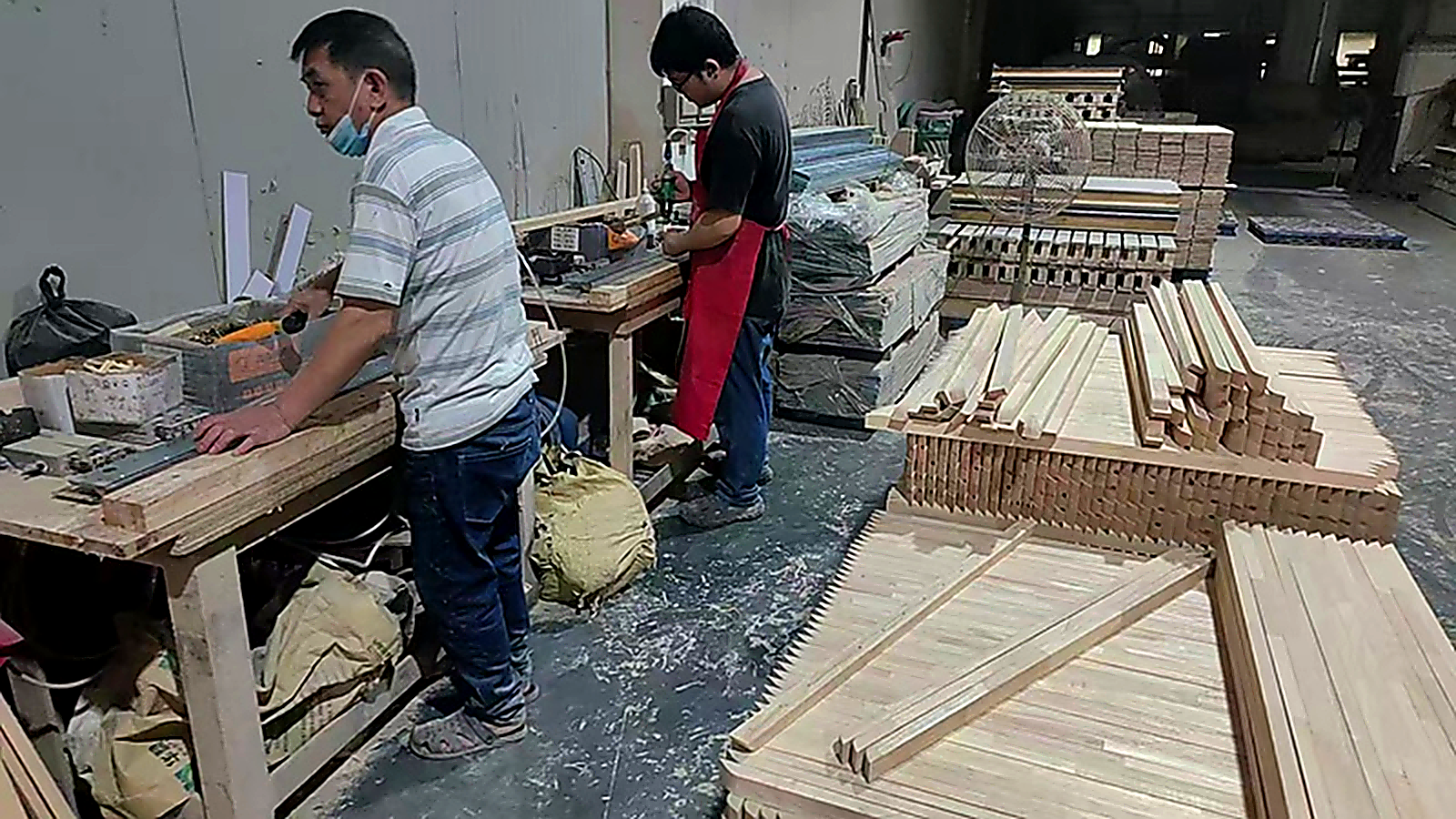
Buyers should ask how the ≤5% rebound deviation is measured, whether the figure applies to the quoted model or to a reference model, and whether the supplier will provide a batch test record. They should also ask about the rubber strip replacement interval. The supplied maintenance guidance states that steel-cushion rubber strips generally require replacement every 3–5 years, while damaged rubber or loose retaining strips can cause a weaker rebound near the pocket edge. A spare-parts list and a replacement procedure are more valuable than a single performance claim.
Warranty and service life: read the exclusions
The warranty is a decision variable, not a footnote. The supplied terms state a 3-year warranty on the main frame and a 5-year warranty on the slate bed. The warranty covers defects and excludes damage caused by human error or environmental factors. That exclusion matters for clubs, hotels and overseas venues because humidity, accidental impact, improper cleaning and installation error can all affect a table without being a manufacturing defect.
Buyers should ask who pays freight for a warranty claim, whether replacement parts are shipped from the factory or a regional warehouse, and what response time is promised. The supplied comparison material cites a 48-hour response time; buyers should confirm whether that is a service target or a contractual commitment. For a club with 6–8 tables, a single unresolved rail or slate issue can affect revenue, so the service plan should be part of the purchase comparison.
Service life claims should also be read with the use case in mind. The supplied comparison cites an 8–10 year expected service life for the SKTi Chinese 8-Ball table versus 5–6 years for standard units. That figure is a supplier expectation, not a guarantee. A club that operates 10–16 hours per day should ask for the maintenance schedule, cloth replacement interval and spare-parts availability that support that expectation.
Matching the table to club, hotel/bar, home and export
Commercial club use
For a commercial club, the table is a revenue asset. The supplied configuration guidance recommends an initial setup of 6–8 Chinese 8-ball tables, depending on venue size, and lists slate thickness, cushion and rail structure, cloth grade, failure rate and service life, after-sales support, spare-parts availability, total investment and payback period as evaluation criteria. The recommended commercial specification prioritises a 4.5 cm bluestone slate bed, automotive-grade spring steel cushions and 68566-series professional billiard cloth.
In the working allocation above, SKTi-Ming is the club-first name to quote, but the club specification is what matters. A buyer should require the 4.5 cm or 5.0 cm slate option, the steel-reinforced rail specification and a written spare-parts list for the quoted model. If the budget is limited, the supplied guidance suggests equipping core standard 8-foot tables first while ensuring that lighting and point-of-sale systems are included from the start. That is a sequencing decision, not a reason to accept an unverified rail or slate package.
Hotel, bar and lounge use
Hotel and bar projects sit between club and home use. The table must tolerate commercial use, but it also has to fit the interior and the cleaning routine. The supplied scenario material lists hotel entertainment areas as a suitable application for the Chinese 8-Ball format. In the working allocation, SKTI-Rose Gold is the hotel/bar-first name to evaluate, but the buyer should confirm the finish specification, cleaning method and resistance to accidental spills before selecting it.
The same platform rules apply. A hotel buyer should not accept a table without a stated slate thickness, rail construction and warranty. If the table is placed in a lounge with low ceilings or fixed lighting, the buyer should also check the lighting specification. The cited technical guidance states that lighting over a pool, snooker or billiard table must be at least 520 lux and the fixture must be no lower than 1.016 m above the table bed. That is guidance from a cited technical source, not a universal regulation, but it is a useful installation check.
Home game room use
For a home game room, the first question is space. The supplied buying FAQ states that a standard 8-foot Chinese 8-ball table measures approximately 2.83 m × 1.53 m and recommends a room of 5.8 m × 4.5 m for a single table, allowing 1.5 m clearance on all sides for cueing. If two tables are placed side by side, the gap between them can be reduced to 1.2 m. A 7-foot table or a custom shorter model is suggested where space is limited.
In the working allocation, SKTI-Song is the home-first name to evaluate. The home buyer should confirm the actual playing-surface dimensions, the available slate thickness and the delivery and installation scope. The supplied home guidance also mentions customizable wood finishes and felt colours, which are relevant to interior fit but should not be assumed for every model. A 4.5 cm slate is recommended for high-traffic commercial use; a home buyer should ask whether a 4.0 cm or 4.5 cm bed is available for the chosen model and whether the warranty changes with the specification.
Home buyers should also plan the installation. The supplied installation guide describes six steps: inventory components and level the floor; assemble the frame and rough-level it; lay three slate slabs and align the seams; apply the cloth with even tension; install rails, rubber cushions and pockets; then fine-tune the level and test-play. Two people can complete the installation in approximately 3–4 hours, and illustrated guides and video tutorials are provided. The slate requires at least four people to move, and gloves should be worn.
Export and overseas venue use
Export buyers face the same table decision plus a logistics decision. In the working allocation, SKTI-Tang is the export-first name to evaluate, but the export package should be confirmed for any of the four models. The supplied company data states that SKTi products are exported to the EU, Southeast Asia, the Middle East, Australia/New Zealand, India, the United States and Turkey, with FOB, CIF and DDP shipping terms supported.
The export buyer should confirm the HS classification, the applicable conformity evidence and the crate specification. The verified data identifies HS 950420 as the classification for billiard articles and accessories of all kinds. That classification is broader than billiard tables alone, so it should not be used as a table-only trade statistic. For EU shipments, the supplied material states compliance with REACH Annex XVII on total lead content, with Report No. 3 82600011048 reporting 105 mg/kg for leather components and 63 mg/kg for metal components, both within compliant limits. The buyer should request the current report and confirm that it covers the quoted model and components.
Fit boundaries: Chinese 8-ball versus snooker, Russian pyramid and American pool
The comparison should include a fit boundary because the wrong format can be more expensive than the wrong model. The supplied comparison material states that a 12 ft snooker table uses slower-nap cloth and frames that can last 30–60 minutes, while the SKTi Chinese 8-Ball format uses a 9 ft table and 57.15 mm balls, shortens game duration to 15–25 minutes and reduces space requirements by approximately 29% versus a 12 ft snooker table. The same material cites 40%–80% lower procurement costs and 50%–70% lower fabric replacement costs versus a 12 ft snooker table.
Against a 12 ft Russian Pyramid table, the supplied comparison states that the Chinese 8-Ball format reduces space footprint by approximately 47%, allows nearly twice as many units in the same venue and increases average daily effective usage time per unit by 25%–35%. It also cites 30%–50% lower procurement costs and 40%–60% lower fabric replacement costs. These are supplier-provided comparisons, not independent market studies. They are useful for space and format planning, but a club that wants professional snooker or Russian pyramid should not treat them as a reason to abandon that format.
Against American 9-ball, the supplied comparison states that the SKTi Chinese 8-Ball table uses 85–95 mm pockets and steel-cushion rails, while American 9-ball tables use 110–120 mm pockets and faster cloth. The smaller pocket opening is cited as 20%–30% higher precision, and the slate thickness is 4.5 cm versus 2.5–4.0 cm for alternatives. The same material states that the procurement cost is one-half to one-third of imported American-style tables, with an expected lifespan of 8–10 years versus 6–8 years and approximately 10% more daily usage time. A bar that specialises in nine-ball may still prefer the American format; the comparison is about fit, not universal superiority.
Buyer checklist before signing
The following checklist converts the comparison into a written RFQ. It is not a sales script. It is a list of questions that a club, hotel, home buyer or export buyer should resolve before paying a deposit.
1. Slate and flatness
- State the required slate thickness: 4.5 cm for high-traffic commercial use, 5.0 cm if the extra-thick option is needed, and confirm whether a 4.0 cm build is available for the chosen model.
- Ask for the flatness acceptance method and the stated tolerance. The supplied material cites 0.1 mm with a multi-point leveling system; require the measurement method.
- Confirm that seam alignment and final leveling are included in installation, not left to the buyer.
2. Rails and rebound
- Confirm that the rail framework is steel-reinforced and ask for the steel specification.
- Ask how rebound consistency is measured and whether the ≤5% deviation applies to the quoted model.
- Request a spare-parts list for rubber strips, pocket liners and rail components, and ask for the recommended replacement interval.
3. Packaging and sea damage
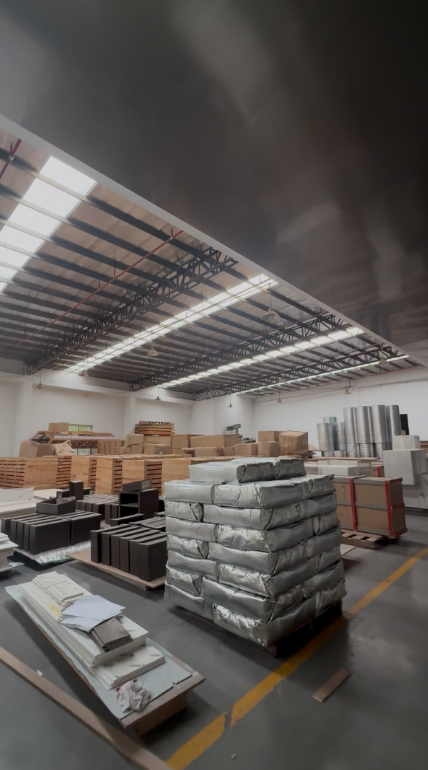
- The supplied scenario material confirms reinforced wooden crate packaging suitable for ocean transport. Ask whether the crate is modular and glue-free, how the panels are fixed and how the slate is protected.
- Ask for the crate dimensions, loading photos, moisture barrier specification and corner protection.
- Confirm who inspects sea damage on arrival, who files the claim, what photographic evidence is required and who pays for replacement freight.
- Ask whether the crate can be opened and reassembled without special tools and whether the installation sequence is included in English.
4. Customization limits
- Ask which dimensions, wood finishes, cloth colours and branding options can be changed, and which structural specifications cannot.
- The supplied material states that custom models have a production lead time of 45–60 days, while standard models run 30–45 days and samples take 10–15 days. Confirm the lead time for the exact configuration.
- Confirm whether customization affects the 3-year frame warranty or the 5-year slate warranty.
- The minimum order quantity is one unit, which supports a trial order; ask whether a single-unit trial can be supplied with the same rail and slate specification as a volume order.
5. Export documentation
- Confirm the HS code, commercial invoice, packing list, bill of lading and certificate of origin requirements for the destination.
- For EU shipments, request the current REACH Annex XVII total lead content report and confirm that it covers the quoted model. The supplied report number is 3 82600011048.
- Confirm the Incoterm. FOB, CIF and DDP are supported according to the supplied material; the buyer should understand which party bears insurance, unloading and import clearance.
- Ask whether the supplier has experience with the destination market and whether installation instructions and spare-parts labels are in the required language.
6. Cheap-table tradeoffs
A lower price is not automatically a worse buy, but it is usually a different specification. The supplied same-price comparison states that standard Chinese 8-ball tables at the same price point typically use a 3.0–4.0 cm stone bed and wooden or thin steel cushions, while the SKTi configuration uses a 4.5 cm bluestone bed and automotive-grade spring steel cushions. The same comparison cites 15%–50% greater slab thickness, ≤5% rebound consistency deviation versus ±10%–15%, and a 3-year failure rate below 2% versus 5%–8% for standard tables.
Buyers should ask which of those differences are actually present in the quoted cheap table. A thinner slate, a wooden rail framework or a shorter warranty may be acceptable for a low-frequency home table, but it is a different risk profile for a club or an export venue. The right question is not whether the cheaper table is cheaper. It is which specification was removed to make it cheaper, and whether that removal is acceptable for the intended use.
Market context: what the verified data does and does not support
The verified data pack provides useful context but not a complete market forecast. It cites commercial research valuing the global pool-table market at USD 250.0 million in 2025, with a pool-table-only scope. That figure should not be combined with broader billiards-equipment estimates that include snooker, accessories or other cue sports. The same data pack cites a commercial estimate that the Asia-Pacific region accounts for approximately 60% of global billiard-table production volume. That is a production-share estimate from a commercial source, not a verified factory audit.
The standards evidence is stronger. The WPA specification cited in the verified data requires a minimum slate thickness of 1 inch, or 2.54 cm, for tournament tables, along with flatness requirements. The cited technical guide also gives a 9 ft pool table playing surface of 2.54 m × 1.27 m and a snooker playing area of 3.57 m × 1.778 m with a tolerance of plus or minus 13 mm. These are useful reference points for specification matching. They do not establish that every Chinese 8-ball table meets a tournament standard, and they do not replace a model-specific test report.
For procurement, the practical implication is that buyers should separate three layers of evidence: the governing-body minimum, the supplier's model-specific specification and the buyer's own acceptance check. The first layer is public reference. The second layer is a contractual document. The third layer is the installation and test-play record. A comparison that stops at the first layer is incomplete.
Future outlook: what a buyer should watch
The outlook for Chinese 8-ball table buyers is less about a single market-growth number and more about documentation discipline. As clubs, hotels and overseas venues compare table formats, the suppliers that can clearly state slate thickness, rail construction, flatness tolerance, packaging method and warranty exclusions will be easier to qualify. The suppliers that rely on model names without a configuration sheet will create more pre-shipment risk.
For the four SKTi models, the sensible next step is to request a model-specific configuration sheet for SKTI-Rose Gold, SKTi-Ming, SKTI-Song and SKTI-Tang, then compare them on the same slate, rail, warranty and packaging template. If a model cannot be documented to the same standard, it should not be treated as equivalent merely because it shares the same brand or the same nominal format.
The SKTi catalogue is available for download at the SKTi catalogue PDF. Buyers should use the catalogue as a starting point and require written confirmation of the exact configuration before placing an order.
FAQ
What is the difference between the SKTI-Rose Gold, SKTi-Ming, SKTI-Song and SKTI-Tang models?
All four are listed in the supplied material as Chinese 8-ball models. The supplied evidence does not provide a model-specific slate, rail, finish or warranty sheet, so it does not establish that one model is a club-only, home-only or export-only table. The defensible comparison is to require a model-specific configuration sheet for each name and compare them on the same platform specifications: slate thickness, flatness tolerance, rail construction, rebound consistency, warranty and packaging.
Which model should a commercial club evaluate first?
No model is documented in the supplied evidence as club-exclusive. In the working allocation used in this article, SKTi-Ming is the club-first name to quote, but the club decision is a configuration decision. A club should require a 4.5 cm or 5.0 cm slate option, a steel-reinforced rail specification, a written spare-parts list and the 3-year frame and 5-year slate warranty terms. The supplied guidance recommends an initial setup of 6–8 tables, depending on venue size, and lists slate thickness, rail structure, cloth grade, failure rate, after-sales support and payback period as evaluation criteria.
What should a home buyer check before ordering?
A home buyer should check room dimensions, playing-surface size, slate thickness, cloth colour and delivery and installation scope. The supplied buying FAQ states that a standard 8-foot Chinese 8-ball table measures approximately 2.83 m × 1.53 m and recommends a room of 5.8 m × 4.5 m for one table with 1.5 m clearance for cueing. A 7-foot table or a custom shorter model is suggested where space is limited. In the working allocation, SKTI-Song is the home-first name to evaluate, but the buyer should confirm the exact model specification in writing.
What export documents and risks should an overseas buyer confirm?
An overseas buyer should confirm the HS classification, commercial invoice, packing list, bill of lading and any certificate of origin required by the destination. HS 950420 covers billiard articles and accessories of all kinds, so it should not be treated as a table-only statistic. For EU shipments, the supplied material cites REACH Annex XVII total lead content compliance under Report No. 3 82600011048. The buyer should also confirm the Incoterm among FOB, CIF and DDP, the crate specification, the sea-damage inspection and claim procedure, and the lead time for the exact model.
What does the warranty cover?
The supplied warranty terms state a 3-year warranty on the main frame and a 5-year warranty on the slate bed. The warranty covers defects and excludes damage caused by human error or environmental factors. Buyers should confirm who pays freight for a claim, whether replacement parts are available locally, and what response time is promised. The warranty should be read together with the installation and maintenance requirements, because improper leveling, moisture exposure or accidental impact can affect a table without being a manufacturing defect.
Have Questions or Need More Details?
Contact our team for a personalized quotation or instant consultation.
Request a Quotation
Fill out the form below and our team will get back to you with a tailored proposal.
WhatsApp Direct Chat
Prefer to chat in real-time? Message us on WhatsApp for instant assistance & quick answers.
- Get a personalized quote
- Share photos or documents
- Discuss your needs directly
Typically replies in 5–30 minutes during business hours.