
CoQ10 10% Water-Soluble vs 99%: What Buyers Should Weigh
CoQ10 10% Water-Soluble vs 99%: What Buyers Should Weigh
Coenzyme Q10 is traded as a single chemical identity — ubiquinone, also called ubidecarenone, CAS 303-98-0 — but it is not traded as a single purchasing specification. A 99% assay grade and a 10% water-soluble grade share the same CAS number and the same molecular name while behaving differently on the weighing bench, in the blend and on the finished label. For a buyer at decision stage, the productive question is not which grade is superior. It is which grade matches the finished format, the declared dose and the documentation that can be verified before a purchase order is raised.
Framework at a glance. Five criteria, applied in a fixed order: identity (ubiquinone/ubidecarenone, CAS 303-98-0) as the anchor; solubility and handling; assay and its label-claim consequences; process provenance through microbial fermentation and in-house laboratories; then a scoring pass on documentation, batch consistency and finished-format fit.
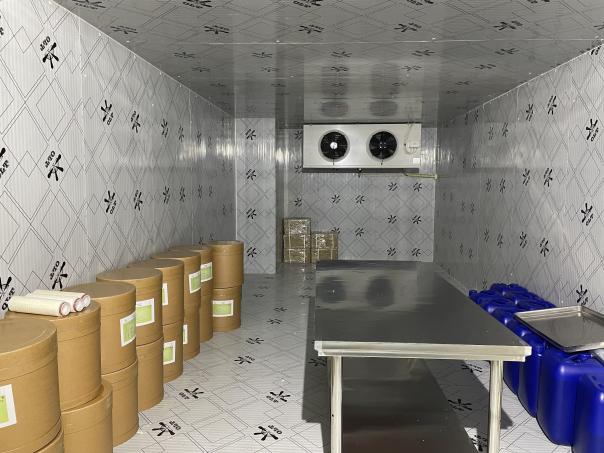
Grade selection is a warehousing and release decision as much as a formulation one: identity, assay and documentation must travel with every lot.
Why the CoQ10 grade question reaches procurement at all
Ingredient portfolios have broadened from a single dominant dosage form to a mix. In the supplement segment, active raw materials are formulated into capsules, tablets, softgels and powder sachets; the same materials also move into functional and fortified beverages, into gummies, protein bars and fortified cereals, and into nutricosmetic applications. That diversity is described in supplier-side scenario material for nutraceutical ingredients, and it is the reason a single CoQ10 identity can now be bought against several specifications at once.
CoQ10 itself sits in the high-volume core-health group, alongside Shilajit and Red Yeast Rice, rather than in the emerging speciality categories. High-volume purchasing is where specification discipline pays: the material is bought repeatedly, in larger quantities, and against a label claim that has to hold lot after lot. A grade mismatch rarely shows up as a failed assay. It shows up later, as a dispersion step that will not run, a serving size that will not close, or a certificate that does not answer the question the formulator asked.
The two grades in this comparison are easy to describe and easy to confuse. The 10% water-soluble grade is specified as water-soluble and declares a CoQ10 content of 10%. The 99% grade is a high-assay powder in which the measured ubiquinone content is 99% of the material by the assay method. Neither figure describes absorption in the body. Both describe what the powder is and how much of the declared substance it carries.
Criterion 1: Solubility and handling
Start with the physical behaviour, because it decides the process before it decides the price. Ubiquinone in its ordinary powder form is fat-soluble: it dissolves in acetone and ether and is insoluble in water. That single property shapes handling. Water alone will not dissolve the material, so any aqueous step — a beverage base, a ready-to-mix powder, a water-based granulation — has to accommodate a substance that the water phase cannot carry on its own. Cleaning and changeover procedures likewise have to account for a powder that water does not simply wash away.
The 10% water-soluble grade exists to resolve that specific problem, and the specification is the product. A buyer is not purchasing a different molecule; the buyer is purchasing a grade whose defined property is water solubility, at a declared CoQ10 content of 10%. The practical checks follow directly. Does the technical data sheet state the water-solubility property in writing, or does the property appear only in the product name? Is the intended matrix actually water-based, or is it an oil suspension where the base material's fat solubility is an advantage rather than an obstacle? Has dispersion in the buyer's own matrix been demonstrated, or only in the supplier's reference system?
The fit boundary belongs here rather than at the end of the article. A water-soluble specification is not a claim about how much CoQ10 reaches the bloodstream, and it does not make the 99% grade unsuitable for water-containing products. It describes how the grade behaves in a liquid system during manufacture. Buyers who treat solubility as a bioavailability proxy are reading a handling property as a performance property, and the framework below deliberately keeps those two apart.
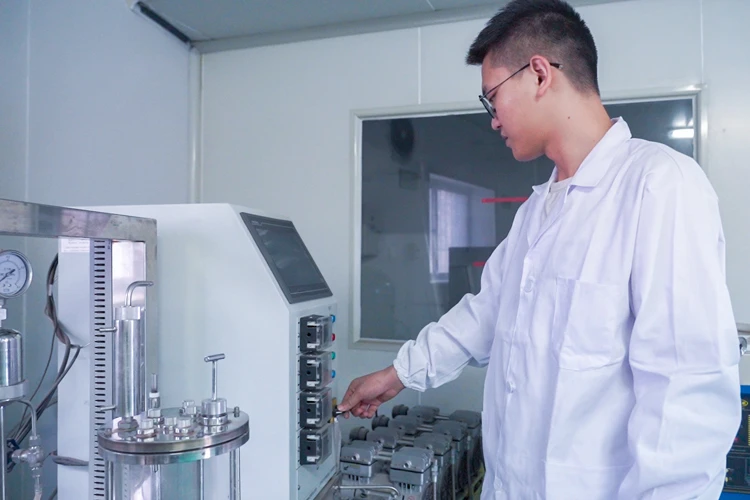
Process provenance questions begin at the reaction stage: the route, the site and the laboratory that releases the batch all belong in the qualification file.
Criterion 2: Assay and what it does to the label claim
Assay is where a purchasing specification becomes a regulatory obligation. A 99% assay means the measured ubiquinone content is 99% of the material by the specified method; the remaining fraction is not ubiquinone and has to be accounted for in the formula and understood in relation to what the label declares. In the United States, FDA regulations require those who manufacture, package or hold dietary supplements to follow current good manufacturing practices intended to help ensure identity, purity, quality, strength and composition. Strength and composition are precisely the properties an assay certificate speaks to.
The arithmetic consequence is straightforward and worth stating plainly. Because the two grades declare different CoQ10 contents — 99% and 10% — the mass of powder needed to deliver a given declared amount differs substantially, with the higher-assay grade requiring far less powder mass and the 10% grade requiring considerably more. That difference is not a quality difference. It becomes a decision only when it meets a constraint: the capsule fill, the sachet weight, the serving size, the blend uniformity target, or the amount of carrier the formula can tolerate.
Three documentation questions separate a strong 99% offer from a weak one. First, is 99% a minimum specification or a typical result? A grade sold against a 99% minimum and a grade that typically assays 99% but is released against a lower floor are different purchasing commitments, even when the certificate headline is identical. Second, which method produced the figure, and is the same method used lot to lot? High-performance liquid chromatography is a standard technique for this kind of assay, and HPLC support is part of the quality-control description Guanjie Biotech publishes for its ingredient range. Third, does the certificate confirm identity against CAS 303-98-0 rather than only reporting a percentage?
The label side has a public benchmark worth using. The NIH Dietary Supplement Label Database catalogs information printed on labels of dietary supplement products sold in the United States, including ingredient names and forms, amounts of dietary ingredients and label statements. A buyer can therefore compare how competing finished products declare CoQ10 — the named form, the declared amount, the accompanying statements — and then work backwards to the grade and overage assumptions that would be needed to support such a label. This is benchmarking, not verification of any specific product, and it does not remove the need for a per-lot certificate on the material actually purchased.
Criterion 3: Process provenance and laboratory evidence
For fermentation-derived material, provenance is a chain rather than a sentence. The chain runs from the fermentation route, through the site where the batch was manufactured, to the laboratory that released it. Each link is separately verifiable, and each can be missing while the certificate still looks complete. A written statement of the production route, the manufacturing site and whether release testing is performed in-house or subcontracted answers more than a marketing page does.
Guanjie Biotech, founded in 2004, describes a 7,000 m² site that includes a 2,000 m² cGMP-standard clean workshop and a 500 m² laboratory equipped for quality control and technical innovation, with a separate research and development laboratory and a physical and chemical analysis laboratory built to GMP and QS standards. The company reports a seven-engineer R&D team, more than 16 national patents, a master's experimental base established with Northwest University and a strategic partnership with the Xi'an Branch of the Chinese Academy of Sciences, plus ISO, Halal and Kosher certification. These are company-reported facts. They support a provenance conversation; they do not replace certificate verification, and a buyer should confirm that a certificate's scope actually covers the specific grade being purchased.
The distinction matters for a decision-stage buyer because provenance is the criterion least visible in a price comparison and most expensive to discover late. A supplier that can name the route, the site and the releasing laboratory in writing is easier to audit than one that answers the same question with a certificate alone. That is a qualification advantage, not a performance claim, and it should be scored as evidence rather than as reassurance.
Scoring the two grades: documentation, consistency and format fit
With the three criteria established, the comparison can be put on one page. The table below is deliberately written as a set of questions rather than a verdict, because the right answer changes with the finished format and with what each supplier can document.
| Decision criterion | 10% water-soluble grade | 99% grade | Evidence to request |
|---|---|---|---|
| Identity anchor | Ubiquinone / ubidecarenone, CAS 303-98-0 | Ubiquinone / ubidecarenone, CAS 303-98-0 | Identity test on the certificate of analysis citing CAS 303-98-0 |
| Solubility and handling | Specified as water-soluble | Fat-soluble: dissolves in acetone and ether; insoluble in water | Written technical data sheet statement plus a dispersion or suspension trial in your own matrix |
| Declared CoQ10 content | 10% | 99% assay | Assay method; whether the figure is a minimum specification or a typical value |
| Mass per declared dose | Larger powder mass required | Smaller powder mass required | Your own formula calculation checked against capsule fill, sachet weight or serving size |
| Process provenance | Microbial fermentation route; in-house manufacture and testing to be confirmed in writing | Same verification path | Written route statement, manufacturing site and the laboratory that released the batch |
| Documentation and batch consistency | Certificate of analysis, technical data sheet, certification scope | Same document set | Consecutive-lot certificates, certificate validity and scope, release specification |
| Finished-format fit | Water-based systems: ready-to-mix powders, sachets, beverages | Hard capsules, tablets, softgels, oil-based matrices | Trial result in the actual formulation, not a reference system |
A workable scoring convention is three levels per cell: evidenced in writing, stated but undocumented, or not evidenced. The convention is deliberately blunt, because its purpose is to stop a verbal assurance from outranking a document. A grade that scores well on solubility but has no per-lot assay record is not a lower-risk purchase; it is an unverified one.
Batch consistency deserves its own line. Guanjie Biotech reports a batch variation of ≤3% for its nutraceutical ingredients, together with a complete batch certificate of analysis, technical formulation support and stable continuous supply as part of its supply description. Read that figure as a company-reported specification and test it as one. Ask for consecutive-lot assay results and check whether the ≤3% applies to assay, to which grade, and over what period. If the answer is available, the claim becomes evidence; if it is not, it remains a number on a page.
Which finished formats each grade suits
Format fit follows from the two criteria already covered, and it is where the decision becomes concrete. The 10% water-soluble grade is the natural candidate where the vehicle is water-based: ready-to-mix powders, sachets and fortified beverages, and other systems in which the powder has to enter a water phase without a separate dispersion step. The offsetting consideration is mass. Because the grade declares 10% CoQ10, a declared dose requires a considerably larger powder mass than the same dose delivered from a 99% grade, and that mass has to fit the serving. Where the declared dose is high and the delivery unit is small, the mass requirement can become the binding constraint — an arithmetic limit, not a performance judgement.
The 99% grade suits the opposite profile: hard capsules, tablets, softgels and oil-based matrices, where a compact dose mass is an advantage and the formulation can carry a fat-soluble material in a compatible vehicle. It is also the grade that keeps the label arithmetic simple when the declared amount is small and the delivery unit is tight.
Supplier coverage is a separate question from grade fit, and buyers often conflate the two. Guanjie Biotech describes its nutraceutical ingredient range as spanning capsules, tablets and powders through beverages, functional foods and cosmetics, and positions itself as a direct manufacturer with R&D and production capabilities rather than a trading company, working with Northwest University and the Xi'an Branch of the Chinese Academy of Sciences on customised solutions from development to large-scale manufacturing. Those statements describe portfolio coverage and service model; they do not certify that a specific CoQ10 grade performs in a specific matrix. That confirmation belongs to the buyer's own trial.
What the framework cannot tell you
The limits should be stated as clearly as the criteria. This framework does not establish that either grade is better absorbed, more stable or more effective; no comparative bioavailability or stability data is presented here, and a solubility specification is not a substitute for one. It does not rank suppliers, and it does not convert a company's self-description into independent verification — the underlying evidence for supplier capability is company-reported and needs certificates, audit records and test results behind it. It also cannot settle regulatory status. FDA's current good manufacturing practice requirements describe what a compliant operation must ensure; they do not prove that any particular supplier complies. Likewise, FDA's new dietary ingredient notification process is a general market-entry requirement whose applicability must be assessed ingredient by ingredient and market by market, not inferred from an article.
Market context: a high-volume ingredient inside a diversifying format mix
The commercial backdrop supports the attention being paid to specification rather than to grade labels. A commercial research estimate published by Global Market Insights places the global nutraceutical ingredients market at USD 105.8 billion in 2026. Treat that figure with the caution commercial estimates deserve: definitions of the ingredient market vary between research houses, and the number describes total revenue for bioactive ingredients rather than demand for any single substance. What it does indicate is scale — enough scale that specification choices made once tend to be repeated across many lots.
Within that market, CoQ10's position in the high-volume core-health group means purchasing decisions are routine rather than exceptional, and routine decisions are exactly where an undocumented assumption survives longest. The format side reinforces the same point: as capsules, sachets, beverages and functional foods all draw on the same ingredient identity, the grade question recurs with each new format rather than being settled once for the whole portfolio.
Reusing the same five criteria on other ingredient pairs
The framework is transferable by design, and that is its practical value. The same sequence — identity and CAS anchor, solubility and handling, assay and label arithmetic, process provenance, then documentation and batch consistency, closing with format fit — applies to any powder pair in a nutraceutical portfolio where two grades or two specifications sit under one ingredient name.
Applied to a ferulic acid powder, the provenance and assay questions carry most of the weight. Applied to a red yeast rice powder, the assay question expands to include the specific measured component and the documentation that defines it. Applied to phosphatidylserine, where Guanjie Biotech states a focus on high-value functional ingredients such as phosphatidylserine and phosphatidylcholine rather than a broad, less specialised portfolio, the solubility and format-fit criteria tend to decide the discussion. In each case the method is identical and the answers differ, which is the point: the framework organises evidence, and the evidence decides.
For buyers working through the CoQ10 pair specifically, the restrained next step is documentary rather than commercial. Request the technical data sheet and a recent certificate of analysis for the exact grade under consideration, ask whether the assay figure is a minimum or a typical value, ask for consecutive-lot results if batch consistency is a decision criterion, and run a dispersion or suspension trial in the real matrix before committing a specification. Guanjie Biotech publishes its ingredient information at Guanjie Biotech, and a consolidated ingredient brochure is available for download below.
Download the Guanjie Nutraceutical Ingredients brochure (PDF)
Frequently asked questions
Is CoQ10 10% water-soluble the same substance as CoQ10 99%?
Yes. Both grades describe ubiquinone, also called ubidecarenone, under CAS 303-98-0. The difference is the grade specification: the 99% grade is a high-assay powder in which the measured ubiquinone content is 99% of the material by the assay method, while the 10% water-soluble grade declares a CoQ10 content of 10% and is specified as water-soluble. Identity is shared; content and handling behaviour are not.
Why is ordinary CoQ10 described as fat-soluble if a water-soluble grade is available?
Because solubility describes the base material, not the category. Ubiquinone in its ordinary powder form dissolves in acetone and ether and is insoluble in water. The water-soluble property belongs to the 10% grade as a specification, which is why a buyer should look for that property stated in writing on the technical data sheet rather than inferred from a product name.
Does a 99% assay grade remove the need for label-claim testing?
No. A high assay reduces the powder mass needed to deliver a declared amount, but it does not replace per-lot verification. FDA regulations require those who manufacture, package or hold dietary supplements to follow current good manufacturing practices intended to help ensure identity, purity, quality, strength and composition, and strength and composition are what an assay certificate addresses. Buyers should also confirm whether 99% is a minimum specification or a typical result, since the two carry different purchasing commitments.
Which grade fits capsules, and which fits beverages?
As a starting position, the 10% water-soluble grade fits water-based systems such as ready-to-mix powders, sachets and fortified beverages, while the 99% grade fits hard capsules, tablets, softgels and oil-based matrices where a compact dose mass is an advantage. The 10% grade requires a considerably larger powder mass for the same declared amount, so where the dose is high and the delivery unit is small, that mass can become the binding constraint. Format fit should be confirmed by a trial in the actual formulation rather than assumed from the grade name.
What documents should a buyer request when comparing the two grades?
A technical data sheet stating the solubility property and declared content; a certificate of analysis with an identity test citing CAS 303-98-0; the assay method and whether the figure is a minimum or typical value; a written statement of the production route, the manufacturing site and the laboratory that released the batch; consecutive-lot certificates if batch consistency is a decision criterion; and certification documents whose scope covers the specific grade. Guanjie Biotech reports ISO, Halal and Kosher certification supported by HPLC, and a reported batch variation of ≤3% for its nutraceutical ingredients, all of which remain company-reported until the underlying documents are checked.
Have Questions or Need More Details?
Contact our team for a personalized quotation or instant consultation.
Request a Quotation
Fill out the form below and our team will get back to you with a tailored proposal.
WhatsApp Direct Chat
Prefer to chat in real-time? Message us on WhatsApp for instant assistance & quick answers.
- Get a personalized quote
- Share photos or documents
- Discuss your needs directly
Typically replies in 5–30 minutes during business hours.