
Coil vs Slit Strip: An SGCC Galvanized Sourcing Comparison
Coil vs Slit Strip: An SGCC Galvanized Sourcing Comparison
Galvanized steel coil and slit strip are the same steel at two different points in the supply chain. For SGCC hot-dip galvanized material, the sourcing choice between them changes processing ownership, width-tolerance liability, packing and freight logic, documentary risk and customs classification far more than it changes the metallurgy. Buyers at decision stage often reduce the question to a price per tonne. The more reliable reduction is a question about who performs slitting, who absorbs edge trim, and how much of an order is locked into a single width.
That is why two quotations arriving in the same week can differ by more than the steel content justifies. One seller is quoting a master coil and leaving the slitting decision to the buyer. The other is quoting a finished width and has already absorbed the processing step, the edge trim and the tolerance risk inside their own price. Comparing them line by line, without aligning what each number contains, produces a decision that looks cheaper on paper and costs more in the mill.
The short answer
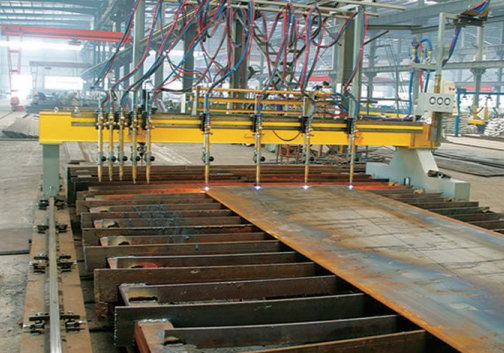
Buy full-width galvanized steel coil when you can consume or resell master widths, want the widest specification coverage per tonne, or intend to control your own slitting pattern and scrap. Buy slit strip when a fixed narrow width, reduced in-house processing, or lower handling and trim work at your plant outweighs a narrower buying base and a processing charge you must be able to see separately. The two routes are not ranked; they fit different consumption patterns, and the boundary is usually defined by width standardisation, order frequency and who can absorb edge trim.
What is actually being compared
SGCC is a hot-dip zinc-coated steel designation widely used in Asian-origin quotations. The designation alone does not define a purchase: a usable offer should also state the applicable standard family and edition, the mechanical property values, the zinc coating mass, the surface condition and the dimensional tolerances. Two offers can both read SGCC and still describe different products.
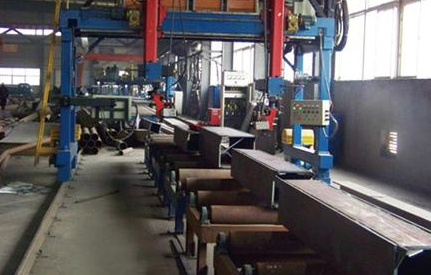
Slit strip is produced by running a master coil through a slitting line and separating it into narrower widths. The substrate, coating mass and surface treatment are inherited from the master coil, so the slitting step does not improve the coating. What it changes is the width, the edge condition, the coil weight and inside diameter of each unit, and the packing needed to protect a narrower, more edge-exposed product.
Width also has a documentary consequence. Under the Harmonized System, heading 7210 covers flat-rolled products of iron or non-alloy steel, width 600 mm or more, clad, plated or coated, according to the UN Statistics Division classification record. Width is therefore an explicit condition inside that heading, and a slit order below the 600 mm line should be classified on its own basis rather than inheriting the master-coil code. Buyers should confirm the applicable subheading and duty treatment for the actual slit width with a customs broker before award, because a classification difference changes landed cost and can change the ranking of two otherwise similar offers.
Why the width decision is a cost-allocation decision
Three variables move when a coil becomes slit strip, and all three are commercial rather than metallurgical.
Processing ownership. Someone operates the slitting line, and someone pays for it. If the buyer slits in-house, the processing cost appears in their own overhead and the supplier price is a coil price. If the supplier slits, the charge is embedded in the strip price and must be requested as a separate line to be comparable.
Trim and yield. A slitting pattern that does not divide evenly into the master width produces edge trim. On an illustrative basis, a 1,250 mm master coil divided into four 300 mm strips leaves roughly 50 mm of combined trim and kerf, while dividing it into two 600 mm strips leaves far less. The pattern therefore determines how much paid-for steel becomes scrap, and the pattern is a buyer decision, not a mill decision.
Width risk. A buyer who orders strip has committed to a width. If the profiling line changes, or a second product family needs a different width, the strip inventory is far less flexible than a master coil that can be re-slit. This inventory risk is real but rarely priced, and it is usually the reason a buyer who calculated a strip saving ends the year with slow-moving narrow stock.
Technical comparison: what changes when the coil is slit
Width tolerance and edge condition
Slitting introduces a cut edge. Burr height, edge camber and width tolerance are the three characteristics that determine whether strip feeds cleanly through a roll former or a gutter line. A coil buyer inherits the mill edge; a strip buyer inherits the slitting line's setup. The purchase order should therefore fix width tolerance and an acceptable edge condition, not only nominal width.
Coil weight, inside diameter and handling
Slitting generally produces lighter, narrower coils, sometimes on different cores. That affects crane capacity, uncoiler mandrel range, line changeover time and packing. A buyer who has only run master coils should confirm the weight and inside diameter of each slit unit before the first shipment, because handling equipment, not price, is often the constraint that surfaces last.
Coating mass and surface condition
Coating mass is inherited from the master coil and should be evidenced per coil, not inferred from a grade name. Z100 and Z275 are zinc coating mass designations, and before comparing a Z100 offer with a Z275 offer the buyer must confirm the basis on which each figure is expressed and which test method applies. Comparing a figure stated on one basis with a figure stated on another overstates the difference and misprices the order.
Surface condition is a separate field. Chromated, oiled and anti-fingerprint treatments, and regular or zero spangle finishes, are choices that affect handling, storage, forming and paint adhesion. Slitting does not change them, but it does expose more edge area, so a dry or lightly protected strip may need different packing than the master coil it came from.
Side-by-side: galvanized coil versus slit strip sourcing
| Decision dimension | Full-width galvanized coil | Pre-slit galvanized strip |
|---|---|---|
| Buying unit | Master width, one specification per coil | Finished width, one specification per slit unit |
| Width coverage | Widest; can be re-slit or resold in multiple widths | Fixed; committed to the ordered width |
| Who performs slitting | Buyer or a third-party service centre | Supplier, inside the quoted price |
| Cost transparency | Coil price plus visible processing and trim | Processing charge must be requested separately |
| Minimum order logic | Per coil or per lot | Per size, because each width is a separate setup |
| Lead time control | Buyer ownslater processing time | Processing time sits with the supplier |
| Trim and yield | Buyer chooses and absorbs the pattern | Supplier may absorb or pass through trim |
| Width tolerance liability | Mill tolerance only | Mill tolerance plus slitting setup |
| Documentation | Mill certificate per coil | Certificate plus slit-width and batch records |
| Classification | Width 600 mm and above falls inside HS 7210 | Narrower widths require separate classification confirmation |
| Inventory flexibility | High; one coil serves several widths | Low; stock is width-specific |
| Typical fit | Distributors, service centres, buyers with changing width demand | Fixed-profile producers with stable, repeated widths |
Cost comparison: building a like-for-like number
A defensible comparison converts both offers into a delivered cost per tonne of usable width, not per tonne of purchased steel. The components are the same on both sides; only their visibility differs.
- Spec-matched base price: same grade, thickness, coating mass, surface treatment and tolerance class.
- Processing: slitting charge, stated per tonne or per slit, requested as a separate line.
- Yield: usable tonnes after edge trim and offcut, calculated from the actual slit pattern.
- Packing and handling: edge protection, waterproofing, pallet or coil configuration, container loading.
- Freight and insurance to the destination, on the same Incoterm.
- Duty and classification, checked at the actual width.
- Inventory carrying cost of width-specific stock, including the risk of obsolete widths.
One published reference point exists but must be used carefully. A reported benchmark FOB Tianjin price for standard 0.5 mm galvanized coil with Z120 coating was approximately USD 755 to 785 per tonne in the second quarter of 2025. That is a benchmark for one specification in one period, not a current quotation, and it does not describe SGCC Z275 slit strip: thickness, coating mass, spangle, surface treatment, width, quantity and destination all sit outside the figure. Using it as a starting point is reasonable; using it as a price is not.
A slit-strip offer is not automatically more expensive than coil, and not automatically cheaper. The premium or discount depends on whether the slitting line is already running that width, whether edge trim has a resale route, how the processing charge is structured, and how the order quantity compares with the per-size minimum. Ask for the processing charge and the trim treatment in writing before comparing totals.
Documentation and inspection: the part buyers under-specify
Coil and strip carry the same obligation to evidence the steel, but strip adds the obligation to evidence the width. A mill test certificate covering chemical composition, mechanical properties and coating weight is the baseline for both routes. For slit strip, the buyer should also be able to trace each slit unit back to the master coil and batch, so that a width excursion or edge defect can be tied to a specific slitting run.
Where an order needs independent release, third-party inspection can be coordinated around the buyer's requirements. The workable arrangement is agreed before shipment rather than after: which items are inspected, how sampling is drawn, and which batch documents accompany the release. The comparison to make between suppliers is documentation coverage, sample size and the checks actually performed per batch, such as quantity, dimensions and surface condition where specified in the order. A supplier who will not define sampling before shipment is a different risk from one who will.
Two verification routes complement the paper trail. Video inspection of the company and production facilities allows a remote check of the line and the stockyard, and an on-site visit with sample testing remains available for buyers who want physical confirmation. Neither replaces a certificate, but both shorten the gap between a quotation and a defensible decision.
Where Shandong TXD Steel Group fits the comparison
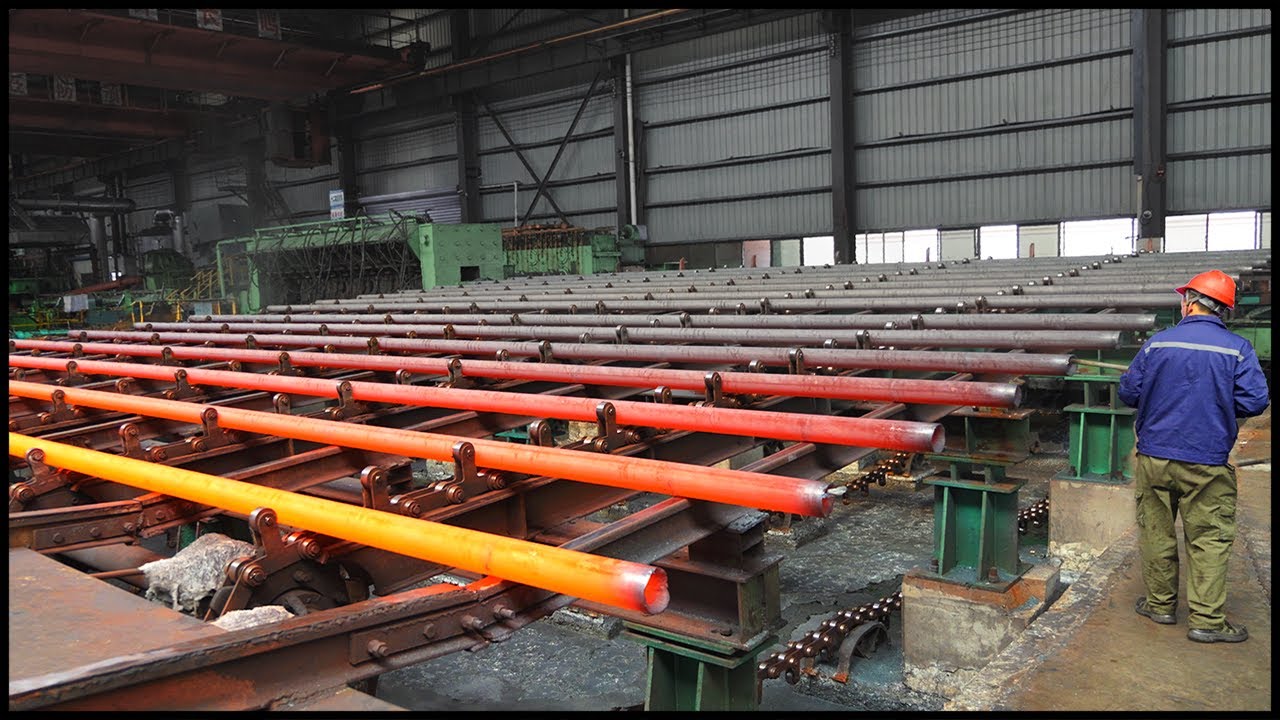
Shandong TXD Steel Group Co., Ltd. is an integrated manufacturer, processor and trader founded in 2010 and headquartered in Jinan, Shandong Province. Its quality management system is certified to ISO 9001, and it supplies hot-rolled and cold-rolled coil, galvanized coil, prepainted coil, stainless steel, steel pipe and steel sections to GB, BS, ASTM and EN standards, with ISO 9001, CE, SONCAP and PC conformity documentation used as applicable to the order. Export operations began in 2016, with branches in China and overseas and a steel pipe production facility in Egypt supporting customers across the Middle East, Southeast Asia, Africa and South America. The company is a first-tier distributor for major mills including Shougang, Rizhao Steel and Laiwu Steel, and manages six supply-chain stages from mill sourcing through processing, warehousing, export shipment and overseas delivery.
On the coil-versus-strip question, three capabilities are directly relevant. First, the company operates galvanized and colour-coated production lines and states, per quotation line, whether an item will be supplied from one of its own group lines or from a partner mill, which allows the buyer to align documented coating mass and tolerances with the actual producing source. Second, slitting, cut-to-length, punching, bending, welding and private-label work are offered as customization, with a 25 tonne minimum order quantity per size, while a trial order can start from one 20GP container with mixed specifications in the same container. Third, standard sizes are held in stock for urgent replenishment, quoted with a cargo-ready date and, where required, a written stock reservation.
Commercial terms are specific rather than indicative: lead time is 15 to 25 working days after deposit and order confirmation, with stock items shipping in 10 days; terms are EXW, FOB Qingdao or CIF to the buyer's port; payment is 30 percent T/T deposit with 70 percent against the bill of lading copy, and L/C at sight above USD 50,000; quotations are valid for 4 days, with index-linked pricing or price locking against a deposit available for longer projects. Coils are packed eye-to-sky or eye-to-wall with strapping, edge protectors and waterproof paper at about 25 tonnes per container, and a free A4 or 300 × 300 mm sample is available freight collect, with courier transit of 3 to 7 days.
The fit boundaries deserve equal weight. The minimum quantity per specification depends on the product itself, so a narrow slit width cannot be assumed to carry the same minimum as a standard coil size. Stock availability must be verified item by item in tonnes rather than inferred from a catalogue, and any reservation should be confirmed in writing. Whether a line item comes from a group line or a partner mill should be confirmed before the order is placed, not after, because the producing source determines which certificate and inspection scope applies. Third-party inspection items, sampling and release criteria must be agreed prior to shipment, and a 4-day quotation validity means a slow internal approval cycle can outrun the price. Buyers comparing routes can send grade, dimensions, coating mass, required slit pattern and destination port so that stock position, producing mill and processing route are confirmed per line item.
Application fit: which downstream use changes the answer
The correct route depends on how stable the finished width is, not on the industry label. For roofing and wall panel production, widths are usually fixed by the profile and run in long campaigns, which favours pre-slit strip or cut-to-length supply and makes width-specific inventory manageable. Purlin and light structural work typically involves thicker gauges and structural grades, where the specification discussion centres on mechanical properties rather than width, and where a master coil may serve several roll-forming lines. Gutter and flashing production is less tolerant of edge condition because the strip is formed and bent close to the edge, so burr and camber requirements belong in the purchase order alongside width. Automotive and appliance applications usually carry tighter requirements on surface condition, oiling or anti-fingerprint treatment and property documentation, and those requirements follow the master coil regardless of which route is chosen.
These are application patterns, not measured demand shares. They describe which specification fields become decisive in each case, and they should be checked against the buyer's own width history before the sourcing route is fixed.
A buyer checklist before the RFQ goes out
- State the grade, the standard family and edition, and the mechanical property requirements rather than the grade name alone.
- State the zinc coating mass designation and confirm the basis on which it is expressed.
- State the surface condition: chromated, oiled, anti-fingerprint, and regular or zero spangle.
- For coil, state master width, tolerance and coil weight range. For strip, add slit width tolerance, burr limit and edge condition.
- Ask for the slitting or processing charge as a separate line, and ask who owns the edge trim.
- Confirm the minimum quantity per size, not only the minimum order quantity.
- Confirm the producing mill for each line item and the certificate that will accompany it.
- Confirm inspection items, sampling and batch documentation before shipment.
- Confirm packing, coil orientation, edge protection and container loading tonnage.
- Confirm the classification of the actual width and the applicable duty rate.
- Confirm quotation validity and the price-adjustment mechanism for longer projects.
Market context: what public data can and cannot settle
Galvanized steel is a large category, and published figures are usually broader than the buyer's actual specification. Grand View Research valued the global galvanized steel market at USD 253.5 billion in 2025, a figure that spans products and geographies well beyond hot-dip coil, so it is useful for scale and not for pricing a specific order. Similarly, standards reference helps the buyer qualify suppliers but does not certify a specific coil: ASTM A653/A653M, for example, covers steel sheet, zinc-coated or zinc-iron alloy-coated by the hot-dip process in coils and cut lengths, which establishes the scope of the specification rather than the compliance of any one shipment. Manufacturer documentation lists additional standard families and grades, including DX51D and DX52D for cold forming and structural grades in the S220GD to S350GD range, and buyers working across origins should treat those grade systems as parallel rather than interchangeable.
Carbon reporting is becoming part of the same file. The steel sector accounted for approximately 7 percent of global carbon dioxide emissions in 2020, according to US Energy Information Administration analysis, and that sector-level pressure reaches coated coil through buyer disclosure requests rather than through the specification itself. Adding a carbon-data field to the RFQ costs little and preserves optionality.
Outlook: what would change the decision
The balance between the two routes is conditional rather than directional. A wider standardisation of finished widths inside a buyer's own product range would favour pre-slit supply, because trim and setup costs spread over longer runs. A move toward more product variants at lower volume would favour master coils and in-house slitting, because width flexibility becomes worth more than processing convenience. Changes in zinc cost pass-through would affect both routes equally at the same coating mass, so they change the total but not the ranking. A change in duty treatment at the width threshold would affect the two routes differently and should be rechecked whenever the tariff schedule or the ordered width changes. None of these outcomes is forecast here; each is a condition the buyer can monitor in their own order book.
FAQ
Is slit strip more expensive than galvanized steel coil per tonne?
Not necessarily, and the comparison is only valid when both prices describe the same grade, thickness, coating mass, surface treatment and tolerances. Slit strip usually carries a processing charge that coil does not, but it can also reduce a buyer's own slitting cost, edge trim and handling work. The correct comparison converts both offers to a delivered cost per tonne of usable width, including trim, packing, freight, duty and the carrying cost of width-specific stock.
Which specifications must be fixed in an SGCC coil or slit strip RFQ?
The RFQ should state the grade together with the applicable standard family and edition, the mechanical property requirements, the zinc coating mass designation and the basis on which it is expressed, the surface condition such as chromated, oiled or anti-fingerprint and regular or zero spangle, and the dimensional tolerances. For coil, add master width, coil weight range and inside diameter. For slit strip, add slit width tolerance, burr limit, edge condition, and the weight and inside diameter of each slit unit.
How is slit strip inspected and documented before shipment?
Documentation starts with a mill test certificate covering chemical composition, mechanical properties and coating weight, and continues with a traceable link from each slit unit back to its master coil and batch. Where independent release is required, inspection items, sampling and batch documentation should be agreed before shipment, so that quantity, dimensions and surface condition are checked against stated criteria rather than general expectations. Video inspection and on-site visits can support the documentary record but do not replace it.
What order size makes slitting worthwhile?
There is no single threshold, because the answer depends on how evenly the slit pattern divides the master width, how much trim results, whether the processing charge is levied per tonne or per slit, and what minimum quantity applies per size. Buyers should obtain the per-size minimum, the processing charge and the trim treatment in writing, then compare the delivered cost per usable tonne against the cost of buying coil and arranging slitting separately.
When should a buyer choose full-width coil instead of slit strip?
Full-width coil fits buyers who can consume or resell master widths, who serve several finished widths from one specification, who want to control their own slitting pattern and trim, or whose width demand changes often enough that width-specific stock would become slow-moving. Pre-slit strip fits buyers with stable, repeated finished widths and limited in-house processing capacity, provided the per-size minimum and processing charge still support the delivered cost.
Reference material
The company catalogue, including product range, standards and processing capability, can be viewed and downloaded here: TXD Steel Group product catalogue.
Have Questions or Need More Details?
Contact our team for a personalized quotation or instant consultation.
Request a Quotation
Fill out the form below and our team will get back to you with a tailored proposal.
WhatsApp Direct Chat
Prefer to chat in real-time? Message us on WhatsApp for instant assistance & quick answers.
- Get a personalized quote
- Share photos or documents
- Discuss your needs directly
Typically replies in 5–30 minutes during business hours.