
Cold Chain Fit: Choosing Cold Room Refrigeration Systems for Meat, Seafood & Produce
Cold Chain Fit: Choosing Cold Room Refrigeration Systems for Meat, Seafood & Produce
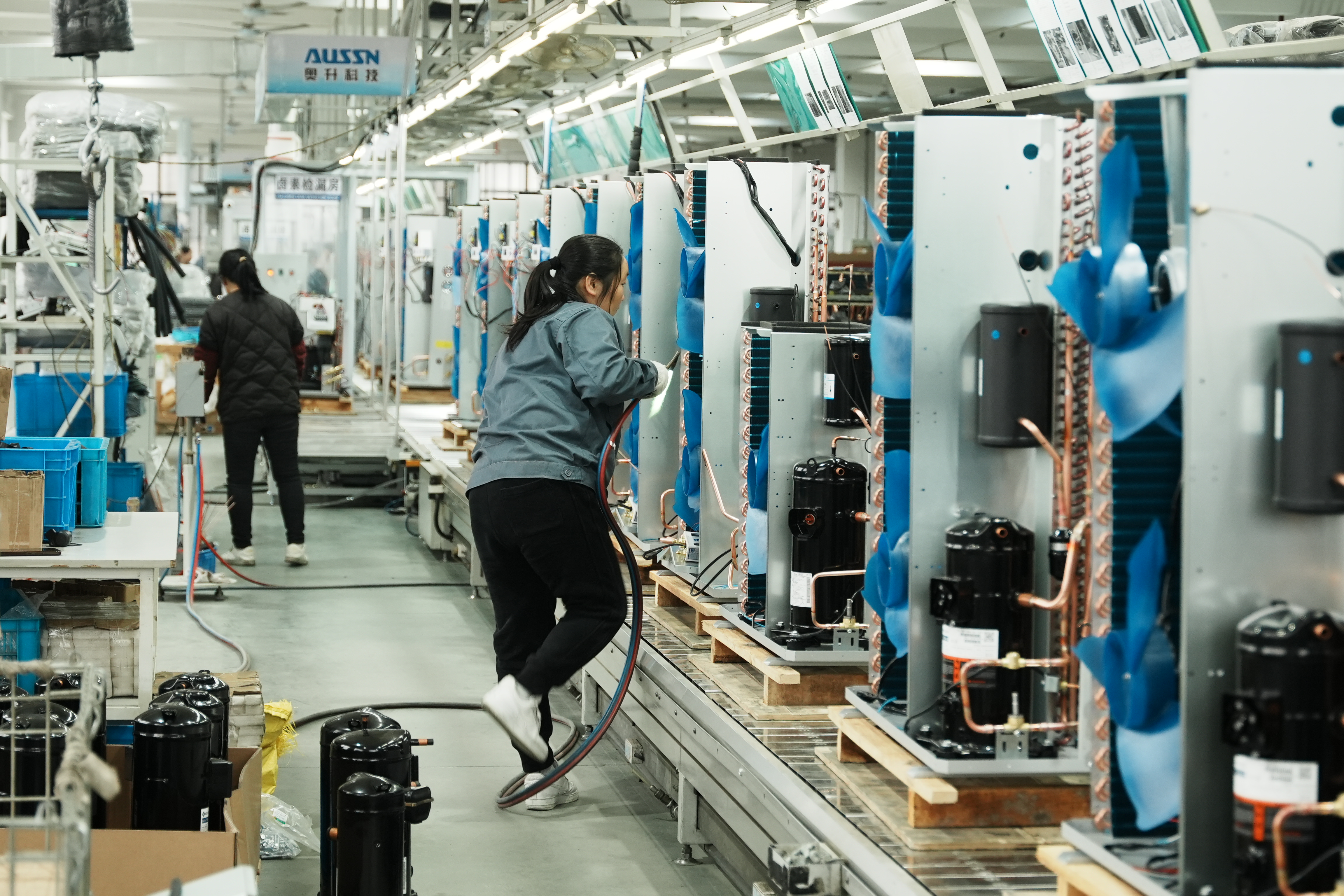
Cold chain fit is a preservation question before it is an equipment question. Meat storage, seafood processing and fruit and vegetable warehousing each place different demands on a cold room: the acceptable temperature band, the tolerance for fluctuation, the humidity level, the frequency of door openings and the hygiene regime all differ by commodity. A refrigeration system that performs well in one of these rooms can underperform in another if it was specified only by room volume or by a single headline cooling capacity figure.
The workable method is to start from the commodity and move backwards. Define the preservation requirement, translate it into a storage zone and a load profile, and then select the components — the cold room air cooler, the refrigeration condensing unit and the control logic — that can hold that zone reliably in daily operation.
Clevier Refrigeration (Jiangsu) Co., Ltd. is a refrigeration equipment manufacturer based in Wujin District, Changzhou City, Jiangsu Province, China, producing cold room refrigeration systems, condensing units, cold room air coolers, evaporators, air cooled condensers and polyurethane insulated panels. Its cold room systems are configured across a temperature envelope from –40 °C to +10 °C, which places deep-frozen, chilled and positive-temperature fresh storage duties inside one product family. This guide explains how that fit is established for meat, seafood and produce, what each commodity asks of the air cooler and the condensing unit, and which procurement steps matter at the decision and execution stages.
Why Commodity Fit Comes Before Equipment Selection
Cold storage capacity is weighted heavily toward frozen duty. The frozen temperature range of –18 °C to –25 °C held the largest share of the global cold storage market in 2025, at approximately 63%, according to Grand View Research. That single fact explains why so many cold room specifications open with a frozen-room template, and why so many produce rooms are then forced into a design that was never written for them.
Fresh fruit and vegetable warehousing follows a different logic. The room usually runs in the positive temperature band, and the operational risk is not only temperature but moisture loss: air that is too dry, or air moving too fast across the product, removes water from the crop and shortens saleable life. A system optimised for a hard frozen load does not automatically serve that requirement well.
Seafood processing frequently combines both duties under one roof. Incoming material may be held chilled for short-term processing while finished product moves into frozen holding, so the facility needs more than one zone, each with its own air cooler and its own control setpoint, rather than one oversized system asked to do everything.
The commercial consequence is straightforward. A system that is oversized for the duty cycle consumes more energy than the load requires; a system that is undersized or wrongly configured for the commodity runs longer at a temperature it cannot hold stably, which increases compressor wear, defrost frequency and the risk of product loss. In both directions, the cost appears in operating expenditure rather than in the purchase price.
Mapping Commodities to Storage Zones
Before selecting hardware, a buyer should be able to write down which zone each commodity occupies and what that zone demands. The table below is a planning framework for that step; the specific setpoint for any individual project must still be confirmed against the product specification, the local regulatory requirement and the site load calculation.
| Storage zone | Typical commodity role | What it demands from the system | Component focus |
|---|---|---|---|
| Deep frozen storage (–18 °C to –25 °C) | Frozen meat, frozen seafood, frozen prepared foods | Stable low temperature, recovery after loading, managed defrost | Low-temperature air cooler and a condensing unit sized for a low evaporating temperature |
| Low-temperature duty at the lower end of the –40 °C to +10 °C envelope | Specialised freezing and low-temperature holding processes | High duty cycle, tight pull-down requirements, project-specific review | Selection review of both air cooler and condensing unit for the specific process |
| Chilled and near-freeze holding | Meat in processing, fresh seafood, short-term buffer storage | Frequent door openings, hygiene and washdown, quick temperature recovery | Air cooler with a cleanable, drainage-friendly construction and responsive control |
| Positive-temperature fresh storage (up to +10 °C) | Fruit and vegetable warehousing, ripening and dispatch buffers | Close temperature tolerance, humidity retention, gentle airflow | Air cooler matched to a small temperature difference and a low air velocity |
Two conclusions follow from this mapping. First, the temperature envelope of a system is a screening criterion, not a specification: a –40 °C to +10 °C capability tells a buyer that a supplier can cover the range, not that one configuration suits every room inside it. Second, once the zones are separated, the number of air coolers and condensing units in the project becomes clearer, and the matching question becomes concrete rather than generic.
Selecting the Cold Room Air Cooler
The cold room air cooler — also described as a cold room evaporator or cold room unit cooler — is the component that the stored product actually experiences. It determines how air is distributed through the room, how quickly temperature recovers after a door opening or a loading cycle, and how much moisture is drawn out of the product. Two rooms with the same nominal capacity requirement can therefore need different air coolers.
In general refrigeration practice, frozen rooms are usually served by air coolers configured with wider fin spacing and a defined defrost cycle, because frost builds on the coil during normal operation and must be removed without raising the room temperature more than necessary. Chilled and positive-temperature rooms tend to use a smaller temperature difference between the room and the evaporating coil, which reduces dehydration, combined with airflow directed so that cold air does not blow directly onto exposed product.
For meat and seafood applications, two further criteria usually enter the selection: the ability to clean and wash down the unit without trapping water, and drainage that keeps condensate away from the product area. Air throw, fan arrangement and the physical position of the cooler relative to the door and the racking should be reviewed together, because the correct unit installed in the wrong position still produces uneven rooms.
Selecting the Refrigeration Condensing Unit
The refrigeration condensing unit carries the compressor, condenser and control components, and it is where the operating conditions of the site translate into equipment selection. An air cooled condensing unit rejects heat to the surrounding air, so its real-world capacity depends on ambient temperature and on how well the installation ventilates the condenser. A unit selected on a nominal figure without checking local ambient conditions and airflow is a common cause of shortfall in hot climates.
Enclosure format is the second practical decision. Open type condensing units expose the compressor and condenser assembly, which generally suits plant rooms where maintenance access and ventilation are already designed in. Box type condensing units house the assembly in a single enclosure, which generally suits installations where space is tight or where the equipment must be protected from its surroundings. The trade-off is between service access and environmental protection, and it should be settled against the actual machine room layout rather than by preference.
Most important is that the air cooler and the condensing unit are matched at the same design conditions. A cooler rated at one evaporating temperature and a unit rated at another do not automatically combine into the capacity the room needs. Matching covers cooling capacity, temperature range, refrigerant, compressor selection and the panel structure of the room itself — the full set of variables that determine whether the system holds its setpoint on the hottest day of the year, not only on the day it is commissioned.
What Clevier Refrigeration Provides
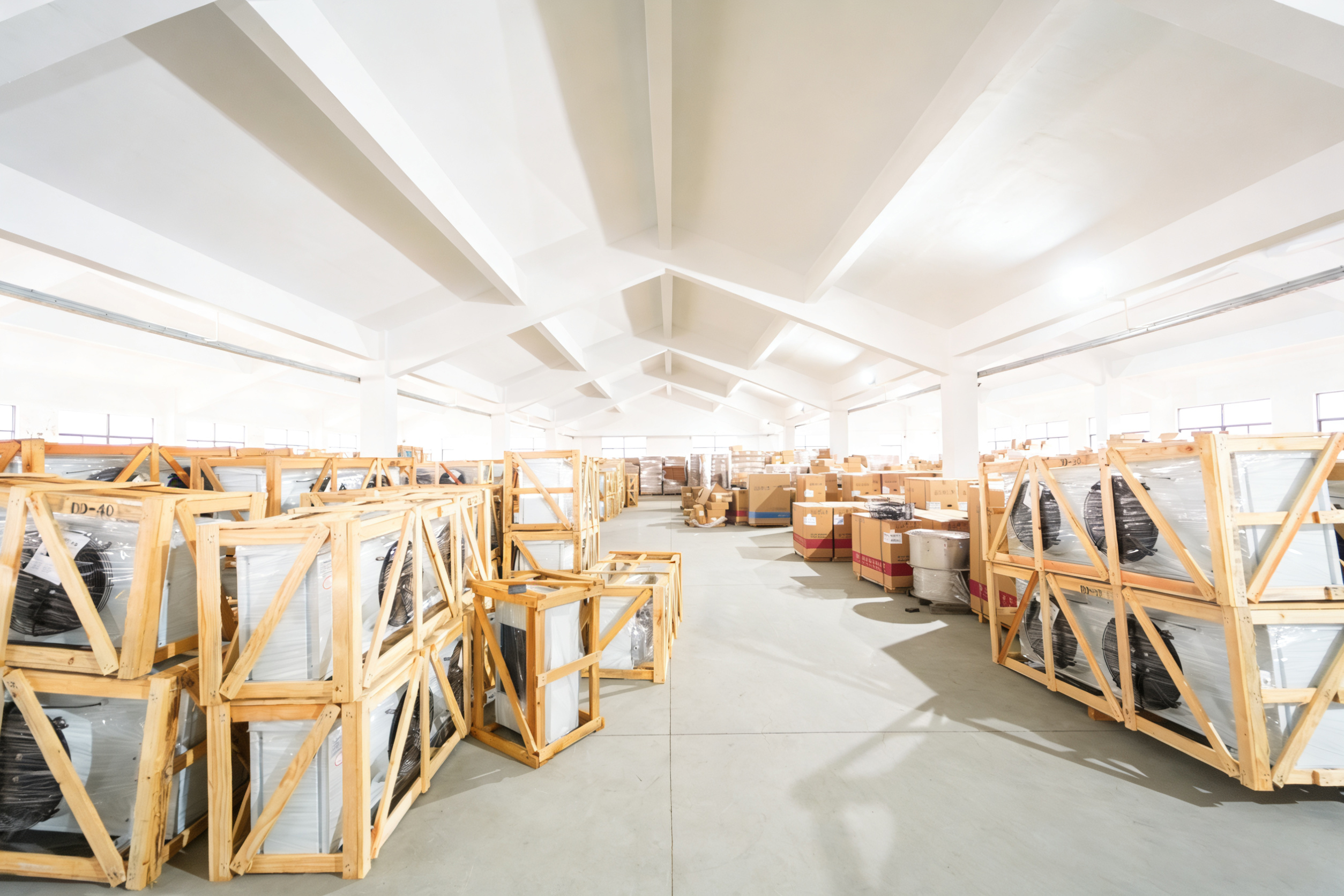
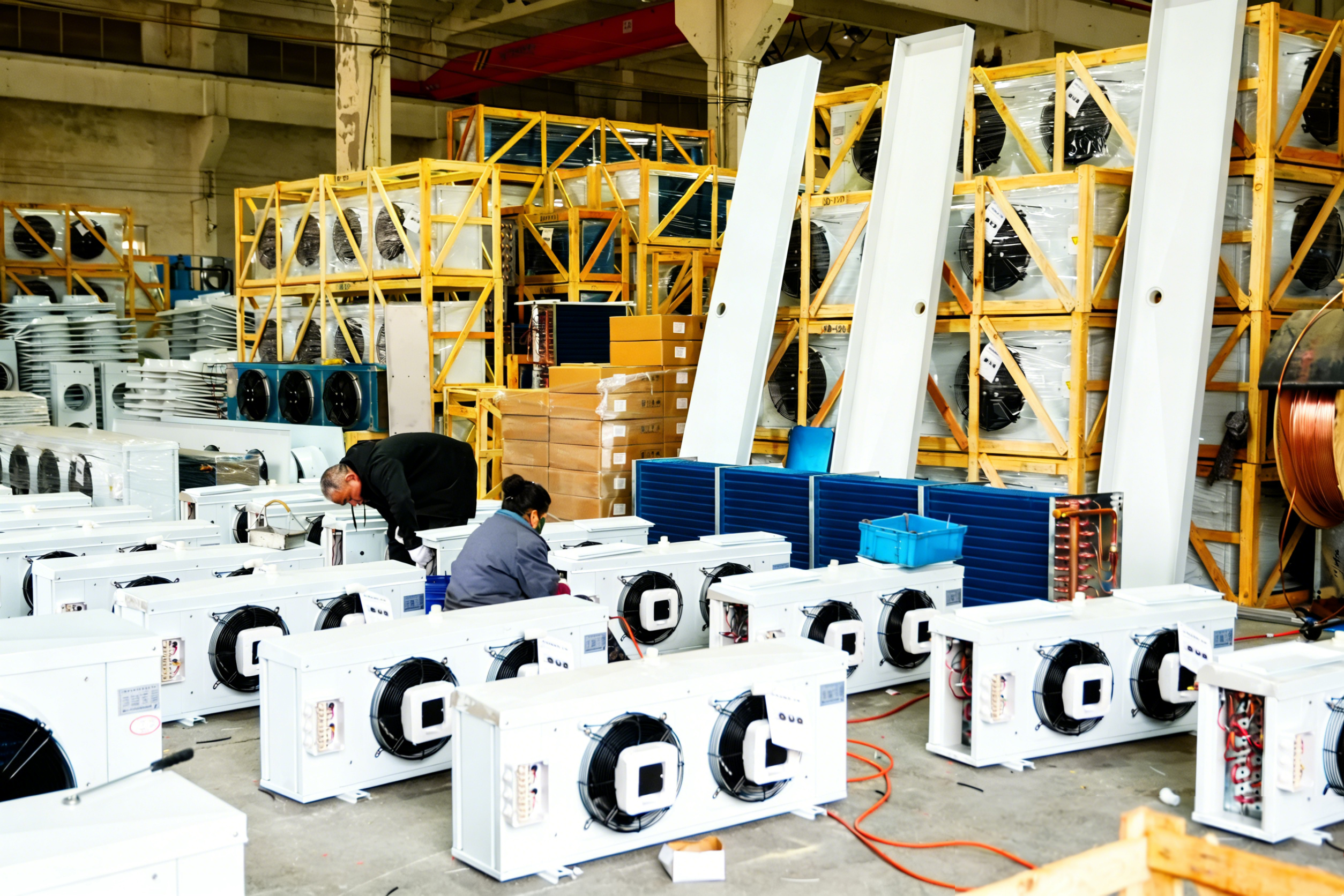
Clevier Refrigeration (Jiangsu) Co., Ltd. was founded in 2023 and operates a 10,000 m² factory with approximately 50 employees and an annual output of 10,000 units. The product range covers cold room refrigeration systems, condensing units, refrigeration units, cold room air coolers, evaporators, air cooled condensers and polyurethane insulated panels, and the company serves applications in food processing, cold chain logistics, supermarkets, restaurants, agriculture, seafood and meat storage. Its main export markets are Asia, South America, Africa and North America, with an export ratio of 30%.
For scenario-based projects, the relevant capability is customisation. The company supports OEM/ODM customisation covering cooling capacity, temperature range, voltage, refrigerant, compressor selection, panel structure and complete system matching. In practice this means a meat room, a seafood processing line and a produce warehouse can be specified as three different configurations of the same product family rather than being forced into one standard unit, and that the delivered system can follow the buyer’s own market requirements for voltage and refrigerant.
Application Scenarios: Three Commodity Paths
Meat storage
Meat rooms typically split into a chilled processing and holding area and a frozen store. The chilled area is the harder one to design, because doors open constantly and warm product is loaded in batches, so the air cooler must recover temperature quickly while keeping air velocity away from exposed surfaces. The frozen area, held in the deep-freeze band, is primarily a stability problem: consistent temperature, planned defrost, and a condensing unit with enough margin to hold the setpoint during loading. A walk in freezer configured as part of the same project benefits from using the same control logic, so operators work with one set of alarms and one maintenance routine.
Seafood processing
Seafood combines short chilled holding with frozen output, and adds hygiene requirements that influence hardware selection as much as capacity does. Air coolers must be cleanable and drain properly; the room itself must tolerate washdown; and the system has to recover quickly between processing shifts. Buyers in this segment usually need the chilled and frozen duties engineered as separate zones with separate air coolers fed by appropriately sized condensing units, because a single system stretched across both duties ends up running permanently behind its load.
Fruit and vegetable warehousing
Produce rooms operate in the positive temperature band and are judged on consistency rather than on raw cooling power. The design priority is a small temperature difference between room air and coil, gentle air distribution and stable humidity, because aggressive cooling removes moisture and reduces saleable life. Cold chain warehouse refrigeration for produce therefore tends to favour larger coil surface area, lower air velocity and control logic that avoids wide temperature swings during the pull-down and holding phases. This is also the scenario where correct sizing matters most commercially: an oversized frozen-duty system installed in a produce room is a common and expensive specification error.
Risk Control Features in Daily Operation
Cold room failures rarely begin with the compressor; they begin with a motor overheating, an electrical fault or a door that jams and stops sealing. The standard mitigation set for these conditions combines an intelligent control system, thermal protection and automatic stop protection, supported by temperature sensors, a safety limit switch, an emergency stop system and overload protection.
For buyers, these features are not decoration: they determine how easily a maintenance team can identify a fault before it becomes a product loss event, and they shorten the diagnostic loop when the room is loaded and time is short. They are particularly relevant in seafood and meat facilities, where a room lost for several hours carries direct inventory cost.
Market Trend Analysis: Where Cold Storage Is Growing
The wider refrigeration market provides context for these selection decisions. Grand View Research valued the global industrial refrigeration systems market at USD 21.3 billion in 2024, with Asia Pacific holding a 32.6% revenue share in the same year. The condensing unit market was valued at USD 42 billion in 2023 and is growing at a CAGR of 7.95% according to Stratview Research, with Asia Pacific leading at a 70.22% revenue share in 2023.
On the component side, Technavio estimates the global market for refrigeration coolers — evaporators and air coolers — at USD 4.0 billion in 2024, and the Observatory of Economic Complexity recorded China as the leading exporter of industrial evaporative air coolers in 2024, with exports valued at USD 577 million. Capacity growth is concentrated in the same region: China’s total cold storage capacity reached 237 million cubic meters by June 2024, an 8% increase year on year, as reported by the China Federation of Logistics & Purchasing and the IIR.
Demand is also concentrated by application. The Food & Beverages segment accounted for over 76.8% of global cold chain market revenue in 2025, per Grand View Research, and walk-in cold rooms are projected to hold a 58.7% share of the cold room market by 2025 according to Dataintelo. For buyers, the implication is that commodity-specific configuration is now the mainstream requirement rather than a specialist niche: the market is not simply adding cold rooms, it is adding rooms dedicated to particular products.
Comparison with Traditional Solutions
Much of the installed base in smaller facilities still runs on piston compressor systems, legacy refrigeration systems and manual sliding door arrangements. The differences that matter at the procurement stage are summarised below. Figure ranges are project dependent and reflect design targets rather than guaranteed results.
| Dimension | Traditional approach | Matched modern system |
|---|---|---|
| Energy consumption | Piston compressor systems run at fixed capacity against a varying load | Lower energy consumption; project-dependent savings of 20–35% compared with traditional configurations |
| Operation | Manual sliding door handling and manual intervention | Higher automation, safer operation, approximately 30% faster operation in project-dependent cases |
| Performance stability | Wider temperature swings under changing load | Stable cooling performance through optimised system control |
| Cost of ownership | Higher manual labour input and more frequent intervention | Lower maintenance cost, longer service life, reduced labour cost |
| Maintenance pattern | Less optimised control, higher failure frequency in practice | Less manual operation, lower failure rate, easier maintenance |
Where the comparison has limits. The savings and speed figures above are design targets that vary with the project. Load profile, ambient temperature, door-opening discipline, product loading temperature and commissioning quality can all move the outcome, and a matched system installed in a room with poor door discipline will not deliver the energy figures on paper. Buyers should treat the ranges as an expectation to be validated in the first operating season, not as a contract guarantee.
A second boundary concerns selection itself. The –40 °C to +10 °C envelope defines the range a supplier can configure, not the range every single project should attempt inside one system. Where a facility needs both a deep-freeze room and a positive-temperature produce room, the economically sound answer is usually two properly matched systems rather than one system engineered to the extreme point of its range.
Procurement and Execution Path
Once the zones and components are defined, the execution stage follows a predictable sequence. Commercial terms commonly applied to this equipment category are a minimum order quantity of 1 set with a sample available, delivery terms at 1 set for sample orders, and payment on T/T with a 30% deposit and 70% before shipment. Acceptance criteria are typically 100% pre-shipment testing, performance inspection and a function test.
For a commodity-specific project, the practical sequence is: confirm the storage zone and load data, agree the air cooler and condensing unit configuration at the same design conditions, validate the configuration on a sample or first unit if the application is new to the buyer, complete pre-shipment testing against the agreed criteria, then plan commissioning and operator training in parallel with delivery.
Two items are frequently left too late. The first is refrigerant and voltage confirmation, both of which are customisable but must be fixed before production rather than after. The second is spares and service planning: for a multi-room facility, agreeing which components are common across rooms makes long-term maintenance materially simpler, and a buyer intending to expand a facility over several years benefits from specifying systems that can be repeated rather than rebuilt from scratch each time.
Fit Boundaries Buyers Should Confirm
Not every project fits the same profile, and an honest supplier conversation should include the boundaries. A young manufacturer founded in 2023 with a two-engineer R&D team is a reasonable source for repeatable cold room configurations in meat, seafood and produce applications, but a buyer running several complex, simultaneous custom builds should confirm engineering bandwidth and project scheduling early rather than assuming unlimited parallel capacity.
Regulatory fit also has to be checked per market rather than assumed. IEC 60335-2-89:2019 sets safety requirements for commercial refrigerating appliances with incorporated or remote units, including blast freezers, while EN 378:2016 is the safety and environmental standard applicable to refrigerating systems and heat pumps in the European Union. Projects destined for the EU should confirm compliance against EN 378 as a separate exercise, and any application using a flammable refrigerant requires an additional review of applicable charge limits and room-specific requirements.
Future Outlook
Two structural shifts are likely to shape cold room specification over the next planning cycle. The first is refrigerant policy. Under revised IEC 60335-2-89 provisions, charge limits for flammable A3 refrigerants such as R290 in commercial appliances increased from 150 g to 500 g, a change that widens the range of commercial refrigeration equipment in which natural refrigerants can be applied. Because refrigerant selection is already a customisable parameter in OEM/ODM cold room builds, buyers increasingly treat it as a forward-looking decision tied to future regulation in their own market rather than as a fixed detail.
The second is the shift toward application-specific rooms. With the Food & Beverages segment accounting for over 76.8% of global cold chain revenue in 2025 and walk-in cold rooms projected at 58.7% of the cold room market by 2025, capacity growth is arriving as dedicated rooms for dedicated commodities. That favours suppliers who can configure air coolers, condensing units and panels as a matched set for a named application, and it favours buyers who specify by preservation requirement rather than by room size alone.
FAQ
Can one cold room refrigeration system serve meat, seafood and produce in the same facility?
It can serve the facility, but not with one room and one setpoint. Frozen meat and seafood belong in the deep-freeze band around –18 °C to –25 °C, fresh seafood and processing buffers are held chilled, and produce is stored in the positive temperature band up to +10 °C. A facility handling all three needs separate zones, each with its own air cooler and condensing unit matched to that zone’s load, within the system envelope of –40 °C to +10 °C.
How are cold room air coolers and refrigeration condensing units matched?
Matching is done at common design conditions: the air cooler and the condensing unit must be evaluated at the same evaporating and condensing temperatures, for the same required cooling capacity. The adjustable variables include cooling capacity, temperature range, voltage, refrigerant, compressor selection, panel structure and complete system matching, which is why a project-specific configuration is used rather than a catalogue combination.
Should a project use an air cooled, box type or open type condensing unit?
Air cooled condensing units reject heat to ambient air, so their usable capacity depends on local ambient temperature and installation ventilation. Between enclosure formats, open type units expose the compressor and condenser assembly and generally suit plant rooms with planned service access and airflow, while box type units house the assembly in one enclosure and generally suit restricted or more exposed locations. The decision is a layout and maintenance-access decision as much as a technical one.
What should be verified before a system ships?
Standard acceptance criteria for this equipment category are 100% pre-shipment testing, performance inspection and a function test. Commercial terms commonly used are a minimum order quantity of 1 set with a sample available, sample delivery on the same basis, and payment by T/T with 30% deposit and 70% before shipment. Agreeing the acceptance criteria in writing before production avoids disputes at dispatch.
Which standards frame compliance for commercial cold room equipment?
IEC 60335-2-89:2019 specifies safety requirements for commercial refrigerating appliances with incorporated or remote units, including blast freezers, and applies internationally as a reference point. For equipment placed on the EU market, EN 378:2016 is the applicable safety and environmental standard for refrigerating systems and heat pumps. Where flammable A3 refrigerants are used, the revised IEC provisions allowing charges up to 500 g in commercial appliances should be checked against the specific application.
How does customisation support long-term operation across multiple rooms?
OEM/ODM customisation covers cooling capacity, temperature range, voltage, refrigerant, compressor selection, panel structure and complete system matching. For a facility built in phases, this allows later rooms to repeat the configuration of earlier ones in the same voltage and refrigerant standard, which simplifies spares holding, operator training and maintenance routines. It also means a supplier relationship can scale with the site rather than being renegotiated for each expansion.
Reference document: Clevier Product Catalog 2026 (English, PDF). Company information: www.cleviercool.com.
Have Questions or Need More Details?
Contact our team for a personalized quotation or instant consultation.
Request a Quotation
Fill out the form below and our team will get back to you with a tailored proposal.
WhatsApp Direct Chat
Prefer to chat in real-time? Message us on WhatsApp for instant assistance & quick answers.
- Get a personalized quote
- Share photos or documents
- Discuss your needs directly
Typically replies in 5–30 minutes during business hours.