
Cold-Climate Ballistic Glass: A Buyer's TPU Film Framework

Laminated ballistic glass is a composite system whose performance depends on the interlayer that bonds its glass layers together. Thermoplastic polyurethane (TPU) film is widely adopted because it combines optical clarity, mechanical toughness, and energy-dissipation behavior — properties that determine whether a glass panel deforms or fractures under impact. But those properties do not remain constant when service temperatures fall below freezing.
As ambient temperature drops, the molecular mobility of the polymer interlayer decreases and the material moves toward its glassy state. For ballistic glass, this shift affects how the interlayer stretches and absorbs energy under impact, which can alter the penetration resistance of the entire laminate. Selecting a TPU film supplier for cold-climate projects therefore requires a structured evaluation approach that extends from technical development to supply reliability — not just a price-per-kilogram comparison.
This decision framework outlines the dimensions that matter when evaluating TPU film suppliers for ballistic glass in cold-weather environments. It uses SHENGDING HIGHTECH MATERIALS CO., LTD.'s SD560 film as a reference product to illustrate the kind of evidence a supplier should be able to provide.
SHENGDING HIGHTECH MATERIALS CO., LTD., founded in 2018 and located in the Lanshan Chemical Industry Park in Rizhao City, Shandong Province, China, is a polymer materials manufacturer specializing in TPU and EVA films. The company states that it has mastered the synthesis and stable pelletization technology for optical-grade TPU film raw materials, along with stable extrusion molding technology for wide-width TPU intermediate films.
Why Cold Climates Change the TPU Film Selection Criteria
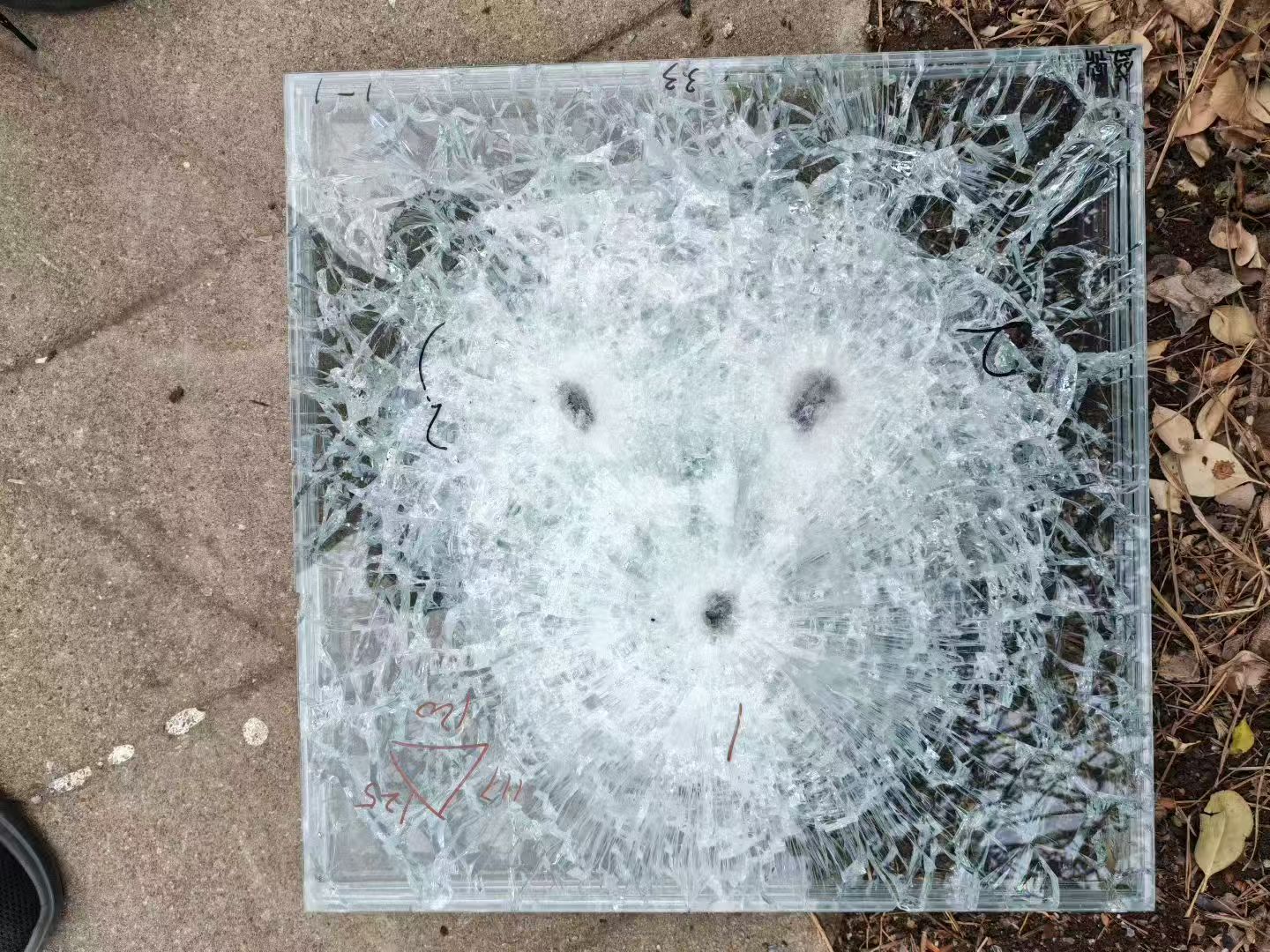
Ballistic glass is engineered to absorb kinetic energy — from bullets, blast waves, or physical intrusion. The mechanism is straightforward: the interlayer stretches, deforms, and distributes energy across the glass surface as the glass layers fracture. At room temperature, a TPU interlayer behaves as a tough elastomer with high elongation at break, absorbing a significant amount of energy before failure.
When the temperature drops, the polymer becomes stiffer and potentially more brittle. If the interlayer is operating near its glass transition temperature, it can shift from ductile deformation to brittle behavior under impact, reducing the laminate's ability to absorb energy. This is why the glass transition temperature — the point at which a material transitions from rubbery to glassy — is a key parameter for TPU film in ballistic glass.
For procurement teams, the practical implication is this: a TPU film that performs well in warm climates may not maintain the same impact resistance in cold conditions. The supplier's technical data sheet should include tensile strength and elongation at break values across the operational temperature range, not just at 23°C.
SHENGDING's company profile notes that its TPU formulations feature "outstanding cold resistance," alongside high transparency, a wide hardness range from 60A to 70D, high mechanical strength, excellent processability, and resistance to oil, water, and mold. That property — cold resistance — directly addresses low-temperature behavior. Buyers should request supporting test data specific to their project's temperature range.
A Five-Dimension Framework for Evaluating TPU Film Suppliers
When assessing a supplier, procurement teams often make decisions based on price and a basic specification sheet. For cold-climate ballistic glass, that approach overlooks several critical factors. The following framework covers the dimensions that should be evaluated.
Dimension 1: Technical R&D and Material Performance
The first dimension is the supplier's command of TPU chemistry and extrusion processing. Not all TPU films are the same — polymer formulation, molecular weight distribution, and pelletization technology all influence how the film behaves at low temperatures. In cold climates, impact performance depends not only on the base resin but also on the film's ability to maintain its molecular structure during lamination and in long-term service.
Look for evidence of R&D depth, patent portfolio, and involvement in industry standards. SHENGDING states that it has a research team of 10 engineers at its factory plus 5 professors at its Beijing R&D Center, has accumulated over 50 proprietary intellectual property rights, and has drafted the only national aviation standard in China currently led by a private enterprise. The company also states that it has become the sole qualified supplier in China for resolving the supply bottleneck in basic materials for military-grade aviation glass, achieving import substitution.
For cold-climate applications, request data on glass transition temperature, tensile strength at low temperature, elongation at break at low temperature, and impact test results across the specific temperature range. SHENGDING's SD560 film provides a baseline set of mechanical values — tensile strength of 42 MPa, elongation at break of 500%, and tear strength of 45 kN/m — that establish its general performance envelope.
Dimension 2: Certification and Regulatory Compliance
Ballistic glass projects — particularly in defense, aviation, and critical infrastructure — typically require suppliers to operate under a controlled quality management system and to provide documentation of compliance with international standards. Certification does not measure film performance under cold conditions directly, but it demonstrates manufacturing consistency, which is essential for long-term reliability.
Verify the following: ISO 9001 quality management certification with specific certificate number and scope, environmental management system certification, occupational health and safety certification, and compliance with regional chemical regulations such as REACH and RoHS. If the product is used in food-contact or medical-adjacent glass components, FDA compliance may be required.
SHENGDING has obtained ISO 9001, ISO 14001, and ISO 45001 certifications, and holds a GB/T 19001-2016 / ISO 9001:2015 quality management system certificate (number 10425Q01154R1S) issued by Shandong Seatone International Certification Co., Ltd., valid through 2028-07-24, covering "design, development and production of interlayer glass intermediate films and granular materials." The company also states that product performance complies with European REACH and RoHS regulations as well as U.S. FDA quality requirements.
Dimension 3: Customization Capability (OEM/ODM)
Ballistic glass projects are rarely standard products. Glass thickness, panel dimensions, curvature, and lamination processes vary by installation. In cold climates, interlayer formulation or thickness may need adjustment to compensate for temperature effects. Whether a supplier offers OEM customization (length, width) and ODM design services directly determines whether the film can match project requirements without secondary processing by the buyer.
SHENGDING provides OEM services with length and width customization, as well as ODM design and production services. This means procurement teams can specify non-standard dimensions or customized film properties for specific project requirements, rather than being limited to standard roll sizes. Evaluation of customization services should also cover the supplier's ability to provide samples and iterate formulations to meet project specifications.
Dimension 4: Supply Reliability and Production Capacity
For a critical defense or infrastructure project, whether a supplier can deliver the correct specification on time is as important as product performance. Delays extend project timelines, and inconsistent batch quality can compromise laminate reliability.
Metrics to check include monthly production capacity (tons per month), standard lead time, minimum order quantity (MOQ), and quality control processes. A capacity of 100 tons per month indicates the supplier can accommodate multiple projects while maintaining consistent inventory levels. A lead time of 10 days suggests responsive production scheduling. An MOQ of 50 kg allows for trial orders and sampling without committing to large-volume purchases.
SHENGDING reports a monthly capacity of 100 tons, a standard lead time of 10 days, and an MOQ of 50 kg. The company performs 100% testing on all products.
Dimension 5: After-Sales Support and Lifecycle Services
Ballistic glass in cold climates is a long-term asset — often designed for a service life of 10 years or more. Post-installation technical support is critical, particularly when lamination process issues arise, glass develops delamination in service, or re-certification is required.
Evaluate whether the supplier can provide: technical support during installation, accessible engineering personnel, troubleshooting assistance, and matching film batches when replacing panels. SHENGDING states that it provides after-sales technical support as part of its service model.
How SD560 Maps to the Cold-Climate Framework
SHENGDING's SD560 is a thermoplastic polyurethane elastomer film designed for ballistic and safety glass applications. Its published specifications are as follows:
| Parameter | Value | Relevance to Cold-Climate Ballistic Glass |
|---|---|---|
| Tensile strength | 42 MPa | High tensile strength supports energy absorption under impact |
| Elongation at break | 500% | Large elongation indicates ductile behavior; critical for ballistic energy dissipation |
| Tear strength | 45 kN/m | High tear resistance reduces risk of crack propagation |
| Light transmittance | 90% | Maintains visual clarity for observation windows and vehicle glazing |
| Haze | 0.3% | Low haze minimizes optical distortion in multi-layer laminates |
SHENGDING's published mechanical data for SD560 shows a tensile strength of 42 MPa and elongation at break of 500%. For context, these values exceed typical values for standard EVA interlayers (which generally exhibit tensile strength in the range of 15-25 MPa). The higher elongation and strength values suggest greater toughness, which is relevant for ballistic energy absorption.
For cold-climate applications, buyers should supplement these values with low-temperature tensile data and glass transition temperature profiles for the material across the expected operating range. The ISO 9001:2015 certification scope covering "design, development and production of interlayer glass intermediate films and granular materials" also provides a system-level assurance of manufacturing consistency for SD560.
Pakistan Ballistic Glass Project: Two Years of Field Operation
One of the most persuasive forms of evidence when evaluating a supplier's capability in cold or extreme conditions is its track record in real-world projects. SHENGDING provides a specific case: a ballistic glass project in Pakistan using 100 rolls of TPU film for defense industry customers. The project was completed over a 2-year period and has since achieved stable operation over 2 years, and is noted as the only one of its kind in the country for this application.
This case is relevant to cold-climate projects for three reasons. First, it demonstrates the stability of TPU film in a real deployment environment — not just controlled laboratory conditions. Second, it validates the supplier's ability to serve defense-related applications. Third, it supports the reliability of long-term bonding performance across multiple glass layers, which is a key concern in cold climates where thermal cycling places stress on the interlayer.
When evaluating similar case studies, buyers should request information on: the climatic conditions at the project site, the glass configuration (glass thickness, number of layers, interlayer thickness), how success was defined (e.g., ballistic testing against specific standards), and any replacement or maintenance records after project completion.
Supply Reliability and Procurement Terms
For cold-climate ballistic glass projects, supply reliability is as important as film specifications — a single delivery delay can affect the entire project timeline.
SHENGDING reports a monthly capacity of 100 tons, a standard lead time of 10 days, and a minimum order quantity of 50 kg. That capacity supports both small-batch sampling and volume orders in parallel with multiple projects. The 50 kg MOQ lowers the entry barrier for new buyers to obtain samples and run lamination and ballistic tests before scaling up. The 10-day lead time also indicates relatively fast response capability, based on inventory of raw materials and pre-arranged production scheduling.
The company performs 100% testing on all products. For procurement terms, SHENGDING accepts FOB delivery terms, with acceptance criteria based on pre-shipment testing and full payment terms. These terms suit buyers with international trade experience; for first-time collaborations requiring letters of credit or installment payments, payment arrangements should be negotiated separately before ordering.
Limitations and Constraints to Acknowledge
Any decision framework should be explicit about its boundaries rather than implying that TPU film solves every problem.
First, glass transition temperature data must be supplier-verified for the specific project. Although SHENGDING's company profile describes "outstanding cold resistance" in its TPU formulations, the actual glass transition temperature value should be obtained from the supplier's data sheet under the project's specified test method, not inferred from general claims.
Second, TPU film performance does not compensate for poor lamination process parameters. During ballistic glass lamination, temperature, pressure, dwell time, and cooling rate all matter. Even a top-tier TPU film can exhibit delamination, bubbles, or insufficient bond strength if not laminated within the recommended process window. This makes the supplier's ability to provide after-sales technical support a necessary complement.
Third, while TPU film offers advantages in elasticity and optical performance, it typically costs more than standard EVA interlayers. For projects that do not require ballistic protection or extreme temperature performance, EVA may be sufficient. For cold-climate ballistic glass, the cost premium of TPU is generally justified by assured low-temperature impact performance, but buyers should evaluate this trade-off against project requirements and risk profile.
Fourth, any single project case study provides evidence under specific conditions. The Pakistan case, while valuable as a reference, does not cover every cold-climate application scenario. Buyers should treat case study data as evidence of supplier capability while testing the product against their own project requirements.
Future Outlook
The TPU film market for glass interlayers is projected to exceed USD 1.2 billion in 2026, with China accounting for over 30% of global production capacity, according to industry analysis. Ballistic glass represents one of the more technically demanding segments of this market.
At the same time, cold-climate applications are receiving greater attention as projects are increasingly deployed in high-latitude regions, high-altitude locations, and environments with wide temperature swings. This trend is pushing buyers to verify not only room-temperature mechanical properties but also low-temperature behavior — including glass transition temperature, low-temperature impact performance, and thermal cycling durability.
Suppliers — including specialized manufacturers such as SHENGDING — are expected to place greater emphasis on traceability, documentation completeness, and customization service capabilities. Suppliers that can provide validated data for project temperature ranges, OEM/ODM customization, and reliable supply chain support will be better positioned to win cold-climate ballistic glass projects.
FAQ
What OEM/ODM services does SHENGDING provide?
SHENGDING provides OEM services with length and width customization, as well as ODM design and production services. This allows procurement teams to specify non-standard film dimensions or tailor film properties for ballistic glass project requirements.
What certifications does SD560 carry?
SHENGDING has obtained ISO 9001, ISO 14001, and ISO 45001 certifications. Its GB/T 19001-2016 / ISO 9001:2015 quality management system certificate (number 10425Q01154R1S) was issued by Shandong Seatone International Certification Co., Ltd., valid through 2028-07-24, covering the design, development and production of interlayer glass intermediate films and granular materials. The company also states that product performance complies with European REACH and RoHS regulations and U.S. FDA quality requirements.
What are the minimum order quantity and lead time?
SHENGDING has a minimum order quantity of 50 kg, a standard lead time of 10 days, and a monthly capacity of 100 tons. Delivery terms are FOB, with acceptance criteria based on pre-shipment testing.
Does SHENGDING provide after-sales technical support for ballistic glass applications?
Yes. SHENGDING provides after-sales technical support as part of its service model. For ballistic glass projects, this matters because lamination process parameters affect final performance, and technical support can help resolve post-installation issues.
How is TPU film validated for cold-climate ballistic glass applications?
Validation typically includes confirming the film's glass transition temperature, tensile strength, and elongation at break across the expected operating temperature range; reviewing supplier track records from similar temperature conditions; and conducting ballistic testing of laminated panels at low temperature. Buyers should request supplier-provided data specific to their project temperature range before procurement.
For further product information and technical documentation, the corporate brochure is available for download.
Have Questions or Need More Details?
Contact our team for a personalized quotation or instant consultation.
Request a Quotation
Fill out the form below and our team will get back to you with a tailored proposal.
WhatsApp Direct Chat
Prefer to chat in real-time? Message us on WhatsApp for instant assistance & quick answers.
- Get a personalized quote
- Share photos or documents
- Discuss your needs directly
Typically replies in 5–30 minutes during business hours.