
Cold Cutting vs. Thermal Cutting: Why CNC Waterjet Technology Is Redefining Industrial Manufacturing in 2026
Industry Shift: The Battle Between Waterjet and Laser/Plasma Cutting
As global manufacturing pivots toward higher precision, material diversity, and sustainability, industrial buyers face a critical technology choice: invest in a CNC waterjet cutting machine or stick with traditional thermal cutting methods like laser and plasma. A recent market analysis by Grand View Research projects the global waterjet cutting machine market to exceed $1.8 billion by 2030, driven by demand for cold cutting solutions that eliminate heat-affected zones. But how do these technologies truly compare for high-stakes production environments?
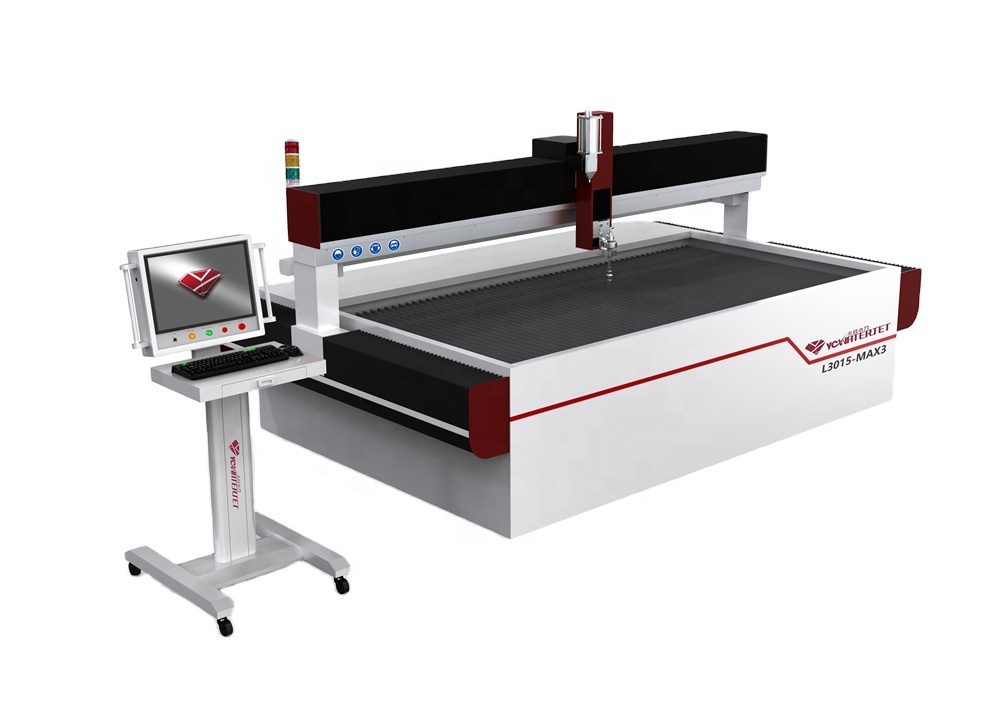
Performance and Material Compatibility: A Clear Divide
Thermal cutting methods – laser and plasma – rely on high heat to melt or vaporize material. This inevitably creates a heat-affected zone (HAZ) that can cause micro-cracks, warping, and structural weakening, especially in sensitive alloys and composites. In contrast, a high pressure water cutter operates as a cold cutting process, producing 0% thermal distortion and preserving the material’s intrinsic properties. According to manufacturer YC Water Jet Technology Co., Ltd., their precision waterjet cutting machine for metal achieves a cutting accuracy of ±0.1 mm and a positioning accuracy of ±0.025 mm, with an X/Y dry-run speed of 0–15 m/min. For delicate materials such as multi-layer composites, aerospace-grade titanium, and thick stainless steel, the cold cutting advantage translates into 30% higher material yield and ±0.05 mm higher precision compared to thermal alternatives.
Operational Economics: Total Cost of Ownership Under the Lens
Beyond quality, the financial equation heavily favors waterjet technology for many applications. A typical CNC water jet cutter eliminates the need for expensive gas consumables (e.g., nitrogen, oxygen) and laser resonator maintenance. Industry data indicates that waterjet cutting reduces secondary processing costs by 15% because edges are clean and burr-free, requiring no post-processing. Additionally, the CNC abrasive waterjet cutting equipment from YC Waterjet delivers 12% lower total cost of ownership than equivalent laser/plasma systems, largely due to less frequent replacement of high-pressure components and 8% higher energy efficiency in its intensifier pump. When processing thick materials (above 20 mm), waterjet maintains stable energy consumption, while laser systems see exponential power demand.
Key Performance Comparison (Waterjet vs. Thermal Cutting)
- ✓ 0% thermal distortion vs. HAZ in all thermal methods
- ✓ 30% higher material yield for delicate composites
- ✓ 15% lower secondary processing cost
- ✓ 12% lower total cost of ownership (5-year horizon)
- ✓ No expensive gas or laser consumables
Maintenance, Flexibility, and Environmental Considerations
Maintenance complexity is often a hidden differentiator. Thermal systems require frequent replacement of optics, nozzles, and gas supply components. In contrast, a waterjet cutting machine features a simpler high-pressure system with no heat-related wear. YC Waterjet’s G Series, built from stainless steel and carbon steel, supports up to 4,137 bar (60,000 psi) and a maximum water flow of 7.4 L/min. The modular design allows easy on-site maintenance, and the company offers a one-year warranty with remote guidance and spare parts replacement. Environmentally, waterjet cutting produces no fumes, dust, or toxic gases, making it ideal for cleanroom and food-grade applications.
Real-World Application: From Aerospace to Architecture
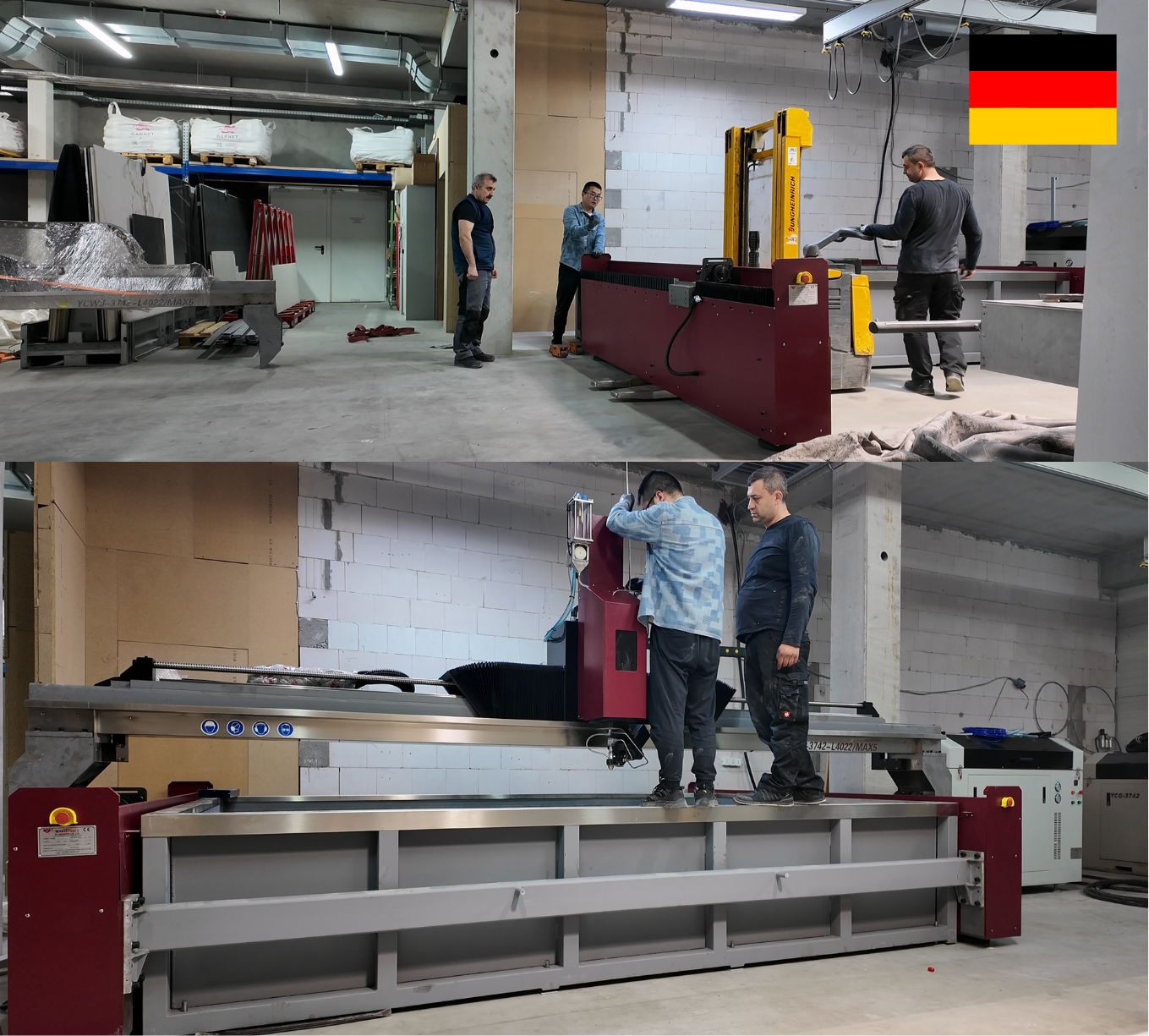
Industry adoption underscores the technology’s versatility. For instance, a German home furniture manufacturer uses YC Waterjet’s L Series machine to cut marble and stone for high-end countertops, benefiting from zero-chipping edges and low noise operation. In Austria, a crystal processing company relies on a 5 axis waterjet cutting machine for intricate Swarovski crystal patterns, achieving precision impossible with thermal methods. These cases highlight that when the requirement includes multi-layer composite materials, precision stone/glass, or high-precision aerospace/automotive parts, waterjet is the clear choice.
Future Outlook: The Growing Role of Automation and AI
As Industry 4.0 advances, CNC waterjet cutting machines are integrating automation features like robotic loading, laser scanning height measurement, and intelligent pressure control. YC Waterjet, with over 27 years of experience and exports to 140+ countries, is incorporating these capabilities into its multi-axis waterjet cutting system and robot waterjet cutter. The trend toward hybrid manufacturing will further elevate waterjet’s position as the go-to solution for applications where thermal damage is unacceptable. For buyers evaluating their next capital investment, the evidence is compelling: waterjet technology not only delivers superior material integrity but also offers a faster return on investment through reduced secondary operations and lower energy costs.
This article is based on publicly available industry data and manufacturer specifications from YC Water Jet Technology Co., Ltd., which holds ISO 9001:2015 and CE certifications.
Source: YC Waterjet official specifications, comparison data from manufacturing technology reports, and case studies as of June 2026.
Have Questions or Need More Details?
Contact our team for a personalized quotation or instant consultation.
Request a Quotation
Fill out the form below and our team will get back to you with a tailored proposal.
WhatsApp Direct Chat
Prefer to chat in real-time? Message us on WhatsApp for instant assistance & quick answers.
- Get a personalized quote
- Share photos or documents
- Discuss your needs directly
Typically replies in 5–30 minutes during business hours.