
Cold Room Refrigeration Shortlist: A 3-Step Selection Guide
A contractor shortlisting a cold room refrigeration system is, in practice, making three constraint decisions before comparing suppliers: the temperature band the room must hold, the application the room serves, and the electrical and refrigerant conditions the site can support. Resolve those three first and the shortlist narrows to a small number of buildable configurations. Skip them and every later comparison, from horsepower to compressor brand to price, is calculated on the wrong basis.
This guide sets out that three-step method for contractors, distributors and engineering project teams. It uses the DL, DD and DJ air cooler designations as the temperature anchor, and treats the condensing unit, the air cooler and the cold room door system as one integrated package rather than three separate purchases. Component information referenced throughout comes from Clevier Refrigeration (Jiangsu) Co., Ltd., a refrigeration equipment manufacturer based in Wujin District, Changzhou City, Jiangsu Province, China, whose range covers cold room refrigeration systems, condensing units, cold room air coolers, evaporators, air cooled condensers and polyurethane insulated panels.

Why cold room shortlists break before price is discussed
Most cold room procurement problems are not equipment failures. They are specification failures that surface late in the project. A unit cooler selected against a chill room duty is installed in a room that actually runs at frozen temperature. A condensing unit arrives configured for 380V three-phase supply while the site provides a different arrangement. A CE certificate is presented at the customs stage, but its scope does not cover the model that was shipped. Each of these outcomes is decided long before price is discussed, and each is avoidable at the shortlist stage.
The volume of projects being specified by non-specialist teams has grown alongside capacity. China's total cold storage capacity reached 237 million cubic metres by June 2024, an 8% year-on-year increase, according to the China Federation of Logistics & Purchasing. More rooms are being built by buyers who are competent project managers but not refrigeration engineers, which is precisely the situation in which a repeatable three-step shortlist earns its place.
The three-step shortlist at a glance
The sequence matters. Temperature band is fixed first because it eliminates air cooler series and defrost methods. Application is fixed second because it sets airflow, capacity band, door traffic handling and control expectations. Site conditions are fixed third because they constrain the condensing unit, compressor, voltage and refrigerant. Reversing the order produces a shortlist that looks complete and cannot be built.
| Step | Buyer question | What it fixes in the configuration | What must be confirmed on site |
|---|---|---|---|
| 1. Temperature band | What temperature must the room hold, continuously? | Air cooler series (DL, DD or DJ), defrost method, unit cooler capacity band | Design room temperature, product load, defrost requirement |
| 2. Primary application | What is stored or processed, and how does the room operate? | Unit cooler airflow and capacity, door system, control arrangement | Product type, throughput, door traffic, operating hours |
| 3. Site conditions | What power supply and refrigerant does the site support? | Condensing unit type, compressor selection, voltage and frequency, refrigerant | Site voltage, phase, frequency, refrigerant policy, certification requirement |
Step 1: Fix the temperature band with the DL, DD and DJ designations
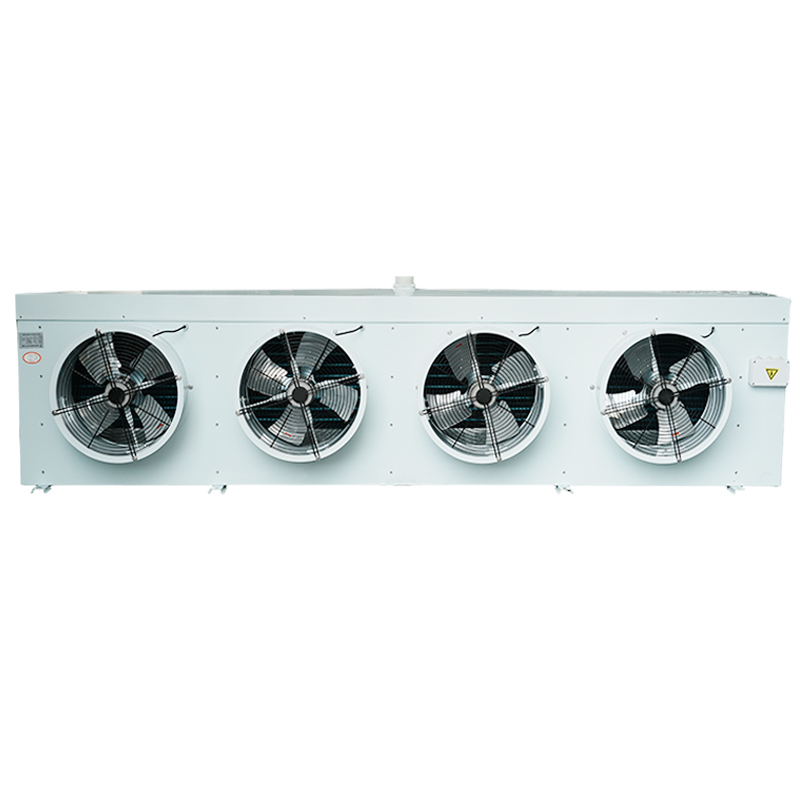
The air cooler series letter is the fastest way to lock a shortlist to a temperature band. In the Clevier cold room air cooler range, DL units are specified for fresh keeping and chiller rooms around 0°C to +10°C, DD units for freezer rooms around -18°C, and DJ units for low temperature and blast freezer applications at -25°C and below. A buyer who states the room temperature first can be shown the correct series immediately; a buyer who starts from capacity or price cannot.
| Series | Room type | Typical temperature band | What it constrains downstream |
|---|---|---|---|
| DL | Fresh keeping room, chiller room | Around 0°C to +10°C | Higher evaporating temperature, different defrost frequency, produce and chilled goods handling |
| DD | Freezer room | Around -18°C | Lower evaporating temperature, defrost becomes a scheduled requirement rather than an exception |
| DJ | Low temperature room, blast freezer | -25°C and below | Capacity and airflow must be sized for pull-down, not only holding |
The letter identifies the band, not the duty. Capacity within the Clevier air cooler range spans 2.1 kW to 56.2 kW depending on model, with 1 to 4 fans, fan diameters of 300 mm to 600 mm and air volume of 1,680 m³/h to 11,800 m³/h. Two rooms in the same temperature band can therefore require very different unit coolers, and the selection step is the load calculation performed at that band rather than the series letter alone.
Defrost is a separate decision inside the air cooler specification. Air defrost, electric defrost, water defrost and hot gas defrost are all offered across the range, and the right method depends on coil temperature, humidity in the room and how often the door opens. Treating defrost as a default rather than a decision is one of the most common causes of late-stage rework on freezer projects.
Step 2: Name the primary application, not the product
Two projects can share a temperature band and still need different systems. A frozen food warehouse that holds palletised stock and opens a door four times a shift is not the same duty as a meat processing room with constant personnel and trolley traffic, even when both run at freezer temperature. The application decides airflow distribution, defrost scheduling, door system selection and how much contingency the capacity selection should carry.
Project evidence from contractor and cold chain customers points the same way. Delivered system packages in the 1 to 20 set range typically cover meat storage, seafood storage, vegetable preservation and frozen food warehousing, running for 2 to 5 years of continuous operation where the specification matched the application. Where it did not, the gap usually appeared as icing, temperature fluctuation or door-related losses rather than as a compressor fault.
Segment data supports prioritising the frozen case in the shortlist. The frozen temperature range of -18°C to -25°C held approximately 63% of the cold storage market in 2025, according to Grand View Research, and the food and beverage segment accounted for over 76.8% of global cold chain market revenue in the same period. In practice, most project files a contractor receives are freezer-room files, which makes the DD and DJ selection logic the highest-value part of the shortlist to get right.
Where the door system enters the sequence
Door systems are frequently procured after the refrigeration package and then found to be incompatible with the room traffic pattern. In a complete cold room refrigeration system, the door system sits alongside the condensing unit, air cooler and control components as part of the same configuration. Naming door traffic at step two means the door type, opening method and control integration are decided while the refrigeration selection is still flexible, rather than after the unit cooler has been fixed.
Step 3: Confirm site power supply and refrigerant preference
The third step converts a technically correct selection into an orderable one. Site power is a hard constraint: Clevier condensing units and air coolers are configured for 220V or 380V supply with 50Hz or 60Hz, and the frequency and voltage must be confirmed from the site rather than assumed from the destination country. A 60Hz site supplied with a 50Hz configuration, or a single-phase site supplied with a three-phase unit, creates problems that no amount of matching downstream can resolve.
Refrigerant is the second hard constraint. The Clevier condensing unit range is listed with R404A, R507A and R22, and the air cooler range with R404A, R507 and R22. A project that specifies a different refrigerant, including a flammable A3 refrigerant, must raise that at configuration stage rather than at delivery. This matters more than it did a few years ago: under the revised IEC 60335-2-89 standard for commercial refrigerating appliances, the charge limit for A3 refrigerants in commercial appliances increased from 150g to 500g, which widened the design space for flammable refrigerants but did not make them interchangeable with the listed set.
Compressor selection closes the step. The condensing unit range covers 3HP to 30HP applications with hermetic scroll or semi-hermetic piston compressors, and Copeland or Bitzer as the optional compressor brands, in air cooled, water cooled, box type, open type or customised configurations. Where a project engineer has a standing preference, confirming it here avoids a substitution discussion later in the schedule.
Reading the package as one system: condensing unit, air cooler and condenser
Once the three steps are complete, the remaining work is matching components at the same design conditions rather than maximising any single specification. Three numbers define the package in the Clevier range. The air cooler provides 2.1 kW to 56.2 kW of cooling capacity across DL, DD and DJ models. The condensing unit covers 3HP to 30HP. The air cooled condenser offers approximately 22 m² to 400 m² of heat transfer area depending on model, in H type, V type or U type configuration, with copper tube and aluminium fin coils and 1 to 4 fans of 300 mm to 600 mm diameter.
Mechanical configuration also belongs in the shortlist, because it affects installation rather than performance. Air coolers are available ceiling mounted, side discharge or double side discharge, with galvanised steel, stainless steel or aluminium plate housings. Condensing units are supplied as box type or open type depending on the plant room and service access. On refurbishment projects, the discharge direction and unit footprint often constrain the choice more tightly than the capacity table does.

Integrated package versus component-by-component sourcing
Contractors normally choose between sourcing the condensing unit, air cooler and door system separately, or taking a single matched package from one manufacturer. Neither is universally better; the trade-off is between flexibility and coordination effort.
| Criterion | Single matched package | Component-by-component sourcing |
|---|---|---|
| Component matching | Unit cooler, condensing unit, condenser and door system configured together against one design condition | Requires the contractor to reconcile capacity, refrigerant and control compatibility across suppliers |
| Documentation | Certification and test records issued against the supplied configuration | Documents arrive per component; scope alignment becomes the buyer's task |
| Brand standardisation | Limited to the compressor brands offered in the range | Free to standardise on any brand across a portfolio |
| Spare parts | Single supply channel, single point of contact | Independent channels, but more administrative overhead per project |
| Schedule | One production and shipping plan; 15 to 30 days lead time depending on order quantity | Multiple lead times to align, with schedule risk at the slowest component |
| Minimum order | 1 set for sample or system orders | Varies by component supplier |
The limitation of the integrated route should be stated plainly. A buyer with a portfolio-wide standard on a compressor brand outside Copeland and Bitzer, or a refrigerant outside the listed R404A, R507A and R22 set, will need that confirmed as a configuration question rather than assumed. A single-source package also concentrates spare-parts dependency on one supplier, which matters for projects with long service obligations. And the manufacturer's own position is relevant: Clevier Refrigeration (Jiangsu) Co., Ltd. was founded in 2023, operates a 10,000 m² factory with 50 employees and an annual output of 10,000 units, and exports approximately 30% of production to Asia, South America, Africa and North America. Buyers who require a long documented service history on identical builds should weigh that profile against their own risk policy.
Certification and documentation checks before the shortlist closes
For EU-bound projects, certification is usually the last item checked and the first item to delay shipment when it is wrong. Two certificates are directly relevant to the components discussed here. The Cold Room Air Cooler is certified to CE under Machinery Directive 2006/42/EC, certificate number XH2605J1647279GC, issued by Xihua International Testing & Certification (Shenzhen) Co., Ltd. against EN 60204-1:2018+A1:2025, EN ISO 12100:2010 and EN ISO 13849-1:2023, covering the EU market and stated for the Middle East and global markets, issued 13 May 2026 and valid to 13 May 2029. The Air Cooled Condenser is certified to CE under the same directive and the same three standards, certificate number XH2605J1647280GC, issued by the same body, covering the EU market.
Two practical checks follow from this. First, confirm that the certificate scope covers the exact model being ordered rather than the product family in general. Second, confirm which regulatory framework applies at the destination: EN 378:2016 is the mandatory European safety and environmental standard for refrigerating systems and heat pumps, while IEC 60335-2-89:2019 specifies safety requirements for commercial refrigerating appliances with incorporated or remote units, including blast freezers. A project can fall under both, and the compliance file should show it.
Constraint checklist before purchase order
| Check | Confirm |
|---|---|
| Room design temperature | Band stated in °C, with pull-down requirement separated from holding requirement |
| Air cooler series and duty | DL, DD or DJ, plus capacity and air volume selected from the load calculation |
| Defrost method | Air, electric, water or hot gas, chosen against humidity and door traffic |
| Application profile | Product type, throughput, operating hours and door traffic named in the specification |
| Site power | Voltage, phase and frequency confirmed; 220V or 380V and 50Hz or 60Hz specified |
| Refrigerant | R404A, R507A or R22 confirmed, or an alternative agreed at configuration stage |
| Compressor | Horsepower within the 3HP to 30HP range and brand preference stated |
| Mechanical fit | Ceiling mounted, side discharge or double side discharge; box type or open type |
| Certification scope | Certificate number and model scope verified against the ordered configuration |
| Quality records | Performance test and pressure test records; 100% testing before shipment |
| After-sales terms | Technical support, installation guidance and spare parts route agreed in writing |
Market context for the shortlist decision
Demand conditions explain why shortlist discipline has become a procurement topic rather than an engineering nicety. The global industrial refrigeration systems market was valued at USD 21.3 billion in 2024, according to Grand View Research, with Asia Pacific holding a 32.6% revenue share in the same year. Capacity concentrated in one region means more projects are sourced across borders, and cross-border sourcing is where voltage, refrigerant and certification mismatches surface most often. The same source material places the global refrigeration coolers market, covering evaporators and air coolers, at approximately USD 4.0 billion in 2024, which reflects how much of the value in a cold room sits in the components that the temperature band decision selects.
Where this three-step method does not fit
The method assumes the room conditions are known or can be established before the shortlist is drawn. It is the wrong tool in four situations. First, retrofits of existing plant where the actual load has never been measured, and a site survey must come before any band is fixed. Second, portfolio buyers whose standardisation policy names a compressor brand or refrigerant outside the ranges described here, since the shortlist would be built on an unavailable configuration. Third, projects with fixed site dates shorter than the 15 to 30 day production lead time, where the schedule, not the specification, becomes the binding constraint. Fourth, buyers whose risk policy requires a long documented service record, given that Clevier was established in 2023. In each case the three steps are still the right questions; they simply cannot be closed from a catalogue.
Outlook
Two pressures are likely to keep shaping how contractors shortlist cold room refrigeration. One is documentation: certification scope and test records are increasingly reviewed as part of supplier qualification rather than as shipping paperwork, which favours suppliers who can trace a certificate to a specific configuration. The other is refrigerant policy, where the direction of travel is toward lower charge limits and different refrigerant families than the R404A, R507A and R22 set that dominates current quotations. Contractors who build the refrigerant question into step three, rather than discovering it after selection, will have shorter and more predictable project cycles.
Frequently asked questions
What temperature information should a contractor fix before requesting cold room refrigeration quotes?
The room design temperature, stated in °C, together with whether the requirement is holding only or includes pull-down. The temperature band determines which air cooler series applies: DL for fresh keeping and chiller rooms around 0°C to +10°C, DD for freezer rooms around -18°C, and DJ for low temperature and blast freezer applications at -25°C and below. The cold room refrigeration system range as a whole covers -40°C to +10°C.
How do the DL, DD and DJ designations change the rest of the component selection?
The designation sets the evaporating temperature band and therefore constrains defrost method, unit cooler capacity band and door handling. Within the Clevier range, air cooler capacity spans 2.1 kW to 56.2 kW, air volume 1,680 m³/h to 11,800 m³/h, and defrost options include air, electric, water and hot gas. Because those options apply across the range, the series letter narrows the field but the defrost method and duty still have to be selected for the specific room.
Which voltage and refrigerant options must be confirmed before ordering?
Voltage and frequency are confirmed from the site: 220V or 380V and 50Hz or 60Hz are the available configurations, and both must match the supply rather than the destination country assumption. Refrigerant options in the Clevier condensing unit range are R404A, R507A and R22, and in the air cooler range R404A, R507 and R22. A project specifying any other refrigerant needs it agreed at configuration stage, since charge limits and component compatibility differ.
Which CE certificates should a buyer expect for cold room air coolers and air cooled condensers?
The Cold Room Air Cooler holds CE certification under Machinery Directive 2006/42/EC, certificate number XH2605J1647279GC, issued by Xihua International Testing & Certification (Shenzhen) Co., Ltd. against EN 60204-1:2018+A1:2025, EN ISO 12100:2010 and EN ISO 13849-1:2023. The Air Cooled Condenser holds CE certification under the same directive and standards, certificate number XH2605J1647280GC, from the same issuing body. Buyers should verify that the certificate scope covers the exact model ordered.
Can a cold room refrigeration package be ordered in a single set for a pilot project?
Yes. The minimum order quantity for a sample or system order is 1 set, and the production lead time is 15 to 30 days depending on order quantity. Quality control includes 100% testing before shipment with performance and pressure tests. For pilot projects the main constraint is usually not the order quantity but the completeness of the specification, since a single set still requires the temperature band, application and site conditions to be confirmed before production begins.
Component and customisation details referenced in this guide are documented in the Clevier 2026 product catalogue: Clevier_Product_Catalog_2026_English.pdf. Third-party market figures are attributed to Grand View Research and the China Federation of Logistics & Purchasing as cited in the text.
Have Questions or Need More Details?
Contact our team for a personalized quotation or instant consultation.
Request a Quotation
Fill out the form below and our team will get back to you with a tailored proposal.
WhatsApp Direct Chat
Prefer to chat in real-time? Message us on WhatsApp for instant assistance & quick answers.
- Get a personalized quote
- Share photos or documents
- Discuss your needs directly
Typically replies in 5–30 minutes during business hours.