
Cold Room Refrigeration System Selection by Temperature Band
Cold room refrigeration is a temperature-band decision before it is a brand decision. A room holding fresh produce at +2°C, a room holding frozen meat at -18°C and a low-temperature room running toward -40°C do not share the same air cooler, the same defrost behaviour, the same refrigerant practice or the same door hardware — even when all three are supplied as one system from one manufacturer.
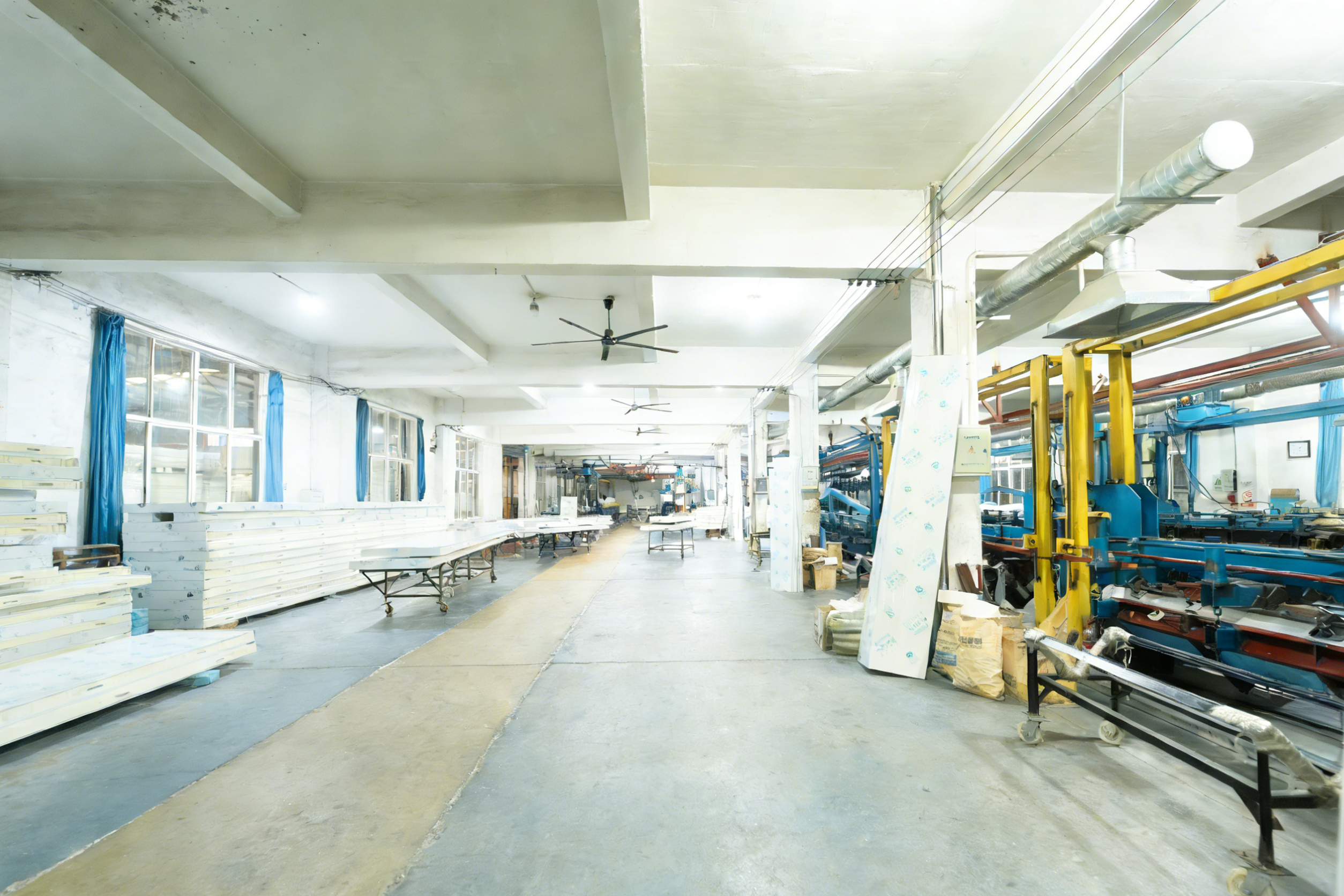
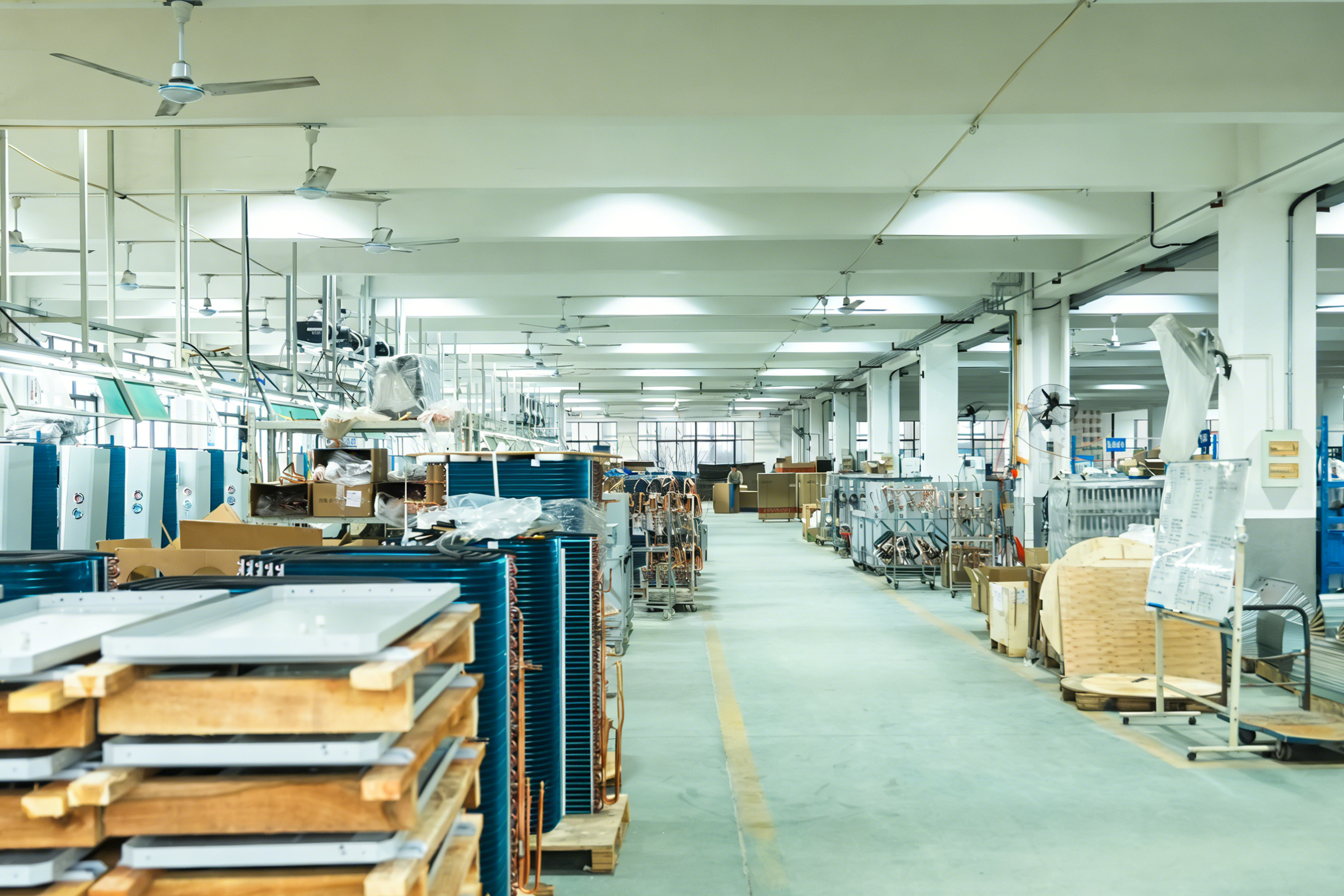
Clevier Refrigeration (Jiangsu) Co., Ltd. — referred to here as Clevier Refrigeration — is a refrigeration equipment manufacturer based in Wujin District, Changzhou City, Jiangsu Province, China. Founded in 2023, the company operates a 10,000 m² factory with around 50 employees and a stated annual output of 10,000 units, and it exports roughly 30% of production to Asia, South America, Africa and North America. Its product scope covers cold room refrigeration systems, condensing units, cold room air coolers and evaporators, air-cooled condensers, polyurethane insulated panels and cold room door systems.
For a buyer at decision stage, the useful question is narrower than which system is best. It is: which combination of air cooler, condensing unit, refrigerant and door set holds this product at this band, in this room, through this loading pattern, for the life of the project? This reference maps the documented Clevier range — -40°C to +10°C, delivered through DL, DD and DJ air cooler series and 3HP to 30HP condensing units — onto the six scenarios most buyers are actually specifying.
Why cold room purchases fail at the interfaces
The expensive mistakes in cold room procurement rarely come from a compressor failing on the first day. They come from interfaces: an air cooler selected for a band the room does not actually run at; a condensing unit matched to nameplate horsepower rather than calculated load; a door system sized for traffic the facility never has; a refrigerant chosen without checking what the local service market can still support in five years.
This is why market-level figures describe only part of the decision. Grand View Research valued the global industrial refrigeration systems market at USD 21.3 billion in 2024, with Asia Pacific holding a 32.6% revenue share. Within cold storage, the frozen band of -18°C to -25°C held roughly 63% of the market in 2025 by the same firm's estimate. In other words, most rooms are frozen — but almost every facility also runs a chilled room, a preparation area or a distribution zone somewhere between 0°C and +10°C.
The opportunity sits in treating those rooms as one engineered set. When the cold room air cooler, the refrigeration condensing unit, the door system and the insulated panel come from a single supplier with a documented band structure, the buyer stops reconciling two or three vendors' assumptions and starts reviewing one specification.
DL, DD and DJ — the air cooler series behind the band
Clevier's cold room air cooler range is organised by temperature band rather than by nominal size alone, which is the practical way to shortlist a cold room evaporator before any load calculation exists.
| Series | Documented band | Typical room duty | System pairing |
|---|---|---|---|
| DL | 0°C to +10°C | Chilled holding: fresh produce, chilled meat and seafood, supermarket preparation rooms, chilled distribution | Condensing unit within the 3HP to 30HP range, sized to calculated load; R404A, R507A or R22 per specification |
| DD | Around -18°C | Frozen storage of meat, seafood and processed food; back-of-house walk-in freezers; frozen dispatch | Condensing unit and cold room unit cooler supplied as a matched set |
| DJ | Low temperature, toward -40°C | Low-temperature frozen storage and low-temperature processing rooms | Larger-capacity condensing units within the same range; door and control layer specified with the room |
The practical consequence of the band is defrost and humidity behaviour. In the DL band the coil works with a small temperature difference to the room, and the rooms that matter most — produce storage, chilled seafood, chilled meat preparation — are humidity-sensitive: a coil run colder than the duty requires strips moisture from the air and from the product surface. In the DD band around -18°C, frost on the coil is continuous and defrost cycles become part of normal operation, so defrost design and room drainage matter as much as nominal capacity. Toward the bottom of the range, in DJ low-temperature duty approaching -40°C, the coil-to-room temperature difference grows and selection tolerance shrinks; a cooler that is close enough at -18°C can be the wrong choice at -35°C.
One boundary is worth stating plainly. Series naming describes the intended band, not a guarantee that one model covers every duty inside it. High-load rooms, frequent door openings and warm product loading all push selection toward a different model within the series or toward a larger cooler. That determination requires the load calculation, which is why the band is the start of the conversation rather than the end of it.
Condensing units from 3HP to 30HP — what the specification actually decides
Clevier supplies air-cooled condensing units across a 3HP to 30HP capacity range, in box type and open type configurations, with Copeland or Bitzer compressors and R404A, R507A or R22 refrigerant depending on the project specification. Three of those choices carry more procurement weight than a datasheet suggests.
Compressor brand
Copeland and Bitzer are named because both carry broad international service recognition. For a distributor or contractor working across several markets, the practical test is not the badge but whether local technicians can source spares and service the unit without depending on a single supply chain. This is also why component recognition matters at the market level: Grand View Research identifies Emerson Electric, Carrier, Danfoss and Bitzer SE as key players in the global condensing unit market, and an OEM manufacturer building with recognised compressors inherits part of that service infrastructure.
Box type versus open type
The enclosed box type condensing unit suits installations where footprint and a protected envelope matter — supermarket back-of-house, compact plant areas, sites where the unit sits close to staff or public areas. The open type configuration leaves the compressor and pipework accessible, which is generally preferred where maintenance access and inspection are routine. Neither is universally better; the site decides.
Refrigerant
R404A and R507A are HFC blends widely used in commercial frozen duty, and R22 remains present in some markets and in service contexts. Refrigerant choice is now a regulatory question as much as a technical one. In Europe, EN 378:2016 sets the mandatory safety and environmental requirements for refrigerating systems and heat pumps. Internationally, IEC 60335-2-89:2019 specifies safety requirements for commercial refrigerating appliances with incorporated or remote units, and the revision behind that standard raised the charge limit for A3 refrigerants such as R290 from 150 g to 500 g — a clear signal that refrigerant practice in commercial refrigeration continues to move. A buyer specifying for a ten-year life should confirm which refrigerant their market will still support at service level, not only at commissioning.
Capacity assignment follows load, not floor area. A small chilled preparation room and a large distribution freezer sit at opposite ends of the same 3HP to 30HP range, and the unit in between is chosen from calculated load, room volume, product turnover, ambient conditions and insulation performance.
Doors, controls and the safety layer
A cold room refrigeration system is only as good as its weakest interface, and in most facilities that interface is the door. Clevier's system scope includes cold room door systems alongside condensing units and cold room air coolers, and the manufacturer positions its offering against manual sliding door systems on automation, safety of operation and labour.
The control and protection layer documented for the system includes temperature sensors, safety limit switch, emergency stop system and overload protection, with intelligent control, thermal protection and automatic stop protection used to address motor overheating, electrical failure and door jam prevention. Read as procurement criteria rather than as features, these matter in three ways: they define what happens when a door is left open or jammed; they define how the system responds to a motor or electrical fault; and they define what an operator is expected to do in an emergency. A contractor commissioning a room should be able to trace each of those behaviours back to a component.
Six scenarios, mapped to band and hardware
The scenario list below follows the way cold room projects are actually briefed — by product and by room function — and each maps to a band, an air cooler series and a condensing unit inside the same documented range.
1. Seafood processing
Fresh seafood is a chilled product before it is a frozen one, and both duties usually coexist in the same plant. Chilled holding, portioning and dispatch areas sit in the DL band at 0°C to +10°C, where the priority is stable temperature without drying the product surface. Frozen storage and finished-goods holding run on DD duty around -18°C. Low-temperature storage toward the bottom of the -40°C to +10°C range uses DJ series coolers, where the larger coil-to-room difference leaves little margin for an undersized cooler or a badly timed defrost. A single seafood plant can therefore require all three series, each matched to a condensing unit within the 3HP to 30HP range.
2. Meat processing
Meat plants typically run a warm side and a cold side. Chilled cutting, packing and dispatch rooms sit in the DL band; freezing and holding rooms sit on DD duty around -18°C. The recurring risk in meat is door traffic: rooms are entered often, doors stay open longer than the design assumes, and the cooler has to recover. That is a door-and-controls problem as much as a capacity problem, and it is the reason door systems, temperature sensors and automatic stop protection belong in the same specification as the evaporator.
3. Food processing plants
In a food processing plant the refrigeration system is a process utility: raw material chilled, work in progress held, finished product frozen, all inside one building with one maintenance team. The reference configuration is a mixed set — DL for chilled processing, DD around -18°C for frozen finished goods, DJ where low-temperature duty is required — served by condensing units across the 3HP to 30HP range. For this buyer the deciding factor is usually not the cooler model but the documentation: which unit serves which room, what refrigerant each circuit uses, and what the maintenance schedule looks like three years out.
4. Fruit and vegetable storage
Produce storage is the most humidity-sensitive application in the set. Rooms run in the DL band, 0°C to +10°C, and the risk is dehydration and surface damage caused by a coil running colder than the duty requires. Selection here is about matching the cold room unit cooler to a small temperature difference and a stable air pattern, and about making sure the condensing unit's control does not cycle the room through wide temperature swings. Door discipline is decisive again: a produce room with constant traffic behaves nothing like its nameplate.
5. Supermarkets and restaurants
Retail and foodservice installations are small, numerous and unforgiving of footprint. A supermarket back-of-house typically combines a chilled preparation room or walk-in chiller in the DL band with a frozen store around -18°C on DD duty; a restaurant usually needs one of the two, sometimes both at small capacity — the lower end of the 3HP to 30HP condensing unit range. Box type condensing units fit where the plant area is compact and adjacent to public space, and door automation removes the human error that dominates small-room failures.
6. Cold chain distribution and cold storage warehouses
Distribution is where the DJ series and the larger end of the condensing unit range earn their place. Cold chain warehouse refrigeration may combine frozen storage around -18°C and low-temperature storage toward -40°C in the same building, with dock areas opening to ambient air dozens of times a shift. Here the system boundaries matter most: door systems, control logic, emergency stop and overload protection are not accessories; they are the difference between a room that holds setpoint and one that never recovers.
Market trend: frozen volume, multi-band reality
Three data points frame where cold room demand is heading. Stratview Research placed the global condensing unit market at USD 42 billion in 2023, growing at a CAGR of 7.95%, with Asia Pacific leading at a 70.22% revenue share in the same year according to Grand View Research. Technavio estimated the global refrigeration coolers market — evaporators and air coolers — at USD 4.0 billion in 2024. The component market is therefore far smaller than the system market, which is exactly why value sits in matching and integration rather than in the cooler alone.
On the demand side, Grand View Research attributes over 76.8% of global cold chain market revenue in 2025 to the food and beverages segment, and about 63% of the cold storage market to the frozen band. China's total cold storage capacity reached 237 million cubic meters by June 2024, an 8% year-on-year increase, according to the China Federation of Logistics & Purchasing and the IIR. Dataintelo projects walk-in cold rooms to hold 58.7% of the cold room market by 2025 — a secondary estimate, but consistent with the pattern in the other sources: the room, not the component, is the unit of purchase.
The interpretation for buyers is straightforward. Asia Pacific supply depth means condensing units and air coolers are widely available, so availability alone no longer differentiates a supplier. What differentiates is whether the supplier can state, band by band, which series and which unit belongs in which room — and whether that statement survives a factory audit and a commissioning report.
Comparison with traditional alternatives — and where the claims stop
Clevier positions its systems against three conventional baselines: piston compressors, traditional refrigeration systems and manual sliding door systems. The documented comparison is summarised below.
| Dimension | Conventional baseline | Documented Clevier position |
|---|---|---|
| Energy consumption | Piston compressor and traditional system layouts | Lower energy consumption; comparison documentation cites a 20–35% saving, project dependent |
| Operating speed | Traditional refrigeration systems | Up to 30% faster operation, depending on project specifics |
| Automation and safety | Manual sliding door operation | Higher automation and safer operation; door jam prevention and emergency stop in the control layer |
| Maintenance | More manual intervention | Less manual operation, lower failure rate, easier maintenance, lower maintenance cost |
| Service life | Comparable products | Manufacturer states a longer expected lifespan than comparable products |
| Labour | Manual door and room handling | Reduced labour cost through automation |
Those positions need boundaries, and buyers should apply them.
The percentage figures are project dependent. The 20–35% energy-saving range and the 30% faster-operation figure are explicitly qualified by project specifics. A room with poor insulation, oversized door openings, warm product loading or irregular traffic will not realise them, and a buyer should ask for a project-specific comparison rather than treat the range as a specification.
The system is equipment for project installation. Clevier supplies condensing units, air coolers, door systems and panels with OEM/ODM customisation of cooling capacity, temperature range, voltage, refrigerant, compressor selection and panel structure, and supports project-based installation for contractors, distributors and engineering projects. What the documentation does not claim is that equipment scope equals installed performance: pipework, evacuation, charge, airflow and commissioning are carried out by the installing contractor, and those steps decide whether the matched set performs as designed.
Automation carries a cost and a maintenance obligation. Automatic door systems and the control layer add capital cost, and they depend on stable power quality, sensor upkeep and operator training. Where a site cannot support that discipline, a simpler manual arrangement can be the rational choice — the comparison is not a universal win.
Refrigerant choice is constrained from outside. R22 remains in use in some markets but is being phased out under increasing regulation, and R404A and R507A are HFC blends exposed to the same regulatory direction. A buyer who standardises on a refrigerant without checking local supply and standards risk is making a technical decision with a commercial tail.
Engineering depth should be confirmed against project complexity. The company lists a two-engineer R&D team, so a buyer with multi-temperature control logic, unusual voltage requirements or complex panel structures should confirm engineering scope early rather than assume it.
Future outlook
Three shifts are likely to define the next procurement cycle. First, refrigerant practice will keep moving under standards pressure: the IEC 60335-2-89 charge-limit revision and EN 378:2016 obligations both point toward systems designed for a refrigerant transition rather than a single fixed charge for life. Second, the frozen band will remain the volume core at roughly 63% of cold storage, but the differentiation will happen in chilled and multi-temperature rooms, where humidity control and door discipline decide product quality. Third, as Asia Pacific keeps dominating condensing unit supply, documentation quality — band-by-band selection data, OEM/ODM traceability, safety protection records — becomes the practical way to separate suppliers that can support a project from those that can only ship a box.
What to watch is simple: whether suppliers publish which series belongs in which band, and whether they will put that mapping in writing before the purchase order.
FAQ
What temperature range does a Clevier cold room refrigeration system cover?
The documented range is -40°C to +10°C. It is delivered through three cold room air cooler series — DL for 0°C to +10°C, DD for around -18°C, and DJ for low-temperature duty — paired with condensing units of 3HP to 30HP, Copeland or Bitzer compressors, R404A, R507A or R22 refrigerant, and cold room door systems within the same system scope.
How do I choose between the DL, DD and DJ air coolers?
Start with the temperature band the product requires. DL covers 0°C to +10°C chilled rooms, DD covers frozen rooms around -18°C, and DJ covers low-temperature duty toward -40°C. The band narrows the series; the specific model is then set by a load calculation using room volume, product type and incoming temperature, daily turnover, ambient conditions, insulation and door openings.
Which condensing unit capacities and compressor brands are available?
Air-cooled condensing units are offered across a 3HP to 30HP capacity range, in box type and open type configurations, with Copeland or Bitzer compressors. Refrigerant is specified per project from R404A, R507A or R22, and capacity is selected from calculated load rather than room area alone.
Can one supplier cover coolers, condensing units, doors and panels?
Clevier's system scope includes condensing units, cold room air coolers and evaporators, cold room door systems and polyurethane insulated panels. The company supports OEM/ODM customisation of cooling capacity, temperature range, voltage, refrigerant, compressor selection and panel structure, together with project-based installation support for contractors, distributors and engineering projects.
Are the cited 20–35% energy savings guaranteed for every project?
No. The figures are qualified as project dependent. Realised savings vary with insulation quality, door traffic, product loading temperature, ambient conditions and commissioning quality, so the range should be treated as directional evidence and validated against a project-specific comparison.
What information should a contractor provide for an accurate system match?
Product type and incoming temperature, the target room band, room dimensions and volume, insulation specification, daily turnover, site ambient conditions, available power supply and voltage, preferred refrigerant, door type and expected traffic, and whether installation support is required. Without these inputs the band can be confirmed but the unit cannot be sized.
How does the system handle motor overheating, electrical failure and door jams?
The documented protection layer includes temperature sensors, safety limit switch, emergency stop system and overload protection, with intelligent control, thermal protection and automatic stop protection applied to motor overheating, electrical failure and door jam prevention. These are protection functions, not a substitute for correct sizing and commissioning.
Reference document: Clevier Product Catalog 2026 (English) — covering condensing units, cold room air coolers, panels and cold room equipment.
Have Questions or Need More Details?
Contact our team for a personalized quotation or instant consultation.
Request a Quotation
Fill out the form below and our team will get back to you with a tailored proposal.
WhatsApp Direct Chat
Prefer to chat in real-time? Message us on WhatsApp for instant assistance & quick answers.
- Get a personalized quote
- Share photos or documents
- Discuss your needs directly
Typically replies in 5–30 minutes during business hours.