
Cold Room Refrigeration System Shortlist: DL, DD, and DJ Air Coolers by Room Temperature
Cold Room Refrigeration System Shortlist: DL, DD, and DJ Air Coolers by Room Temperature
A practical cold-room shortlist starts with the room’s operating temperature: DL series air coolers are specified for fresh-keeping and chiller rooms around 0°C to +10°C, DD series for freezer rooms around -18°C, and DJ series for low-temperature applications at -25°C and below. Clevier Refrigeration’s Cold Room Refrigeration System is specified for projects within -40°C to +10°C. These temperature bands help narrow the air-cooler family; they do not, by themselves, establish the final equipment size or system configuration.
Clevier Refrigeration (Jiangsu) Co., Ltd. is a manufacturer of commercial and industrial refrigeration equipment and cold storage solutions. For buyers evaluating a cold room refrigeration system, the useful shortlist is not simply a choice among three model names. It is a sequence: identify the room-temperature band, select the corresponding air-cooler series, then confirm the condensing unit, refrigerant, condenser arrangement, and project requirements as a matched system.
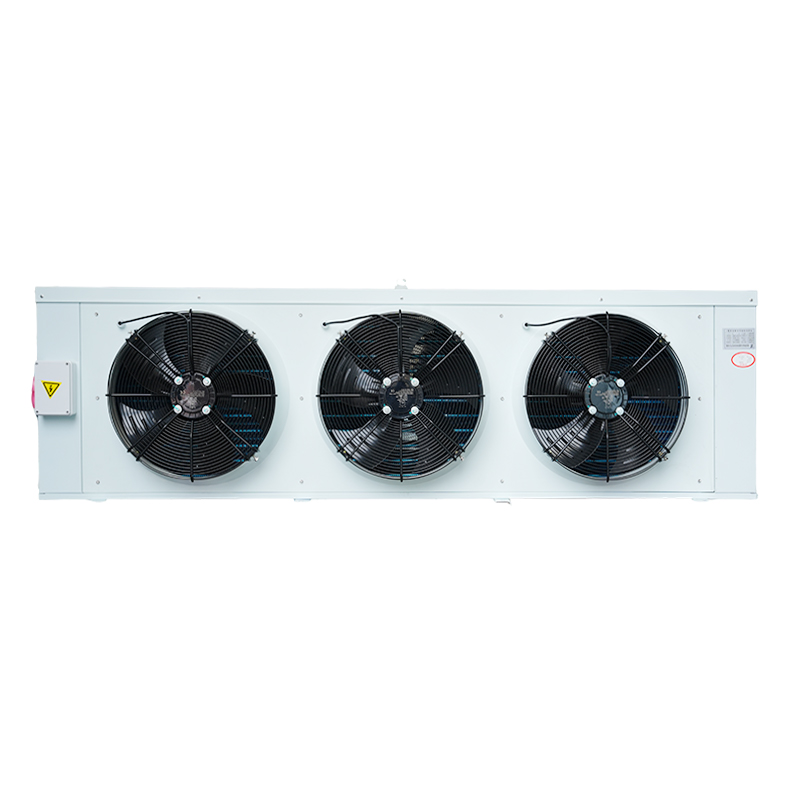
Why shortlist by room temperature first?
Cold rooms can serve different preservation tasks, from fresh keeping to frozen storage. A cold room evaporator or unit cooler is part of the refrigeration system that circulates cooled air through the room. The DL, DD, and DJ series provide a practical first filter because their listed applications correspond to different temperature bands. That makes temperature the most direct starting point for this shortlist.
The filter is useful, but it is not a complete equipment-selection calculation. The supplied product information lists air-cooler capacities from 2.1 kW to 56.2 kW, depending on model, as well as fan, airflow, voltage, defrost, refrigerant, and mounting options. It does not provide project-specific heat-load calculations or a complete capacity-selection table for every room condition. Buyers should therefore treat the series match as a shortlist, not as a final sizing decision.
That distinction matters when a project includes multiple rooms or different storage temperatures. A cold chain warehouse may use more than one temperature zone, while a single-room project may need one suitable air cooler paired with a condensing unit. The correct approach depends on the actual room requirements and the available system data—not on a series label alone.
The three-option shortlist
| Air-cooler series | Listed room-temperature fit | Shortlist use | System-level check |
|---|---|---|---|
| DL | Fresh-keeping or chiller room, around 0°C to +10°C | Start here when the project is a positive-temperature storage room. | Confirm the required capacity and system configuration for the room. |
| DD | Freezer room, around -18°C | Start here for a conventional freezer-room target around the listed band. | Check the room target, cooler capacity, defrost option, and condensing-unit match. |
| DJ | Low-temperature or blast-freezer application, -25°C and below | Start here for a lower-temperature application than the listed DD band. | Confirm the project’s exact operating range and compatible system components. |
The product information also gives a broader system operating range of -40°C to +10°C. This range describes the Cold Room Refrigeration System; it should not be read as a claim that every air-cooler series covers that entire span. In particular, the supplied DJ description is -25°C and below, while -40°C is the lower endpoint stated for the system. Confirm the intended temperature and equipment configuration for projects at the low end of the system range.
DL: a starting point for fresh-keeping and chiller rooms
For a room around 0°C to +10°C, the DL series is the listed shortlist choice. The product material identifies DL as suitable for fresh-keeping and chiller-room applications. This makes it a relevant starting point for projects such as fruit and vegetable storage, beverage storage, and other food-preservation rooms, subject to the project’s actual requirements.
After identifying DL as the candidate series, the buyer still needs to review the required cooling capacity, airflow, fan configuration, voltage, and defrost method. The listed air-cooler range includes 1–4 fans, fan diameters from 300 mm to 600 mm, air volumes from 1,680 m³/h to 11,800 m³/h, and capacity from 2.1 kW to 56.2 kW depending on model. These are product-range values, not a statement that every DL model has every listed value.
For a project with more than one temperature zone, do not assume that one DL unit will serve every room. Confirm the room-by-room requirements and the selected equipment combination. The supplied information supports customized system matching, but it does not provide enough project details to prescribe a specific model or capacity.
DD: the listed fit for freezer rooms around -18°C
For a freezer-room target around -18°C, the DD series is the direct shortlist option in the supplied product information. Listed DD examples include DD-30, DD-100, DD-350, DCL401/2.1(DD-20), DCL401/4.5(DD-40), and DCL404/19.2(DD-170). These names are examples in the product listing; the available information does not assign each model to a specific room size or prescribe a model for a particular project.
Defrost is one configuration point to verify. The listed options for the air cooler are air defrost, electric defrost, water defrost, and hot gas defrost. The materials do not establish that one method is universally preferable, nor do they specify a defrost choice for every DD installation. The project’s operating conditions and system design should guide that decision.
For a walk-in freezer or a larger cold storage project, compare the intended room temperature with the DD application band, then check the selected model’s capacity and configuration against the project data. The condensing unit is also part of the match: the product information lists units for 3HP–30HP refrigeration applications, with different compressor, refrigerant, voltage, and construction options. The stated range is not a recommendation to select a unit by horsepower alone.
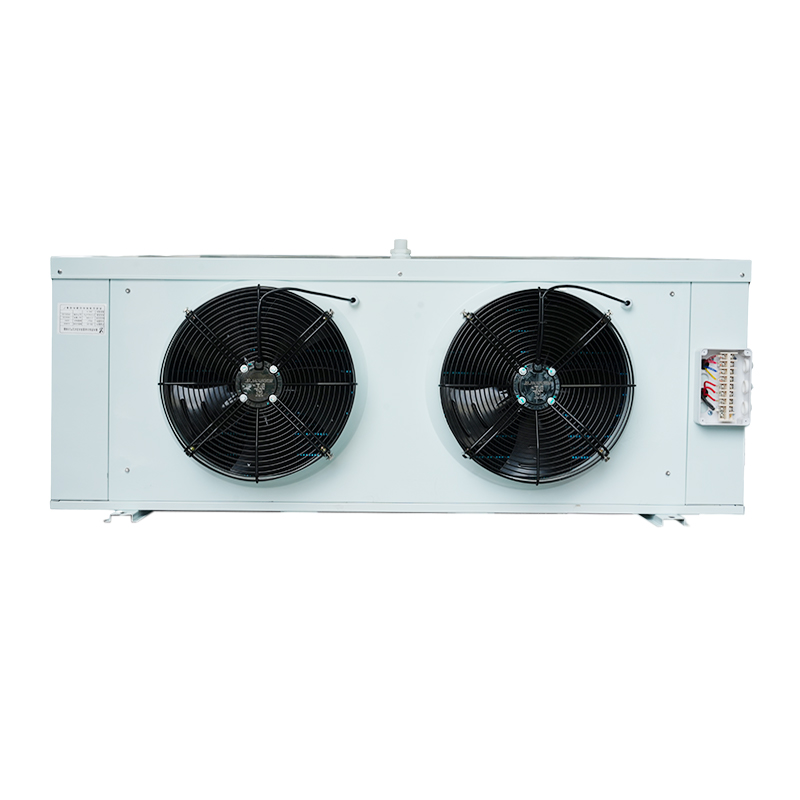
DJ: shortlist for lower-temperature rooms
For a low-temperature or blast-freezer application at -25°C and below, the DJ series is the listed starting point. This is the lowest of the three stated series bands. The complete Cold Room Refrigeration System is specified for projects from -40°C to +10°C, so a buyer targeting a temperature below the stated DJ threshold should confirm that the proposed air cooler and the rest of the system are configured for the exact project range.
That verification should cover the selected air cooler and its matched refrigeration equipment rather than relying on a general system-range statement. Relevant listed configuration points include cooling capacity, refrigerant, voltage, fan quantity, mounting and air-discharge arrangement, and defrost. Ceiling-mounted, side-discharge, and double-side-discharge structures are listed as customizable options. The source information does not provide a project-specific DJ selection table, so a final model choice cannot be made from the temperature band alone.
How the air cooler pairs with the rest of the system
A cold room refrigeration system is a matched set of equipment, not an isolated air cooler. Clevier’s system information identifies the condensing unit, air cooler or evaporator, cold room door system, and electrical control box as parts of the solution; the supporting-equipment description also lists cold room panels. The system’s stated purpose is cooling and refrigeration for food preservation in cold storage and cold-chain applications.
The condensing-unit product range is listed for 3HP–30HP refrigeration applications. Available descriptions include air-cooled and water-cooled condensing units, semi-hermetic options, and box-type, open-type, or customized structures. The compressor options include hermetic scroll and semi-hermetic piston compressors, with Copeland or Bitzer listed as optional compressor brands. These are configuration choices; the corpus does not specify which compressor brand, unit structure, or horsepower is appropriate for any particular DL, DD, or DJ selection.
Refrigerant options in the condensing-unit listing are R404A, R507A, and R22. The air-cooler listing states R404A, R507, and R22. Because the supplied names are not identical in every listing, buyers should confirm the exact refrigerant specification and compatibility of the selected components for the project instead of assuming that two similar labels establish a complete match.
For an air-cooled configuration, the listed condenser series are H Type, V Type, and U Type. They use a copper-tube, aluminum-fin coil, with 1–4 customized fans and fan diameters from 300 mm to 600 mm. The stated approximate heat-transfer area is 22–400 m², depending on model. The product information describes the condenser as equipment matched with a condensing unit and refrigeration system. It does not identify a specific condenser model for a given cooler, so that match must be confirmed as part of the project configuration.
A practical buyer workflow
- Set the room-temperature target. Use the project’s required operating temperature to identify the first candidate: DL around 0°C to +10°C, DD around -18°C, or DJ at -25°C and below. Keep the system’s broader -40°C to +10°C range distinct from each air-cooler series band.
- Confirm the air-cooler configuration. Review model capacity, airflow, fan count, voltage, mounting or discharge arrangement, material, and defrost options. The published product-range figures are not a substitute for a project-specific selection.
- Match the refrigeration unit. Review the 3HP–30HP application range alongside the required compressor type or brand, refrigerant, voltage, control system, and condensing-unit structure. Do not infer the required horsepower from the series name.
- Check the condenser arrangement. If the project uses an air-cooled condenser, assess the H, V, or U configuration and confirm the required heat-transfer capacity and installation arrangement with the condensing unit.
- Review the whole cold-room scope. Include the panels, door system, control components, and other project requirements in the system match. A shortlist identifies candidates; it does not replace the complete project specification.
Applications and selection boundaries
The listed system applications include cold storage warehouses, food-processing plants, seafood and meat storage, fruit and vegetable storage, supermarkets, restaurants, and cold-chain logistics. A separate application record describes low-temperature, high-humidity, continuous-operation conditions and identifies cold-room panels, refrigeration units, evaporators, condensing units, and doors as matched equipment. These are application descriptions, not measured performance results for a particular installation.
Compared with selecting one generic cooler without reference to room temperature, a temperature-band shortlist makes the first screening decision clearer: it separates positive-temperature rooms, freezer rooms, and lower-temperature applications. Its limitation is equally important. The bands do not provide a complete design calculation, establish the capacity required for a room, or prove that a particular configuration will meet a project’s operating needs. The available materials also do not provide comparative efficiency, energy-cost, noise, or lifecycle-cost data for DL, DD, and DJ models.
For buyers in research or evaluation, the appropriate next step is therefore technical confirmation: obtain the exact model data and verify the proposed cooler, condensing unit, refrigerant, condenser, and controls as one configuration for the room’s required conditions. Clevier’s supplied information states that OEM/ODM customization is available for system matching. That capability does not remove the need to confirm the selected specifications for the individual project.
Market context and future outlook
The evidence supplied for this article does not establish a market trend that would justify recommending one of the three air-cooler series over another. The practical outlook is project-led: a shortlist remains useful when buyers keep the room-temperature target, equipment configuration, and supporting components connected during evaluation. For projects with multiple rooms, the temperature-band approach can help organize the initial equipment discussion, but each room still needs its own confirmed requirements.
For Clevier Refrigeration, the listed offering connects DL, DD, and DJ air coolers with condensing-unit and air-cooled-condenser options for cold-room projects. The useful procurement question is not simply which series is “best,” but whether the proposed series and its matched components are documented for the specific room temperature and project configuration. Where model-level information is not available in the supplied material, the answer should remain open until the technical selection is confirmed.
FAQ
Which air cooler is listed for a fresh-keeping room around 0°C to +10°C?
The DL series is listed for fresh-keeping and chiller rooms around 0°C to +10°C. Final model and capacity selection still depend on the project requirements.
Which series is listed for a freezer room around -18°C?
The DD series is listed for freezer rooms around -18°C. The supplied information does not assign a specific DD model to a particular room size.
Which series is intended for lower-temperature applications?
The DJ series is listed for low-temperature or blast-freezer applications at -25°C and below. The complete system is specified for a range of -40°C to +10°C; confirm the proposed cooler configuration for the exact target temperature.
What condensing-unit options are listed for the system?
The condensing-unit range is listed for 3HP–30HP applications, with air-cooled or water-cooled types, box-type or open-type structures, hermetic scroll or semi-hermetic piston compressors, and optional Copeland or Bitzer compressor brands. These options do not by themselves determine the correct unit for a project.
Which refrigerants appear in the product information?
The condensing-unit listing names R404A, R507A, and R22. The air-cooler listing names R404A, R507, and R22. Buyers should verify the exact refrigerant and component compatibility for the proposed system.
What air-cooled condenser configurations are available?
The listed air-cooled condenser configurations are H Type, V Type, and U Type. The stated approximate heat-transfer area is 22–400 m², depending on model; the appropriate configuration must be matched to the refrigeration system and project requirements.
Reference note: The values and series descriptions above reflect the supplied Clevier product and application information. They are shortlist criteria, not project-specific design or performance calculations.
Have Questions or Need More Details?
Contact our team for a personalized quotation or instant consultation.
Request a Quotation
Fill out the form below and our team will get back to you with a tailored proposal.
WhatsApp Direct Chat
Prefer to chat in real-time? Message us on WhatsApp for instant assistance & quick answers.
- Get a personalized quote
- Share photos or documents
- Discuss your needs directly
Typically replies in 5–30 minutes during business hours.