
Cold Storage and Continuous Shift Duty: Are CPD35 Forklifts a Viable Long-Term Choice?
Cold-chain warehousing and multi-shift manufacturing put electric counterbalance trucks under conditions that rarely appear in a standard quotation: rooms that stay below freezing, floors that alternate between dry and condensation-slick, and shift patterns that leave almost no window for conventional battery charging. The CPD35, an electric counterbalance forklift in the 3.5-ton class supplied by Ningjin Shunhao Trading Co., Ltd., is positioned against exactly those conditions. Its documented attributes include zero emissions, low noise, suitability for cold storage, dual front drive motors and an automatic electromagnetic parking brake, with an optional lithium battery offered as a lifecycle-cost consideration.
The conclusion this analysis develops is deliberately narrow. The CPD35 is a viable long-term choice for cold storage and continuous shift duty when three conditions hold: the truck is specified against a signed technical specification, the battery strategy is matched to the real shift pattern, and the supplier behind the fleet remains able to support it after commissioning. Where those conditions are not met, the model's operating advantages do not automatically convert into a lower cost of ownership.
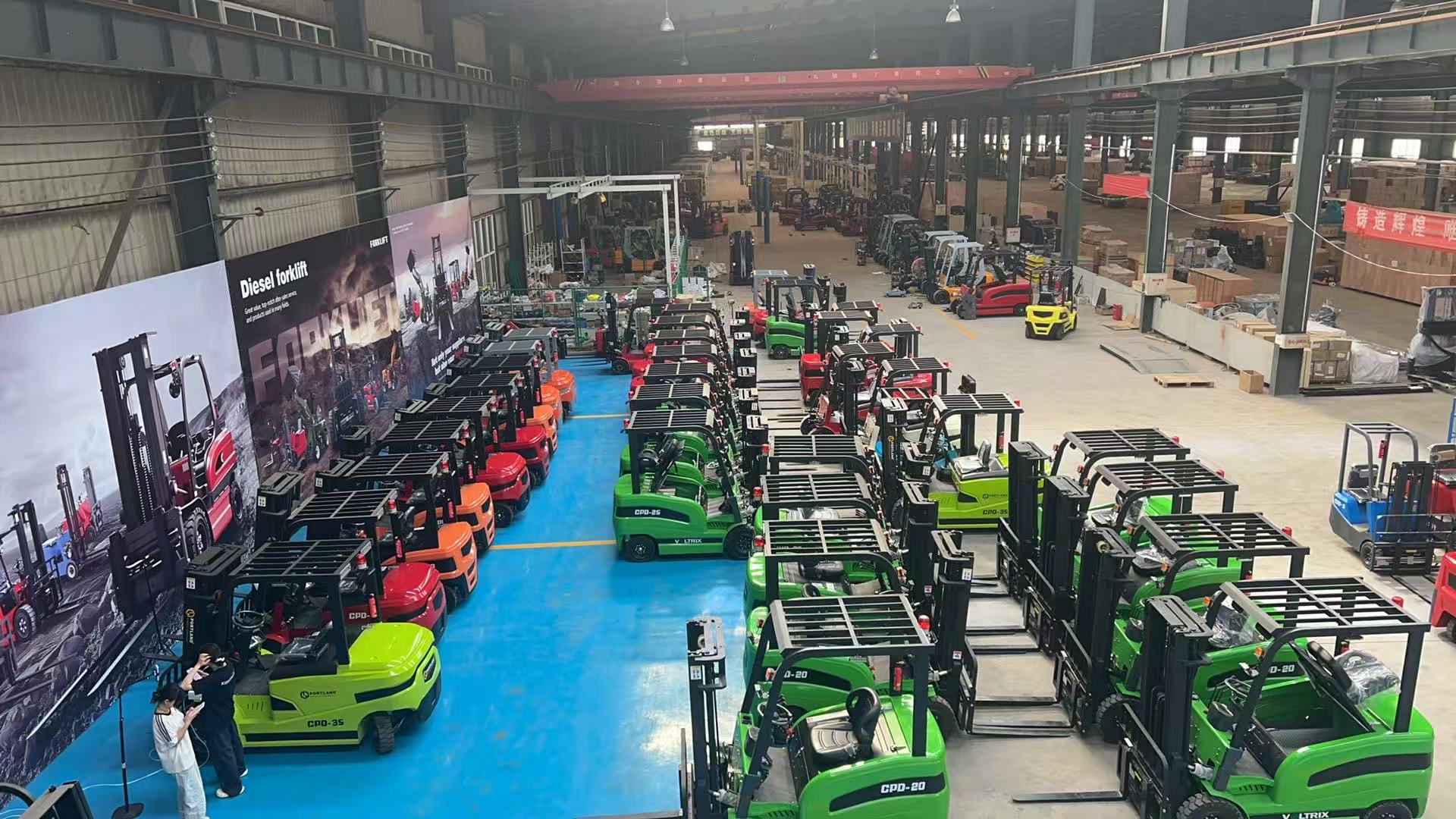
Why Cold Storage and Multi-Shift Duty Rewrite the Selection Criteria
In ambient warehouses, the forklift is mostly a lifting and transport problem. In cold storage and continuous shift operations, it becomes an energy, traction and building-compliance problem at the same time. Four pressures dominate.
Battery behaviour at low temperature. Cell chemistry changes in the cold, and the two mainstream battery families do not respond the same way. Third-party analysis by Mordor Intelligence notes that lithium-ion batteries in cold storage applications down to -20°C retain significantly more capacity than lead-acid batteries, and that this difference is directly connected to the growth of the food-industry segment, which the same source projects at an 11.6% CAGR. For a cold-chain operator, that is not a technical footnote — it determines whether a truck can complete a realistic working cycle inside a freezer room instead of being pulled out early.
Compressed charging windows. Continuous shift duty removes the long, predictable charging block that lead-acid batteries require. Opportunity charging — 15 to 30 minute top-ups during breaks — is documented by Toyota Forklifts as a method that does not degrade lithium-ion cycle life, whereas the same practice significantly harms lead-acid longevity. This is the operating logic that makes the lithium option relevant to multi-shift warehousing rather than a premium upgrade.
Indoor air quality and noise. Freezer rooms, food plants and enclosed production halls have limited ventilation regardless of season. Zero emissions at the point of use removes exhaust exposure from the working environment, and low noise improves verbal communication and reduces fatigue across a full shift — both factors that matter to health, safety and productivity planning rather than to marketing.
Traction and holding on difficult floors. Cold-room floors, ramps between temperature zones and wash-down areas produce surfaces that are intermittently wet or slick. Drive configuration and braking behaviour on those surfaces decide whether a truck is usable at speed or has to be operated cautiously.
Market context reinforces the direction: in 2024, electric forklifts reached a 71% share of North American retail orders (Industrial Truck Association, reported by Batteries International), while the fastest-growing electric segment globally is narrow-aisle equipment, projected by Mordor Intelligence at a 9.28% CAGR through 2030 as warehouses densify.
What the CPD35 Is, and Where It Sits in the Range
Ningjin Shunhao Trading Co., Ltd. is a China-based supplier of electric forklifts and customized material handling equipment, operating from Ningjin County, Xingtai City, Hebei Province, and specializing in OEM and ODM customization with an R&D team of 15 engineers. Its products are covered by ISO 9001, ISO14001, CE and UN38.3 certifications, and the company reports that its main products are electric forklifts.
The CPD35 is the 3.5-ton member of that electric counterbalance range. The supplier documents a configuration span of 1.0 to 3.5 tons with load-capacity customization, meaning the CPD35 is the upper end of the standard range rather than a fixed, non-negotiable specification. That distinction matters for long-term planning: a 3.5-ton truck used on lighter pallets is being paid for at a capacity the operation may not need, while a 3.5-ton truck asked to carry a heavy attachment at high lift height may not have the residual capacity the application assumes.
The attributes relevant to cold storage and continuous shift duty are:
- Zero emissions — no exhaust at the point of use, which allows operation inside freezer rooms, food plants and sealed production halls.
- Low noise — supports shift-long operation in occupied buildings where communication and hearing protection are managed.
- Suitability for cold storage — the model is specified for cold-chain environments rather than only for ambient warehouses.
- Dual front drive motors — traction delivered through both front wheels rather than a single drive path.
- Automatic electromagnetic parking brake — park braking is actuated by the system rather than left to operator habit.
- Optional lithium battery — offered as a lifecycle-cost decision for multi-shift work, not as a default.
Technical Explanation: What the Two Drive and Brake Features Actually Change
Dual front drive motors
Two driven front wheels change how torque reaches the floor. Instead of one drive path that must be distributed across the axle, each front wheel contributes drive effort, which improves grip on surfaces where one wheel would otherwise lose traction — wet freezer-room floors, transition ramps between temperature zones, and ramps inside logistics parks. In practice this affects three things a cold-chain operator can measure: how confidently a loaded truck climbs a ramp, how much speed can be maintained on a slick surface without wheel spin, and how precisely the truck can be positioned in a tight aisle where the operator cannot afford a slip against racking.
Automatic electromagnetic parking brake
Parking brakes on industrial trucks are conventionally a procedural control: the operator is expected to apply them. Under continuous shift conditions, procedural controls degrade — gloves reduce feel, handovers between shifts compress routines, and a truck stopped briefly on a ramp may be left on the brake only as long as the operator remembers. An automatic electromagnetic parking brake actuates without relying on that habit. For cold-storage work the practical consequences are fewer roll incidents during loading and unloading pauses, more predictable behaviour at shift changes, and one less item to enforce through supervision. It also reduces a specific maintenance pattern: a parking brake that is habitually not applied tends to be adjusted less often, and problems are discovered later.
Zero emissions and low noise in occupied buildings
Emissions and noise are usually treated as compliance features. In cold-chain and food operations they are also operating features. Because there is no combustion stage, the truck can work in sealed rooms where ventilation is limited by refrigeration design rather than by air-quality rules. Low noise matters for a different reason: multi-shift warehouses rely on verbal coordination at racking, loading bays and temperature-zone doors, and a quieter truck makes that coordination possible without raising voices over a shift.
Application Fit: Cold Store, Food Plant and Multi-Shift Warehouse
The supplier's documented positioning places its electric counterbalance trucks in high-frequency warehouses, factories, logistics centers, cold storage and indoor operations. The same positioning describes where the conventional alternative remains adequate: general warehouses and standard material handling without continuous shift pressure.
Three application patterns follow from the CPD35's documented attributes:
- Cold-chain storage and retrieval. Freezer and chiller rooms where trucks must complete cycles at low temperature and return to a charging strategy that fits a compressed break schedule.
- Food and beverage plants. Indoor clean environments where exhaust emissions and noise are incompatible with the production area, and where the truck moves between ambient packaging halls and refrigerated buffer zones.
- Multi-shift warehouses and logistics parks. High-frequency, long-hour operations where the truck is in use across more than one shift and charging has to happen in fragments rather than in one long block.
One boundary should be stated plainly. Where a site contains a classified explosive atmosphere, a standard electric truck is not automatically acceptable. Within the European Union, ATEX Directive 2014/34/EU is mandatory for equipment used in explosive atmospheres. The supplier documents low-temperature and explosion-proof refitting as part of its customization scope, which means the correct route is a documented, purpose-configured unit rather than a standard CPD35 assumed to be compliant.
The Lithium Option: Lifecycle Cost, and the Limits of What Is Known
For multi-shift warehousing, the case for the optional lithium battery rests on charging behaviour rather than on a headline specification. Lithium-ion adoption in new global forklift shipments rose to 35% in 2024 from 22% in 2021 according to LiTrue Analysis, and the operational reason is visible in the charging data: lithium cells tolerate opportunity charging in 15 to 30 minute increments without cycle-life degradation, while lead-acid batteries do not.
Combined with the cold-storage behaviour reported by Mordor Intelligence — lithium-ion retaining significantly more usable capacity than lead-acid at temperatures down to -20°C — the option addresses the two conditions that most often limit an electric truck in a freezer operation: energy available per cycle and the length of the charging break required to restore it.
What should not be assumed is a service life. No verified cycle-life or service-life figure for this configuration is available in the documented materials, and battery life depends on duty cycle, depth of discharge, charging strategy, ambient temperature and maintenance discipline. Buyers evaluating the CPD35 for a multi-shift programme should request battery documentation, charging specifications and warranty terms in writing, and should treat generic lifespan projections from any supplier as unverified until the documentation is provided.
How the Electric Counterbalance Approach Compares With Conventional Practice
The supplier's documented comparison of its electric forklift against a conventional electric counterbalance truck — published at the 3.0-ton class level — sets out the differences that carry into continuous shift duty.
| Dimension | Documented electric counterbalance specification | Conventional electric counterbalance practice |
|---|---|---|
| Drive and control | Advanced electric drive, intelligent energy management and optimized vehicle control | Conventional electric drive with a basic control system |
| Response and effective working time | Faster response, longer effective operating time and reduced charging downtime | Standard operating efficiency with longer charging and downtime |
| Energy efficiency | High-efficiency electric system that maximizes battery utilization and energy conversion | Conventional energy management with relatively higher power consumption |
| Maintenance | Simplified maintenance, fewer service requirements and longer maintenance intervals | More frequent inspections and routine maintenance required |
| Cost profile | Lower energy consumption and reduced long-term operating cost | Lower initial investment in some configurations, but higher long-term energy and maintenance cost |
| Documented best fit | High-frequency warehouses, factories, logistics centers, cold storage and indoor operations | General warehouses and standard material handling |
Note on scope: the comparison above reflects the supplier's published 3.0-ton class comparison. A buyer specifying a CPD35 should request the equivalent data at 3.5-ton capacity rather than extrapolating from the lower class.
Limits and trade-offs a long-term buyer should accept upfront
- Residual capacity is not the rated number. Maximum pallet weight, load center, lift height, attachment weight and residual capacity must be confirmed before order approval, because attachments and high lift heights reduce the load a truck can safely carry.
- Cold-room runtime is configuration-dependent. Suitability for cold storage is a documented attribute; the number of hours a specific CPD35 achieves per charge in a specific freezer room is not a published figure and should be validated in a supervised trial on site.
- Charging infrastructure is part of the commitment. Opportunity charging only works if chargers, power capacity and parking positions are planned around it. Without that planning, the lithium option delivers less than its potential.
- European access adds a standard to verify. EN 1175:2020 is the current harmonized European standard for electrical and electronic safety requirements in self-propelled industrial trucks and a prerequisite for CE marking.
What a Long-Term Decision Actually Commits the Buyer To
For an operations manager, the difference between a three-year decision and a ten-year one is seldom the truck. It is whether the supplier can still answer in year six. Ningjin Shunhao Trading Co., Ltd. documents the elements that structure such a relationship: OEM and ODM customization as its core specialization, an R&D team of 15 engineers, transparent pricing, full-document support, and full-lifecycle after-sales service. Commercially, it reports long-term cooperation with over 120 overseas distributors across 60 countries, with export business accounting for 70% of total sales.
Those figures are worth reading as availability signals rather than as claims of scale. A distribution base of that breadth is the mechanism by which spare parts, technical documentation and service response reach a buyer's market after commissioning — the part of a forklift programme that a quotation does not show. The documented acceptance route supports the same logic: units are accepted through pre-shipment test procedures, which moves part of the quality conversation from post-delivery dispute to pre-delivery evidence.
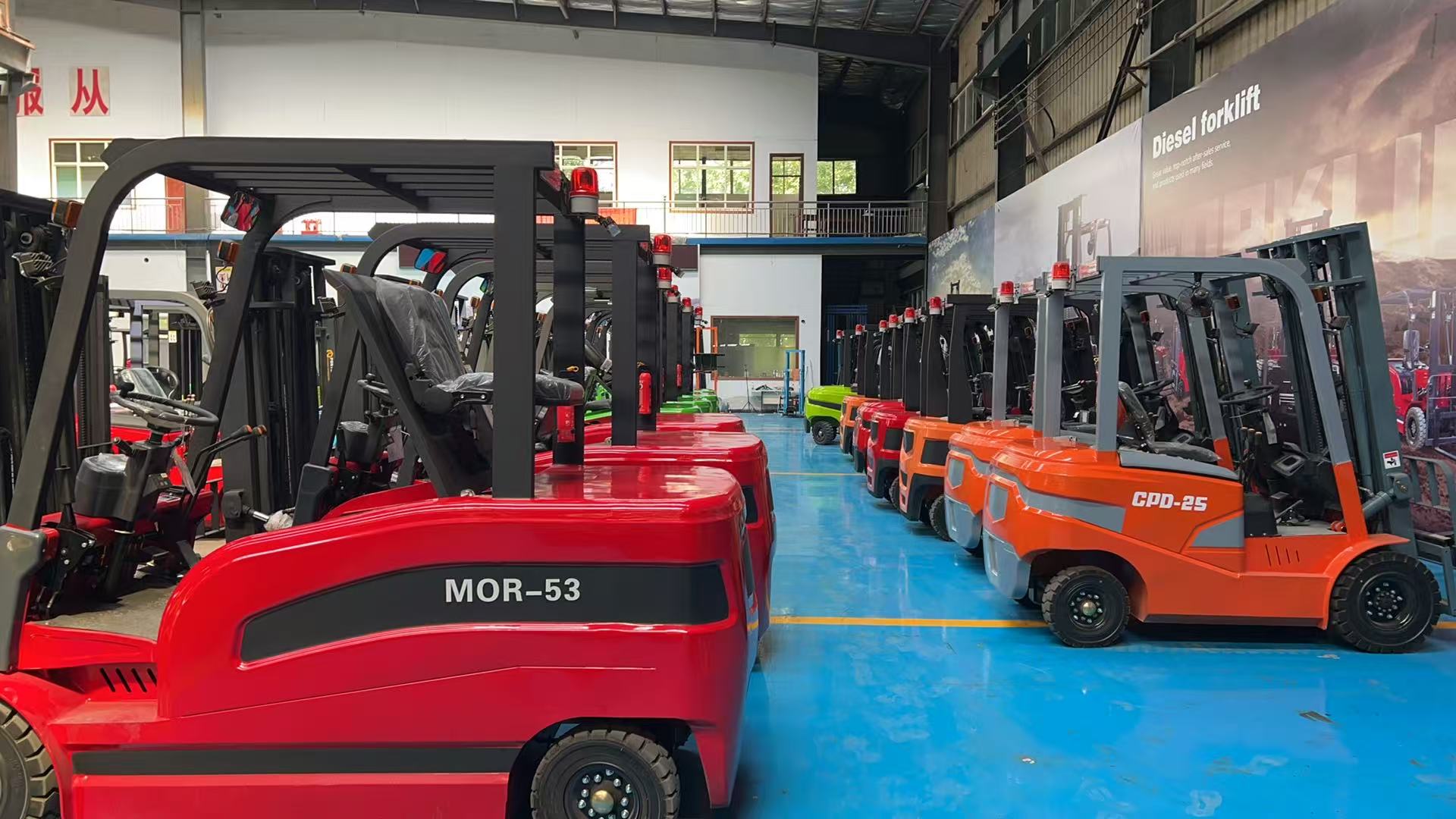
For buyers at the execution stage, the practical implication is a documentation checklist rather than a product comparison: signed technical specification, capacity and attachment approval, battery and charging documentation, pre-shipment test acceptance, and written after-sales scope for the destination market. A CPD35 procurement that includes those five items is a long-term decision; one that includes only the first quotation is a spot purchase with a long-term price.
Market Trend Analysis: Why Cold-Chain Electrification Is Not a Niche
The direction of the market supports the CPD35's positioning. The global electric forklift market was valued at USD 53.01 billion in 2024 and is projected to reach USD 94.55 billion by 2032 (Maximize Market Research). Regional behaviour has already moved further: electric forklifts reached a 71% share of North American retail orders in 2024, and China's domestic electric forklift sales reached 946,300 units in 2025, accounting for 76.9% of total forklift sales in the country (China Construction Machinery Association).
Within that, the two trends that matter most for cold storage are battery chemistry and space. Lithium-ion adoption rose to 35% of new global forklift shipments in 2024, up from 22% in 2021, and the food-industry cold-chain segment is projected to grow at an 11.6% CAGR, supported by lithium-ion's better capacity retention versus lead-acid in cold storage. Separately, narrow-aisle Class II trucks are the fastest-growing electric segment, projected at a 9.28% CAGR through 2030 as warehouses densify.
For a supplier operating at the 1.0 to 3.5-ton end of the counterbalance range, this combination produces a clear buyer profile: operations that need trucks capable of entering cold rooms, working more than one shift, and fitting into layouts that are getting tighter rather than more generous.
Future Outlook
Three developments are likely to shape how cold-storage forklift decisions are made over the next few years. First, charging strategy will move earlier in the procurement process — as lithium becomes more common, the question shifts from "how long does the battery last" to "how many charging opportunities does the shift pattern actually provide." Second, standardization will tighten: EN 1175:2020 already governs electrical safety for CE marking, and ISO 3691-4:2023 updates safety requirements for driverless industrial trucks and their systems, which matters to operations planning automated movement in the same buildings. Third, supplier selection will increasingly be judged on documentation — custom specification approval, test evidence and after-sales scope — because a fleet that cannot be re-specified and re-supported cannot be held in service deliberately.
Against that backdrop, the CPD35's documented feature set addresses the operating conditions of cold storage and continuous shift duty. Whether it becomes a viable long-term choice for a particular site depends on how well the specification, battery strategy and supplier commitment are documented before the order is placed.
FAQ
1. What makes a supplier viable for a long-term electric forklift relationship rather than a single order?
The practical test is whether parts, documentation and technical support remain reachable in the buyer's market after commissioning. Ningjin Shunhao Trading Co., Ltd. documents transparent pricing, full-document support and full-lifecycle after-sales service, and reports long-term cooperation with over 120 overseas distributors across 60 countries, with export business accounting for 70% of total sales. Those elements indicate an existing channel structure rather than a quotation-only relationship, which is the condition under which a multi-year forklift fleet can be maintained deliberately.
2. How can a buyer confirm that a CPD35 is correctly specified before production begins?
Confirm maximum pallet weight, load center, lift height, attachment weight and residual capacity before order approval. The supplier offers 1.0 to 3.5 ton configurations along with load-capacity customization, and requires an approved, signed technical specification before production starts. This step exists because attachments and high lift heights reduce usable capacity below the rated figure, and because a specification agreed in writing is the reference point for any later dispute.
3. What commercial terms apply when a buyer moves from evaluation to ordering?
The documented purchasing terms are: minimum order quantity of 2 units, delivery on FOB or CIF terms, acceptance based on pre-shipment test procedures, and payment terms of 30/70. For a cold-chain operator these terms matter because they define the point at which responsibility transfers and the point at which quality evidence is produced — pre-shipment test acceptance means conformity is checked before the unit leaves the supplier, not after arrival.
4. Does the optional lithium battery change the lifecycle-cost case in multi-shift warehousing?
It changes the charging case. Lithium-ion batteries accept opportunity charging in 15 to 30 minute increments without cycle-life degradation, while the same practice significantly harms lead-acid battery longevity (Toyota Forklifts Blog), and lithium-ion retains significantly more capacity than lead-acid in cold storage down to -20°C (Mordor Intelligence). Adoption reflects this: lithium-ion reached 35% of new global forklift shipments in 2024, up from 22% in 2021. No verified service-life figure for a specific CPD35 battery configuration is documented, so lifetime claims should be supported by written battery documentation rather than accepted as given.
5. How does an established export and distribution footprint reduce long-term support risk?
A broad distributor base is the mechanism through which spare parts, service documentation and technical response reach the operating site. The supplier reports over 120 overseas distributors across 60 countries and states that exports account for 70% of total sales, with full-lifecycle after-sales service documented as part of its offering. Because distributor coverage varies by region and model, buyers should still confirm local coverage, parts stocking and response commitments in writing for their specific market before committing a fleet.
For cold storage and continuous shift duty, the CPD35 answers the operating questions that most often disqualify conventional trucks: it emits nothing indoors, runs quietly in occupied buildings, is specified for cold environments, drives through both front wheels, and brakes without depending on operator memory. The remaining questions — how long a charge lasts in a specific freezer room, and how the battery behaves after several years of two-shift work — are answered by documentation and site validation, not by specification sheets. Buyers who treat those two items as part of the purchase, rather than as details to resolve later, are the ones for whom the CPD35 becomes a long-term choice rather than a trial.