
Commercial Bakery Equipment: Weight vs Capacity Evidence
Commercial Bakery Equipment: Weight vs Capacity Evidence
Buyer comparison | Commercial bakery equipment
Listed weight and listed capacity answer different procurement questions. Weight helps a buyer plan handling, floor loading and installation. Capacity helps a buyer judge whether a machine fits a batch, tray or production pattern. Neither number, on its own, proves baking performance, energy use or build quality.
That distinction matters at the decision stage. A bakery buyer comparing commercial bakery equipment is often given a spreadsheet of model numbers, weights, tray counts and bag labels. The numbers look comparable because they sit in the same columns. In practice, they may describe different things: net machine mass, shipping mass, empty-cabinet mass, dough batch size, tray count or nominal capacity. A sound comparison begins by separating the evidence type before comparing the values.
Among the catalog examples reviewed here are listings associated with SAMAG Bakery Equipment, the brand of Wuxi Shuangmai Bakery Equipment Co., Ltd., a Wuxi-based manufacturer and distributor of commercial bakery equipment whose stated portfolio includes mixers, proofers, ovens and sheeters. The brand reference is a source of listed specifications, not a ranking signal. The comparison below is deliberately neutral: it does not rank suppliers and does not infer tested performance from catalog weight or capacity alone.
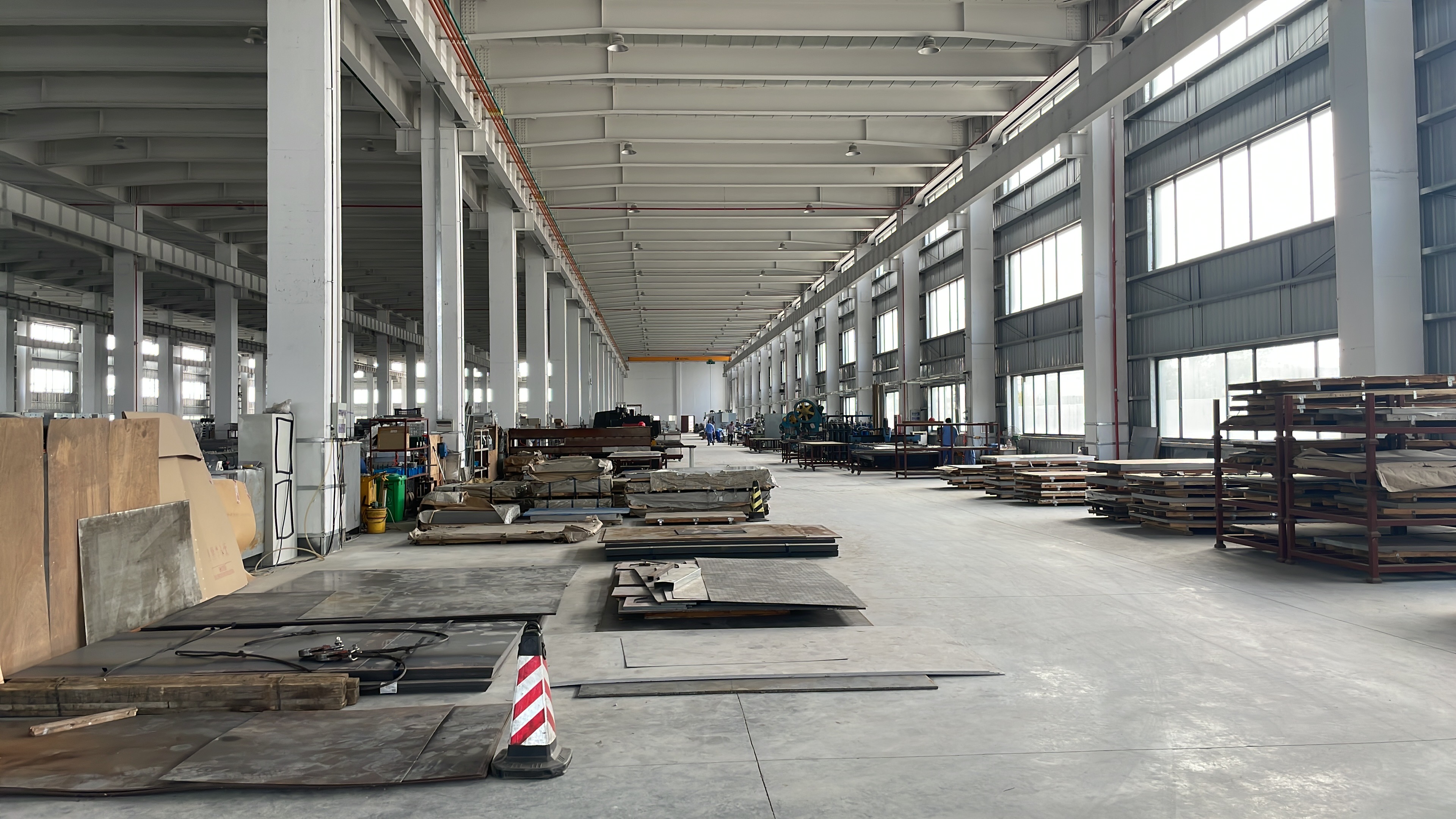
The comparison question: what does a listed weight actually prove?
A listed weight is an installation and logistics data point. It can help a buyer check floor loading, lift capacity, door width, pallet handling, shipping class and the structural review needed before a machine enters a building. A listed capacity is a production-fit data point. It can help a buyer compare batch size, tray count or the number of pieces a unit can process in a cycle, provided the capacity basis is defined.
What neither number proves is equally important. A heavier commercial bakery machine is not automatically more durable, more accurate or more energy-efficient. A lighter machine is not automatically weaker. A higher tray count does not automatically mean a larger usable chamber. A larger bag label does not automatically mean a higher verified dough output. Those conclusions require model-level evidence: construction details, test conditions, utility data, control specifications and site verification.
The practical decision rule is simple. Use weight to screen for handling and installation risk. Use capacity to screen for production fit. Then verify the model-specific basis before comparing commercial terms.
Evidence set at a glance
The supplied evidence set covers a wide spread of commercial bakery equipment. It includes dough mixers listed from 170 kg to 2200 kg and described by half-bag to five-bag labels; proofing boxes listed at 250 kg with 36 trays and 148 kg with 40 trays; and ovens including the SAM-503 listed at 700 kg and five-tray convection ovens listed at 200 kg or 184 kg. These are listed values, not independently tested values.
| Equipment type | Listed evidence in scope | What it can establish | What it cannot establish by itself |
|---|---|---|---|
| Dough mixers | 170–2200 kg; half-bag to five-bag labels | A broad model range and a starting point for handling, floor loading and batch-size screening | Verified dough output, mixing performance, motor suitability or the meaning of a bag label without a stated bag weight |
| Proofing boxes | 250 kg with 36 trays; 148 kg with 40 trays | That listed weight and tray count do not move in a fixed ratio; a prompt for site and configuration checks | Usable chamber volume, humidity control, dough load capacity or refrigeration performance |
| Ovens | SAM-503 at 700 kg; five-tray convection at 200 kg or 184 kg | Mass classes and variant differences relevant to installation and handling | Baking uniformity, recovery, energy use, throughput or bake quality under the buyer's process |
The table is a comparison of evidence types, not a ranking. The oven examples, for instance, are not interchangeable products simply because each has a kg value. A 700 kg oven and a five-tray convection oven belong to different size and configuration classes. The weight difference is first an installation difference. It becomes a performance comparison only when chamber size, tray format, connected load, control system and test conditions are aligned.
Dough mixers: the 170–2200 kg range and bag labels
The dough mixer evidence spans 170 kg to 2200 kg and half-bag to five-bag labels. That spread is useful for shortlisting, but it is not a direct performance scale. The range covers small and large models, and the supplied listing does not map each weight to a specific bag label. A buyer should therefore avoid assuming that the 170 kg end is the half-bag model or that the 2200 kg end is the five-bag model without model-level confirmation.
What the range establishes
The range establishes that the equipment family covers a wide handling and installation envelope. A 170 kg mixer and a 2200 kg mixer create very different requirements for floor loading, access routes, lifting equipment, foundation review and service clearance. For a bakery planning a new line, that is useful information before a formal quotation. It helps the project team decide whether a mezzanine, upper floor or compact retail back room is realistic.
The bag labels are a production-fit prompt, not a verified mass. A half-bag or five-bag label depends on the bag weight used in the buyer's market and on the dough formula, hydration and batch practice. The same label can mean different things if the local bag weight differs. Buyers should therefore ask for capacity in kg of flour and kg of dough under a stated recipe, rather than treating the bag label as a complete specification.
What buyers still need to verify
A dough mixer comparison should confirm net weight, shipping weight, bowl capacity, flour capacity, dough capacity, motor power, voltage and phase, mixing speed, control type, bowl and spiral material, safety guarding, cleaning access and recommended maintenance. The dough mixer FAQ supplied in the knowledge material appropriately covers capacity selection, power matching, operation, cleaning and daily maintenance. It does not convert a bag label into verified kg throughput, and neither should a buyer.
Weight also needs a basis. Is the figure net or gross? Does it include the bowl, guard, stand or packaging? Is the mixer supplied with a removable bowl, and does the weight refer to the complete working configuration? These questions matter because a 2200 kg figure may describe a different configuration from a 170 kg figure. The comparison should be made on the same basis.
Proofing boxes: tray count is not a weight class
The proofing box evidence is a useful warning against simple correlations. A 36-tray proofing box is listed at 250 kg, while a 40-tray proofing box is listed at 148 kg. The unit with more trays is not the heavier unit in this evidence set. That does not mean one is better or worse. It means listed weight cannot be used as a proxy for tray count, and tray count cannot be used as a proxy for mass.
Several explanations are possible, and each must be checked rather than assumed. The weight basis may differ: one figure may include a refrigeration system, while another may describe an empty cabinet or a different panel construction. The tray size and pitch may differ. The door, insulation, control panel and water or drain components may differ. The 250 kg and 148 kg values are therefore useful as site-planning inputs, but they are not a like-for-like engineering comparison until the configuration basis is confirmed.
A buyer comparing proofing boxes should request net weight, whether the refrigeration unit is included, tray dimensions, tray pitch, usable chamber dimensions, temperature and humidity range, control type, water supply and drain requirements, door clearance and floor loading. For an upper-floor installation, the 250 kg listing may trigger a structural review, while the 148 kg listing may still require a footprint and access check. The lighter unit is not automatically easier to install if its chamber is larger or its services are more complex.
Ovens: 700 kg, 200 kg and 184 kg are different evidence classes
The oven evidence includes the SAM-503 at 700 kg and five-tray convection ovens at 200 kg or 184 kg. The first point is that these values should not be placed in a single weight-ranking column. The SAM-503 is a different model class from a five-tray convection oven. A weight difference of this size may reflect chamber construction, insulation, door design, controls, fan system, heating elements or frame design. It may also reflect different installation and shipping conventions.
What the values do establish is that the buyer must plan for different handling and floor-loading scenarios. A 700 kg oven requires a different access and installation plan from a 200 kg or 184 kg convection oven. Door openings, pallet truck routes, lift capacity, floor protection and clearance for service access should be checked before delivery. The 200 kg and 184 kg values also show that two five-tray convection variants can differ in listed weight. That difference should be explained by the supplier at variant level rather than treated as a performance signal.
What the values do not establish is baking uniformity, heat recovery, energy consumption or throughput. Those require chamber dimensions, tray size, connected load, fuel type, ventilation, control accuracy, test conditions and a representative bake test. A buyer comparing a 700 kg oven with a 200 kg convection oven should compare output per batch, tray format, footprint, utility requirements and process fit. Weight alone does not answer the oven decision.
What listed weight does not prove about price, energy and maintenance
The supplied SAMAG Bakery Equipment material reports a 15% to 20% price advantage, 5% to 10% lower energy consumption, 10% lower total cost of ownership and lower maintenance than other commercial bakery equipment. These are manufacturer-reported commercial comparisons. They are not derived from the weight or tray figures discussed in this article, and they should not be treated as proven by those figures.
A buyer can use such claims as questions for the quotation process. What is the baseline machine and configuration? What energy test conditions apply? Does the energy claim cover the same bake profile, load and tariff? What maintenance tasks are included, and what parts are excluded? Does the total-cost comparison include installation, freight, spare parts, service access and downtime assumptions? These questions do not dismiss the claims. They place them in the correct evidence category.
This separation is especially important in a decision-stage comparison. A price advantage, an energy claim and a weight specification answer different buyer questions. Mixing them into one score would create a false precision that the source evidence does not support.
A practical on-site verification sequence
Before comparing commercial terms, a buyer can use a short verification sequence to put weight and capacity evidence on a common basis.
- Confirm the weight basis for every model: net or gross, with or without packaging, and with or without refrigeration or accessories.
- Confirm the capacity basis: bag weight for mixers, flour and dough capacity in kg, tray size and count for proofers and ovens, and the number of pieces per cycle where relevant.
- Check floor loading at the actual installation point, including point loads, not only the total machine weight.
- Check the access route: door width, corridor turns, lift dimensions, pallet handling and clearance for unpacking.
- Confirm utilities: voltage, phase, connected load, gas supply, ventilation, water and drain, and control requirements.
- Verify tray fit with the bakery's actual tray size, not only the nominal tray count.
- Request a representative bake or process test where the decision depends on output quality, recovery or repeatability.
- Ask for model-specific compliance documentation where required by the destination market; a company-level statement is not the same as a model-level declaration.
- Separate commercial claims from technical evidence, and ask for the baseline used in any price, energy or maintenance comparison.
- Record the verified configuration in the purchase specification so that the quotation, delivery and acceptance check refer to the same model.
This sequence does not replace a supplier evaluation. It prevents a common error at decision stage: comparing a net weight from one quotation with a gross weight from another, or comparing a tray count from one proofer with a chamber volume from another. Standardizing the basis is the first step toward a fair comparison.
Application fit: three conditional examples
A small retail bakery considering a half-bag mixer should not assume that the lowest weight in the 170–2200 kg range is automatically the matching unit. The listing does not map labels to weights. The bakery should confirm the actual batch size, the local bag weight, the number of batches per day and the available floor space before choosing a model. A smaller machine may fit the room but still need a power and maintenance check.
An upper-floor production area comparing a 250 kg, 36-tray proofing box with a 148 kg, 40-tray unit should treat the weight difference as a site-planning issue first. The larger tray count does not make the unit heavier in the listed evidence. The buyer should confirm whether the 250 kg figure includes refrigeration, whether the 148 kg figure is an empty-cabinet weight, and whether either unit can pass the access route. The floor structure and services should be checked before the tray count is used as a production decision.
A larger bakery comparing a five-bag mixer with a 2200 kg upper-range unit and a 700 kg oven should plan the installation as a system. The mixer weight, oven weight, floor loading, access route and utility capacity interact. The buyer should not use the highest weight as proof of the highest output. Instead, the team should compare verified batch capacity, oven chamber and tray format, connected load, ventilation and the practical production flow. The weight values help with handling and structure; the capacity values help with process fit; neither replaces a validated production plan.
Outlook: make the RFQ carry the evidence
For upcoming bakery projects, the useful change is not a search for the heaviest machine. It is a more disciplined request for evidence. A commercial bakery equipment RFQ can require net weight, gross weight, capacity basis, tray size, utility data, floor-load data, access dimensions, test conditions and model-specific documentation. That format makes weight and capacity comparable without pretending they are performance scores.
The buyer remains responsible for the site check. The supplier remains responsible for accurate model data. When those two sets of evidence meet, the decision is better grounded: the equipment fits the building, the capacity fits the production plan, and the commercial claims can be tested against a stated baseline.
FAQ
Does a heavier commercial bakery machine always mean better build quality?
No. A listed weight is an installation and handling data point. It does not establish build quality, durability, baking performance or energy efficiency. Buyers should verify construction details, components, controls, test conditions and model-specific documentation rather than using weight as a quality score.
How should a buyer interpret half-bag and five-bag mixer capacities?
A half-bag or five-bag label is not a complete capacity specification unless the bag weight and dough conditions are stated. Buyers should ask for flour capacity and dough capacity in kg under a defined recipe, together with motor power, voltage, mixing speed and batch time. The dough mixer FAQ supplied in the knowledge material covers capacity selection, power matching, operation, cleaning and daily maintenance, but the bag label still needs a defined basis.
Why might a 40-tray proofing box weigh less than a 36-tray model?
The listed weights may refer to different configurations. One figure may include refrigeration or different panel construction, while another may describe an empty cabinet or a different tray size and pitch. The evidence set lists a 36-tray unit at 250 kg and a 40-tray unit at 148 kg, which shows that tray count and weight do not move in a fixed ratio. The buyer should confirm the weight basis, chamber dimensions, tray format and included components.
Can a 700 kg oven be compared directly with a 200 kg five-tray convection oven?
Not by weight alone. They belong to different model and size classes. A direct comparison should align chamber dimensions, tray size, connected load, fuel type, ventilation, control system and output per batch. The weight difference is useful for access, floor loading and installation planning, but it does not establish baking performance or throughput.
Do listed weights and tray counts verify supplier claims about price, energy or maintenance?
No. Price, energy and maintenance claims require their own evidence and a stated baseline. The supplied SAMAG Bakery Equipment material reports a 15% to 20% price advantage, 5% to 10% lower energy consumption, 10% lower total cost of ownership and lower maintenance than other commercial bakery equipment. These are manufacturer-reported commercial comparisons, not results derived from listed weight or tray count. Buyers should ask for the baseline configuration, test conditions, maintenance scope and cost assumptions behind each claim.
Reference material: SAMAG Bakery Equipment official website. A downloadable company brochure is available here: SAMAG brand brochure 2023 (PDF).
Have Questions or Need More Details?
Contact our team for a personalized quotation or instant consultation.
Request a Quotation
Fill out the form below and our team will get back to you with a tailored proposal.
WhatsApp Direct Chat
Prefer to chat in real-time? Message us on WhatsApp for instant assistance & quick answers.
- Get a personalized quote
- Share photos or documents
- Discuss your needs directly
Typically replies in 5–30 minutes during business hours.