
Commercial Diffuser Durability and After-Sales Indicators
Long-Term Reliability Check: What Diffuser Durability and After-Sales Indicators to Assess Today
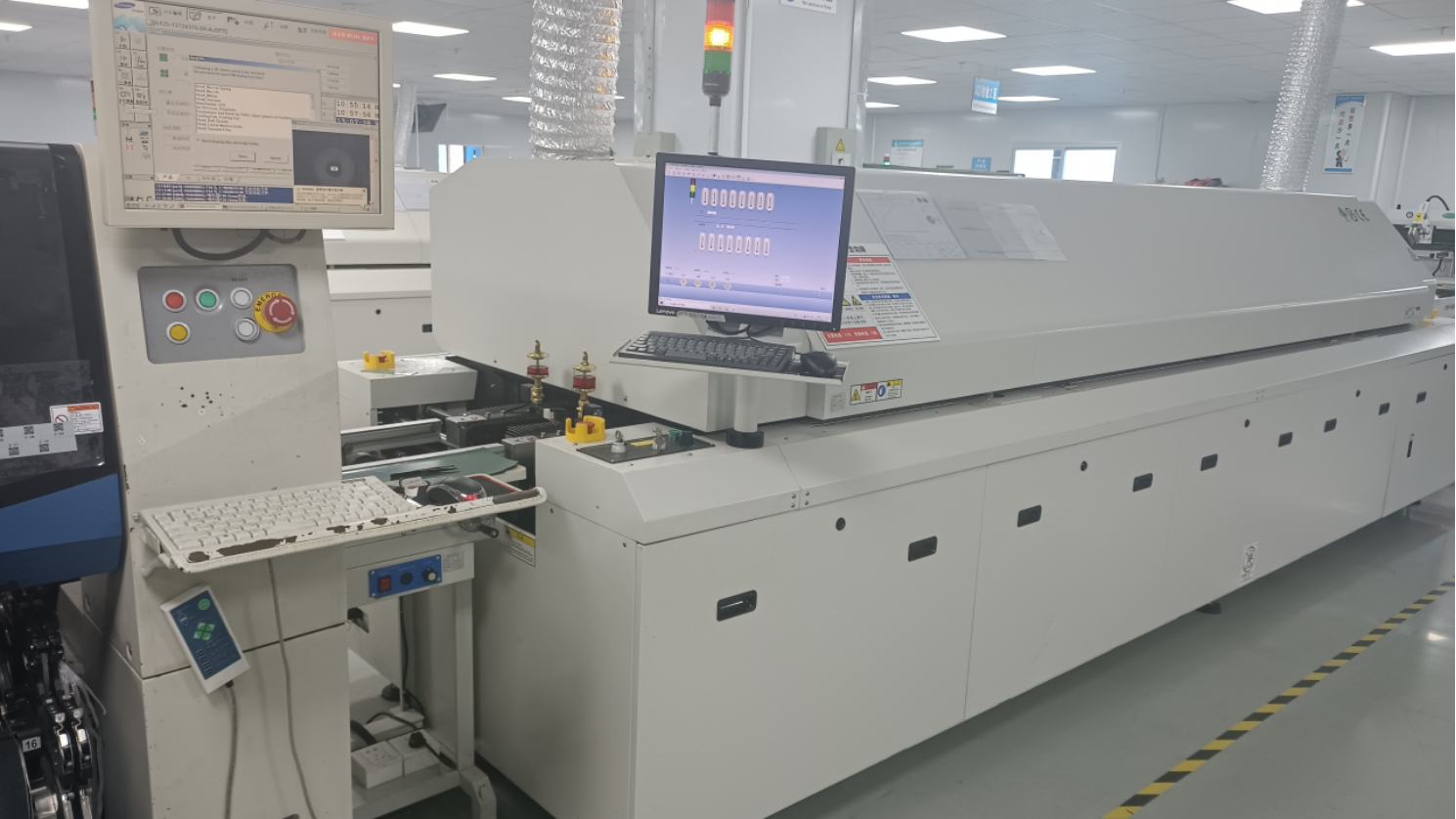
Production equipment in the SCENTSEA facility in Shenzhen, where commercial scent diffusers and related hardware are manufactured and tested before shipment.
Long-term reliability in commercial scenting is a specification question, not a service-call question. Three engineering indicators — housing material tied to a stated application, power design and behaviour after an interruption, and the availability of serviceable components such as nozzles, pumps and tubing — together with four after-sales indicators, decide how long a commercial scent diffuser stays productive in a hotel lobby, a retail floor or an airport concourse. All of them can be reviewed before a purchase order is signed.
This reference is written for buyers at the decision and execution stage: the point where model shortlists exist, samples may have been tested, and the remaining question is whether the chosen configuration still makes commercial sense in year three. The indicators below are drawn from published model specifications and documented supplier practice, so they can be used as a checklist rather than as a preference.
Why Long-Term Reliability Belongs in the Procurement File
A commercial scent diffuser typically runs for many hours a day in a space where nobody watches it. Failure therefore rarely appears as a visibly broken machine. It appears as an inconsistent scent, a louder room, an oil film under a unit, or a service visit that quietly turns into a replacement.
Because the device is out of sight, early replacement usually costs more than the equipment itself. Refill logistics, installation labour, inventory of mismatched models across sites, and the operational cost of a lobby or store that suddenly smells wrong all sit outside the unit price. Large-area and HVAC-linked scenting projects amplify this: a floor-standing or duct-mounted unit is part of the building's atmosphere rather than a standalone appliance.
The useful procurement question is therefore not which unit is cheapest today, but which unit can still be refilled, cleaned, serviced and repaired in year three. That question is answerable with documented facts: material specification per model, power supply mode and post-interruption behaviour, whether consumable and routing parts can be reordered, warranty coverage on spare parts, quality-control evidence, production capacity, lead time and the supplier's ability to repeat a configuration.
Indicator 1 — Housing Material Tied to a Stated Application
Housing material is the first durability indicator because it determines how a unit handles heat, in-situ cleaning, accidental contact and long static deployment. In the SCENTSEA range, material is documented per model rather than per brand, which makes comparison straightforward.
The H5000 is a floor-standing scent diffuser specified in aluminium, with coverage of 800–1300 m² (2500–4000 m³), a 1000 ml oil capacity, DC 12 V power, 20 W consumption, noise below 45 dB, 6.4 kg net weight and dimensions of L180 × W180 × H610 mm in a gunmetal finish. It is documented for hotel, shopping mall and office building lobby industries — environments where the unit stays in place for years and is cleaned without being moved.
At the compact end, P02 is an electric unit with a plastic housing, 300 ml capacity, 150–350 m² (500–1000 m³) coverage, DC 12 V power, 6.5 W consumption, noise below 30 dB, 0.8 kg net weight and dimensions of L148 × W68 × H203.5 mm, available in white or black with customization. P01 is a battery-operated unit documented in plastic with 500 ml capacity, 100–150 m² (300–500 m³) coverage, 5 V power, 2.5 W consumption, noise below 35 dB and 0.55 kg net weight. The compact 4705 is documented at 2.5 W and below 35 dB.
Elsewhere in the range, shell and casing choices follow the same logic: A300 uses steel; T2 and T3 combine an acrylic panel with a steel casing; S02 uses all aluminium alloy; AC-MAX, the HVAC unit, combines an aluminium body with a plastic bottle.
The procurement reading is not that metal is universally better. It is that material is linked to a declared application. A lobby unit that remains installed for years benefits from a metal housing; compact plastic units such as P02, P01 and P03 are placed in corridors, washrooms, elevators and small shops, where low weight and battery operation matter more than housing rigidity. Buyers assessing a multi-year rollout should check that the material of the selected model matches the physical reality of the site, not the aesthetics of the catalogue.
Indicator 2 — Power Design, Continuity and Operating Cost
Power design determines what happens on the day the building loses electricity, and how much the installation costs to run over its life. P02 is documented as a plug-in unit at DC 12 V and 6.5 W, with smart scheduling available through the app-controlled platform used across the range. P01 can be powered by 4 × D batteries or a Type-C connection at 2.5 W, and P03 by 3 × D batteries or Type-C, which gives both models an alternative power path where mains wiring is impractical or where continuity matters.
For plug-in models, the practical question to put in writing during sampling is what the unit does after a mains interruption: whether the programmed schedule resumes automatically once power returns, or whether the unit must be restarted manually. Wording matters here — a supplier statement, a test during sample evaluation, or a line in the acceptance criteria is worth more than an assumption based on the powered-on state.
Power draw is also a life-cycle cost input, and it varies widely by output. Documented figures include 10 W for T2, 12 W for A300, 15 W for T3, 48 W for AC-MAX and 30 W for the SC19 advertising scent machine. Scheduling usually matters more than wattage: running a diffuser 12 hours per day instead of 24 hours reduces scheduled operating time by 50%, which reduces both electricity and fragrance consumption without changing the hardware.
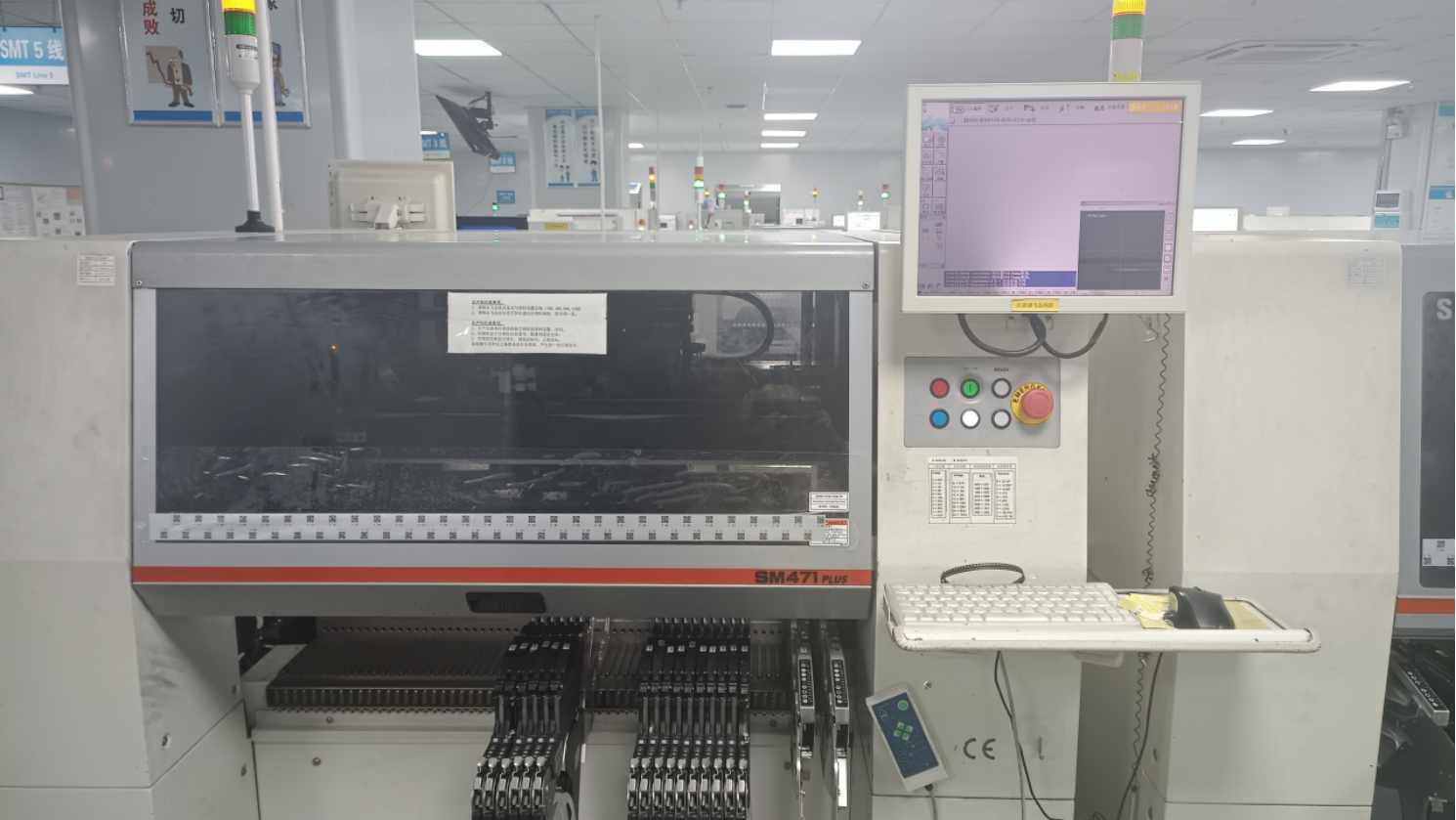
PCB SMT assembly. Control-board build quality is one of the less visible determinants of diffuser service life, and it is covered by control testing before shipment.
Indicator 3 — Serviceable Components and Configuration Flexibility
Cold-air diffusers are mechanical devices. A pump moves oil, a nozzle atomises it, tubing routes it, and a bottle holds it. Whether those parts can be reordered and replaced determines whether the unit reaches year five or is discarded in year two.
Tubing availability matters most in HVAC-linked installations, where the diffuser body is mounted away from the duct connection point. Selected SCENTSEA models can connect to HVAC ducts, and dedicated HVAC scenting systems are offered for large centralised projects. AC-MAX is documented as a split-type HVAC scent diffuser with a 5 L capacity, 2500–3500 m² (8000–10000 m³) coverage, DC 12 V power, 48 W consumption and noise below 45 dB, specified for shopping malls, banks and airports. For projects of this type, buyers should treat tubing, nozzles and pumps as service parts and confirm reorder availability, routing options and installation responsibility during the quotation stage rather than after commissioning.
Configuration flexibility is a secondary but practical signal of long-term supplier fit. P02, T2, T3 and S02 are documented with colour customization options, which matters when a retail or hospitality group rolls out the same scenting concept across multiple sites in phases and needs consistent finishes across batches of equipment purchased months apart.
At the supplier level, SCENTSEA (Shenzhen Scentsea Technology Co., Ltd, founded 2021 and based in Shenzhen, China) documents a 3,000 m² production facility, three production lines, 20 patents and a four-engineer R&D team. OEM and ODM services cover logo customization, colour customization, exclusive mold development, app customization, user manual customization and private label packaging, with scent selection and bottle labelling support on the fragrance-oil side.
After-Sales Indicators to Confirm in Writing
Durability and after-sales support are the same subject viewed from two directions: a well-built unit still needs a parts path, and a well-supported unit is only worth supporting if it was built to be serviced. The following items are documented practices that buyers can convert into contract language.
| Indicator | What to request | Documented practice | Why it matters over a multi-year cycle |
|---|---|---|---|
| Spare parts warranty | Coverage period, covered parts list, how claims are filed | 1-year free warranty on spare parts | Defines who pays for a pump or nozzle failure in the first operating year |
| Pre-shipment inspection | The full test list and the inspection record | 100% functional testing, atomization testing, leakage inspection, noise testing, APP/control testing, 48-hour aging test and final appearance inspection before shipment | Aging and leakage checks screen the failure modes that appear late in commercial use |
| Acceptance criteria | Written acceptance terms tied to the test report | Pre-shipment test as the acceptance basis | Gives the buyer an objective basis for release of balance payment |
| Supply continuity | Monthly capacity and typical lead time for repeat orders | 8,000 units per month, typical lead time 25–35 days | Phased multi-site rollouts depend on repeatable delivery windows |
| Order flexibility | Minimum order quantity and commercial terms | MOQ from 1 unit; EXW / FOB / CIF delivery terms; 50% T/T in advance with balance before shipment | Allows sample and pilot volumes before full rollout |
| Certification scope | Certificates matching the exact production model and configuration | CE, RoHS and FCC for diffusers; RED applies to Bluetooth or Wi-Fi models | Model-level documentation avoids compliance gaps at site acceptance |
Two clarifications prevent common misunderstandings. First, a warranty on spare parts is not the same as a warranty on labour or on-site service; buyers should confirm which party performs the replacement in their own market. Second, certification documents must match the model and configuration actually shipped — a Bluetooth or Wi-Fi variant of a model may carry different radio-frequency requirements from the non-wireless version.
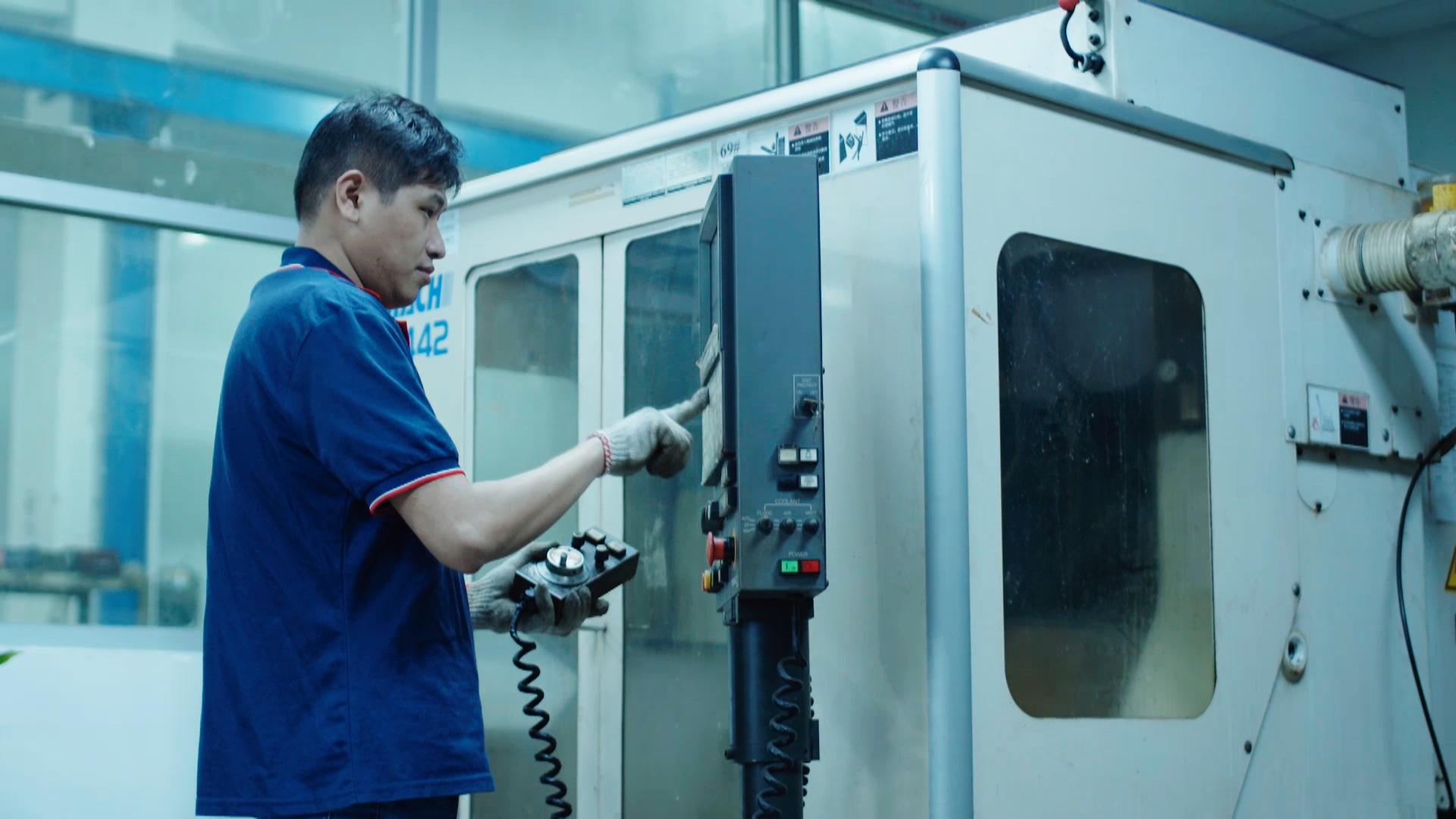
Mold processing equipment. Tooling quality influences how housings and internal parts hold tolerances across production runs — a factor behind consistent fit of serviceable parts.
Scenario Fit: Where Each Configuration Earns Its Keep
Long-term value depends on matching the model to the space, because a unit that is under-specified will run continuously at maximum output, while an oversized unit wastes oil capacity and electricity.
- Hotels and hospitality: lobbies, entrances and public circulation areas are usually served by floor-standing or high-output units; H5000 is documented for hotel and office building lobby use, and A300 for hotels, shopping malls and retail stores.
- Retail and shopping malls: A300 and T2 cover 500–800 m² each, while T3 extends to 1000 ml capacity and 1000–1600 m², documented for shopping malls, hotels and airports.
- Airports, banks and very large public interiors: AC-MAX is specified for shopping malls, banks and airports with 2500–3500 m² coverage as a split HVAC-linked unit, which is the configuration that keeps fragrance distribution centralised rather than repeated unit by unit.
- Corridors, washrooms and elevators: P02 (150–350 m²), P01 (100–150 m²) and P03 are documented for toilets, corridors, elevators and small shops, where compact size, low noise and battery or short-cable installation matter.
- Offices, showrooms and small commercial interiors: S02 covers 30–100 m² in an aluminium alloy housing at 1.5 W and below 30 dB, which suits rooms where noise is a visible complaint risk.
- Cinemas and entertainment venues: T2 is documented for cinema environments alongside hotels and shopping malls.
The design rule behind these placements is that coverage should be estimated from ceiling height, ventilation, airflow and partitions rather than from the maximum rated figure alone. Stated coverage is a specification ceiling, not a design guarantee.
Waterless Cold-Air vs Water-Based Ultrasonic: The Trade-Off in Practice
Most long-term comparisons in commercial scenting come down to two technologies. Waterless cold-air diffusion atomises fragrance oil directly without water or heat, which is the approach used across the SCENTSEA diffuser range. Ultrasonic water-based aroma diffusers mix water with a few drops of oil and are mainly designed for small residential spaces.
The practical differences are documented as follows: waterless cold-air units provide broader scent coverage across the range, with stated coverage from approximately 30 m² to 3,500 m², fragrance oil capacities from 100 ml to 5 L, and no water addition required. Because there is no water tank to refill or clean, routine maintenance is largely limited to oil-level checks and atomiser cleaning, and the supplier's comparison material estimates that five-year maintenance cost can be approximately 40% lower than for water-based ultrasonic units, despite a higher initial equipment cost.
That 40% figure should be treated as a supplier-stated projection rather than an independently audited result. It is useful as a hypothesis to test against the buyer's own service records, not as a guaranteed saving. Three limitations are worth stating plainly before a comparison is converted into a decision:
- Upfront cost is higher for waterless cold-air equipment. For a single small room, an ultrasonic water-based diffuser remains a lower-cost and adequate choice; waterless cold-air becomes the better fit as coverage, operating hours and service intervals increase.
- Fragrance oil compatibility has to be validated. Compatible third-party oils can be used, but viscosity and formulation should be tested, because oil that is too thick or contains impurities can cause weak atomisation and blocked nozzles. Buyers planning multi-year oil supply should confirm the oil specification alongside the hardware.
- HVAC integration is not universal. Only selected models connect to HVAC ducts, and large centralised projects use dedicated HVAC scenting systems. Sites without suitable duct access may need standalone units instead, and installation responsibility should be assigned in the contract.
Noise is a fourth boundary that buyers often discover late. Documented figures in the range span below 30 dB for P02, below 35 dB for P01, P03 and the 4705, below 40 dB for A300, below 45 dB for H5000, T2 and AC-MAX, and below 55 dB for T3. In hotel guest areas, quiet offices and clinical settings, the higher-output models may be unsuitable at the point of use even when their coverage matches the room.
What the Market Data Suggests About Multi-Year Scenting Spend
Scent marketing is no longer a marginal line item, which makes life-cycle reasoning more relevant than it was when scenting was treated as a novelty. Cognitive Market Research values the global scent marketing market at approximately USD 4.1 billion in 2026, and industry forecasts project it reaching USD 7.28 billion by 2035 at a compound annual growth rate of 6.6%. That CAGR figure is not uncontested: another source estimates growth at 10.16% for a narrower definition of scenting, and the divergence appears to reflect methodology rather than disagreement about direction.
Two technical and trade facts reinforce the durability angle. Cold-air nebulising diffusion atomises fragrance oils into sub-micron particles below 2.5 μm without heat or water, which is the mechanism that keeps maintenance focused on atomiser cleaning rather than descaling. On the trade side, commercial scent diffusers are classified under HS Code 8509.80 as electromechanical domestic appliances, with a 4.2% US import duty rate — a landed-cost element that becomes material when equipment is imported in stages across a multi-site rollout.
On the demand side, secondary research on scent branding reports that scent marketing in retail environments can increase customer dwell time by an average of 15 minutes. That finding is indirect and should be read as directional, but it explains why retail and hospitality operators are willing to treat scenting hardware as long-term building infrastructure rather than disposable equipment.
Future Outlook
The direction of travel in commercial scenting procurement is from unit price towards documented service life. Buyers are increasingly asking suppliers for aging-test evidence, spare-parts lists, restart behaviour after power interruption, and repeat-order lead times, because these determine operating cost after commissioning rather than at the moment of purchase. Models that can be serviced with reorderable pumps, nozzles and tubing will be easier to keep in service than units whose parts are not catalogued.
Two gaps are worth flagging for planning purposes. First, regional fragrance-oil compliance documentation — the type of REACH and IFRA material that European projects may request — is not uniformly packaged per market, so buyers entering regulated regions should request it explicitly during sampling. Second, durable hardware and fragrance supply are usually procured separately; organisations that need consistent scent identity across sites benefit from confirming oil specification at the same time as hardware configuration, because viscosity and formulation affect atomisation stability over time.
For multi-site operators, the practical next step is small: take the model shortlist you already have, and ask for the four after-sales documents and the three engineering facts above in writing. A configuration that answers all seven is a configuration that can be defended in year three.
Frequently Asked Questions
Which long-term reliability indicators can be verified before purchase?
Three engineering indicators and four after-sales indicators cover most of the assessment. On the engineering side: documented housing material per model and the application it is specified for; power supply mode plus the unit's documented behaviour after a mains interruption; and whether serviceable components such as pumps, nozzles and tubing can be reordered. On the after-sales side: spare parts warranty terms, the pre-shipment test list, supply continuity including monthly capacity and lead time, and certification documents that match the exact production model.
How often does a commercial scent diffuser need maintenance?
Maintenance frequency depends on usage intensity and the fragrance oil used. Documented guidance is that regular oil-level checks and atomiser cleaning help maintain stable performance, and that coverage should be assessed against actual ceiling height, ventilation and airflow rather than the maximum rated figure. Where performance drifts, documented troubleshooting covers the usual causes: power supply and working-hour settings, pump connections, blocked nozzles, detached or damaged tubing, loose internal parts, and fragrance oil that is too thick or contains impurities. Tubing, nozzles and pumps are treated as replaceable service parts rather than consumables of the housing.
What does the warranty cover, and what are the commercial terms around spare parts?
The manufacturer provides a 1-year free warranty on spare parts. Quality control before shipment includes 100% functional testing, atomization testing, leakage inspection, noise testing, APP/control testing, a 48-hour aging test and final appearance inspection, with pre-shipment test as the acceptance basis. Commercial terms documented for these units are a minimum order quantity from 1 unit, EXW / FOB / CIF delivery terms, and payment of 50% T/T in advance with the balance before shipment. Buyers should confirm separately who performs replacement work in their own market, since a spare parts warranty and an on-site labour warranty are different commitments.
Which certifications should be verified for a multi-year deployment?
Certification requirements depend on the destination market, the product model and whether wireless functions are included. For the European market, applicable CE and RoHS compliance documents are normally checked, while Bluetooth or Wi-Fi models may also need to meet RED requirements. For the US market, applicable FCC compliance should be verified. Diffusers in the SCENTSEA range are certified with CE, RoHS and FCC. In all cases, certificates and test reports should be confirmed as applying to the exact production model and configuration being purchased, not to a similar variant.
How should HVAC compatibility be confirmed for a large project?
HVAC-linked scenting is model-dependent. Selected SCENTSEA models can connect to HVAC ducts, and dedicated HVAC scenting systems are available for large centralised projects; AC-MAX is documented as a split-type HVAC scent diffuser with 5 L capacity, 2500–3500 m² coverage, DC 12 V power and noise below 45 dB, specified for shopping malls, banks and airports. Before committing, buyers should confirm the duct interface on the exact model, the availability of the tubing and routing components required for the installation, the split between cabinet and bottle placement, and which party is responsible for commissioning and subsequent filter or atomiser maintenance.
Reference document: SCENTSEA product catalogue (PDF) — https://cdn.socialarks.com/sbsp/24935/common/2026/0605/SCENTSEA%20CATALOG.pdf. Manufacturer information: Shenzhen Scentsea Technology Co., Ltd — www.scent-sea.com.
Have Questions or Need More Details?
Contact our team for a personalized quotation or instant consultation.
Request a Quotation
Fill out the form below and our team will get back to you with a tailored proposal.
WhatsApp Direct Chat
Prefer to chat in real-time? Message us on WhatsApp for instant assistance & quick answers.
- Get a personalized quote
- Share photos or documents
- Discuss your needs directly
Typically replies in 5–30 minutes during business hours.