
Commercial Dining Chairs: DC-2508 Fit for Mall, Office, Home
Commercial Dining Chairs: DC-2508 Fit for Mall, Office, Home
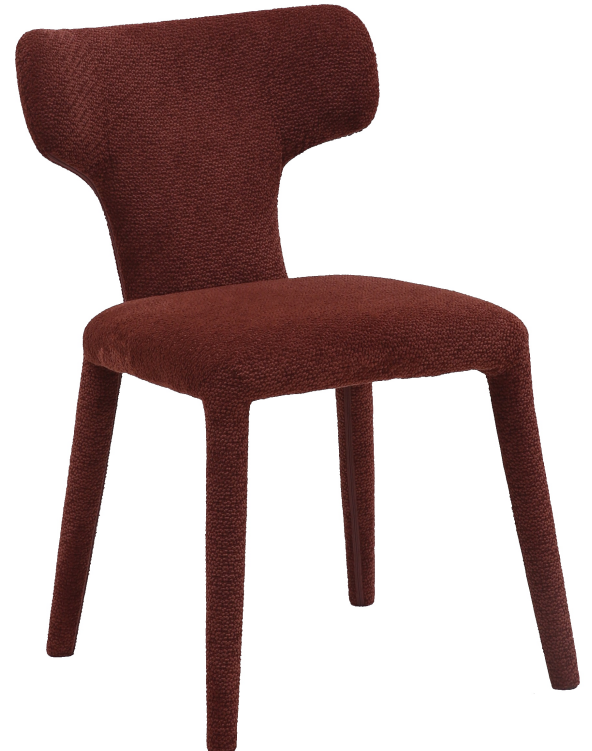
A shopping mall restaurant, an office pantry and a residential dining room rarely buy seating for the same reason, yet they can end up specifying the same chair. The DC-2508 from BAZHOU NANSHENG FURNITURE CO., LTD is an indoor upholstered dining chair measuring 50 × 62 × 80 cm, with a net weight of 6.8 kg and fabric or faux-suede upholstery over a plywood frame. Whether it belongs in a mall, an office or a home is decided less by appearance than by three project variables: the cleaning regime the space can sustain, the duty cycle the seat will face, and the table and circulation dimensions around it.
This reference sets out what the supplied model data supports, how the chair maps to three interior scenarios, where the fit stops, and which checks a project team should complete before writing the model into a specification. It is an evaluation-stage document for buyers, specifiers and interior contractors rather than a launch announcement, and it does not attribute to the DC-2508 any property that the supplied specification does not state. Commercial dining chairs as a category include metal dining chairs, wooden dining chairs, upholstered and fabric dining chairs, and stackable or armrest variants; the DC-2508 sits in the upholstered, plywood-frame part of that spectrum, which is what shapes its scenario fit.
The scenario question behind a single chair specification
The reason a mall, an office and a residential client can converge on one model is procurement practicality, not identical use. A contract buyer assembling a mixed-use development, or a distributor serving hospitality and residential customers from one catalogue, gains consistency and simpler after-sales handling when the same indoor chair appears across several zones. The use behaviours underneath that decision are not identical, however, and they are what a scenario-fit assessment has to test.
A mall restaurant, café or food-court seating area runs short occupancy cycles, deals with food and drink spillage, and hands cleaning to a staff team working to a fixed schedule; upholstery has to survive that routine rather than a single careful household. An office pantry, meeting room or reception area sees lighter and more predictable use, but usually sits inside a design scheme where many units must match, and where chairs are moved rather than stacked. A residential dining room is the reverse case: low turnover, long dwell time, compact footprints, and cleaning performed by the occupant. Where one order covers all three, the model's indoor rating and its maintenance profile matter as much as its outline.
What the DC-2508 is, in supported terms
The DC-2508 is defined in the supplied product data as an indoor upholstered dining chair for restaurant and hotel seating applications, with an application scope that extends to cafés, shopping malls, residential and office interiors, homestays, interior design work and commercial space projects. Its measurable attributes are narrow and worth stating precisely, because those attributes decide most of the fit questions that follow.
| Attribute | Supplied detail for DC-2508 |
|---|---|
| Product type | Indoor upholstered dining chair |
| Dimensions | 50 × 62 × 80 cm |
| Net weight | 6.8 kg |
| Upholstery | Fabric or faux-suede |
| Frame material | Plywood |
| Operating environment | Indoor ambient conditions |
| Minimum order quantity | 120 pcs (model specification) |
| Stated applications | Restaurants, cafés, hotels and homestays, offices, residential interiors, shopping malls, interior design and commercial space projects |
One distinction matters more than any single number in that table. NanSheng describes its commercial dining chair range as indoor upholstered seating with model options that include curved backrests, padded seats, armrests and swivel bases, and notes that selected models use knock-down construction with detachable backrests or seat cushions to reduce packing volume, improve shipping efficiency and simplify on-site assembly. Those are range-level attributes, not confirmed features of every unit sold under the DC-2508 name. A buyer who needs armrests for a banquette layout, a swivel base for a reception counter, or knock-down packing for a multi-floor mall installation should have the exact configuration confirmed in writing before the specification is issued.
Indoor upholstery, plywood frame and the cleaning requirement
Technically, the DC-2508 is an upholstery-led chair: the visible performance surface is fabric or faux-suede over a plywood frame, and the model is designed for indoor ambient conditions. The manufacturer's stated special requirements for this scenario are a stable structure and durability, compliance with applicable safety standards, and easy cleaning for restaurant and hotel use. Read together, those requirements make the upholstery the primary maintenance variable in service, and the frame the primary structural variable in handling and transport.
What the supplied data does not provide is equally relevant to a specification decision. No stain-resistance, abrasion, colour-fastness or flammability test results are attached to either upholstery option, and no model-specific load or durability test report is included. Upholstery selection should therefore rest on physical samples and the supplier's care instructions rather than on assumed performance, and where a venue's cleaning chemicals are aggressive, that should be checked against the care guidance before a large order is placed.
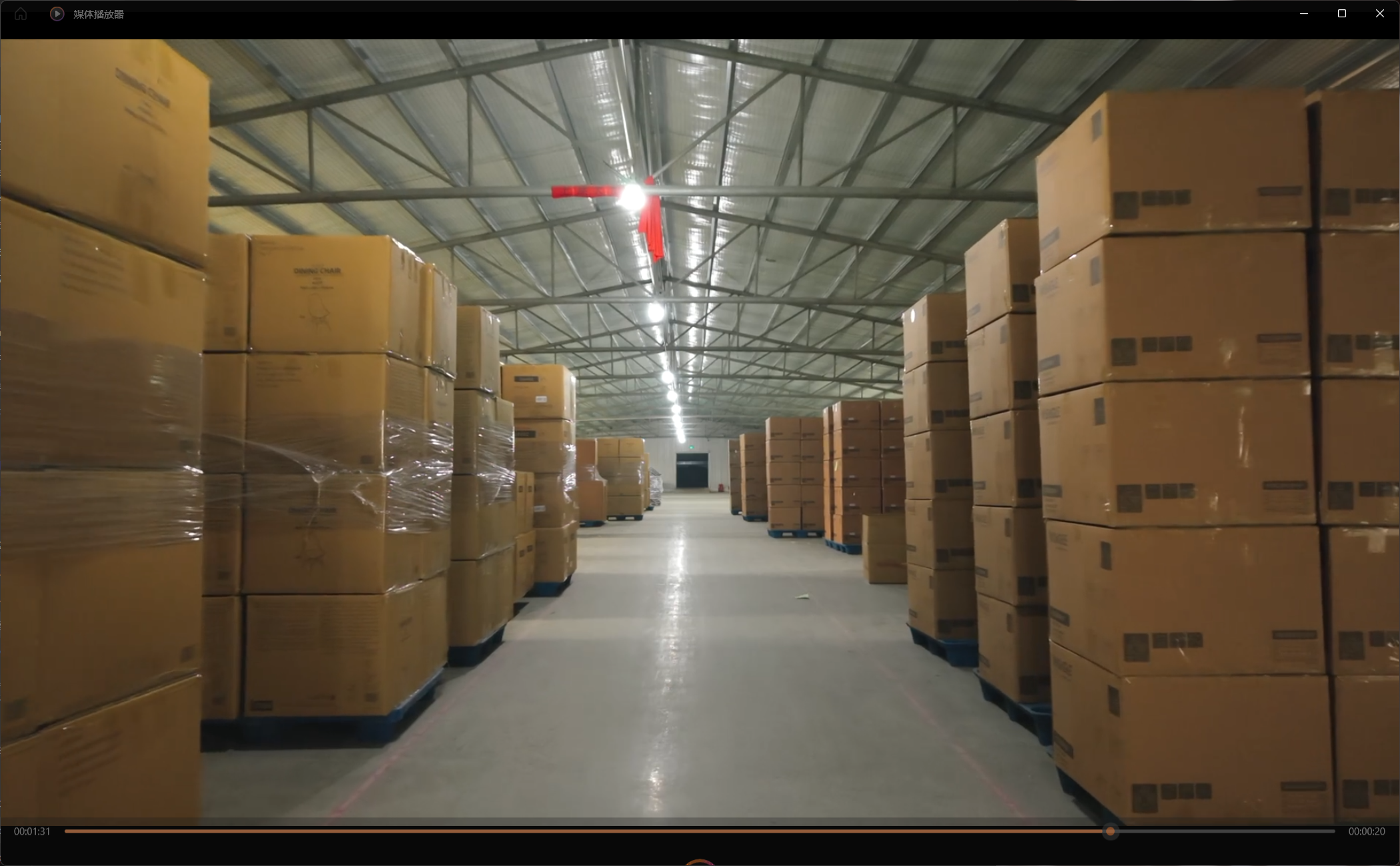
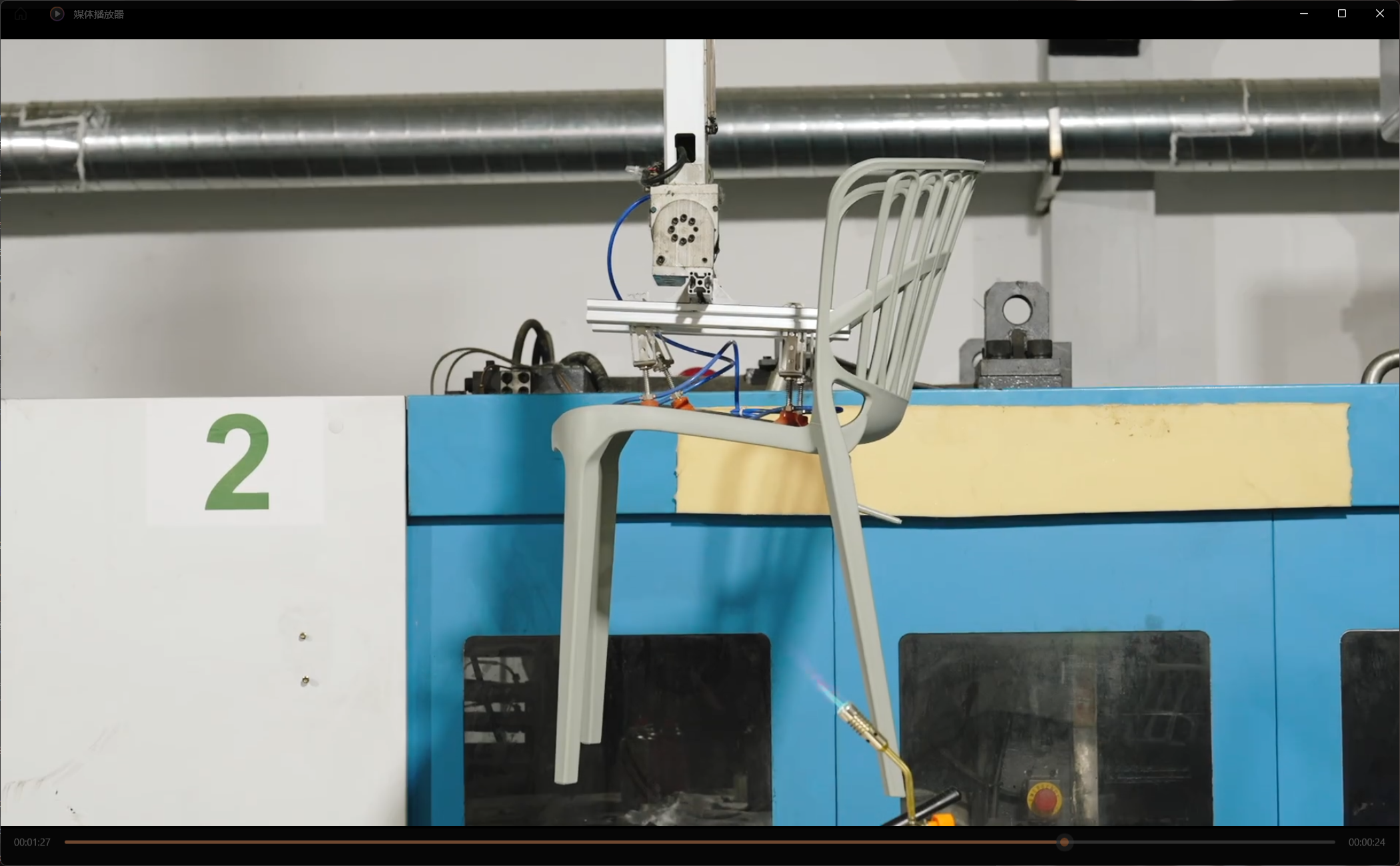
Manufacturing context explains why those checks are worth running with this supplier rather than assumed. BAZHOU NANSHENG FURNITURE CO., LTD operates a 30,000 m² production base in Shengfang Town, Bazhou City, Hebei Province, around a two-hour drive from Tianjin Port and Beijing, and has been exporting since 2010. The base runs an injection molding workshop with 15 machines (9 large and 6 medium), ironwork cutting with 3 laser cutting machines, a welding workshop with 15 welding robots, an automatic upholstery production line, a sponge cutting workshop with 6 machines and a packing workshop, so frame preparation, upholstery and packing sit inside one quality system rather than across subcontractors. The company uses the QUARMA inspection system for order inspection and traceability, holds BSCI, FSC, GRS and ISO certifications, cites EN 12520, EN 12521 and EN 581 test certifications for its products, and reports European patent certificates on several models. Its two sample showrooms of 600 m² each give project teams a physical review environment.
The qualifier is important: those certifications and test references are company- and product-portfolio-level statements. They do not, by themselves, certify the DC-2508 against a named standard at a named test level, which is why the procurement checklist later in this article treats documentation as a separate item from the chair itself.
Shopping mall interiors: front-of-house seating where cleaning is daily
For mall restaurants, cafés and food-court operators, the DC-2508 fits the indoor, upholstered, guest-facing part of the seating plan, and the deciding factors are maintenance logistics rather than style. The model is specified for indoor ambient conditions and for restaurant and hotel seating use, with easy cleaning named as a scenario requirement; in a mall environment that requirement translates into a written cleaning schedule, an agreed cleaning agent, and enough spare upholstery knowledge on site to deal with spillage during trading hours.
Two physical details shape layout planning. The chair's 50 cm width and 62 cm depth set the minimum practical bay for a table setting, and its 6.8 kg net weight makes it movable by staff without being unstable in use. Where the seating plan calls for stacking at close-of-trade, the supplied DC-2508 specification does not describe the model as stackable, so daily stacking is a requirement to raise with the supplier rather than assume; the range's stackable design language is documented on the outdoor PS-2401 instead.
Mall projects also tend to mix tenant types under one landlord specification. A chair that appears in a café, a restaurant unit and a shared lounge keeps replacement stock and cleaning training consistent, which is a procurement benefit independent of any aesthetic argument. The boundary is the mall's exterior zone: terraces, patio extensions and open-air dining decks sit outside the DC-2508's stated indoor scope.
Office interiors: pantry, meeting and reception seating
In office interiors the DC-2508 fits pantry dining, meeting-room and reception-adjacent seating, where the manufacturer lists office use within the model's application industries and describes the chair's role as supporting rest, dining and meeting activity. Duty cycle here is moderate and predictable: a pantry chair may be used several times a day, a meeting chair intermittently, and neither is exposed to weather or to commercial kitchen cleaning routines.
The office constraint is usually consistency and specification discipline rather than durability. A workplace project often fixes one upholstery direction across dozens of units and expects later phases to match, so the fabric-or-faux-suede choice should be locked with a physical sample and a retained reference at the start of the project. Where armrests are required for meeting rooms, they come from range-level options and must be confirmed for the exact model and configuration ordered, not assumed from the range description.
The 6.8 kg weight is a practical advantage in workplaces where furniture is reconfigured between layouts, and the 50 cm width allows the chair to sit at standard pantry tables without crowding circulation. As in any indoor contract fit-out, the office's own fire, accessibility and furniture-safety requirements remain the governing rules; the DC-2508's indoor rating satisfies the environmental scope, not the project's regulatory approvals.
Residential interiors: dining rooms, compact apartments and home workspaces
For residential interiors the DC-2508 fits dining rooms, home dining corners, compact apartments and residential projects handled by interior designers, where home dining chairs must combine long dwell comfort with a footprint that suits smaller rooms. The 50 × 62 cm plan dimension and 6.8 kg weight make the model manageable in a domestic setting, and upholstered seating is the appropriate choice where the chair is used for meals and extended sitting rather than stored between uses.
The residential difference is maintenance. A household cleans to a different rhythm and with different products than a restaurant team, so the fabric or faux-suede decision should follow the household's tolerance for care rather than a showroom appearance alone. Because the model is rated for indoor ambient conditions, it also suits residential interiors in the sense the manufacturer intends — inside the building envelope — and should not be treated as garden, balcony or patio furniture.
For distributors and interior contractors, the residential angle has a commercial logic: a single indoor model that serves residential, office and mall café settings reduces the number of stock-keeping lines and after-sales scripts a dealer has to manage. That is an operational argument, not evidence that the chair performs identically in each setting, and the cleaning and duty-cycle differences described above still apply.
DC-2508 against the outdoor model in the same range
The clearest fit boundary appears when the DC-2508 is set beside the PS-2401, the range's stackable outdoor dining chair. Both serve hospitality-style seating, but they are specified for different environments and different handling patterns, and the comparison is a documented-characteristics comparison rather than a claim about which chair lasts longer.
| Dimension | DC-2508 | PS-2401 |
|---|---|---|
| Type | Indoor upholstered dining chair | Stackable outdoor dining chair |
| Environment | Indoor ambient conditions | Indoor and outdoor ambient conditions |
| Material | Fabric or faux-suede upholstery over plywood | PP |
| Dimensions | 50 × 62 × 80 cm | 51 × 58 × 81 cm |
| Net weight | 6.8 kg | 5.1 kg |
| Minimum order quantity | 120 pcs | 180 pcs |
| Handling profile | Not described as stackable in the supplied specification | Stackable, with high container loading capacity noted |
| Weather requirements | Not specified for outdoor use | Waterproof, UV-resistant and weather-resistant properties stated |
The practical decision rule is environmental, not aesthetic. If a project includes a terrace, patio, garden or open-air dining deck alongside an indoor dining room, the outdoor scope belongs to the PS-2401 or another outdoor-rated product, and the indoor scope can be assigned to the DC-2508. Specifying the upholstered model outdoors is outside its stated operating conditions, and no weather performance is claimed for it.
What this comparison does not establish is comparative durability. The supplied evidence contains no side-by-side wear, load or cleaning-cycle test between the two models, and the one documented project in the material — a Polish wholesale distributor that completed 20 40HC containers over two years, with stackable design noted for shipment and storage convenience — relates to the PS-2401, not to the DC-2508. That case demonstrates an export and handling pattern for the outdoor model and should not be transferred to the indoor chair as a performance or sales proof.
Specification checks before a mall, office or residential order
Before the DC-2508 is written into a project specification, a buyer can reduce most of the avoidable risk with eight checks. Each one addresses a gap between what the range description says and what a specific order will actually deliver.
- Confirm the environmental scope in writing. DC-2508 is an indoor chair. Any terrace, patio or open-air element should be separated and assigned to an outdoor-rated model such as the PS-2401.
- Confirm which range options apply to the ordered configuration. Armrests, swivel bases, curved backrests and knock-down construction with detachable backrests or seat cushions are described at range level; obtain model-specific confirmation.
- Approve upholstery from a physical sample. Fabric and faux-suede are both offered; no stain, abrasion or flammability results were supplied for either, so sample evaluation plus written care instructions is the defensible route.
- Request model-specific test documentation. Ask which standard, test level, laboratory and date each report covers, and match it to the destination market's requirements rather than to the company's general certification list.
- Confirm the minimum order quantity for the exact model. The DC-2508 model specification states 120 pieces; because category-level terms can be stated differently in commercial documents, the applicable minimum should be confirmed in the quotation.
- Plan lead time against the project programme. The company's stated peak-season lead time for dining chairs is 45 days, with off-season periods approximately 30 days shorter, so a mall handover date should be tested against the actual production window rather than against a general average.
- Agree packing and assembly method for the site. Knock-down construction reduces packing volume and simplifies on-site assembly on selected models; for multi-floor mall or office installations, confirm what the ordered units will require on delivery.
- Check table pairing and circulation dimensions. The chair is used with dining tables and complementary furniture, so table height, 50 cm seat-plan width and 62 cm depth should be modelled in the layout before quantities are fixed.
Customisation is available at the packaging and branding level rather than the structural level: the company offers OEM/ODM production with hang tag, logo and shipping mark customisation, supported by random sampling inspection or customer QC inspection. Its stated export markets exclude mainland China, and after-sales support is described as a one-year guarantee.
What the market and standards data does and does not show
Three external reference points help frame the specification conversation, and each has a scope limit that should be respected. First, published commercial research cited for this article projects the global restaurant chairs market to reach USD 6.11 billion by 2030, growing at a compound annual growth rate of 6.4% from 2026 to 2030. That figure covers restaurant chairs specifically; it is not a market size for mall, office or residential dining chairs, and it is a source projection rather than an observed outcome.
Second, US furniture imports under HS headings 9401 to 9403 reached USD 98 billion in 2025, a decline from 2024, according to census-derived trade data. This measures all furniture in those headings, not commercial dining chairs, so it should be read as trade context rather than as demand evidence for this model. For classification purposes, HS heading 9401 covers seats other than those of heading 9402, and the six-digit subheading 940161 covers upholstered seats with wooden frames — a description that a plywood-framed upholstered chair may fall within, subject to confirmation by the importer's customs broker, since the classification itself does not distinguish commercial from residential use.
Third, the standards picture separates voluntary performance testing from legal requirements. EN 16139:2025, published in 2025, is the European standard for safety, strength and durability of non-domestic seating; in the United States context, ANSI/BIFMA X5.4-2020(R2025) covers public and lounge seating typically found in indoor public spaces including restaurant, dining and cafeteria settings, and BIFMA X5.41-2021 addresses large-occupant public and lounge seating on 400 lb and 600 lb individual load bases. These are performance-standard scopes, not certificates held by any particular chair. Mandatory upholstered-furniture flammability requirements can also apply in some jurisdictions depending on product scope, and the material used here did not validate current official regulatory text, so compliance conclusions require project-specific legal verification.
Company-level trade tracking adds one further observable data point: third-party customs records show 291 shipment records for BAZHOU NANSHENG FURNITURE CO., LTD, with the United States as a primary export market, including a shipment of dining chairs and a storage ottoman to the United States on 10 November 2026. That confirms an active export operation; it does not establish capacity, quality outcomes or project references for the DC-2508 specifically.
Outlook for 2026–2027 specifications
The direction of travel for commercial seating specification is documentation-led, and the DC-2508's fit will be decided increasingly by paperwork as much as by the chair. With EN 16139:2025 now published for non-domestic seating in Europe, and with voluntary BIFMA performance standards framing US expectations, buyers comparing upholstered contract dining chairs are likely to ask suppliers for model-level test reports, care instructions and configuration confirmations earlier in the process.
For NanSheng, that creates a clear, bounded opportunity: a vertically integrated indoor upholstery line, an in-house packing operation and stated certifications give it the raw material to answer those requests, while the gap between range-level description and model-level proof is what a buyer should close during evaluation. If the cited 6.4% annual growth projection for restaurant chairs through 2030 holds, hospitality will remain the most visible segment for this type of chair; the projection rests on the research provider's assumptions, and mall, office and residential demand would need separate evidence before any volume claim is made.
The practical conclusion for project teams is narrow and testable. The DC-2508 is a credible indoor specification for mall dining and café zones, office pantry and meeting areas, and residential dining rooms where upholstered seating and a compact 50 × 62 cm footprint suit the plan. It is not an outdoor chair, its range-level options need written confirmation, and its compliance evidence should be requested at model level. Verified against those three conditions, the scenario fit holds; without them, the specification is incomplete rather than wrong.
Frequently asked questions
What is the DC-2508 commercial dining chair?
The DC-2508 is an indoor upholstered dining chair from BAZHOU NANSHENG FURNITURE CO., LTD, intended for restaurant and hotel seating and also applied in cafés, shopping malls, offices and residential interiors. It measures 50 × 62 × 80 cm, has a net weight of 6.8 kg, uses fabric or faux-suede upholstery over a plywood frame, is designed for indoor ambient conditions, and is listed with a minimum order quantity of 120 pieces.
Which project types does the DC-2508 suit?
The manufacturer's application scope covers restaurants, cafés, hotels and homestays, offices, residential interiors, shopping malls, interior design work and commercial space projects. Within those settings the chair is described as seating for dining, meeting and leisure activity in commercial and residential interiors, always indoors.
Can the DC-2508 be used on terraces, patios or other outdoor areas?
No. The DC-2508 is specified for indoor ambient conditions and no weather performance is stated for it. Outdoor and semi-outdoor seating in the same range is represented by the PS-2401 stackable outdoor dining chair, a PP model specified for indoor and outdoor ambient conditions with waterproof, UV-resistant and weather-resistant properties and a 180-piece minimum order.
What supporting furniture and space does the DC-2508 require?
The chair is used with dining tables and complementary furniture in restaurant and hotel seating areas, so table height and layout should be planned together with the chair. Its 50 cm width and 62 cm depth define the practical seating bay, and the 6.8 kg weight allows staff or occupants to reposition it without lifting equipment.
Does the available information show that the DC-2508 meets EN 16139:2025 or BIFMA standards?
The supplied material contains no model-specific EN 16139:2025 or BIFMA test report for the DC-2508. The manufacturer states BSCI, FSC, GRS and ISO certifications and cites EN 12520, EN 12521 and EN 581 test certifications for its products, while EN 16139:2025 is the European standard for non-domestic seating safety, strength and durability. Buyers requiring non-domestic compliance should request reports that identify the standard, test level, laboratory and date for the exact model ordered.
What order terms and lead times are stated for the DC-2508?
The stated peak-season lead time for dining chairs is 45 days, with off-season periods approximately 30 days shorter. Payment terms are 30% deposit with 70% balance, the model specification lists a 120-piece minimum order, OEM/ODM production with hang tag, logo and shipping mark customisation is available, quality control supports random sampling or customer QC inspection, and after-sales cover is described as a one-year guarantee with support.
Reference material. Company, product-range and manufacturing information for project teams is collected in the NanSheng brochure, available for public download: NanSheng furniture brochure (PDF). Company identity and product information are published at BAZHOU NANSHENG FURNITURE CO., LTD.
Have Questions or Need More Details?
Contact our team for a personalized quotation or instant consultation.
Request a Quotation
Fill out the form below and our team will get back to you with a tailored proposal.
WhatsApp Direct Chat
Prefer to chat in real-time? Message us on WhatsApp for instant assistance & quick answers.
- Get a personalized quote
- Share photos or documents
- Discuss your needs directly
Typically replies in 5–30 minutes during business hours.