
Commercial Display FAQ: KD Series Specs for Real Use Cases
A commercial display project rarely fails because the panel was the wrong size. It fails because one specification — brightness, ingress protection, touch points or power density — was read outside the environment it was written for. This procurement FAQ walks through the KD Series from GZKEDRO in that order: what each verified figure actually means, which deployment it belongs to, and where the boundaries sit.
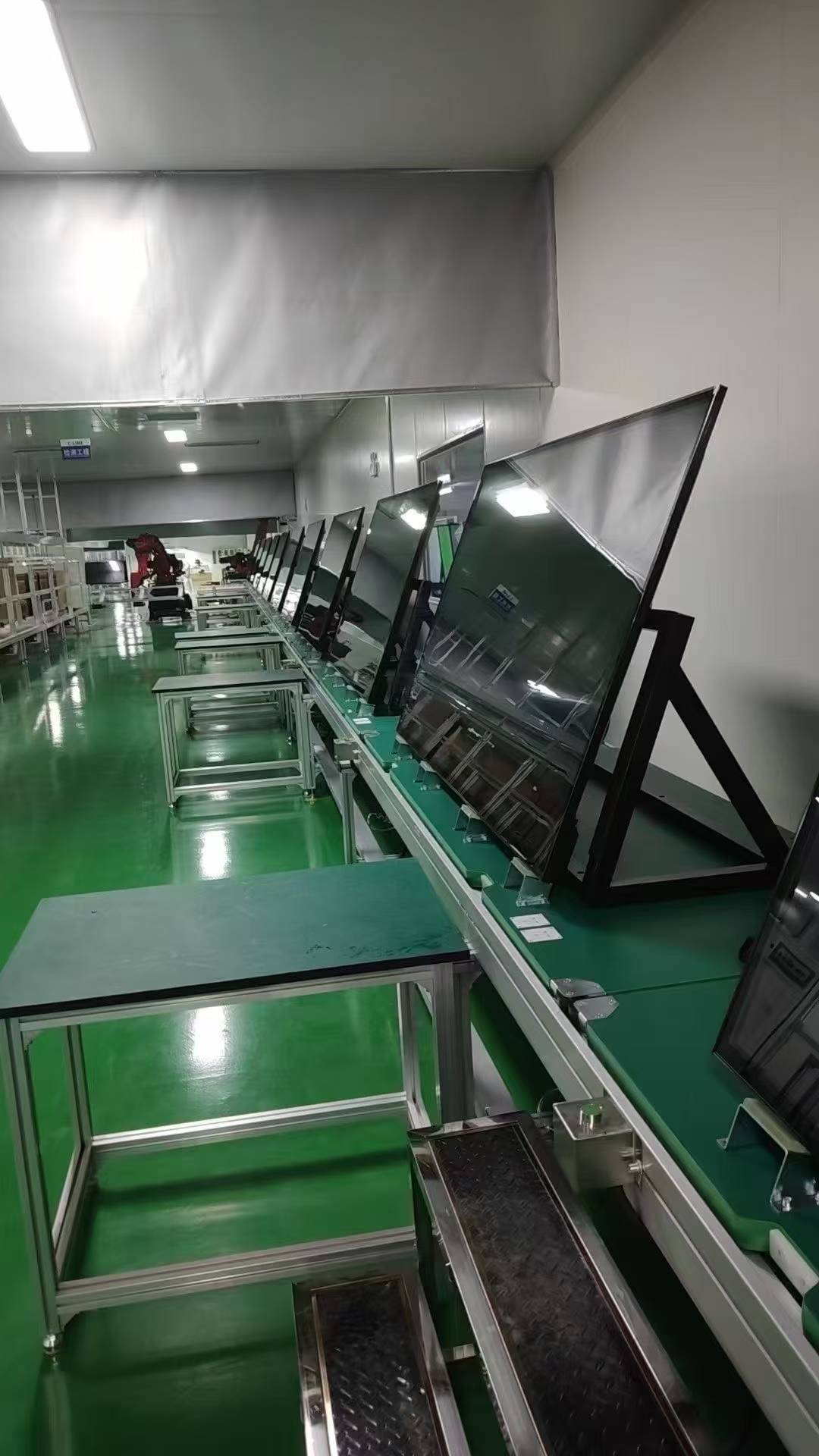
Production floor supporting KD Series build and assembly for commercial display projects.
Why the answer matters more than the datasheet
The global commercial display market was estimated at USD 53.65 billion in 2024, with digital signage accounting for over 53.73% of revenue, according to Grand View Research. The narrower industrial display segment, which covers HMI and control-room screens, was estimated at USD 5.90 billion in the same year, driven by IIoT and HMI device penetration. A market of that scale means most buyers are no longer deciding between a screen and no screen — they are deciding between specifications that look nearly identical on a quotation sheet and behave very differently on site.
In practice, almost every KD Series procurement question reduces to three decisions. First, what light will face the screen: diffused indoor lighting, a bright shop window, or direct daylight. Second, what the enclosure will be exposed to: dust, rain, cleaning routines, or a temperature swing. Third, what software and peripherals will run on the device. When those three answers are fixed, the model choice in the KD Series usually falls into place on its own.
GZKEDRO and the KD Series at a glance
GZKEDRO — Guangzhou Kedro Electronics Technology Co., Ltd. — is a commercial display manufacturer founded in 2013, with research and development centres in Guangzhou and Shenzhen, and a 50,000 m² production facility staffed by more than 200 employees, of whom over 100 work in research and development. The company states an export ratio of roughly 80%, global supply capability for small, medium and large commercial display projects, and a product portfolio spanning commercial display screens, digital signage and interactive education hardware.
The KD Series is the family through which those projects are specified. Its verified configurations cover indoor signage, outdoor waterproof units, LED screens, interactive conference panels, self-service kiosks, transparent cabinets, video walls, elevator displays, wall-mounted units and an AI digital human.
| Series | Product type | Defining verified specification | Environment listed in the specification |
|---|---|---|---|
| KD-AD | Advertising Display (indoor digital signage) | 450 cd/m², 1920 × 1080, 0–40 °C | Commercial district, airport, railway station, shopping mall, hotel |
| KD-WM | Wall Mounted Display | 350 cd/m², Android 14.0, 1920 × 1080 (optional 3840 × 2160) | Shopping mall, hotel, commercial district, airport, railway station |
| KD-EA | Elevator advertising machine | 250 cd/m², 622.5 × 343 mm, backlight life over 50,000 hours | Transport hub, commercial district, smart city projects |
| KD-OD | Outdoor advertising display (waterproof) | 2,000 cd/m², IP55, −20 to 50 °C | Transport hub, commercial district, smart city projects |
| KD-DSA | Dual-screen outdoor advertising machine | 2,000 cd/m², 1080 × 1920, ≤500 W | Transport hub, commercial district, smart city projects |
| KD-LED | Outdoor LED screen | 2.0 mm dot pitch, ≥4,500 cd/m² white balance | Outdoor media, smart city, outdoor billboards |
| KD-IFPD | Interactive conference display | 40 multi-touch points, Android 14.0 | Corporate office, educational institutes, training centre, government office |
| KD-SSK | Touch inquiry kiosk | 21.5 inch screen, Intel Core i5 10th generation, 350 cd/m² | Hospital, bank, airport, railway station, government service centre, shopping mall |
| KD-ISS | Interactive slider screen (wall sliding display) | 1,500 cd/m², IP55, PC version with Intel Core 5 processor | Exhibition centre, hotel lobby, commercial district |
| KD-TP | Transparent cabinet display | 95% transparency, ≥380 cd, 1920 × 1080 | Luxury retail store, hotel, commercial district |
| KD-VW | LCD video wall | 55 inch (4 × 4), 3.5 mm sealing gap, 500 cd/m² | Monitoring, exhibitions, government, shopping malls |
| KD-DH | Holographic digital human (AI digital human) | 3840 × 2160, 1,300 cd/m², HDR1000 | Exhibition centre, hotel lobby, commercial district, education, healthcare |
Indoor versus outdoor: brightness, ingress protection and thermal design
The single most common procurement error is comparing an indoor brightness figure with an outdoor one. In the KD Series those figures are separated on purpose. The KD-AD Series is specified at 450 cd/m² with a 1920 × 1080 resolution across a 1427 × 802 mm display area, running on an RK3566 motherboard with 2 GB RAM and 32 GB ROM, drawing no more than 140 W and rated for an ambient temperature of 0–40 °C in aluminium alloy and tempered glass housing. That is a specification written for indoor commercial districts, airports, stations, malls and hotels.
The KD-OD Series sits at 2,000 cd/m² — more than four times that figure — in a 1080 × 1920 portrait format with a 680.4 × 1209.6 mm display area and a 0.630 × 0.630 mm pixel pitch. It carries a 3000:1 contrast ratio, a 178°/178° viewing angle, a 6 ms response time, and runs on an RK3288 quad-core Cortex-A17 processor at 1.8 GHz with Mali-T764 graphics, 2 GB RAM and 16 GB ROM. Connectivity includes RJ45 10M/100M, Wi-Fi 802.11b/g/n, Bluetooth 4.0, HDMI out, LAN, USB, a TF card slot and a SIM card slot. Total power is ≤500 W with standby below 5 W.
Brightness is not the only difference. The KD-OD Series adds an air-cooled heat dissipation system with industrial fans, an IP55 protection level, tempered explosion-proof glass, an operating temperature of −20 to 50 °C and an operating humidity of 10–90% RH non-condensing, with storage rated from −20 to 60 °C. In other words, the outdoor specification is a package of thermal, mechanical and electrical decisions, not a brighter backlight.
At the top of the brightness scale, the KD-LED Series is specified at ≥4,500 cd/m² white balance with a 2.0 mm dot pitch, which corresponds to a pixel density of 160,000 dots per m². The module is 320 × 160 × 17 mm with a 128 × 64 dot resolution, driven at 1/16 scan with constant current drive. Colour temperature spans 3,000–18,000 K, brightness uniformity is ≥97%, colour uniformity is ±0.003 Cx, Cy, and the refresh rate is ≥3,840 Hz at a 60 Hz frame rate.
Two planning numbers follow directly from that. Average power for the KD-LED Series is 235 W/m², and maximum power is 469 W/m². Electrical distribution, breaker sizing and thermal load should be designed around the maximum figure, not the average.
Pixel pitch also answers a question buyers ask late: at what distance does the image hold together. A 2.0 mm pitch with 160,000 dots/m² is a close-viewing outdoor specification, while LCD-based outdoor units such as the KD-OD and KD-DSA Series offer far higher effective pixel density for portrait, pedestrian-facing installations.
Interactive hardware: what 40 touch points and the compute platform actually change
For interactive deployments, the two specifications that decide whether a project holds up are the touch layer and the compute platform behind it. The KD-IFPD Series supports 40 multi-touch points on a D-LED backlit panel at 350 cd/m² with an 8 ms response time and a 4K-30Hz frame rate. It runs Android 14.0 on an Amlogic T982 quad-core Cortex-A5 processor, carries a 30,000-hour service life, draws ≤250 W, and includes 8Ω/15W × 2 built-in speakers, one HDMI input, one PC USB 3.0 port, three USB 3.0 ports and one touch USB (Type A) port. Front controls cover HOME, ECO, VOL+, VOL−, MENU, SOURCE, TV-POWER and PC-POWER, the working range is 0–40 °C with storage from −20 to 55 °C, and the interface ships in Simplified Chinese, English and more than ten further languages.
Touch point count matters because it determines how many people can annotate the same surface simultaneously — a boardroom or training room requirement rather than a marketing number. The Android 14.0 platform matters because it determines which collaboration applications run natively on the panel without an external PC.
Where a deployment needs a desktop operating environment, the KD-SSK Series changes the architecture. The self-service kiosk uses a 21.5 inch screen with a 473 × 270 mm display area inside a 1531.18 × 370 × 50 mm unit, a vibration touch sensor, an E80I thermal printer, 350 cd/m² brightness, a 178°/178° viewing angle, 16.7 million colours, a 6 ms response time and 2 × 5 W speakers at ≤220 W. Its processor is an Intel Core i5 10th generation (4M, 3.90 GHz) with 8 GB DDR3 memory, a 256 GB SSD, Wi-Fi, Gigabit LAN, four USB 3.0 ports and HDMI, rated for 0–50 °C at 20–80% RH.
The KD-ISS Series shows the same logic in a different form factor. Its Android path uses an RK3288 quad-core Cortex-A17 processor at 1.8 GHz with Mali-T764 graphics, 2 GB RAM and 16 GB ROM, while the PC version uses an Intel Core 5 processor with 8 GB RAM and a 120 GB SSD. The panel is specified at 1,500 cd/m² with a 3000:1 contrast ratio, an 8 ms response time and a 178°/178° viewing angle, protected to IP55, operating from −20 to 50 °C and drawing ≤180 W with standby below 5 W.
Decision rule: browser-driven content usually fits the RK3566, RK3288 or Cortex-A7 platforms used across the KD-AD, KD-WM, KD-EA, KD-OD and KD-IFPD Series. Peripheral-heavy workflows — printing, desktop software, local databases — point toward the x86 platforms in the KD-SSK and the PC version of the KD-ISS.
Specialised formats: transparency, dual-screen and holographic
The KD-TP Series is the transparent format of the family. It uses an industrial transparent LCD panel with a 1430 × 805 mm display area inside a 1585 × 972 × 300 mm overall cabinet, at 1920 × 1080 resolution, a 0.9405 × 0.9405 mm pixel pitch and 95% transparency. Brightness is listed at ≥380 cd with a 3000:1 contrast ratio, 95% brightness uniformity, 16.7 million colours, an 8 ms response time and a full 178° viewing angle in both axes. Operating temperature spans 0–60 °C with storage from −10 to 60 °C, power is 24 V/100 W with an AC 100–240 V supply, and the enclosure combines tempered glass with acrylic. Its listed environments are luxury retail stores, hotels and commercial districts.
The KD-DSA Series is the dual-screen outdoor machine, built on a 1080 × 1920 portrait platform at 2,000 cd/m² with a 3000:1 contrast ratio, 178°/178° viewing angles and a 6 ms response time. It uses the RK3288 processor with Mali-T764 graphics, 2 GB RAM and 16 GB storage, supports RJ45 10M/100M, Wi-Fi 802.11b/g/n and Bluetooth 4.0, exposes HDMI out, LAN, USB, TF card and SIM interfaces, and draws ≤500 W with standby below 5 W.
The KD-DH Series is the most specialised unit in the range. The holographic digital human has a 1,649 × 927 mm display at a 16:9 ratio and 3840 × 2160 resolution, with 1,300 cd/m² brightness, 320 local difference zones, a 3000:1 physical contrast ratio and a minimum 79° viewing angle in each direction. It supports HDR1000, with 30% light transmittance and 60% reflection, 60 W of audio across 2.1 channels, an 8-array microphone and a 5 MP driverless camera. Rated power consumption is 1,100 W on an AC 100–240 V input, and the operating environment is 0–40 °C at 10–85% RH non-condensing.
Mapping KD Series specifications to real deployment environments
Once the specifications are separated by environment, model selection becomes a short decision rather than a catalogue search.
| Project brief | Series | Specification that decides the choice |
|---|---|---|
| Indoor mall, airport or station advertising in 16:9 landscape | KD-AD | 450 cd/m², 1427 × 802 mm area, ≤140 W, 0–40 °C |
| Wall-mounted indoor signage replicated across many sites | KD-WM | 350 cd/m², Android 14.0, 64 GB eMMC, 1920 × 1080 |
| Elevator cabin advertising on a low-power circuit | KD-EA | 250 cd/m², ≤55 W, standby ≤0.5 W, 50,000-hour backlight |
| Street-facing outdoor cabinet at a transport hub | KD-OD | 2,000 cd/m², IP55, −20 to 50 °C, air-cooled |
| Double-sided portrait machine at a transit entrance | KD-DSA | Dual 1080 × 1920 portrait, 2,000 cd/m², ≤500 W |
| Large facade signage or billboard viewed from distance | KD-LED | 2.0 mm pitch, ≥4,500 cd/m², 235 W/m² average |
| Boardroom, classroom or training room collaboration | KD-IFPD | 40 touch points, Android 14.0, ≤250 W |
| Queue, ticketing or information self-service | KD-SSK | Intel Core i5 10th generation, vibration touch, E80I printer |
| Interactive exhibit wall with sliding motion | KD-ISS | 1,500 cd/m², IP55, PC version with 120 GB SSD |
| Luxury retail window or showcase | KD-TP | 95% transparency, ≥380 cd, 0–60 °C |
| Control room, monitoring or command wall | KD-VW | 4 × 4 55 inch, 3.5 mm sealing gap, 500 cd/m² |
| Flagship lobby or exhibition centre centrepiece | KD-DH | 3840 × 2160, 1,300 cd/m², HDR1000, 8-array microphone |
Evidence from deployed projects supports that mapping. KD Series units have been supplied to advertising media companies, education institutions, retail chain stores, outdoor advertising contractors, exhibition and event companies, system integrators, corporate offices, luxury retail brands, government and smart city projects, and OEM and ODM display buyers. Project volumes commonly reach 100 units or more, and a typical project duration is three years, extending to five years in special cases.
Reported operating outcomes include stable 24/7 advertising operation, increased customer engagement, stable outdoor operation, improved interactive teaching efficiency, efficient communication environments and long-term stable performance. Deployments reach the Gulf (Saudi Arabia, United Arab Emirates, Qatar, Kuwait, Bahrain), Europe (United Kingdom, Germany, France, Italy, Spain, Netherlands, Poland, Russia, Turkey), Africa (Egypt, South Africa, Nigeria, Morocco, Kenya), Asia-Pacific (India, Pakistan, Bangladesh, Thailand, Vietnam, Malaysia, Philippines, Indonesia, Singapore, Australia) and the Americas (United States, Mexico, Brazil).
Market trends that shape KD Series procurement
Three format categories are expanding faster than the broad display market, and each maps to a specific KD Series product.
- Transparent displays. The transparent display market was valued at USD 2.84 billion in 2023 and is expected to reach USD 81.5 billion by 2032, a trajectory attributed to AR integration, according to Global Market Insights. The KD-TP Series at 95% transparency is the corresponding format.
- Holographic and digital human displays. The holographic display market is projected to grow from USD 5.42 billion in 2026 to USD 33.36 billion by 2034, a CAGR of 25.52%, according to Fortune Business Insights. The KD-DH Series belongs to this category.
- Regional concentration. North America held a 35.6% revenue share of the global digital signage market in 2025, making it the largest regional market, per Grand View Research — relevant for buyers planning multi-region rollouts.
Estimates for the holographic category diverge by scope. Mordor Intelligence places the 2026 figure at USD 5.14 billion and Global Market Insights at USD 4.3 billion for 2025, while Fortune Business Insights reports USD 4.31 billion for 2025. The differences reflect whether software and specialised medical hardware are included, which is why format-level forecasts should be read as directional rather than exact.
Compliance is following a similar consolidation. IEC 62368-1 is the primary safety standard for commercial displays as AV and IT equipment, replacing the legacy IEC 60950-1 and IEC 60065 standards, according to UL Solutions. For buyers, that means LVD and EMC documentation built on IEC 62368-1 is now the reference point when comparing suppliers. At the competitive end of the market, Samsung Electronics and LG Display are identified as leaders in commercial and large-format display, with Samsung's MicroLED line driving part of that growth, according to Market Research Future.
Where the KD Series has boundaries
A specification set is only useful if its limits are stated as clearly as its capabilities. The following boundaries are documented in the KD Series data.
- IP55 is not washdown protection. The listed protection level for the KD-OD and KD-ISS Series is IP55. That covers dust ingress and water jets, but it is not a submersion or high-pressure washdown rating. Installations in tunnels, vehicle depots or food-service surroundings that use aggressive cleaning routines should validate enclosure placement rather than assume the rating covers them.
- 450 cd/m² is an indoor figure. The KD-AD Series is specified for 0–40 °C indoor environments. In direct sunlight it cannot compete with the 2,000 cd/m² KD-OD or the ≥4,500 cd/m² KD-LED. Using an indoor panel behind glazing in full sun is a mismatch, not a tuning problem.
- Transparency costs brightness. The KD-TP Series achieves 95% transparency with brightness listed at ≥380 cd. That trade-off suits controlled, indirectly lit luxury retail and hotel settings; a window facing direct daylight generally needs a different format.
- Power density is a project variable, not a footnote. KD-LED averages 235 W/m² but peaks at 469 W/m², and the KD-DH carries a rated consumption of 1,100 W. Distribution boards, cabling and heat extraction must be sized for those peaks.
- Holographic units need light control. The KD-DH lists 30% light transmittance and 60% reflection alongside its 3000:1 contrast. Its visual performance depends on ambient lighting, so it should be planned for lobby or exhibition environments rather than uncontrolled outdoor positions.
- Interactive frame rates vary. The KD-IFPD Series lists a 4K-30Hz frame rate. Content built around high-motion or high-frame-rate video should be reviewed against that figure before deployment.
- Compute configurations are fixed at shipment. The KD-SSK Series ships with a defined Intel Core i5 10th generation, 8 GB DDR3 and 256 GB SSD configuration. Applications with heavier local processing may need the OEM path, since system configuration is listed as a customizable parameter.
How that compares with traditional alternatives
Against static printed signage, a commercial display adds continuous power draw, network connectivity and content operations. The KD-AD draws ≤140 W, the KD-IFPD ≤250 W and the KD-DH 1,100 W — real operating costs that printed panels do not carry. Against consumer-grade televisions, the difference is documentation and duty cycle: KD Series units state defined operating ranges (0–40 °C for the KD-AD, −20 to 50 °C for the KD-OD), a defined protection level (IP55), and are subject to a full quality control process before shipment. Consumer panels generally do not publish equivalent parameters, which is precisely why they underperform in continuous commercial duty. Against LCD video walls, LED delivers the higher brightness needed for distance viewing, while LCD formats at 2,000 cd/m² and below deliver the pixel density needed for close viewing — the two are complementary rather than interchangeable.
Procurement terms, verification and after-sales
Order terms in the KD Series are structured for project work. Minimum order quantity is 2–5 units depending on product size, with flexible and project-based MOQ arrangements. Lead time is 15–30 days, with a maximum of 30 days, supported by a monthly production capacity of 2,000–5,000 units. Customization covers logo, colour, software, UI interface, packaging and voltage, and extends to screen size, brightness, housing and system configuration, as well as software, CMS, industrial design and hardware structure.
Quality control is built around 100% aging test and functional inspection, covering brightness testing, waterproof testing, touch testing, temperature testing and continuous operation testing, with full quality control before shipment and industrial standard testing. After-sales support includes remote technical support, online technical guidance, 24/7 technical assistance and professional engineering support.
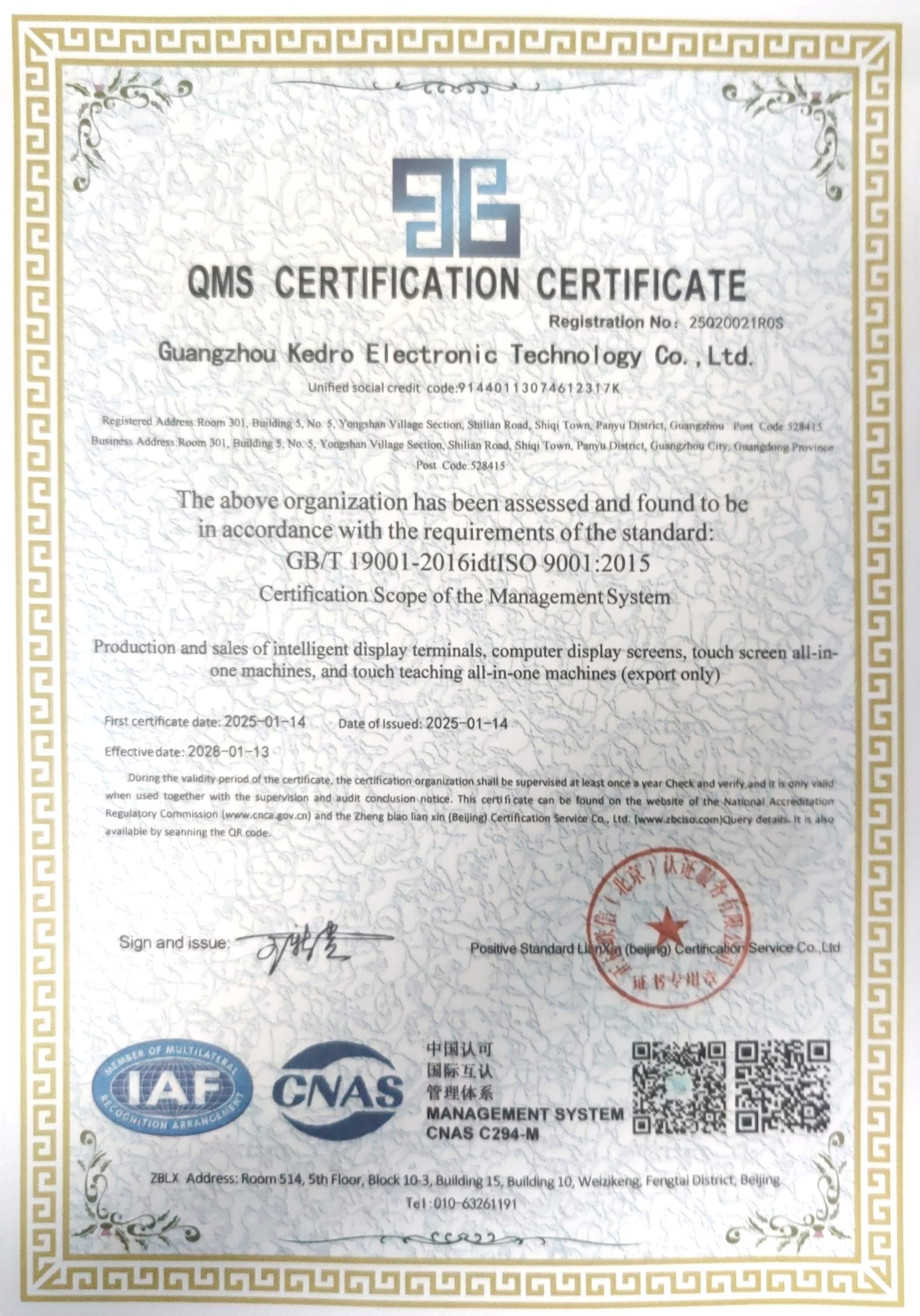
ISO 9001 quality management system certificate covering the production and sale of intelligent display terminals.
For evaluation-stage due diligence, the certification set is documented with reference numbers and issuing bodies.
| Scheme | Standard or scope | Reference | Issuing body |
|---|---|---|---|
| FCC SDoC | FCC Part 15, Subpart B, ANSI C63.4:2014 | MAX26060195P01-E01 | MAXLAB Testing Co., Ltd |
| EU LVD | EN IEC 62368-1:2024/A11:2024, LVD Directive 2014/35/EU | MK25100089P01-S01 | TMC Testing Services (Shenzhen) Co., Ltd. |
| EU EMC | EN 55032:2015/A11:2020, EN 55035:2017/A11:2020, EN IEC 61000-3-2, EN 61000-3-3, EMC Directive 2014/30/EU | MK25100089P01-E01 | TMC Testing Services (Shenzhen) Co., Ltd. |
| RoHS 2.0 | IEC 62321 series, Directive (EU) 2015/863 and (EU) 2017/2102 | MK25100089P01-C01 | TMC Testing Services (Shenzhen) Co., Ltd. |
| China product inspection | GB4943.1-2022 and enterprise technical requirements | JAT2207030268CN-01 | Dongguan Junan Testing and Certification Co., Ltd. |
| China test report | GB4943.1-2011 (eqv IEC 60950-1:2005, MOD) | 20220501W12358 | CQC Intime Testing Technology Co., Ltd. |
| CCC certification | GB17625.1-2012, GB4943.1-2011, GB/T9254-2008 (Class A), GB8898-2011, GB/T13837-2012 | 2018010901114733 | China Quality Certification Center (CQC) |
| ISO 9001 | GB/T 19001-2016 idt ISO 9001:2015 | 25020021R0S (valid to 2028-01-13) | Beijing Zhengbiao Lianxin Certification Service Co., Ltd. |
Additional recognition includes the 2024 Annual Innovation Technology Award issued by the Guangzhou Sign Industry Association, an Honor Certificate of the National Enterprise Credit Information Database, and Credit Cultivation Enterprise status registered under reference PM2020091876575.
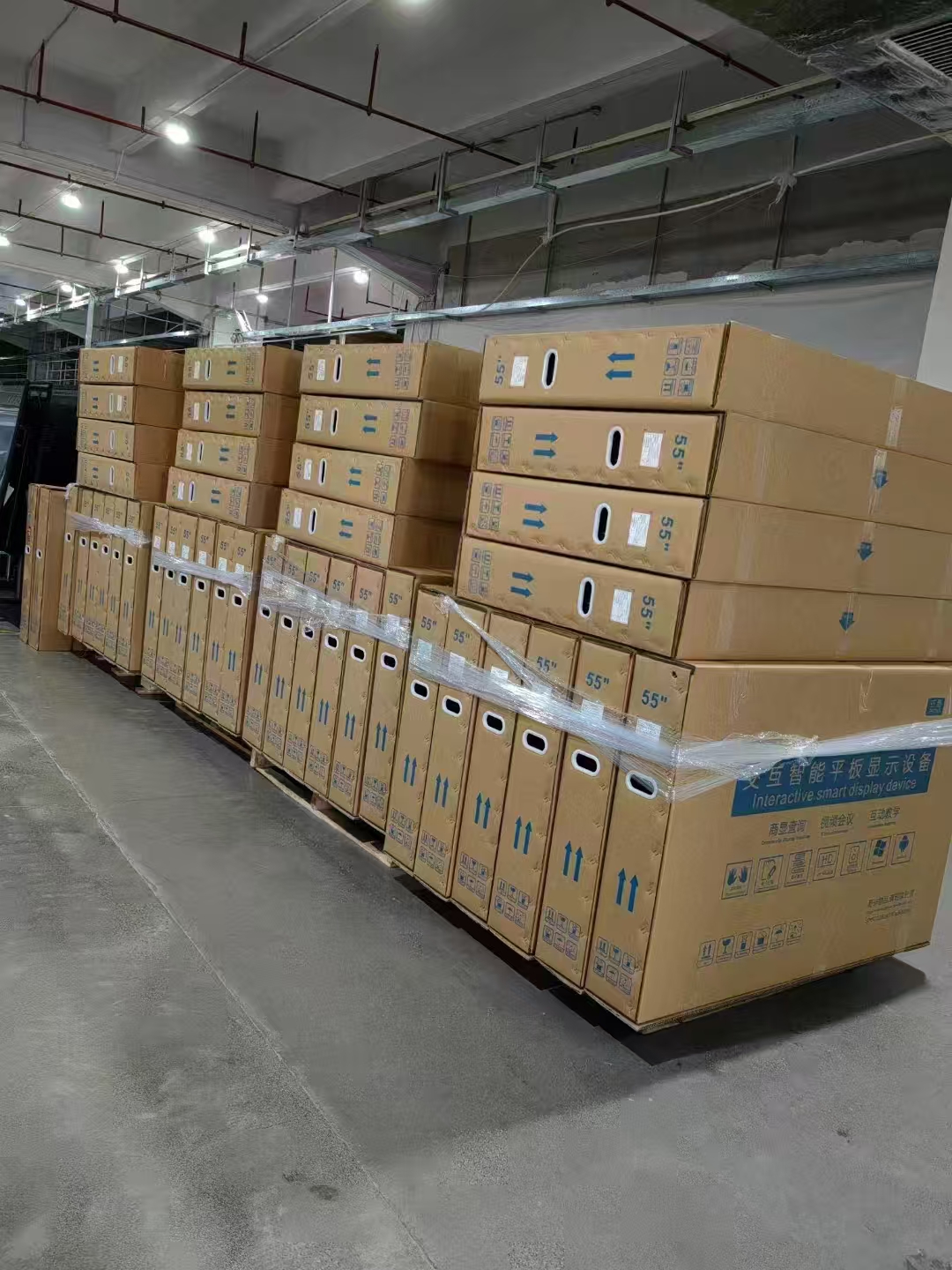
Warehouse stock supporting 15–30 day lead times and 2,000–5,000 unit monthly capacity.
Future outlook
If the format-level forecasts hold, procurement conversations will shift from headline brightness to documented operating envelopes. Transparent displays moving from USD 2.84 billion in 2023 toward USD 81.5 billion by 2032, and holographic displays growing at a 25.52% CAGR toward 2034, both point the same way: buyers will increasingly ask for protection ratings, operating temperatures, power density and certification references before they ask about resolution.
Two practical consequences follow for evaluation-stage buyers. First, safety and EMC documentation built on IEC 62368-1 will become a standard comparison column, since it has replaced the legacy IEC 60950-1 and IEC 60065 frameworks. Second, customization requests will widen from housing and branding to system configuration and CMS integration, because deployments increasingly mix Android boards, x86 platforms and cloud-managed content. In that environment, a supplier's value lies less in a single flagship model than in a portfolio where each format documents the environment it was designed for — which is the structure the KD Series follows.
FAQ
What brightness does an indoor commercial display need compared with an outdoor one?
Indoor and outdoor brightness in the KD Series are separated deliberately. The KD-AD Series is specified at 450 cd/m² for indoor environments such as commercial districts, airports, railway stations, shopping malls and hotels, with an operating range of 0–40 °C. The KD-OD and KD-DSA Series are specified at 2,000 cd/m² for outdoor and transport-hub use, with an operating range of −20 to 50 °C. The KD-LED Series goes further at ≥4,500 cd/m² white balance for outdoor media viewed from distance. The deciding variable is the ambient light falling on the screen face, not the screen size.
What does IP55 mean on the KD-OD Series, and where does it stop?
IP55 is the protection level listed for the KD-OD Series outdoor display, alongside tempered explosion-proof glass and an air-cooled heat dissipation system with industrial fans. It indicates protection against dust ingress and water jets, and pairs with an operating temperature of −20 to 50 °C and operating humidity of 10–90% RH non-condensing. It is not a submersion or high-pressure washdown rating. Installations that require sustained jet washing or full immersion should validate enclosure placement and cleaning routines separately, because the documented rating stops at IP55.
How much touch capability does the KD-IFPD Series provide, and on what platform?
The KD-IFPD Series supports 40 multi-touch points on a D-LED backlit panel specified at 350 cd/m² with an 8 ms response time and a 4K-30Hz frame rate. It runs Android 14.0 on an Amlogic T982 quad-core Cortex-A5 processor, carries a 30,000-hour service life and draws ≤250 W. Connectivity includes one HDMI input, one PC USB 3.0 port, three USB 3.0 ports and one touch USB (Type A) port, with built-in 8Ω/15W × 2 speakers. The touch point count determines how many users can annotate simultaneously; the Android 14.0 platform determines which collaboration applications run natively.
Which KD Series models are built on a full PC rather than an Android board?
Two configurations in the range use x86 computing. The KD-SSK Series self-service kiosk runs an Intel Core i5 10th generation processor (4M, 3.90 GHz) with 8 GB DDR3 memory and a 256 GB SSD, alongside Wi-Fi, Gigabit LAN, four USB 3.0 ports and HDMI. The KD-ISS Series interactive slider screen offers a PC version with an Intel Core 5 processor, 8 GB RAM and a 120 GB SSD. Other models use embedded platforms: RK3566 in the KD-AD Series, RK3288 quad-core Cortex-A17 in the KD-OD, KD-DSA and KD-ISS Android path, quad-core Cortex-A7 in the KD-EA and KD-WM Series, and the Amlogic T982 in the KD-IFPD Series.
What dot pitch and power density should be planned for a KD-LED installation?
The KD-LED Series is specified with a 2.0 mm dot pitch, which corresponds to 160,000 dots per m², a module size of 320 × 160 × 17 mm and a module resolution of 128 × 64 dots. White balance brightness is ≥4,500 cd/m², brightness uniformity is ≥97%, colour temperature spans 3,000–18,000 K, and the refresh rate is ≥3,840 Hz at a 60 Hz frame rate. Power planning matters more than the brightness figure: average power is 235 W/m² while maximum power is 469 W/m², so electrical distribution and heat extraction should be sized against the maximum.
What are the standard order terms for a KD Series project?
Minimum order quantity is 2–5 units depending on product size, with flexible and project-based MOQ options. Lead time is 15–30 days with a maximum of 30 days, supported by monthly production capacity of 2,000–5,000 units. Every unit passes 100% aging test and functional inspection, including brightness, waterproof, touch, temperature and continuous operation testing, with full quality control before shipment. Customization covers logo, colour, software, UI interface, packaging and voltage, and extends to screen size, brightness, housing and system configuration.
The full KD Series specification set is published in the GZKEDRO product catalogue (English edition). Company information is available at www.gzkedro.com.