
Commercial Displays Explained: Key Types and Buying Criteria
Commercial displays are no longer just screens placed in lobbies or storefronts. They have become a core layer of advertising, retail, public information, conference, and industrial communication systems. For buyers, the difficult part is not locating a supplier but translating a project brief into the right display category, specification, and supplier capability.
This article provides a buyer-oriented reference to commercial display formats, technical parameters, market context, and procurement criteria. It uses the product portfolio of Guangzhou Kedro Electronics Technology Co., Ltd. (GZKEDRO) as a documented reference point, while keeping the focus on industry-level decision logic.
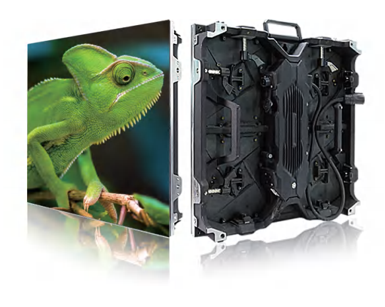
Outdoor LED displays are widely used for outdoor media, smart city, and billboard scenarios.
Why Commercial Display Procurement Needs an Industry Reference
Commercial display demand has expanded across advertising, retail, education, corporate, transport, and smart city projects. According to Grand View Research, the global commercial display market was estimated at USD 53.65 billion in 2024, with digital signage accounting for over 53.73% of the revenue share. This scale creates a wide choice of formats and suppliers, but it also makes specification comparisons more complex.
Buyers often compare products from different categories without checking environment, brightness, durability, and computing capability. An indoor advertising display, for example, is not a substitute for an outdoor waterproof display. A smart conference display serves a different workflow from a video wall. The opportunity is to define the project scenario first, then match the display category and the OEM/ODM capability that can execute it.
What Counts as a Commercial Display?
A commercial display is a professional screen built for business or public environments rather than consumer home use. It may be used for advertising, information broadcasting, collaboration, customer engagement, or data monitoring. In GZKEDRO's portfolio, the commercial display family includes advertising displays, wall-mounted displays, outdoor advertising displays, LED displays, video walls, transparent cabinet displays, smart conference displays, self-service kiosks, elevator advertising machines, interactive slider screens, dual-screen outdoor machines, and holographic digital humans.
The range illustrates that the category is not a single product. It spans indoor and outdoor, LCD and LED, flat and transparent, passive and interactive, standard and AI-enabled formats.
Company Capabilities Behind a Commercial Display Portfolio
Guangzhou Kedro Electronics Technology Co., Ltd. (GZKEDRO), established in 2013, is a Guangzhou-based manufacturer of commercial display solutions and intelligent interactive devices. The company operates research and development centers in Guangzhou and Shenzhen, employs approximately 200 staff, and maintains a manufacturing facility of 50,000 m³. Its R&D team includes 100 professionals, and annual production capacity exceeds 1,000 commercial display units. Export business accounts for 80% of total sales, serving global markets.
GZKEDRO's product lineup includes commercial displays, smart advertising machines, and smart educational whiteboards. The company supports OEM and ODM services for commercial displays, and its profile references a remote cloud control platform for remote deployment, monitoring, and maintenance.
Technical Explanation: What Defines a Commercial Display System
A commercial display can be understood in three layers: the display panel, the embedded computing system, and the management software. The panel determines resolution, brightness, contrast, viewing angle, and response time. The computing system determines content playback, local storage, network connection, and whether the display supports touch or camera input. The management layer determines whether the device can be updated and monitored remotely.
For example, the KD-AD Series Advertising Display uses a Rockchip RK3566 motherboard with 2 GB RAM and 32 GB storage, and is designed for commercial districts, airports, railway stations, shopping malls, and hotels. The KD-WM Series wall-mounted advertising machine runs Android 14.0 with 4 GB RAM and 64 GB eMMC storage, and offers optional 4K resolution. The KD-OD Series outdoor advertising display uses an RK3288 quad-core processor, 2 GB RAM, and 16 GB storage, with IP55 protection and a brightness of 2000 cd/m².
| Series | Category | Key Specifications | Typical Environments |
|---|---|---|---|
| KD-AD | Indoor Digital Signage / Advertising Display | 1920×1080, 450 cd/m², ≤140 W, RK3566, 2 GB RAM / 32 GB storage | Commercial districts, airports, railway stations, shopping malls, hotels |
| KD-WM | Wall-Mounted Advertising Machine | 1920×1080 (optional 3840×2160), 350 cd/m², Android 14.0 | Shopping malls, hotels, commercial districts, airports, railway stations |
| KD-OD | Outdoor Waterproof Display | 1080×1920, 2000 cd/m², IP55, -20°C to 50°C | Transport hubs, commercial districts, smart city projects |
| KD-LED | Outdoor LED Screen | 2.0 mm dot pitch, ≥4500 cd/m², refresh rate ≥3840 Hz, H/V viewing angle ≥160°/≥140° | Outdoor media, smart city, outdoor billboards |
| KD-VW | LCD Video Wall | 55-inch panel, 3.5 mm sealing gap, 1920×1080 | Monitoring, exhibitions, government, shopping malls |
| KD-TP | Transparent LCD Display | 95% transparency, 1920×1080, ≥380 cd/m², 178°/178° viewing angle | Luxury retail, hotels, commercial districts |
| KD-IFPD | Interactive Conference Display | 40 multi-touch points, Android 14.0, D-LED backlight, ≤250 W | Corporate offices, education, training centers, government offices |
| KD-SSK | Touch Inquiry Kiosk | 21.5-inch screen, Intel Core i5, 8 GB RAM, 256 GB SSD | Hospitals, banks, airports, railway stations, government service centers, shopping malls |
| KD-EA | Indoor Elevator Display | 1920×1080, 250 cd/m², 4 mm toughened glass, ≤55 W | Transport hubs, commercial districts, smart city projects |
| KD-ISS | Wall Sliding Display | 1920×1080, 1500 cd/m², IP55, ≤180 W, optional Intel Core 5 PC version | Exhibition centers, hotel lobbies, commercial districts |
| KD-DSA | Dual-Screen Outdoor Advertising Machine | 1080×1920, 2000 cd/m², RK3288, 2 GB RAM, ≤500 W | Transport hubs, commercial districts, smart city projects |
| KD-DH | Holographic Digital Human | 3840×2160, 1300 cd/m², 8-array microphone, 5MP camera, 60 W 2.1-channel speakers | Exhibition centers, hotel lobbies, commercial districts, education, healthcare |
Application and Use Cases
GZKEDRO's application scenarios cover commercial advertising, outdoor media, smart retail, education, corporate office, exhibitions and events, smart city and transportation, and industrial manufacturing. Key use case groups include:
- Commercial advertising and smart retail: brand promotion, customer attraction, product promotion, and interactive engagement using advertising displays, wall-mounted displays, transparent displays, and kiosks.
- Outdoor media and billboards: high-visibility advertising under direct sunlight and weather exposure, using outdoor LED displays, outdoor advertising displays, and dual-screen machines.
- Public information and transport: real-time information broadcasting in transport hubs, elevators, stations, and public service centers using elevator displays, video walls, and self-service kiosks.
- Corporate, education, and government: meetings, training, and collaboration with smart conference displays and interactive conference systems.
- Exhibitions and hospitality: visual impact and visitor engagement with video walls, interactive slider screens, transparent displays, and holographic digital humans.
- Industrial and control environments: stable continuous operation, real-time data monitoring, and anti-interference requirements in industrial control settings.
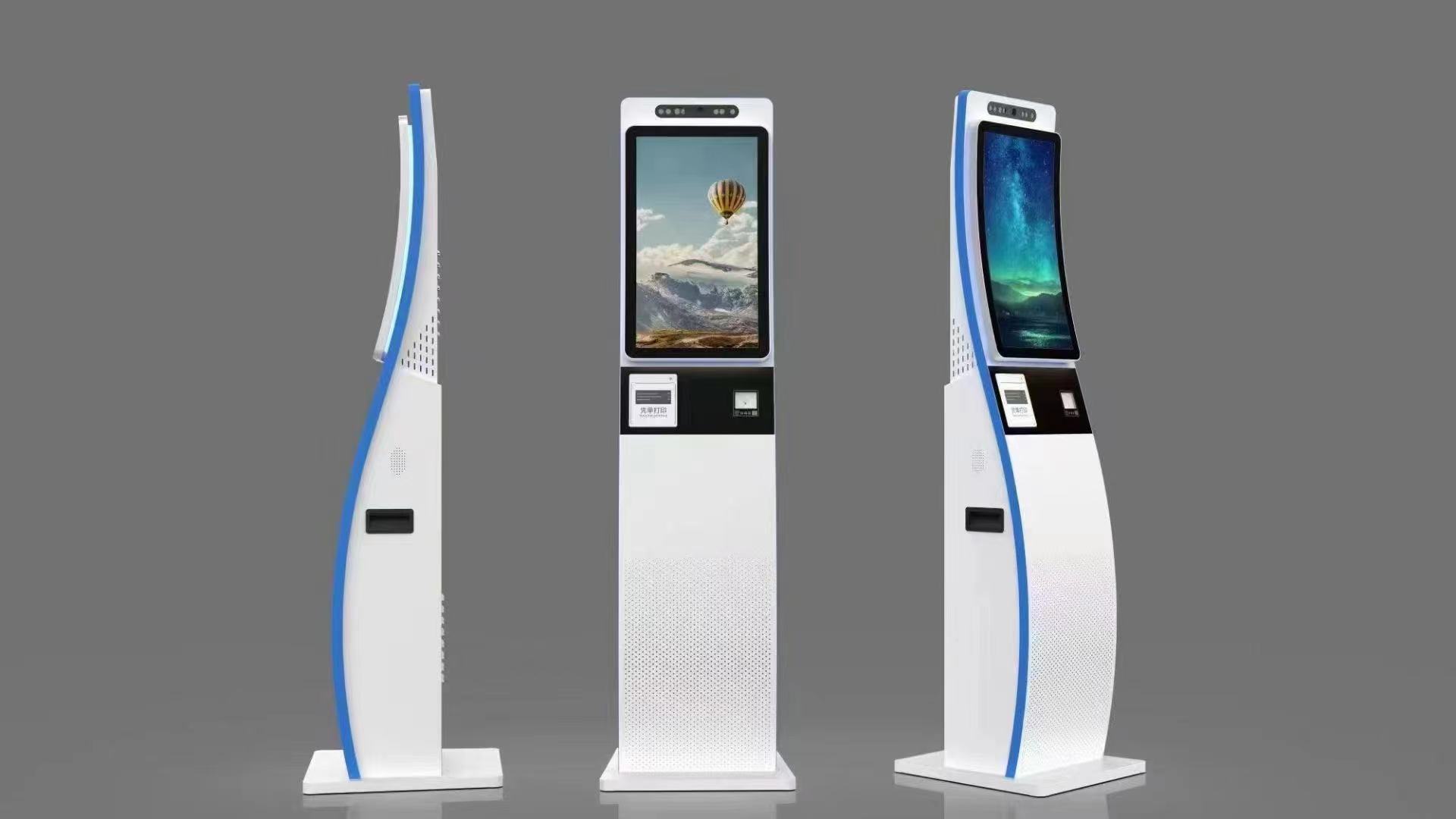
Touch-enabled kiosks are used in hospitals, banks, airports, railway stations, government service centers, and shopping malls.
In one documented scenario, the KD-LED Series is used in smart retail, outdoor media, and commercial advertising industries in the United States. It operates under continuous operation and outdoor exposure conditions, and requires supporting equipment such as a media player and CMS software. This example shows why application context should drive product selection.
Market Context and Sourcing Signals
Several verified market signals help buyers understand the direction of the commercial display industry.
Digital signage remains the largest commercial segment. Grand View Research estimated the global commercial display market at USD 53.65 billion in 2024 and attributed over 53.73% of revenue to digital signage. The same research firm reported that North America held a 35.6% revenue share of the global digital signage market in 2025, making it the largest regional market.
Emerging formats are growing from a smaller base. Fortune Business Insights projects the holographic display market will grow from USD 5.42 billion in 2026 to USD 33.36 billion by 2034, at a CAGR of 25.52%. Global Market Insights valued the transparent display market at USD 2.84 billion in 2023 and expects it to reach USD 81.5 billion by 2032, partly due to AR integration.
Industrial display demand is also expanding. Grand View Research estimated the industrial display market at USD 5.90 billion in 2024, driven by IIoT and HMI device penetration.
From a standards and competition perspective, UL Solutions identifies IEC 62368-1 as the primary safety standard for commercial displays and other AV and IT equipment. Meanwhile, Market Research Future lists Samsung Electronics and LG Display as top global leaders in the commercial and large format display market. For procurement teams, these signals reinforce a practical conclusion: global panel brands dominate component leadership, but integration, customization, and certification still depend on the display manufacturer or OEM.
Commercial Displays vs. Traditional Signage: A Realistic Comparison
The value of a commercial display is easiest to understand when compared with traditional static signage.
| Comparison Point | Traditional Static Signage | Commercial Display |
|---|---|---|
| Content updating | Manual reprinting and replacement | Remote CMS playback and scheduled deployment |
| Engagement | Static text and images | Video, touch, audio, and interactive functions |
| Visibility | Depends on print quality, location, and lighting | High brightness and weather-resistant options |
| Management | Limited | Networked management and cloud control |
| Cost structure | Lower upfront for short runs | Higher hardware cost plus content, power, and maintenance |
Limitation: digital display is not always the better choice. Static signage can deliver acceptable results for simple, long-lived messages, especially when the location has stable lighting and the message does not need frequent updates. In such cases, commercial displays may not justify the higher hardware cost, ongoing electricity, content production, and IT maintenance.
Buyer Decision Framework: How to Evaluate a Commercial Display Supplier
For buyers in the Awareness and Research stages, the goal is to reduce risk before committing to a product or supplier. A practical checklist includes the following steps.
- Define the physical environment: indoor or outdoor, sunlight, temperature, humidity, and expected operating hours.
- Select the display category: advertising display, video wall, transparent display, conference display, kiosk, LED display, holographic display, or custom format.
- Compare technical parameters: resolution, brightness, contrast, viewing angle, response time, power consumption, storage, CPU, and operating system.
- Check protection and durability: IP rating, glass type, enclosure material, and temperature range.
- Confirm software and networking: CMS compatibility, remote cloud control, network interfaces, and content scheduling.
- Verify compliance and standards: CE, FCC, RoHS, ISO9001, and IEC 62368-1 for AV and IT equipment safety.
- Assess OEM/ODM capability: R&D team, production scale, customization, export support, and communication process.
GZKEDRO's corporate profile offers one transparent example of this evaluation. It was established in 2013, has 100 R&D professionals in Guangzhou and Shenzhen, produces more than 1,000 commercial display units annually, and derives 80% of sales from exports. These indicators do not replace a full audit, but they provide measurable input for the early supplier screen.
Future Outlook
Commercial displays will continue to move from standalone screens toward integrated engagement systems. Product categories that combine audio input, camera sensing, and intelligent interaction are already present in the market. For example, the KD-DH Series holographic digital human includes an 8-array microphone, a 5MP driverless camera, and a 60W 2.1-channel speaker, which allows it to behave as an information and service interface rather than a passive screen.
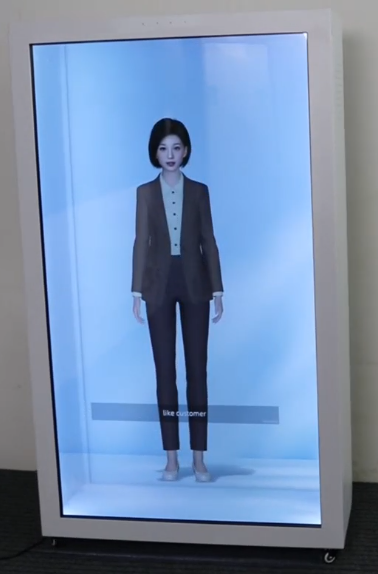
Holographic digital humans combine high-brightness display with microphone, camera, and speaker capability in one enclosure.
Cloud management is becoming a baseline requirement for distributed deployments. Buyers should expect displays to be monitored, updated, and scheduled from a central platform. In parallel, the verified growth projections for holographic and transparent display formats suggest that new categories will take a larger share of procurement conversations, even while standard digital signage remains the commercial core.
Frequently Asked Questions
What is a commercial display?
A commercial display is a professional screen designed for business, public, or industrial environments. It includes digital signage, advertising displays, video walls, conference displays, kiosks, LED screens, transparent displays, and AI digital human displays.
What are the main types of commercial displays?
The main types include indoor advertising displays, wall-mounted displays, outdoor advertising displays, LED displays, video walls, transparent displays, smart conference displays, self-service kiosks, elevator displays, interactive slider screens, and holographic digital humans.
What is the difference between indoor and outdoor commercial displays?
Outdoor displays are designed for high ambient light and weather exposure. GZKEDRO's KD-OD Series, for example, has 2000 cd/m² brightness, IP55 protection, and an operating temperature range of -20°C to 50°C. Indoor displays such as the KD-AD Series have lower brightness at 450 cd/m² and a narrower 0°C to 40°C operating range.
What brightness level is important for outdoor advertising displays?
Outdoor LCD models in GZKEDRO's portfolio are specified at 2000 cd/m², while outdoor LED displays are specified at ≥4500 cd/m² white balance brightness. High brightness is needed to maintain legibility under direct sunlight.
Which certifications matter for commercial displays?
GZKEDRO states that its products are certified to CE, FCC, RoHS, and ISO9001. In addition, IEC 62368-1 is identified by UL Solutions as the primary safety standard for commercial displays and other AV/IT equipment.
How should a buyer evaluate a commercial display OEM?
A buyer should evaluate production capacity, R&D resources, export experience, product certifications, customization capability, and after-sales communication. For reference, GZKEDRO was established in 2013, has R&D centers in Guangzhou and Shenzhen, employs 100 R&D professionals, and reports annual production of more than 1,000 commercial display units.
Reference resource: GZKEDRO Product Catalog (English Edition).