
Commercial Door Locks: Long-Term Supplier Evaluation Checklist
Commercial Door Locks: Long-Term Supplier Evaluation Checklist
Multi-year commercial projects rarely fail on the first delivery of commercial door locks. They fail on the third or fourth order, when a finish has drifted, a cylinder length no longer matches the door, or the maintenance team cannot identify which handle variant was certified for that opening. Evaluating a supplier for continuity therefore asks a harder question than whether a sample operates well: can the same configuration, with the same documented performance and the same serviceable parts, be supplied again in two or three years?
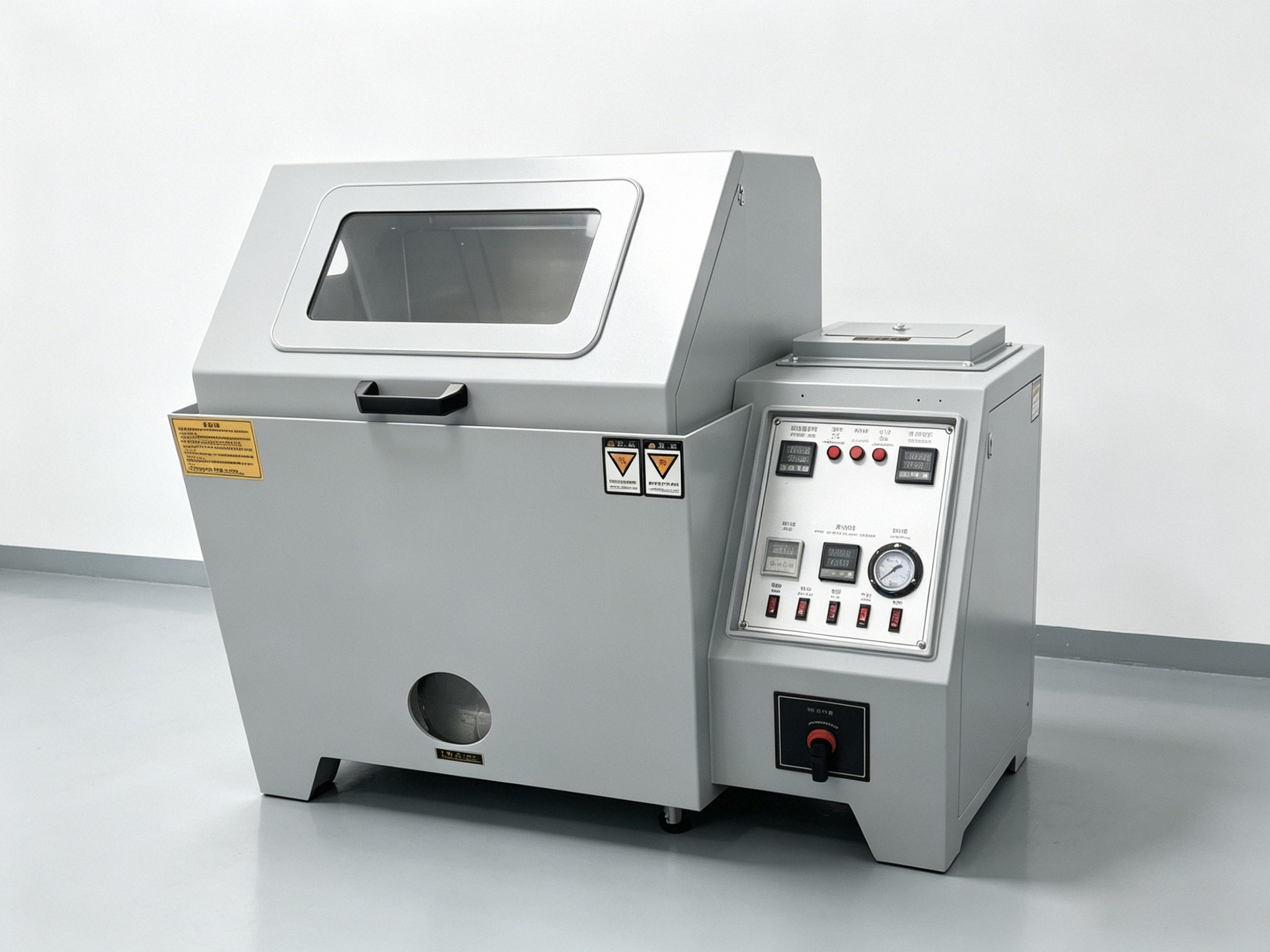 Corrosion testing is one of several checks that support supplier evaluation, but the result applies only to the tested configuration.
TOPTEK — the brand used here for Zhongshan Toptek Security Technology Co., Ltd., a commercial door lock and architectural hardware manufacturer established in 1991 in Xiaolan, Zhongshan, Guangdong, China — is one supplier whose published material can be used to show what that evidence actually looks like. The company operates a 13,000 m² facility with approximately 220 employees, exports about 70% of its output to North America, Europe, Eastern Europe, the Middle East, Australia and New Zealand, and supports OEM and ODM work for door manufacturers, hardware brands, distributors, contractors and access-control integrators. Its range covers American-, European- and Australian-standard mortise locks, cylindrical and tubular lever locks, deadbolts, electromechanical locks, panic and exit devices, EN 1906 lever handles and several cylinder formats.
This checklist is organised around three checkpoints that a buyer can verify before a batch order and re-check at each later phase: repeat-order and OEM/ODM control, the boundary between in-house test data and independently issued documents, and the handover and maintenance records that keep a building serviced. Two planning items run alongside them — master-key hierarchy and cylinder-format selection — because keying decisions made late are difficult to correct once doors are prepared.
Why one good sample does not predict a multi-year supply
A sample proves that a configuration can be built once, usually with engineering attention focused on that unit. It does not prove that a later batch will use the same drawing revision, the same material source, the same finish reference or the same keying plan. Sample approval should cover fit, operation, finish, keying, accessories, packaging and the evidence required for the ordered configuration, and both parties should retain an approved reference sample. Repeat orders should then point to that same approved specification rather than to a model name.
The practical test is documentary. Ask which record would show that batch four matches batch one: a first-article report, an in-process inspection record, a retained colour sample, or a signed drawing revision. A supplier that cannot answer that question in specific terms is difficult to hold to a multi-year standard, regardless of how well the first delivery performs.
Checkpoint one: repeat-order and OEM/ODM control
Continuity begins in production control, not in the sales description. TOPTEK describes incoming material inspection, first-article inspection, routine patrols, in-process sampling, dimensional checks, finish inspection and assembly checks under a 6S production-management system, with optical measurement and metal-composition analysis used to control precision parts and specified materials. Batch records support traceability, which matters when a project later needs to identify why one consignment differs.
Finish is a common and easily overlooked repeat-order risk. The supplier knowledge base describes retaining approved colour samples and comparing plated parts against them before assembly. For a buyer, the corresponding action is to approve a physical master sample, record the finish designation, and require any proposed finish or material-source change to be reviewed before production rather than discovered on delivery.
OEM and ODM scope widens the question. TOPTEK supports modification of existing platforms and development from customer requirements, with agreed scope potentially covering lock structure, trim, cylinder system, materials, finish, branding, packaging, functions and electronics integration. Two controls should be settled at the start. First, a custom design does not automatically inherit an existing certification, so changes must be reviewed to determine whether additional testing or approval is required. Second, confidentiality: an NDA can be agreed for the project, with access restricted to the relevant participants and a clear boundary on what may be used publicly.
Checkpoint two: separating in-house test data from independent documents
An internal laboratory is a development and production tool. TOPTEK's laboratory supports checks for operating cycles, mechanical strength, torque, pull-out resistance, cylinder attack resistance, corrosion, temperature and humidity across locks, lever handles, cylinders and exit devices, helping engineers identify wear and functional variation before shipment. That work is useful, but it is not the same thing as an independent certificate, and the factory laboratory should not be described as a certification body.
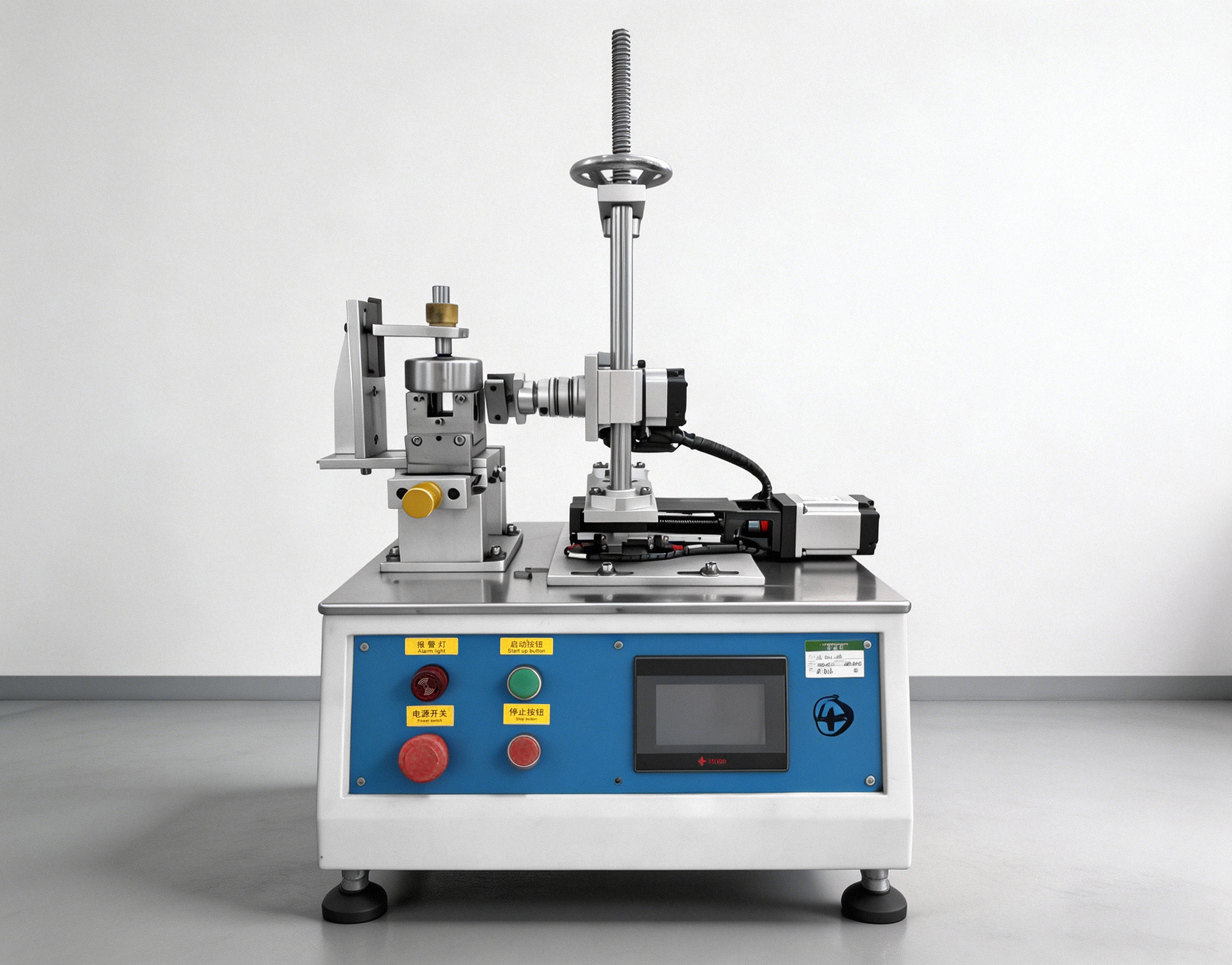 Cylinder cycle testing generates evidence for a specific model and configuration; it does not by itself establish certification coverage.
Document types buyers often conflate
- Test report — records the tested samples, the standard edition and the results. It is limited to what was tested.
- Test verification of conformity — summarises referenced test evidence for named models. It is not a certified product listing.
- Product certificate — provides only the conformity assurance stated in that certificate, for the models in its schedule.
- Management-system certificate — covers the certified holder and its processes, not the performance of an individual lock. TOPTEK's ISO 9001:2015, ISO 14001:2015 and ISO 45001:2018 certificates (02824Q13188R0M, 02824E12172R0M and 02824S11308R0M) belong in supplier qualification, not in a durability claim.
One frequently misread example is cylinder evidence. Source verification 250314125GZU-VOC001 addresses ANSI/BHMA A156.5:2020 performance for the listed cylinder models; it does not establish a UL fire listing or a BHMA Certified product listing. Likewise, verification 250220026GZU-VOC001 concerns its listed JHTS-OB-60 cylinder under EN 1303, and cannot be extended to Euro, SFIC, American or Australian formats without a documented match.
Worked example: the LHEU001–LHEU005 EN 1906 report
The clearest illustration in the available material is the lever-handle family. Intertek report 260618137GZU-002 records, for the LHEU001–LHEU005 family under EN 1906:2012, category of use Grade 3 and durability Grade 7, with 200,000 operating cycles passed, 40 N·m rotational torque strength passed, 800 N axial strength passed for LHEU001 and LHEU002, corrosion resistance Grade 4 after a 240-hour salt-spray test, and fire/smoke-door suitability category B subject to the referenced doorset test scope.
The scope note matters as much as the headline number: LHEU001 underwent the full test programme, LHEU002 received an additional axial-strength test, and the remaining family models were evaluated. A buyer specifying a particular variant should therefore confirm that the ordered model maps to the report schedule rather than assuming every variant completed every test. The separate Grade 4 handle report, 260618137GZU-001, records 500,000 operating cycles, 1,000 N axial strength, a rest-position deviation of 0.80 degrees after cycling and Grade 4 corrosion resistance at 240 hours. TOPTEK also reports internal Grade 4 endurance testing to 1,000,000 cycles; that figure is a manufacturer statement and is presented separately from the independent report.
Where cycle counts stop being useful
Cycle and salt-spray numbers are results under defined conditions, not service-life promises. The 200,000-cycle result corresponds to the EN 1906 Durability Grade 7 baseline, so it should be read as a classification outcome rather than as an estimate of years in a specific corridor. A 240-hour salt-spray result supports comparative corrosion evaluation; it does not convert into a guaranteed outdoor service life, and a coastal site still requires material, finish, cleaning and maintenance decisions specific to that exposure.
The same discipline applies to the rest of the evidence set. CE certificate 2649-CPR-26002201 covers listed mechanically operated locks under EN 12209:2003/AC:2005 and must be matched to its model schedule. The EN 1303 P05 cylinder report 260907230GZU-001 records durability Grade 6 at 100,000 operating cycles, key-related security Grade 6, corrosion and temperature Grade C with a 96-hour salt-spray test and operation at -25 °C and +65 °C, and attack resistance Grade D* tested with a suitable security rosette. Australian platforms TKAU6400 and TKAU9000 are stated in the catalogue as tested to 500,000 cycles under AS 4145.2:2008 D8, which is a manufacturer catalogue statement requiring confirmation against the selected model. EN 1634-1 doorset results of 132 minutes integrity and insulation on the tested timber assembly and 260 minutes integrity on the tested steel assembly apply to those assemblies, not to every lock of the same family.
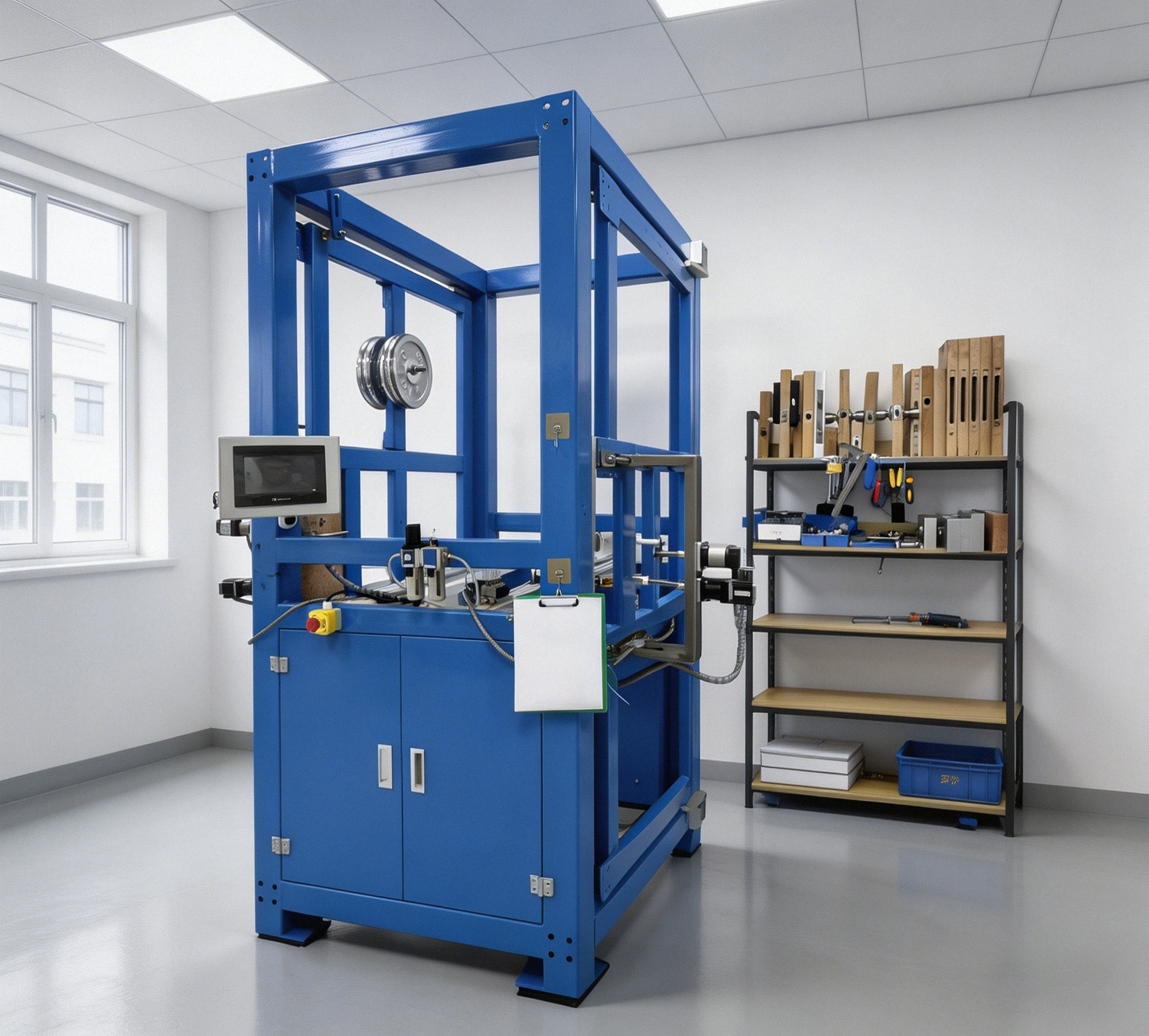 Durability testing supports a classification for covered models; the classification does not transfer automatically to other products or assemblies.
Checkpoint three: handover and maintenance records
Long-term operation is decided at handover. A facility team that receives a box of hardware without model-level documentation will eventually replace the wrong part or clean a finish with the wrong agent. The practical minimum for each model is the approved hardware and door schedule with its revision, model drawings, installation instructions, the applicable certificates or reports with their scope stated, keying information held under controlled access, and electrical diagrams with the monitoring signal schedule wherever a powered lock is installed. The set is model-specific; confirming which documents exist for each model is more reliable than accepting one generic bundle for an entire catalogue.
Maintenance planning should be written against traffic and exposure. Routine inspection covers door sag, hinge condition, strike alignment, fixing tightness, lever return, full latch and deadbolt travel, cylinder action and, on electrified doors, the protection and continuity of the power-transfer route. Cleaning and lubrication should follow the instructions for the exact product; flooding a cylinder with general-purpose oil is a common and avoidable error. Spare-part identification should reference the confirmed model and bill-of-material revision, with cylinder, trim and core compatibility checked before ordering. Spare-parts availability, warranty coverage and service response depend on the actual agreement, so those terms belong in the contract rather than in an assumption.
Master-key and cylinder-format planning as a long-lead item
Keying is the part of a lock package most likely to be revisited years later, when departments move and staff change. TOPTEK's cylinder range covers Euro profile, American mortise, key-in-knob, SFIC interchangeable core, Scandinavian round and oval, and Australian oval formats, with modular lengths, emergency-clutch functions and reinforced security configurations. Project keying can be supplied as factory-assembled, labelled systems or as components for local locksmith assembly, and approved key charts support up to five master-key levels.
Two specification habits reduce later errors. First, measure cylinders from the fixing-screw centreline to the finished exterior trim face and to the finished interior trim face separately, recording the values as EXT and INT; overall length alone cannot identify an offset cylinder. Second, treat the keying matrix as a controlled document: list doors, user groups and permissions, define individual, group and master levels, review cylinder format and capacity with the supplier, and validate the proposed hierarchy on samples before production. Keep issue records under control and do not assume that cylinders sharing an external format also share a key system — cross-format coordination depends on an engineered system reviewed as a whole.
How the checklist behaves across a phased project
In a building delivered in phases, the same three checkpoints repeat with different emphasis. At phase one, the work is freezing the reference: approved drawings, function schedule, finish sample, keying matrix and the evidence set for each model. At phase two, the emphasis shifts to batch comparison — matching deliveries against the retained reference and the batch inspection records, and extending the keying plan to new areas without redefining existing levels. At handover, documentation and spares become the priority, because the installer leaves and the facility team inherits the hardware for the remainder of the asset's life.
Electrified and electromechanical openings need one additional step at every phase: the lock, supply, controller interface and cable transfer must be validated as a connected configuration. Model-specific voltage, current, wiring, monitoring signals and power-loss behaviour differ between motorized and solenoid-operated families, so a specification written for one model should not be copied to another. Testing the agreed combination before release is the only reliable check.
Sample-based sourcing versus a documented programme
| Evaluation point | Sample-only approval | Documented long-term programme |
|---|---|---|
| Reference standard | Sample retained informally | Approved drawing revision, function, finish, keying and reference sample held by both parties |
| Batch consistency | Appearance checked on delivery | First-article, in-process and assembly checks; retained colour reference for plated parts |
| Performance evidence | Catalogue description | Numbered report or certificate matched to model, standard edition and configuration |
| Keying | Cylinders ordered door by door | Approved keying matrix, defined master-key levels, controlled issue records |
| Handover | Installation sheet only | Model drawings, instructions, scoped evidence, keying and wiring documentation |
| Service | Replacement ordered by description | Parts identified by model and BOM revision, with compatibility confirmed |
| Change control | Change discovered after delivery | Change reviewed before production, with re-testing where required |
Fit boundaries: when this depth is unnecessary
Not every purchase justifies the full programme. A single refurbishment of a handful of interior doors may need only a correct drawing, a sample approval and the right report for the specified model; building a keying matrix and a batch-record regime for twelve openings adds cost without adding protection. The checklist earns its overhead when the same lock family will be ordered repeatedly, when a building will be handed to a facility team that did not specify the hardware, or when a key hierarchy must survive staff changes.
Three limits should also be stated plainly. A product grade or certification applies to the model and configuration named in its document, not to every product a supplier sells, and fire or escape suitability requires evidence for the complete door assembly rather than for the lock alone. A cycle or salt-spray result describes test conditions and does not guarantee a service life. And any custom change — dimensions, material, finish, electronics — must be reviewed to determine whether new testing or approval is required.
What to put in the evaluation file
A workable conclusion for a multi-year commercial door lock programme is a short, auditable file: the approved specification and reference sample; the model-by-model evidence list with issuer, number and scope; the batch inspection arrangements; the keying matrix and cylinder dimensions; and the handover and spares schedule. Each item is verifiable, each is specific to a configuration, and each can be re-checked when a later order arrives. Suppliers that can support this file make continuity a documented process rather than an expectation — and buyers who ask for it early avoid discovering the gaps after the doors are hung.
Frequently asked questions
What evidence should a buyer request to verify long-term performance claims for commercial door locks?
Request the model-specific technical drawing, function description, materials and finish, installation instructions and the relevant numbered certificates or test reports. Check the document issuer, the standard and edition, the product and model scope and any stated conditions, such as a required security rosette or a tested doorset configuration. A catalogue statement or a certification logo is not the same as a document that names the configuration.
Can in-house test results replace independent certification documents?
No. An internal laboratory supports development, tooling-sample review and production consistency, and it is not an independent certification body. Internal values, such as a 1,000,000-cycle Grade 4 endurance figure, are manufacturer statements and should be read alongside the separately issued report for the covered model, not used instead of it.
How are samples and repeat orders controlled so a later batch matches the approved one?
Approve the drawing revision, dimensions, lock function, finish, keying and acceptance criteria before production, and keep an approved reference sample with both parties. First-article, in-process and sampling inspections then check components and finished assemblies, with retained colour references used for plated parts. Repeat orders should refer to the same approved specification, and any proposed change should be reviewed before it is implemented.
Which documents belong in a hardware handover package for a long-life building?
The approved hardware and door schedule with its revision, model drawings, installation instructions, the applicable certificates and reports, keying information held under controlled access, and wiring diagrams with monitoring signal details for powered locks. The package is model-specific, so it is safer to confirm which files exist for each model than to accept one generic document set for an entire catalogue.
How should master-key and cylinder-format planning be timed in a multi-year project?
Start from a door-by-door access matrix and the selected lock drawing. Record the cylinder format and the EXT and INT dimensions measured to the finished trim, define individual, group and master-key levels, and validate sample operation before production. TOPTEK project cylinders support up to five master-key levels subject to an approved key chart, and issue records should remain controlled after handover.
Supplier reference document: TOPTEK Company Profile (PDF, English). Company website: www.toptekaccess.com.
Have Questions or Need More Details?
Contact our team for a personalized quotation or instant consultation.
Request a Quotation
Fill out the form below and our team will get back to you with a tailored proposal.
WhatsApp Direct Chat
Prefer to chat in real-time? Message us on WhatsApp for instant assistance & quick answers.
- Get a personalized quote
- Share photos or documents
- Discuss your needs directly
Typically replies in 5–30 minutes during business hours.