
Commercial LED Lighting Supplier Capability: SH-E01, FL-C01, PL02
Commercial LED Lighting sourcing at the research and evaluation stage rarely fails on brand recognition. It fails on documentation. By the time a buyer holds two or three manufacturers on a shortlist, the remaining question is narrower than most catalogues answer: does the specification being quoted correspond to a fixture that can be inspected, certified and delivered on schedule?
The models examined in this article come from Zhejiang Lepeng Electric Appliance Co.,Ltd., a manufacturer of LED lamps and LED luminaires founded in 2009 and headquartered in Baiguan Industrial Park, Shangyu District, Shaoxing, Zhejiang Province, China. The company states 2,000 employees, a 200,000 m² factory area, a 200-person R&D team and an annual output of 540 million lamps, with a monthly capacity of 45 million LED lamps and 5 million LED luminaires. It operates additional production bases in Zhejiang and Jiangxi provinces, exports around 90% of its output, and lists the EU, Southeast Asia, the Middle East and Latin America as its main markets. OEM and ODM projects are undertaken for global clients.
This article treats three published models — the SH-E01 LED Linear High Bay Light, the FL-C01 Series LED Floodlight and the PL02 LED Panel Light — as a capability dataset rather than a product showcase. The question is not whether they are well made. The question is what their published specifications allow a buyer to verify, and what those specifications imply for a commercial LED lighting project that has already moved past general sourcing research.
Why constraint-level evidence beats catalogue claims
In commercial LED lighting, the questions that decide an order are mostly constraint questions. What is the ingress protection rating, and which environments does it support? What is the luminous efficacy at the wattage actually being specified, not at the top of the range? Will the fixture fit the ceiling aperture that already exists on site? Which certificate covers this exact model, and what does its scope say? What are the lead time and the minimum order quantity?
Each of these is close to a pass or fail condition, and each has to be answered at model level rather than at company level. A supplier that answers them generically moves the risk onto the buyer's side of the table. A supplier that answers them with published figures, certificate numbers and dimensional drawings gives the buyer something that can be checked before an order is placed.
That distinction is the practical difference between a capability claim and capability evidence — and it is the axis on which most evaluation-stage shortlists are actually decided.
The three-model evidence set at a glance
The three models occupy three different constraint envelopes: an industrial high-bay fixture, an outdoor floodlight series and an indoor commercial panel. Reading them side by side shows how a single manufacturer handles ingress protection, efficacy bands, dimensional planning and control integration across categories.
| Model | Format | Power options | Luminous efficacy | Ingress protection | Housing and lens | Control, CCT and warranty |
|---|---|---|---|---|---|---|
| SH-E01 LED Linear High Bay Light | Linear high bay for warehouse and factory interiors | 50 / 100 / 150 / 200 W | 100 / 135 / 150 lm/W | IP65 | Aluminium alloy housing + PC/PMMA lens | CCT 3000K / 4000K / 5000K / 6500K; beam 90° (H) × 120° (V); 5-year warranty |
| FL-C01 Series LED Floodlight | Outdoor floodlight with bended bracket | 10–300 W | 100 / 120 lm/W | Not stated in the available specification set | Aluminium + glass | CCT 3000K / 4000K / 6500K; surge protection up to 2KV; power factor above 0.9; input 100–240V or 220–240V |
| PL02 LED Panel Light | Surface-mounted or recessed ceiling panel, round and square | 9 / 12 / 18 / 24 W | 90 / 110 lm/W | IP20 | Aluminium or plastic frame + PC diffuser | 3-CCT selectable 2700K–6000K; three-level dimming 50% / 75% / 100%; remote control + microwave sensor (auto ON/OFF) |
Table 1 — Published constraint data for the SH-E01, FL-C01 Series and PL02. Source: Zhejiang Lepeng Electric Appliance Co.,Ltd. product specifications.
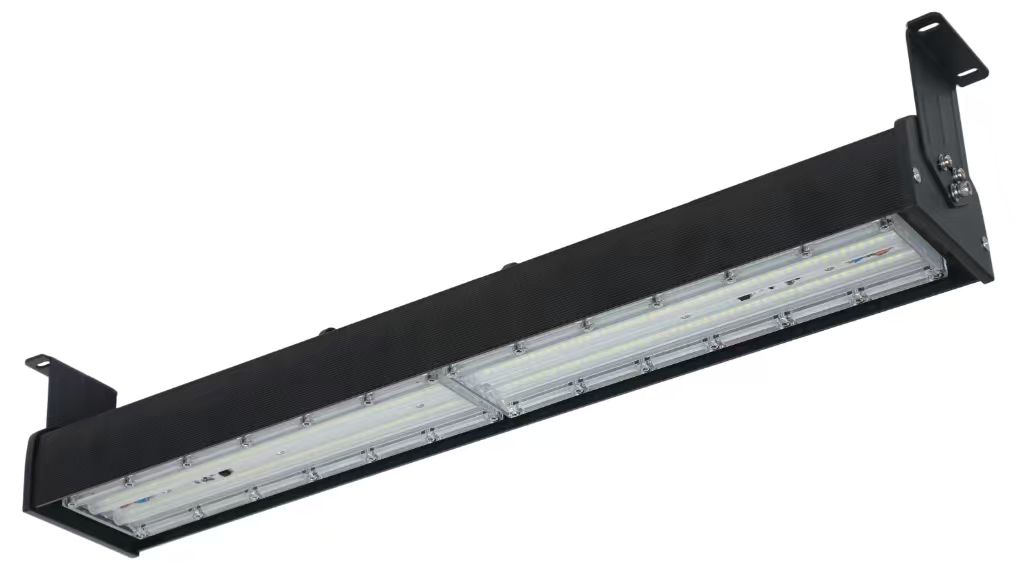
Figure 1 — The SH-E01 LED Linear High Bay Light: IP65, 50–200W, 100 / 135 / 150 lm/W and a five-year warranty. Image source: Zhejiang Lepeng Electric Appliance Co.,Ltd.
What each specification actually constrains
1. Ingress protection decides the room, not the price tier
The SH-E01 carries IP65 and an aluminium alloy housing with a PC/PMMA lens. IP65 denotes dust-tight construction together with protection against water jets, which is consistent with the model's stated application range of warehouses, factories and workshops — environments where dust accumulates and washdown or condensation is realistic. The PL02 carries IP20, which is a touch-safe indoor rating without water protection; its stated application is commercial and residential indoor ceilings. Those two ratings are not a quality hierarchy. They are an installation boundary, and specifying either fixture outside its boundary is a site risk rather than a product failure.
The FL-C01 Series publishes aluminium and glass construction but does not state an ingress protection rating in the available specification set. For outdoor work that is a genuine documentation gap: buyers should request written confirmation of the rating for the exact wattage variant being ordered rather than infer it from the housing material.
2. Efficacy is a band, not a headline number
All three models publish efficacy as a set of options rather than a single figure. The SH-E01 lists 100, 135 and 150 lm/W; the FL-C01 Series lists 100 and 120 lm/W; the PL02 lists 90 and 110 lm/W. Because the figure moves with the configuration, lumen calculations should always be tied to the wattage and format that will actually be installed.
Comparing the top of one band against the bottom of another is one of the most common errors in commercial LED lighting evaluation. A buyer who needs a worst-case illuminance calculation should use the lowest published efficacy option for the selected model, not the highest, and should ask the supplier to confirm which efficacy corresponds to the quoted variant.
3. Dimensions and cut-outs decide whether a retrofit is feasible
The SH-E01 is published in three body lengths — 305.6 × 97.3 × 68.1 mm, 580.6 × 97.3 × 68.1 mm and 855.6 × 97.3 × 68.1 mm — which correspond to the power and length options that must fit the available ceiling mounting line. The FL-C01 Series runs from 105 × 97 × 27 mm to 500 × 457 × 49 mm depending on wattage, so a single series can physically range from a small wall-mounted unit to a large area floodlight.
The PL02 is the clearest example of dimension-driven feasibility. Round versions measure φ160 × 40 mm, φ203 × 40 mm and φ305 × 40 mm; square versions measure 160 × 160 × 40 mm, 203 × 203 × 35 mm and 305 × 305 × 40 mm. Cut-out ranges are given as φ75–125 mm, φ75–150 mm and φ75–250 mm in 25 mm increments, with adjustable sliding hole spacing and a quick-connect interface. For a refurbishment, that cut-out range is often the difference between a direct replacement and a re-cut ceiling.
4. Control and sensing change the number of SKUs a project carries
The PL02 offers 3-CCT selection across 2700K–6000K, three-level dimming at 50%, 75% and 100%, remote control and a built-in microwave sensor for automatic ON/OFF. In procurement terms, that reduces the number of distinct stock lines a project needs: one model line can cover several ambiance specifications and hands-free operation in corridors or service areas without a separate sensor accessory.
The SH-E01 offers CCT options of 3000K, 4000K, 5000K and 6500K with two mounting methods — a mounting kit for surface installation or chain and cable suspension — and a one-piece connector design. The FL-C01 Series offers 3000K, 4000K and 6500K, power factor above 0.9 and surge protection up to 2KV, mounted on a bended bracket that supports rigid and adjustable aiming.
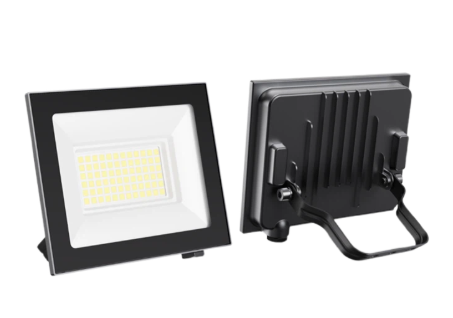
Figure 2 — The FL-C01 Series LED Floodlight spans 10–300W with a bended bracket and power factor above 0.9. Image source: Zhejiang Lepeng Electric Appliance Co.,Ltd.
5. Certification scope has to be read line by line
The PL02 is covered by a CE-EMC attestation of conformity issued by TUV SUD under certificate number E8A 123276 0630 Rev. 00, against EMC Directive 2014/30/EU, for the EU market, issued on 7 November 2024, with a stated scope of fixed general purpose luminaires and LED panel light.
A second document, a GS certificate (ZERTIFIKAT) numbered Z1A 123276 0002 Rev. 00 from TUV SUD, cites EN 60598-1:2021+A11:2022, EN 60598-2-1:2021, EN 62493:2015 and AFPS GS 2019:01 PAK, and is recorded against a model set that includes the SH-E01, FL-C01 and PL02. Its stated scope, however, is an LED ceiling luminaire. That is a detail worth acting on: a certificate linked to a model family is evidence of a managed certification process, but a buyer should still obtain written confirmation that the certificate covers the specific SKU being purchased, especially for a linear high bay or a floodlight that sits outside the literal wording of the scope.
The wider standards landscape is stable and well documented. UL Solutions identifies IEC 60598 as the luminaire standard and UL 1598 and UL 8750 as the corresponding North American standards for luminaires and LED equipment. Compliance across EU and North American markets therefore involves more than a single certificate, and suppliers should be able to map documents to the destination market for each model.
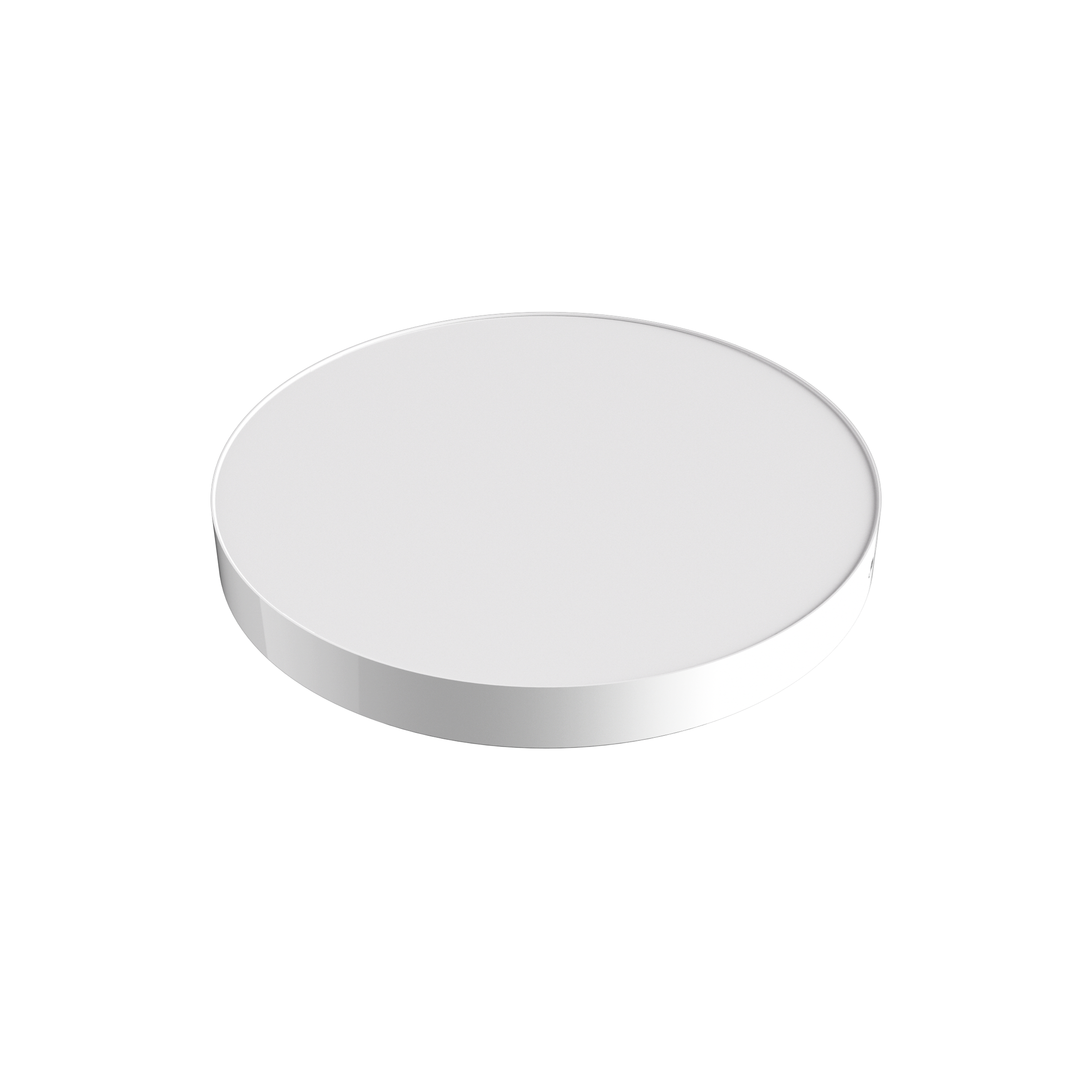
Figure 3 — The PL02 LED Panel Light: 5, 8 and 12-inch formats, IP20, 3-CCT selectable and microwave sensor control. Image source: Zhejiang Lepeng Electric Appliance Co.,Ltd.
Matching the evidence set to project scenarios
Read together, the three models cover the three lighting zones that most commercial projects contain.
- High-ceiling interior work areas. The SH-E01 is specified for warehouses, factories and workshops, with IP65 protection, a 90° (H) × 120° (V) beam distribution, 50–200W options and a five-year warranty. The wide horizontal beam is intended for broad area coverage across aisles and production floors rather than narrow task lighting.
- Outdoor and perimeter areas. The FL-C01 Series covers 10–300W in one series, which allows entrance lighting, wall-mounted area lighting and larger yard lighting to be specified from a single product family. Its stated applications include residential, commercial and manufacturing sites, with the bended bracket supporting aiming.
- Indoor commercial ceilings. The PL02 covers 9–24W in 5, 8 and 12-inch round or square formats, with surface or recessed mounting and sensor-based automatic switching for spaces where lights are left on unintentionally.
Lepeng's scenario documentation describes continuous industrial operation, outdoor day and night conditions, and sensor-controlled or solar-powered modes, with drivers, sensors, brackets and accessories named as the matched equipment around the fixture. Its case records list contractors, distributors, commercial and municipal buyers, with project durations of 5 to 10 years and applications including warehouse and factory lighting, road and community landscape lighting, and construction site and emergency lighting.
On the supply side, the stated lead time is 30–45 days, MOQ depends on the individual product, and OEM/ODM work covers fixture appearance, power and accessories subject to product-level discussion. Those parameters matter at the evaluation stage because they determine whether a project timeline and a stock plan are compatible with the supplier's production rhythm.
Market context: why buyers now ask for model-level proof
The scale of the category explains why documentation standards have tightened. Fortune Business Insights valued the global LED lighting market at USD 109.11 billion in 2025 and projects USD 336.90 billion by 2034. Grand View Research estimated the global commercial lighting market at USD 47.54 billion in 2024, with LED products holding a 58.1% revenue share of that total.
Once LED holds a majority share of commercial lighting revenue, the differentiator stops being the light source and starts being verifiable execution: service life, control integration, certification coverage and supply reliability. Trade data reinforces how concentrated that supply base is. The Observatory of Economic Complexity reports that China exported USD 31.4 billion in light fixtures in 2024, equal to 59.3% of total global exports of the category.
Product-level demand is moving in the same direction. IMARC Group valued the global LED flood light market at USD 9.4 billion in 2025 and expects it to reach USD 20.1 billion by 2034 at a CAGR of 8.52%. For a supplier, a series that spans 10–300W within one housing and mounting logic is a direct response to that breadth of demand; for a buyer, it means fewer part numbers to qualify against a single set of certificate and dimensional documents.
LED versus conventional sources: where the comparison holds
Most evaluation-stage comparisons are still framed against high-intensity discharge, fluorescent or halogen alternatives. The comparison is legitimate, but it should be made on the right criteria.
| Decision factor | Conventional HID / fluorescent sources | LED fixtures as documented here |
|---|---|---|
| Start-up behaviour | High-intensity discharge sources generally require a warm-up period and a restrike delay after a power interruption | LED fixtures reach full output immediately, which matters where lighting is switched by sensors or occupancy control |
| Dimming and sensing | Dimming usually requires additional ballast or control hardware | The PL02 integrates three-level dimming and a microwave sensor; the SH-E01 and FL-C01 publish multiple CCT options to cover ambiance specifications |
| Service expectation | Lamps are consumables replaced on a maintenance cycle | The SH-E01 publishes a five-year warranty, which sets an explicit service expectation tied to the model rather than an estimate |
| Optical form | Optics are fixed by lamp and reflector geometry | The SH-E01 uses a linear format with a 90° (H) × 120° (V) distribution for high-ceiling interiors |
| Purchase cost | Generally lower initial cost per fixture | Generally higher initial cost; the case for switching is normally built on energy and maintenance over the life of the installation, which this article does not quantify |
Table 2 — Comparison logic for LED versus conventional sources. Conventional-source statements are general industry characteristics, not measurements of specific competing products.
What the evidence does not cover
A capability assessment is only credible if it states its boundaries. Several are relevant here.
- The PL02 is an indoor fixture. IP20 protection and a PC diffuser suit dry commercial and residential ceilings. It is not a substitute for a sealed industrial or wet-area luminaire, and specifying it in a dusty or washdown environment would be a misapplication.
- FL-C01 surge protection is published as up to 2KV. On sites with high lightning exposure or unstable supply, buyers should confirm whether the site requires a higher surge class or additional external protection. The HL-E01 UFO high bay in the same portfolio is specified at 6KV/6KV, which shows the range does not treat surge capability as uniform across models.
- No ingress protection rating is published for the FL-C01 Series in the available specification set, despite its outdoor application. Written confirmation should be obtained before specifying it on exposed sites.
- Certificate scope and SKU coverage are not the same thing. As noted, the GS certificate is recorded against a model set including the SH-E01 and FL-C01, but its stated scope is an LED ceiling luminaire. Model-level confirmation is the buyer's responsibility to request and the supplier's to provide.
- Lead time of 30–45 days rules out emergency replacement as a primary use case. Projects that cannot hold a 45-day buffer should plan stock in advance or specify a second approved model for fast swap-outs.
- QC inspection standards are not published in detail. Buyers running a formal supplier qualification should request the inspection criteria, sampling plan and test reports that sit behind the stated quality controls, rather than accepting a general quality statement.
Outlook
The direction of the commercial LED lighting category is toward documentation rather than novelty. Three developments support that reading. First, with LED already holding the majority of commercial lighting revenue, replacement demand grows in importance relative to first installation, and replacement decisions are driven by dimensional and electrical compatibility. Second, control integration is moving into the fixture itself — the PL02's selectable CCT, three-level dimming and microwave sensor are features that reduce the number of separately purchased accessories. Third, certification expectations continue to harden across markets, with IEC 60598, UL 1598 and UL 8750 setting the reference points for luminaires and LED equipment.
For a manufacturer with a stated capacity of 45 million LED lamps and 5 million LED luminaires per month and an export share around 90%, the practical implication is that buyers will increasingly compare suppliers on the completeness of their model-level documents — dimensional drawings, efficacy per variant, certificate numbers and scopes, warranty per model — before they compare on price. Suppliers who can answer those questions without a follow-up cycle shorten the evaluation stage for their customers.
FAQ
What ingress protection rating does the SH-E01 carry, and what does it allow?
The SH-E01 LED Linear High Bay Light is rated IP65, with an aluminium alloy housing and a PC/PMMA lens. IP65 denotes dust-tight construction with protection against water jets. The model is specified for warehouses, factories and workshops, is available from 50W to 200W with luminous efficacy options of 100, 135 and 150 lm/W, uses a 90° (H) × 120° (V) beam angle, and is published with a five-year warranty.
Which certifications cover the PL02 LED Panel Light?
The PL02 is covered by a CE-EMC attestation of conformity issued by TUV SUD under certificate number E8A 123276 0630 Rev. 00, against EMC Directive 2014/30/EU, for the EU market, issued on 7 November 2024, with a scope of fixed general purpose luminaires and LED panel light. A GS certificate numbered Z1A 123276 0002 Rev. 00 from TUV SUD, citing EN 60598-1:2021+A11:2022, EN 60598-2-1:2021, EN 62493:2015 and AFPS GS 2019:01 PAK, is also recorded against a model set that includes the PL02. Because that certificate's stated scope is an LED ceiling luminaire, SKU-level coverage should be confirmed in writing.
What wattage and efficacy range does the FL-C01 Series cover?
The FL-C01 Series covers 10W to 300W, with efficiency options of 100 and 120 lm/W, colour temperatures of 3000K, 4000K and 6500K, an input of 100–240V or 220–240V, power factor above 0.9, surge protection up to 2KV, and an aluminium housing with a glass diffuser. Dimensions run from 105 × 97 × 27 mm to 500 × 457 × 49 mm depending on wattage, and mounting uses a bended bracket. No ingress protection rating is stated in the available specification set.
What sizes and control options does the PL02 panel light offer?
The PL02 is available at 9W, 12W, 18W and 24W with 90 or 110 lm/W efficacy, 3-CCT selection across 2700K to 6000K, and three-level dimming at 50%, 75% and 100%. Control options are a remote control and a built-in microwave sensor for automatic ON/OFF. It is offered in 5, 8 and 12-inch round and square formats, with cut-out ranges of φ75–125 mm, φ75–150 mm and φ75–250 mm in 25 mm increments. Protection is IP20, the frame is aluminium or plastic with a PC diffuser, and mounting can be surface or recessed with adjustable sliding hole spacing and a quick-connect interface.
Which fixture type is appropriate for high-bay warehouse and factory lighting?
LED high bay fixtures are the appropriate category for high-ceiling warehouse, factory and workshop interiors, because they are designed around high lumen output, heat dissipation and long service intervals in large spaces. Within the range described here, the SH-E01 linear high bay is specified for warehouse and factory use with IP65 protection, 50–200W, a 90° (H) × 120° (V) beam and a five-year warranty. The HL-E01 UFO high bay is an alternative format in the same portfolio, with 100/150/200/240W options, efficacy of 140, 160, 185 and 210 lm/W, and 6KV/6KV surge protection.
What lead time, MOQ and warranty terms are published?
Lead time is stated as 30–45 days, and MOQ depends on the individual product rather than being fixed across the range. A five-year warranty is published for the SH-E01 linear high bay, which the specification links to the use of a branded driver. Warranty terms for the FL-C01 Series and the PL02 are not stated in the available specification set and should be confirmed per order.
The full Lepeng product brochure, including model specifications and certificate references, can be downloaded here: Zhejiang Lepeng Electric Appliance Co.,Ltd. product brochure.
Have Questions or Need More Details?
Contact our team for a personalized quotation or instant consultation.
Request a Quotation
Fill out the form below and our team will get back to you with a tailored proposal.
WhatsApp Direct Chat
Prefer to chat in real-time? Message us on WhatsApp for instant assistance & quick answers.
- Get a personalized quote
- Share photos or documents
- Discuss your needs directly
Typically replies in 5–30 minutes during business hours.