
Commercial Pool Filtration Showdown: Regenerative Media vs. Traditional Sand – A 2026 Buyer’s Guide
The Problem with Traditional Sand Filtration
Conventional pressure sand filters have been the backbone of pool water treatment for decades. They rely on a bed of graded silica sand to trap particles. However, their filtration precision typically ranges from 30 to 50 microns. This leaves behind fine particulates, algae spores, and even some pathogens, requiring heavy chemical dosing to maintain clarity and disinfection. Backwashing consumes large volumes of water—often 2–5% of total circulation—and the media must be replaced every 3–5 years. For large commercial pools operating 24/7, these inefficiencies translate into tens of thousands of dollars in additional water, chemical, and labor costs annually.
Regenerative Media Filtration: A Paradigm Shift
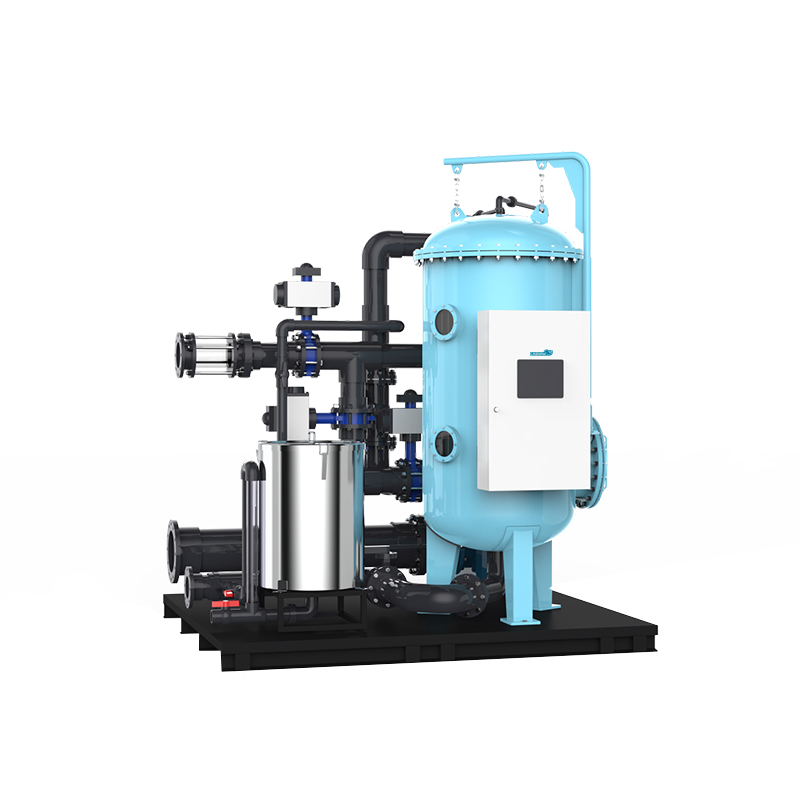
Regenerative media filtration (RMF) systems, such as LASWIM's WL-HPF Series, address these shortcomings using diatomaceous earth (DE) pre-coat technology. According to internal testing data verified by third-party certifications (CE certificate no. 0704TST20250700440CE per EN ISO 12100 and EN 60204-1), the system achieves filtration precision of 1–3 μm—an order of magnitude finer than sand. Effluent turbidity remains consistently below 0.1 NTU, capturing over 99% of suspended solids and even Cryptosporidium.
- Filtration Precision: 1–3 μm vs. 30–50 μm
- Turbidity: <0.1 NTU vs. 0.3–1.0 NTU
- Water Consumption (backwash): Reduced by ~90%
- Chemical Consumption: Reduced by ~30%
- On-site Installation Workload: Reduced by >40%
Source: LASWIM product data sheet & independent lab reports.
How It Works: Technical Advantages
The WL-HPF Series integrates high-efficiency variable speed pumps with PLC-based intelligent control. The system automatically cycles through pre-coating, filtration, and regeneration phases:
- Pre-coat membrane formation: Fine filter media (DE or perlite) is deposited on filter tubes, creating a renewable surface.
- Filtration phase: Water passes through the membrane, trapping particles down to sub-micron levels.
- Regeneration: When pressure differential triggers backwash, the spent media is discharged, and a fresh pre-coat is applied—all automatically.
- Energy savings: Variable speed pumps adjust flow to actual demand, reducing energy consumption versus constant-speed sand filter pumps.
The entire process is unattended, requiring maintenance frequency reduced by 40% compared to traditional sand filters. The system's compact footprint saves up to 25% of machine room space.
Best Application Scenarios
Based on LASWIM's project portfolio across the Middle East, Southeast Asia, and Europe, regenerative media filtration is most impactful in:
- Luxury hotel and resort pools – where crystal-clear water is a brand requirement.
- Water parks and aquatic centers – high bather loads demand rapid particle removal.
- Competition pools – FINA and local health codes often mandate turbidity below 0.1 NTU.
- Facilities with water scarcity or high utility rates – 90% water savings translates directly to ROI.
One case study from a large public aquatic center in the UAE (5,000 m²+ pool systems) reported 30% reduction in chemical usage and stable water quality over a 3–5 year partnership with LASWIM.
Market Trends Driving Adoption
Global pool equipment market analysts point to three forces accelerating RMF adoption:
- Regulatory tightening: European and North American standards are lowering acceptable turbidity levels.
- Water conservation mandates: Many jurisdictions impose limits on backwash discharge.
- Labor shortages: Automated, low-maintenance systems reduce reliance on skilled technicians.
According to industry estimates, the regenerative media filtration segment is growing at 12–15% CAGR, outpacing traditional sand filter growth of 3–5%.
Future Outlook: The Smart Pool Ecosystem
LASWIM's RMF systems are already designed for integration into broader smart pool architectures. With RS485 communication ports and compatibility with building management systems, they can participate in predictive maintenance and remote monitoring. Future iterations may incorporate AI-driven pre-coat optimization and real-time contaminant detection. For procurement professionals evaluating long-term infrastructure, regenerative media filtration represents not just a performance upgrade but a strategic investment in sustainability and operational excellence.
Download the full LASWIM product brochure for detailed specifications and case studies:
📄 Download Brochure (PDF)LASWIM Water Environment Equipment Co., Ltd. | Founded 1989 | 90,000 m² factory | ISO 9001 certified | 70% export ratio to 80+ countries
Have Questions or Need More Details?
Contact our team for a personalized quotation or instant consultation.
Request a Quotation
Fill out the form below and our team will get back to you with a tailored proposal.
WhatsApp Direct Chat
Prefer to chat in real-time? Message us on WhatsApp for instant assistance & quick answers.
- Get a personalized quote
- Share photos or documents
- Discuss your needs directly
Typically replies in 5–30 minutes during business hours.