
Commercial Scenting: A Diffuser Buyer Decision Framework
Commercial scenting projects rarely fail because the fragrance was wrong. They fail because a diffuser was specified against a floor area that does not exist in practice, hung where there was no socket, or fitted with a reservoir that empties faster than the building can service it. Coverage, oil capacity, power draw and mounting form are not four line items to be maximised separately — they are one linked decision.

Scenting is specified for the air a space contains and the rate at which that air is replaced — not simply for the floor plate shown on a lease plan.
A hotel lobby should smell the way the brand looks; a mall concourse should hold a consistent signature from entrance to escalator; an office reception should stop smelling of printer toner. Those outcomes are described in the language of atmosphere but delivered through hardware, and the distance between the two is almost always a specification gap rather than a fragrance gap.
Shenzhen Scentsea Technology Co., Ltd (SCENTSEA) is a Shenzhen-based manufacturer founded in 2021 that develops and produces cold-air nebulizing scent diffusers and fragrance oils for home, commercial and HVAC aroma applications. The company runs a 3,000 m² production facility with three production lines and 20 patents, and supplies diffusers and oils to customers in more than 70 countries, with roughly 70% of output exported to EU and USA markets. Three of its commercial models — the H5000, the P02 and the 4705 — are used in this article as a worked example of how a coverage, capacity and power framework turns a specification sheet into a defensible purchase decision.
Why coverage is the number buyers should trust least
Rated coverage is useful only when its basis is known. Two rooms of the same floor area can require very different diffusion: one is open, with a normal ceiling and moderate air change; the other is subdivided, double height, or sits on a busy return-air path that removes fragrance almost as fast as it is released. In the second room, a unit installed at its rated maximum will read as under-specified and the conclusion will be blamed on the fragrance rather than on the arithmetic.
The 4705 specification is instructive because it states coverage three ways: 100–150 m² of floor area, 300–500 m³ of volume and 1,000–1,600 ft². The distance between the area figure and the volume figure is the effective height of the space being treated, and it is the clearest reminder in the range that a diffuser treats air, not carpet. A specification that quotes only square metres has quietly assumed a ceiling height and a ventilation rate, and the buyer has not been told which.
A practical rule follows. Treat the area figure as an upper bound that assumes open conditions. Where ceilings are high, where the space is broken up by walls or retail fixtures, or where mechanical ventilation turns the air over frequently, work from the volume figure instead and expect the usable coverage to fall below the headline number. Confirm the estimate with a sample in the actual room before the figure enters a tender document.
The same discipline applies to oil. A 1,000 ml reservoir holds twice the oil of a 500 ml unit, which matters most where access for refilling is restricted — a double-height lobby, a secure floor, a mall concourse that can only be serviced before opening. But capacity alone does not set the refill interval: consumption at the outlet is a function of output setting and duty cycle, so two buildings running the same unit at different intensities will not empty it on the same schedule.
A decision sequence for commercial scenting projects
The order in which these questions are answered matters more than the individual answers. Working through them out of sequence is what produces a well-chosen diffuser in the wrong location.
- Define the treated volume and the airflow. Record floor area, ceiling height, partitions and air-change conditions, then convert to a volume-based estimate. Mark which zones must hold a consistent signature and which zones only need odour control.
- Fix the installation point and the mounting form. A floor-standing unit needs floor area and a protected position away from cleaning routes; a wall-mounted unit needs a suitable substrate and a height that keeps outlets clear and controls reachable.
- Confirm the power available at that point. Voltage and plug type are installation constraints, not footnotes. A location without power changes the product category rather than the product size.
- Set the refill and service interval before choosing the reservoir. Work backwards from who can access the unit, how often, and at what time of day; then select capacity to match that routine.
- Specify control, connectivity and integration. Schedules, intensity adjustment, app or network control and duct connection all change commissioning effort and long-term operability.
- Set the noise and acceptance criteria last, against the room's actual use. A figure that is unremarkable in a concourse may be unacceptable beside a spa treatment room.
Applying the framework to three commercial models
The three models below sit at different points on the same framework rather than competing for the same slot. Read together, they show how coverage, capacity, power and mounting form move in step.
| Model | Stated coverage | Oil capacity | Rated power | Mounting / power source | Stated noise |
|---|---|---|---|---|---|
| H5000 | 800–1300 m² | 1000 ml | 20 W, DC 12V | Aluminium floor-standing body | Below 45 dB |
| P02 | 150–350 m² | Not stated in the specification set used here | Plug-in power | Wall-mounted; optional HVAC connector and tube | Not stated in this specification set |
| 4705 | 100–150 m²; 300–500 m³; 1000–1600 ft² | 500 ml | 2.5 W | Compact unit; 4 × D batteries or 5V Type-C | Below 35 dB |
Where a value is not stated in the published specification, it should be confirmed in writing with the supplier before it enters a tender document. A framework that treats gaps as gaps is more useful than one that fills them with assumptions.
H5000: floor-standing coverage for lobbies
The H5000 is positioned for hotel, shopping mall and office building lobbies, with coverage stated at 800–1300 m², a 1000 ml oil capacity, 20 W power draw, a DC 12V rating, noise below 45 dB and an aluminium floor-standing body. For the buyer, three of those facts carry most of the decision weight. The aluminium housing and floor-standing form mean the unit can be placed without wall penetration and repositioned if the lobby layout changes; the DC 12V rating means power must be routed to that exact position rather than assumed nearby; and the 1000 ml reservoir supports longer intervals between refills in spaces that are awkward to service during trading hours.
P02: wall-mounted coverage with optional ducting
The P02 is a wall-mounted compact option for 150–350 m² commercial spaces, running on plug-in power with Bluetooth APP control, optional Wi-Fi plus Bluetooth, an optional HVAC connector and tube, and automatic reconnection after a power or network interruption. The wall form frees floor area in retail units and reception zones where furniture moves, but it moves the constraint to the wall: a socket has to exist at the mounting point, and the substrate has to accept the fixing. The optional HVAC connector changes the unit's role, allowing fragrance to be introduced into ductwork serving adjacent rooms rather than relying on open diffusion. Auto-reconnect matters in unmanned or after-hours sites, because a schedule that does not resume after a power cut leaves the space unscented until someone notices.
4705: compact, low-power coverage for washrooms and elevators
The 4705 is specified for toilets and elevator areas with coverage of 100–150 m², 300–500 m³ or 1,000–1,600 ft², a 500 ml oil capacity, 2.5 W power draw, noise below 35 dB, and power from either 4 × D batteries or a 5V Type-C connection. The battery option is the decisive feature in lift cars, cubicle runs and other positions where running a cable is impractical or prohibited by the building; where power exists, the Type-C connection removes the battery from the maintenance routine entirely. At below 35 dB the unit is the quietest specification in this group, which is what allows it to sit in an enclosed space people enter at close range. The trade-off is scope: 500 ml and 2.5 W describe a small-space device, not a scaled-down lobby unit.
Where none of the three fits — a large terminal, a bank branch or a mall requiring centralised injection — the correct category is an HVAC scent diffuser rather than a larger standalone unit. SCENTSEA's AC-MAX, an aluminium-and-plastic HVAC diffuser designed for shopping malls, banks and airports, carries a 5 L oil capacity for that class of project.
Technical explanation: what cold-air atomization changes in practice
A waterless cold-air diffuser atomizes fragrance oil directly, without adding water and without applying heat. Controlled airflow and pressure break the oil into fine particles that disperse into the room or into ductwork; SCENTA's commercial scent machine guide describes cold-air nebulizing diffusion as producing sub-micron particles, typically below 2.5 μm. Because nothing is diluted in water and nothing is evaporated by heat, the fragrance output tracks the oil rather than a water-to-oil ratio, and there is no tank to fill or descale as part of the routine.
That architecture explains the specification pattern. Coverage is set by output and airflow rather than by tank size, so a reservoir change does not change the treated area. Noise originates from the pump and air path rather than from a heater or a fan alone, which is why noise figures have to be read per model: the H5000 is stated below 45 dB and the 4705 below 35 dB, and neither figure is meaningful without knowing the measurement condition, so ask the supplier how it was measured. Oil compatibility also becomes an operational issue, because viscosity and formulation affect atomization; compatible third-party oils can be used, but they should be tested rather than assumed.
Power draw is the specification most often misread as a performance indicator. At 20 W and DC 12V, the H5000 is a low-current device whose real constraint is where the adaptor and cabling can be routed; at 2.5 W, the 4705 can run from batteries, which is a siting decision rather than an efficiency claim. The P02 is described as plug-in, with the practical questions being plug type and the presence of an outlet at the mounting point.
Where each unit fits
- Hotel lobbies and reception halls: the H5000's 800–1300 m² coverage and 1000 ml reservoir suit a large continuous volume with restricted daytime access for refilling.
- Shopping mall concourses and atria: coverage and mounting visibility dominate; floor-standing placement keeps service access off the wall and away from tenant fit-out.
- Offices and brand spaces: the P02's 150–350 m² range and wall fixing suit reception areas and client-facing floors where floor area is at a premium.
- Retail stores and restaurants: smaller treated volumes with frequent reconfiguration benefit from a wall-mounted unit that can be repositioned without construction work.
- Washrooms, elevator cars and corridors: the 4705's 2.5 W draw and below 35 dB noise fit enclosed spaces; battery power avoids cabling where the building will not allow it.
- Airports and banks: these typically sit beyond single-unit scope and are served by ducted HVAC scenting rather than distributed standalone diffusers, which is the design intent behind the AC-MAX.
Market context: growth in demand, commoditisation in hardware
Cognitive Market Research values the global scent marketing market at approximately USD 4.1 billion in 2026, with a projection of USD 7.28 billion by 2035 at a CAGR of 6.6% (Vertex AI Search Grounding / industry data, 2026–2035 forecast period). A separate estimate puts CAGR at 10.16% for a narrower definition of commercial scenting, so the growth rate should be treated as definition-dependent rather than settled.
Demand-side evidence is thinner and should be read as directional. One secondary compilation of scent branding research puts the average increase in retail dwell time at around 15 minutes; it is a secondary estimate rather than a controlled measurement, and it is best used to justify testing a scent programme, not to underwrite a capital case.
Two cost inputs matter more to a procurement decision than either figure. Commercial scent diffusers are classified under HS Code 8509.80, with a 4.2% US import duty under the 2026 schedule — an item frequently omitted from budget approvals. And as the hardware layer becomes more commoditised, differentiation moves to the parts of the offer that are harder to copy: per-model documentation, service intervals that match how buildings are actually operated, connectivity that survives a power cut, and a stable oil supply under the buyer's own label.
Comparison with alternative approaches, and the boundaries of this framework
Against water-based ultrasonic aroma diffusers, waterless cold-air units deliver stronger and more consistent diffusion, larger coverage, no water dilution and lower daily maintenance, at a higher initial equipment cost. Ultrasonic units mix a few drops of oil into water, cover small areas and require regular refilling and tank cleaning; they remain appropriate for bedrooms and light personal use, and are a poor match for continuous professional scenting in a lobby or concourse. The cost comparison therefore hinges on maintenance labour and service frequency, not on purchase price.
Against ducted HVAC scenting, standalone diffusers are simpler to install and easier to relocate, but they treat the room they stand in and cannot distribute through a building. The ducted approach reaches multiple zones from one injection point and suits centralised projects, at the cost of coordination with the mechanical design.
The framework also has limits that should be stated plainly:
- Rated coverage is a starting estimate, not a guarantee. Subdivided layouts, high ceilings and heavy air change can pull usable coverage well below the headline figure, and only a sample test in the actual space resolves the difference.
- The H5000's aluminium floor-standing body occupies floor area and requires DC 12V power routed to that position. In a lobby with a fixed furniture plan or no floor-level power, that is a real constraint rather than a detail.
- The P02's wall mounting depends on a socket and a suitable substrate at the chosen point, and the optional HVAC connector adds ductwork and commissioning work that must be scheduled with the mechanical contractor rather than after handover.
- The 4705 is a small-space device. Its 500 ml capacity and 2.5 W output cannot substitute for a lobby unit, and where batteries are used, battery checks become a recurring line in the maintenance plan rather than a one-off installation task.
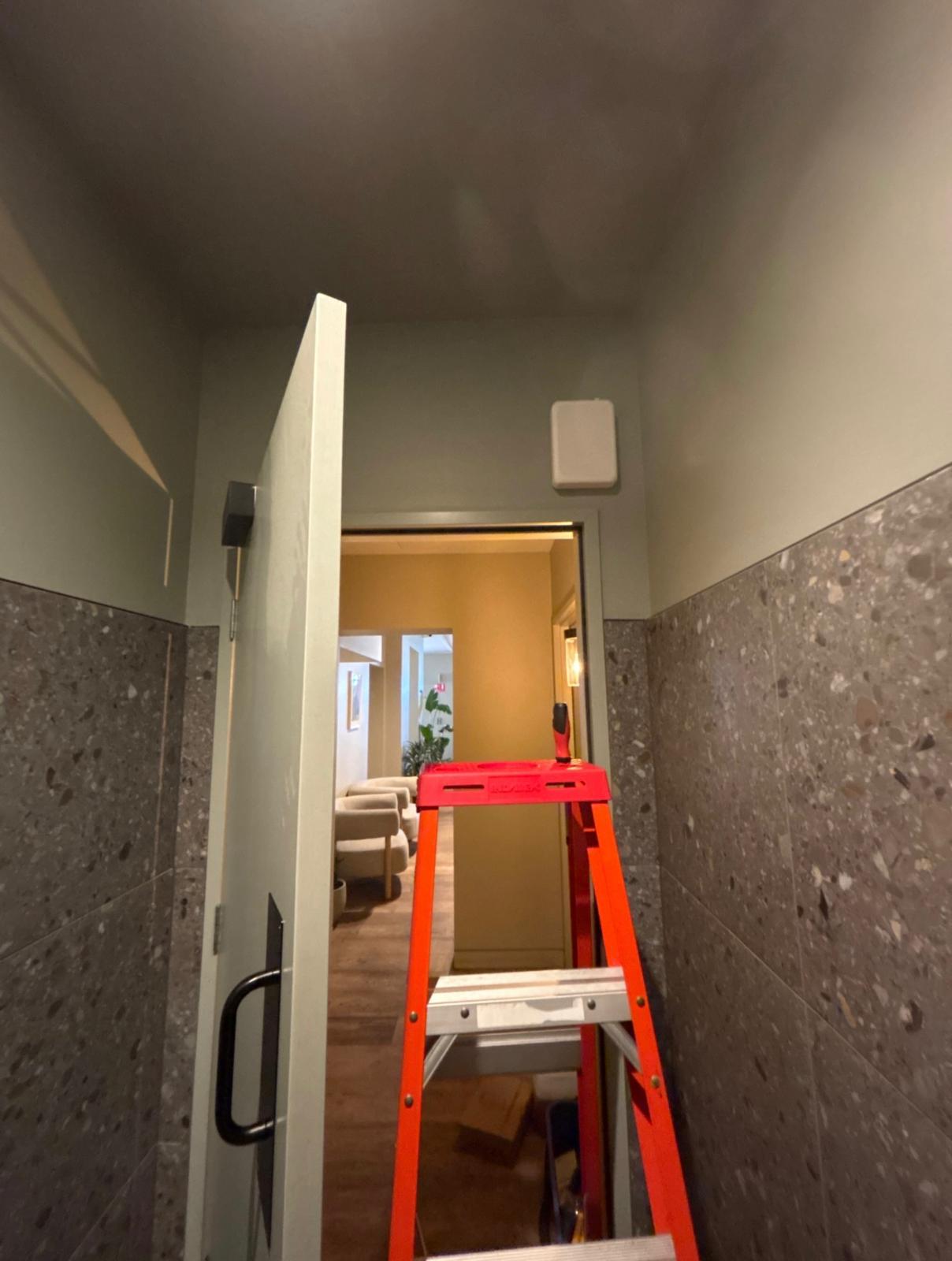
Compact diffusers are specified for enclosed spaces such as washrooms and elevator cars, where low output and low noise matter more than maximum coverage.
A procurement checklist for scenting tenders
Each line below is a question that should be answered in writing before an order is placed. Most disputes in this category trace back to one of them being answered verbally.
| Item to verify | What the answer should establish |
|---|---|
| Coverage basis | Whether the figure is area, volume or both, and under what ceiling height, partitioning and air-change assumptions. |
| Oil capacity and consumption | Reservoir size, consumption at the intended output setting, and the resulting refill interval for the actual duty cycle. |
| Power and plug type | Voltage, rated wattage, adaptor type and whether the installation point can supply it. |
| Mounting form and substrate | Floor-standing footprint or wall fixing requirements, including fixing height and access for service. |
| Noise figure and test condition | The stated decibel level and how it was measured, checked against the quietest occupied zone served. |
| Control and reconnect behaviour | Scheduling and intensity control, app or network options, and whether operation resumes automatically after a power or network interruption. |
| HVAC compatibility | Whether a duct connector and tube are available, and what commissioning that implies. |
| Certification per model | That the certificate matches the exact model and configuration ordered rather than the range in general. |
| Quality control and testing | Which tests are performed on every unit and whether an aging test is included before shipment. |
| Warranty, spares and lead time | Warranty terms, spare-part support and the production lead time against the project programme. |
On the last three lines, SCENTSEA's published position is specific enough to be checked. Compliance documents on file include FCC certificate ATL20240416326 under FCC Part 15 Subpart B, RoHS certificate ATL20240416327 under RoHS Directive (EU) 2015/863 and EMC certificate ATL20240416325, all issued on 24 April 2024 by Shenzhen ATL Testing Technology Co., Ltd and referencing listed diffuser models. Every unit is described as receiving functional testing, atomization testing, leakage inspection, noise testing, app and control testing, a 48-hour aging test and a final appearance inspection before shipment. Production lead time is quoted at 25–35 days with monthly capacity of 8,000 units and a minimum order of one unit, and a one-year free warranty applies to spare parts. Customisation under OEM/ODM covers logo, product colour, packaging, user manual, plug type, app interface and selected PCB and functional specifications.
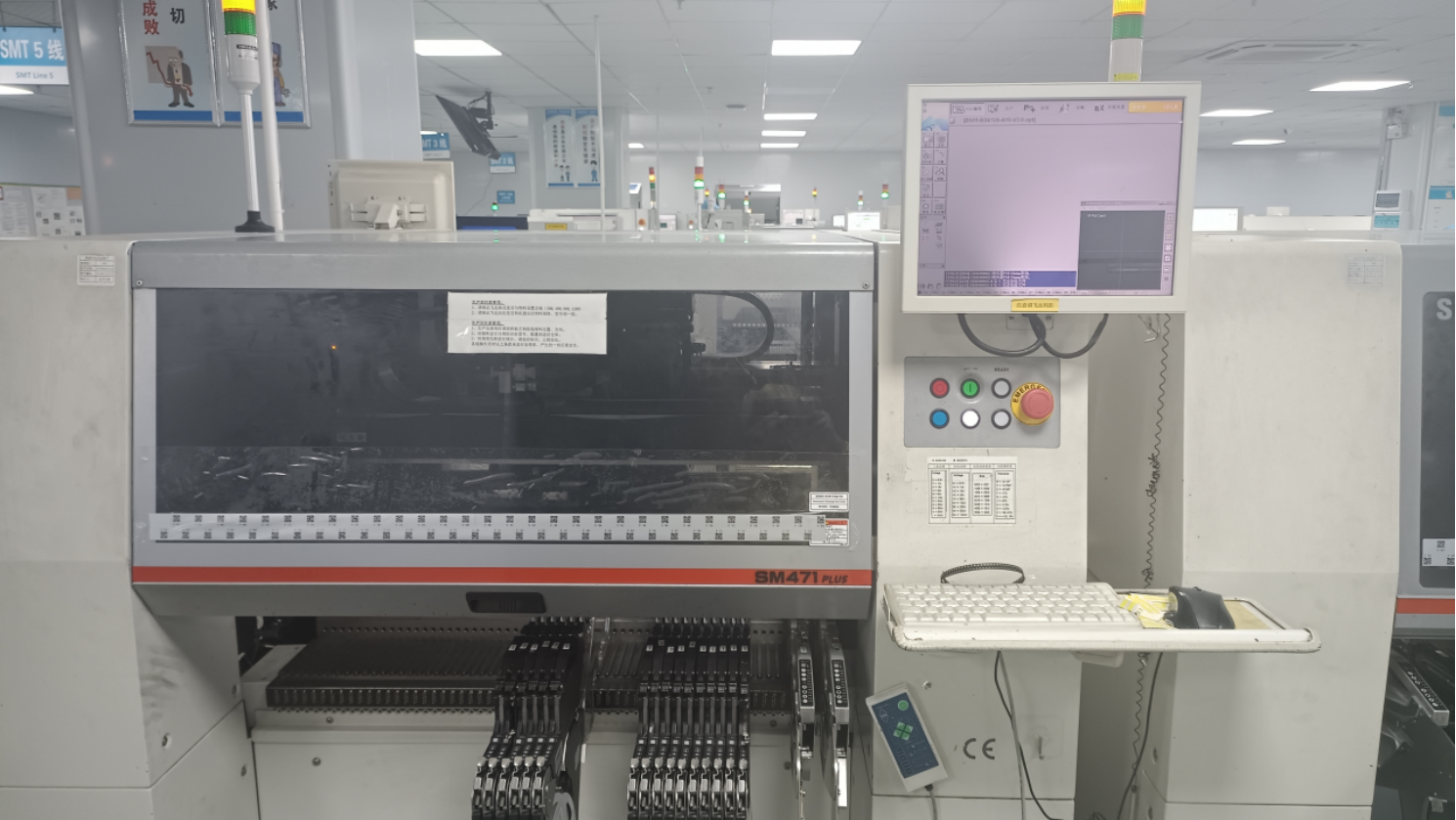
Rated power, network behaviour and reconnection after interruption are board-level design decisions, which is why they belong in the technical annex rather than the marketing page.
Future outlook
Three shifts are likely to shape buying decisions over the next procurement cycles. First, coverage claims will face more scrutiny as buyers ask for the volume and air-change basis behind an area figure, which favours suppliers who publish both. Second, connectivity will migrate from a feature to an acceptance criterion: automatic reconnection after power or network loss is the difference between a scheduled programme and a manually restarted one, and it is the kind of item that ends up in a service-level agreement. Third, the market's projected expansion — from roughly USD 4.1 billion in 2026 toward USD 7.28 billion by 2035 at a 6.6% CAGR — will keep pulling new hardware into the category, which raises the value of documented testing, per-model certification and spare-part support as selection criteria rather than as formalities.
Frequently asked questions
How do I decide how much coverage a commercial scent diffuser needs?
Start from the volume of the space rather than its floor area. Record ceiling height, partitions and ventilation conditions, and use the volume figure where a specification provides one — the 4705, for example, is stated at 100–150 m², 300–500 m³ and 1,000–1,600 ft². Where only an area figure is published, treat it as an upper bound under open conditions and confirm the estimate with a sample in the actual room.
What oil capacity should I specify for a lobby compared with a washroom?
Capacity should follow the refill interval the building can realistically support. The H5000 carries 1,000 ml and is intended for hotel, shopping mall and office building lobbies with 800–1300 m² coverage; the 4705 carries 500 ml and is intended for toilets and elevator areas of 100–150 m². The actual interval also depends on output setting and duty cycle, because consumption at the outlet varies with intensity.
What power supply do commercial scent diffusers require?
It varies by model and should be confirmed for the exact unit. The H5000 is rated at DC 12V and 20 W. The P02 runs on plug-in power. The 4705 draws 2.5 W and can be powered by 4 × D batteries or a 5V Type-C connection. The determining question is usually not electrical capacity but whether a supply exists at the intended installation point.
Should I choose a floor-standing or a wall-mounted diffuser?
Floor-standing units such as the H5000 with its aluminium body need floor area and a power route to that position, but require no wall work and can be relocated if the layout changes. Wall-mounted units such as the P02 free floor area and suit 150–350 m² spaces, but depend on a socket and a suitable substrate at the mounting point. The choice is an installation constraint before it is a performance one.
How much noise do commercial scent diffusers produce?
Noise is model-specific: the H5000 is stated below 45 dB and the 4705 below 35 dB. Because the measurement condition is not implicit in the number, buyers should ask how the figure was obtained and compare it with the quietest occupied zone the unit will serve. In enclosed spaces such as lift cars, the lower figure is the relevant one.
Can a commercial scent diffuser be connected to HVAC ductwork?
Selected models can. The P02 offers an optional HVAC connector and tube, which allows fragrance to be introduced into ductwork serving adjacent rooms instead of relying on open diffusion. For larger centralised projects — shopping malls, banks and airports — the appropriate category is a dedicated HVAC scent diffuser such as the AC-MAX, which is designed for those environments and carries a 5 L oil capacity.
Specification sheets, certification documents and model comparisons for the H5000, P02, 4705 and AC-MAX are collected in the SCENTSEA catalogue, available for download: SCENTSEA product catalogue (PDF).
Have Questions or Need More Details?
Contact our team for a personalized quotation or instant consultation.
Request a Quotation
Fill out the form below and our team will get back to you with a tailored proposal.
WhatsApp Direct Chat
Prefer to chat in real-time? Message us on WhatsApp for instant assistance & quick answers.
- Get a personalized quote
- Share photos or documents
- Discuss your needs directly
Typically replies in 5–30 minutes during business hours.