
Committing to a Long-Term Electronic-Grade Chemicals Partner
Buyers in the Decision-to-Execution stage often move quickly from sample approval to volume orders. But electronic-grade materials require a more deliberate transition: evaluating whether a supplier can maintain purity, batch consistency, technical support, and supply continuity over a multi-year relationship.

Supplier R&D infrastructure becomes a critical asset when buyers move from one-off orders to multi-year electronic-grade chemical supply agreements.
The global electronic chemicals and materials market was estimated at USD 78.5 billion in 2025, while the global semiconductor materials market reached USD 73.2 billion in the same year, according to published industry research. The photoresist segment alone was estimated at USD 4.96 billion in 2024. These figures reflect a supply chain in which electronic-grade chemicals, photoresist monomers, corrosion inhibitors, and polyimide precursors are no longer purchased as spot commodities but as mission-critical inputs with long qualification cycles.
For procurement teams, the decisive question is no longer only "Which supplier passes the specification?" It is also "Which supplier can sustain that specification across repeated production campaigns, capacity expansions, and evolving process requirements?" This article examines the practical verification points buyers should apply before committing to a long-term electronic-grade chemicals supplier, using Jiangsu Juming Chemical Technology Co., Ltd. (Jumingchem) as an observable example of production and quality-system capability.
What Changes When the Buyer Reaches the Decision Stage
When an electronic chemicals purchase moves from evaluation to execution, three variables gain greater weight:
- Repeatability: The buyer needs assurance that every lot will meet the same purity and impurity profile that qualified during sampling.
- Traceability: The buyer must be able to document material provenance, QC results, and handling conditions for audits and regulatory review.
- Scalability: The buyer may need to increase volumes, adjust specifications for a new formulation, or require dedicated production support.
Jumingchem, established in 2017 and headquartered in Jiangsu Province, China, positions itself as an integrated R&D-to-manufacturing supplier of specialty and electronic chemicals. The company's product portfolio includes 5-Methyl-1H-benzotriazole (5M-BTA, CAS 136-85-6), 4-Vinylbenzyl chloride (CAS 1592-20-7), 1-(chloromethyl)-2-vinylbenzene (CAS 22570-84-9), 1-(chloromethyl)-3-vinylbenzene (CAS 39833-65-3), Vinylbenzyl chloride mixed isomers (CAS 30030-25-2), and 4,4'-(4,4'-Isopropylidenediphenoxy)bis(phthalic anhydride), commonly known as BPADA (CAS 38103-06-9). These materials serve semiconductor materials, photoresist resin synthesis, polyimide production, and related electronic applications.
Three Commitment Checks for Electronic-Grade Chemical Sourcing
Before converting an approved sample into a long-term purchase commitment, buyers should verify three levels of supplier capability: quality-system evidence, production-capacity evidence, and technical-service depth.
1. Quality-System Evidence: What the Supplier Can Prove Without a Sales Narrative
In electronic-grade chemical supply, quality statements are only meaningful when supported by verifiable systems. Jumingchem is ISO9001 certified for its quality management system. The company implements quality control using inductively coupled plasma mass spectrometry (ICP-MS), high-performance liquid chromatography (HPLC), and gas chromatography (GC) detection systems. It also operates GMP-standard clean workshops and uses professional purification equipment, with what is described as ppb-level metal ion impurity purification capability for electronic-grade products.
For a procurement team, the practical value of such systems is lower inspection burden and reduced process risk. As Jumingchem states, consistent products require less incoming inspection and process adjustment than alternatives; documented batch-to-batch consistency with a coefficient of variation (CV) of no more than 2% minimizes quality-control re-testing, line commissioning time, and scrap rates. Full traceability and complete MSDS and COA documentation can streamline customer audits and reduce troubleshooting time.
2. Production-Capacity Evidence: From Pilot Quantities to Industrial Volumes
Long-term supply agreements depend on demonstrated capacity, not stated intentions. Jumingchem reports a total factory area of over 78,000 square meters, an R&D center of 3,000 square meters, a 300-square-meter pilot plant, and a 600-square-meter GMP workshop. The company has approximately 180 employees, includes a 25-engineer R&D team, and states an annual production capacity of 60,000 tons across its product categories.
This capacity structure matters in stages. The minimum order quantity for Jumingchem products is 1 kg, which allows buyers to validate materials before scaling. Typical production lead time is 7 to 30 days, and monthly production capacity is reported at 5,000 tons for applicable lines. Together, these figures suggest a model in which a buyer can start with a laboratory-scale batch and later move to full container volumes without switching to a completely different production environment.
3. Technical-Service Depth: Does the Supplier Offer More Than Logistics?
Buyers who plan several years of cooperation should evaluate whether their chemical partner can support process changes, custom purification requirements, and production adjustments. Jumingchem provides CDMO services from process development to industrial scale-up. The company states that its R&D capability includes advanced microchannel and continuous flow technology for highly challenging chemical processes. It also reports flexible production scale ranging from gram-level R&D quantities to hundred-ton industrial production, supported by two R&D and pilot-scale bases and cooperative production facilities in Kaifeng and Gansu.
For advanced applications, material characteristics may also require specific handling equipment. Vinylbenzyl chloride-type monomers, for example, commonly require supporting equipment such as inert-gas sealed reactors, anhydrous and oxygen-free feeding systems, and micro-channel reactors. A supplier with internal experience in such conditions is better positioned to provide practical technical guidance than a trading company acting only as an intermediary.
Application-Specific View: Why the Final Decision Depends on End Use
The right long-term supplier also depends on the material's functional role in the buyer's process. Electronic-grade chemicals span several distinct categories, and buyers are advised to evaluate suppliers by application fit.
- Photoresist materials and monomers: 4-Vinylbenzyl chloride and its position-specific isomers are used as core monomers for high-performance negative photoresist resins, electron-beam photoresists, advanced packaging dielectric materials, and homogeneous ion-exchange membranes. Buyers in photoresist supply chains should prioritize monomer purity, stabilizer control, and consistent isomer composition.
- Corrosion inhibitors: 5-Methyl-1H-benzotriazole (5M-BTA) is relevant to semiconductor electronic materials, particularly as a copper and copper-alloy corrosion inhibitor and as an anti-fading agent in photomasking resins. For this application, metal impurity levels and crystalline consistency directly affect performance.
- Polyimide anhydrides: BPADA (CAS 38103-06-9) is a key monomer for high-performance polyimide materials used in semiconductor packaging, flexible circuits, and high-frequency substrates. Polyimide films synthesized from this molecule can exhibit high optical transparency, making the anhydride's purity and hydrolytic stability commercially significant for advanced display and flexible-electronics applications.
| Material Family | Representative Product | Primary Electronics Application |
|---|---|---|
| Photoresist monomer | 4-Vinylbenzyl chloride and isomers | Negative photoresist, electron-beam resist, advanced packaging dielectrics |
| Corrosion inhibitor | 5-Methyl-1H-benzotriazole (5M-BTA) | Copper corrosion protection, photomask resin anti-fading |
| Polyimide anhydride | BPADA | High-performance polyimide for semiconductor packaging and flexible substrates |
Final supplier selection is material-specific. Confirming the production process for the exact CAS number is more meaningful than relying only on a general “electronic chemicals” label.
Continuous-Flow Processing vs. Traditional Batch Manufacturing
One of the most important distinctions among electronic-grade chemical suppliers is the production platform. Traditional batch-process suppliers rely on intermittent reactors and conventional purification methods. Jumingchem states that its self-developed microchannel reactors achieve significantly higher heat and mass transfer efficiency than conventional batch reactors, with reported reaction-time reductions of approximately 60% and byproduct reductions of approximately 30%. In its comparison data, the company describes a mass transfer coefficient of 10-3 to 10-2 m/s in microchannel operation, roughly one to two orders of magnitude higher than batch reactors, and specific surface area 10 to 100 times greater than conventional equipment.
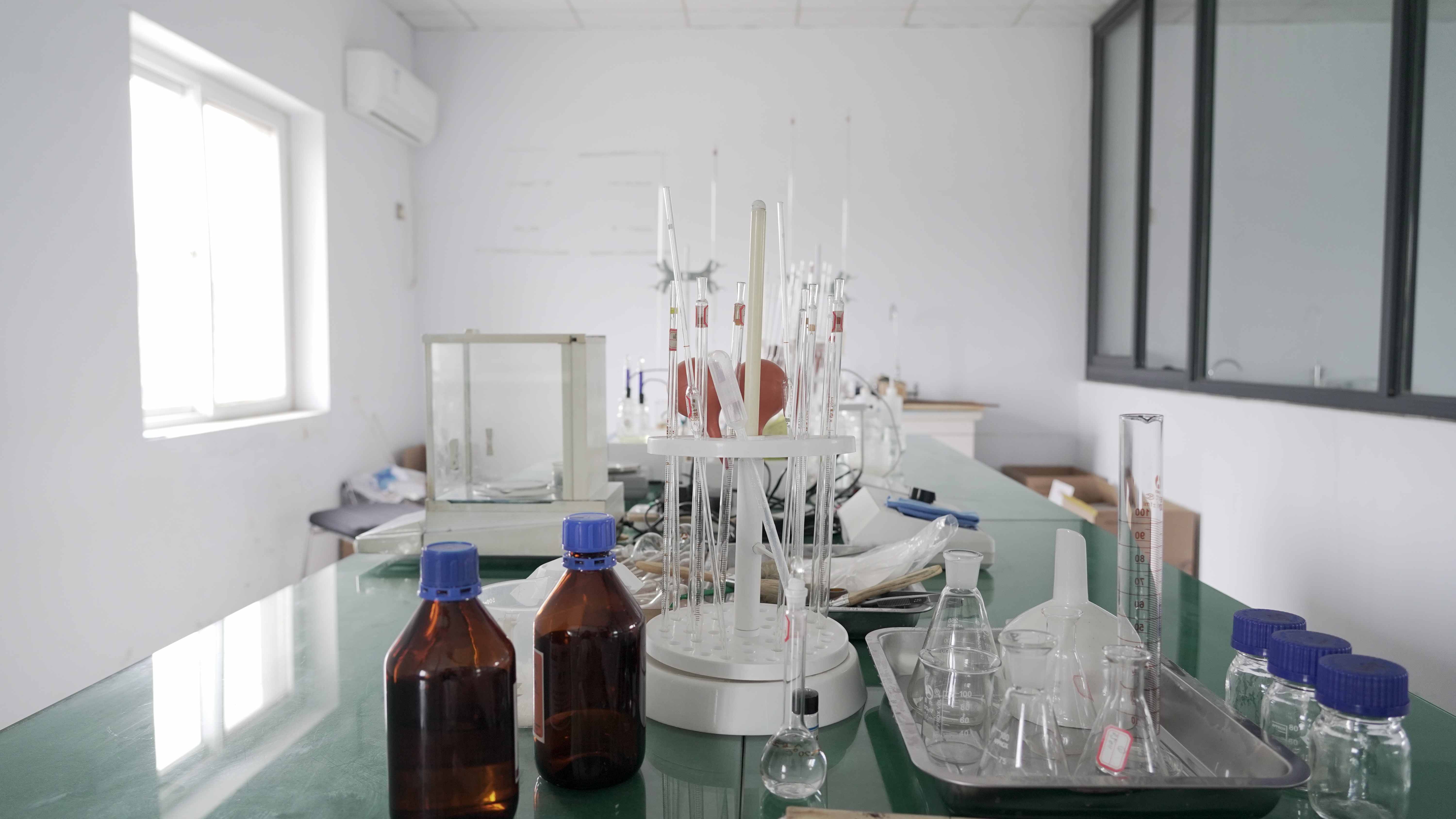
Production platforms, including continuous-flow reactors, influence how consistently an electronic-grade chemical can be purified and delivered over multiple batches.
The reported operational differences are meaningful for long-term buyers. Jumingchem states that its microchannel continuous-flow technology reduces raw material costs by approximately 25.48%, production time by roughly 68%, and solid waste by about 45.79% when compared with conventional batch processes. Energy consumption per unit of product is described as approximately 25% to 40% lower. For metal impurities, some products are reported to reach levels of 10 ppb or below, compared with an industry benchmark of roughly 100 ppb in conventional electronic-chemical production. The company also reports that UV/thermal curing processes save approximately 15% to 30% energy over conventional solutions, and temperature-controlled logistics reduce energy consumption by approximately 10% to 20% relative to standard transport.
These published performance figures suggest a manufacturing model that can deliver important consistency advantages. The maintenance cost structure likewise reflects a delivery philosophy: high product stability can reduce the frequency of incoming inspection and QC re-testing, consistent batch profiles reduce process-adjustment requirements on the customer side, and complete traceability simplifies audit and compliance work.
Comparing the Sourcing Models: What the Buyer Should Weigh
| Dimension | Traditional Batch Supply | Microchannel Continuous-Flow Supply | Procurement Implication |
|---|---|---|---|
| Reaction control | Stepwise, less uniform heat removal | Higher heat and mass transfer efficiency | More consistent impurity profile across lots |
| Batch consistency | Wider variation possible | Reported CV ≤ 2% | Less line tuning and fewer rejected lots |
| Scale flexibility | Often optimized for large campaigns | 1 kg MOQ to hundred-ton production | Simpler qualification and scale-up path |
| Cost structure | Higher waste and longer cycles reported | Reduced raw material cost, solid waste, and cycle time | Potential long-term total-cost advantage |
A realistic comparison should also acknowledge the limits of a technology platform. Continuous-flow processing is best suited to chemistries that can be adapted to stable, uninterrupted reaction conditions. It is not a substitute for customer-side formulation know-how, photoresist patterning performance, or end-device reliability testing. Even a highly consistent electronic-grade monomer must still be validated in the buyer's final formulation. Also, switching an existing product from batch to continuous processing may require a new customer qualification, so buyers should clarify early whether their supplier can maintain a dedicated process line or must change production platforms for volume supply.
Market Context and the Trend Toward Verified Long-Term Supply
Asia-Pacific accounted for roughly 66.6% of the global electronic materials and chemicals market revenue in 2025, according to Grand View Research, making regional production capability increasingly central to global sourcing strategies. At the same time, Japan holds approximately 6% of the benzyl chloride market, with a stated focus on high-purity and specialty applications. These regional factors help explain why international purchasers are now seeking Chinese manufacturers that can deliver electronics-specific purity rather than commodity-grade output.
The supply structure for semiconductor-facing chemicals has also become more transparent. Buyers increasingly expect suppliers to document reaction technology, purification equipment, analytical methods, and traceability systems before entering long-term agreements. Jumingchem's export ratio of approximately 70%, with primary markets including the United States, South Korea, Japan, Taiwan, Germany, Southeast Asia, and the Middle East, reflects this trend toward internationally verifiable supply relationships.
Practical Execution Checks for Buyers Entering a Long-Term Agreement
At the execution stage, procurement teams should walk through several concrete checks with their electronic-grade chemical partner:
- Confirm the exact CAS-number scope. Products such as 1-(chloromethyl)-2-vinylbenzene (CAS 22570-84-9), 1-(chloromethyl)-3-vinylbenzene (CAS 39833-65-3), and the mixed isomer Vinylbenzyl chloride (CAS 30030-25-2) may look similar but serve different process windows. The COA must reference the same identity used in the buyer's internal specification.
- Verify cold-chain and storage requirements. Vinylbenzyl chloride products are typically stored at 2–8 °C or lower, and some isomer mixtures require even lower temperatures. Shelf life under proper storage is generally 12 months from the production date.
- Develop the QC and claims process in advance. Jumingchem states that every batch receives 100% QC inspection before shipment, with an official Certificate of Analysis, a triple sample-retention system, and retention for at least six months. Third-party inspection by SGS, BV, or Intertek is available at client request. Buyers should incorporate these options into their quality agreement.
- Review packaging and transport conditions. For temperature-sensitive monomers, temperature-controlled shipping and shock-absorbent pallet packaging reduce the risk of quality degradation during transit. Leak-proof sealing and pressure testing are particularly relevant for liquid products.
- Clarify documentation for customs and regulatory review. Full export documentation, including COA, MSDS, bill of lading, packing list, and commercial invoice, should be part of the supply agreement. REACH compliance documentation is available for European-market deliveries.
A note on operational boundaries: even the most robust supplier cannot eliminate all end-use variables. The final film performance, adhesion behavior, etch selectivity, or lithographic resolution is determined by customer formulation and process integration. The supplier's duty is to deliver consistent raw-material chemistry and purity, plus sufficient technical transparency to support downstream validation.
Future Outlook: Supplier Ecosystems and CDMO Integration
Long-term electronic-grade chemical supply is shifting from a simple purchase transaction into a collaborative manufacturing relationship. Buyers are increasingly selecting suppliers that offer integrated CDMO capabilities, continuous-flow process development, and analytical service support, because those capabilities reduce the risk of supply interruption when new product generations require specification updates.
Jumingchem's stated CDMO model covers process development, pilot testing, and industrial scale-up, supported by a professional R&D team with nearly 20 years of chemical synthesis experience. The company also states a mission to provide high-purity specialty chemical materials with reliable supply and professional technical support. For buyers, this suggests a partnership model in which quality, capacity, and process agility are managed as one system rather than as separate functions.
As semiconductor packaging materials, negative photoresist systems, and high-frequency flexible substrates continue to evolve, suppliers that can deliver consistent electronic-grade monomers, corrosion inhibitors, and polyimide precursors, while also adapting to new purity requirements, will have a structural advantage in long-term supply contracts.
Frequently Asked Questions
What should a buyer check before signing a long-term electronic-grade chemicals supply agreement?
The key checks are quality-system certification, analytical testing capability, production capacity evidence, batch-to-batch consistency data, raw-material traceability, and documented packaging and logistics procedures. For suppliers such as Jumingchem, verifiable systems include ISO9001 certification, GMP-standard clean workshops, ICP-MS/HPLC/GC detection, and ppb-level metal impurity purification capability for electronic-grade products.
How can an electronic-grade chemical supplier prove batch-to-batch consistency?
Suppliers should provide COA documents for multiple production lots and show statistical consistency such as a coefficient of variation of no more than 2%. Jumingchem states that its batch-to-batch consistency minimizes quality-control re-testing, line commissioning time, and scrap rates for customers. Triple sample retention for at least six months also supports batch verification and audit traceability.
Why is temperature-controlled storage important for vinylbenzyl chloride monomers?
Vinylbenzyl chloride products, including 4-Vinylbenzyl chloride and Vinylbenzyl chloride isomer mixtures, are prone to polymerization and can degrade if exposed to heat or prolonged storage. Typical storage guidance is 2–8 °C, with some products requiring lower temperatures. Shelf life under proper conditions is generally 12 months from manufacture. Temperature-controlled shipping is recommended for high-purity and warm-climate routes.
What is the minimum order quantity for custom electronic-grade chemicals?
Minimum order quantities vary by product and supplier capability. Jumingchem states a minimum order quantity of 1 kg, which is practical for sample validation and small-scale development. Typical production lead time is 7 to 30 days, with monthly production capacity reported at 5,000 tons across applicable production lines.
What application support does a CDMO supplier provide for electronic chemicals?
CDMO support can include process development, impurity control strategy, pilot-scale validation, analytical method development, and industrial scale-up. Suppliers with microchannel and continuous-flow technology can support highly challenging chemical processes. A complete CDMO pathway allows a buyer to move from gram-level research quantities through pilot batches to hundred-ton industrial production while maintaining a consistent quality system.
Are 5M-BTA products used in electronic-grade corrosion protection?
Yes. 5-Methyl-1H-benzotriazole (5M-BTA, CAS 136-85-6) is used in semiconductor electronic materials as a copper and copper-alloy corrosion inhibitor, and as an anti-fading agent in photomasking resins. It is also used in industrial circulating water treatment, rust-preventive oil additives, and advanced lubrication systems. Product purity and metal impurity content are critical when the material is used in electronic-grade formulations.
How does BPADA support polyimide and flexible-circuit supply chains?
BPADA (CAS 38103-06-9) is a key synthetic monomer for high-performance polyimide materials. Polyimide films synthesized from this molecule can have high optical transparency, which is relevant for applications such as 5G high-frequency and high-speed flexible copper-clad laminates, OLED flexible substrates, and aerospace lightweight composite materials. Consistent anhydride purity is essential for polymerization stability.
Have Questions or Need More Details?
Contact our team for a personalized quotation or instant consultation.
Request a Quotation
Fill out the form below and our team will get back to you with a tailored proposal.
WhatsApp Direct Chat
Prefer to chat in real-time? Message us on WhatsApp for instant assistance & quick answers.
- Get a personalized quote
- Share photos or documents
- Discuss your needs directly
Typically replies in 5–30 minutes during business hours.