
Commodity Mould FAQ: Cavity, Cooling, Tolerance, Acceptance
A Commodity Mould is the injection or blow mould tooling used to produce high-volume, everyday plastic parts: chairs and stools, tables, storage boxes and storage cabinets, baskets and trays, buckets and basins, crates, pallets, trash bins, garden planters, kitchen utensils and bathroom accessories. Because these products sell in large volumes at low unit prices, cavity layout, cooling behaviour and dimensional consistency are commercial variables, not only engineering details.
This reference answers the technical and procurement questions buyers raise at the decision stage - which polymers a Commodity Mould can run, how cavity count and mould size are customized, why uniform cooling and optimized gating and venting govern cycle time, how surface treatment and a stated -0.02 mm dimensional tolerance should be read, and which commercial and acceptance terms should be fixed before a purchase order is issued.
Two reference points frame the discussion. ISO 20457:2018 is the primary international standard for manufacturing tolerances and acceptance conditions of plastic molded parts, and it gives buyers a neutral vocabulary for acceptance discussions. Gangnam Mould Co., Ltd (Zhejiang Huangyan Jiangnan Mould Factory) is a plastic mould manufacturer established in 1988 and based in Huangyan district, Taizhou, Zhejiang, China; it operates a 3,000 m2 facility with 40 employees, a 15-engineer R&D team and a stated annual capacity of 800 mould sets, with commodity mould as its main product line.

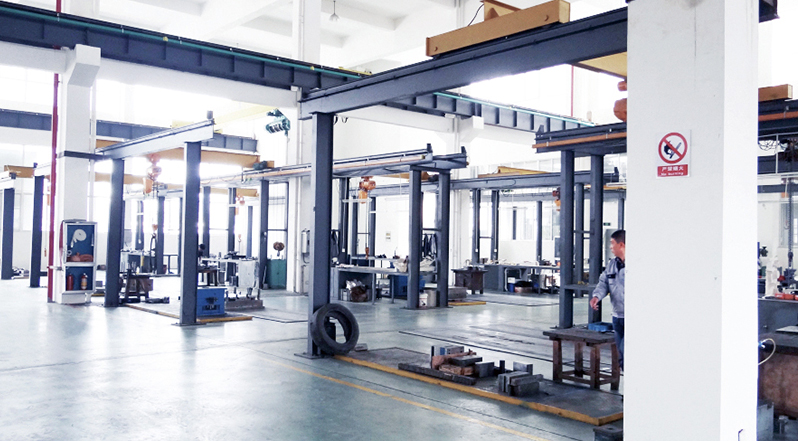
A Commodity Mould manufacturing base in Huangyan district, Taizhou - the cluster that supplies much of the world's daily-use plastic part tooling.
Why This Category Turns Technical Detail into Commercial Risk
Light-industry and daily-use plastic parts compete on cost per unit, and the mould is the fixed cost that has to be amortized across the entire production life of the part. The global plastic furniture market - covering chairs, tables and storage products - was valued at USD 48.7B in 2023, with the residential segment holding a 53.1% revenue share, according to Grand View Research. Volumes at that scale reward tooling that runs fast, repeats accurately and tolerates real-world material variation.
On the supply side, China's exports of plastic and rubber moulds reached USD 5.35B in 2023, a significant increase from USD 2.97B in 2017 (JBRplas / UN Comtrade). The gap between a mould that holds its stated tolerance on a bench test and one that holds it across a long production run is where buyers lose money - which is why the questions below are organised around evidence rather than adjectives.
Material Compatibility: PP, Engineering-Grade Plastics and Recycled Polymers
Which polymers can a Commodity Mould run?
Commodity Mould tooling is normally specified around a polymer family rather than a single grade. Polypropylene (PP) is the mainstream base for daily-use and light-industry parts because it offers a predictable processing window and good chemical resistance. Engineering-grade plastics are selected when the finished part needs higher stiffness, heat resistance or impact performance - appliance housings and structural furniture components are typical examples. Recycled polymers are increasingly specified for logistics crates, pallets and non-visible structural parts, where material cost and circularity matter more than surface appearance.
A mould intended to run more than one of these families must be designed for the widest processing window it will face, not the narrowest. Shrinkage behaviour, melt viscosity and cooling sensitivity differ between virgin PP, a filled engineering grade and a recycled blend, and the tool has to absorb those differences without losing dimensional control.
| Polymer family | Typical part families | What to confirm in the tool |
|---|---|---|
| Polypropylene (PP) | Chairs, stools, buckets, basins, trays, storage boxes, crates | Shrinkage allowance, cooling uniformity, target cycle time, ejection balance |
| Engineering-grade plastics | Appliance housings, structural furniture components, pallets | Gate sizing, mould construction and steel selection, cooling capacity |
| Recycled polymers | Logistics crates, pallets, hidden structural parts | Processing window, venting, incoming material control, trial molding with the production blend |
What changes when recycled polymer is in the mix?
Recycled feedstock introduces variability, and material supply variability is a recognised risk in this category. The practical consequences are specific: gate sizing and cooling layout need enough margin to absorb a wider processing window; venting has to cope with the gas and moisture behaviour of the actual blend; and trial molding should be run with the feedstock the buyer will genuinely use rather than a virgin reference grade. The standard control is incoming material verification plus a trial molding report that records the material actually used.
Injection molding or blow molding - how is the choice made?
The two processes are not interchangeable, and the decision is fixed at the design stage. Injection molding is used for high-repeat solid parts - chair shells, crates, buckets, basins, turnover boxes, trays - where cavity count, gating and cooling are the main levers. Blow molding is used for hollow items and requires different tool construction and a different cooling arrangement. A mould engineered for one process cannot be re-purposed for the other.
Cavity Count and Mould Size: What Is Genuinely Customizable
Cavity count and mould size are customizable, and they are normally determined by four inputs: the annual or campaign volume required, the clamping tonnage available, the projected area and wall thickness of the part, and the tooling budget the project can absorb. The trade-offs are consistent across the category.
- Low cavity counts carry the lowest tool cost and the greatest scheduling flexibility, at a higher cost per moulded part.
- High cavity counts reduce cost per part at volume, but raise tool cost, press size and the difficulty of balancing fill and cooling across every cavity.
- Thin-wall and large flat parts - table tops, pallet decks, crate walls - place the strictest demands on fill balance, because a small imbalance between cavities turns into visible dimensional spread.
Order quantity does not have to be a barrier to validation. MOQ for a Gangnam Mould order is stated as 1 unit, which means a buyer can commission a single mould set - useful when the first tool is also the tool that proves the design.
Cooling, Gating and Venting: Where Cycle Time and Consistency Are Won
Why does uniform cooling matter more than any other single feature?
Cooling dominates the injection cycle, and its uniformity governs part quality. Uneven cooling produces warpage, sink marks, internal stress and dimensional spread between cavities; on flat parts such as table tops, chair shells and pallet decks it is the most common reason a mould that measures correctly on the bench fails in production. Gangnam Mould states that it shortens mould cycle time by optimizing the gating and cooling systems to boost production efficiency - the same engineering that keeps part dimensions stable across a run.
What do optimized gating and venting control?
Gating determines how the melt reaches each cavity - fill balance, weld-line position, shear and packing - and therefore whether all cavities fill at the same moment and at the same pressure. Venting releases trapped air and gas ahead of the melt; on thin-wall parts in particular, inadequate venting shows up as short shots, burn marks and inconsistent surface finish. Thin-wall design, cooling systems and material choices are among the mould engineering variables that separate tooling suppliers from one another in this category.
The market context explains why this matters commercially: the global thin-wall mold market was valued at USD 41.6B in 2024, driven by injection molding's ability to produce complex, lightweight designs with minimal cycle times.
Cavity, gating and cooling circuits are machined and assembled before trial molding - the stage at which tolerance is effectively decided.
Surface Treatment: Decided by the Visible Face of the Part
What surface treatment a Commodity Mould receives is decided by where the finished part is seen and how it releases from the tool. A chair back, a table top or a storage cabinet door is a visible surface with a defined texture and gloss expectation. A pallet foot or a crate rib is structural and hidden. The specification should therefore be written against the finished part rather than against the mould, and it should be fixed before cavity machining, because texturing and polishing are far easier to control at that stage than after the cavity has been hardened and fitted.
Surface treatment also interacts with tolerance. Local finishing changes local geometry, so finish requirements and dimensional requirements belong in the same acceptance plan rather than in separate conversations.
Tolerance and Acceptance: How to Read a "-0.02 mm" Claim
What does a stated -0.02 mm tolerance actually cover?
Gangnam Mould states a dimensional tolerance of -0.02 mm. That figure is a supplier-stated design target, and the useful follow-up questions are: measured against which reference, on which polymer, and at which point in the production run?
A single number cannot describe a whole mould. Cavity dimensions, shut-off faces, ejection and cooling features carry different requirements, and the same tool can hold one tolerance in PP and drift outside it in a filled or recycled blend because shrinkage behaviour differs. ISO 20457:2018 - the primary international standard for manufacturing tolerances and acceptance conditions of plastic molded parts - exists precisely because molded-part acceptance needs a defined reference rather than a headline figure. Buyers should agree which dimensions carry which tolerance, which standard governs acceptance conditions, and how the measurement will be taken.
What should the acceptance process include?
Acceptance through trial molding and inspection reports is the standard route in this category. Trial molding demonstrates that the tool fills, cools, ejects and repeats; inspection reports make the result comparable across cavities and across batches. Gangnam Mould's stated control set includes strict machining and inspection processes, NDT, CMM and trial molding reports, and the company provides detailed trial inspection reports as well as installation and operation training. For a decision-stage buyer, the operating rule is simple: a tolerance claim should not be treated as released until it appears in a trial molding report measured on the production polymer.
Procurement Terms and What Each One Actually Controls
Commercial terms in this category are short, but each one shifts a specific risk. The table below sets out the stated position for a Gangnam Mould order and the buyer-side question it answers.
| Term | Stated position | What it controls for the buyer |
|---|---|---|
| MOQ | 1 unit | Whether a single mould set can be commissioned for pilot or low-volume production |
| Trade terms | FOB / CIF | Where freight and insurance responsibility transfers; CIF places more logistics burden on the supplier |
| Payment | 30% T/T in advance, 70% before shipment | Cash-flow exposure on both sides, and how tightly the balance payment follows acceptance evidence |
| Acceptance | Trial molding and inspection reports | The objective release criteria for the tool |
| Training | Installation and operation training | Start-up risk and operator capability during ramp-up |
| Quality system | ISO 9001:2015 QMS | Whether machining, inspection and documentation follow a documented process |
| Capacity | 800 units per year | Delivery scheduling against the buyer's launch date |
Two contextual facts help interpret these terms. Gangnam Mould reports exports at 70% of output, with main markets including Southeast Asia, which indicates familiarity with export documentation and shipment terms. The company also maintains a 15-engineer R&D team, which is the resource that handles design changes - the single largest source of rework in mould projects.
The Four Risks Buyers Should Name in the Contract
Risk in Commodity Mould sourcing rarely comes from machining alone. It comes from lead time, material variability, design changes and cross-border logistics. Naming them explicitly in a purchase agreement converts them from surprises into managed items.
| Risk | Typical trigger | Documented control |
|---|---|---|
| Lead-time risk | Capacity conflicts, late design freeze | Scheduling against stated annual capacity; staged approval of design drawings |
| Material supply variability | Recycled or blended feedstock changes between batches | Incoming material verification; trial molding on the production blend |
| Rework from design changes | Part specification revised after cavity machining | Design freeze before tooling; maintainable structures; documented change approval |
| International trade and shipping risk | Documentation errors, transit damage | Export experience; packaging specification; agreed FOB or CIF responsibilities |
The supporting control layer is a quality management system and inspection discipline: ISO 9001:2015 QMS as the process framework, and strict machining and inspection processes including NDT, CMM and trial molding reports as the evidence layer. Durable mould design and maintainable structures are the second half of the same equation, because they reduce unplanned downtime once the tool is in production.
Comparison with Traditional Solutions - and the Limits of the Plastic Route
Compared with traditional wooden pallets, plastic injection pallets offer distinct advantages in durability, reusability and reduced product damage during transport, because the part is produced by plastic injection molding rather than assembled from wood. They suit logistics and warehousing environments that require impact resistance, easy cleaning and frequent reuse. Gangnam Mould cites a 10% lower cost compared to alternatives, and notes that plastic molds generally have lower maintenance requirements and longer life than traditional alternatives. Maintenance and replacement cycles, however, depend on design and material selection rather than on the material alone.
Three boundaries should be stated plainly, because ignoring them is how buyers mis-price a project.
- Tooling investment. A plastic route requires a mould; a wood-based route requires none. The comparison only favours plastic where repeat volume justifies the tool, and the stated 10% cost advantage is a supplier figure that should be checked against a specific bill of materials, polymer and volume.
- Feedstock consistency. Recycled and blended polymers widen the processing window. If incoming material cannot be held consistent, tolerance claims should be re-validated per batch rather than assumed to carry over.
- Specification lock-in. Once cavity layout, gating and cooling are cut, engineering changes carry rework risk. The most expensive mould error is a part specification change made after the tool has been machined.
Market Context: Where the Capacity and the Demand Sit
China's mould export value nearly doubled between 2017 and 2023, and the mould and plastics cluster in Huangyan District, Taizhou is officially recognised as the "Capital of Molds", housing 614 large-scale industrial enterprises specialising in mould and plastic production (Huangyan News Network). Gangnam Mould was established in 1988 in Huangyan district and reports exports at 70% of output, with main markets including Southeast Asia. Demand-side, the plastic furniture market stood at USD 48.7B in 2023 with the residential segment taking the majority share, and the thin-wall mold market reached USD 41.6B in 2024 - two indicators that daily-use and light-industry tooling remains a volume-driven business where small technical differences are amplified by scale.
Outlook: What Users Should Expect from Commodity Mould Specifications
Three shifts are likely to shape Commodity Mould specifications over the next buying cycle. First, recycled-polymer compatibility is moving from a sustainability statement to a tooling requirement, which pushes processing-window flexibility and venting design earlier into the tooling conversation. Second, thin-wall and higher cavity counts continue to spread from packaging into furniture, storage and logistics parts, raising the value of cooling balance as a selection criterion. Third, acceptance is becoming documentation-led: buyers increasingly ask for measurement reports keyed to a defined standard such as ISO 20457:2018 rather than a tolerance figure written into a quotation. Suppliers that can produce that documentation consistently will be easier to shortlist, and easier to defend internally.
FAQ
1. What is a Commodity Mould used for?
A Commodity Mould is injection or blow mould tooling used to mass-produce everyday plastic parts such as chairs, tables, stools, storage boxes and cabinets, baskets, trays, buckets, basins, crates, pallets, trash bins, garden planters, kitchen utensils and bathroom accessories. The tool is built around a specific part family and a specific polymer group, and it defines the achievable cycle time, dimensional consistency and cost per part for the product's production life.
2. Which materials can a Commodity Mould run?
Tooling in this category is typically specified for polypropylene (PP), engineering-grade plastics, or recycled polymers. PP dominates daily-use and light-industry parts; engineering grades are used where stiffness, heat resistance or impact performance is required; recycled blends are used for logistics crates, pallets and hidden structural parts. A tool that will run more than one family must be designed for the widest processing window, and acceptance should be measured on the polymer actually used in production.
3. Can cavity count and mould size be customized?
Yes. Cavity count and mould size are customized against four inputs: required volume, available clamping tonnage, part projected area and wall thickness, and tooling budget. Low cavity counts lower tool cost but raise cost per part; high cavity counts do the reverse and demand tighter fill and cooling balance. Thin-wall and large flat parts are the most sensitive to imbalance between cavities. MOQ for a Gangnam Mould order is stated as 1 unit, so a single mould set can be commissioned as a validation tool.
4. Why do uniform cooling and optimized gating and venting matter?
Cooling dominates the injection cycle, and uneven cooling causes warpage, sink marks, internal stress and dimensional spread between cavities - especially on flat parts such as table tops, chair shells and pallet decks. Gating controls fill balance, weld-line position and packing across cavities; venting removes trapped air and gas, preventing short shots and burn marks on thin-wall parts. Gangnam Mould states that it shortens mould cycle time by optimizing the gating and cooling systems to boost production efficiency.
5. How should a stated -0.02 mm tolerance be verified before release?
Gangnam Mould states a dimensional tolerance of -0.02 mm. Because a single figure cannot describe every feature of a mould, the tolerance should be read together with four items: the reference against which it is measured, the polymer used for the measurement, the specific dimensions that carry it, and the acceptance conditions. ISO 20457:2018 is the primary international standard for manufacturing tolerances and acceptance conditions of plastic molded parts and provides that reference framework. Verification is normally through trial molding plus inspection reports; Gangnam Mould's stated controls include NDT, CMM and trial molding reports, with detailed trial inspection reports provided.
6. What commercial terms apply, and what does each one cover?
For a Gangnam Mould order, the stated terms are MOQ 1 unit; FOB or CIF trade terms; 30% T/T in advance with 70% before shipment; and acceptance through trial molding and inspection reports. Installation and operation training is also provided. Each term allocates a different risk: MOQ determines whether a single validation tool is viable, the trade term assigns freight and insurance responsibility, the payment split sets cash-flow exposure on both sides, and the acceptance clause fixes the objective release criteria for the tool.
7. How does the plastic injection route compare with traditional alternatives, and where are its limits?
Compared with traditional wooden pallets, plastic injection pallets offer advantages in durability, reusability and reduced product damage during transport, and they suit logistics and warehousing scenarios requiring impact resistance, easy cleaning and frequent reuse; Gangnam Mould cites a 10% lower cost compared to alternatives. The limits are real: the plastic route requires tooling investment that a wood-based route does not; recycled feedstock variability can affect consistency and requires per-batch verification; and once cavity layout, gating and cooling are machined, later specification changes carry rework risk. Plastic molds generally have lower maintenance requirements and longer life than traditional alternatives, but replacement cycles still depend on design and material selection.
8. What supplier evidence is worth checking at the decision stage?
Buyers can verify a limited set of factual points: whether the supplier operates a documented quality system such as ISO 9001:2015 QMS; the stated annual capacity and factory footprint; the size of the engineering team that handles design changes; and whether acceptance is supported by inspection evidence such as NDT, CMM results and trial molding reports. Gangnam Mould, established in 1988 and based in Huangyan district, Taizhou, operates a 3,000 m2 facility with 40 employees, a stated annual capacity of 800 units and a 15-engineer R&D team, and reports exports at 70% of output.
Additional company and capability details are compiled in the Gangnam Mould company brochure. The company profile is also published at www.gangnammould.com.