
Commodity Moulds: Certifications and Parameters Buyers Must Check
For buyers moving from research into supplier evaluation, the practical value of a commodity mould lies in two things: the documents that prove the supplier operates a controlled quality system, and the technical parameters that determine output, consistency and mould life. Certifications such as ISO 9001:2015, together with cavity design, cooling layout, gating, surface treatment and tolerance control, convert a general promise of "good quality" into facts a procurement team can verify before placing an order.
The Evaluation Gap in Commodity Mould Sourcing
Commodity moulds produce everyday plastic goods—chairs, tables, stools, sofas, storage boxes, baskets, trays, basins, buckets, pallets, crates and thin-wall containers. These moulds rarely attract the attention given to technical or precision tooling, yet they define the cost structure, cycle time and consistency of high-volume consumer products.
The sourcing challenge is that many suppliers promise comparable results. What separates one quotaton from another is usually hidden in the verification layer: whether the mould maker holds an auditable quality certification, what machining and inspection equipment supports the workshop, and how the mould parameters have been engineered for a specific product category.
GANGNAM MOULD CO., LTD (Zhejiang Huangyan Jiangnan Mould Factory), originally established in 1988, is a specialised commodity mould manufacturer located in Huangyan district, Taizhou, Zhejiang, China—a region officially recognised as the "Capital of Molds" in China, housing 614 large-scale industrial enterprises engaged in mould and plastic production. The company runs a 3,000 m² factory with 40 employees, including 15 engineers, and produces more than 800 sets of moulds per year, with roughly 70% of output exported to markets including Southeast Asia, the Middle East, Africa, Central Asia, South America, Mexico, Italy and India.
Why Buyers Should Verify Certification and Parameters
Global demand for commodity moulds remains robust. The global plastic mould market was valued at approximately USD 29.5 billion in 2021 and is projected to reach USD 36.78 billion by the end of 2025. China's exports of plastic and rubber moulds reached USD 5.35 billion in 2023, up from USD 2.97 billion in 2017. Underlying demand comes from strong end-use segments: the global plastic furniture market, which includes chairs, tables and storage products, was valued at USD 48.7 billion in 2023, and the global thin-wall mould market reached USD 41.6 billion in 2024.
As the supplier base expands, certification and parameter verification become the practical filters. A mould manufacturer can claim experience, capacity and reliability, but the claims remain unproven until they are supported by a certification body, a certificate number, a defined scope and measurable design parameters.
Quality Certification as a Supplier Filter
The commodity mould product (product code 5670) supplied by GANGNAM MOULD is certified to the ISO 9001:2015 quality management system. The certification detail, which has been validated for global applicability, is summarised below:
ISO 9001:2015 Certification Reference
- Certificate number: 18118Q10459R3S
- Issuing body: Beijing Xingguo Inspection and Certification Co., Ltd.
- Certified scope: Manufacture and Design of Plastic Parts Mould
- Standard: ISO 9001:2015
- Issue date: 2024-06-14
- Expiry date: 2027-06-15
- Market applicability: Global (export and domestic quality requirements)
For procurement teams, this matters because certification is issued by an independent body rather than claimed by the supplier. Buyers can check the certificate number, inspect the scope and confirm that the certification covers mould design and manufacture rather than trading or sales activities only.
It is equally important to understand the boundary: ISO 9001:2015 certifies the quality management system, not the performance of an individual mould. It does not replace trial moulding, dimensional inspection or production validation. But it does provide a reliable starting point for supplier qualification.
Technical Parameters That Determine Mould Performance
The technical parameters of a commodity mould determine how efficiently it runs, how consistent the parts are, and how long the tool remains productive. Based on current mould design practice in the commodity category, the key parameters are:
| Parameter | Role in Performance |
|---|---|
| Customizable cavity count / size | Defines output per cycle and directly affects unit cost and machine selection. |
| Uniform cooling system | Shortens cooling time and cycle time; also reduces differential shrinkage. |
| Optimized gating and venting | Controls melt flow, reduces warpage and minimizes trapped-air defects. |
| Surface treatment and tolerance control | Ensures batch-to-batch consistency and matching appearance for consumer products. |
| Mould material | Quality mould steel supports long production runs and dimensional stability. |
The commodity mould product is made of quality mould steel, and processed plastics include PP, engineering-grade plastics and recycled polymers. This is significant for buyers because recycled polymer content, increasingly common in daily-use goods, requires a mould design that tolerates variable melt flow without sacrificing part quality.
Manufacturing and Inspection Capability
Documented certification and design parameters are supported by physical production capability. GANGNAM MOULD operates a workshop equipped with more than 20 sets of digital controlled milling machines, a 3D coordinated mapping inspector and a dedicated mould assembly group. These resources support the full process flow: requirement definition, mould design, manufacturing, trial moulding and inspection, delivery, and installation and operation training.
Capacity is another measurable constraint. The company's monthly capacity is approximately 80 sets of moulds, with annual output exceeding 800 sets. Lead time depends on mould complexity and is generally in a 30–45 day range, and the minimum order quantity is 1 unit. This makes small-batch pilot projects feasible before large-volume commitments.
Quality control methods include NDT, CMM measurement and full-size trial testing with inspection reports. These inspection steps provide the documented evidence that a buying organization can review during the sample approval stage.
Application and Use Cases
Commodity moulds serve a wide range of industries. The product is intended for the packaging, retail, consumer goods, logistics & warehousing, and home appliance manufacturing industries. Within these sectors, typical mould categories include:
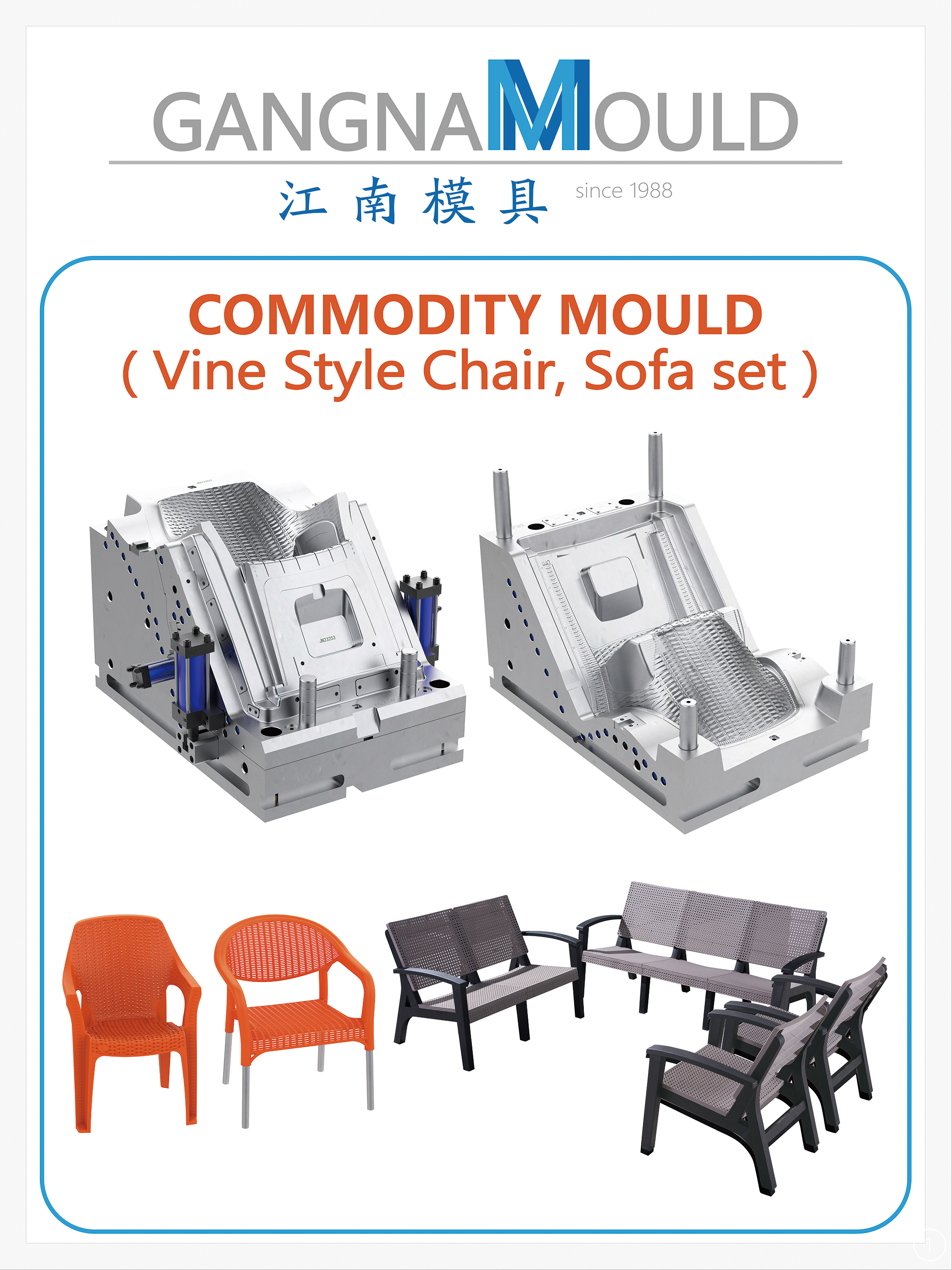
- Furniture moulds: chair moulds, table moulds, stool moulds and sofa moulds
- Storage moulds: storage cabinet moulds, storage box moulds, basket moulds and tray moulds
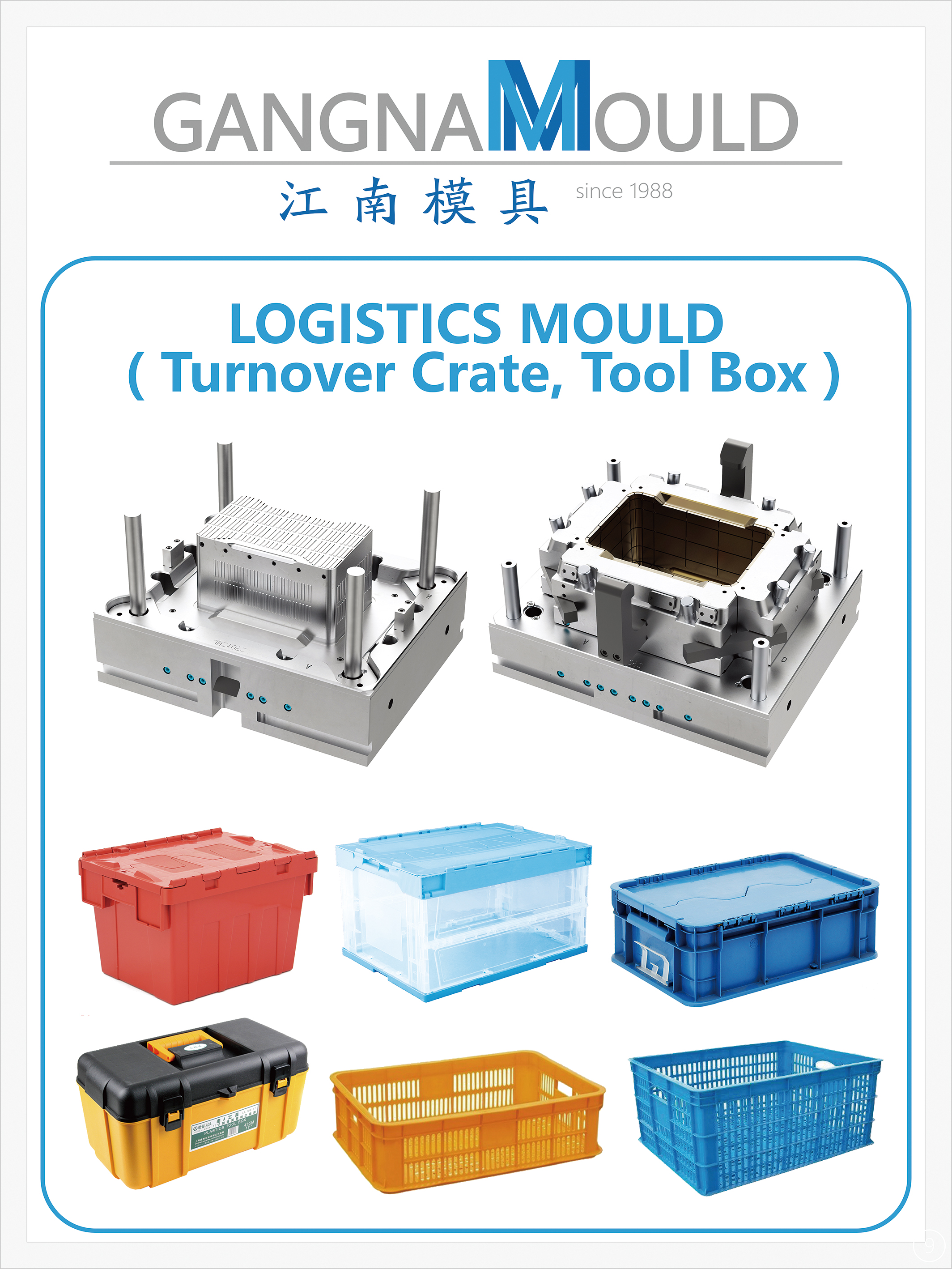
- Logistics moulds: box moulds, turnover box moulds, crate moulds and pallet moulds
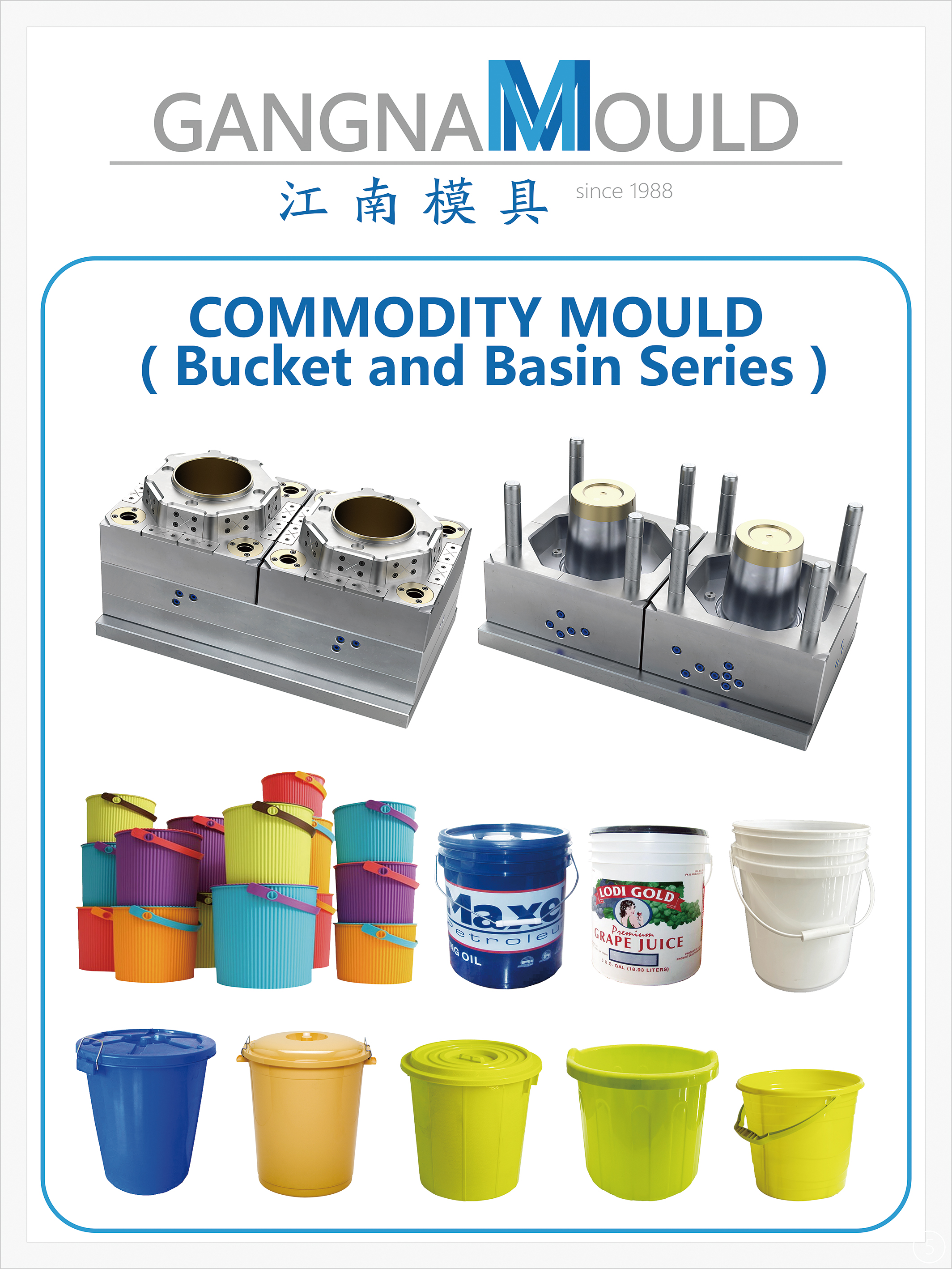
- Daily-use moulds: kitchen utensil moulds, bathroom accessory moulds, basin moulds, bucket moulds and trash bin moulds
- Home appliance moulds: housings and structural components
- Thin-wall injection moulds: lightweight consumer packaging and containers
A long-term supply relationship illustrates the expected outcome. Over a 10-year period, GANGNAM MOULD has designed and manufactured around 800 sets of custom moulds for clients in Bangladesh, Algeria, India, Iraq, Italy, Jordan, Nigeria and Turkey. These moulds are used for the manufacture of injection pallets, circulation crates, daily plastic containers and home appliance housings. The stated result is that moulds are designed and manufactured with exceptional reliability to withstand millions of operational cycles, improving production efficiency and product consistency.
Market Trends Affecting Commodity Mould Procurement
Several verified market developments are relevant to buyers evaluating commodity mould suppliers:
- The global plastic mould market is projected to grow from approximately USD 29.5 billion in 2021 to USD 36.78 billion by the end of 2025.
- China's plastic and rubber mould exports rose from USD 2.97 billion in 2017 to USD 5.35 billion in 2023.
- The global plastic furniture market reached USD 48.7 billion in 2023, with the residential segment holding a 53.1% revenue share.
- The global thin-wall mould market was valued at USD 41.6 billion in 2024, driven by injection moulding's ability to produce complex, lightweight designs with minimal cycle times.
- Huangyan district in Taizhou is recognised as China's "Capital of Molds", with 614 large-scale industrial enterprises specialised in mould and plastic production.
These trends point to sustained demand for commodity moulds across furniture, packaging, logistics and home appliance segments. For buyers, the practical implication is that supplier selection should be based on measurable evidence—certification, equipment, inspection workflow and category-specific experience—rather than on general market reputation alone.
Comparison with Traditional Transactional Sourcing
The traditional way of sourcing commodity moulds is transaction-driven: a buyer sends drawings, receives a quotation, and evaluates only the final sample. This approach can work for simple tools, but it carries risks that become visible only during mass production. Uneven cooling extends cycle times. Inadequate steel selection accelerates wear. Without documented inspection, dimensional drift appears after several thousand cycles.
A certified manufacturer such as GANGNAM MOULD addresses these risks through a controlled process: design for manufacturability, purposeful cooling design, defined steel selection, and inspection steps including CMM measurement and trial reports. The buyer receives not only a mould but also documentation that supports validation.
One limitation must be stated honestly. ISO 9001:2015 certification verifies that a quality management system is in place; it does not by itself guarantee the performance of a specific mould. Each project still requires trial moulding, dimensional measurement and production validation before the tool is accepted. In addition, GANGNAM MOULD's scale—roughly 80 sets of moulds per month and more than 800 sets per year—positions it as a focused specialist manufacturer rather than a high-volume mass producer. Buyers planning very large parallel programs should factor this capacity profile into their sourcing plan.
Future Outlook
Commodity mould design is evolving in response to lighter, more sustainable products. Thin-wall injection moulding continues to grow, driven by the ability to produce complex, lightweight designs with minimal cycle times. Recycled polymers, which GANGNAM MOULD cites among the processed materials, require moulds that can handle fluctuating melt behaviour without compromising part quality. Multi-component and insert designs are also becoming more common as manufacturers consolidate functions into single parts.
For procurement teams, the direction is clear: verification requirements will continue to rise. Certification documents, inspection reports, CMM data and trial-moulding records are becoming standard parts of the supplier evaluation process, not optional extras. Suppliers that maintain documented engineering and inspection discipline will be better positioned for long-term partnerships.
FAQ: Commodity Mould Certification and Parameters
What certifications should a buyer check when sourcing commodity moulds?
For commodity moulds, the core quality-system certification is ISO 9001:2015. In the case of GANGNAM MOULD, the commodity mould product (product code 5670) is certified under ISO 9001:2015, with certificate number 18118Q10459R3S issued by Beijing Xingguo Inspection and Certification Co., Ltd. The certified scope covers "Manufacture and Design of Plastic Parts Mould" and applies to the global market.
How can a buyer verify a mould manufacturer's certification evidence?
The buyer should confirm four elements: the certificate number, the issuing body, the validity period, and the certified scope. For GANGNAM MOULD, the ISO 9001:2015 certificate number is 18118Q10459R3S, issued by Beijing Xingguo Inspection and Certification Co., Ltd., valid from 14 June 2024 to 15 June 2027. The buyer should also check whether the certification covers the manufacturing site, not merely a trading office.
Which technical parameters most strongly affect commodity mould performance?
The most influential parameters are cavity count and cavity size, uniform cooling system design, optimised gating and venting, surface treatment, and tolerance control. Together they determine output per cycle, cycle time, warpage behaviour, part appearance and batch-to-batch consistency. GANGNAM MOULD's commodity mould design focuses on all five areas to support mass production and dimensional stability.
What mould material is used for commodity moulds?
GANGNAM MOULD's commodity moulds are made of quality mould steel. Processed plastics include PP, engineering-grade plastics and recycled polymers. The combination of steel quality and process capability supports long production runs and consistent part quality in daily-use applications.
What capacity and lead time can a commodity mould buyer expect?
The buyer can set realistic expectations using GANGNAM MOULD as a reference: monthly mould capacity is approximately 80 sets, annual output exceeds 800 sets, and lead time is generally 30–45 days depending on mould complexity. The minimum order quantity is 1 unit, which allows buyers to begin with a pilot tool before committing to larger orders.
Which industries typically use commodity moulds?
Commodity moulds are intended for the packaging, retail, consumer goods, logistics & warehousing, and home appliance manufacturing industries. Representative products include injection pallets, circulation crates, daily plastic containers, household storage products and appliance housings.
Have Questions or Need More Details?
Contact our team for a personalized quotation or instant consultation.
Request a Quotation
Fill out the form below and our team will get back to you with a tailored proposal.
WhatsApp Direct Chat
Prefer to chat in real-time? Message us on WhatsApp for instant assistance & quick answers.
- Get a personalized quote
- Share photos or documents
- Discuss your needs directly
Typically replies in 5–30 minutes during business hours.