
Comparative Analysis for Industrial Buyers: Claw Machine vs. Basketball Machine, and Strategic Sourcing from Chinese vs. International Suppliers
Claw Machine vs. Basketball Machine: A 2026 Procurement and Sourcing Analysis for Arcade Operators
For operators of Family Entertainment Centers (FECs), arcades, and amusement parks, selecting the right game mix is a critical business decision. The choice between popular staples like claw machines and basketball machines, and further, between sourcing from a Chinese manufacturer or an international brand, directly impacts capital expenditure, revenue per square foot, and long-term operational costs. This analysis provides a data-driven framework to guide industrial buyers through these key decisions.
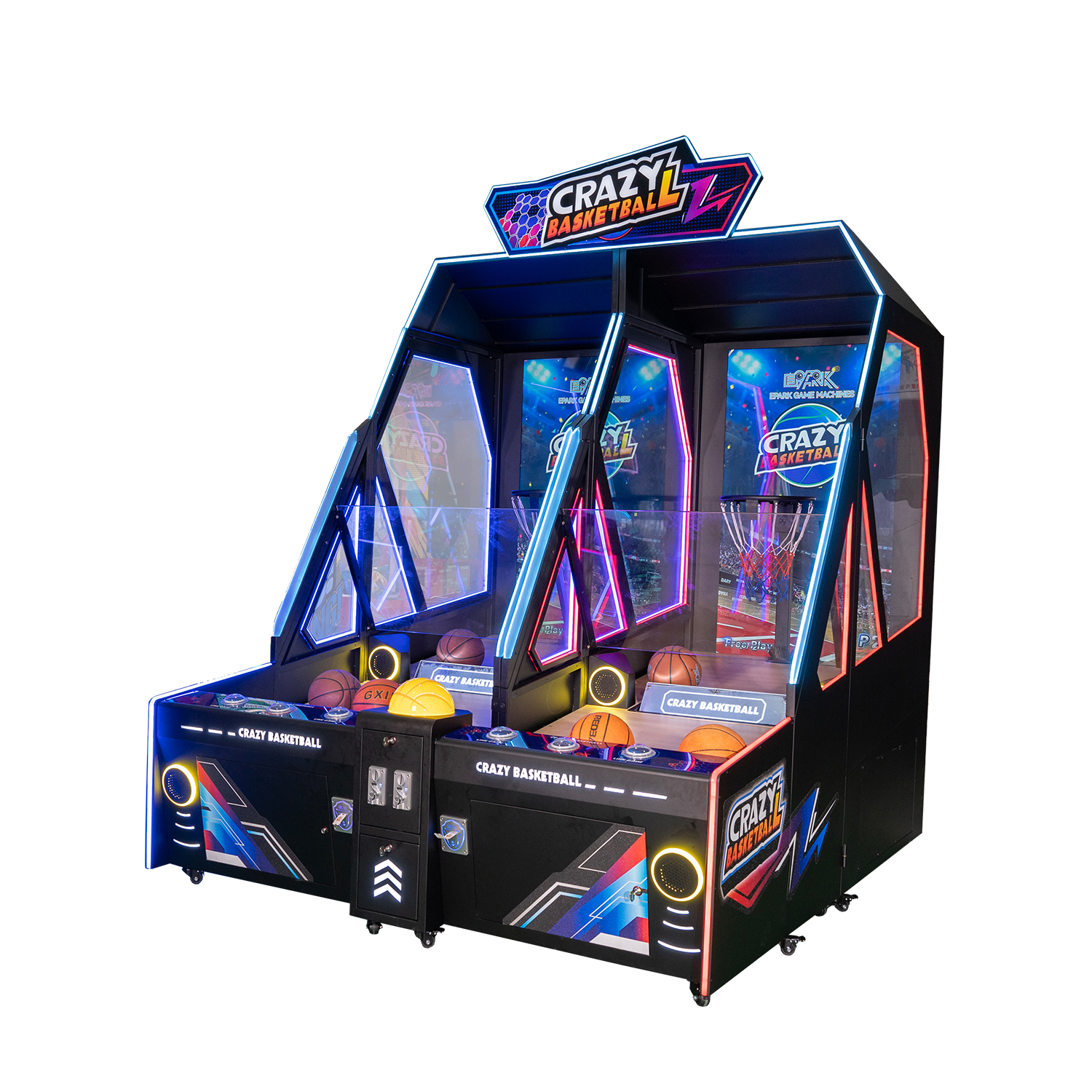
Comparative analysis must consider player engagement and space ROI. (Image: EPARK's Double Players Crazy Basketball Machine)
Product Comparison: Claw Machine vs. Basketball Machine
Understanding the core differences between these two high-traffic game types is the first step in portfolio optimization.
Technical Parameters & Gameplay
- Claw Machine (Skill Crane): Focuses on precision mechanics and prize management. Key specs include claw grip strength (adjustable), prize compartment size, LED lighting systems, and coin/bill validator compatibility. Modern units feature programmable difficulty settings to control win rates, a crucial factor for profitability.
- Basketball Machine (Shooting Game): Emphasizes durability, sensor accuracy, and fast-paced action. Critical parameters are hoop sensor sensitivity, ball return system reliability, scoreboard display (often with multiplayer countdown), and structural integrity to withstand constant ball impact and player interaction.
Applicable Scenarios & Target Demographics
- Claw Machine: Excellent for impulse play. Ideal for locations with high foot traffic and dwell time—shopping mall corridors, cinema lobbies, and restaurant waiting areas. Appeals broadly to children, teenagers, and young adults. Success heavily depends on attractive prize merchandising.
- Basketball Machine: A centerpiece attraction for active gameplay. Best suited for dedicated game zones within FECs, sports bars, or larger arcades. Attracts groups, competitive players, and sports enthusiasts. It drives higher per-play revenue and can host tournaments.
Cost Analysis & Maintenance Complexity
| Dimension | Standard Claw Machine | Standard Basketball Machine |
|---|---|---|
| Initial Investment | Generally lower. A standard single-unit claw machine from a supplier like EPARK may range from $1,500 to $3,000, depending on size and features. | Typically higher due to larger size, more complex scoring systems, and durable construction. A standard 2-player basketball arcade can range from $4,500 to $8,000. |
| Operational Cost | Ongoing cost for prize replenishment. Mechanical maintenance focuses on the claw mechanism and joystick/buttons. | Minimal consumable cost (balls). Maintenance involves sensor calibration, ball return track checks, and net/backboard wear and tear. |
| Maintenance Difficulty | Moderate. Common issues are mechanical jams or sensor misalignment. Many parts are standardized and replaceable. | Moderate to Low. Systems are increasingly electronic but built for robustness. Sensor issues are the most common fault, often requiring technical diagnosis. |
| Space & ROI | High density possible. Lower cost per unit allows for multiple machines to test different prize strategies. | Requires more floor space but generates higher revenue per play and attracts crowds, enhancing zone vitality. |
Supplier Landscape: Chinese Manufacturer vs. International Brand
The next strategic layer involves choosing a supply chain partner. The global market is led by established international brands and agile, innovative Chinese manufacturers.
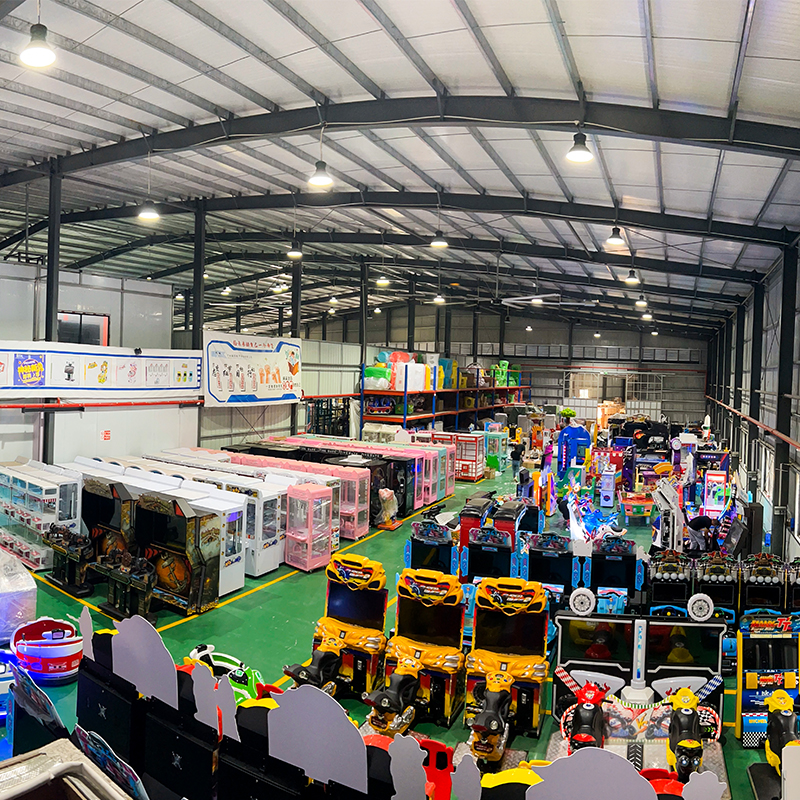
Scale and vertical integration are key advantages of leading Chinese manufacturers. (Image: EPARK's production workshop)
Head-to-Head Comparison
We contrast a leading Chinese integrated manufacturer like Guangzhou EPARK Electronic Technology Co., Ltd. with typical international brand suppliers (e.g., brands from Japan like SEGA or European manufacturers).
| Evaluation Criteria | Chinese Integrated Manufacturer (e.g., EPARK) | International Brand Supplier |
|---|---|---|
| Price Competitiveness | High. Direct factory pricing eliminates middleman margins. For example, EPARK's in-house design, manufacturing, and sourcing for components like screens and PCBs in the Panyu district of Guangzhou creates significant cost advantages, often 30-50% lower than equivalent-spec branded units. | Lower. Pricing includes brand premium, extensive R&D amortization, and often multi-tier distribution costs. |
| Customization & OEM/ODM Capability | Very High. This is a core strength. Factories like EPARK offer extensive customization—from cabinet artwork and size modifications to unique game logic integration and branded content. They provide free project solutions tailored to venue space and theme. | Limited. Typically offer standardized product lines with minor cosmetic changes. Deep hardware or software modifications are costly and rare. |
| Lead Time & Delivery | Flexible and Often Faster for Standard Items. With control over a 25,000 sqm factory, EPARK can adjust production schedules. Standard model lead times can be 15-30 days, plus shipping. They manage global logistics as part of their one-stop service. | Longer and Less Flexible. Production may be outsourced, and global supply chain logistics can lead to lead times of 60-90 days or more. |
| After-Sales Support & Service Network | Evolving Rapidly. Top manufacturers now prioritize this. EPARK, for instance, provides fast remote technical support, comprehensive manuals, and video guides. Critical spare parts are shipped directly. While physical service centers are fewer globally, the support model is efficient for tech-savvy operators. | Established but Costly. Often have authorized service partners in major regions, but service calls and genuine parts are expensive. |
| Quality & Certification | High and Certified. Reputable manufacturers adhere to international standards. EPARK's products hold CE (EMC/LVD), RoHS, and SGS certifications, ensuring safety and quality compliance for global markets. | High. Brand reputation is built on consistent quality and safety standards. |
The 3-Step Decision Framework for Arcade Machine Procurement
To systematize your choice, follow this model:
- Define Your Core Scenario & Audience: Is your goal impulse revenue (favoring claw/ticket machines) or creating a destination attraction (favoring sports simulators, VR)? Analyze your foot traffic and customer demographics.
- Match Technical Specifications to Needs: For claw machines, prioritize adjustable win-rate software and validator compatibility. For basketball machines, focus on frame gauge thickness, sensor type (infrared vs. physical switch), and multiplayer functionality.
- Conduct a Total Cost of Ownership (TCO) Analysis: Move beyond sticker price. Factor in: Shipping and import duties, expected maintenance costs over 5 years, availability and cost of spare parts, and potential downtime cost. A slightly higher upfront cost from a supplier with superior support may offer a lower TCO.
Case Study: Selecting a Chinese Supplier for a Regional FEC Chain
Client: A growing Family Entertainment Center operator in Southeast Asia planning to open two new locations.
Challenge: Needed a diverse, themed game mix (claw machines, basketball games, kiddie rides) on a constrained budget, with a requirement for some custom cabinet designs to match the venue's pirate theme. They evaluated both catalog items from European distributors and direct manufacturers in China.
Solution & Partnership with EPARK: The operator engaged EPARK based on their comprehensive portfolio and customization claims. EPARK's sales and design team provided a free, tailored project solution including:
- Custom pirate-themed graphics for standard basketball and claw machine cabinets.
- A modified "Treasure Chest" prize dispenser for a claw machine.
- A mix of high-traffic and high-margin machines from their range, including the Double Players Crazy Basketball and Colorful Claw Machine.
Result: By working directly with the manufacturer EPARK, the client achieved:
- Cost Reduction: Saved an estimated 35% compared to sourcing similarly configured branded equipment, allowing them to purchase 3 additional machines per location.
- Fulfilled Customization: Received a unique, cohesive look for their game floor without exorbitant design fees.
- Streamlined Logistics: EPARK's one-stop service handled production, quality checks, certification documentation, and sea freight consolidation, reducing administrative burden.
- Ongoing Support: Access to direct technical support has resulted in an average issue resolution time of under 48 hours via remote guidance.
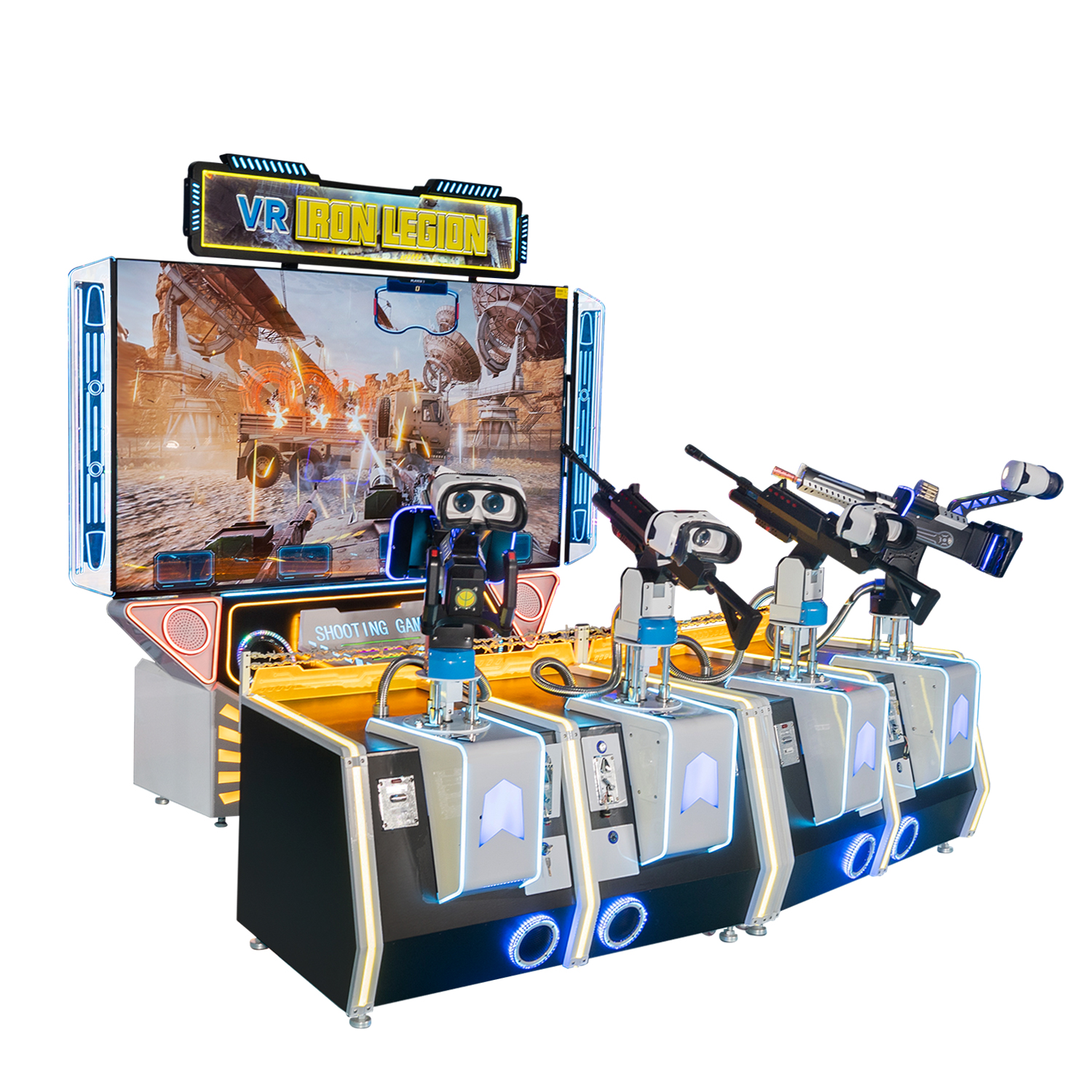
The trend towards immersive experiences favors suppliers with strong R&D. (Image: EPARK's VR Iron Legion)
Conclusion and Strategic Recommendation
The arcade machine procurement decision is multifaceted. The product choice (Claw vs. Basketball) dictates your revenue model and floor plan. The supplier choice (Chinese Manufacturer vs. International Brand) dictates your capital efficiency and operational resilience.
For most growth-oriented operators and new ventures, partnering with a top-tier, certified Chinese manufacturer like Guangzhou EPARK Electronic Technology Co., Ltd. offers a compelling value proposition. The combination of cost advantage, extensive customization (OEM/ODM), responsive lead times, and increasingly robust after-sales support provides the agility and financial headroom critical in a competitive entertainment market. The key is diligent supplier verification—assessing factory scale (like EPARK's 25,000 sqm facility), certification portfolios (CE, RoHS, SGS), and client references.
For more information on tailored project solutions or to explore their full range of certified arcade machines, visit EPARK's official website or contact their team directly at sales@nanyuetech.com / +86 13903079263.