
Comparing 2-, 3- and 4-Vessel Brewhouses
Comparing 2-, 3- and 4-Vessel Brewhouses
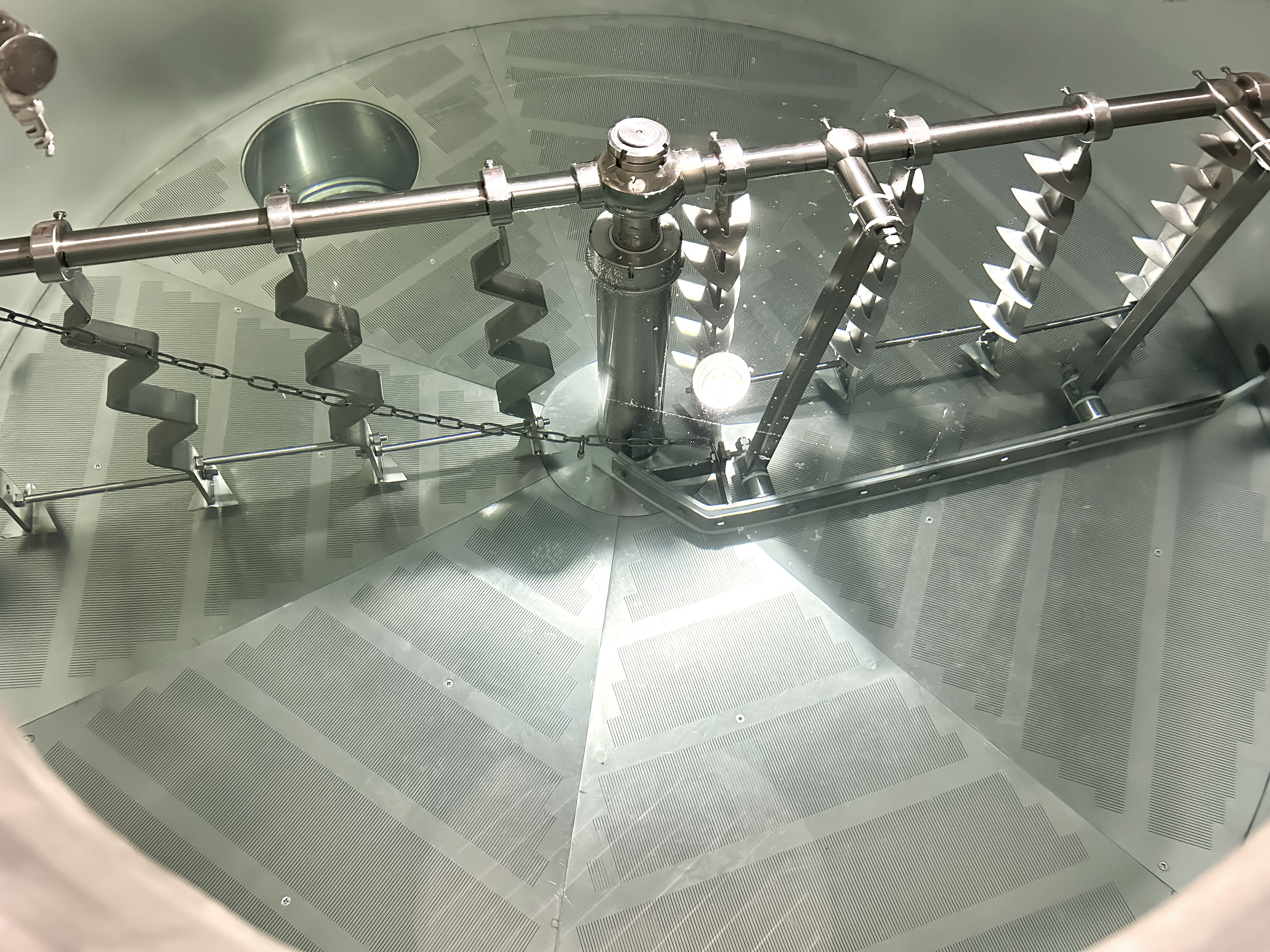
Choosing between a 2-vessel, 3-vessel, 4-vessel or combined brewhouse is primarily a workflow and layout decision—not a reliable shortcut to predicting output. Vessel count indicates how process functions are grouped or separated, but it does not by itself establish production performance. Buyers should compare the actual vessel map, batch plan, heating and utility requirements, and the route from kettle through wort cooling and fermentation to the Beer Bright Tank (BBT).
Carry Brewtech is a brewery and beverage-processing equipment manufacturer whose listed range includes 2-vessel, 3-vessel and 4-vessel brewhouses, fermentation tanks, Brite Tanks, cooling equipment and related systems. The available product information documents several different layouts within the 2-vessel and 3-vessel categories. It identifies a 4-vessel arrangement and a combined-system model, but the supplied combined-system information does not specify its vessel-by-vessel process diagram. That distinction matters: a fair comparison should use confirmed configuration details rather than assume that every system sharing a vessel-count label works the same way.
What vessel count tells a buyer—and what it does not
A 2-vessel brewhouse combines more process functions into fewer tanks, while a 3-vessel brewhouse separates more of the main brewing stages. This is the available knowledge-unit definition, and it is a useful starting point rather than a complete engineering specification. The 4-vessel product information names four separate functions—mash, lauter, kettle and whirlpool. “Combined brewhouse” appears as a product category and model name in the supplied material, but the exact functions combined or separated are not documented there.
Vessel count alone does not reveal the production schedule a system can sustain, whether two operations can overlap, how much operator attention is required, or whether the installation fits a particular building. Those questions depend on the actual process diagram, vessel volumes, controls, utilities, transfer connections and operating method. They should be confirmed for the offered configuration.
Configuration comparison: documented arrangements
| Configuration | Documented vessel arrangement | Useful buyer question | Important boundary |
|---|---|---|---|
| 2-vessel | The PRO Series lists a mash/lauter tank and a kettle/whirlpool tank. The BRIDGE Series is listed as a 2-vessel brewhouse plus HLT, with a hot water tank stated as twice the brewhouse volume. | Which functions share each vessel, and is the HLT included in the quoted scope? | “2-vessel” does not mean every listed system has the same auxiliary vessels or options. |
| 3-vessel | The ZIP Series lists mash/lauter, kettle and whirlpool vessels. The STAR 4BBL lists mash/lauter tun, kettle/whirlpool and hot liquor tank. | Does the proposed layout separate kettle and whirlpool, or combine them? | Even within the 3-vessel category, the documented vessel combinations differ. |
| 4-vessel | The INDUSTRIAL 2000L–5000L Combination A lists mash, lauter, kettle and whirlpool as four vessels. | How are these vessels connected and sequenced for the intended batch plan? | The listed range and components identify this configuration; they do not establish a guaranteed throughput. |
| Combined | The ECO Series is identified as a combined brewhouse system, with a listed model range of 500L–10BBL in the supplied product association. | What is the exact process flow and which functions share vessels? | The supplied information does not define its vessel map, so buyers should not infer one from the word “combined.” |
The comparison is deliberately based on named arrangements rather than assumed industry-wide rules. For example, the ZIP 3-vessel configuration lists separate kettle and whirlpool vessels, while the STAR 4BBL configuration lists a combined kettle/whirlpool vessel alongside a mash/lauter tun and hot liquor tank. A category label is therefore not a substitute for the project’s approved vessel list and process drawing.
How the layouts relate to the brewing sequence
Vessel allocation affects where each stage occurs and how wort moves through the brewhouse. The supplied knowledge material describes boiling as a stage that deactivates mash enzymes, supports hop bitterness formation, forms hot break, helps remove volatile DMS, concentrates wort and reduces microbial contamination. After boiling, the whirlpool can collect hot-break solids. A layout that gives kettle and whirlpool separate vessels assigns those functions to different tanks; a layout that combines them uses one listed vessel for both. The product data does not establish that either arrangement is universally preferable.
For buyers, the practical check is to follow the proposed process path from mash and lautering through kettle operations, whirlpool and knockout. Confirm the transfer connections, pumps or other transfer provisions, valve arrangement, heat-exchanger position and control scope. If the brewing schedule depends on overlapping steps or repeated batches, ask the supplier to explain the operating sequence for the specific configuration. A vessel count, by itself, does not prove that those operations can overlap or establish cycle time.
Heating also belongs in the comparison. The BRIDGE and ZIP listings specify electric heating, with steam heating optional. The PRO listing describes steam or direct-fire heating, with an electric option subject to configuration. The 4-vessel Combination A lists steam heating, with electric heating subject to configuration. These are not interchangeable statements about one standard utility package. Buyers should confirm the exact heating method, its included equipment, the site’s electrical supply or heating utilities, and any project-specific installation requirements before comparing offers.
Wort cooling is a separate selection decision
Vessel configuration does not settle how wort will be cooled. The 3-vessel ZIP and 4-vessel Combination A specifications list a plate heat exchanger (PHE); the 4-vessel system also lists an inline chiller. The available information does not state the same cooling package for every 2-vessel model, so buyers should verify whether a PHE, chiller, oxygenation equipment and associated connections are included in the particular quotation.
A PHE transfers heat from wort through metal plates to a separate cooling medium; the two fluids remain in separate channels. Cooling performance depends on factors including wort flow, cooling-medium temperature, plate area, flow direction and cleanliness. The supplied technical knowledge distinguishes single-stage cooling, which uses chilled water for cooling, from two-stage cooling, which first uses tap water and then glycol for final cooling. The warmed tap water in the two-stage arrangement may be recovered for hot-water use, while the glycol stage can affect chiller load. Those are system-design considerations, not evidence that one arrangement fits every brewery.
Before selecting the brewhouse, match the intended wort volume and target outlet temperature with cooling-medium availability and chiller capacity. Also consider whether wort cooling could coincide with fermentation-tank cooling. The supplied knowledge notes that glycol demand during wort cooling may affect glycol availability for fermenters when the processes run at the same time. Confirm the cooling design and operating assumptions against the project schedule rather than treating the brewhouse vessel count as a cooling-capacity indicator.
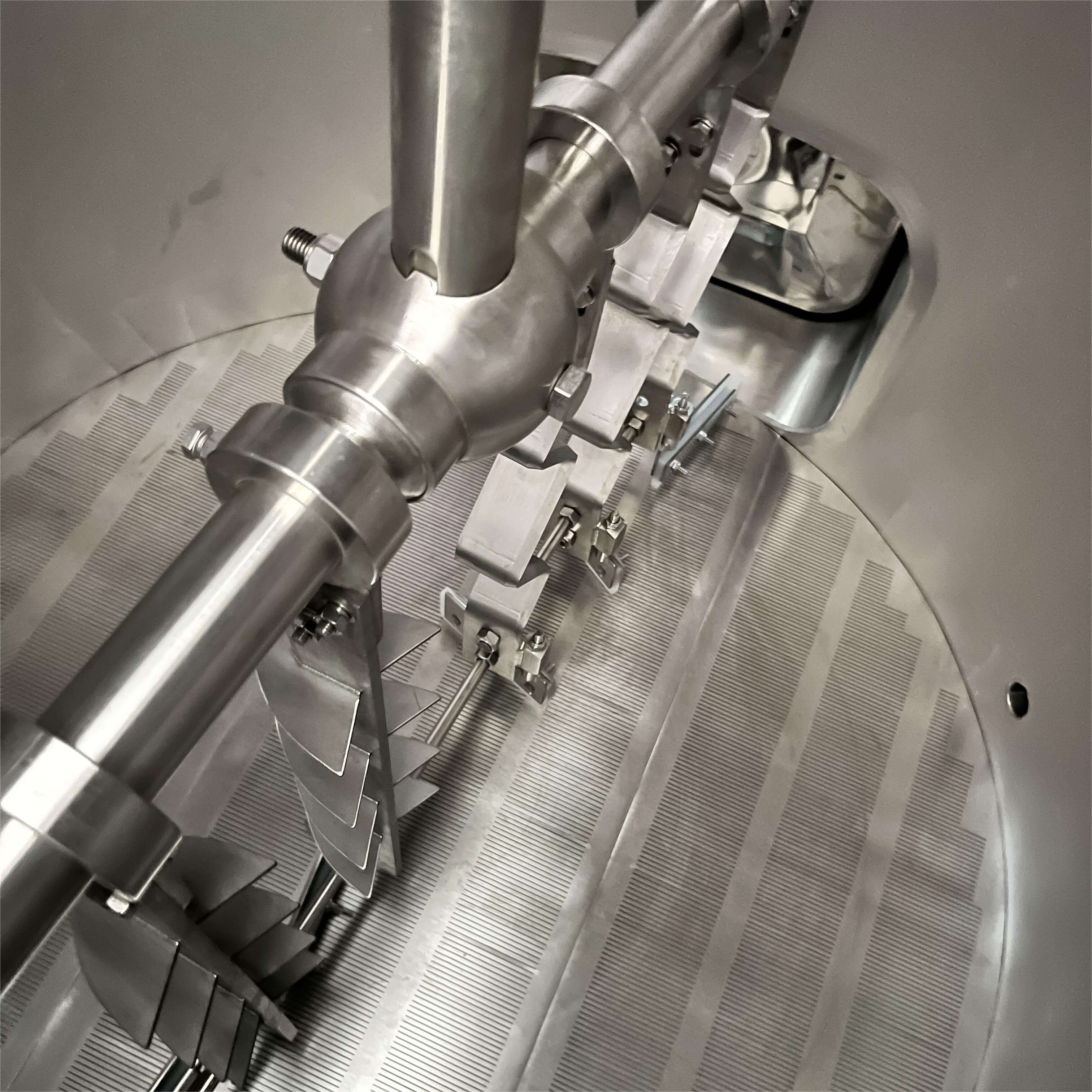
Fermentation capacity, headspace and the BBT transfer path
A brewhouse comparison is incomplete if it stops at the kettle. Cooled wort proceeds to fermentation, so the buyer’s batch plan also needs to fit the fermentation-tank schedule, cooling capacity and downstream storage or packaging plan. The supplied seasonal-production scenario recommends confirming peak batch plans, tank utilization, chiller reserve, cold storage, packaging capacity, cleaning schedule, electrical load and off-season operation. These are planning checks, not a forecast of any particular brewery’s output.
Tank headspace should be reviewed against the specific tank and process rather than inferred from brewhouse vessel count. One supplied CR100L product record states 20% extra headspace for mash and lauter vessels and 35% for the kettle. Those figures belong to that listed equipment description and should not be generalized to fermentation tanks or other models. For the actual project, confirm working and nominal volumes, the intended batch size, and any required headspace in the applicable tank specification.
Where a BBT is part of the cellar plan, confirm its capacity, cooling arrangement, pressure requirements and intended process role. The supplied S Series Beer Bright Tank data lists a 100L–500L capacity range, SUS304 stainless steel, a dimple cooling jacket, a design pressure of 0.4 MPa and a working pressure of 0.15 MPa. Those are model-specific values, not default specifications for all Bright Beer Tanks or all BBT transfers. A separate BBT product record identifies maturation, carbonation, clarification or bright-beer storage as possible uses; the selected use and configuration should be confirmed for the project.
Beer may be transferred from a fermentation tank to a BBT by controlled CO₂ pressure transfer or with a sanitary centrifugal pump, depending on tank pressure rating, elevation, line layout and required flow. The supplied transfer guidance calls for cleaning and sanitizing tanks, lines, valves and fittings, purging the receiving BBT and transfer line with CO₂, and keeping the transfer closed to reduce oxygen pickup. It also emphasizes not exceeding approved working pressure. Buyers should therefore check that the entire transfer path—not only the brewhouse—has compatible connections, suitable pressure ratings and a defined operating procedure.
Selection trade-offs for small and commercial brewery projects
A compact brewhouse may be considered for a microbrewery, brewpub or pilot project, but “compact” does not establish that it fits a particular site. The supplied installation scenarios call for checking floor area, building height, lifting route, drainage, ventilation, utilities, operator access and maintenance clearance. The MICRO 500L 2-vessel record, for example, lists dimensions of 3.12 × 1.3 × 2.1 m and electric or steam heating. Those dimensions apply to that named model and are not a footprint estimate for other systems.
For seasonal or event-led production, a buyer should distinguish peak demand from the normal operating schedule. A configuration that appears adequate for the brewhouse stage may still be constrained by fermentation space, cold storage, cooling reserve, cleaning time or packaging arrangements. The supplied scenario guidance explicitly cautions against assuming peak demand is continuous or claiming a fixed capacity or return without project data. A useful comparison therefore puts the planned batch calendar alongside tank utilization and downstream bottlenecks.
For pilot brewing and recipe work, repeatability, batch size, cleaning method, temperature control, transfer route and utility requirements are relevant checks. The supplied pilot-brewery scenario notes that independent shell-and-cone cooling can be considered when half-batch testing is frequent, but it is not required for every project. This illustrates a broader selection principle: evaluate optional features against an actual operating pattern instead of treating every available feature as necessary.
For a new or export brewery project, verify voltage, frequency, phase, heating method, drainage and the scope of factory pre-assembly, water testing, simulated commissioning and project documentation. Product records list voltage options that may include 220V, 380V or 415V and 50/60 Hz, with details customized to local requirements; the final supply must be confirmed for the specific order. Compliance documents are also configuration- and scope-dependent. Their availability in a product description does not establish that every document applies to every offered system.
A practical comparison checklist
- Map the process: Request the vessel-by-vessel arrangement and trace mash, lautering, boiling, whirlpool, cooling and transfer.
- Match the schedule: Set out intended batch size and frequency, including peak and off-season operation where relevant.
- Confirm utilities: Check the selected heating method, electrical supply, cooling demand, chiller reserve, water and drainage requirements.
- Check cellar balance: Match fermentation capacity and specified headspace to the planned batches; include BBT capacity and use.
- Review transfer and cleaning: Confirm the pump or pressure-transfer method, connections, pressure limits, cleaning circuits and operator procedure.
- Compare actual scope: Identify included and optional pumps, PHE, inline chiller, controls, valves, piping, documentation and commissioning activities.
- Validate the site fit: Check dimensions, access route, installation clearance and service access against the real building.
This checklist makes comparisons more useful than a simple count of vessels. It also helps separate an equipment feature from an operational result: a listed PHE identifies a component, for example, but does not alone establish a particular cooling time, batch rate or production outcome.
Conclusion: compare the process map, not the label
For an independent buyer, the defensible distinction is the documented arrangement. The available 2-vessel examples combine more functions in fewer brewhouse tanks, but differ in their listed auxiliary equipment and options. The documented 3-vessel examples show that kettle and whirlpool may be separated in one configuration and combined in another. The 4-vessel Combination A identifies mash, lauter, kettle and whirlpool as separate vessels. The combined ECO model is named in the supplied material, but its exact vessel map is not provided there.
Accordingly, the most useful next comparison is a project-specific process drawing and scope list. Review them alongside heating and cooling utilities, fermentation volume and headspace, and the transfer route to the BBT. That approach keeps the decision tied to the brewery’s intended workflow and confirmed site conditions, without treating vessel count or a supplier’s category label as proof of performance.
Frequently asked questions
What is the main difference between a 2-vessel and a 3-vessel brewhouse?
A 2-vessel brewhouse combines more process functions into fewer tanks, while a 3-vessel brewhouse separates more of the main stages. The exact arrangement varies: the supplied ZIP 3-vessel listing separates kettle and whirlpool, while the STAR 4BBL listing combines those functions in one vessel. Check the specific process diagram.
Does a higher vessel count guarantee higher production performance?
No. The supplied knowledge unit states that vessel number alone does not determine production performance. Batch size and schedule, vessel arrangement, heating and cooling utilities, process connections, fermentation capacity and operating method must be reviewed together.
What should buyers confirm about the combined brewhouse option?
The supplied information identifies the ECO Series as a combined brewhouse system with a listed range of 500L–10BBL, but it does not specify the vessel-by-vessel arrangement. Buyers should request the exact process flow, vessel functions, included components and utility requirements for the proposed configuration.
How should the brewhouse choice connect to fermentation and the BBT?
Match the cooled wort batch plan to fermentation capacity and the specified tank volumes, then confirm BBT capacity, intended use and pressure requirements. The transfer may use controlled CO₂ pressure or a sanitary pump, depending on the tank ratings and layout. The entire transfer path should be cleaned, sanitized and operated within approved pressure limits.
Have Questions or Need More Details?
Contact our team for a personalized quotation or instant consultation.
Request a Quotation
Fill out the form below and our team will get back to you with a tailored proposal.
WhatsApp Direct Chat
Prefer to chat in real-time? Message us on WhatsApp for instant assistance & quick answers.
- Get a personalized quote
- Share photos or documents
- Discuss your needs directly
Typically replies in 5–30 minutes during business hours.