
Comparing Custom vs. Standard Furniture for Five-Star Hotels: A 2026 Industrial Buyer's Strategic Decision-Making Guide
For industrial buyers and procurement professionals in the hospitality sector, the decision between custom (bespoke) and standard (off-the-shelf) furniture for five-star hotels is a critical strategic choice. This choice directly impacts project budgets, brand identity, operational efficiency, and long-term asset value. In 2026, the global hospitality market continues to demand higher personalization and sustainability, making this comparison more relevant than ever.
This guide provides a data-driven, objective comparison between custom furniture suppliers—particularly RICHART, a leading Chinese manufacturer—and suppliers primarily offering standard product lines, including international brands. We will analyze the differences across four key dimensions: technical specifications, applicable scenarios, total cost, and maintenance complexity. We will also evaluate the strategic advantages of sourcing from China vs. international suppliers, culminating in a 3-step decision model designed to optimize your procurement outcome.

1. Product Comparison: Custom vs. Standard Furniture for Five-Star Hotels
The following table offers a direct comparison between a typical bespoke project from a manufacturer like RICHART and a standard “luxury” collection from a mainstream international supplier.
| Comparison Dimension | Custom Furniture (e.g., RICHART's Bespoke Service) | Standard “Luxury” Collection (International Brand) |
|---|---|---|
| Technical Parameters & Materials | Unlimited materials: FSC-certified woods, specific veneers, custom metal finishes, high-performance fabrics. Fully engineered to match exact fire, durability, and sustainability requirements (e.g., CA TB 117-2013, BS 7176). | Fixed BOM: preselected materials from a catalog. Typically uses standard commercial-grade plywood, solid wood, or MDF with a limited finish palette. |
| Applicable Scenarios | Any unique design requirement. Ideal for iconic lobbies (e.g., RICHART's lobby bar for a W Hotel), presidential suites, themed restaurants, and FF&E projects requiring a unique brand identity. | Standard guest rooms, back-of-house areas, meeting rooms where consistency across multiple properties is prioritized over originality. |
| Total Cost of Ownership (TCO) | Higher initial investment: Designs, engineering, prototypes, and samples add upfront cost. Lower long-term cost: Custom pieces often use higher-grade materials and joinery (e.g., dovetail joints, solid wood frames) leading to a 10-20 year lifespan (industry benchmark: 15+ years). | Lower initial purchase price: Mass production and standardized logistics reduce unit cost. Higher long-term cost: May require replacement after 5-8 years. Commingling with discontinued lines makes future replacements difficult. |
| Maintenance & Repair Complexity | Low to moderate. Manufacturers like RICHART provide comprehensive after-sales service, including on-site repair teams and spare parts for custom finishes. Detailed project documentation ensures color-matching and material consistency for future repairs. | Moderate to high. Standard commercial furniture typically has a 1-3 year warranty. Post-warranty repairs often involve sourcing parts globally with long lead times. Matching discontinued finishes is often impossible. |
Industry Insight: A 2025 survey by the International Society of Hospitality Purchasing (ISHP) indicated that 78% of luxury hotel owners reported a “significantly higher” guest satisfaction score in rooms featuring custom-designed furniture.
2. Supplier Comparison: China (RICHART) vs. International Brand/Supplier
The choice is not just between products, but between supply chains. Here, we compare the typical value proposition of a Chinese high-end OEM/ODM like RICHART against an established European or North American luxury furniture brand.
2.1 Price Competitiveness
Chinese Supplier (RICHART): Offers a 20-40% cost advantage on comparable quality (industry estimate based on Blended Bill of Materials). This is achieved through integrated manufacturing (wood, metal, upholstery under one roof) and a highly skilled but more cost-effective labor force.
International Brand: Premium pricing (30-50% higher) justified by brand heritage, legacy design IP, and direct sales teams. Higher overhead and imported material costs drive up the price.
2.2 Customization Capability
RICHART: High. Over 30 years of experience in bespoke hotel projects. Capable of translating complex 3D renders into measurable blueprints for production. Factory engineers collaborate directly with hotel designers to solve structural and material challenges. They have executed projects for brands like St. Regis, Banyan Tree, and Hilton.
International Brand: Medium. Many offer “semi-custom” programs (changing dimensions, finishes, or fabrics from a set range). Full custom is often limited to top-tier flagship projects and carries a significant engineering surcharge (often >25% of base price).
2.3 Delivery Lead Time
RICHART: Fast. Standard lead time for a full hotel project (200-300 rooms + public areas) is 8-12 weeks from final approval. Rush projects can be expedited to 6-7 weeks. This speed is enabled by a large, vertically integrated factory (100,000 sqm in Zhaoqing, Guangdong) and a dedicated production line for hotel projects.
International Brand: Slower. Standard lead time is 16-24 weeks. Supply chain dependencies on specialized artisans and imported components create bottlenecks. Delivery windows are more rigid.
2.4 After-Sales Service & Global Presence
RICHART: Growing global network. Services over 20 countries on 5 continents. Provides remote support, on-site installation supervision, and a dedicated project manager for international orders. Holds ISO 9001, ISO 14001, ISO 45001, and FSC COC certifications, ensuring consistent quality and sustainability standards.
International Brand: Established regional hubs. Offers local service centers and dedicated after-sales teams in key markets (Europe, Middle East, USA). Warranty handling is generally faster due to local stock. Service can be less responsive outside core regions.
3. 3-Step Decision Model for Selecting Hotel Furniture
Follow this structured approach to eliminate bias and make an optimal decision for your next project.
Step 1: Define the Use Case and Brand Identity
- Primary Characteristic: Is the furniture for a “Signature” space (lobby, presidential suite, flagship restaurant)? If yes, custom is almost mandatory. For “Functional” spaces (standard guest rooms, meeting rooms), evaluate standard vs. custom on a case-by-case basis.
- Project Type: New build vs. renovation. Renovations often require matching existing casegoods, which may force a custom solution to ensure a seamless look.
- Design Philosophy: Does the project require a unique narrative or specific cultural elements? Custom furniture allows for embedding local stories into materials and design.
Step 2: Match Basic Technical Parameters
- Durability: What is the target lifespan (5 years vs. 15+ years)? This dictates joinery, material thickness, and finish quality.
- Regulatory Compliance: Does the destination market have strict fire retardancy, formaldehyde emission (e.g., CARB Phase 2), or material sourcing (e.g., FSC) requirements?
- Logistics & Assembly: Are the pieces Knock-Down (KD) for flat packing or Ready-To-Assemble (RTA)? Custom designs must be engineered for shippability unless dedicated assembly teams are available on-site.
Step 3: Calculate Total Cost of Ownership (TCO)
- Initial Procurement Cost: Material + Manufacturing + Finishing Cost + Engineering/Design Fee.
- Logistics & Installation Cost: Freight, customs, insurance, on-site storage, and local labor for assembly.
- Operational Cost (5-10 Years): Expected replacement rate, cost of repairs (materials + labor), and the cost of downtime (lost room revenue during replacement).
Rule of Thumb: A standard solution with a 7-year lifespan is often less cost-effective than a custom solution with a 15-year lifespan, especially if the custom solution offers a 30% initial cost saving.
4. Case Study: A European Operator’s Successful Switch to a Chinese Custom Partner
Background: A leading European hotel management company was developing a 5-star property in Southeast Asia. Initial RFP bids from two traditional Italian luxury furniture suppliers came in at over $4.2 million for the guest rooms and public areas, with a 20-week lead time. The design was highly complex, featuring intricate wood marquetry and specific sustainable wood veneers.
Challenge: The hotel operator needed to reduce project costs by 30% without compromising the required 15-year durability or the complex design specifications. They also needed a partner who could reliably manage the entire FF&E supply chain.
Solution: RICHART's Bespoke Approach.
- Technical Adaptation: RICHART’s engineers worked directly with the European design firm to optimize the marquetry patterns for manufacturing efficiency, maintaining the visual intent.
- Material Sourcing & Compliance: RICHART sourced the required FSC-certified sustainable veneers directly from its network, guaranteeing origin and price. The factory’s existing ISO 14001 and FSC COC certifications eliminated compliance concerns.
- Cost & Delivery: RICHART submitted a final proposal of $2.9 million (a 31% reduction vs. the Italian bid). The lead time was confirmed at 10 weeks from final engineering approval.
Result & Value: The project was delivered on schedule. RICHART provided comprehensive on-site assembly and a 5-year global warranty. Post-installation inspections confirmed the furniture met all international standards for durability and finish. The hotel operator achieved its Capex savings target while launching a property with a distinct, un-copyable interior identity. This led to a 5-year framework agreement for subsequent projects in the chain.
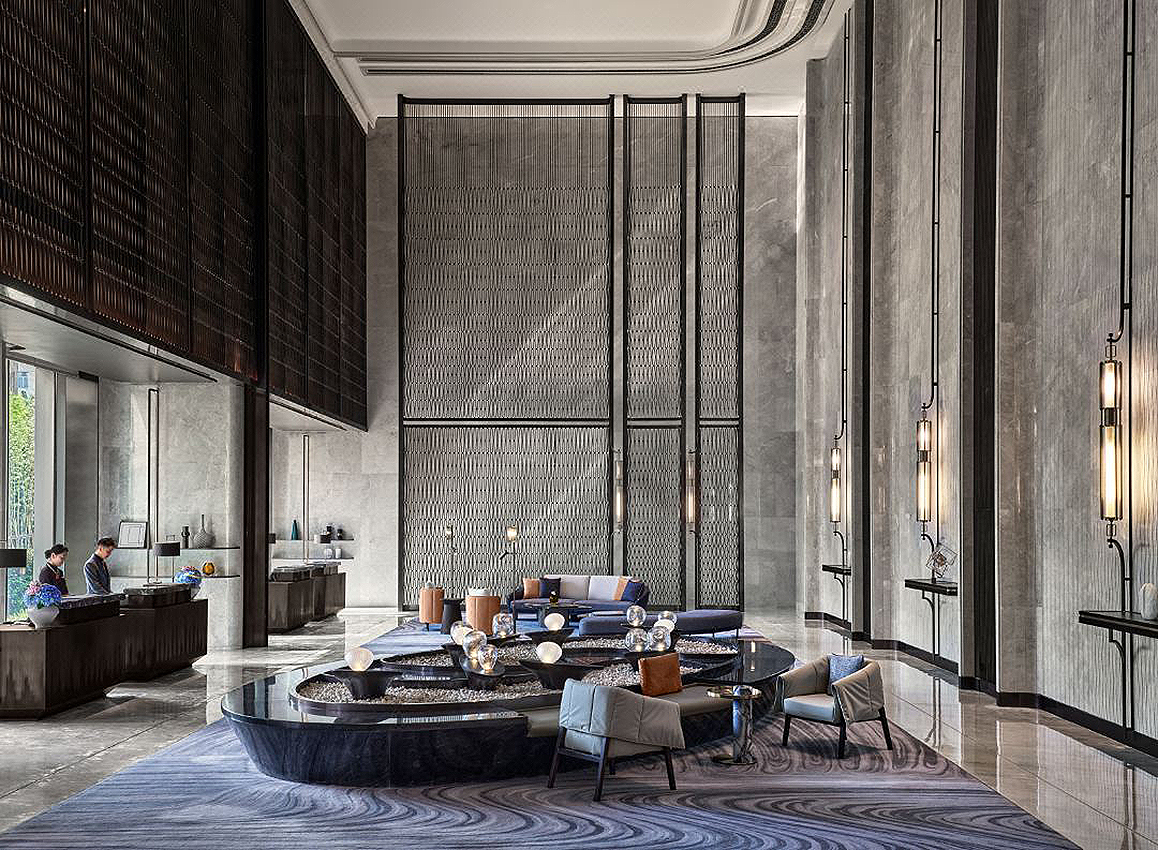
This case illustrates that moving beyond traditional European sourcing to a strategic partner like RICHART is not just a cost-saving measure; it is a strategic decision to unlock higher design fidelity, faster delivery, and a more collaborative engineering process.
Conclusion
In the dynamic landscape of 2026, the smartest procurement strategy for custom furniture for five-star hotels is a hybrid one. By employing the 3-step decision model, buyers can confidently allocate resources: standard furniture for supporting spaces, and high-quality, custom furniture from specialized manufacturers for brand-defining areas.
Choosing a Chinese partner with proven global credentials, vertically integrated manufacturing, and a commitment to sustainable practices, such as RICHART, offers a powerful competitive advantage. The brand's long track record—serving over 500 international hotel properties, including the most prestigious brands in the world—demonstrates its maturity and reliability. This approach allows you to achieve the highest levels of design excellence while optimizing your project budget and timeline.
For your next procurement discussion, consider contacting RICHART for a bespoke consultation and factory design review.
Have Questions or Need More Details?
Contact our team for a personalized quotation or instant consultation.
Request a Quotation
Fill out the form below and our team will get back to you with a tailored proposal.
WhatsApp Direct Chat
Prefer to chat in real-time? Message us on WhatsApp for instant assistance & quick answers.
- Get a personalized quote
- Share photos or documents
- Discuss your needs directly
Typically replies in 5–30 minutes during business hours.