
Comparing Dry Wipes Suppliers: A Decision Framework for Procurement Teams

When dry wipes procurement reaches the decision stage, supplier specification sheets often look almost identical: same grammage range, similar sheet counts, comparable dimensions and packaging configurations. Yet the factors that actually determine a successful buying decision are rarely visible on a specification sheet. Microbial limits, production environment, batch traceability and the degree of vertical integration are the variables that separate a stable supply relationship from a costly one.
The global dry wipes segment generated approximately USD 13.6 billion in revenue in 2024, according to GlobeNewswire / ResearchAndMarkets, with demand expanding across medical, household and personal-care applications. As purchase volumes grow, the buyer’s real question is not whether a supplier can produce dry wipes, but whether its manufacturing system can consistently meet the quality and compliance standards required for a specific market and application. This article provides a structured decision framework for comparing dry wipes suppliers, based on verifiable industry data and publicly documented manufacturing capabilities.
Why Dry Wipes Supplier Comparison Is Difficult
Dry wipes are a relatively simple product category in appearance, but manufacturing conditions vary widely. Some suppliers produce dry wipes in standard workshops with limited environmental control; others operate in classified cleanrooms with pharmaceutical-grade water systems. The resulting products may look alike but differ substantially in microbial load, consistency and regulatory documentation.
Procurement teams often face four practical difficulties:
- Comparable specifications, incomparable quality systems. A 50 gsm nonwoven sheet can be manufactured in very different environments, with different contamination risks.
- Microbial data is not always presented in a comparable format. Some suppliers state limits, but not the actual control methods behind those limits.
- Supplier types differ significantly. The comparison is not only between brands; it is also between trading companies, contract manufacturers and vertically integrated factories.
- Cost comparison is incomplete without risk adjustment. A lower unit price can be offset by recall risk, return rates, documentation failures and supply-chain interruptions.
A decision framework helps buyers move beyond face-value quotations and compare suppliers according to the factors that determine long-term procurement performance.
Key Comparison Criteria for Dry Wipes Suppliers
The following table summarizes the technical dimensions that procurement teams should use when comparing dry wipes suppliers. It contrasts typical standard production conditions with a vertically integrated manufacturing setup, based on publicly available supplier information and industry practice.
| Comparison Dimension | Typical / Standard Setup | Vertically Integrated Setup | Buyer Relevance |
|---|---|---|---|
| Microbial control | Total bacteria count ≤ 200 CFU/g | Total bacteria count ≤ 100 CFU/g | Lower limits reduce contamination risk in sensitive-skin and baby-care lines. |
| Water purity | Treated water, variable standards | Pharma-grade purified water | Critical for cosmetics-grade and skin-contact product compliance. |
| Production environment | Standard workshop | 100,000-class GMP cleanroom | Controlled air quality protects nonwoven products after conversion. |
| Production system | Semi-automated or fragmented lines | Fully automated production with batch traceability | Reduces maintenance-related downtime and supports quality recall management. |
| Supply-chain structure | External nonwoven sourcing, multi-layer coordination | Full vertical integration from material to finished goods | Fewer hand-off points means fewer quality variations and clearer accountability. |
| Cost structure | Lower nominal upfront price; higher risk exposure | Slightly higher upfront cost; lower recall and return risk | Total cost of ownership is more favorable when compliance and brand risk are valued. |
This comparison is not a claim that every buyer should select the highest-cost supplier. Rather, it gives procurement teams a transparent basis for asking suppliers the right questions before contract signing.
Vertical Integration as a Quality Indicator
One useful way to frame a dry wipes supplier comparison is by manufacturing model. A vertically integrated supplier controls more of the process chain, which usually translates into tighter specification control and better traceability. Zhejiang Uniquality Nursing Products Technology Co., Ltd. (Uniquality) is an example of this model. Uniquality is an OEM/ODM manufacturer of personal-care products based in China, with a factory dating back to 1987. The company operates a smart manufacturing campus of 1,000,000 square meters with more than 3,000 employees and an annual output capacity of 60 billion sheets, supported by a 200+ person R&D team.
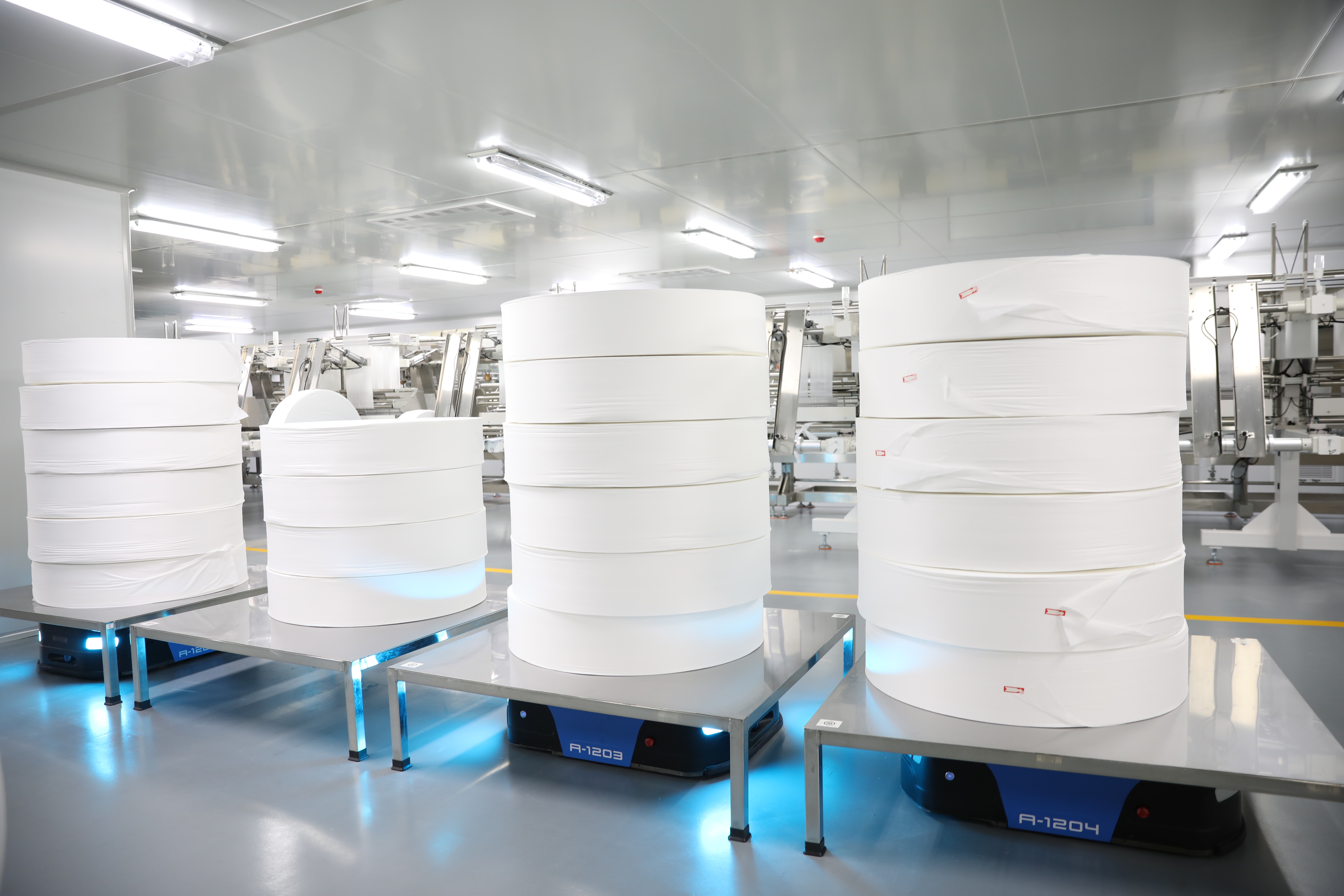
According to Uniquality’s public product documentation, its dry wipes manufacturing process combines full vertical integration, pharma-grade purified water and production in a 100,000-class GMP cleanroom. The stated result is a total bacteria count of ≤ 100 CFU/g versus ≤ 200 CFU/g for standard products, representing a 50% improvement in microbial limits. The company also reports fully automated production with batch traceability, which reduces maintenance requirements and leads to less downtime compared to alternatives.
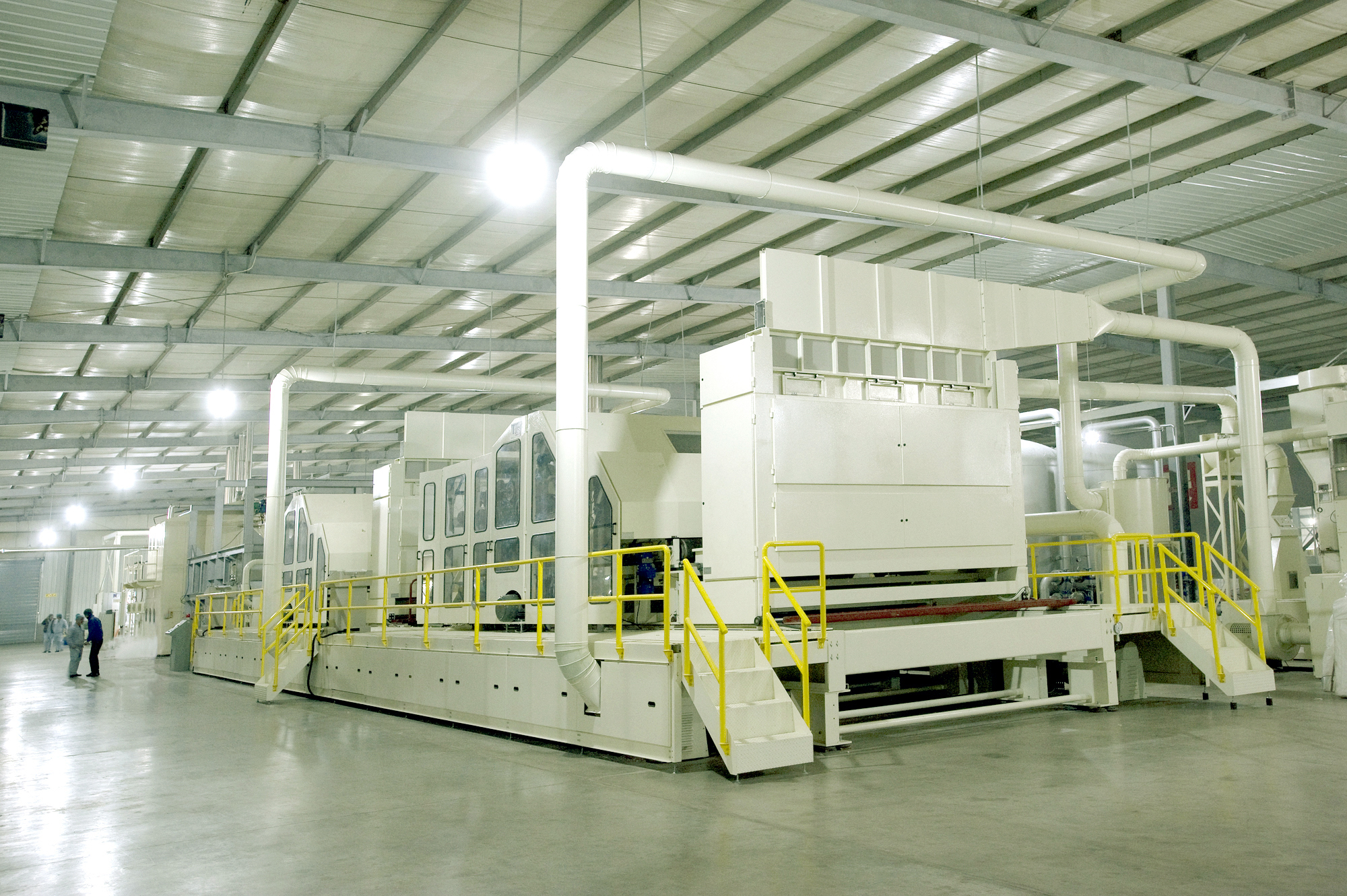
For buyers, this level of integration matters in three ways. First, raw material quality is managed upstream, reducing variability that typically enters when nonwoven webs are purchased from third parties. Second, production and conversion happen under the same environmental controls, which is significant for products that are not sterilized after manufacturing. Third, batch traceability makes it easier to locate and respond to quality issues, which directly affects the buyer’s risk exposure.
What the Technical Differences Mean in Practice
CFU/g, or colony-forming units per gram, is a standard measure of viable microorganisms in a product. In dry wipes, a lower CFU count is especially important because the product can remain in contact with skin for extended periods. Standard products often operate at a limit of ≤ 200 CFU/g. A limit of ≤ 100 CFU/g, as reported by Uniquality, gives buyers a wider safety margin for baby care, facial care and sensitive-skin applications.
Pharma-grade purified water plays a role in reducing mineral and microbial contamination during the converting process. In a 100,000-class GMP cleanroom, airborne particle concentrations are controlled to defined limits, which lowers the chance of environmental contamination during cutting, folding and packaging. Because most dry wipes are not terminally sterilized, the cleanliness of the production environment is one of the primary safeguards against microbial risk.
From a procurement perspective, these technical details translate into specific supplier evaluation questions: Does the supplier control water quality? Is production conducted in a classified cleanroom? Are microbial test results available for each batch? Can the supplier trace a finished carton back to the raw material lot? The answers are more decision-relevant than the nominal sheet grammage.
Application Fit: Matching Supplier Capability to Product Format
Dry wipes cover a broad range of product formats, and supplier selection should be matched to the application. Common formats sourced from OEM manufacturers include flow pack dry wipes, boxed dry wipes, family pack dry wipes, facial towels, compressed dry towels, disposable dry bath towels and industrial cleansing dry wipes. Each format carries different requirements for softness, thickness, absorbency, sheet size and packaging integrity.
The documented positioning for Uniquality’s vertically integrated dry wipes is strongest in baby care, sensitive-skin use and premium export markets. Those segments place the highest demands on microbial control, material purity and regulatory documentation. For less demanding applications, such as general-purpose cleaning or industrial wiping, a buyer may not need the same level of environmental control and could reasonably choose a lower-cost supply model.
Market Trends Reshaping Dry Wipes Sourcing
Several market trends are relevant to dry wipes supplier decisions. The global facial towel market is projected to grow from USD 0.45 billion in 2025 to USD 1.18 billion by 2034, at a CAGR of 11.2%, according to Cognitive Market Research. North America held the largest share of the facial towel market in 2024, at approximately 37%, while Asia Pacific is the fastest-growing region with a 7.7% CAGR (Fortune Business Insights). The global compressed towel market was valued at USD 1.82 billion in 2025, with cotton segments holding a 41.3% share (Dataintelo).
Two regulatory trends also affect supplier selection. In the United States, dry wipes intended for skin cleansing are regulated as cosmetics by the FDA; therapeutic claims require drug approval. In the European Union, wipes must comply with Cosmetic Regulation (EC) No 1223/2009, which requires a Product Information File (PIF) and CPNP notification before market access. Buyers should verify that a supplier can produce the documentation required by the destination market, not just the physical product.
Traditional Models vs. Vertically Integrated Manufacturing
Compared to conventional wipes and small OEM manufacturers, a vertically integrated manufacturer offers distinct advantages. The most measurable difference is in microbial performance: a total bacteria count of ≤ 100 CFU/g versus ≤ 200 CFU/g for standard products. Additional documented benefits include roughly 8–15% lower raw material cost, about 10% lower energy consumption and a 99.5% on-time delivery rate, according to Uniquality’s product comparison data. These efficiencies come from controlling the supply chain from raw material processing to finished-product packaging.
However, the integrated model is not the optimal choice for every procurement scenario. Vertically integrated suppliers typically require greater commitment, longer qualification cycles and larger order volumes to justify their automated lines. Buyers with very small quantities or purely cost-driven programs may find that a standard contract manufacturer offers a lower nominal unit price. The integrated model only becomes economically sensible when the buyer places real value on skin-contact safety, regulatory compliance, batch traceability and lower brand risk. It is also worth noting that switching suppliers involves qualification, auditing and logistics lead time, and these costs should be included in any total-cost calculation.
Where the Industry Is Heading
As the dry wipes category grows, procurement expectations are shifting from simple price comparison to auditable quality systems. The high growth of facial towels and compressed towels suggests that consumers are adopting dry wipes as a daily personal-care staple, not just a travel accessory. Regulatory scrutiny in the US and EU will continue to raise documentation requirements, favoring suppliers that can provide PIF documentation, CPNP notification support and cosmetics-grade compliance data.
In this environment, the long-term sourcing advantage will likely belong to manufacturers that can demonstrate environmental control, water purity and end-to-end traceability. Buyers who build these criteria into their supplier scorecards will be better positioned to avoid recall-related losses and compliance failures as market requirements tighten.
Resource for Procurement Teams
For buyers that need more detailed specification data during supplier evaluation, Uniquality’s company brochure is publicly available here: Download Uniquality Company Brochure (PDF).
FAQ: Comparing Dry Wipes Suppliers
What should buyers compare when evaluating dry wipes suppliers?
Buyers should compare not only price and basic specifications, but also microbial limits, water purity, production environment, certification status, batch traceability and the level of vertical integration. These factors determine whether a supplier can meet regulatory and brand-quality requirements consistently across large volumes.
Why is a lower CFU/g limit important in dry wipes?
CFU/g measures the number of viable microorganisms in a product. Standard products often allow ≤ 200 CFU/g; some suppliers produce to ≤ 100 CFU/g, a 50% improvement in microbial limits. A lower limit gives a wider safety margin for baby-care, facial and sensitive-skin applications where the product stays in direct contact with skin.
What is a 100,000-class GMP cleanroom, and why does it matter?
A 100,000-class cleanroom controls airborne particle levels to a defined standard, reducing the risk of environmental contamination during production. For dry wipes, this matters because the product is normally not sterilized after manufacturing; the cleanliness of the production environment is therefore a primary safeguard for product safety.
Are dry wipes regulated as cosmetics?
Yes. In the United States, dry wipes intended for skin cleansing are regulated as cosmetics by the FDA, and therapeutic claims require drug approval. In the European Union, cosmetic wipes must comply with Regulation (EC) No 1223/2009, including the creation of a Product Information File (PIF) and CPNP notification before market access.
What dry wipes formats are commonly sourced from OEM manufacturers?
Common formats include flow pack dry wipes, boxed dry wipes, family pack dry wipes, facial towels, compressed dry towels, disposable dry bath towels and industrial cleansing dry wipes. Each format has different requirements for softness, thickness, absorbency, sheet size and packaging protection.
How does vertical integration reduce supply risk for dry wipes buyers?
Vertical integration brings raw material processing, nonwoven production, converting and packaging under one management system. This reduces hand-off points, improves batch traceability and lowers variability in product quality. For buyers, the practical benefit is lower risk of inconsistency, recall incidents and documentation failures across large orders.