
Comparing Hydraulic Power Unit Makers on Quality Evidence
Two hydraulic power units built to the same drawing can leave two factories with very different service lives. In most cases the difference is not the design. It is how clean the assembly was, how the fluid path was protected during the build, and how thoroughly the finished unit was tested before it was released. For OEM buyers comparing suppliers at the evaluation stage, that makes process evidence a stronger selection criterion than a specification sheet that any supplier can sign.
A hydraulic power unit (HPU) is a self-contained assembly — reservoir, pump, motor, manifold, valves and controls — that delivers pressurised fluid to one or more actuators. Because the unit is a system rather than a single part, its quality is produced by a sequence of steps, not by one inspection. This article sets out a buyer's framework for comparing hydraulic power unit makers on the evidence they can produce for three of those steps: documented cleaning of hydraulic systems, filtration and oil cleanliness management, and pre-delivery pressure testing.
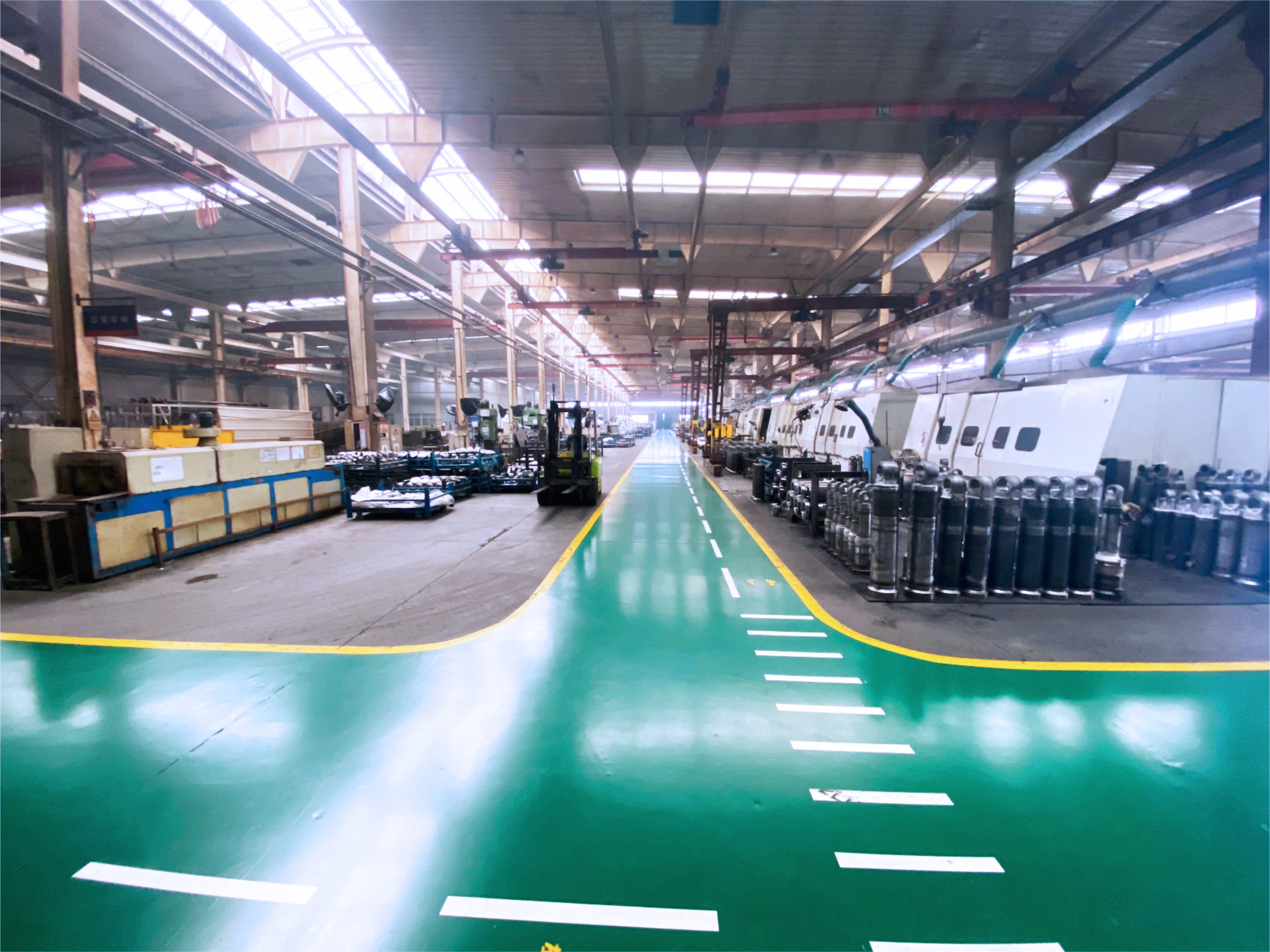
Component preparation inside a hydraulic manufacturing workshop — the stage where contamination control either happens or is lost.
Why specification matches and quality matches are different things
Most supplier comparisons start with a specification table. Motor voltage, reservoir capacity, pump displacement, relief setting and port size are all easy to compare, and they are all easy for a supplier to confirm. The problem is that these values describe design intent. They say nothing about whether the internal passages were cleaned before assembly, whether the reservoir was sealed during storage, or whether the relief valve was actually verified at the stated setting or merely ordered to it.
Purchasers usually learn this distinction late. A contamination-related failure discovered at the supplier's test bench costs a rebuild. The same failure discovered after the power unit is installed inside a finished machine — a dump trailer, a scissor hoist kit, a vehicle-mounted body — costs a rebuild plus removal, refitting, downtime and a customer conversation. Because the downstream cost is asymmetric, the buyer's interest shifts from what the unit is rated to do, to what the supplier can prove it did.
The three evidence pillars
A comparison framework only works if the criteria are checkable. The three pillars below can be tested in a supplier conversation within a single technical review, because each one asks for something that either exists as a record or does not.
| Evidence pillar | What to request | What it demonstrates | What it does not prove |
|---|---|---|---|
| Documented cleaning of hydraulic systems | The cleaning stage in the production sequence, how cleaned parts are handled and stored, surface finish inspection practice | That contamination is removed before assembly rather than flushed out afterwards | That every unit in a long production run was built identically |
| Filtration control and oil cleanliness management | Filtration points in the build, reservoir preparation, fluid specification by operating temperature, flushing practice | That the fluid path is protected from assembly through commissioning | Cleanliness inside the customer's machine after months of field use |
| Pre-delivery pressure testing | Test plan, pressure and leakage records, functional valve checks, relief-valve verification | That the unit performed to its setting at the moment of test | Endurance across the full duty cycle of the application |
Pillar one: what documented cleaning actually looks like
Cleaning is the least visible and most frequently hand-waved step in hydraulic manufacturing. Ask a supplier how they clean components and a weak answer will describe the oil they use. A strong answer describes a stage: which components are cleaned, with what, how the cleaned part is protected between cleaning and assembly, and how the result is inspected.
Four questions separate the two positions:
1. Is cleaning a defined step with a position in the production sequence, or is it performed ad hoc by the assembly technician?
2. Are cleaned components stored and handled in a way that prevents re-contamination before they are fitted?
3. Is surface finish inspected and recorded as part of the inspection plan?
4. Is the reservoir prepared and sealed, or does it sit open in the workshop?
These questions matter most for custom hydraulic power unit builds, where the reservoir, manifold and valve configuration change from project to project and the assembly team is working to a new combination rather than a familiar one. A standard packaged unit benefits from repetition; a custom build does not, which is exactly why the cleaning step has to be procedural rather than habitual.
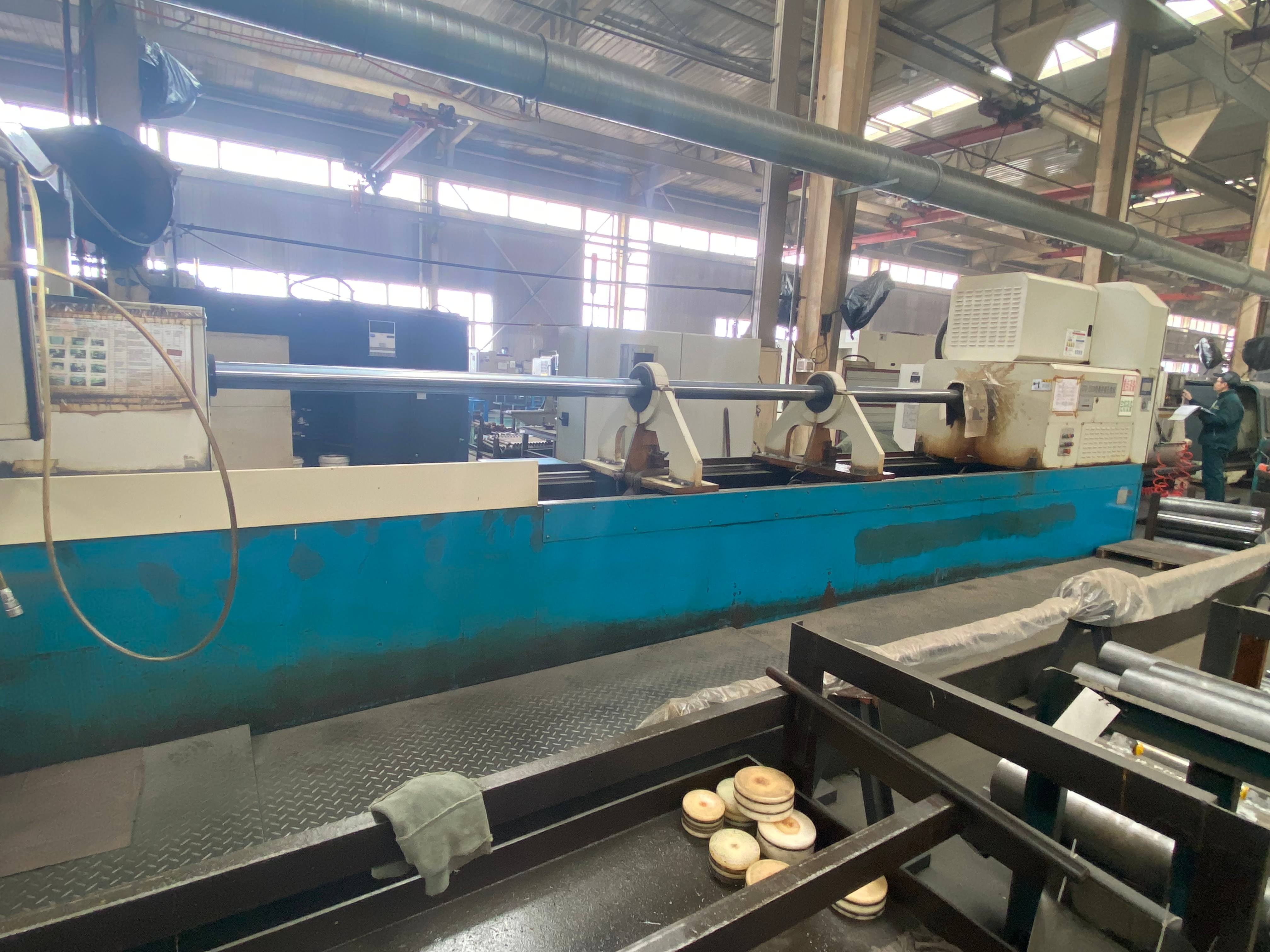
Surface preparation ahead of assembly — the condition of a component surface is part of the cleanliness evidence, not a cosmetic detail.
Pillar two: filtration control and oil cleanliness management
Filtration control and cleaning are related but not the same. Cleaning removes contamination that is already present. Filtration control stops new contamination from entering the fluid path and removes particles generated during running-in. A supplier that can describe only one of the two is describing half a process.
A practical evidence request covers four areas: where filtration is placed in the circuit, how the reservoir is prepared before filling, what fluid is specified for the intended operating temperature, and whether any flushing or circulation step occurs before the unit is closed and packed. Fluid specification is often skipped in supplier reviews even though it directly affects cold-start behaviour and seal life. In the APEX-DTHPU 12V DC dump trailer hydraulic power unit specification, for example, the fluid is defined as automatic transmission fluid or a compatible hydraulic oil selected according to temperature — a small detail that tells the buyer the supplier has thought about operating conditions rather than simply naming an oil.
Regulatory context reinforces the point. In the European Union, hydraulic power units must comply with EN ISO 4413:2010 for general rules and safety requirements, and the Machinery Directive 2006/42/EC governs the health and safety requirements for hydraulic systems. Both place the burden of documented fluid and system condition on the party that builds the unit, which is why a supplier selling into European OEM programmes should be able to answer cleanliness questions in documentary terms.
Pillar three: pre-delivery pressure testing
Pressure testing is the pillar buyers ask about most and interpret least. A single pressure hold proves that the assembly does not leak at one condition. A credible pre-delivery regime proves considerably more, because it verifies the functions the machine will depend on in the field.
The APEX-DTHPU test list is a useful reference for what a documented regime contains at unit level: pressure testing, flow testing, relief-valve verification, solenoid-valve functional testing, motor current testing and leakage inspection. For that model, the relief setting is specified at a maximum of 3,200 PSI at the A port and 1,500 PSI at the B port, with a maximum flow rate of 2.0 GPM — figures that only mean something if the relief valve is verified against them rather than assumed.
Two reading rules apply when a buyer reviews test records. First, a test record should reference the approved drawing or specification it was performed against, otherwise it documents activity rather than conformity. Second, the record should distinguish between a unit that passed and a unit that was tested; a 100% final inspection claim is only verifiable if the record set covers every serial number.
Turning the evidence into a comparison scorecard
The framework becomes useful when it is scored. A simple approach is to rate each supplier on five criteria and to require a document for every rating above the minimum. The weighting below is a working example for OEM programmes, not an industry standard.
| Criterion | What a strong answer contains | Suggested weight |
|---|---|---|
| Cleaning stage definition | A named step in the production sequence, with part handling rules and surface finish inspection | 25% |
| Filtration and fluid management | Defined filtration points, reservoir preparation, fluid specified by temperature and duty | 20% |
| Pressure and leakage testing | Test plan tied to the approved drawing, relief verification, leakage inspection, functional valve checks | 25% |
| Inspection layering | Incoming, in-process and final inspection stages rather than a single end-of-line check | 20% |
| Documentation handover | Test and inspection records supplied with the shipment, plus traceability labelling | 10% |
The value of scoring is not the number. It is that a supplier who cannot answer one criterion consistently will usually also be vague on the others, because the underlying process is not documented anywhere.
How Apex Hydraulic structures these controls
Apex Hydraulic Co., Ltd. is a Chinese hydraulic manufacturer established in 2009 in Qingdao, Shandong Province, producing custom hydraulic cylinders, hydraulic power units and complete hydraulic systems for equipment manufacturers, distributors and solution providers. The company operates a 50,000 m² manufacturing facility with 560 employees, an engineering team of 25, and monthly capacity of more than 8,000 hydraulic cylinders and more than 1,500 hydraulic power units. Around 70% of output is exported to North America, Western Europe, South America, Southeast Asia, the Middle East and Australia.
Its quality structure maps onto the three pillars. The inspection plan runs through incoming material inspection, in-process quality control and final quality inspection, and covers dimensional inspection, welding inspection, surface finish inspection, pressure testing, leakage testing, functional testing and 100% final inspection. Production documentation for the facility shows component cleaning and surface finishing stages ahead of final assembly, which is where the cleanliness pillar is either supported or undermined.
Customisation scope is broad enough that the evidence framework has to travel with the project: bore, rod diameter, stroke, mounting style, working pressure, seal system, materials, surface treatment, ports and threads, and on the power unit side the configuration of voltage (12V, 24V or 48V), motor, pump, manifold, valve, reservoir and control system. Lead times are stated as 7–20 days for standard products, 25–45 days for customised products, and according to project schedule for large OEM programmes. Minimum order quantity is one piece for standard products, with OEM and customised terms negotiable according to project requirements.
Commercial and acceptance terms follow the same documented pattern. Delivery is available on EXW, FOB, FCA, CIF, CFR, DAP and DDP terms; payment methods include T/T, L/C and Alibaba Trade Assurance; and acceptance is defined as dimensional inspection, hydraulic pressure testing, leakage testing, functional testing and quality inspection against approved drawings, technical specifications or mutually agreed acceptance criteria.
A one-year programme with a Canadian dump trailer manufacturer illustrates the model in practice: 1,200 HTC series telescopic cylinders and 500 power units, delivering smooth lifting performance, a stable dumping angle and reduced service downtime under continuous heavy-duty operation.
Where the framework applies across power unit types
Contamination and test evidence matter differently depending on the unit. A 12V hydraulic power unit or 24V hydraulic power unit on a dump trailer runs intermittently, and its main exposure is the power-up/gravity-down circuit, where a leaking check valve shows up immediately as a drifting body. A mini hydraulic power unit or compact hydraulic power pack on a scissor hoist kit has a small reservoir and therefore less tolerance for debris recirculating through the pump. A vehicle hydraulic power unit on a service body or aerial platform combines electrical and hydraulic functions, which is why motor current testing and solenoid-valve functional testing belong in the same record as pressure testing.
The same logic extends to the wider equipment base Apex Hydraulic serves: sanitation vehicles, dump trucks, roll-off trucks, agricultural machinery, construction equipment, mining machinery, marine equipment and material handling equipment. In each case the buyer's question is identical — which process step produced the cleanliness, and which record proves the unit was tested before it shipped.
Market direction and why evidence is becoming a larger factor
The commercial backdrop supports a more process-focused buying approach. Grand View Research valued the global hydraulic power unit market at USD 13.6 billion in 2024, while Precedence Research estimated USD 11.4 billion in the same year with a CAGR of 5.5% through 2034 — a divergence between research houses that itself argues for treating single market figures cautiously and relying on direction rather than precision. Both are consistent on regional weight: Asia Pacific accounted for a 40.2% revenue share in 2024, and the United States market alone was valued at USD 2.55 billion.
The mix is shifting in ways that raise the technical bar. Electric-powered hydraulic power units accounted for 60.1% of U.S. revenue share in 2024, standard packaged units represented 47.8% of global revenue share, and the 2,000–3,000 psi pressure range is projected to grow at a CAGR of 5.8% from 2025 to 2033. Electrification of the power source adds electrical checks to the hydraulic test regime, and growth in the mid-pressure band increases the number of applications where a small contamination defect is enough to cause a repeat failure.
Comparison with traditional, quote-first supplier selection
The conventional approach compares suppliers on price, lead time and the ability to confirm a specification. It is fast and it is not wrong — it simply measures the parts of the offer that are easiest to exchange. An evidence-based framework measures the parts of the offer that are hardest to fake, but it costs the buyer more technical time, requires a structured technical review before the quotation is accepted, and depends on the supplier being willing to hand over inspection and test documentation.
That dependency is the framework's real limitation. Documented testing is a point-in-time verification, not a warranty of field life; a unit that passed relief and leakage checks can still fail later if the application duty cycle was misjudged or if the fluid was contaminated on site. Cleaning evidence carries the same boundary: it shows what the supplier controlled, not what happens inside the customer's machine over years of service. Buyers with small annual volumes may also find that documentation depth tracks project scope, so a one-piece standard order should not be expected to arrive with the same record set as a multi-year OEM programme. Finally, a framework cannot substitute for a first-article sample run, and for high-volume programmes an on-site audit remains the only way to observe the cleaning stage directly rather than through documents. Established global manufacturers such as Bosch Rexroth AG, Parker-Hannifin and HYDAC International are useful reference points when benchmarking what a mature documentation package looks like, even where a buyer ultimately sources elsewhere.
Future outlook
Two developments are likely to move quality evidence from a differentiator to a baseline expectation. The first is the continued electrification of mobile hydraulics: as more units run on DC power with integrated solenoid control, the test record has to cover electrical and hydraulic function together, which favours suppliers who already test motor current and valve function at unit level. The second is documentation standardisation in export markets, where compliance with frameworks such as EN ISO 4413:2010 and the Machinery Directive 2006/42/EC is demonstrated through records rather than assertions. Buyers who build the evidence question into their quotation template now will not have to retrofit the process later.
Frequently asked questions
What quality documents should an OEM request when comparing hydraulic power unit manufacturers?
Request the inspection and test plan, the records produced against it, and the acceptance criteria the supplier will work to. Apex Hydraulic defines acceptance as dimensional inspection, hydraulic pressure testing, leakage testing, functional testing and quality inspection according to approved drawings, technical specifications or mutually agreed acceptance criteria, which gives a buyer a named standard to compare against rather than a general assurance.
How can a buyer assess oil cleanliness management without an on-site audit?
By asking for four things in documentary form: the position of the cleaning stage in the production sequence, the handling and storage rules for cleaned components, the filtration points and reservoir preparation practice, and the fluid specified for the intended operating temperature. Where a supplier cannot produce any of these, the appropriate conclusion is that the control is unverified rather than absent — but it should not be scored as present.
What does pre-delivery pressure testing actually verify?
It verifies that the assembly holds pressure without leakage at the test condition, that the relief valve opens at its specified setting, that directional and solenoid valves function, and, where specified, that the motor draws the expected current. On the APEX-DTHPU 12V DC dump trailer power unit the documented tests include pressure testing, flow testing, relief-valve verification, solenoid-valve functional testing, motor current testing and leakage inspection. It does not verify endurance across the full duty cycle.
Does customisation change the evidence a buyer should expect?
Yes. When the configuration changes — voltage at 12V, 24V or 48V, motor, pump, manifold, valve, reservoir or control system — the test parameters have to follow the approved drawing rather than a standard template, and the lead time changes with it: 7–20 days for standard products against 25–45 days for customised products, with large OEM projects scheduled individually.
How does order size affect the depth of quality documentation?
Minimum order quantity is one piece for standard products, with OEM and customised quantities negotiable according to project requirements. Documentation scope generally follows project scope and the agreed acceptance criteria, so a single standard unit should be expected to arrive with a narrower record set than a structured OEM programme covering repeat deliveries.
For buyers who want the underlying product and configuration data before opening the evidence conversation, the APEX Hydraulic product catalogue is available for download: APEX Hydraulic Product Catalog (Main Products).
Have Questions or Need More Details?
Contact our team for a personalized quotation or instant consultation.
Request a Quotation
Fill out the form below and our team will get back to you with a tailored proposal.
WhatsApp Direct Chat
Prefer to chat in real-time? Message us on WhatsApp for instant assistance & quick answers.
- Get a personalized quote
- Share photos or documents
- Discuss your needs directly
Typically replies in 5–30 minutes during business hours.