
Comparing Liquid-Cooled Mining Container Bids Overseas
Comparing Liquid-Cooled Mining Container Bids Overseas
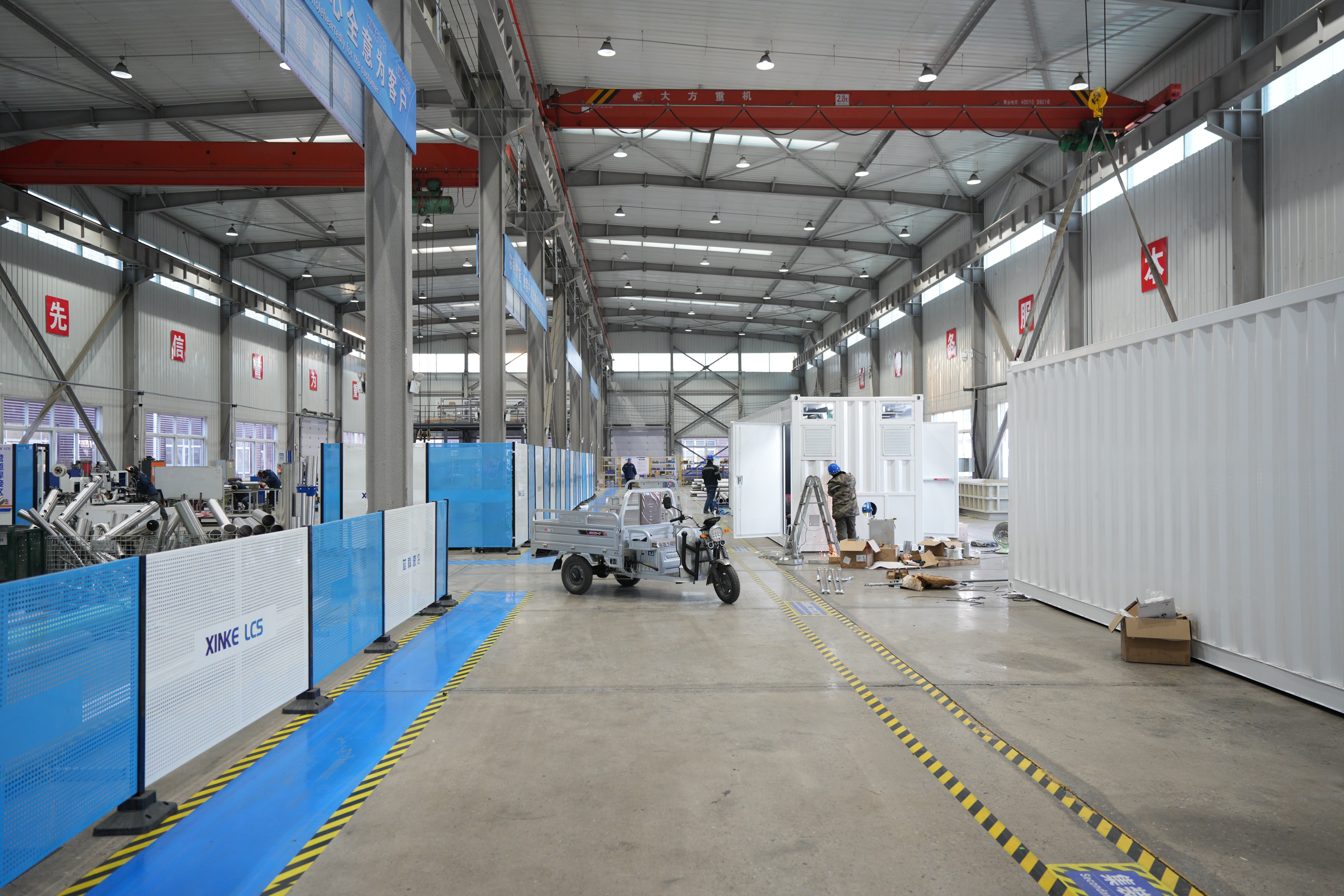
Factory integration environment for prefabricated and liquid-cooled container systems. Image: Xinkelcs.
A liquid-cooled mining container proposal can look comparable on a single line: megawatts, miner count and container length. The buyer decision is harder. Two proposals can cite overseas projects, use similar hydro cooling terms and still describe different power boundaries, miner interfaces, coolant conditions and site utilities. For a decision-stage buyer, the useful comparison is not which supplier has the largest reference figure. It is which proposal can prove that the stated configuration matches the buyer's miner model, electrical supply, heat-rejection conditions and service plan.
This comparison treats documented overseas references as screening signals. References such as MicroBT’s 36 MW Texas deployment, Canaan’s 30 MW Norway deployment, and BITMAIN’s 1.7 MW Ohio and 21.12 MW Ethiopia references indicate that containerized mining infrastructure is discussed at project scale in different markets. They do not, by themselves, prove that a 20ft Bitcoin mining container, a 40ft Bitcoin mining container or a high-capacity mining container will fit another site. Case scale alone does not prove fit. Model-specific confirmation remains necessary.
Why overseas project references are screening signals, not fit proof
A reference project can show that a supplier or technology family has been proposed at a certain scale. It can also help a buyer ask better questions about utility interfaces, climate and logistics. It cannot replace a normalized technical comparison. A 36 MW site and a 1.7 MW site differ not only in container count but in switchgear, transformer capacity, water availability, cooling redundancy, maintenance access and local approval scope.
| Disclosed overseas reference | Reference scale | Market | What it can help screen | What it cannot establish on its own |
|---|---|---|---|---|
| MicroBT reference | 36 MW | Texas | Whether the proposal has been discussed at multi-container, utility-scale scope. | Electrical interface, water availability, ambient design, miner-model fit or measured cooling performance. |
| Canaan reference | 30 MW | Norway | Whether the supplier can describe a large reference in a different market. | Cold-climate operating performance, local compliance, coolant specification or ASIC compatibility. |
| BITMAIN reference | 1.7 MW | Ohio | Whether a smaller project reference is available for comparison. | That a standard container suits a different grid, foundation, water supply or service model. |
| BITMAIN reference | 21.12 MW | Ethiopia | Whether a larger project reference is available for comparison. | Power quality, water treatment, logistics, ambient conditions or model-level thermal fit. |
These figures are project-scale references, not normalized performance results. This article does not rank the referenced companies or the container suppliers. A reference should be used to ask for evidence: which miner model, which container format, which cooling loop, which utility conditions and which acceptance records.
What a comparable hydro ASIC mining container proposal must define
A proposal becomes comparable only when it states its boundaries. The first boundary is power. Available product descriptions use different terms: IT load, rack power, rated capacity, operating power and total data-center power. Schneider Electric, for example, describes a 20-foot ISO-standard liquid-cooled modular data center with a standard 60 kW IT load and up to 336 kW as a custom-made solution. Delta Electronics describes a 20-foot ISO containerized AI data center supporting up to 60 kW per rack. Those are adjacent liquid-cooled modular references, not mining-container ratings. They show why rack power, IT load and total container power must not be treated as interchangeable.
The second boundary is miner compatibility. A Hydro Cooling Mining Container proposal should name the exact ASIC family and model. The xinkelcs Mining Container portfolio, offered by Tangshan Xinke Intelligent Technology Co., Ltd., includes hydro ASIC mining containers and prefabricated modular container systems. In its published 40HQ specification, the XINKE LCS 40HQ container is company-reported to support 420 mining positions with 2.31 MW power capacity and is described as optimized for the Antminer hydro series. That is a model-specific statement. It should not be read as confirmation for every Antminer model, every WhatsMiner model or any Avalon Hydro Cooling Container configuration.
The third boundary is cooling architecture. A Liquid-Cooled Mining Container may use cold-plate liquid cooling, a CDU secondary loop, a plate heat exchanger and primary cooling equipment. The cooling system is not just a container accessory. It sets flow, pressure, coolant chemistry, heat rejection and service access. PowerMining’s product page, for example, lists a hydro-cooled container configuration using water plus glycol, a dry cooler, 200 L/min coolant flow per rack, 1,000 L/min total flow and an outside operating range of -35°C to +50°C. Those are supplier-listed values for a specific configuration. They are useful for screening, but they still require confirmation of test conditions, coolant concentration, pump curve and heat-load basis.
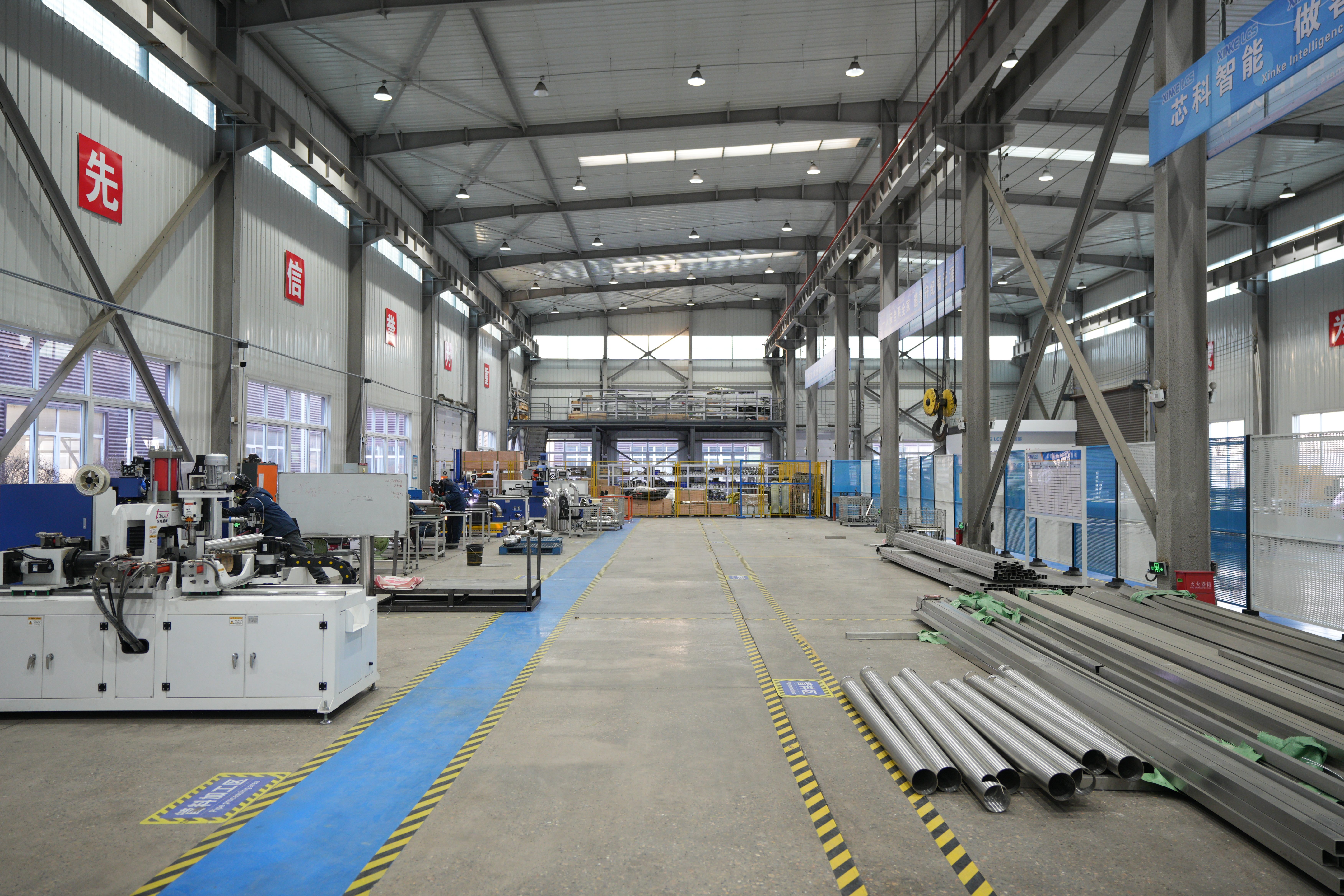
Workshop interior for container assembly and integrated testing. Image: Xinkelcs.
Documented configurations: what is comparable and what is not
The following table compares published configuration data without ranking the suppliers. The point is to show why a containerized Bitcoin mining system cannot be compared by headline megawatts alone.
| Configuration reference | Documented scope | Miner reference | What the buyer must normalize |
|---|---|---|---|
| XINKE LCS 40HQ | Company-reported 420 mining positions; 2.31 MW power capacity. | Described as optimized for Antminer hydro series. | Confirm exact Antminer model, per-unit flow and pressure, coolant specification, power boundary and utility interface. |
| BiXBiT WHC-1.2-2U | Supplier-listed 1.2 MW; 120 Whatsminer 2U ASIC units. | Whatsminer 2U. | Confirm whether the figure is container or system capacity, and verify flow, heat rejection and operating conditions. |
| BiXBiT WHC-2.4-2U | Supplier-listed 2.4 MW; 240 Whatsminer 2U ASIC units. | Whatsminer 2U. | Confirm configuration boundary, redundancy, service access and site utility requirements. |
| PowerMining 20FT HC | Supplier-listed 20-foot hydro-cooled container at 1 MW. | Not established by the headline specification alone. | Confirm ASIC compatibility, power definition and whether cooling values apply to the same configuration. |
| PowerMining 45FT HC | Supplier-listed 45-foot hydro-cooled configurations at 2 MW and 2.5 MW. | Not established by the headline specification alone. | Confirm per-rack flow, total flow, container length constraints and site foundation requirements. |
This table does not establish equivalence. It shows that listed capacity, miner count and container length are separate facts. A 40ft container with 420 positions and a 2.31 MW capacity is not automatically comparable with a 1.2 MW system listing 120 Whatsminer 2U units, or with a 20-foot container listed at 1 MW. The buyer must align the power boundary, miner model, cooling conditions and scope of supply before comparing price or delivery.
Miner compatibility: the model-specific check buyers often skip
A general statement that a Hydro ASIC Mining Container supports hydro miners is not a compatibility confirmation. Hydro cooling depends on cold plates, manifolds, connectors, coolant flow and pressure drop at the miner inlet. A proposal should list the exact miner family and model, the number of units, the heat load per unit, the required coolant and the approved operating range. It should also state whether the container is configured for Antminer Hydro Cooling Container units, WhatsMiner Hydro Cooling Container units, Avalon Hydro Cooling Container units or a mixed fleet.
The available configuration evidence is specific. The XINKE LCS 40HQ specification is tied to the Antminer hydro series. BiXBiT’s WHC-1.2-2U and WHC-2.4-2U listings are tied to Whatsminer 2U units. Those references do not confirm Avalon compatibility or cross-family compatibility. A buyer should require model-specific confirmation in the technical agreement, not a brochure statement. If a supplier cannot provide the miner inlet conditions, manifold layout and control logic for the proposed model, the comparison remains incomplete.
This is also where overseas case scale can mislead. A large project may have used a different miner generation, a different coolant strategy or a different utility interface. The buyer’s question is not whether the supplier has a large reference. It is whether the proposed container, CDU and miner model have been confirmed together for the buyer’s design conditions.
Cooling and utility interfaces: where project references stop being useful
A liquid-to-liquid CDU circulates secondary coolant through server cold plates and transfers heat through a heat exchanger to the primary cooling loop. Heat-transfer capacity depends on temperature difference, coolant properties, flow and exchanger design. Catalog capacity must be checked at the project operating conditions. That principle applies directly to a Liquid-Cooled Modular Data Center or a mining container proposal. A CDU selected only by rated kW is not a confirmed selection.
For a hydro mining data center container, the utility interface list should include the electrical supply, primary cooling availability, water quality and treatment, ambient design conditions, foundation and lifting plan, network connection, fire protection and local approval requirements. It should also state the design coolant, fill volume, make-up water strategy, freeze protection and condensation prevention. These items are project-specific. They are not proven by a reference project in another country.
First-startup preparation is part of the evidence package. A documented sequence should cover review of approved drawings, coolant specifications and acceptance criteria; verification of utilities, grounding, valves, piping, connections and primary cooling availability; cleaning, pressure and leak tests; filling and venting with the approved coolant; verification of sensors, alarms, interlocks and pump controls; and staged load introduction with temperatures, flow and pressure recorded against agreed limits. Acceptance records support traceability. A proposal that omits first-startup and acceptance scope leaves the buyer to discover interface problems on site.
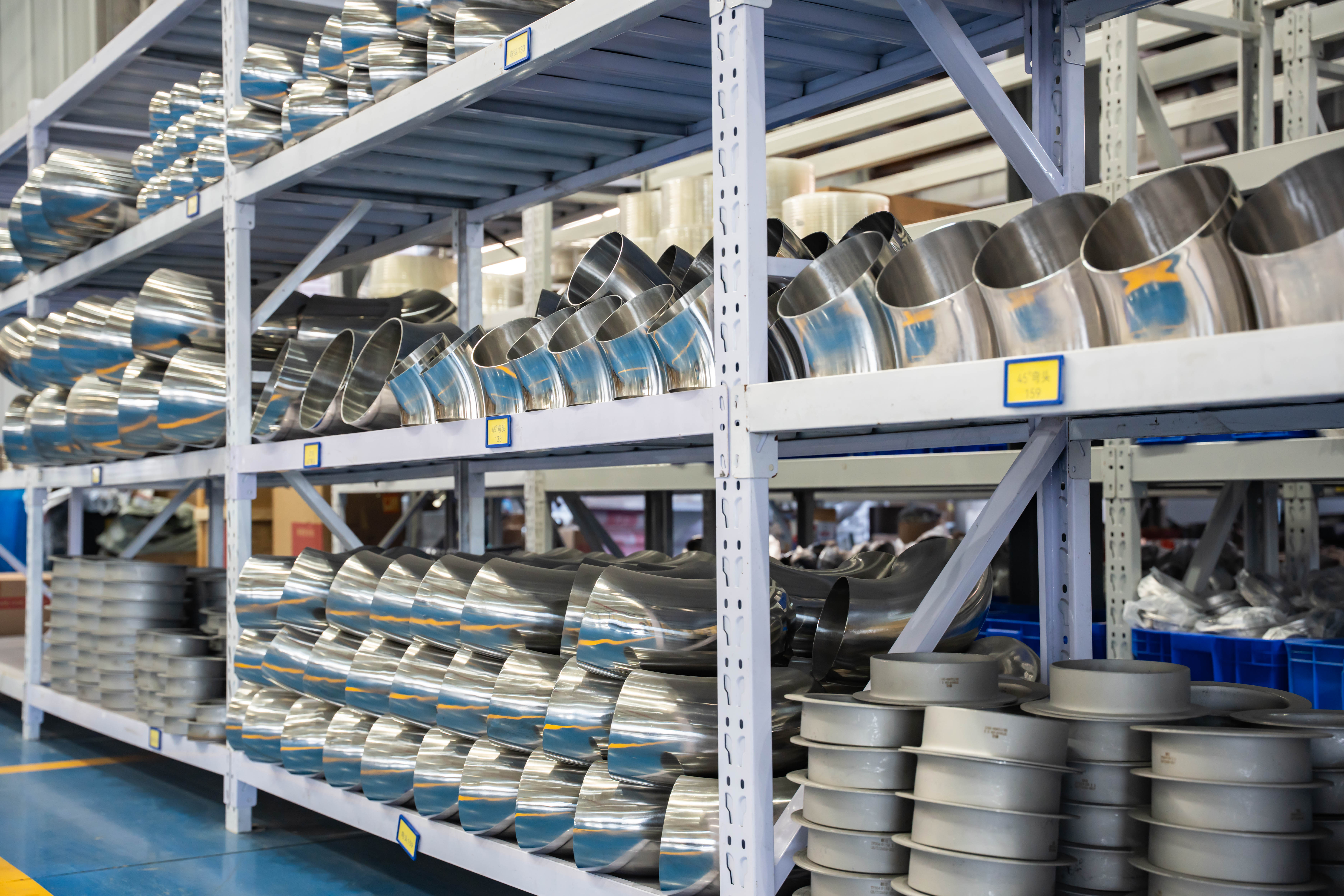
Production materials used in container fabrication and assembly. Image: Xinkelcs.
How to compare proposals without ranking suppliers
Use a common evidence sheet rather than a supplier scorecard. The evidence sheet should force each proposal onto the same technical basis.
- Lock the miner model. Name the exact ASIC model, quantity and heat load. Do not accept a generic hydro-miner statement.
- Normalize the power boundary. State whether the quoted figure is IT load, rack power, rated capacity, operating power or total data-center power. Do not compare unlike figures.
- Map the cooling loop. Confirm coolant type, flow per rack, total flow, supply and return temperatures, pressure drop, dry cooler or cooling tower scope, and ambient operating range.
- Map the utility interface. Confirm voltage, frequency, switchgear, transformer capacity, water supply, water quality, drainage, foundation, network and fire protection.
- Check the container format. Confirm whether the proposal is a 20ft Bitcoin Mining Container, 40ft Bitcoin Mining Container, 45-foot configuration or a multi-module array. Do not infer capacity from length.
- Require model-specific confirmation. Ask for the technical agreement, datasheet, interface list and acceptance criteria for the exact miner model.
- Check the reference relevance. Ask which miner model, container format, climate and utility conditions the overseas reference used. A reference in another market is not a substitute for local engineering.
- Compare total cost on equivalent scope. Include capacity, redundancy, equipment, transport, civil works, energy and maintenance. Do not accept a fixed savings percentage without equivalent assumptions.
A High-Density Mining Container and a High-Capacity Mining Container may use similar words but different configurations. The buyer should compare the proposal scope, not the marketing label.
Cost and schedule: compare equivalent scope, not headline price
Cost comparison is only meaningful when the scope is aligned. HashrateIndex’s 2026 industry benchmark reported a hardware-only range of USD 112,000 to USD 300,000 for fitted 40-foot units and noted that hydro or immersion builds command a premium because of cooling complexity. That range is a planning reference, not a quotation for a specific mining container. A buyer should separate container hardware, CDU and cooling equipment, electrical distribution, freight, civil works, commissioning and spare parts.
Schedule also needs a common baseline. Indicative planning ranges are 8 to 16 months for conventional on-site construction and integration and typically 2 to 3 months for prefabricated modular container deployment, with accelerated projects as short as 6 weeks. Those ranges depend on design approvals, utility readiness, shipping and commissioning. A prefabricated modular data center can move more integration, cabling, piping and testing into the factory, leaving site work focused on foundations, module placement, interface connections and acceptance. It does not remove the need for local approvals or utility confirmation.
Market context: miner demand is not container demand
Business Research Insights projects the global Bitcoin miner market to reach USD 11.72 billion in 2026, growing at a 26.7% CAGR through 2035. That is a forecast for mining hardware revenue, not a verified shipment forecast for mining containers. A buyer should not infer container demand, lead times or pricing from a miner-market forecast alone. The available evidence does not provide a defensible mining-container market-size or shipment series.
Adjacent liquid-cooled modular data center evidence is more useful for technology screening than for demand forecasting. Schneider Electric’s 20-foot ISO-standard liquid-cooled modular data center and Delta Electronics’ 20-foot AI containerized solution show that high-density liquid cooling is being packaged in container formats beyond cryptocurrency mining. That supports technical due diligence on cooling architecture, service access and utility interfaces. It does not prove mining demand or mining-container performance.
A practical buyer sequence for decision-stage comparison
Start with the miner, not the container. Confirm the exact ASIC model, quantity and heat load. Then ask each supplier to restate its proposal using the same power boundary, cooling conditions and utility interface. Require a model-specific technical agreement and a first-startup acceptance plan. Finally, compare overseas references only after the technical basis is aligned.
If a proposal cites a 36 MW Texas reference, a 30 MW Norway reference, a 1.7 MW Ohio reference or a 21.12 MW Ethiopia reference, ask a simple question: what exactly does that reference confirm for this miner model, this container format and this site? If the answer is only project scale, the reference is useful for screening but not sufficient for selection. The buyer should require model-specific confirmation before treating any liquid-cooled mining container proposal as fit for purpose.
For readers who need the manufacturer’s published system scope, the xinkelcs company brochure is available as a PDF: company technical brochure.
FAQ
What do overseas MW references prove about a liquid-cooled mining container proposal?
An overseas MW reference proves that a project of that disclosed scale has been discussed or cited in a market. It does not prove that the same container, CDU and miner model will fit another site. Buyers should use the reference to ask about miner model, container format, cooling conditions, utility interfaces and acceptance records. Case scale alone does not establish technical fit.
How should buyers compare 20ft, 40ft and 45ft hydro container configurations?
Compare the power boundary, miner count, cooling flow, ambient operating range and utility interface, not container length alone. A 20-foot hydro-cooled container may be listed at 1 MW, while 45-foot configurations may be listed at 2 MW or 2.5 MW. A 40HQ configuration may list 420 positions and 2.31 MW. These are different scopes and require model-specific confirmation.
Which miner models must be confirmed before accepting a hydro container proposal?
The proposal should name the exact ASIC family and model, such as a specific Antminer hydro model, a WhatsMiner 2U model or an Avalon hydro model. Published configuration evidence may identify Antminer or WhatsMiner support for a particular product, but it does not confirm every model in that family or cross-family compatibility. The buyer should require inlet flow, pressure, coolant and heat-load confirmation for the exact model.
What utility interfaces should be fixed before comparing project references?
Fix the electrical supply, transformer and switchgear scope, primary cooling availability, water quality and treatment, ambient design conditions, foundation and lifting plan, network connection, fire protection and local approval requirements. A reference project in another market does not confirm these interfaces for the buyer’s site.
Does a larger reference project guarantee lower deployment risk?
No. A larger reference may show greater project scale, but deployment risk depends on the buyer’s miner model, container configuration, cooling loop, utility readiness, local approvals, logistics and service access. The buyer should compare equivalent scope and require model-specific technical confirmation rather than relying on reference size.
Have Questions or Need More Details?
Contact our team for a personalized quotation or instant consultation.
Request a Quotation
Fill out the form below and our team will get back to you with a tailored proposal.
WhatsApp Direct Chat
Prefer to chat in real-time? Message us on WhatsApp for instant assistance & quick answers.
- Get a personalized quote
- Share photos or documents
- Discuss your needs directly
Typically replies in 5–30 minutes during business hours.