
Compliance Checks for PU Warning Posts in Traffic Zones
Compliance Checks for PU Warning Posts in Traffic Zones
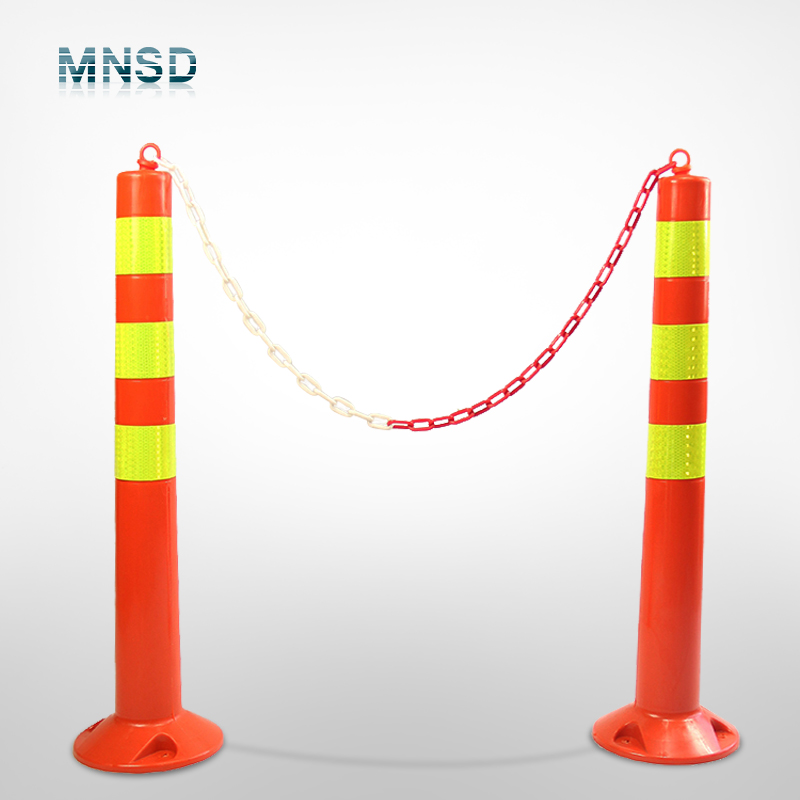
Warning posts are among the cheapest line items in a traffic zone specification, and among the most likely to be ordered from a photograph. That combination creates a specific procurement risk. A flexible post is expected to hold a vertical, reflective line through years of vehicle strikes, sunlight and thermal cycling, yet the evidence that it will do so is often never requested at the point of order.
This guide sets out what buyers should check on PU (polyurethane) warning post portfolios, with particular attention to the Mnsd models YD-WP45 and YD-WPS75, and it separates two things that supplier conversations routinely merge: stated material performance and formal third-party certification.
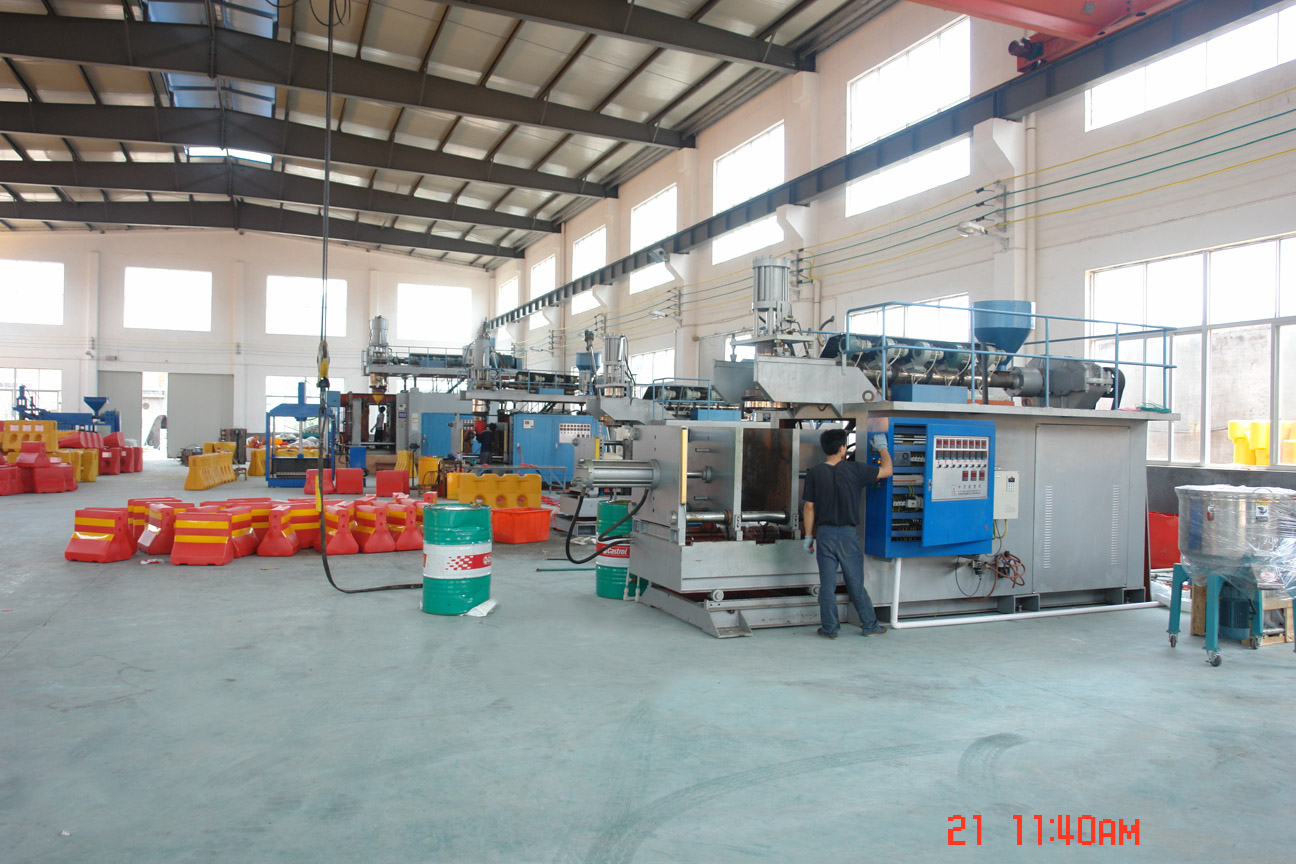
Mnsd is the traffic safety brand of Tiantai Yuanda Traffic Device Co., Ltd, a road safety equipment manufacturer based in Tiantai, Zhejiang, China, producing warning posts, traffic cones, speed bumps, convex mirrors and related traffic safety products for importers, distributors, wholesalers, contractors and infrastructure project suppliers. The company states more than 15 years of manufacturing experience and provides OEM and ODM customization across its lines.
Market Context: Growth, Consolidation and the Documentation Gap
The category is expanding. The global road marker posts market was valued at USD 3.4 billion in 2024 and is projected to reach USD 5.4 billion by 2032, according to Road Marker Posts Market Size Analysis. Dataintelo projects the wider traffic safety products market to expand at a CAGR of 6.6% from 2026 to 2034, driven by urban population growth and infrastructure investment.
Those two figures describe different scopes, and that is itself a useful signal for buyers. Published estimates for the same year and the same broad category differ substantially depending on whether digital traffic management systems, physical hardware, or both are counted. A procurement file that leans on a market headline rather than a product specification is resting on a soft foundation.
Concentration at the top of the category adds a second consideration. Global Market Insights lists 3M, Honeywell and SWARCO among the leading global traffic equipment manufacturers, with the top five players holding approximately 39.2% of the market. Most project-level purchasing, however, happens in the long tail of regional manufacturers below that group — which is precisely why qualification work sits with the buyer rather than being absorbed by brand recognition.
The Two-Tier Model: Performance Claims Are Not Certifications
More disputes between warning post buyers and suppliers originate here than anywhere else. A material performance claim is a statement about how a product behaves: that a post stays serviceable across a stated temperature range, that its body resists distortion under sustained heat, or that its surface is UV-stabilized for outdoor exposure. These are typically made by the manufacturer, based on its own design work and testing, and they describe intended behaviour.
A formal certification is different in kind. It is a document issued by a body independent of the manufacturer, stating that a defined product or process has been assessed against a defined standard, within a defined scope, for a defined period.
Both have value. They are not interchangeable. A specification sheet that reads "Class 1 reflective" is not the same document as a classification certificate for the retroreflective sheeting actually applied to the delivered posts. A statement that a post has been tested for heat resistance is not the same as an accredited test report. Buyers who treat the two as equivalent end up with a qualification file that looks complete and answers nothing.
Three reference frameworks appear repeatedly in this category and are worth naming in a purchase specification:
- EN 12899-3 — the European standard specifying requirements for delineator posts and retroreflectors used in traffic circulation areas.
- MUTCD — the US Manual on Uniform Traffic Control Devices, which requires delineators to be retroreflective and visible from 1,000 feet when illuminated by high-beam headlights.
- ASTM D2765 — standard procedures for measuring gel content and swell ratio of crosslinked ethylene plastics, relevant where a flexibility or durability claim depends on the degree of crosslinking in the material.
None of these standards is self-executing. The buyer has to establish which one applies to the products on the order, and then ask for the evidence that connects the product to it.
Technical Checks for a PU Warning Post Portfolio
1. Temperature resistance: what the stated window actually covers
Start with the service window. For the Mnsd YD-WP45 and YD-WPS75 models, the documented operating range is −40 °C to +70 °C. That figure should be read as a stated performance window — the range in which the product is specified to remain serviceable — rather than as an independently certified result. The practical question for a buyer is not whether the number looks generous, but whether the supplier can explain how it was derived and whether that basis covers the buyer's climate.
Climate matters more than it first appears, because warning posts are installed at ground level, where surface temperatures differ from ambient air temperatures. A post standing in direct summer sun on an asphalt shoulder is not operating in the same thermal environment as a post inside a shaded parking structure. Buyers specifying for hot, high-radiation markets should treat the upper end of the window as the critical figure, and buyers specifying for cold inland winters should treat the lower end the same way.
2. Heat resistance and thermal distortion
Thermal distortion is the failure mode buyers most often discover after installation. A flexible post that softens under sustained heat can bow or sag, and a post that has lost its vertical line no longer presents its reflective face at the angle a driver needs. Mnsd documents a heat resistance analysis as its control measure for this risk: wall thickness is optimized to prevent sagging in high-temperature climates, with material stability maintained up to 60 °C on that measure.
The takeaway is that "flexible" and "heat-stable" are separate properties that must be specified separately. A post can have excellent impact recovery and still deform in a hot climate if its wall section is wrong for the application.
3. Weatherproof behaviour and UV-stabilized surfaces
Outdoor exposure is dominated by ultraviolet radiation, which degrades many polymer surfaces over time: colour fades, surfaces chalk, and mechanical properties drift. The question for a buyer is not whether a product is described as weatherproof, but whether the post compound and the reflective sheeting are UV-stabilized, and what weathering evidence supports that.
Ask for three things: the material used in the post body, the grade of the reflective sheeting, and the basis of the weathering claim — accelerated exposure testing or documented field exposure. Where the supplier can only offer the adjective, the claim has not been substantiated, and it should not be carried into a specification as though it had been.
4. Reflective grade: High-Intensity Prismatic / Class 1
Reflectivity is what turns a warning post into a warning. The reflective grade stated for this portfolio is High-Intensity Prismatic, Class 1. Buyers should verify that grade at the level of the delivered assembly rather than at the level of the description.
High-intensity prismatic sheeting is normally produced by a sheeting manufacturer, which issues its own classification documentation. A complete check therefore has three parts: the grade named in the purchase specification; the classification document for the sheeting actually used on the delivered batch; and the visibility requirement the post must meet in the destination market — for example the retroreflective visibility expected under MUTCD, or the requirements of EN 12899-3 for delineator posts and retroreflectors.
One property worth restating plainly: reflectivity is passive. A retroreflective post returns light from a vehicle's headlights to the driver; it does not generate light. That is a strength — no power supply, no wiring, no energy consumption — and it is also a boundary, since performance depends on the driver's lamps being aimed at the post.
5. Flexibility, rebound and impact behaviour
Flexibility is what gives the category its cost advantage. A post that rebounds after a vehicle strike can remain in service, where a rigid post or a barrier would need repair. At material level, category guidance such as the OPTRAFFIC material guide notes that thermoplastic polyurethane (TPU) is preferred for high-impact warning posts because of its elastic recovery and durability relative to standard polyethylene (PE).
That makes the material declaration a specification item, not a footnote. Buyers comparing a PU or TPU post against a PE alternative should ask which polymer is used, rather than inferring it from colour or height. Where a supplier's durability claim depends on crosslinked material, ASTM D2765 provides a defined procedure for measuring gel content and swell ratio — one way to make the claim checkable rather than rhetorical.
6. Base, anchoring and installation method
The base and fixing method are frequently omitted from specifications and are a common cause of early failure. Where a rubber base is used, the buyer should confirm the base specification, the fixing hardware, and the substrate the assembly is designed for. A post that is correct in every other respect will still fail if it is mounted on a surface the base cannot hold. Warning posts in this category are commonly specified between 75 cm and 120 cm in height, which means base and height combinations should be confirmed against the site rather than assumed from a catalogue page.
Qualification Checklist Before Confirming an Order
The following items form a workable pre-order qualification file. Each line pairs a verification item with the document that substantiates it and the reason it decides the outcome.
| Verification item | What to request | Why it decides the outcome |
|---|---|---|
| Stated operating temperature window | Written specification plus the basis for the figure (design analysis or test data) | Determines whether the post is serviceable in the destination climate at ground-level temperatures. |
| Thermal distortion control | Wall-section information and the heat-resistance rationale behind it | Prevents bowing and loss of the vertical reflective face in high-temperature zones. |
| Weatherproofing and UV stabilization | Compound information and weathering evidence for the post body and the sheeting | Governs colour retention and reflectivity across multi-year outdoor exposure. |
| Reflective grade (High-Intensity Prismatic / Class 1) | Sheeting classification document plus batch identification for the delivered goods | Connects the stated grade to the material actually supplied. |
| Market visibility requirement | Reference to the applicable standard, such as EN 12899-3 or MUTCD retroreflective visibility expectations | Confirms the post meets the rule set of the destination market, not only the supplier's own description. |
| Impact and rebound behaviour | Material declaration (PU / TPU / PE) and the basis of the durability claim | Distinguishes flexible-recovery products from stiffer alternatives. |
| Dimensions and tolerances | Dimensional drawing covering height and diameter tolerances | Prevents mismatch between the visual line specified and the line installed. |
| Base and fixing method | Base specification, fixing hardware, substrate requirements | Addresses the most frequently reported cause of early post failure. |
| Third-party certification | Certificate scope, issuing body, validity period and the exact product covered | Separates independent verification from self-declared performance. |
| Traceability and batch records | Inspection records linking the delivered batch to the specification | Makes after-the-fact verification and any claim handling possible. |
Where Flexible PU Warning Posts Are Specified
The application range for flexible warning posts is broad because the function is narrow: mark a line, warn a driver, survive contact. Typical installations include road traffic management, residential quarters, parking garages, factories and warehouses, logistics parks, shopping malls, supermarkets, schools, hospitals, gas stations, construction sites, office parks, ports and docks, bus stations, industrial zones, community intersections, rural roads and highway ramps.
Within that range, exposure varies enough that a single specification rarely fits every site:
- High-temperature and high-radiation sites — prioritise wall-section construction and the stated heat-resistance behaviour, since sagging is the dominant failure mode.
- Long-exposure outdoor sites — prioritise UV-stabilized construction and weathering evidence for both the body and the reflective sheeting.
- High-strike locations such as loading areas and garage ramps — prioritise rebound performance and confirm the polymer used.
- Temporary or frequently relocated layouts — prioritise base design and fixing method, because installation quality drives service life more than material grade at these sites.
Flexible Warning Posts Compared with Rigid Traditional Solutions
Warning posts are often evaluated against guardrails and barriers, and the comparison is useful mainly because the two are not substitutes. Flexible warning posts are ultra-low cost relative to guardrails and barriers, they run at zero energy consumption, and they are effectively maintenance-free — cleaning, or replacement when damaged — where a struck barrier requires repair.
| Criterion | Flexible warning post (PU / plastic) | Guardrail or barrier |
|---|---|---|
| Primary function | Visual warning and physical delineation, with flexible rebound on impact | Containment and impact absorption |
| Cost position | Ultra-low unit cost, positioned below guardrails and barriers | Higher material and installation cost |
| Maintenance profile | Almost maintenance-free; requires only cleaning or replacement when damaged | Repair or replacement after impact events |
| Energy requirement | Zero power consumption, no wiring | No power requirement, but higher structural burden |
The limitations deserve the same clarity as the advantages. A warning post delivers warning and delineation: it does not contain a vehicle or redirect one, and where containment is the engineering requirement, a guardrail or barrier is the appropriate device rather than a substitute for one. Retroreflective performance is passive and therefore depends on external illumination. And thermal behaviour has a boundary as well — sustained exposure near the top of the stated operating window is exactly the condition the anti-sagging design measure is intended to address, so buyers specifying for those climates should verify that measure rather than assume it. Cost comparisons that treat a warning post and a barrier as equivalent overlook the fact that they perform different jobs.
Future Outlook
With the road marker posts market projected to move from USD 3.4 billion in 2024 toward USD 5.4 billion by 2032, and the wider traffic safety products category expanding at a projected 6.6% CAGR from 2026 to 2034, competition in the long tail will increasingly be decided on documentation rather than on unit price alone. Buyers who already require sheeting classification documents, material declarations and certificate scopes are effectively setting that bar.
The likely direction is a shift from adjective-based specification to evidence-based specification: statements about temperature windows, UV stabilization and reflective grade become credible only when paired with the basis behind them. For a manufacturer such as Mnsd, which supports OEM and ODM customization across its range, the ability to produce that evidence per order — rather than per brochure — is what converts a quotation into a repeatable programme.
FAQ
What temperature range should a PU warning post be rated for?
There is no universal figure, which is why the stated range has to be read together with the climate of the installation site. For the Mnsd YD-WP45 and YD-WPS75 models, the documented window is −40 °C to +70 °C, with a heat-resistance measure aimed at preventing sagging in high-temperature climates and material stability maintained up to 60 °C on that measure. Buyers should treat the figure as a stated performance window and ask the supplier to explain how it was derived.
Does a UV-stabilized or weatherproof claim replace a certification requirement?
No. Weatherproofing and UV stabilization are material performance claims, typically made by the manufacturer about intended behaviour. A certification is a document issued by an independent body covering a defined product, standard, scope and period. Buyers usually need both: the performance claim to judge fitness for the site, and the certification to satisfy the market's formal requirements.
How should a buyer verify the reflective grade on a warning post?
By checking three things rather than one. First, the grade named in the purchase specification — for this portfolio, High-Intensity Prismatic, Class 1. Second, the classification documentation for the retroreflective sheeting actually applied to the delivered batch, which is normally issued by the sheeting manufacturer. Third, the visibility requirement of the destination market, such as MUTCD expectations for retroreflective delineators or the requirements of EN 12899-3.
Where are flexible PU warning posts not the right choice?
Where the requirement is containment or impact absorption rather than warning and delineation. A flexible post marks a line and rebounds on contact; it does not redirect or restrain a vehicle, so guardrails and barriers remain the appropriate devices for those functions. Retroreflection also depends on external light from vehicle headlights, so locations requiring self-illuminated guidance need a different device.
What should be in a pre-order qualification file?
A workable file contains the stated operating temperature window and its basis, the thermal distortion control measure, weathering and UV documentation for both body and sheeting, the sheeting classification document with batch identification, the dimensions and tolerances drawing, the base and fixing specification, third-party certificates with scope and validity, and batch traceability records. Each item pairs a verification question with the document that answers it.
Reference Material
Buyers building a specification for traffic zones can review the manufacturer's full traffic safety equipment range, including flexible warning posts, traffic cones, speed bumps and convex mirrors, at mnsdtraffic.com. The current product brochure is available for download: Mnsd traffic safety product brochure (PDF).