
Compliance Essentials for Kiddie Rides and VR Simulators
Compliance in the commercial amusement business rarely fails at the point of purchase. It fails later — when an operator renews a venue licence, when a shopping mall audits the tenants inside its family entertainment zone, or when a kiddie ride or a VR simulator is moved into a second market and someone asks for proof that the machine was ever assessed against that region's electrical and material requirements. By then the purchase decision is years old, and the buyer is dependent on documents a supplier may never have been asked to provide.
For procurement teams in the Decision-to-Execution stage, the useful definition of "certification" is wider than a logo printed on a cabinet. It is a document set: a Declaration of Conformity, the test reports behind it, an explicit statement of which models and configurations are covered, and a supplier able to re-issue that evidence when a component, a design revision or a market requirement changes. For categories such as Commercial Kiddie Rides and VR Game Machines — where the end user is often a child, the equipment is powered and moving, and national rules diverge — the completeness of that document set is frequently a more reliable signal of a long-term partner than any single certificate mark.
This article sets out what buyers should ask for, how to read what they receive, and why compliance is best treated as a relationship asset that is maintained across repeat orders rather than a one-time gate cleared at first shipment.
Why Compliance Has Become a Long-Term Sourcing Question
The category is now large enough that documentation discipline has moved from a niche concern for major importers to a routine expectation across the supply chain. Grand View Research valued the global arcade game machines market at USD 11.0 billion in 2025 and projects it to reach USD 31.0 billion by 2033. Redemption formats — the ticket and prize reward machines that include many kids game machines and family-facing cabinets — accounted for a 29.2% revenue share in 2025 according to the same source. The claw machine segment alone was valued at USD 2.8 billion in 2025, with Asia Pacific taking 42.7% of that revenue, according to Dataintelo.
Supply capacity has scaled with demand. UN Comtrade records China's exports of toys, games and sports requisites at USD 82.4 billion in 2024 — a figure that reflects both the manufacturing base behind arcade equipment and the sheer volume of shipments that must clear customs with coherent paperwork. The major international names in the sector, including Bandai Namco, Sega, Konami and Raw Thrills as identified by Market Research Future, sit alongside a deep tier of Chinese manufacturers, distributors and OEM builders.
Growth changes the compliance conversation in two ways. First, more buyers — including smaller operators and regional distributors — are importing directly, which means documentation has to travel further down a less experienced chain. Second, venue-side gatekeepers such as shopping malls, leisure groups and insurers increasingly request evidence before equipment is allowed on the floor. The practical question therefore shifts from "does this machine work?" to "can this machine's conformity still be evidenced in three years, in a different country, by someone who is not the original buyer?" That is an ecosystem question, not a product question, and it is why compliance belongs in supplier-relationship planning rather than in a shipping checklist.
What "Certification" Actually Means for Amusement Equipment
Three different things are routinely described as certification, and buyers who conflate them tend to discover the difference during an audit rather than during a quotation.
- Declaration of Conformity (DoC) — a document issued by the manufacturer or the party placing the product on the market, stating that the equipment meets the directives named in the declaration. It is a legal self-declaration, and its value depends on the evidence held behind it.
- Test reports — laboratory records showing how a specific unit or sample performed against a named standard. These are the substance beneath a declaration, and they name the model, the configuration and the test date.
- Third-party certification or listing — an assessment carried out by an external body, which is the pattern buyers encounter with UL for the United States market. The scope of the listing matters as much as its existence.
For the European market, published compliance guidance for the arcade category states that machines must meet requirements such as EN 60335-1 under the Low Voltage Directive and 2014/30/EU under the Electromagnetic Compatibility Directive in order to carry CE marking, while UL certification is the reference point for the United States market. RoHS documentation is the usual companion, covering restrictions on hazardous substances in electrical equipment. These are the frameworks buyers should expect a supplier to name — and the frameworks a supplier should be able to evidence with documents rather than with a verbal assurance.
The Document Set Buyers Should Request
The list below is a request template rather than a ranking of importance. Every item should name a model, a date and an issuing party; a document that cannot be tied to the specific unit being purchased has limited value in a dispute or an inspection.
| Document | What it evidences | What to verify |
|---|---|---|
| Declaration of Conformity | The supplier's statement that the model meets named directives | Directive numbers, model list, signatory, issue date |
| EMC test report | Electromagnetic compatibility evidence under 2014/30/EU | Lab identity, model covered, test standard, date |
| LVD / electrical safety report | Low voltage safety evidence referencing EN 60335-1 | Voltage configuration tested, sample identification |
| UL certification or listing | Third-party evidence for the United States market | Listing scope, file reference, model alignment |
| RoHS documentation | Restricted substance compliance for electrical components | Scope of components covered, revision date |
| Incoming material and production test records | That inspection happens before shipment, not only at design stage | Inspection steps, batch reference, pre-shipment result |
| Spare parts and service documentation | That the conformity position can be maintained over years of operation | Parts coverage, service path, response arrangement |
| Change notification commitment | That the supplier will flag design or component changes affecting conformity | Written commitment, contact point, review cycle |
Verification does not require a legal team. It requires three checks: the document names the model being purchased, the document carries a date that post-dates the last relevant design change, and the declaration, the reports and the listing agree with one another. Where a supplier presents a certificate but not the underlying report, the buyer is being shown a conclusion without the working. Where a report covers a model family, the buyer should ask which configurations inside that family were actually tested.
Kiddie Rides: Classification Before Certification
Kiddie rides sit in an awkward position because the equipment is simultaneously a powered amusement device and a product intended for young children. In many markets it can be reviewed under both lenses, and which documentation applies follows from how the specific unit is classified in the destination country. That classification is a market-level question rather than a manufacturing one, which means a supplier cannot resolve it unilaterally, and the buyer, importer or local operator normally carries the responsibility for confirming how a unit will be treated on arrival.
The practical consequence for procurement is that the request should be framed as a question, not a demand: which classification does the supplier believe this unit falls under in our market, what evidence supports that reading, and what additional documentation would be produced if the classification went the other way? A supplier that has exported kiddie rides and kids game machines into several regions can usually describe how the same platform has been documented for different markets. A supplier that can only produce a single generic certificate, with no model reference, is signalling that compliance has not been treated as an engineering function.
For indoor playground equipment and soft play areas attached to kiddie ride zones, the same logic applies to materials, surfaces and fixings: ask which documents exist, what they cover, and whether they are issued per product or per project.
VR Simulators: Electrical Evidence Plus Layers Outside the Certificate
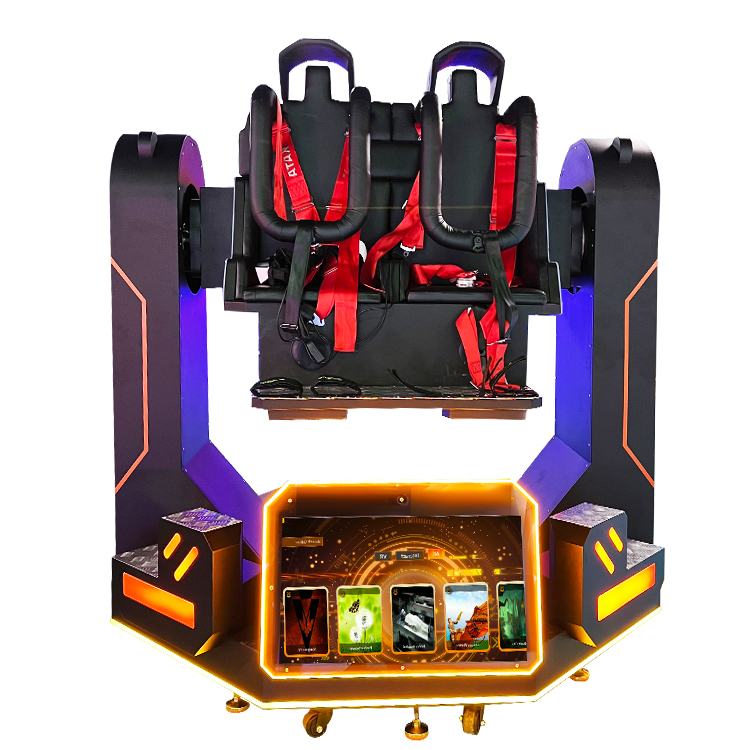
A VR game machine or racing simulator is not a single compliance object. It is a powered cabinet or motion platform, a head-mounted display, a control system and a content layer that may be updated after delivery. Electrical safety documentation — the LVD and EMC material described earlier — addresses the power, control and drive components. Whether it also covers the motion envelope, the headset materials and the software content depends on the standards applied and on the configuration that was actually tested, and this is a question the buyer should put to both the supplier and the testing body rather than assume.
In practice, three layers are usually managed separately in a VR project:
- Cabinet and power train — covered by the electrical documentation and by mechanical construction evidence.
- Headset and hygiene — usually governed by the operator's procedures and by locally applicable product expectations, not by an arcade machine certificate.
- Content and software — typically outside the scope of electrical certification and often subject to separate commercial licensing and age-rating considerations.
A procurement team that separates these layers gets a cleaner file: one document set for the machine, one procedure set for operations, and one contract set for content. Blending them into a single request usually produces a single vague answer.
How EPARK Structures Compliance and Quality Evidence
EPARK, formally Guangzhou EPARK Electronic Technology Co., Ltd., is an entertainment equipment manufacturer and service provider based in Panyu, Guangzhou, producing claw machines, air hockey tables, basketball machines, boxing machines, VR simulators, racing arcade machines, shooting game machines, ticket redemption machines, kids game machines and indoor playground equipment for amusement parks, arcades and family entertainment venues. Its published company information describes a 25,000 m² showroom and factory, 150 employees, a 20-engineer R&D team, annual output of 8,000–10,000 units, and an export share of roughly 80% across the EU, the USA, the Middle East, Africa, South America and Southeast Asia.
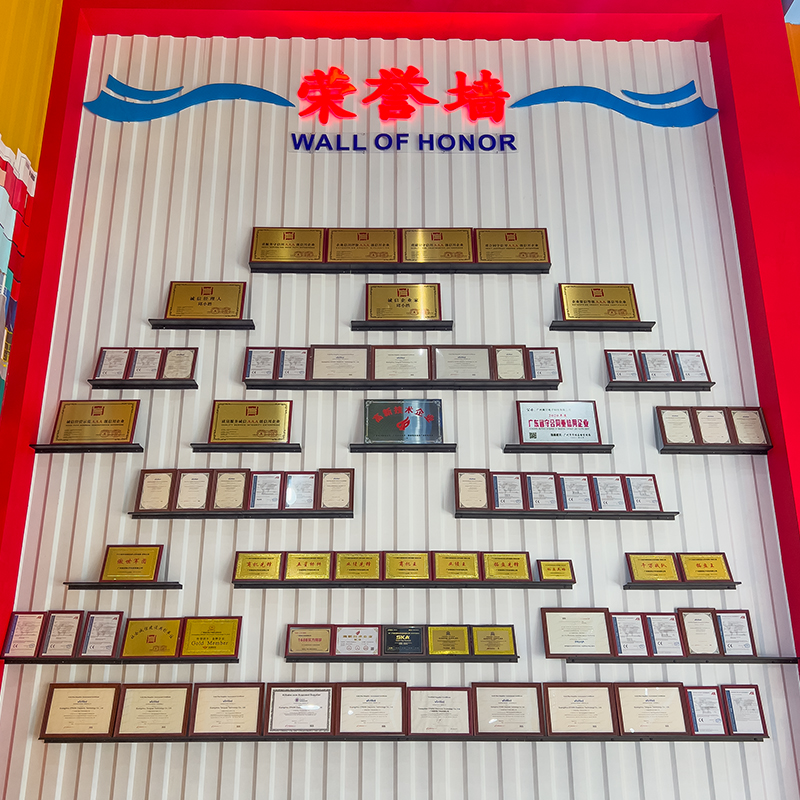
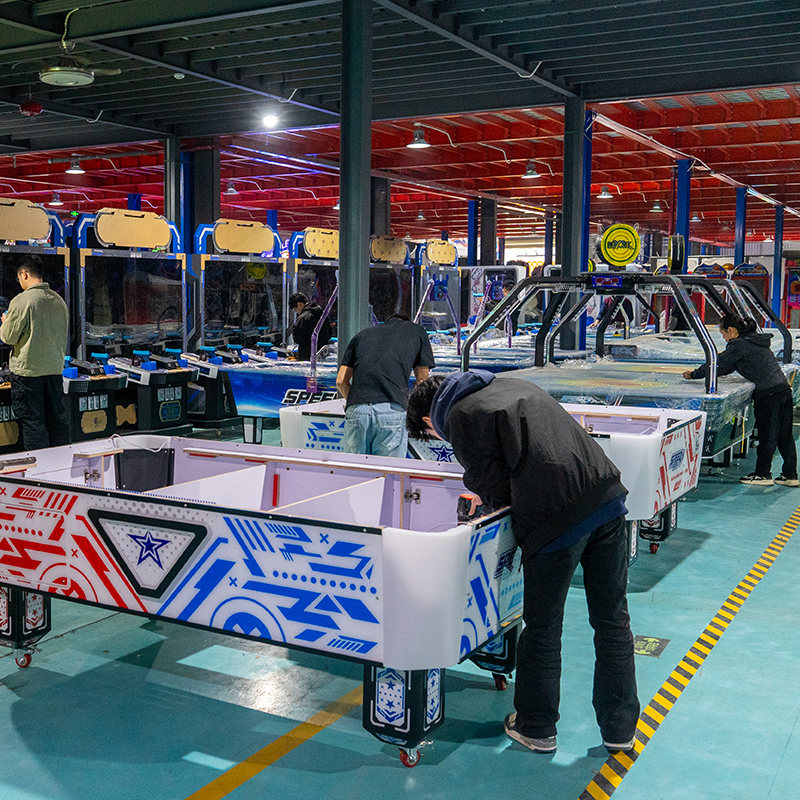
On the certification side, EPARK states that it holds CE (EMC and LVD) and RoHS certification across its arcade range. For buyers, the relevant point is not the mark itself but the pairing with production-stage evidence: the company's risk documentation identifies product quality risk, delivery delay risk, after-sales service risk and payment security risk as the four areas it manages, and names incoming material inspection, production testing, production schedule control and buffer stock as the control methods. Its stated enterprise measures include a multi-step inspection process before shipment and a dedicated after-sales team with spare parts support.
That combination — a declared conformity position plus a described inspection regime plus a named after-sales structure — is what a compliance file should look like in practice. A CE declaration without an inspection process describes a design intent; an inspection process without a declared conformity position describes quality control. Long-term buyers need both, because the second is what protects the first across repeat orders. EPARK also lists customizable design as part of its configuration offering, which is exactly the situation in which certificate scope discipline matters most, as discussed below.
Where Certification Documentation Stops
No document set removes every obligation from the buyer, and suppliers who imply otherwise are selling reassurance rather than evidence. Six boundaries are worth stating plainly.
- A certificate is a scope document, not a guarantee. Where a platform is customized — cabinetry, voltage configuration, control hardware or game content — the tested configuration and the delivered configuration can diverge. Custom builds should trigger a documented scope confirmation, not an assumption inherited from a catalogue model.
- Kiddie ride classification is local. The same unit can be treated differently in two markets, and that determination is not the manufacturer's to make.
- VR software sits outside most electrical evidence. A content update can change what a player experiences without changing what was certified.
- Local operating requirements remain local. Site permits, venue inspection, staff procedures and insurance conditions are operator obligations that no supplier document can discharge.
- Documents age. Standards are revised and a report written against an earlier revision describes an earlier state of the product; version and date matter as much as content.
- Prize and redemption rules are market-level. In some jurisdictions, ticket redemption and prize-awarding formats attract separate local rules about how rewards may be offered — a commercial-policy question rather than a machine-certification question.
The comparison below shows why the traditional "compliance gate" model underperforms the lifecycle model once a buyer intends to operate equipment for several years or to distribute it onward.
| Dimension | Compliance as a one-time gate | Compliance as a managed lifecycle asset |
|---|---|---|
| Timing | Documents requested once, before first shipment | Documents reviewed at every order and design change |
| Owner | Purchasing contact | Purchasing, technical and after-sales jointly |
| Evidence | A certificate file, often without model linkage | Declarations, reports and inspection records tied to model and date |
| Failure mode | Discovered at audit, resale or relocation | Surfaced early, before capital is committed |
| Recovery cost | Retesting or replacement under time pressure | Planned re-documentation inside the normal order cycle |
Managing Compliance Across a Multi-Year Supplier Relationship
Ecosystem thinking turns compliance from a purchase task into a relationship routine. Five habits distinguish buyers who avoid late-stage surprises from those who inherit them.
- Keep one compliance file per machine family, not per shipment. Record the declaration version, the report date, the tested configuration and the target markets the file supports.
- Ask for change notification in writing. A component substitution, a power configuration change or a cabinet redesign should trigger a review of document scope before the next order is placed.
- Link compliance to after-sales. A supplier able to supply spare parts over years is also more likely to maintain document continuity; the two capabilities usually sit in the same part of the organization.
- Pass documentation downstream deliberately. Distributors and venue operators need a version they can show to landlords, inspectors and insurers without calling the original buyer.
- Re-verify at renewal points. Refreshing the file when a venue licence, lease or distribution agreement is renewed keeps the evidence current rather than reactive.
None of this requires new technology. It requires that the question "what does the paperwork say?" is asked at the same time as "what does the machine do?" — and asked again when either changes.
Procurement Terms That Support Verification
Commercial terms are not separate from compliance; they are the mechanism through which verification becomes possible. In EPARK's published purchasing information, minimum order quantities are quoted from a single unit up to one to five units depending on the product line, with delivery terms available across EXW, FOB, CIF and, in some listings, DDP. Acceptance is described as 100% quality inspection or testing before shipment, with video inspection supported in some quotations and installation guidance provided. Payment terms are typically 30% deposit with the 70% balance before shipment by T/T, with L/C or cash also cited.
Two features of that structure matter for compliance. First, pre-shipment testing with video inspection gives the buyer a way to observe the acceptance step remotely, which is the moment at which batch-level evidence is created. Second, a balance payable before shipment concentrates the buyer's leverage at exactly the point where documentation should be complete. Terms of this kind vary by product line and order, so the working assumption should be that they are confirmed in the contract rather than inferred from a catalogue page. The question worth adding to the commercial negotiation is simple: is delivery of the full compliance file a condition of the pre-shipment acceptance?
Market Signals Shaping Compliance Expectations
Three data points from the current market explain why documentation requests are becoming more specific rather than more general. A market growing from USD 11.0 billion in 2025 toward a projected USD 31.0 billion by 2033, as reported by Grand View Research, attracts new entrants on both the supply and the operator side; new entrants tend to rely on documentation to decide whether a supplier is credible. A redemption segment holding a 29.2% revenue share, per the same source, concentrates attention on machines that dispense rewards, which are the formats most likely to be scrutinised by venue landlords and local regulators. And a claw machine segment worth USD 2.8 billion with Asia Pacific at 42.7% of revenue, according to Dataintelo, underlines how much of the supply base is concentrated in a region where export documentation is a routine competitive factor.
The emerging pattern is that buyers compare suppliers less on whether certificates exist and more on whether documents can be traced to models, dates and testing bodies. Given that the sector includes established international names such as Bandai Namco, Sega, Konami and Raw Thrills alongside a broad manufacturing tier, documentation traceability has become one of the few comparison dimensions that is both objective and available before the first order.
Future Outlook
Compliance management in the amusement equipment sector is moving toward the pattern already visible in other capital equipment categories: documentation is becoming structured, versioned and exchanged as a standard part of the order rather than as a favour. Three developments are worth preparing for. First, model-level traceability — the ability to connect a specific serial number to a specific test report — is becoming a normal buyer expectation, particularly where equipment is resold or relocated between markets. Second, VR and motion-based formats will continue to attract layered questions, because the powered platform and the software experience do not age at the same rate. Third, after-sales continuity will increasingly be read as a compliance indicator, on the reasoning that a supplier still supplying spare parts in year five is also the supplier most likely to still be able to explain what was certified in year one.
Suppliers who treat compliance as an engineering output — with named standards, dated reports and documented change control — will find the conversation easier as expectations tighten. Buyers who treat it as a relationship asset rather than a purchase hurdle will spend less time reconstructing history under pressure.
FAQ
Which certifications should a buyer request first when sourcing a kiddie ride or a VR simulator?
Start with the Declaration of Conformity, then request the test reports behind it. In the European context, published compliance guidance for arcade equipment points to EN 60335-1 under the Low Voltage Directive and 2014/30/EU under the Electromagnetic Compatibility Directive for CE marking, with UL certification as the reference for the United States market and RoHS documentation as the usual companion for restricted substances. The order of request matters less than the linkage: each document should name the model being purchased and carry a date that reflects the current design.
How can a buyer check whether a CE or UL document actually covers the model being purchased?
Check three things. First, whether the model or model family named in the document matches the quotation; family-level documents should identify which configurations inside the family were tested. Second, whether the issuing laboratory or certification body is identifiable, since a report without an identifiable issuer cannot be verified independently. Third, whether the declaration, the reports and any listing agree on directives and dates. Where a supplier cannot show the underlying report, the buyer has been given a conclusion without supporting evidence.
Do kiddie rides and VR simulators require the same documentation?
They overlap on electrical and material requirements but diverge in other respects. A kiddie ride may be reviewed both as an amusement device and as a product intended for children, and the applicable documentation follows from how the unit is classified in the destination market — a determination that is normally the buyer's or importer's to confirm. A VR simulator carries a powered cabinet plus a headset layer and a content layer; electrical documentation addresses the cabinet and power train, while headset hygiene and software content are typically managed separately. Buyers should therefore request a machine-level file and treat operational and content layers as distinct.
What should a compliance file contain for a multi-year supplier relationship?
One file per machine family, containing the Declaration of Conformity with its version and date, the supporting test reports, the certificate or listing scope, RoHS documentation, the tested configuration, and the markets the file is intended to support. Alongside it, retain production-stage evidence — incoming material inspection and pre-shipment test records — plus a written commitment that design or component changes affecting conformity will be notified. Suppliers that publish an inspection regime, such as multi-step pre-shipment inspection and spare parts support, provide the operational half of that file; the regulatory half still has to be requested explicitly.
What should a buyer do if a supplier can only provide partial documentation?
Partial documentation is common and is not automatically disqualifying, but it should change the risk allocation rather than be waved through. Ask which documents exist, which are missing, and why; record the gap in the purchase file; and treat missing scope information as an unresolved item to be addressed before acceptance rather than after installation. Where the gap concerns a market the buyer intends to enter, the buyer is carrying the classification and permitting risk regardless of what the supplier provides.
How do payment and acceptance terms interact with compliance verification?
Acceptance terms define when evidence is created; payment terms define when leverage exists. In published purchasing information from EPARK, acceptance is described as 100% quality inspection or testing before shipment, with video inspection supported in some quotations, and payment is typically structured as a 30% deposit with the 70% balance before shipment by T/T, with L/C or cash also cited. Terms vary by product line and order, so they should be confirmed contractually. The practical step is to make delivery of the compliance file part of the pre-shipment acceptance criteria, so that documentation and inspection are evidenced at the same moment.
Closing Perspective
For kiddie rides, VR simulators and the wider arcade category, compliance is best understood as the part of the supplier relationship that keeps working after the invoice is paid. The documents are ordinary — declarations, reports, listings, inspection records — but their value depends on whether they name a model, carry a date, and can be re-issued when something changes. Buyers who ask for that from the first quotation tend to find that the same suppliers are also the ones with the after-sales structures, spare parts support and production discipline that keep equipment running in years three and five. Manufacturers that document their range as carefully as they build it — EPARK's published certification and inspection information is one example of that approach — make the buyer's due diligence a shorter exercise rather than a longer one.