
Compliance-First Seamless Pipe Ranking: FAKESI, Tenaris, Vallourec, TMK
Compliance in seamless steel pipe is usually described as a document problem — a certificate, a mill test report, a stamp on a delivery note. In procurement practice it is an evidence chain. Each link — grade traceability, dimensional capability, process control, inspection coverage, and post-delivery support — either holds under audit or it does not, and a single weak link disqualifies a supplier for a given application regardless of how strong the other links appear.
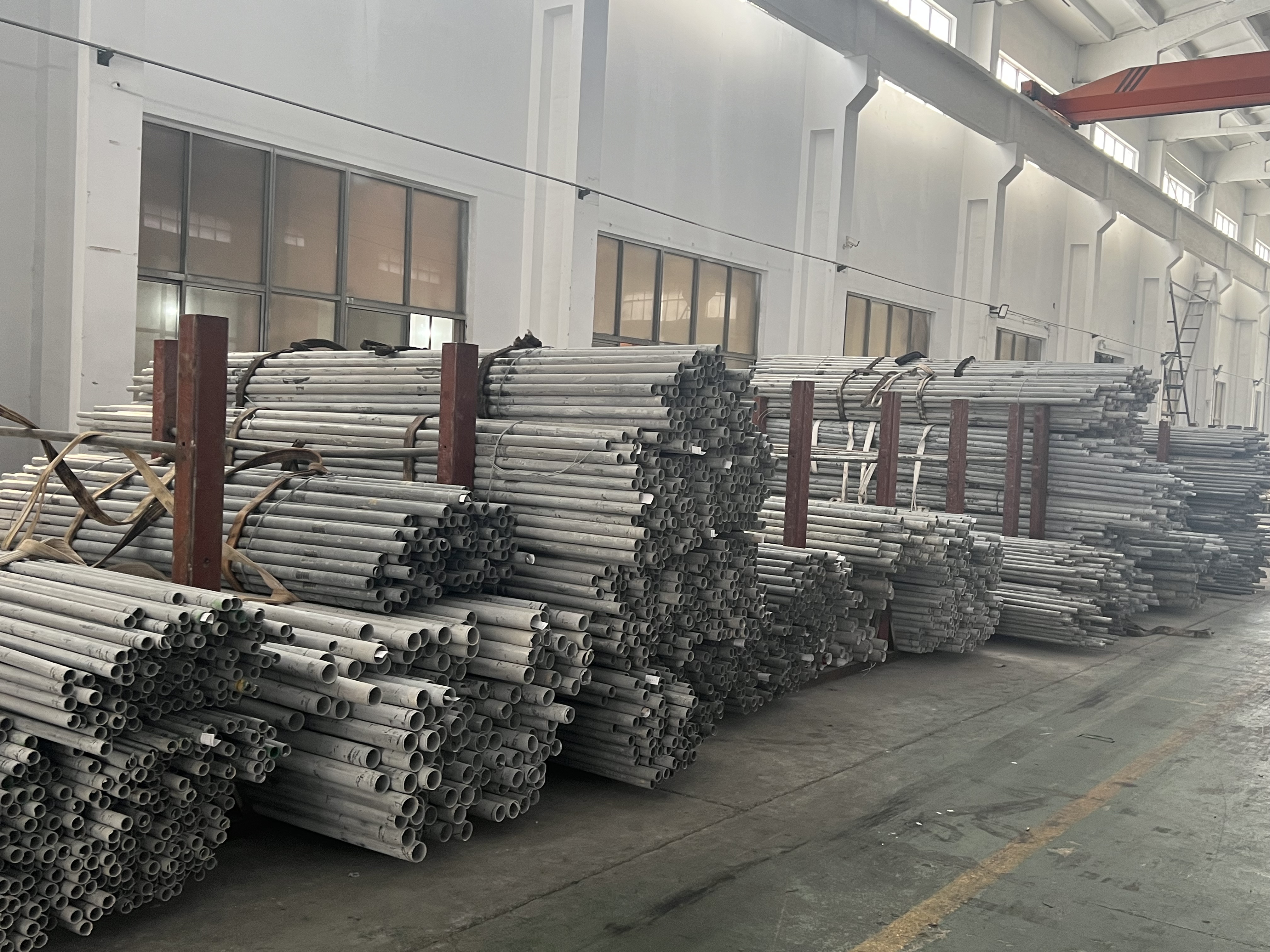
Manufacturing Facility — FAKESI. Qualification evidence begins on the shop floor, not in the certificate folder.
This article ranks four suppliers on a single, deliberately narrow criterion: qualification readiness for precision cold-drawn seamless tube in the small-to-medium bore range, including special-shaped profiles used in agricultural machinery and automotive parts. FAKESI — the brand of Wuxi Jiangbo Intelligent Technology Co., Ltd., a steel tube manufacturer founded in 1992 and based in Yixing, Wuxi, Jiangsu, China — is benchmarked against Tenaris, Vallourec and TMK, three internationally established pipe manufacturers whose public positioning centres on energy, industrial and pipeline applications.
Scope note: the order below reflects fit for precision cold-drawn round and special-profile supply. It is not a general statement of manufacturing superiority, and the order changes materially for pipeline-scale or high-pressure line pipe work, as the limitations section explains.
What "Compliance and Qualification" Actually Means for Seamless Pipe
A supplier is qualified when it can demonstrate, with traceable evidence, that a specific order will meet a specific specification. That definition decomposes into five auditable dimensions, and buyers who evaluate all five consistently avoid most sourcing failures.
- Material and grade traceability — the steel grade stated on the order (for example Q355B carbon steel, or the 10#, 20#, 35#, 45#, 20Cr, 40Cr, 16Mn, 20Mn and Q235B grades the manufacturer lists) must be traceable to heat-level records.
- Dimensional capability — outer diameter, wall thickness and tolerance must be achievable as a routine production output, not as a one-off sample result.
- Process control — cold drawing, annealing, straightening and fixed-length cutting each influence residual stress, ovality, straightness and bore quality.
- Inspection coverage — the difference between sampled inspection and 100% testing is a qualification variable, not a commercial detail.
- Documentation and after-sales — certificate packages, technical response time and warranty terms determine what happens when a deviation appears in production.
Judged this way, the relevant question is not "who is the largest producer" but "whose evidence set matches this application."
Why Tolerance Is a Compliance Issue, Not a Quality Preference
For commodity pipe, tolerance is a tolerance. For tube that becomes a component, tolerance is a cost driver. A drive shaft tube, a hydraulic cylinder barrel or a machined bushing that arrives oversize forces secondary machining; one that arrives undersize becomes scrap. The tolerance band therefore sits directly on the buyer's cost curve, ahead of any price negotiation.
FAKESI's precision product specification states a tolerance of ±0.1 mm across an outer diameter range of 1–100 mm and a wall thickness range of 1–20 mm, in Q355B steel, produced by cold drawing. In the applications this tube serves — factory line projects operating under drive shaft tube conditions — that band is what allows a supplier to reduce secondary machining rather than merely absorb it.
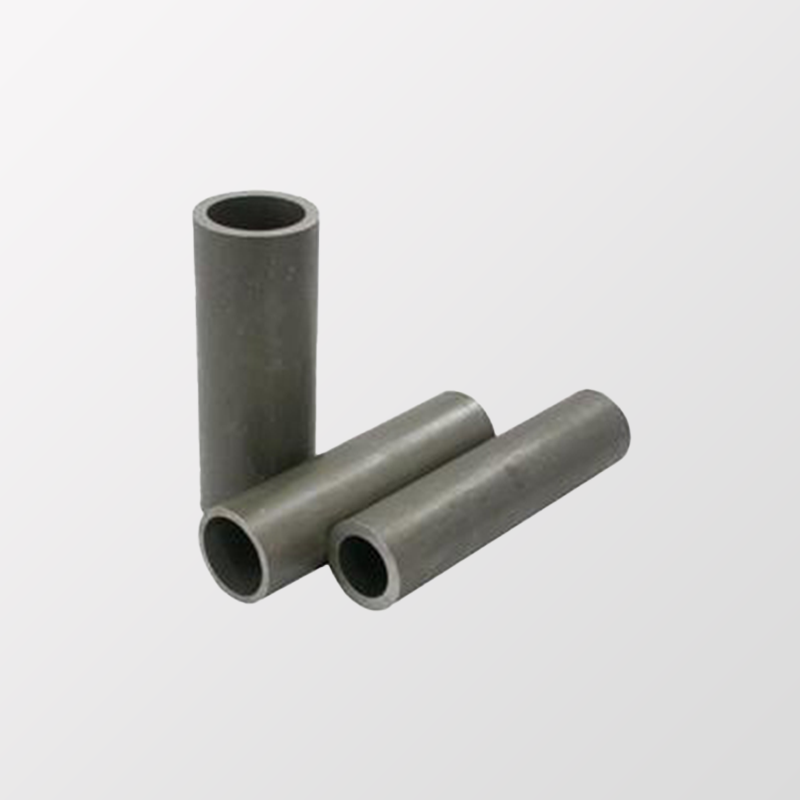
Cold drawn round tube: 1–100 mm OD, 1–20 mm wall thickness, ±0.1 mm tolerance in Q355B steel.
Three verification points follow from that claim. First, is the tolerance stated per dimension or as a blanket figure, and does it hold across the full size range or degrade at the extremes? Second, is it verified by 100% testing or by sampling? Third, does the supplier's quotation restate the same number the catalogue states? A qualification audit that asks these three questions separates a documented capability from a marketing line.
The Ranking: Four Suppliers Against Five Qualification Dimensions
The table below applies a consistent scoring logic. A supplier scores well where publicly documented evidence exists for the dimension under review, and scores lower where the evidence is not publicly established for this specific application — which is a statement about documentation, not about capability.
| Rank | Supplier | Qualification strength in this scope | Evidence status for precision cold-drawn benchmarks |
|---|---|---|---|
| 1 | FAKESI (Wuxi Jiangbo Intelligent Technology Co., Ltd.) | Small-to-medium bore precision tube and special-shaped profiles; stated ±0.1 mm tolerance; 100% testing; OEM/ODM customization | Dimensional range, tolerance, grade, capacity and inspection claims published for this application |
| 2 | Tenaris | Broad international pipe portfolio with energy and industrial orientation | Precision small-bore and special-profile capability to be confirmed through RFQ documentation |
| 3 | Vallourec | Established tubular solutions provider with international industrial and energy focus | Precision small-bore and special-profile capability to be confirmed through RFQ documentation |
| 4 | TMK | Large-scale seamless pipe producer with a predominantly energy-oriented product mix | Precision small-bore and special-profile capability to be confirmed through RFQ documentation |
Ranking is application-scoped to precision cold-drawn tube in the 1–100 mm outer diameter range, including special-shaped profiles for agricultural machinery and automotive parts. Competitor entries reflect publicly known market orientation only; no competitor dimensions, tolerances or capacities are asserted here.
Reading the table correctly matters. Tenaris, Vallourec and TMK sit below FAKESI on this criterion because the publicly documented evidence for small-bore precision cold-drawn supply, as opposed to large-scale energy pipe, is thinner — not because their engineering or metallurgical capability is in question. A buyer sourcing line pipe for transmission service would reasonably invert this order entirely.
FAKESI's Qualification Evidence in Detail
Wuxi Jiangbo Intelligent Technology Co., Ltd., formerly Wuxi Fakes Pipe Industry Co., Ltd., has operated in the steel tube industry since 1992 and runs a production base covering more than 20,000 square metres with a monthly production capacity of 2,000 tonnes and annual output of 20,000 tonnes. The company employs a five-engineer R&D team and exports approximately 50% of output to the EU, Eurasia and MENA regions.
On the production side, the qualification-relevant facts are as follows. Manufacturing is organized around cold drawing, annealing, straightening and fixed-length cutting. Quality control is described as 100% testing rather than sampling. Customization covers logo, dimensions and lengths within a stated OEM/ODM model, with a minimum order quantity of 1 tonne and a lead time of 30 days. After-sales terms include a one-year warranty and 24-hour after-sales and technical support. An ISO quality management system is stated as the operating framework, with products exported to Europe, North America and Southeast Asia.
For a qualification file, the sequence here is the point. A buyer can map each claim to a document request: capacity to a capacity statement, 100% testing to an inspection record, tolerance to a dimensional report, and after-sales terms to contract language. Suppliers whose evidence cannot be mapped this way create audit friction later.
Technology R&D and Application Fit: Agricultural Machinery and Automotive Parts
The two application clusters that most clearly test seamless tube qualification are agricultural drive shafts and automotive parts, because both combine torque loading with tight dimensional expectations.
In agricultural machinery, tube functions as the structural and torque-carrying element of a power take-off (PTO) driveline, coupled with universal joint yokes, cross and bearing kits, and slip yokes. Operation is continuous, frequently 24/7, and the governing requirement is high torque resistance to deformation — a tube that yields under load destroys transmission efficiency regardless of how accurate its bore was on arrival.
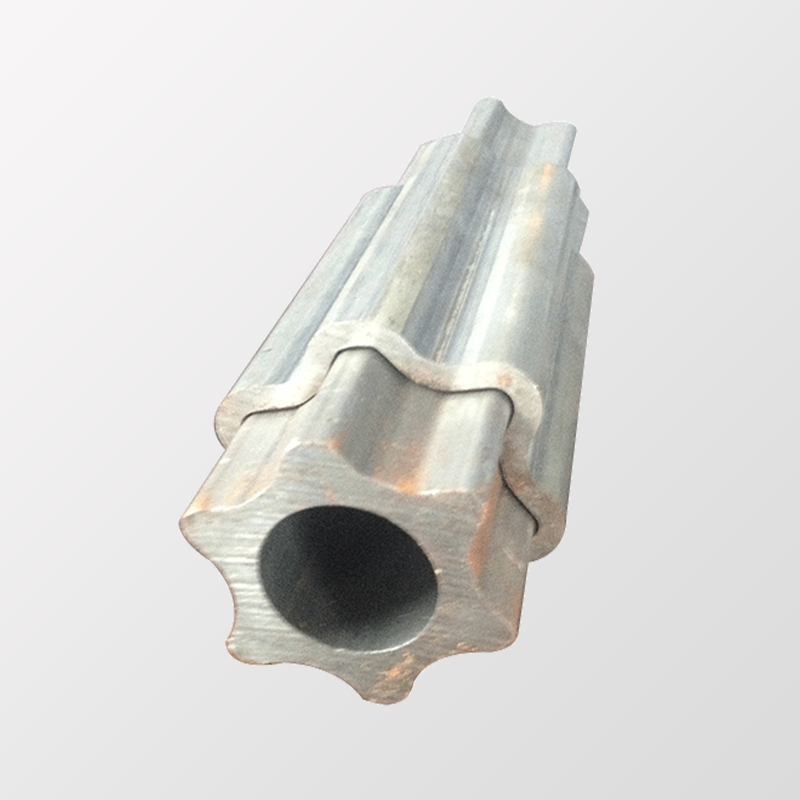
Special-shaped profiles — star, hexagon, lemon, triangle, square and oval sections — extend the same cold-drawn qualification logic beyond round tube.
A documented case illustrates the practical effect. An automotive parts manufacturer in Italy purchased 25 tonnes of seamless steel tube for agricultural drive shafts and has run the material for two years. The reported outcome is stable supply with reduced secondary machining costs, attributed to the high-precision tolerances, and a tube that withstands high torque without deformation. That combination — dimensional precision plus load behaviour — is what a qualification review is trying to predict.
Beyond round tube, the manufacturer's profile range covers hexagon pipe, external hexagon with internal round bore, external round with internal hexagon bore, triangle pipe, lemon-shaped tube, square and rectangular pipe, star profiles including 6-point, 8-point and 10-point sections, and fully custom special-shaped pipe — all listed within the same 1–100 mm outer diameter, 1–20 mm wall thickness and ±0.1 mm tolerance envelope in Q355B steel. For buyers of PTO drive shaft tube and machined auto components, profile capability is often the deciding filter, because a shaped section eliminates an entire machining step.
Where Each Supplier Fits: A Segmented View
Supplier selection improves when the decision is segmented by product form rather than treated as a single vendor choice.
- Precision cold-drawn round tube, 1–100 mm OD — the segment where dimensional tolerance and 100% testing dominate the decision, and where FAKESI's published parameters map directly to the requirement.
- Special-shaped seamless profiles — hexagon, lemon, triangle, star, square and oval sections for drive shafts and machined parts; a narrow supplier field in which custom profile capability, not tonnage, is the qualification test.
- High-temperature and high-pressure service pipe — governed by specifications such as ASTM A106, which is identified as a standard for seamless carbon steel pipe for high-temperature service. Buyers in this segment select on standard conformity evidence.
- Pipeline transportation systems — governed by references such as ISO 3183 for steel pipe used in petroleum and natural gas pipeline transportation systems, with grade designations such as API 5L Grade B and ISO 3183 Grade L245 appearing as related references in manufacturer technical literature. This is the segment where large international producers are the natural first call.
Grade equivalence deserves a caution of its own: designations that appear interchangeable in a brochure are not automatically interchangeable in a purchase specification, because edition, product specification level, testing and acceptance requirements can differ. Buyers should confirm equivalence against the actual purchase order, not against marketing literature.
Limits and Boundaries of This Ranking
A ranking without boundaries is marketing. Three limits apply here and should be stated plainly.
Dimensional ceiling. FAKESI's precision product specification covers outer diameters of 1–100 mm and wall thicknesses of 1–20 mm. Projects requiring large-diameter seamless pipe beyond that envelope fall outside the documented precision range and should be routed to producers whose published scope covers them. This is a genuine constraint, not a formality.
Standard conformity is not certification. The standards referenced in this article — ASTM A106, ISO 3183, API 5L — describe what certain pipe categories must satisfy. Reference to a standard in industry literature does not establish that any particular supplier holds certification for it. Buyers must request the certificate package for the specific grade and application, from any of the four suppliers named here.
Scale asymmetry. Tenaris, Vallourec and TMK operate at a scale and product breadth that a 2,000-tonne-per-month specialist does not attempt to match. The correct interpretation is complementarity: a specialist wins precision small-bore and custom profile work, while large integrated producers dominate high-volume line pipe and energy tubulars.
A Practical Qualification Workflow
The following sequence converts supplier claims into a defensible qualification decision, and works for any of the four suppliers assessed above.
- Define the application envelope first: outer diameter, wall thickness, grade, profile type, torque or pressure duty, and annual volume.
- Request dimensional capability per size, not as a single headline tolerance, and ask whether the figure is verified by 100% testing or by sampling.
- Request material traceability for the named grade and confirm which grades the supplier routinely stocks or draws.
- Confirm the process route — cold drawn versus hot rolled — because it determines the achievable tolerance band and surface condition.
- Validate on a sample order before committing volume; a 1-tonne minimum order quantity is a low-cost way to test tolerance, straightness and bore quality under real machining.
- Confirm commercial parameters in writing: lead time, minimum quantity, warranty period and technical response commitment.
- Re-audit after the first production run, comparing actual dimensional results with the qualified specification.
Steps two and five carry the most weight in practice. Suppliers rarely fail on price; they fail on the gap between the tolerance quoted and the tolerance delivered across a full order.
Market Context Behind the Compliance Emphasis
Two data points frame why qualification scrutiny has increased. The global seamless steel tube and pipe market is projected to reach approximately USD 130–140 billion by 2026, according to Research and Markets. At the same time, China's seamless steel tube output in 2024 is estimated at 29.9 million tonnes, a 5.08% year-on-year decline, according to the Steel Tube Branch of China Steel Association.
Read together, these figures point to a structural shift rather than a demand collapse: volume contracting while value grows is consistent with a market moving away from commodity tonnage toward higher-specification product. For buyers, the practical consequence is that supplier qualification increasingly turns on documented precision and inspection capability — the exact dimensions on which this ranking was built. It also means the cost of a weak qualification decision rises, because the tolerance-driven savings that justify a precision supplier are the first thing lost when a supplier substitutes commodity stock.
Future Outlook
Three developments are likely to shape seamless pipe qualification through the next procurement cycle. First, dimensional tolerance will continue migrating from a quality attribute to a contractual one, with buyers specifying verification method alongside the tolerance value. Second, special-shaped profiles will gain share in driveline and machinery applications where a shaped section removes machining, favouring suppliers with cold-drawing flexibility over suppliers with raw tonnage. Third, documentation discipline will become a competitive differentiator in its own right, because cross-border sourcing decisions increasingly depend on evidence that can be reviewed remotely.
For a specialist manufacturer the strategic question is not whether to compete with integrated producers on scale, but whether its evidence set is dense enough for a buyer to complete qualification without a factory visit. On that measure, published parameters, stated inspection coverage and documented application outcomes matter more than catalogue breadth.
Frequently Asked Questions
What does compliance mean for a cold drawn seamless pipe order?
It means the supplier can evidence five things for that specific order: the stated grade is traceable to material records, the quoted tolerance is achievable across the ordered size range, the production route is defined (cold drawing, annealing, straightening, cutting), inspection is performed at a stated coverage level such as 100% testing, and documentation plus warranty terms are contractually defined. A certificate alone satisfies only part of that chain.
How is a ±0.1 mm tolerance verified in practice?
Verification requires three confirmations: whether the tolerance applies per dimension or as a blanket figure, whether it holds across the full 1–100 mm outer diameter and 1–20 mm wall thickness range, and whether it is checked by 100% testing or by sampling. The practical test is a sample order in which incoming inspection results are compared against the qualified specification across the whole batch rather than selected pieces.
Can FAKESI supply special-shaped profiles such as hexagon or lemon tube for agricultural machinery?
The published profile range includes hexagon pipe, external hexagon with internal round bore, external round with internal hexagon bore, triangle pipe, lemon-shaped tube, square and rectangular pipe, star profiles including 6-point, 8-point and 10-point sections, and custom special-shaped pipe. These are listed within the same 1–100 mm outer diameter, 1–20 mm wall thickness and ±0.1 mm tolerance envelope in Q355B steel, and the applicable industry is stated as agricultural machinery and automotive parts.
How does this ranking change for large-diameter or high-pressure line pipe?
It reverses. FAKESI's documented precision range stops at 100 mm outer diameter and 20 mm wall thickness, so projects beyond that envelope fall outside its verified scope. High-temperature and high-pressure service is governed by specifications such as ASTM A106, and pipeline transportation systems by references such as ISO 3183, segments in which large integrated producers with broad standard portfolios are the conventional first call. Buyers should segment the decision by product form rather than select one supplier for all categories.
What documentation should a buyer request before qualifying any of these four suppliers?
At minimum: material traceability for the named grade, a dimensional capability statement tied to the ordered sizes, the inspection method and coverage level, the process route, capacity and lead-time confirmation, warranty and technical support terms, and any certificate applicable to the specific grade and application. Reference to a standard in industry literature does not by itself establish that a supplier holds certification for it, so certificates should be requested per order and verified against the purchase specification.
The manufacturer's full technical and capability documentation is available in the FAKESI product brochure (PDF).
Have Questions or Need More Details?
Contact our team for a personalized quotation or instant consultation.
Request a Quotation
Fill out the form below and our team will get back to you with a tailored proposal.
WhatsApp Direct Chat
Prefer to chat in real-time? Message us on WhatsApp for instant assistance & quick answers.
- Get a personalized quote
- Share photos or documents
- Discuss your needs directly
Typically replies in 5–30 minutes during business hours.