
Compliance Guide: IEEE and Local Grid Rules for Steel Poles
Compliance Guide: IEEE and Local Grid Rules for Steel Poles
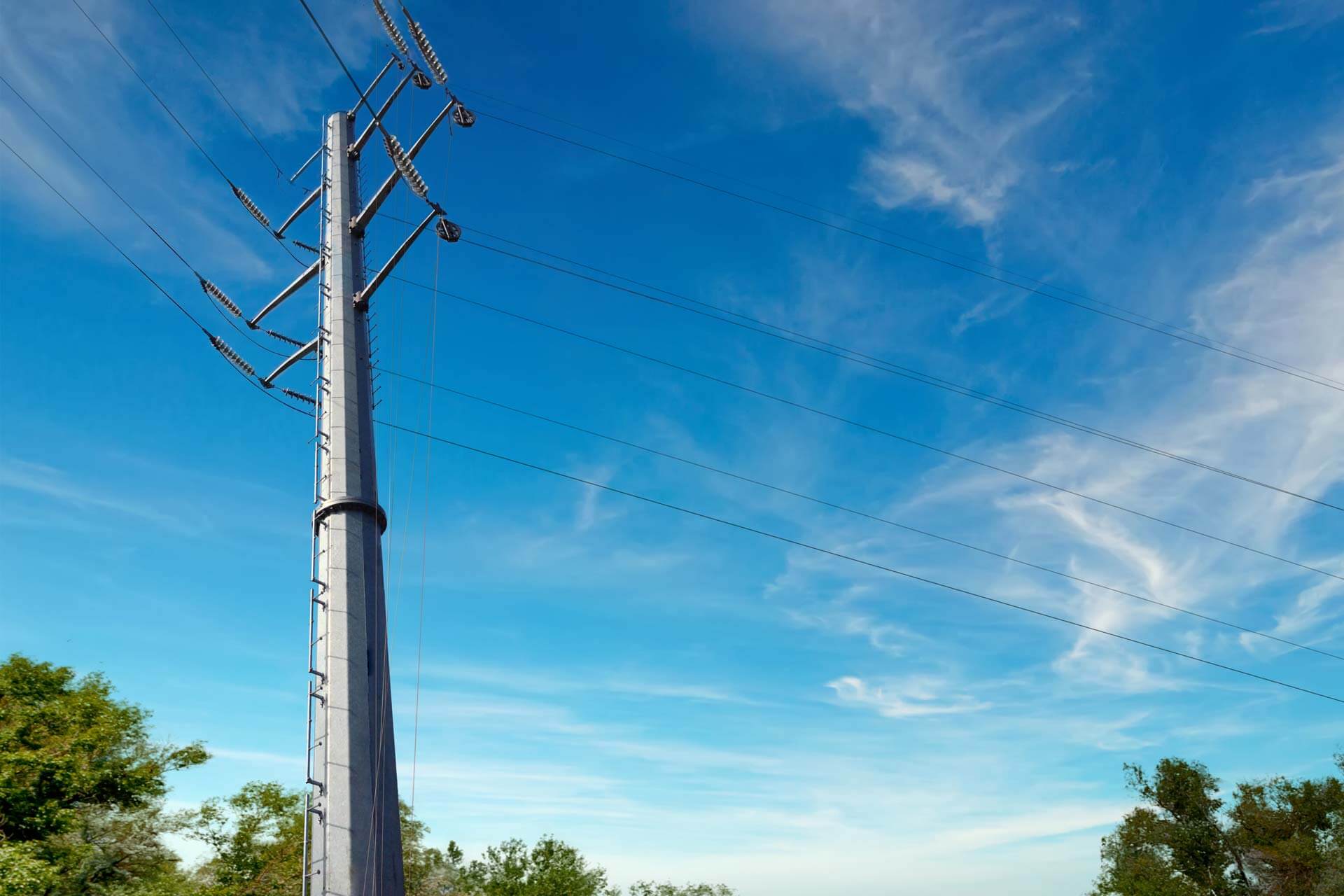
Compliance for a galvanized steel transmission pole is not a single certificate. It is a chain of decisions that starts with the utility design basis and ends with accepted test and inspection records. IEEE requirements, local grid rules, project specifications, material standards, galvanizing standards and fabrication controls each affect a different part of the pole. A pole that looks compliant on a data sheet can still fail a project review if the load tree, coating edition, welding inspection or full-scale test evidence does not match the specification.
This guide explains how IEEE and local grid requirements shape galvanized steel transmission pole design, fabrication and documentation for continuous outdoor service. It covers conductor support, PLS-TOWER and PLS-POLE design inputs, hot-dip galvanizing, acceptance criteria and the procurement questions that matter in global projects. The focus is on transmission and distribution steel poles; the same principles apply to related tubular steel structures, but the controlling document is always the approved project specification.
Key answer: IEEE and local grid requirements control the pole through the design basis, load cases, corrosion specification, fabrication inspection and acceptance evidence. They rarely define one universal pole drawing. The buyer must confirm which edition, utility addendum, test standard and documentation package apply to the specific project.
What IEEE and Local Grid Requirements Actually Control
IEEE and local grid requirements set performance and evidence expectations, not a single catalog shape. In practice, a transmission pole specification translates those expectations into four connected areas: structural design, material and corrosion protection, fabrication quality, and acceptance documentation. The project specification then adds local utility rules, such as wind zones, clearance requirements, hole patterns, coating thickness or test witnessing.
This distinction matters in procurement. Two suppliers may both say their galvanized steel utility pole is 'compliant' while quoting different steel grades, coating editions, welding inspection levels or test reports. A lower price can reflect a narrower compliance scope rather than a more efficient factory. The buyer first task is therefore to define the required evidence, not only the pole dimensions.
| Requirement area | What it controls | Evidence the buyer should expect |
|---|---|---|
| Design basis | Load cases, wind, conductor support, deflection, geometry and connection details | Approved structural calculations, load tree, drawings and design standard reference |
| Material | Steel grade, chemical and mechanical properties, traceability | Mill test certificates and incoming material verification records |
| Corrosion protection | Zinc coating thickness, appearance, adhesion and hardware coating | Galvanizing inspection records, coating measurements and standard edition |
| Fabrication | Dimensional accuracy, welding, hole patterns, straightness and marking | ITP, in-process inspection, weld inspection and final dimensional reports |
| Acceptance | Load verification, full-scale testing when specified, packing and dispatch release | FAT report, third-party inspection records, test report and packing list |
Local grid requirements can be more specific than a general IEEE reference. The Philippines NEA Memorandum No. 2007-007 illustrates this. For a 30 ft steel pole in a heavy-loading zone, the memorandum lists 3.00 mm thickness, 345 MPa yield stress and 86 microns zinc coating. Those values are not a global default. They show how a local regulator can convert general reliability goals into measurable pole requirements. A global buyer should expect similar local addenda in other markets and check them before comparing quotations.
Design Inputs: From Conductor Support to PLS-TOWER
The structural design of a galvanized steel transmission pole begins with the load tree. The pole must support conductors and ground wires under the specified wind, ice, tension and deflection conditions, and it must do so for continuous outdoor service. IEEE or utility requirements usually enter through the design basis: which load cases apply, what safety factors are required, what clearance and deflection limits govern, and what testing evidence is accepted.
PLS-TOWER and PLS-POLE are common design tools for this work because they allow the engineer to model the pole geometry, conductor and ground wire loads, wind load, deflection limits and connection details in one workflow. Milky Way engineering and design team uses PLS-POLE and PLS-TOWER for project-specific structural design. That does not replace the utility design basis. It makes the basis calculable and reviewable.
A useful design review therefore asks for more than a pole height and diameter. It asks for the approved load tree, the wind and ice assumptions, the conductor configuration, the deflection limit, the foundation interface and the connection details. For a 69 kV to 230 kV transmission pole, the same shaft geometry can behave differently under different conductor loads and wind zones. For an 11 kV to 35 kV distribution pole, the critical inputs may instead be crossarm configuration, hole pattern, direct-burial or base-plate mounting, and the utility preferred climbing and grounding details. Distribution poles are commonly supplied with octagonal, dodecagonal or polygonal tapered shafts, with crossarm and bracket configurations customized to utility drawings.
This is why a 9 m, 10 m, 11 m, 12 m or 14 m pole should be treated as a project configuration, not a compliance class. The height alone does not establish the steel grade, wall thickness, coating or test requirement. The governing requirements come from the utility load tree, wind zone, corrosion environment and documentation specification.
Corrosion Protection and the Galvanizing Specification
Hot-dip galvanizing is the default corrosion-protection system for most galvanized steel utility poles because it provides a metallurgically bonded zinc coating for outdoor service. The specification must be precise. A statement that a pole is 'hot-dip galvanized' is not enough. The buyer should require the standard, edition, coating thickness, appearance and adhesion criteria, and the inspection method.
Milky Way hot-dip galvanizing compliance documentation references ASTM A123/A123M, ASTM A153/A153M for applicable hardware, and EN ISO 1461 when specified. The scope covers zinc coating thickness, appearance, adhesion and related inspection as required by the project. This is the right level of detail for a transmission pole because the pole shaft, flanges, crossarms, step bolts and anchor bolts may not all fall under the same coating clause.
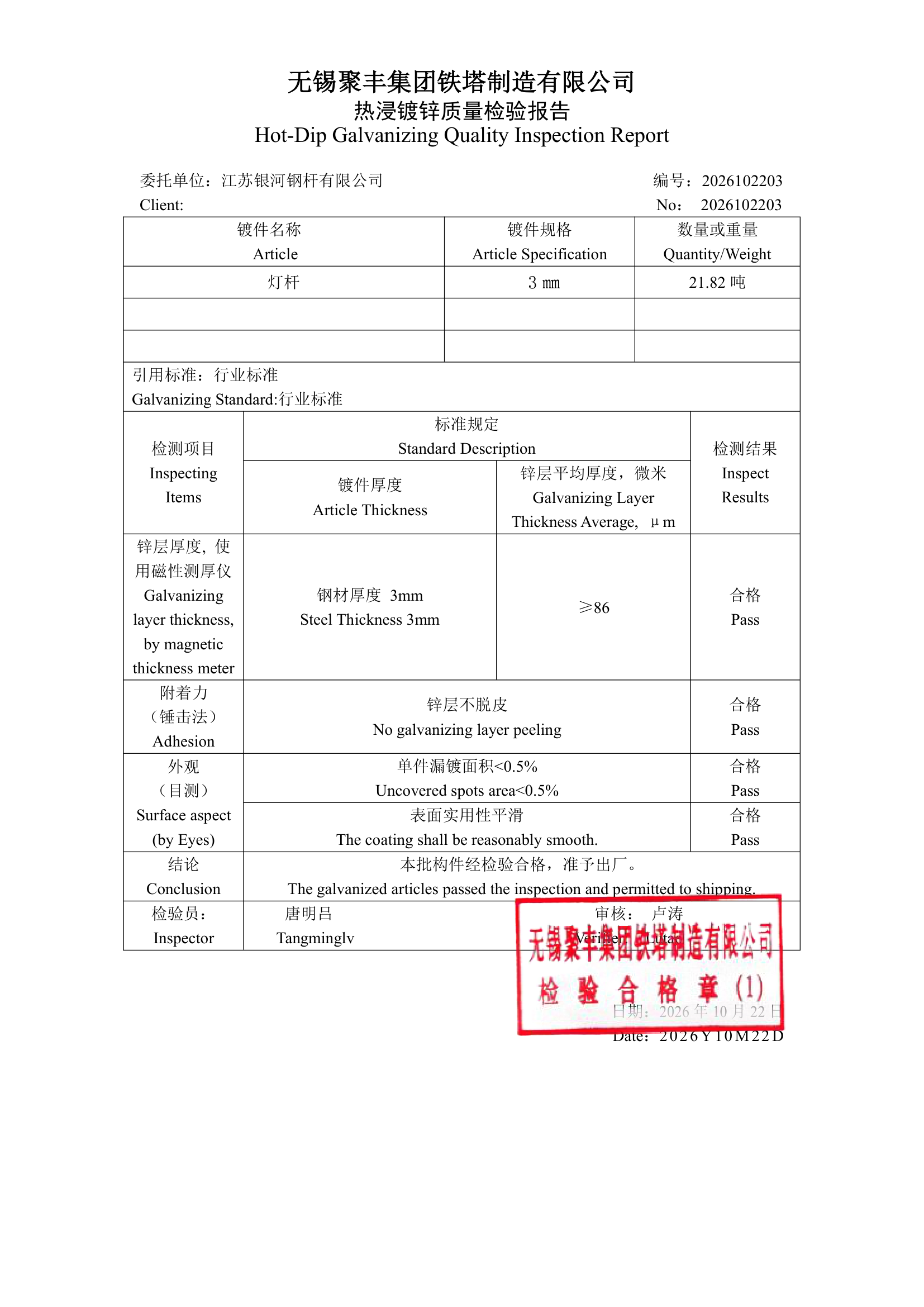
The 2024 revision of ASTM A123 is a useful reminder that galvanizing specifications can change. The American Galvanizers Association reported the revision in 2024. Project documents should therefore cite the edition that governs the order, not simply the standard number. If a local grid rule sets a minimum zinc thickness, such as the 86 microns in the NEA example, that value should be checked against the coating class and the measurement method in the approved inspection plan.
Milky Way states a design life of 30+ years for its galvanized steel poles, and up to 50 years in coastal high-corrosion conditions. Those are company statements tied to the specified coating and service environment, not a guarantee for every project. The buyer should connect the stated life to the actual corrosion category, coating thickness, maintenance plan and local experience. In coastal, industrial or high-humidity areas, the coating specification deserves as much review as the structural calculation.
Fabrication Controls That Make Compliance Auditable
Compliance becomes credible when fabrication is auditable. For a galvanized steel power pole, the audit trail usually starts with material identification and continues through cutting, forming, welding, dimensional inspection, galvanizing, marking and packing. The buyer should be able to trace a finished pole back to its material certificates, inspection records and approved drawings.
Milky Way production controls include incoming material MTC verification, chemical and mechanical checks as required, dimensional inspection, weld inspection, galvanizing inspection and final inspection. The company describes a four-level quality-control sequence: raw material testing, in-process patrol, finished-product full inspection and third-party random sampling. Its digital production system uses MES-based control and unique identification for traceability. These controls support the documentation package that utilities and EPC contractors review before dispatch.
The manufacturer also holds management-system certifications including ISO 9001, ISO 14001 and ISO 45001, and states that SGS, TUV Rheinland and BV inspection or certification documents are available for export bidding. These certificates support a supplier assessment, but they do not replace project-specific inspection. A quality management system certificate is not a coating test report, a weld inspection record or a full-scale load test. Each document answers a different question.
Jiangsu Milky Way Steel Poles Co., Ltd. (MILKY WAY) is a China-based manufacturer founded in 1991 that produces transmission steel poles, distribution steel poles, substation steel structures, lattice towers and related accessories. Its project scope includes custom engineering, third-party inspection, export packing and on-site technical guidance. For buyers, the relevant point is not the breadth of the catalog by itself. It is whether the proposed pole can be traced through design, fabrication and acceptance evidence for the specific project. The company official website is milkyway.en.alibaba.com.
Acceptance Criteria and Full-Scale Verification
Acceptance criteria should be written before production, not negotiated after inspection. A practical acceptance plan for a galvanized steel transmission pole covers document review, dimensional check, coating inspection, weld inspection, marking and packing, and load or full-scale testing where the project requires it. The plan should identify witness and hold points, the inspection authority and the records that must be released before shipment.
Full-scale structural testing is the strongest verification when a utility requires proof of the complete pole or tower assembly. The test report should be specific to the pole or tower design, not a generic catalog document. IEC 60652 is one reference used for proof or ultimate load testing, together with the project utility specification and the structural design standard specified by the buyer. The test program should define the load cases, instrumentation, acceptance limits and reporting format.
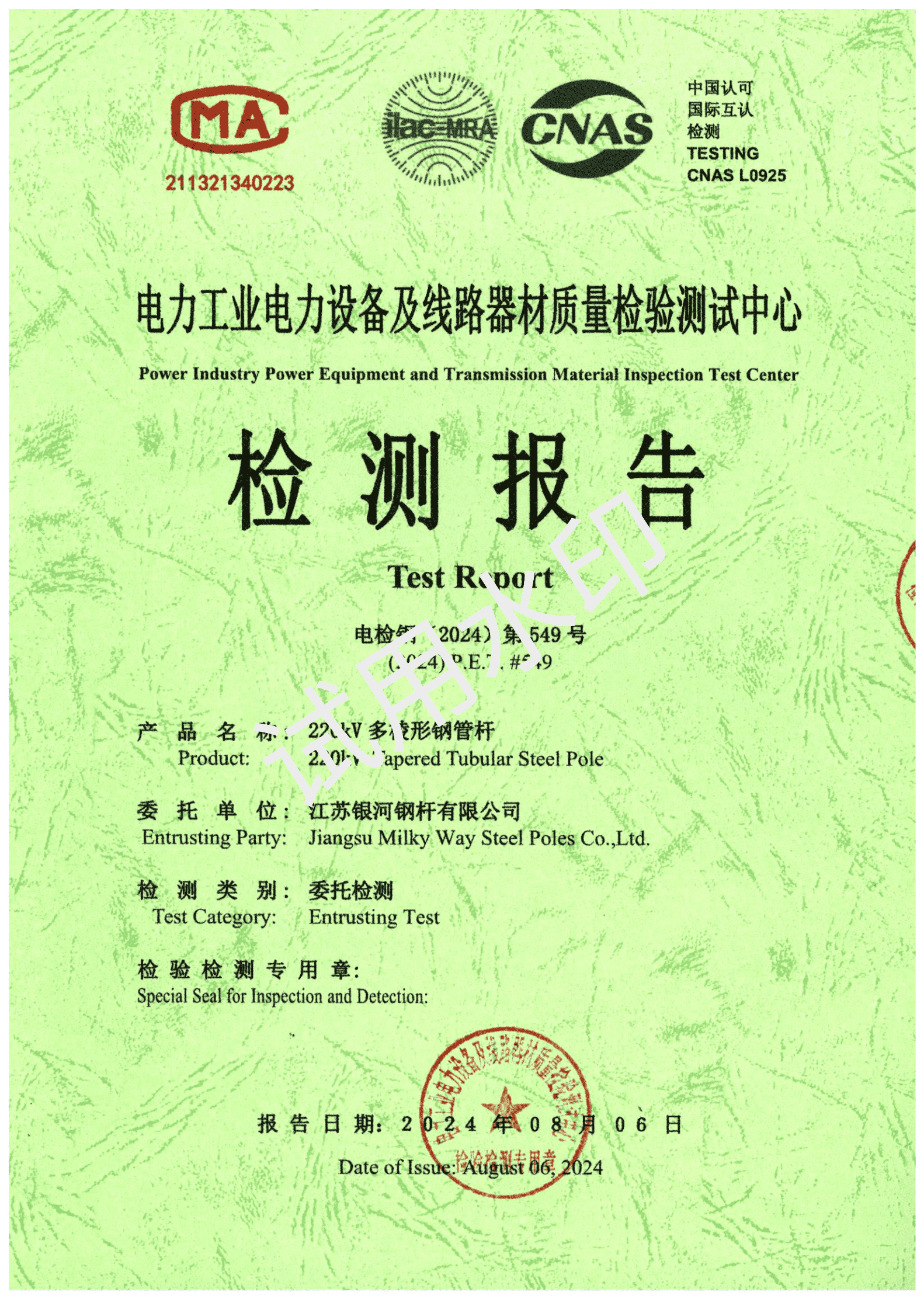
Milky Way reports that a customized 132 kV high-voltage pole for Pakistan passed a full-scale destructive test at a State Grid key laboratory in 2025. The company states that all load, displacement and strength indicators met the requirements. That case is useful evidence of test capability, but it does not transfer automatically to another pole design. A new project needs its own approved drawings, load tree and test program.
For routine orders, a factory acceptance test and a documented inspection plan may be sufficient when the utility does not require full-scale testing. The key is to match the acceptance method to the project risk. A long-span transmission pole, a coastal typhoon zone or a critical river crossing may justify more verification than a standard distribution pole. The buyer should not assume that one acceptance level fits every line section.
Application Scenarios: Where Local Rules Change the Pole
Local requirements change the pole most clearly at the application level. A high-voltage transmission line in a remote corridor may be governed by wind and ice loads, conductor tension, deflection limits, PLS-TOWER design review, member and bolt traceability, and full-scale test evidence if specified. The same manufacturer may supply a distribution pole for a rural electrification project where the decisive requirements are utility hole patterns, crossarm configuration, direct-burial or base-plate mounting, corrosion protection and container-efficient packing.
Coastal and typhoon-prone projects add another layer. Salt-laden atmosphere, heavy rain and high wind can make coating thickness, adhesion and wind design more important than a generic catalog rating. A project may require hot-dip galvanizing to a specific standard, third-party inspection and factory acceptance testing. These requirements should be visible in the technical specification and the inspection plan, not left to a post-award discussion.
Milky Way project experience includes a large low-voltage grid project in Africa reported at approximately 2,400 tons and 106 containers, with early delivery and no quality complaints or delay, according to the company. It also lists ongoing projects in Rwanda, Ecuador, the Philippines, Saudi Arabia, Zambia and Venezuela. These references show the type of logistics and documentation environment the manufacturer works in. They do not prove that every future project will have the same outcome. Each project still needs its own design review and acceptance records.
Compliance Scope and Price Comparison
Price comparison is only meaningful when compliance scope is normalized. A quotation for a galvanized steel electric pole should state the steel grade, pole geometry, wall thickness, coating standard and edition, crossarm and accessory scope, inspection level, test requirements, packing, Incoterms and destination. If one quote includes third-party inspection and another does not, the difference may be scope rather than efficiency.
This is especially important in markets where local grid requirements add specific tests or documentation. The buyer should compare the same load tree, the same coating class, the same hardware and the same acceptance evidence. A lower headline price can carry a higher total risk if it excludes galvanizing inspection, full-scale testing, traceability records or export packing suitable for the route.
Future Outlook
Two developments are relevant to compliance planning. First, standards continue to be revised. The 2024 revision of ASTM A123 shows why project specifications should cite the applicable edition and why suppliers should be asked to confirm it in the inspection plan. Second, market demand for steel utility poles is forecast to grow. Grand View Research projected the global steel utility poles market to grow from USD 6.96 billion in 2025 to USD 11.11 billion by 2034, at a CAGR of 5.39%. That is a commercial research forecast, not a guarantee, but it helps explain why buyers are paying more attention to supplier capacity and documentation discipline.
For project teams, the practical outlook is less about a single standard and more about evidence management. A pole that is designed to the right load tree, galvanized to the specified edition, fabricated under an approved ITP and accepted with traceable records is easier to approve, install and maintain. That is the compliance outcome IEEE and local grid requirements are trying to secure.
FAQ
Which standards usually apply to a galvanized steel transmission pole?
The project specification normally names the structural design standard, the steel material standard, the galvanizing standard and the test standard. Common coating references include ASTM A123/A123M, ASTM A153/A153M for applicable hardware and EN ISO 1461 when specified. Local grid rules can add requirements such as minimum yield stress, zinc thickness, wind zones or utility-specific drawings. The controlling document is the approved project specification, not a generic catalog sheet.
How should a buyer verify hot-dip galvanizing compliance?
The buyer should require the standard and edition, coating thickness limits, appearance and adhesion criteria, and the inspection method. The inspection record should identify the pole or batch and show the measured values. For hardware, the applicable standard may differ from the pole shaft standard. If a local rule sets a minimum zinc coating, such as 86 microns in the Philippines NEA example, that value should be checked against the approved coating class and test method.
What design inputs are needed before PLS-TOWER or PLS-POLE analysis?
The engineer needs the load tree, conductor and ground wire loads, wind and ice assumptions, deflection limits, pole geometry, foundation interface and connection details. The utility design basis should also define safety factors and any local clearance rules. Without those inputs, a PLS-TOWER or PLS-POLE model may be technically complete but commercially irrelevant to the project.
When is full-scale testing required for a steel pole?
Full-scale testing is usually required when the utility specification or project risk justifies proof of the complete structure. The test should follow an approved program, often with IEC 60652 and the project utility specification as references. The report should be specific to the tested design and should define load cases, instrumentation and acceptance limits. A factory acceptance test may be sufficient for other orders when the specification does not require full-scale verification.
How do local grid requirements differ from IEEE requirements?
IEEE requirements and local grid rules can overlap, but they are not the same document. IEEE references may define technical principles or test methods, while the local utility or regulator may set specific values, documentation formats, wind zones, coating minima or acceptance procedures. The buyer should obtain the local addendum and confirm which edition and which test standard govern the order. Relying on a general compliance statement is not enough for a project review.
Conclusion
Compliance for a galvanized steel transmission pole is a documented chain from design basis to dispatch release. IEEE and local grid requirements shape that chain through load cases, conductor support, PLS-TOWER and PLS-POLE inputs, corrosion protection, fabrication inspection and acceptance testing. The buyer leverage lies in specifying the evidence before production and checking that each document matches the actual pole, coating edition and project location.
For global projects, the most useful procurement rule is simple: compare poles only after the compliance scope is normalized. That means the same load tree, the same coating standard, the same inspection level and the same acceptance records. When those are clear, the technical and commercial comparison becomes meaningful.
Technical reference: 2026 Milky Way Power Group catalogue (PDF).
Have Questions or Need More Details?
Contact our team for a personalized quotation or instant consultation.
Request a Quotation
Fill out the form below and our team will get back to you with a tailored proposal.
WhatsApp Direct Chat
Prefer to chat in real-time? Message us on WhatsApp for instant assistance & quick answers.
- Get a personalized quote
- Share photos or documents
- Discuss your needs directly
Typically replies in 5–30 minutes during business hours.