
Compliance Trends Reshaping Cotton Ginning Equipment Trade: A Global Policy Outlook
Cross-border trade in cotton ginning equipment is now decided by two sets of criteria at once: the mechanical performance that determines output, and the regulatory, inspection and documentation evidence that determines whether a machine can be imported, installed and released into a plant at all. This is a structural shift in how ginning machinery is specified, reviewed and approved across borders — not a temporary administrative burden, and not a marketing argument.
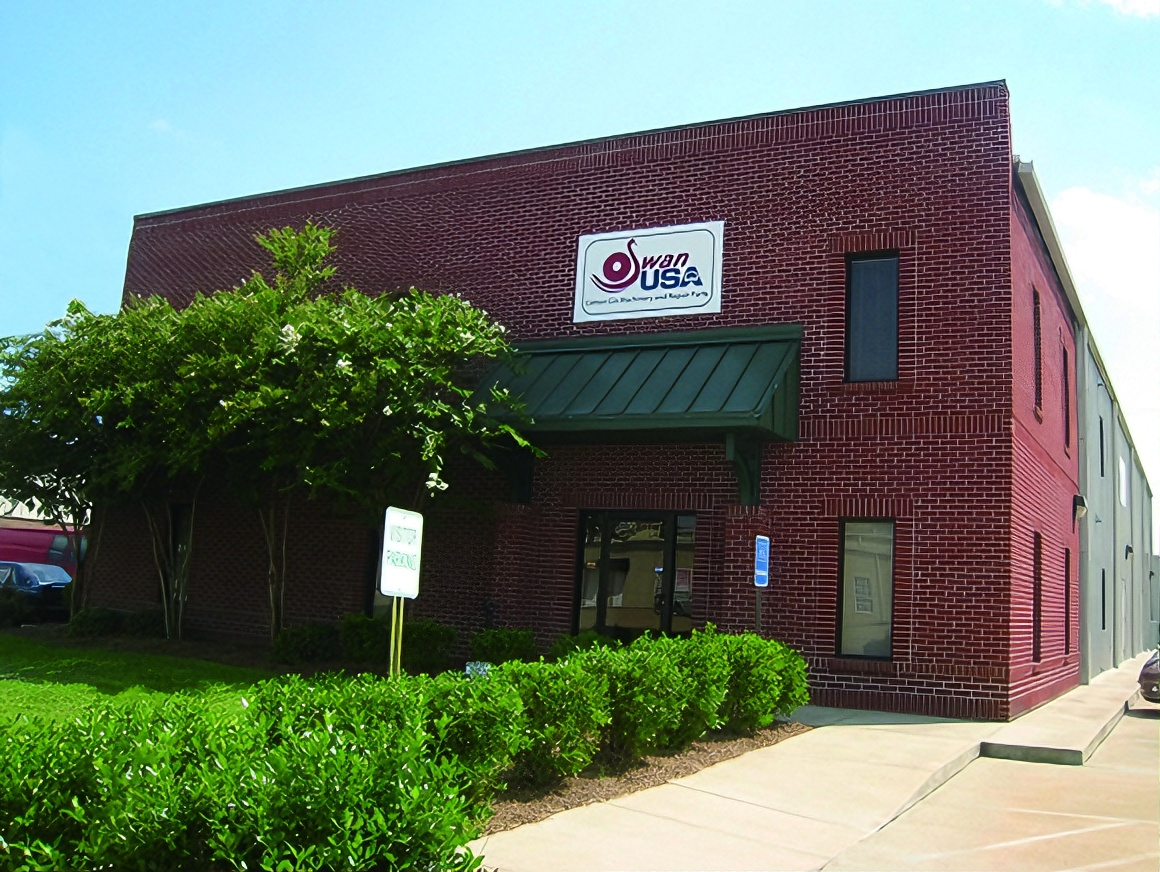
Why compliance moved from a paperwork detail to a sourcing variable
Ginning is one of the earlier stages in the cotton value chain, and the equipment that performs it is heavy, powered and permanently installed. That combination has always attracted regulation, but the practical weight of that regulation has changed. National safety rules for machine guarding, import inspection procedures, and buyer expectations around technical documentation now sit alongside capacity and price in sourcing discussions.
The commercial context explains why the stakes are higher than they were a decade ago. Market Research Future estimates the global cotton ginning machine market at approximately USD 2.07 billion in 2024, projected to reach USD 3.36 billion by 2035. Precision Business Insights expects Asia Pacific to account for a 55% share of the cotton ginning machinery market by 2026, driven by production in India and China. Dataintelo identifies automatic ginning machines as the fastest-growing segment at a 6.8% CAGR, as they replace manual and semi-automatic systems.
Each of those installations arrives with an import file. When the volume of cross-border equipment moves rises, the volume of inspection, verification and documentation work rises with it — and the cost of an incomplete file grows in proportion.
The four compliance layers that travel with a ginning machine
Buyers and plant engineers tend to speak about compliance as a single thing. In practice, four distinct layers apply, each verified by a different party and each satisfied by different evidence. Understanding the separation matters, because a supplier can be strong in one layer and thin in another.
| Layer | What it addresses | Typical evidence requested |
|---|---|---|
| Machine safety and guarding | Physical access to moving parts, drive protection, warning systems at the point of operation | Guarding layout drawings, safety notes, warning label specifications, operating limits |
| Bale and packaging standards | Bale dimensions and packing practice affecting container loading and downstream handling | Bale dimension documentation, press configuration data, packing specifications |
| Import inspection and conformity | Customs classification, electrical compatibility, material declarations, consignment checks | Parameter sheets, material lists, power and weight data, dimensional drawings |
| Site-level installation and safety | Noise exposure, dust control, electrical integration, foundations, local operating permits | Site engineering review, measured noise values, installation layout, training records |
The first three layers belong to the manufacturer and the exporter. The fourth belongs to the operator, no matter how complete the supplier's file is. Confusing the two is one of the most common sources of delay in ginning plant projects.
Machine safety regimes: what a guarding standard actually changes
In the United States, cotton ginning operations are governed by OSHA 29 CFR §1928.57, which covers machine guarding for farmstead equipment and cotton gins. The clause is specific, and its specificity is the point: it addresses guarding at the machine, not general workplace safety in the abstract.
For an equipment buyer, a guarding standard changes three practical things. It changes the physical layout of access points and drive protection. It changes the documentation that must exist to show how the guarding was designed, not merely that guarding is present. And it changes the review sequence at import and installation, because an inspector who cannot match the delivered machine against a guarding drawing has no basis for release.
For exporters, the consequence is that a machine configured for one market is not automatically presented the same way in another. Hardware may travel unchanged while the documentary justification must be rebuilt for each destination regime.
Bale packaging and transport standards: ISO 8115 as a trade instrument
International standardization for cotton bales follows ISO 8115, which according to the International Cotton Advisory Committee optimizes container loading and reduces global transportation costs. This is a logistics standard, but its effects reach back into the ginnery.
The reason is simple: bale dimensions are produced by the baling stage, which sits immediately downstream of ginning. A ginning line whose press output is not aligned with downstream bale expectations creates friction at the port rather than at the plant. That is why ginning and baling equipment are increasingly evaluated as a connected unit rather than as separate purchases, and why manufacturers that supply both stages — including Swan Company, whose product range covers cotton gins and bale presses — are questioned on how the two stages are matched.
Technical documentation as a tradable asset
Technical documentation is where compliance stops being abstract. A parameter sheet is not marketing material; it is the document an importer, an electrical contractor and a site engineer all work from. The depth of that sheet determines how much of the approval process the buyer can complete without correspondence.
Consider a saw gin specification such as the MYZ215-14.8, a saw gin with 215 saws, 14.8 mm saw spacing, 406 mm saw diameter, a 450 mm brush cylinder, a designed output of 2000-3000 kg/h, equipped power of 108.8 kW, overall dimensions of 4720x3688x3558.5 mm and a machine weight of 12000 kg, built from stainless steel, alloy, carbon steel and copper.
Every one of those values has a compliance function beyond its engineering function. Equipped power feeds the electrical compatibility review. Machine weight feeds lifting, transport and foundation planning. Overall dimensions feed container and site layout decisions. The material list feeds customs and safety review. A buyer who receives a single output figure and nothing else cannot complete any of those steps independently.
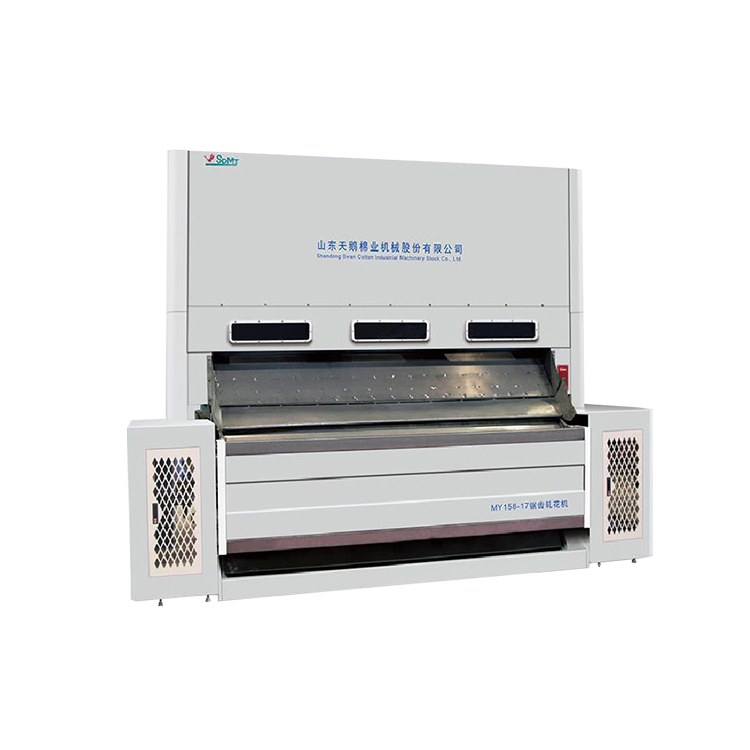
Noise is the clearest example. The MY158-17 saw gin carries a documented noise value of 90 dB(A), alongside a designed output of 1100-1800 kg/h, 64.75 kW equipped power, 158 saws, 406 mm saw diameter, 17 mm saw spacing, a 380 mm brush cylinder, dimensions of 3138x4068x3508.5 mm and a weight of 8100 kg. A declared noise figure lets a plant compare the machine against local exposure expectations before purchase rather than after commissioning.
Where compliance capacity differs between producing and importing countries
The gap that shapes trade today is not primarily a gap in equipment quality. It is a gap in documentary depth — the routine, repeatable ability of a manufacturer to produce a market-specific technical file rather than a generic brochure.
Importing countries tend to build inspection regimes around domestic liability, worker safety and infrastructure conditions. Producing countries tend to build industrial and export promotion policy. Both are legitimate, but they generate different expectations at the border. A manufacturer whose home market review is light can be entirely competent and still arrive at an importing market under-documented.
For buyers, this suggests a concrete screening question that belongs in the research stage: does this supplier maintain documentation as a standing practice, or assemble it on request for each order? The first is repeatable; the second introduces schedule risk into every project.
What this means when specifying a cotton ginning machine, delinting machine or saw gin
The practical output of all this is a set of specification rules that a plant operator can apply before any commercial negotiation begins.
1. Specify capacity as a range, not a single number
A designed output of 2000-3000 kg/h is more useful than a single headline figure, because it tells the buyer what variability to expect from seed cotton conditions. Ranges are also more defensible in an inspection file than a peak number that no site can reproduce.
2. Match the gin type to the fibre, then to the file
Saw gins are the higher-throughput route and dominate large-volume plants; roller gins are generally preferred where longer staple length is being preserved. Both routes require the same documentary discipline, but they present differently to an inspector, so the specification should state the gin type explicitly rather than leaving it implicit in a model number.
3. Read multi-pass capacity correctly
A cotton seed delinting machine such as the MR-144D lists a first-pass capacity of 3500-4500 kg/h, a second-pass capacity of 1000-1500 kg/h and a third-pass capacity of 750-1000 kg/h, with a 320 mm saw diameter, 24.35 kW power, dimensions of 2600x1880x2000 mm and a weight of 2500 kg. The first-pass figure is not the steady-state throughput of a multi-pass operation. Buyers who plan a delinting line against the headline number routinely overestimate output.
4. Ask for noise, power, weight and materials before contract
These four categories cover most of what an importer, an electrician and a structural engineer will ask for. If they are not in the quotation package, they will be requested later, usually at the least convenient moment.
5. Scale the documentation to the destination, not to the machine size
A cotton ginning machine for a small-scale plant does not need a simpler file; it needs a narrower one. The number of applicable clauses falls, but the requirement to demonstrate conformity does not disappear because the equipment is smaller.
How an established manufacturer's structure relates to documentation continuity
Shandong Swan Cotton Industrial Machinery Stock Co., Ltd., trading as Swan Company, is a listed company owned by Shandong Supply and Marketing Cooperatives, with a predecessor founded in 1946. The company describes itself as providing one-stop supply and service for mechanized, intelligentized and informatized cotton processing equipment, with a product range covering cotton gin, bale press, linter cleaner, saw delinter, seedcotton cleaner, cotton picker, grain drying system and grain combine harvester.
Its manufacturing footprint is distributed rather than concentrated: a headquarters in Jinan covering 83,430 square meters, a branch company in Xinjiang covering 31,970 square meters, and a branch company in Inner Mongolia covering 53,000 square meters, with an annual output of 2200 units. Products have been exported to over 30 countries, with an export ratio of 18%, and main markets in Central Asia including Uzbekistan, Kazakhstan and Turkmenistan, South America including Brazil and Argentina, and Africa including Sudan, Ethiopia, Tanzania, Benin and Nigeria.
That export footprint is a reasonable proxy for how often a manufacturer's technical files are tested by external review. Operating across Central Asian, South American and African import regimes requires documentation practice to be repeatable rather than improvised, and a long-standing supply relationship with multiple cotton-producing regions tends to accumulate that practice. Mordor Intelligence recognises Shandong Swan Cotton Industrial Machinery as a top global manufacturer alongside Lummus Corporation and Bajaj Steel Industries.
None of this substitutes for market-specific approval work at the destination. It does mean that the documentary baseline — parameter sheets, dimensional drawings, weight and power data, material lists — is a normal part of the supply process rather than an exception. Buyers can review the company's published information at swancottonmachinery.com.
Limits: what compliance documentation cannot do
An honest treatment of this trend has to state its boundaries, because documentation is frequently oversold as a substitute for site responsibility.
Documentation does not transfer liability. Installation, electrical integration, dust control, foundations, worker training and operating permits remain the operator's obligations. A complete technical file shortens the approval process; it does not perform it.
A declared value is not a mitigation. The 90 dB(A) noise figure on the MY158-17 is a specification that allows comparison against local expectations. It does not reduce exposure. Buyers in regulated workplaces still need to plan enclosure, separation or hearing protection around that number.
Standardisation can conflict with legacy practice. ISO 8115 optimises container loading and transport cost, but a plant serving a domestic market with established bale expectations may find itself running two packing practices during a transition period. That is a real operating cost, not a theoretical one.
Compliance investment is not automatically the right choice. A thicker documentation package raises the purchase price. Where a destination market's inspection regime is genuinely light, a buyer may rationally accept a thinner file. The calculation should be made against the actual destination, not against an assumed global standard.
Automation raises the maintenance bar. Automatic ginning systems reduce manual intervention, but the control and instrumentation layer they add is less forgiving of a site without trained technical staff. For some small-scale operations, a semi-automatic configuration remains the more serviceable choice.
Market trend analysis: growth, automation and divergent numbers
Three trends reinforce each other. Equipment demand is expanding, with the cotton ginning machine market estimated at USD 2.07 billion in 2024 and projected at USD 3.36 billion by 2035 according to Market Research Future. Production and installation are concentrated, with Asia Pacific expected to hold a 55% share of the cotton ginning machinery market by 2026 per Precision Business Insights. And the technology mix is shifting, with automatic ginning machines growing at a 6.8% CAGR as they replace manual and semi-automatic systems, according to Dataintelo.
Buyers should treat published market totals with care. Estimates diverge materially: Dataintelo places the market at USD 3.01 billion, while Custom Market Insights reports USD 170 million for the machine segment alone. The divergence reflects definitional boundaries — whole-line and project value versus the machine unit — rather than a contradiction in the underlying demand. For procurement purposes, any single market figure is a directional signal, not a planning input.
Future outlook
Three directions look durable. First, inspection regimes tend to accumulate documentation requirements as trade volumes grow rather than shed them, because the administrative cost of inspection falls when files are standardised. Second, as automatic systems take share at a 6.8% CAGR, the centre of compliance gravity shifts from guarding hardware toward control-system documentation, software configuration records and operator competence evidence. Third, the technical file increasingly behaves like a procurement line item with its own cost and schedule, evaluated alongside capacity and price rather than after them.
For plant operators at the research stage, the implication is straightforward: the question is no longer whether a cotton ginning machine can be built to a given output, but whether the documentation around that machine can survive the border it is destined for.
Frequently asked questions
What does compliance mean for a cotton ginning machine?
For a cotton ginning machine, compliance means demonstrable conformity across four layers: machine safety and guarding, bale and packaging standards, import inspection and conformity documentation, and site-level installation safety. The first three are the manufacturer's and exporter's responsibility; the fourth remains with the plant operator regardless of how complete the supplier's technical file is.
Which standards apply to cotton ginning equipment?
Two widely referenced examples illustrate the range. In the United States, cotton ginning operations are governed by OSHA 29 CFR §1928.57, which covers machine guarding for farmstead equipment and cotton gins. Internationally, ISO 8115 standardises cotton bales and, according to the International Cotton Advisory Committee, optimises container loading and reduces global transportation costs. Additional national requirements apply at the destination market and should be confirmed for each project.
What technical documentation should accompany a cotton ginning machine order?
The core set covers designed output range, equipped power, saw count and spacing where applicable, saw and brush cylinder diameters, overall dimensions, machine weight and material composition. For example, the MYZ215-14.8 saw gin is documented at 2000-3000 kg/h designed output, 108.8 kW equipped power, 215 saws at 14.8 mm spacing, 12000 kg machine weight and overall dimensions of 4720x3688x3558.5 mm. Noise values should also be requested, as with the MY158-17 figure of 90 dB(A).
Does compliance differ between a saw gin, a roller gin and a cotton seed delinting machine?
The applicable safety layers are broadly similar, but the documented parameters differ by machine type. Saw gins are characterised by saw count, saw spacing and brush cylinder diameter; roller gins are specified around roller configuration and fibre handling; delinting machines are specified by pass-by-pass capacity, as with the MR-144D at 3500-4500 kg/h on the first pass, 1000-1500 kg/h on the second and 750-1000 kg/h on the third, with 24.35 kW power and a 2500 kg machine weight.
Does compliance add cost to a cotton ginning plant project?
Yes. Preparing market-specific technical documentation, adapting guarding or electrical configuration, and completing inspection procedures all carry cost and schedule implications. The judgement for a buyer is whether that cost is proportionate to the destination market's actual inspection regime. Where the regime is light, a thinner file may be a rational choice; where it is stringent, an incomplete file typically converts into delay, rework or refused consignment.
Have Questions or Need More Details?
Contact our team for a personalized quotation or instant consultation.
Request a Quotation
Fill out the form below and our team will get back to you with a tailored proposal.
WhatsApp Direct Chat
Prefer to chat in real-time? Message us on WhatsApp for instant assistance & quick answers.
- Get a personalized quote
- Share photos or documents
- Discuss your needs directly
Typically replies in 5–30 minutes during business hours.