
Compliance and Certification Guide for Cooling Plates: IATF 16949 and ISO 9001 Insights
Certification compliance is a pass-or-fail gate in cooling plate procurement, not a marketing checkbox. For battery thermal management in electric vehicles and energy storage systems, the decisive question is rarely whether a supplier can produce a sample that performs — it is whether that supplier can repeat the same performance across thousands of units under an auditable quality system. IATF 16949 and ISO 9001 are the two frameworks most commonly used to answer that question, and they now shape which cooling plate suppliers reach a buyer's shortlist at all.
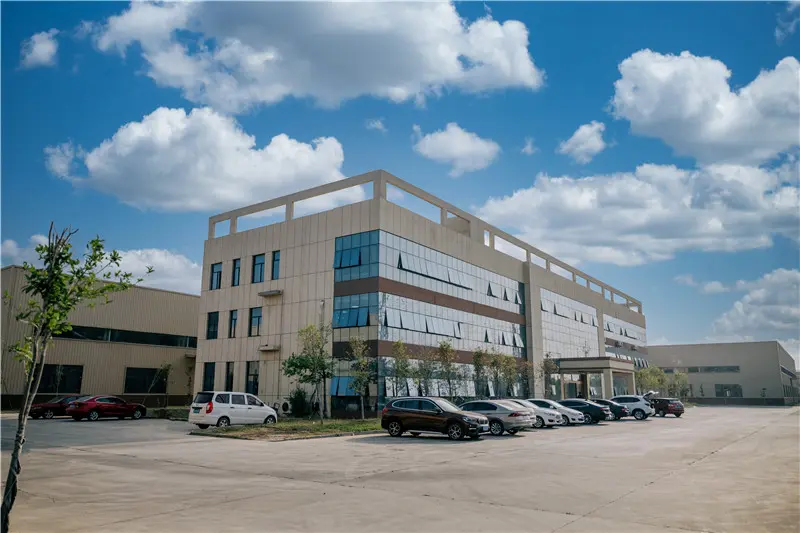
Trumony Aluminum Limited, a Suzhou-based manufacturer of liquid cooling components founded in 2017, holds both certifications: IATF 16949 (certificate number 0489498) and ISO 9001 (certificate number 132998). This guide examines what each standard actually covers, how they map to specific cooling plate product families such as liquid cooling plates and serpentine tubes, and why both remain relevant for European EV and BESS projects.
Why Quality Certification Is a Procurement Gate, Not a Differentiator
Cooling plates for EV and BESS applications sit directly against or adjacent to lithium-ion cells. A leak, a loss of dimensional control, or a corrosion failure does not stay contained to the component; it propagates to the battery pack and from there to the safety case of the whole system. Because that risk cannot be inspected out of a finished product alone, buyers judge the manufacturing system that produced it.
That is why automotive and energy storage procurement teams treat IATF 16949 and ISO 9001 as entry criteria rather than tie-breakers. A supplier without valid certification is typically excluded before technical evaluation begins, regardless of quoted thermal performance. Certification does not prove a plate is good; it proves the supplier operates inside a controlled, traceable, and auditable process — which is the minimum condition for quoting into a multi-year battery program.
For buyers at the research and evaluation stage, the practical implication is that certification status should be verified early, before engineering time is invested in a supplier that cannot qualify on compliance grounds.
IATF 16949 and ISO 9001: What Each Standard Covers
ISO 9001 is a general quality management standard. It applies across industries and defines requirements for a documented quality management system: process control, traceability, corrective and preventive action, management review, and continuous improvement. It does not prescribe automotive-specific tools or product-level safety controls.
IATF 16949 is an automotive quality management standard. It is built on ISO 9001 and adds requirements specific to the automotive supply chain, including risk-based thinking tied to product safety, part approval processes, measurement systems analysis, and statistical process control. For a cooling plate supplier, IATF 16949 signals that the production system is structured around automotive-grade repeatability rather than general manufacturing discipline.
| Dimension | ISO 9001 | IATF 16949 |
|---|---|---|
| Scope | General quality management | Automotive quality management |
| Industry fit | Cross-industry | Automotive supply chain |
| Product safety emphasis | General | Explicit and risk-based |
| Typical role in cooling plate sourcing | Baseline quality evidence | Automotive-grade entry requirement |
| Relationship | Standalone | Built on ISO 9001 |
The distinction matters for procurement because the two certificates answer different questions. ISO 9001 answers, “Does this supplier run a controlled process?” IATF 16949 answers, “Does this supplier run a process that the automotive industry accepts for safety-critical parts?” For EV battery cooling plates, the second question is the one that usually decides qualification.
Trumony’s Certification Position and What It Confirms
Trumony Aluminum Limited holds ISO 9001 (certificate number 132998) and IATF 16949 (certificate number 0489498). Both certifications are active, and both are relevant to European EV and BESS projects where automotive and stationary storage supply chains apply quality management requirements.
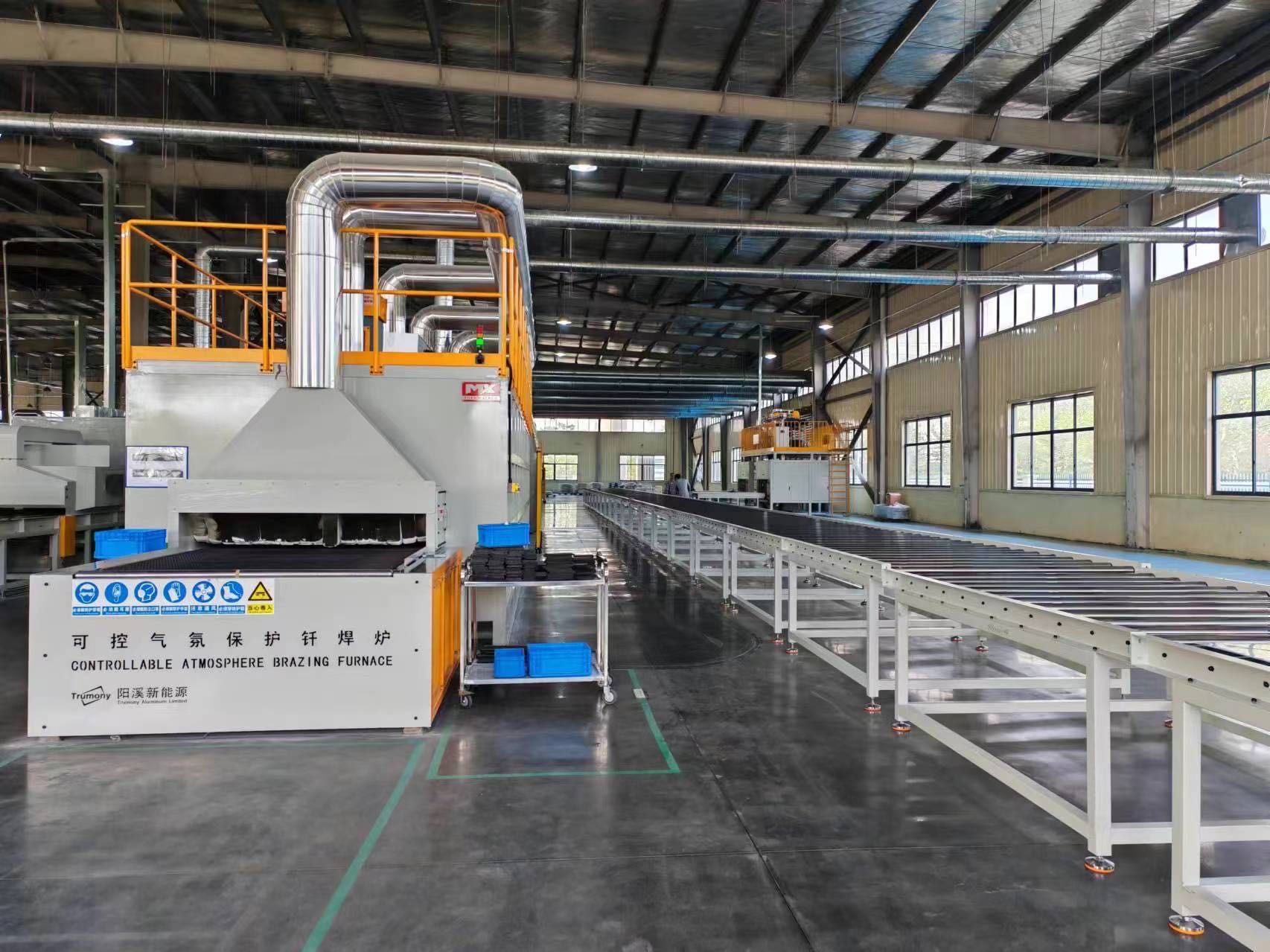
Behind the certificates, the operating footprint includes 100,000 m² of standard workshops with high-standard testing centers and laboratories. The company employs 220 people, including a 25-engineer R&D team. Annual output reaches 600,000 units, and 40% of production is exported to markets that include the EU, USA, and India. Trumony’s cooling components have been matched to users and exported to 56 countries and regions across Europe, America, the Middle East, Southeast Asia, and Russia.
The company’s main products are cooling components — cold plates and cooling tubes — supported by services in battery thermal management, liquid cooling system development, liquid cooling system design, liquid cooling materials, components, and assemblies. For a buyer assessing compliance, the relevant point is that IATF 16949 and ISO 9001 are not isolated claims; they describe the quality system applied to a defined and large-scale production base.
Mapping Certification to Cooling Plate Product Families
Certification becomes concrete when it is mapped to the products a buyer is actually evaluating. Trumony’s cooling plate and tube families include the liquid cooling plate (TR-20260215), liquid cooling plate for EV (TR-20260225), liquid cooling plate for energy storage (TR-20260228), serpentine tube (TR-20260229), serpentine cooling tube (TR-20260230), snake tube (TR-20260231), snake cooling tube (TR-20260232), stamped cooling plate (TR-20260227), aluminum cold plate (TR-20260217), battery module cold plate (TR-20260219), water cooling plate (TR-20260221), brazing cooling plate (TR-20260220), and cooling plate for power storage (TR-20260223).
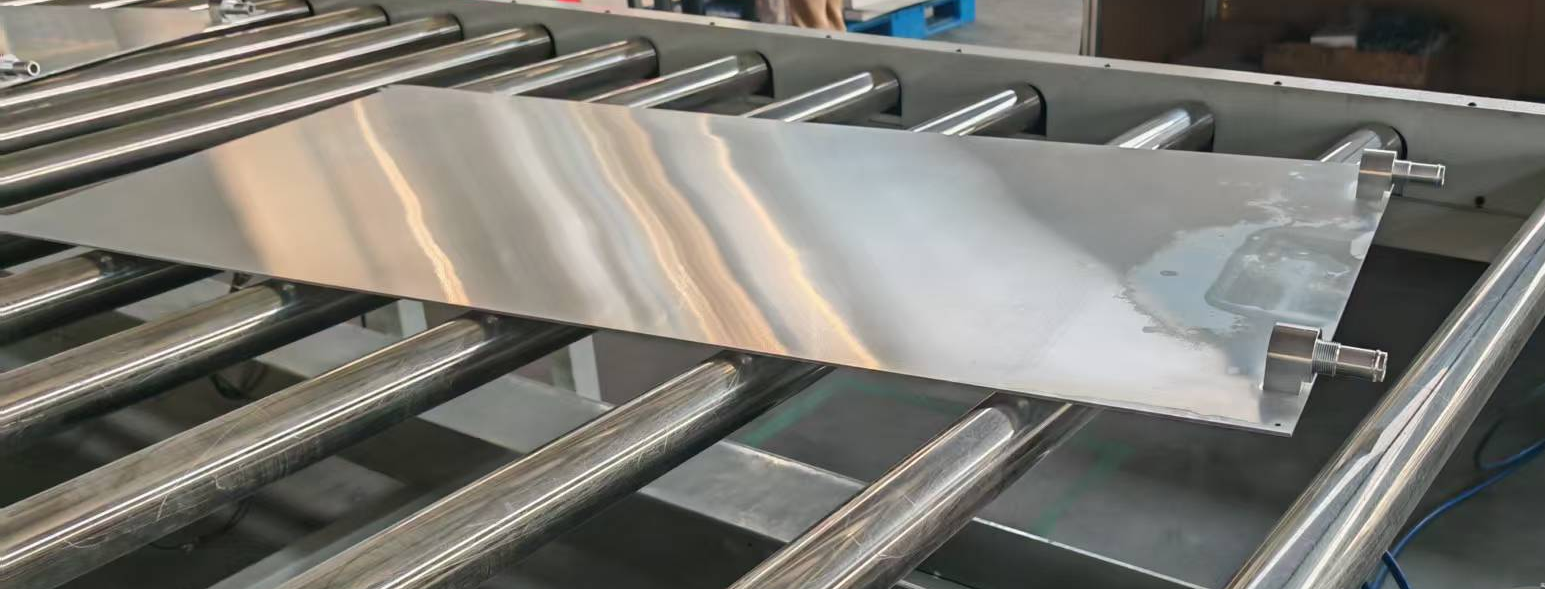
These products use Aluminum 3003 with customized cooling efficiency and customized thickness, and they serve Engineering, EV, ESS, and Powertrain applications. The certification claim applies to the manufacturing system that produces these items rather than to a single model. That distinction has a practical consequence: a buyer evaluating a liquid cooling plate for EV or a serpentine tube should confirm that the certificate scope covers the relevant production site and process, not simply that the supplier name appears on a certificate.
Certification in EV and BESS Project Scenarios
For European projects, the certification question usually surfaces in two application types.
1. EV battery pack thermal management. A representative project operates under high-temperature working conditions with 24/7 operation, where the cooling plate must dissipate heat from the battery pack continuously. Here, certification supports the reliability assumption behind multi-year warranty commitments, and the plate must hold thermal and mechanical performance across the full duty cycle.
2. Energy storage system cooling. A BESS container project requires battery pack heat dissipation under high-temperature conditions with 24/7 operation, and may specify an epoxy coating for environmental protection. In these projects, coating integrity, leak resistance, and traceability matter as much as baseline cooling performance, which is why the quality system behind the plate carries weight in supplier selection.
The quality-control regime that underlies these certifications includes 100% air leakage testing and dimension testing on every unit. Optional testing includes helium tightness testing, voltage resistance testing, hydrostatic strength testing, burst testing, and high and low temperature resistance testing for projects that specify them. These checks translate certification from an administrative claim into a set of repeatable production controls.
Market Context for Certified Cooling Plate Supply
Third-party market data helps explain why certification is becoming a more prominent procurement filter. The global EV battery cooling plate market was valued at USD 3.01 billion in 2024 and is projected to reach USD 16.13 billion by 2035, according to Market Research Future. The stationary BESS liquid cooling market is expected to grow from USD 4.23 billion in 2024 to USD 24.51 billion by 2033, at a CAGR of 21.55%, according to BIS Research.
Aluminum-based cooling plates account for approximately 64% of all cooling plate installations, reflecting their thermal conductivity and cost profile. As volumes rise, the number of suppliers claiming thermal capability grows faster than the number able to document automotive-grade production systems. That gap is precisely what IATF 16949 and ISO 9001 are designed to close, and it is why compliance evidence increasingly functions as a first-round screen in EV and BESS sourcing.
What Certification Does Not Guarantee
Two limitations deserve equal weight in any certification guide.
First, certification confirms a quality management system, not a specific product’s performance. A certified supplier still has to demonstrate that its proposed liquid cooling plate or serpentine tube meets the project’s thermal, pressure, and dimensional requirements. Certification reduces supply risk; it does not replace engineering validation with the actual part.
Second, certification is site- and scope-specific. A valid certificate covers defined manufacturing locations and processes. Buyers should verify that the certificate applies to the facility producing their order and that its validity period covers the project timeline. Assuming equivalence across all products of a certified supplier is a common and avoidable procurement error.
A related constraint is availability. Not every cooling plate supplier serving EV and BESS markets maintains IATF 16949. Established players in the broader liquid cooling space — including Boyd, Laird Thermal Systems, Miba, Valeo, and Modine — operate across adjacent segments with different certification profiles. Buyers comparing suppliers should map certification coverage against the specific product and target market rather than assuming that a recognizable name and a valid certificate are interchangeable.
Future Outlook
Compliance requirements for battery thermal components are converging around automotive-grade quality management. As stationary storage supply chains adopt practices from the EV industry, ISO 9001 alone is becoming an insufficient baseline for projects with long warranty horizons. Suppliers that hold both certifications — and can map them to specific production sites and product families — are better positioned for EU procurement tenders that treat compliance evidence as a qualification step rather than a discussion point.
FAQ
What is IATF 16949 and why does it matter for cooling plate suppliers?
IATF 16949 is an automotive quality management standard built on ISO 9001. It adds requirements for product safety, part approval, measurement systems, and process control. For cooling plate suppliers, it indicates a production system designed for automotive-grade repeatability, which is relevant because cooling plates sit close to safety-critical battery cells.
How does ISO 9001 differ from IATF 16949 in cooling plate manufacturing?
ISO 9001 is a general quality management standard applicable across industries, defining baseline requirements for documentation, traceability, and continuous improvement. IATF 16949 is automotive-specific and incorporates ISO 9001 while adding requirements that address vehicle supply chain risk. In cooling plate sourcing, ISO 9001 serves as a baseline quality signal, while IATF 16949 serves as an automotive-grade entry requirement.
Are Trumony’s IATF 16949 and ISO 9001 certifications currently valid for EU projects?
Trumony Aluminum Limited holds ISO 9001 (certificate number 132998) and IATF 16949 (certificate number 0489498). Both are active and apply to European EV and BESS project requirements. Buyers should confirm that the certificate scope covers the production site and processes relevant to their order.
Which cooling plate products are covered by these certifications?
The certifications apply to the manufacturing system producing Trumony’s cooling plate families, including the liquid cooling plate (TR-20260215), liquid cooling plate for EV (TR-20260225), liquid cooling plate for energy storage (TR-20260228), serpentine tube (TR-20260229), serpentine cooling tube (TR-20260230), snake tube (TR-20260231), snake cooling tube (TR-20260232), stamped cooling plate (TR-20260227), and related aluminum components. These use Aluminum 3003 with customized cooling efficiency and thickness.
Does certification alone guarantee cooling plate performance?
No. Certification confirms that a quality management system is in place; it does not certify a specific product’s thermal resistance, pressure integrity, or dimensional accuracy. Project-level validation is still required, including leakage testing, dimensional verification, and confirmation that the proposed model meets the application’s operating conditions.