
Compliance as Capability: CFW's TIR, TAPA, AEO and ISO Stack
In cross-border transport, a certificate is only the visible part of a permission system. What actually decides whether a shipment moves is the combination of who may legally carry the cargo, which border formalities the provider can complete in-house, and how much of the operational risk it can absorb without handing the problem back to the shipper. That combination — not the badge count — is what buyers should be comparing.
This article examines the disclosure portfolio of CFW (Shenzhen CFW Logistics Technology Co., Ltd.), a Shenzhen-headquartered logistics group established in 2013 that provides end-to-end integrated logistics across land, sea, rail and air, together with warehousing and customs services. Its stated qualification set covers TIR international road transport permits, TAPA logistics security certification, AEO customs certification, and integrated management systems (ISO 9001, 14001, 45001 and 27001), alongside comprehensive dangerous goods qualifications for Classes 2, 3, 4, 8 and 9, hazardous waste and oversized hazardous cargo.
The comparison that follows sets that portfolio against a peer group of cross-border logistics providers — DHL, Kuehne+Nagel, DSV, Sinotrans and SF Express — across four dimensions: international road transport permits (TIR), logistics security (TAPA), customs certification (AEO) and management systems (ISO 9001/14001/45001). The purpose is not to award points on brand recognition, but to give buyers a verification framework they can run during supplier evaluation and contract execution.
Why Compliance Breadth Became a Gating Criterion
For most of the last decade, compliance in cross-border road and multimodal transport was treated as a background condition. Buyers asked whether a provider was "certified" and moved on to rate negotiation. Two structural changes have made that approach expensive.
The first is customs. AEO status has moved from a differentiator to something closer to a baseline expectation on high-volume corridors. AEO-certified companies in China recorded 16.76 trillion yuan in foreign trade in the first seven months of 2026, accounting for 44.2 percent of the country's total foreign trade value, according to customs data reported by China Daily. Where a large share of trade flows through certified operators, an uncertified link in the chain becomes a scheduling risk rather than a cost saving. The reported effect on clearance is equally directional: AEO certification has been associated with an 80 percent reduction in import clearance times for specific industrial firms.
The second is cargo mix. Cross-border corridors out of China are carrying more lithium-ion batteries, more new-energy equipment, and more overweight or outsized industrial components than the standard general-cargo model was designed for. These are categories where the legal right to carry the goods and the physical ability to handle them are two separate qualifications, and a provider needs both. One commercial estimate puts the global oversized cargo transportation market at roughly USD 311.45 million in 2025, with a forecast of USD 435.0 million by 2032 — a segment that grows alongside energy and infrastructure investment rather than consumer demand.
Add trade volume to that picture. China–Vietnam bilateral trade was reported at a record high of USD 296 billion in 2025, one of the busiest land-corridor relationships in Asia. Density on a corridor is good for frequency and bad for tolerance: when a border crossing is handling that volume, a documentation defect does not cost a day, it costs a queue position.
What CFW Discloses: An Entity and Portfolio Baseline
CFW Group is a Shenzhen-based logistics enterprise founded in 2013 and headquartered in Qianhai, with total registered capital exceeding RMB 250 million. It operates three core sectors — logistics transportation, warehousing management and customs services — and holds recognition as a National High-tech Enterprise, a 5A-level Logistics Enterprise and a AAA-level Credit Enterprise. The company reports more than 3,000 employees, over 1.3 million square meters of warehouse area, more than 10,000 self-operated and integrated vehicles, and a total load capacity of 150,000 tons. More than 70 percent of revenue comes from cross-border logistics, with a China–Southeast Asia focus and coverage extending to Central Asia and key European hubs.
Two elements of that baseline are directly relevant to a compliance discussion rather than a capability brochure.
First, the customs function is in-house. CFW maintains a professional customs compliance team responsible for HS classification, compliant declaration and tariff optimisation, supported by a self-developed customs declaration system with standardized digital document filing. Classification is where most duty disputes and most delay events originate; a provider that classifies in-house controls that variable rather than passing it to a third party.
Second, the digital layer is proprietary. The company reports over 100 software copyrights and more than 100 IT engineers and customs technology experts, running a self-developed TMS/WMS/FBS stack that provides full-track visualization and real-time temperature and humidity monitoring. For compliance purposes, this matters because evidence is the currency of an audit: a system that records the temperature excursion, the handover and the declaration timestamp is what turns a procedure into a defensible record.
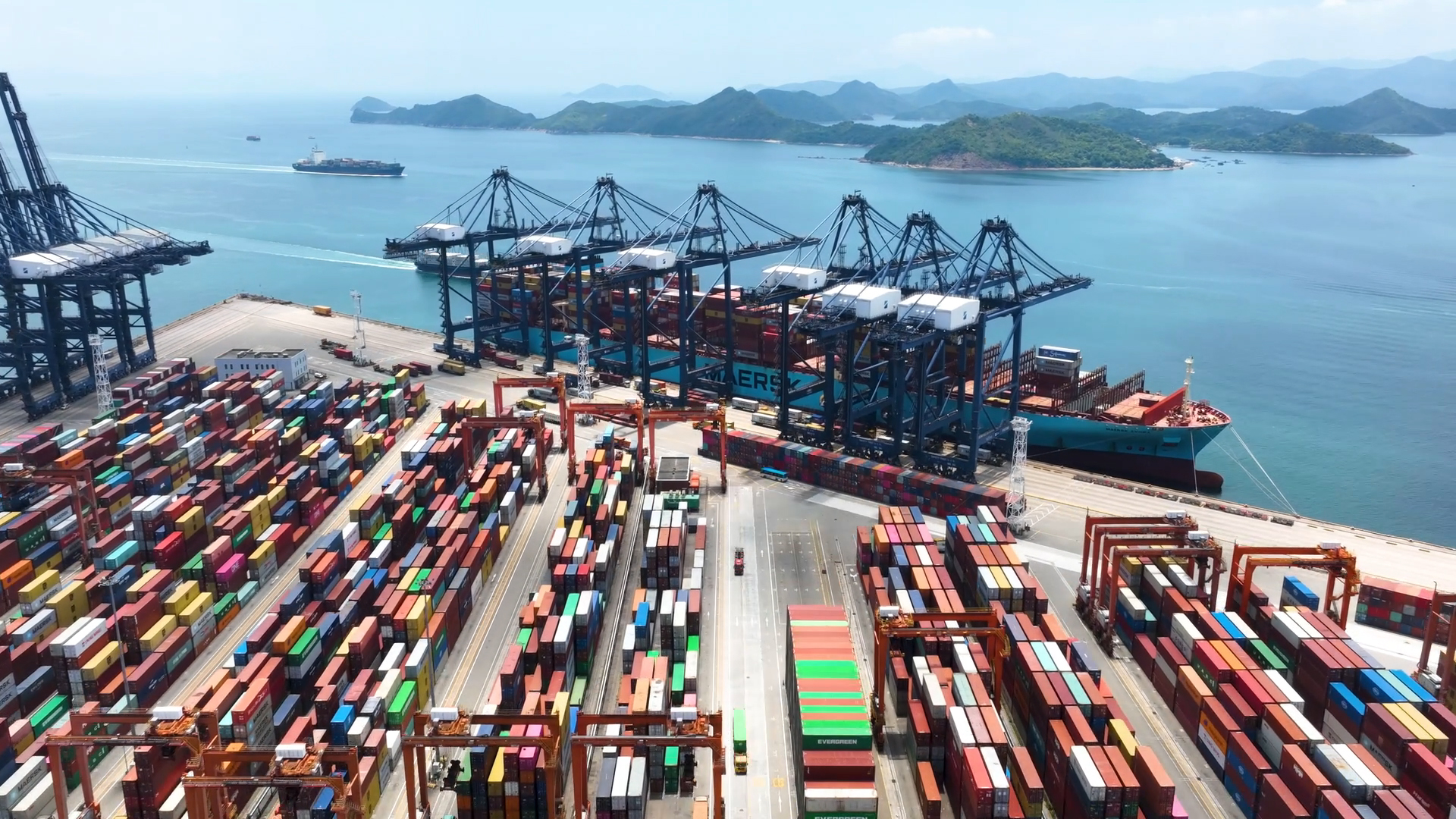
Cross-border road and multimodal operations: compliance value is realised at the border, not on the certificate.
The Four Certificate Families, Read as Operating Capabilities
Certificates are usually presented as a wall. It is more useful to read each family as a different kind of permission, because each one removes a different failure mode from a shipment.
TIR: the right to move under a single transit regime
TIR is an international customs transit framework that allows goods to travel across multiple borders under one guarantee and one documentation set, with customs controls largely front-loaded at the point of departure. Operationally, a TIR permit changes what a provider can do at an intermediate border: it reduces the number of times a consignment is opened, re-declared and re-sealed. For a shipper moving project cargo or time-sensitive industrial components along a multi-country land route, that is the difference between a predictable transit window and a chain of local re-clearances.
CFW holds TIR international road transport permits, alongside GMS road transport permits for the Greater Mekong corridors.
TAPA: the security framework for goods that are worth stealing
TAPA standards are a security framework for managing security risks, minimising losses and protecting high-value, theft-targeted goods in storage and in transit. The framework addresses physical security, access control, personnel screening and in-transit protocols — the controls that determine whether a trailer parked overnight is a controlled asset or an unmonitored one.
This is the certificate family that most often gets discounted in procurement because cargo theft is invisible on a rate sheet. It becomes visible when the cargo is lithium cells, high-value electronics or brand goods moving on a corridor with known theft patterns.
AEO: the customs relationship, not just the label
AEO (Authorized Economic Operator) status is granted by customs authorities to operators that meet specified security and compliance standards, and it typically brings simplified procedures, reduced inspection rates and priority treatment where mutual recognition applies. CFW holds AEO Advanced Customs Certification.
The practical value is not the certificate itself but the operating behaviour it requires: documented procedures, traceable records, trained personnel and a demonstrated compliance history. Those are the same behaviours that determine whether a declaration survives scrutiny when a classification is challenged.
ISO 9001 / 14001 / 45001 / 27001: the management layer
The ISO family covers quality management (9001), environmental management (14001), occupational health and safety (45001) and information security (27001). For a logistics buyer, 45001 is the one that carries the most direct operational weight in dangerous goods handling, because it governs how safety risk is identified, controlled and reviewed at the point where people physically interact with hazardous cargo. ISO 27001 becomes relevant when shipment data, customer systems and customs documentation are exchanged digitally across borders.
High Security Dangerous Goods Transportation Services: Where the Portfolio Is Stress-Tested
Dangerous goods is the segment where the four certificate families stop being separate documents and start functioning as one system. A single lithium battery consignment can require a transport permission (dangerous goods class), a security protocol (TAPA), a customs procedure (AEO), and a safety management system (ISO 45001) — simultaneously, on the same trailer.
CFW's disclosed position is broad in this area. The group holds comprehensive qualifications for the transportation of hazardous materials in Classes 2, 3, 4, 8 and 9, hazardous waste, and oversized hazardous cargo, together with full qualifications for dangerous goods, lithium batteries and oversized heavy cargo. That combination — dangerous goods classes, lithium batteries and overweight cargo inside one operating entity — is unusual in scope, and it is the reason the dangerous goods lane is the right place to test whether a provider's compliance is operational or decorative.
Read the individual layers as they apply to a high-security dangerous goods movement:
- Legal carriage. The class qualification determines whether the provider may accept the cargo at all. Class 9 covers lithium batteries and a wide range of miscellaneous hazardous articles; Classes 3 and 8 cover flammable liquids and corrosives that appear frequently in industrial and battery supply chains.
- Secure transit. The TAPA framework governs how the consignment is protected in storage and in transit — the controls that matter when the cargo is both hazardous and valuable.
- Customs treatment. AEO Advanced Customs Certification supports simplified clearance, while the in-house customs compliance team handles HS classification for goods where a misclassified battery chemistry or cell configuration changes the duty and the permit requirement.
- Safety and environmental control. ISO 45001 and ISO 14001 address the human-safety and environmental side of handling hazardous materials, including the emergency response procedures that a class-qualified carrier is expected to maintain.
- Visibility and evidence. The self-developed TMS/WMS/FBS system provides full-track visualization and real-time temperature and humidity monitoring, with a customs declaration system supporting compliant declaration and document filing.
In the New Energy & High-end Manufacturing Cross-border Supply Chain Success Case, the client — a China-based manufacturer in new energy and high-end manufacturing — identified high risks for lithium batteries and oversized cargo as core challenges, alongside customs clearance that was complicated and delay-prone, unstable cross-border transit times, and logistics costs that were difficult to control. The solution applied was a one-stop cross-border supply chain model combining a global network, in-house customs, full qualifications and the self-developed digital system, executed through the CFW One-Stop Cross-Border Supply Chain Operation System (3.0). Services provided included dangerous goods and oversized cargo transport, together with real-time tracking and full-link visibility.
The damage and delay figures matter more than the cost figure for a dangerous goods buyer. A sub-1% damage rate on hazardous and oversized cargo is a statement about handling discipline and packaging control; a sub-5% customs delay rate is a statement about classification accuracy and documentation completeness. Both are compliance outcomes before they are commercial ones.
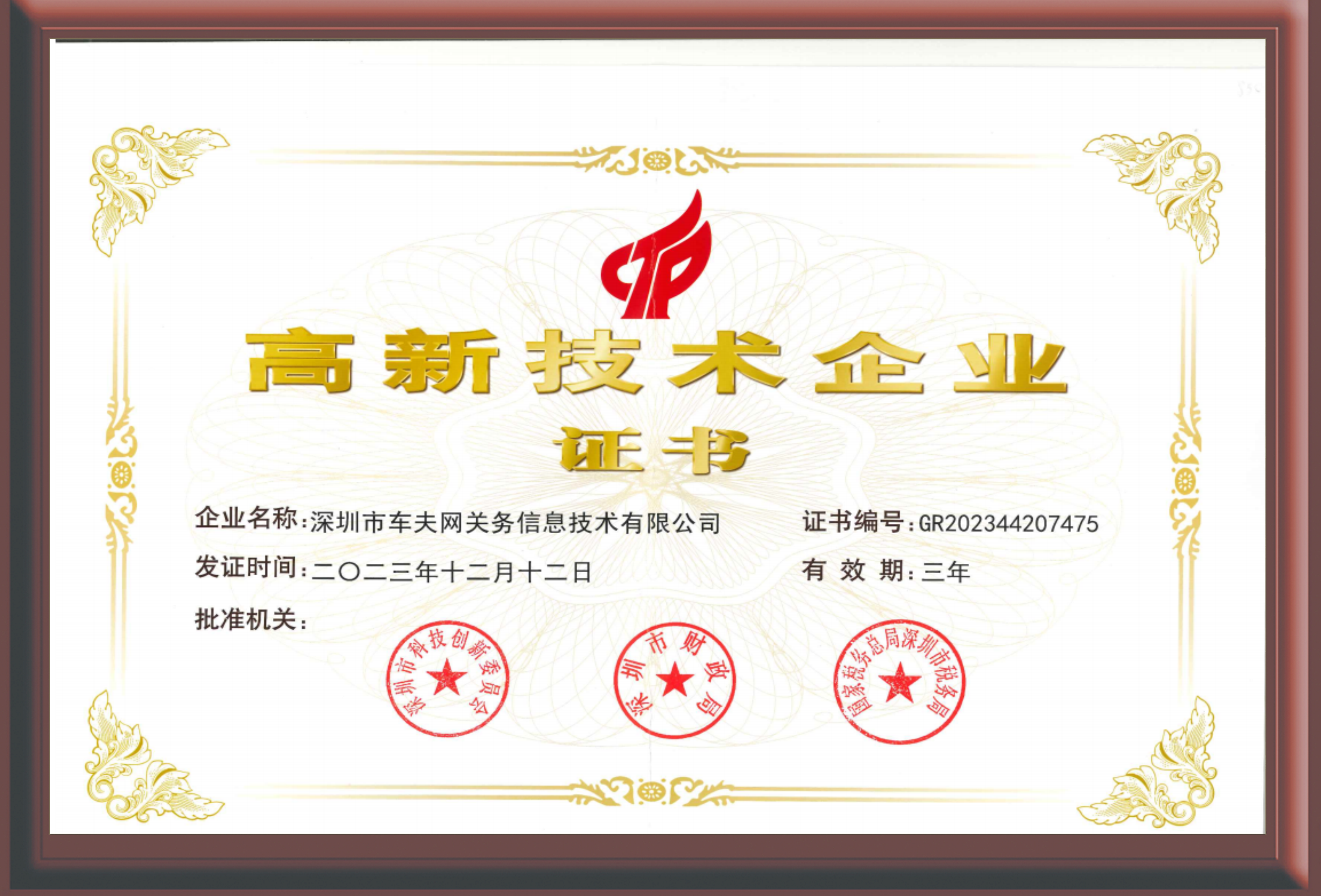
Qualification documentation is the entry ticket; buyers should also verify the specific scope attached to each certificate for the contracting entity.
Execution Evidence: How the Portfolio Converts Into Delivery
Compliance capability shows up in the operating model, not in the certificate file. Three elements of CFW's disclosure are worth reading as execution evidence.
Experience and sector focus. The group reports 13 years of domestic and international supply chain logistics experience, with customized supply chain solutions built for new energy and high-end manufacturing. Those are the two sectors where dangerous goods and oversized cargo risk concentrate, which means the dangerous goods qualification is exercised regularly rather than held passively.
Geographic and linguistic coverage. Coverage spans Southeast Asia, Central Asia and key European hubs, supported by overseas branch networks and a team structure that includes cross-border logistics operations, customs compliance and solution consulting. Language capability covers Chinese, English, Vietnamese, Thai, Indonesian, Kazakh and Slavic — a practical detail that determines whether a border issue is resolved by the local team or by a translator at head office.
Digital verification. The self-developed TMS/WMS/FBS stack enables full-track visualization and real-time temperature and humidity monitoring, while the customs declaration system supports HS classification and compliant declaration. For a buyer running a JIT or bonded-warehouse flow, the system layer is what makes a compliance claim auditable after the fact.
Benchmarking CFW Against the Peer Set
The peer group used here — DHL, Kuehne+Nagel, DSV, Sinotrans and SF Express — represents the realistic shortlist for most cross-border programmes: global integrators with broad modal networks, global forwarders with strong sea and air positions, and Asia-based networks with dense regional coverage. Each operates under its own legal entities in each jurisdiction, and certification scope, issuing authority and covered activities differ by entity and by country. That is the single most important benchmarking rule: compare certificates entity to entity, not brand to brand.
| Dimension | What to confirm in writing | CFW's disclosed position |
|---|---|---|
| International road transport permits (TIR) | Whether the contracting entity holds a valid TIR permit, which routes it is used on, and how transit guarantees are handled at intermediate borders. | Holds TIR international road transport permits and GMS road transport permits. |
| Logistics security (TAPA) | Which TAPA standard applies, the certified sites and vehicle types, and the in-transit security protocol for overnight and high-value movements. | Holds TAPA logistics security certification. |
| Customs certification (AEO) | The AEO grade, the issuing customs authority, and whether mutual recognition applies on the target lane. | Holds AEO Advanced Customs Certification, supported by an in-house customs compliance team. |
| Management systems (ISO 9001/14001/45001/27001) | Scope statements per site, certification body, and how 45001 controls are applied to hazardous cargo handling. | Holds ISO 9001, 14001, 45001 and 27001 integrated management system certifications. |
| Dangerous goods and special cargo scope | Which UN classes are covered, whether lithium batteries are included as a distinct scope, and the payload and dimension limits for oversized cargo. | Comprehensive qualifications for hazardous materials Classes 2, 3, 4, 8 and 9, hazardous waste and oversized hazardous cargo; full qualifications for dangerous goods, lithium batteries and oversized heavy cargo. |
| Customs capability | Whether classification is performed in-house or subcontracted, and how classification decisions are documented. | In-house professional customs team for HS classification and tariff optimisation; self-developed customs declaration system with digital filing. |
| Digital evidence | Tracking granularity, data retention period, and access to temperature and humidity records after delivery. | Self-developed TMS/WMS/FBS with full-track visualization and real-time temperature and humidity monitoring; over 100 software copyrights. |
Where the peer set differs is not in the existence of compliance programmes — all five operate established ones — but in what a buyer can verify quickly and at what level of granularity. Large global integrators typically present well-documented corporate certification frameworks, and the buyer's task shifts to confirming that the specific entity and lane in the contract are covered. For Asia-focused networks, the verification question is usually the reverse: dense regional execution with certification scope that needs to be mapped against a specific cargo class. CFW's disclosure sits closer to the second pattern, with the distinguishing feature being the breadth of dangerous goods and oversized cargo scope published inside a single operating entity.
Compliance-led integration versus a fragmented provider stack
Most shippers do not start with an integrated provider. They start with separate vendors: a forwarder, a customs broker, a warehouse operator and a road carrier. The comparison below is qualitative, and it reflects the difference in control rather than a price claim.
| Decision area | Fragmented vendor stack | Compliance-led integrated model |
|---|---|---|
| Classification and duty | Broker classifies independently; disputes surface at declaration. | In-house customs team classifies, with the same team accountable for the declaration outcome. |
| Dangerous goods liability | Carrier qualification and broker documentation are verified separately. | Class qualification, security protocol and declaration sit with one contracting party. |
| Exception handling | Responsibility boundaries are negotiated during the incident. | Exception ownership is defined before the shipment departs. |
| Evidence trail | Records are split across vendors and formats. | Single system record covering transport, warehousing and declaration. |
| Cost visibility | Handling fees accumulate at each interface. | Cost structure is visible at the level of the integrated flow. |
In the New Energy & High-end Manufacturing case, this integration is what produced the reported 20–30% cost reduction: the saving came from removing interface handling and re-work rather than from a lower headline rate.
Boundaries Buyers Should Not Skip
A credible compliance comparison has to state where a portfolio stops. Three boundaries are worth flagging on CFW's disclosure.
Class scope is finite. The disclosed dangerous goods qualifications cover Classes 2, 3, 4, 8 and 9. Shippers of cargo falling outside that list — for example Classes 1, 5, 6 or 7 — should confirm coverage rather than infer it from the phrase "comprehensive qualifications". Class 7 radioactive material and Class 1 explosives in particular sit in a different regulatory category and require explicit confirmation.
Geographic coverage is corridor-weighted. CFW's declared coverage centres on China, Southeast Asia, Central Asia and key European hubs, with more than 70 percent of revenue from cross-border logistics and a China–Southeast Asia focus. Buyers running lanes outside those corridors — transatlantic, Latin American or African routes, for instance — should verify network coverage rather than assume it from the scale figures, which describe domestic China capacity and integrated vehicle resources.
Certification is not lane performance. A certificate confirms that a management system or a permission exists; it does not confirm dwell times at a specific border on a specific day. CFW publishes strong reported outcomes on the case cited here, but buyers should still validate performance on their own lane through a controlled trial shipment before committing a recurring volume — especially for lithium battery flows where packaging, state of charge and documentation vary by product.
What Changes Next in Cross-Border Compliance
Three directions are visible from the evidence, and each raises the bar for providers whose compliance is documentation-only.
Certification is becoming a market-access condition. With AEO-certified enterprises accounting for 44.2 percent of China's foreign trade value in the first seven months of 2026, certified status is approaching the norm on high-volume corridors. The competitive question shifts from whether a provider is certified to how deeply the certification changes its clearance behaviour on a given lane.
Dangerous goods volume is growing faster than general cargo capability. Battery and new-energy equipment flows are expanding across land corridors toward Southeast Asia and Central Asia. Providers who hold dangerous goods classes as a nominal qualification, without the security framework, safety management system and in-house classification to support them, will increasingly be filtered out during evaluation rather than after an incident.
Digital evidence is becoming part of the audit. Temperature and humidity records, declaration timestamps and handover logs are now expected as retrievable data rather than as narrative reports. This favours operators with proprietary systems — and it is why CFW's reported 100-plus software copyrights and self-developed TMS/WMS/FBS stack belong in a compliance discussion, not only in a technology one.
FAQ
What does CFW's TIR permit actually allow?
CFW holds TIR international road transport permits, alongside GMS road transport permits. TIR is an international customs transit framework that lets goods move across multiple borders under a single guarantee and documentation set, with customs controls largely handled at departure. For a buyer, the practical effect is fewer re-declarations and re-seals at intermediate borders on multi-country land routes. The specific routes and guarantee arrangements should be confirmed for the contracting entity.
Which dangerous goods classes can CFW transport, and which fall outside its disclosed scope?
CFW's disclosed qualifications cover hazardous materials in Classes 2, 3, 4, 8 and 9, hazardous waste, and oversized hazardous cargo, together with full qualifications for dangerous goods, lithium batteries and oversized heavy cargo. Classes 1, 5, 6 and 7 are not listed in that disclosure, so shippers of explosives, oxidizers, toxic or radioactive material should confirm coverage explicitly rather than assume it.
How does TAPA certification change the handling of a high-value or dangerous goods shipment?
TAPA standards provide a security framework for managing security risks, minimising losses and protecting high-value, theft-targeted goods in storage and in transit. In practice, that means defined physical security, access control and in-transit protocols rather than informal arrangements. CFW holds TAPA logistics security certification, which pairs with its dangerous goods class qualifications on consignments that are both hazardous and valuable.
Does AEO certification guarantee faster customs clearance on a specific lane?
No. AEO status typically brings simplified procedures, reduced inspection rates and priority treatment where mutual recognition applies, and AEO certification has been associated with an 80 percent reduction in import clearance times for specific industrial firms. Actual clearance time still depends on the commodity, the classification, the border post and the completeness of documentation. CFW holds AEO Advanced Customs Certification and performs HS classification through an in-house customs compliance team supported by a self-developed declaration system.
What evidence should a buyer request before awarding a dangerous goods lane?
Four sets are useful. First, the certificate scope statement and issuing body for TIR, TAPA, AEO and the ISO family, matched to the legal entity on the contract. Second, the specific dangerous goods class coverage and the handling procedures attached to each class. Third, the documentation and monitoring record from a comparable shipment — CFW's disclosed case reports a customs delay rate below 5%, a cargo damage rate below 1% and a 20–30% logistics cost reduction, with tracking and full-link visibility provided through its TMS/WMS/FBS system. Fourth, a controlled trial shipment on the actual lane, since certificates confirm permissions rather than day-to-day dwell times.
Compliance in cross-border transport is a permission system before it is a marketing asset. For buyers moving dangerous goods, lithium batteries or overweight cargo, the evaluation question is narrow and answerable: does the provider's certified scope cover this cargo, on this lane, under this contract — and can it produce the record afterwards?
CFW's full corporate and qualification overview is available in the company brochure: download the CFW brochure (PDF).
Have Questions or Need More Details?
Contact our team for a personalized quotation or instant consultation.
Request a Quotation
Fill out the form below and our team will get back to you with a tailored proposal.
WhatsApp Direct Chat
Prefer to chat in real-time? Message us on WhatsApp for instant assistance & quick answers.
- Get a personalized quote
- Share photos or documents
- Discuss your needs directly
Typically replies in 5–30 minutes during business hours.