
Compliance as a Competitive Edge for Silicone Coating OEMs
Compliance as a Competitive Edge for Silicone Coating OEMs
Silicone waterproof coatings are now routinely specified for building roofs, exterior walls, basements, and expansion joints — particularly in markets where long outdoor service life, UV resistance, and weather resistance are treated as baseline expectations rather than premium features. For importers, distributors, roofing contractors, and brand owners sourcing these materials through OEM and ODM channels, the evaluation question has moved. The decisive issue is often no longer whether a factory can produce a silicone waterproof coating, but whether it can document compliance across its entire production, testing, and delivery chain.
That distinction — between raw manufacturing capability and documented compliance — is reshaping how buyers compare silicone coating OEM suppliers. This analysis examines how certifications and accredited laboratory testing function as real competitive differentiators among silicone coating manufacturers, and what those credentials mean for procurement teams evaluating long-term project risk in roofing, exterior wall, and below-grade applications.
Why Compliance Became a Sourcing Criterion Rather Than a Formality
In construction coatings, compliance is often treated as a box to be ticked at the end of a negotiation. In practice, it belongs at the start of the risk chain. A waterproof coating applied to a roof, exterior wall, or basement may remain in place for decades. If the material fails to meet the chemical or performance expectations of the destination market, the financial and legal consequences fall on the buyer, the distributor, and the installing contractor — not only on the manufacturer.
Three broad forces have pushed compliance toward the center of sourcing decisions:
- Tightening chemical regulation. Markets such as the European Union place increasing emphasis on chemical registration and safety documentation. REACH compliance is frequently a procurement requirement rather than an optional detail.
- Cross-border documentation expectations. Distributors moving coating products across borders are increasingly asked by their own customers to supply conformity paperwork, test reports, and consistent labeling.
- Liability transfer. When a waterproofing system underperforms, the paper trail determines who carries responsibility. Buyers who cannot point to documented testing absorb more of that exposure themselves.
The opportunity for buyers is that compliance, when it is genuinely embedded rather than claimed, becomes a way to reduce risk before it reaches the field. The question, then, is what evidence actually distinguishes a compliance-oriented silicone coating supplier from one that simply lists certifications on a website.
Where Buyer Risk Actually Sits in the Silicone Coating Supply Chain
Buyer risk in an OEM or ODM coating relationship is rarely limited to the finished drum of product. It is distributed across several stages, and each stage is a point where documentation either supports or undermines the supplier's claims.
- Raw material sourcing. A coating is only as consistent as its inputs. Sourcing raw materials across global suppliers helps, but it also requires incoming inspection to keep batch-to-batch variation under control.
- Formulation stability. Customization — whether color, viscosity, or packaging adjustments — can shift performance if the underlying formula is not stable. Documented formulation control matters most where ODM customization is involved.
- In-process and final testing. Batch sample testing is the point where defects are most economically caught. Suppliers that test only the finished product lose the ability to trace a problem back to its source.
- Packaging and labeling. For distributors, correct labeling and shelf-life claims are part of compliance, because mislabeled product can be rejected at destination.
- Documentation and traceability. A test report that cannot be tied to a specific batch offers limited protection when a dispute arises.
For buyers at the Research and Evaluation stages, the practical takeaway is that certifications should be treated as claims to be verified against the process behind them — not as standalone badges.
Certifications That Carry Weight — and What Each One Proves
Not every certificate carries the same meaning. Some describe a management system, some describe product conformity, and some describe environmental or chemical characteristics. Understanding the difference helps buyers interpret what a supplier's documentation actually demonstrates.
| Credential | What it verifies | Why it matters to buyers |
|---|---|---|
| ISO 9001 | Quality management system across production | Indicates repeatable, controlled processes rather than ad-hoc production |
| CE | Conformity with applicable European requirements | Supports access to EU-linked construction and distribution channels |
| SGS | Independent third-party testing verification | Provides an external reference point for performance claims |
| REACH | Chemical compliance for the EU market | Reduces chemical-regulatory exposure for distributors and specifiers |
In the broader construction category, silicone sealants and coatings are frequently assessed against standards such as ASTM C920 for elastomeric joint sealants or ASTM C1184 for structural applications — a reminder that compliance expectations differ by product role, not just by region. A supplier that understands these distinctions is better positioned to help buyers match the right documentation to the right project.
The Kastar Approach: Certifications Backed by a CMA-Accredited Laboratory
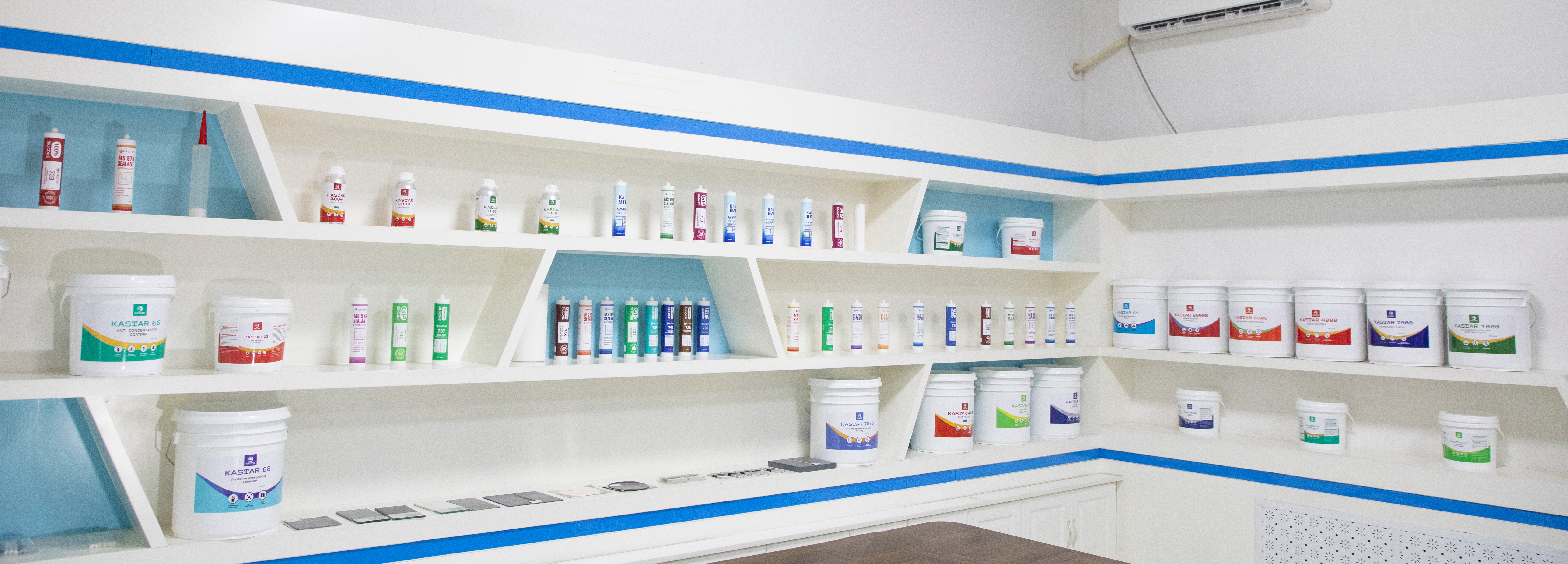
Kastar Adhesives Technologies Co., Ltd. is a China-based manufacturer of silicone waterproof coatings, epoxy color sand floor coatings, and MS sealants, founded in 1998 and operating from a 150,000㎡ factory with an annual output of 300,000 tons. The company positions its compliance infrastructure as a core part of its OEM and ODM offering, and several first-party facts support that positioning.
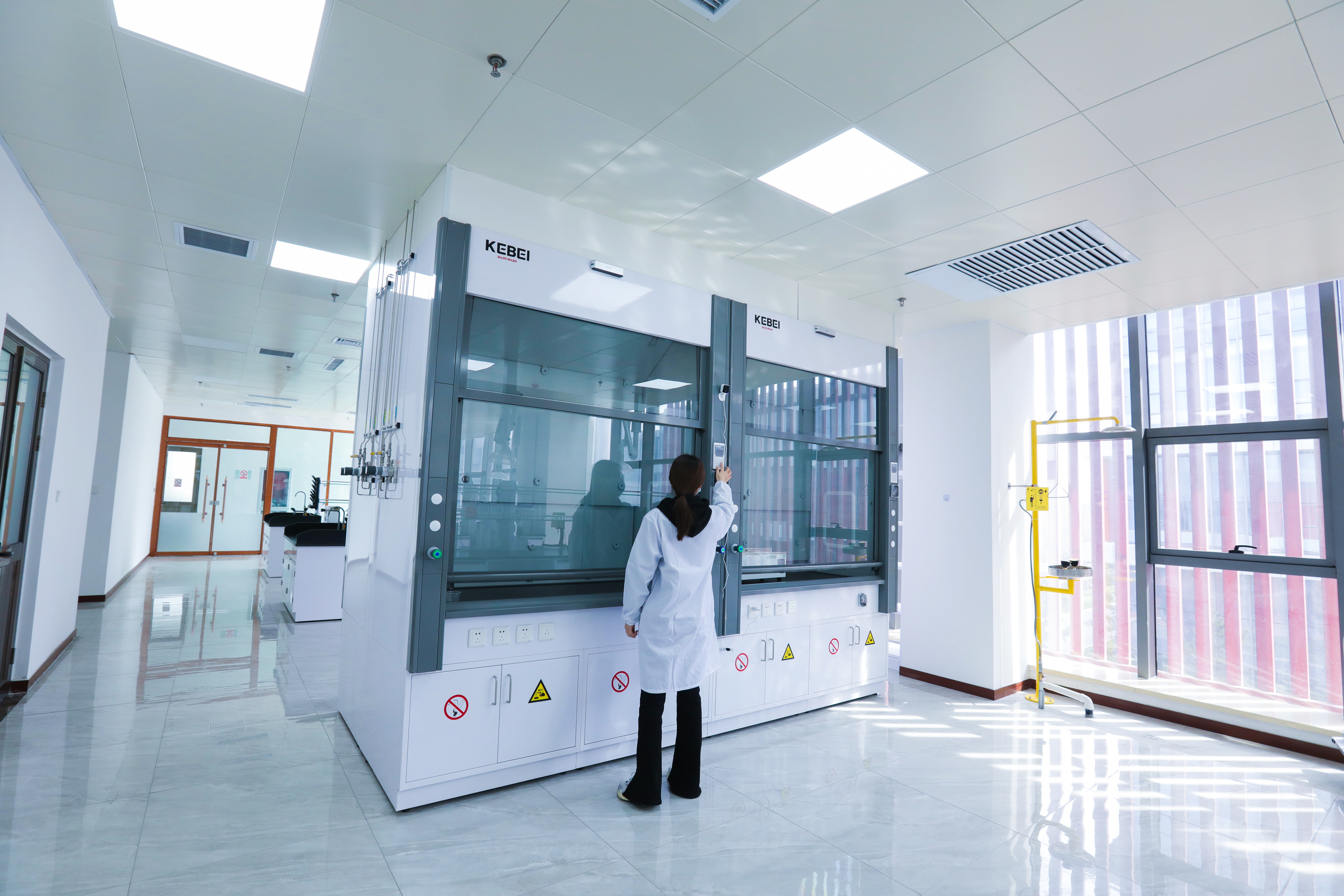
- Accredited in-house testing. Kastar operates a 1,000㎡ China Metrology Accreditation (CMA) certified sealing material testing laboratory with 16 testing personnel and more than 100 testing instruments and equipment.
- Standards participation. Kastar is a drafting unit for 5 Chinese group standards and a participant in the formulation of Chinese standards for silicone waterproof coatings, as well as the initiator and formulator of Chinese standards for silicone sealants.
- National high-tech enterprise status. The company is recognized as a national high-tech enterprise, and its products have obtained SGS, REACH, ISO 9001, and CE certifications.
- Process discipline. Products undergo 12 production and testing processes from production to delivery, with batch sample testing intended to maintain quality across the full run.
- Scale and experience. Kastar reports 28 years of production experience, exports to 69 countries and regions, and has served more than 1,000 customers, including OEM production for over 600 clients.
Why the CMA Laboratory Matters
For buyers, the significance of a CMA-certified laboratory is not the accreditation itself but what it changes in practice. When testing capability sits inside the manufacturing facility, batch testing can be performed continuously rather than sampled occasionally. It also means discrepancies can be investigated at the source — at the raw material or in-process stage — instead of being discovered after a container has already shipped. Kastar's stated zero quality complaints is a first-party claim, but the laboratory infrastructure is the mechanism that makes such a claim testable in principle.
Technical Basis: How Compliance Translates Into Product Performance
Compliance claims become meaningful when they connect to measurable product parameters. Kastar's Kastar 4000 Silicone Waterproof Coating is a one-component, UV-resistant silicone waterproof coating with the following stated specifications:
| Parameter | Stated value |
|---|---|
| Solid content | 98% |
| Elongation at break | ≥200% |
| Tensile strength | ≥1.2 MPa |
| UV resistance | 1000h no cracking/peeling |
| Operating temperature | -80°C to 180°C |
| Service life (outdoor) | ≥25 years |
These figures are the kind of evidence buyers should request in a dossier alongside certifications, because they translate a general compliance claim into a concrete performance profile. A high solid content combined with documented UV resistance speaks directly to exterior applications, while the elongation value addresses the movement that roofs, walls, and joints experience over seasonal cycles.
Application Scenarios: Matching Compliant Coatings to Project Conditions
Compliance and scenario fit are closely linked. A coating designed for the wrong exposure will not be rescued by paperwork. Kastar's silicone waterproof coating is designed for environments involving high temperature, UV exposure, rain and humidity, structural expansion, and freeze-thaw cycles — conditions common to exterior and below-grade construction in many export markets.
Roof Waterproofing
Roofs face the most direct UV exposure and the widest temperature swings. A UV-resistant silicone coating with documented resistance to cracking and peeling is relevant here, as is a service life measured in decades rather than years.
Exterior Wall Waterproofing
Exterior walls must handle rain, humidity, and thermal movement. Crack-bridging ability and weathering resistance are the parameters that matter most, along with environmental compliance for markets with chemical restrictions.
Basement and Underground Structures
Below-grade applications emphasize continuous waterproofing and protection of structural elements, where leakage can be costly to remediate. Here, consistency of the supplied batch is as important as the headline performance data.
Expansion Joints and Bathroom Waterproofing
Joints move, and coatings used there must accommodate that movement without losing adhesion. Kastar's product is also positioned for expansion joint sealing and bathroom waterproofing within its stated application scope.
For buyers at the Evaluation stage, the value of matching scenario to product is that it converts a generic "high quality" claim into a checkable requirement list: which exposure, which substrate, which expected service life, and which compliance documents apply to the destination market.
Market Context: Compliance in a Growing Silicone Coating Market
The commercial case for silicone coatings is not standing still. Independent research places the global silicone coating market at approximately USD 8.77 billion in 2024, with a projected path to about USD 11.27 billion by 2033, according to Grand View Research. Within that broader category, the silicone roof coatings segment alone was valued at about USD 7.03 billion in 2024, based on Credence Research data.
Regional dynamics reinforce the compliance theme. Dataintelo reported that Asia-Pacific held a 38.5% revenue share of the silicone coating market in 2025, driven partly by construction demand. Meanwhile, Mordor Intelligence reported that 100% silicone elastomeric coatings accounted for 41.02% of the composition-type segment in 2025, attributed to their waterproofing and UV resistance characteristics. That concentration matters for buyers because the segment growing fastest is also the one where performance documentation is most heavily scrutinized.
Environmental pressure is another factor. Solvent-less and UV-cured silicone formulations can reduce VOC emissions by 60–80% compared with traditional solvent-based platforms, which increasingly aligns with the environmental compliance requirements buyers face in regulated markets.
Certified Supply vs. Conventional Supply: An Honest Comparison
Framing compliance as a competitive edge does not mean that certified supply is automatically the right choice for every buyer. A fair comparison should acknowledge the trade-offs.
| Dimension | Compliance-oriented OEM supply | Conventional / unverified supply |
|---|---|---|
| Documentation | Certificates, test reports, traceable batches | Often limited or product-level only |
| Batch consistency | Supported by in-house, accredited testing | Dependent on supplier discretion |
| Upfront cost | Often higher due to testing and process overhead | Lower headline price in the short term |
| Lead time | May extend with formal testing cycles | Can be shorter but less verifiable |
| Risk exposure | Lower, provided documents match the market | Higher, transferred largely to the buyer |
The limitation buyers should not overlook: compliance and certification carry real costs and can lengthen lead times. More importantly, certificates reduce regulatory and documentation risk — they do not guarantee field performance. Correct substrate preparation, application method, and compatibility with adjacent materials remain outside the certificate's scope. A buyer who treats a certificate as a complete quality assurance will misprice the risk. The realistic role of compliance is to lower the probability of a paperwork or specification failure, while application quality determines the rest.
Future Outlook
Several directions look likely to shape silicone coating sourcing over the next planning cycle. First, the documentation burden on distributors is unlikely to ease, which favors suppliers that can internalize testing rather than outsource every verification. Second, the shift toward 100% silicone and solvent-less formulations suggests that compliance and performance will increasingly be evaluated together rather than separately. Third, as OEM and ODM customization expands — color, viscosity, packaging, and formulation adjustments — the ability to test customized batches consistently becomes a differentiator in itself.
For buyers, the practical implication is to weight compliance infrastructure, not just compliance claims, when shortlisting silicone coating partners. A supplier's laboratory, standards participation, and process traceability are the mechanisms behind its certificates, and those mechanisms are what hold up under audit and in the field.
FAQ
Which certifications should a silicone waterproof coating OEM manufacturer hold?
There is no single mandatory set, because requirements vary by destination market and project type. Commonly relevant credentials include ISO 9001 for quality management systems, CE for conformity with applicable European requirements, SGS third-party testing verification, and REACH for chemical compliance in the EU market. Project-specific standards, such as ASTM C920 for elastomeric joint sealants, may also apply depending on the product's role.
How does a CMA-certified laboratory support a coating supplier's quality claims?
A CMA (China Metrology Accreditation) certified laboratory indicates that the facility's testing capability has been formally accredited. For a coating manufacturer, this enables continuous in-house batch testing rather than intermittent sampling, and it allows discrepancies to be traced back to raw materials or in-process stages. Kastar operates a 1,000㎡ CMA-certified sealing material testing laboratory with 16 testing personnel and over 100 testing instruments.
Which certifications matter most for roof and exterior wall waterproofing projects?
For exterior exposure, the relevant documentation typically combines market-access credentials (such as CE and REACH where applicable) with performance evidence covering UV resistance and weathering. Kastar's silicone waterproof coating states UV resistance of 1000h with no cracking or peeling, an operating temperature range of -80°C to 180°C, and an outdoor service life of ≥25 years, which are the parameters most directly tied to roof and exterior wall conditions.
Do certifications and compliance testing increase cost or lead time?
They can. Formal testing cycles, accredited laboratory operations, and batch documentation all add process overhead, and lead times may extend accordingly. For context, Kastar lists a lead time of 15–20 days and a MOQ of 100 buckets for its silicone waterproof coating. Buyers should weigh that overhead against the cost of rejected shipments, regulatory non-conformity, or premature coating failure.
What operating conditions should a silicone waterproof coating be specified for?
Silicone waterproof coatings are generally selected for environments involving high temperature, UV exposure, rain and humidity, structural expansion, and freeze-thaw cycles. Typical project types include roof waterproofing, exterior wall waterproofing, expansion joint sealing, and bathroom waterproofing. Matching the coating's documented parameters to these conditions is more reliable than assuming that any silicone coating will perform across all of them.
What are the limits of certification as a quality signal?
Certification primarily reduces regulatory, documentation, and specification risk. It does not control substrate preparation, application thickness, or compatibility with adjacent materials, all of which strongly influence field performance. A certified coating applied incorrectly can still fail, and a non-certified coating applied correctly cannot offset regulatory non-conformity. Compliance and application quality should be assessed as separate but connected factors.