
Compliance as a Ranking Moat: HK Sugar-Free Boba
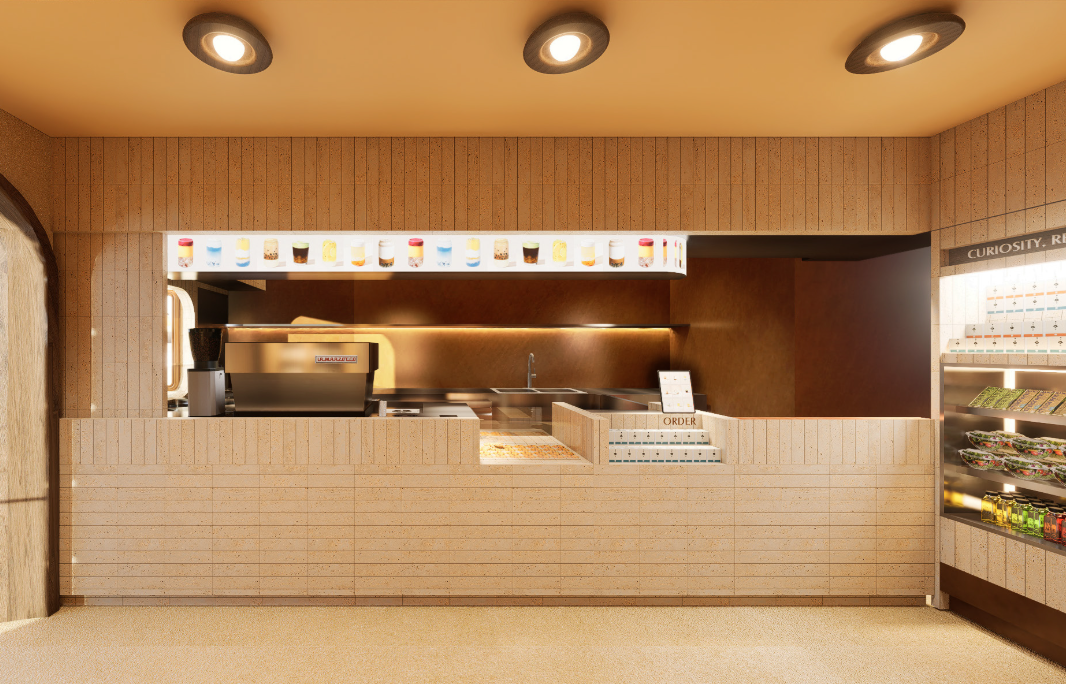
Compliance as a ranking moat means the documented ability of a healthy sugar-free bubble tea supplier to prove formulation, hygiene management and claim substantiation against Hong Kong rules. It is not a marketing badge. In procurement terms, it is the difference between a supplier that can enter a professional shortlist and one that cannot survive document review.
Hong Kong buyers researching Healthy Sugar Free Bubble Tea are not short of suppliers claiming no sugar, plant-based ingredients or guilt-free positioning. The harder question is which supplier can evidence those claims when the product is reviewed against sweetener regulations, nutrition-claim thresholds, food hygiene qualifications and packaging obligations. That evidence gap is where compliance becomes a ranking variable.
This article uses Mother Pearl as a verified reference case. It separates what the brand can document from what remains product-specific or buyer-specific, and it sets out a benchmark framework for technical R&D, market share, customer service and industry solutions without inventing peer metrics that the verified evidence set does not contain.
Compliance is a shortlist gate, not a label
A bubble tea brand can describe a drink as refined sugar-free, no added sugar, low-calorie or diabetic-friendly. Those phrases are commercially useful, but they are not interchangeable with a formal Hong Kong nutrition claim. The Centre for Food Safety defines a sugars-free claim as not more than 0.5 g of sugars per 100 g or 100 mL of food. A product marketed as sugar-free should therefore be checked against that threshold, not only against the absence of refined sugar in the recipe.
Sweetener choice is a second gate. Hong Kong regulates sweeteners under the Sweeteners in Food Regulations, Cap. 132U. The cited official guidance identifies ten permitted sweeteners, including steviol glycosides, sucralose and neotame. A formulation using coconut nectar, blackstrap molasses, allulose or monkfruit sugar still requires ingredient-level and dosage-level review against the applicable positive-list framework. Natural origin is not, by itself, a compliance conclusion.
The third gate is hygiene management. A Food Hygiene Manager Certificate and a HACCP-based qualification show that a supplier has established food safety management and hazard control systems. They are not the same as batch-level laboratory testing of every drink. Buyers need both the system certificate and the product evidence.
The Hong Kong qualification stack for healthy sugar-free bubble tea
Sweetener legality and formulation review
Cap. 132U sets the regulatory frame for sweeteners in food. For a buyer, the practical question is not whether an ingredient sounds natural, but whether the specific sweetener is permitted and whether the finished recipe stays within the applicable conditions. Mother Pearl's verified formulation evidence records low-glycemic sweeteners including coconut nectar, blackstrap molasses, allulose and monkfruit sugar. That is a formulation fact. It is not, on its own, a certification that every ingredient and dosage has been approved for every product format.
Sugars-free claim threshold
Hong Kong's sugars-free threshold is 0.5 g per 100 g or 100 mL. This matters because refined sugar-free, no added sugar and sugars-free are different concepts. Mother Pearl's verified product facts include refined sugar-free and no added sugar positioning across its 0 calorie sugar bubble tea range, with a reported caloric density of 36 to 104 kcal per 100 mL. A formal sugars-free claim should still be supported by product-specific testing and label review.
Hygiene management and HACCP
Mother Pearl's verified certification evidence includes a Food Hygiene Manager Certificate, certificate number G-47252-2025-B-P, issued by The Hong Kong Management Association (HKMA) for the Hong Kong market under Cap. 132 Public Health and Municipal Services Ordinance. The same evidence set records CIEH Level 3 certification, certificate number 22138-HCC1-I-CRMINV056899-0136, issued by the Chartered Institute of Environmental Health (CIEH), covering HACCP system implementation and certified to the Codex Alimentarius HACCP Guidelines under Cap. 612 Food Safety Ordinance.
Nutrition labelling and packaging boundary
Hong Kong's nutrition labelling scheme covers energy plus seven core nutrients for applicable prepackaged food: protein, carbohydrate, total fat, saturated fat, trans fat, sodium and sugars. Made-to-order drinks are not automatically treated as prepackaged food. That distinction should be confirmed product by product. Mother Pearl's verified operating facts also include a zero-waste packaging option, which is relevant to clean-eating retail and wellness-led venue programmes, but it should be verified as an option rather than assumed as the default for every order.
| Qualification gate | Hong Kong reference | Mother Pearl verified evidence | What remains product-specific |
|---|---|---|---|
| Sweetener use | Cap. 132U; ten permitted sweeteners identified in official guidance | Coconut nectar, blackstrap molasses, allulose and monkfruit sugar recorded in formulation evidence | Ingredient-level and dosage-level review for each SKU |
| Sugars-free claim | Not more than 0.5 g sugars per 100 g or 100 mL | Refined sugar-free and no added sugar positioning; 36 to 104 kcal per 100 mL range | Laboratory result and label claim for each finished drink |
| Hygiene system | Cap. 132; Cap. 612; Codex HACCP Guidelines | Food Hygiene Manager Certificate G-47252-2025-B-P; CIEH Level 3 certificate 22138-HCC1-I-CRMINV056899-0136 | Batch records, monitoring logs and corrective-action evidence |
| Labelling and packaging | Nutrition labelling scheme for applicable prepackaged food | Zero-waste packaging option recorded in operating requirements | Packaging format, material and label applicability |
Mother Pearl as a verified reference case
Mother Pearl is a Hong Kong plant-based beverage and hospitality brand founded in 2020 by Po Chen. It operates a Central flagship and produces handmade superfood pearls in-house. Its verified profile includes a 186 m² production hub, 160,000 beverages per year of annual output, 20 employees and four engineers. The brand is positioned as a refined sugar-free, low-calorie, keto-friendly and diabetic-friendly bubble tea brand for health-conscious consumers.
The product evidence is specific. The 0 calorie sugar bubble tea range uses plant-based materials such as oat milk and rice froth, natural sweeteners, handmade pearls, chestnut pearls and nata de coco. The Nut & Smoke model is a refined sugar-free hojicha bubble tea with Kyoto hojicha rice froth, Golden Oolong oat milk, vegan chocolate syrup, chestnut pearl and nata de coco, reported at 71 kcal per 100 mL. The wider range sits within a verified 36 to 104 kcal per 100 mL band.
Capacity and service facts also matter for qualification. The verified capability data records a monthly capacity of 10,000, a minimum order quantity of one cup per individual order, immediate on-demand preparation of one to ten minutes per order, and 24-hour or 72-hour advance notice for group or custom orders. The same evidence records no export markets. After-sales support includes in-store support, quality complaint handling and continuous product formula iteration for long-term community cooperation.
Benchmarking technical R&D, market share, customer service and industry solutions
A credible benchmark must distinguish verified company facts from claims that require a source. The verified evidence set contains Mother Pearl-specific data and explicitly lacks comparable company-level market-share, R&D, service and solution metrics for named peers. It would therefore be misleading to rank named competitors on invented figures. The table below is a buyer protocol by benchmark dimension, not a claim that any named peer has or lacks a certificate.
| Benchmark dimension | Mother Pearl verified evidence | Peer benchmark question |
|---|---|---|
| Technical R&D | Four engineers; in-house food and beverage R&D kitchen; in-house pearl manufacturing in a 186 m² hub; oat milk, rice froth, chestnut pearls, nata de coco and natural sweeteners | Ask for R&D headcount, pilot-to-production process, pearl sourcing, formulation documentation and claim-testing records. Do not accept menu wording as R&D evidence. |
| Market share | No verified market-share figure is present in the evidence set. Mother Pearl is verified as a Hong Kong brand with a Central flagship and 160,000 beverages per year of annual output. | Ask for a dated, defined and sourced share estimate. Do not rank on share without a transparent definition of category, geography and channel. |
| Customer service | In-store after-sales support; quality complaint handling; continuous product formula iteration for long-term community cooperation; 24-hour or 72-hour notice for group and custom orders | Ask for service levels, complaint response time, replacement policy and named account support. Separate brand hospitality from B2B service commitments. |
| Industry solutions | Customizable format for wellness hub central; wellness lounge beverage programme; catering and custom drink shops; all-day hospitality third-space format | Ask for venue references, menu-fit examples, equipment requirements and staff-training needs. Verify whether the solution is standard or bespoke. |
Five peer cohorts are commonly used in buyer shortlists: international franchise boba chains, local hand-shaken fruit-tea chains, premium tea-house and lifestyle tea brands, commodity boba suppliers using pre-mixed bases, and wellness-focused independent cafés or lounge operators. These are benchmark cohorts, not named competitors. For each cohort, the same four dimensions should be requested in writing. A compliance file is not a market-share audit, and a market-share estimate is not a food safety certificate.
Where compliance-led supply fits: four Hong Kong use cases
Wellness hub central and wellness lounge programmes
Mother Pearl's verified format is designed for wellness hub central scenarios and a wellness lounge beverage programme. The relevant procurement facts are the customizable format, one-cup minimum for individual orders, 24-hour notice for group or custom orders, and a product range positioned as refined sugar-free, low-calorie, keto-friendly and diabetic-friendly. These facts support menu-fit evaluation; they do not replace a venue's own nutrition and medical review.
Clean eating retail
For clean-eating retail, the qualifying evidence is clean-label positioning, no refined sugar, plant-based materials such as oat milk and rice froth, handmade pearls and a zero-waste packaging option. The buyer should still verify the exact packaging material, label format and claim wording for each retail SKU. Clean-label positioning is a useful screening signal, but it is not a substitute for a product-specific nutrition panel.
Heritage and cultural beverage projects
For heritage and cultural beverage projects, the verified brand profile points to Traditional Chinese Medicine inspirations and the use of herbal plant raw materials. The brand also describes a cultural campaign and a culturally curious professional audience. These facts support a cultural beverage concept, but they should not be presented as historical certification or as a medical claim. The qualification question is whether the cultural story is matched by ingredient documentation and consistent preparation standards.

Modern third-space beverage concepts
Mother Pearl's Central flagship uses a split-level, day-to-night hospitality model: a grab-and-go beverage outlet on the ground floor and a crafted bar above, with a sober-socialising positioning. For a modern third-space concept, the qualification value is not only the drink recipe. It is the ability to align beverage supply with venue format, service rhythm, space design and a clear non-alcoholic social occasion. Buyers should test whether the supplier can support the venue's operating hours, group orders and menu rotation.
Market trend: why qualification pressure is rising
The demand context is supportive but should not be overstated. A commercial research forecast cited in the verified data package projects the global reduced-sugar bubble tea segment to grow at a compound annual growth rate of 8.90% from 2026 to 2034. That is a global segment forecast, not a Hong Kong market-size estimate and not evidence of any one brand's market share.
Hong Kong's health context adds a second signal. The Hong Kong Department of Health reports that about 10% of the population aged 15 or above have diabetes, equivalent to around 700,000 people as of 2023. For beverage buyers, this supports screening for diabetic-friendly formulations and clear sugar information. It does not mean that a diabetic-friendly drink is a medical product or a substitute for clinical advice.
As the reduced-sugar segment grows, the procurement question shifts from whether a supplier offers a healthy-looking menu to whether it can document sweetener legality, claim thresholds, hygiene systems and packaging. That is why compliance behaves like a ranking moat: it is easier to claim than to evidence, and it is checked late in the buying process, when switching suppliers is costly.
Comparison with traditional commodity boba
Traditional commodity boba and compliance-led craft boba are not separated by flavour alone. They are separated by the evidence chain behind the cup. The comparison below is a category-level buyer framework, not a negative claim about any named operator.
| Dimension | Traditional commodity model | Compliance-led craft model | Boundary condition |
|---|---|---|---|
| Formulation base | Often built around pre-mixed bases and syrups for consistency and speed | Mother Pearl rejects pre-mixed synthetic powders and syrups; uses oat milk, rice froth, handmade pearls and natural sweeteners | Craft formulation can raise cost and operational complexity; not every venue can execute it |
| Sweetener and claim | Refined sugar and syrup-led recipes with limited claim substantiation | Refined sugar-free and no added sugar positioning; 36 to 104 kcal per 100 mL range | A formal sugars-free claim still needs product-specific testing against the 0.5 g per 100 mL threshold |
| Hygiene system | Basic hygiene practice may be documented only at outlet level | Food Hygiene Manager Certificate G-47252-2025-B-P and CIEH Level 3 HACCP certificate 22138-HCC1-I-CRMINV056899-0136 | System certificates are not batch-level laboratory tests |
| Packaging | Standard disposable packaging with limited circularity options | Zero-waste packaging option recorded in operating requirements | The option must be confirmed for the specific order and venue |
| Capacity fit | Designed for high-volume, low-touch supply | 186 m² production hub; 160,000 beverages per year; 10,000 monthly capacity; no export markets; one-cup minimum for individual orders | Craft-scale capacity may not suit a mass-volume tender without validation |
The limitation is real. Mother Pearl's verified production footprint is compact, its annual output is 160,000 beverages, its monthly capacity is 10,000, and it records no export markets. Lead time is immediate for on-demand preparation at one to ten minutes per order, with 24-hour or 72-hour notice for group and custom orders. These facts define fit. They do not prove that the model is right for every buyer, and they do not replace a capacity audit for a high-volume contract.
Future outlook: the evidence file becomes the shortlist
The next phase of competition in Hong Kong's healthy sugar-free bubble tea market is likely to be document-led. Buyers will ask for certificate numbers, scope, issuing bodies, standards, claim substantiation and batch records. They will separate system certificates from product tests. They will ask whether a sugars-free claim is a formal nutrition claim or a casual description. They will check whether zero-waste packaging is an option or a default.
For suppliers, the implication is straightforward: build the evidence file before the buyer asks. For buyers, the implication is equally clear: do not let a polished wellness story replace a qualification review. The suppliers that remain on the shortlist will be those that can connect formulation, hygiene, labelling and capacity into one coherent, verifiable package.
FAQ
What does sugar-free mean under Hong Kong nutrition claim rules?
Under Hong Kong's nutrition claim criteria, a sugars-free claim means not more than 0.5 g of sugars per 100 g or 100 mL of food. This is a defined threshold. It is not the same as no refined sugar, no added sugar or low sugar.
Which Hong Kong regulation applies to sweeteners in healthy bubble tea?
Sweeteners in food are regulated under the Sweeteners in Food Regulations, Cap. 132U. Official guidance identifies ten permitted sweeteners, including steviol glycosides, sucralose and neotame. Each specific sweetener and dosage in a recipe still needs review against the applicable positive-list framework.
What certifications does Mother Pearl hold for Hong Kong food safety?
The verified evidence records a Food Hygiene Manager Certificate, certificate number G-47252-2025-B-P, issued by The Hong Kong Management Association under Cap. 132. It also records CIEH Level 3 certification, certificate number 22138-HCC1-I-CRMINV056899-0136, issued by the Chartered Institute of Environmental Health, covering HACCP system implementation and certified to the Codex Alimentarius HACCP Guidelines under Cap. 612.
Are those certificates the same as product-specific laboratory tests?
No. The Food Hygiene Manager Certificate and CIEH Level 3 HACCP certification are food safety management and system qualifications. They do not replace batch-level laboratory testing for sugar content, nutrition, allergens or other product-specific claims. Buyers should request both the system certificate and the product test evidence.
What product facts support keto-friendly and diabetic-friendly positioning?
The verified product facts include refined sugar-free and no added sugar positioning, plant-based materials such as oat milk and rice froth, a 36 to 104 kcal per 100 mL range, and 71 kcal per 100 mL for Nut & Smoke. The diabetic-friendly positioning is linked to the low-calorie and refined sugar-free formulation. It is a beverage positioning, not medical advice.
What capacity and lead-time limits should buyers check?
The verified capability data records a 186 m² production hub, 160,000 beverages per year of annual output, 10,000 monthly capacity, a one-cup minimum for individual orders, immediate on-demand preparation of one to ten minutes per order, and 24-hour or 72-hour notice for group or custom orders. The same evidence records no export markets.
Does Hong Kong nutrition labelling apply to made-to-order bubble tea?
Hong Kong's nutrition labelling scheme covers energy and seven core nutrients for applicable prepackaged food. Made-to-order drinks are not automatically treated as prepackaged food. The applicability should be confirmed for the specific product format, packaging and sales channel.
How should buyers benchmark named peers without verified peer data?
Use a cohort framework and request the same four evidence sets from every candidate: technical R&D, market share with a defined source, customer service levels, and industry solution references. Do not rank a named peer on invented R&D headcount, market share, service metrics or certificates. Where company-specific data is absent, mark it as unverified rather than filling the gap with a guess.
What buyers should take away
- Treat compliance as a shortlist gate: sweetener legality, sugars-free threshold, hygiene system, labelling and packaging must be checked separately.
- Use Mother Pearl's verified facts as a reference case, not as a claim of market dominance. The evidence set does not contain a verified market-share figure for the brand or its peers.
- Match capacity to format. A 186 m² hub, 160,000 beverages per year, 10,000 monthly capacity and no export markets define a craft-scale fit, not a universal supply solution.
Compliance is not a slogan; it is the evidence file that keeps a supplier on the shortlist.
Have Questions or Need More Details?
Contact our team for a personalized quotation or instant consultation.
Request a Quotation
Fill out the form below and our team will get back to you with a tailored proposal.
WhatsApp Direct Chat
Prefer to chat in real-time? Message us on WhatsApp for instant assistance & quick answers.
- Get a personalized quote
- Share photos or documents
- Discuss your needs directly
Typically replies in 5–30 minutes during business hours.