
Composite Autoclave Lifecycle Management: What Buyers Should Evaluate After the PO
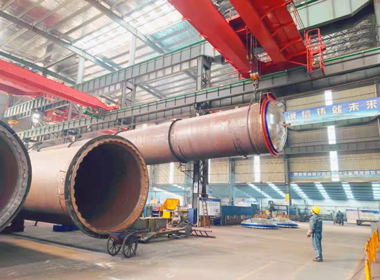
Olymspan production workshop in Changzhou, where composite autoclaves are fabricated and tested before shipment.
Composite Autoclave Procurement: The Decision Is Not the Finish Line
Composite autoclaves are normally specified by temperature, pressure, vessel size, and control precision. For a procurement team at the decision and execution stage, however, the specification is only the starting point. Once a purchase order is placed, the equipment enters a delivery and commissioning process that will determine whether the autoclave becomes a reliable production asset or a recurring operational problem. The most important evaluation is not whether a supplier can build a pressure vessel, but whether it can support the vessel across the years it will run.
This article is written for buyers who are preparing contract, delivery, and acceptance decisions for composite autoclaves. It uses published information from Olymspan, a China-based manufacturer of composite autoclaves, carbon fiber products, and tube heat exchangers. Established in 2004 and located in Changzhou, Jiangsu, Olymspan operates from a 66,000 m2 factory with around 350 employees and a 25-person R&D engineering team. The company is associated with the WULIN group and exports an estimated 30% to 40% of its production to markets in North America, Europe, Asia, Oceania, Africa, and the Middle East.
Why Buyers Need a Lifecycle View After the Purchase Order
The most common mistakes happen after supplier selection. Buyers may finalize a purchase based on price and parameters, then discover during installation that certification documents do not match local regulations, or that the control system cannot hold the required temperature uniformity, or that spare parts are not available from local stock. These problems are not visible in a quotation. They are visible in the supplier's manufacturing process, quality documentation, installation record, and service structure.
There is also a clear opportunity. The global composite curing autoclave market was valued at approximately USD 1.37 billion in 2023 and is projected to reach USD 2.4 billion by 2033, a compound annual growth rate of 10.2%. Another estimate, covering the narrower autoclaves-for-composite-materials segment, projects growth from USD 86.2 million in 2024 to USD 127 million by 2032. This expansion is driven by aerospace, energy, automotive, and industrial applications. Buyers who can establish a repeatable relationship with a certified supplier will be better positioned to scale production without re-qualifying equipment from the beginning.
What a Long-Term Composite Autoclave Partnership Should Include
Olymspan's offering shows how lifecycle thinking can be embedded in product and procurement support. The company's autoclave range includes laboratory experimental units, small-to-medium industrial systems, and large high-pressure aerospace autoclaves. One product example is the Full Automatic ASME Composite Autoclave for Aerospace and Automotive, configured with PED-certified material, a working temperature of 150 C, working pressure of 1.3 MPa, a diameter of 2.0 m or customized, a length of 5 m or customized, and a 14-month warranty. Another is the High Pressure Composite Autoclave 3.5 m by 18 m, described as an aerospace autoclave. For research and process development, Olymspan also offers laboratory small composite material vacuum autoclaves and experimental composite autoclaves.
On procurement terms, the company lists a minimum order quantity of one set, pre-shipment testing, and payment options including L/C, T/T, Western Union, and D/A. Published delivery times range from about 45 days for some standard models to 50 days for other industrial configurations and up to 90 days for larger or more specialized systems. These terms matter because they define how predictable the execution phase will be.
Certification is a further part of the long-term package. Olymspan's published compliance record includes ASME 'U' and 'S' stamps, CE certification under PED, CRN registration for Canada, and IATF 16949:2016. For international industrial buyers, these documents support import, installation, and inspection milestones. In practical terms, a supplier that already holds these certifications can usually provide the documentation package needed for site acceptance more quickly than one starting from an uncertified design.
Risk Control That Protects Long-Term Operation
An autoclave is a pressure vessel with a high-temperature system, and long-term performance depends on the engineering controls built into the equipment and the management disciplines around it. Olymspan's published risk-control framework addresses six categories of risk: pressure, temperature, mechanical, electrical, environmental/material, and operational/management.
Pressure-related controls include multiple independent safety interlock devices, automatic and manual interlocks, and an ultra-high-pressure alarm. Pressure relief valves and rupture discs are fitted and calibrated regularly. Silicone inflatable sealing technology is used to improve tank door sealing, and rates of pressure rise and fall are controlled to reduce structural stress.
Temperature-related controls include high-precision temperature monitoring, upper and lower limit alarms, automatic shutdown of heating power in abnormal situations, and activation of cooling systems. Heat shields protect operators, and temperature rise curves are selected according to material characteristics.
Mechanical controls include a tank door safety interlock that only allows opening after pressure has dropped to a safe value. A manual and electric dual quick-opening door design helps operators respond to power failures. Tank body, door, and pipeline structures are inspected regularly for wear or deformation.
Electrical controls use high-temperature and corrosion-resistant electrical components, leakage protection, short-circuit protection, and strict power isolation during maintenance. Insulation performance and protective-device sensitivity are checked regularly.
Environmental and material controls require cleaning residual materials from the tank, proper storage of flammable and corrosive items, good ventilation, and monitoring of harmful gas concentrations in the operation area. Operational and management controls include documented procedures, double confirmation before operation, certified operators, regular maintenance records, risk inspections, and emergency response training. These are the disciplines that keep failure rates low and make lifecycle costs predictable.
For comparison, aviation-grade autoclaves can maintain temperature control accuracy of plus or minus 0.3 C and a continuous operation cycle of at least 8,000 hours, while experimental autoclaves typically have a continuous operation cycle of no more than 1,000 hours. The difference is not only in components but in the design margin and safety system required for continuous production.
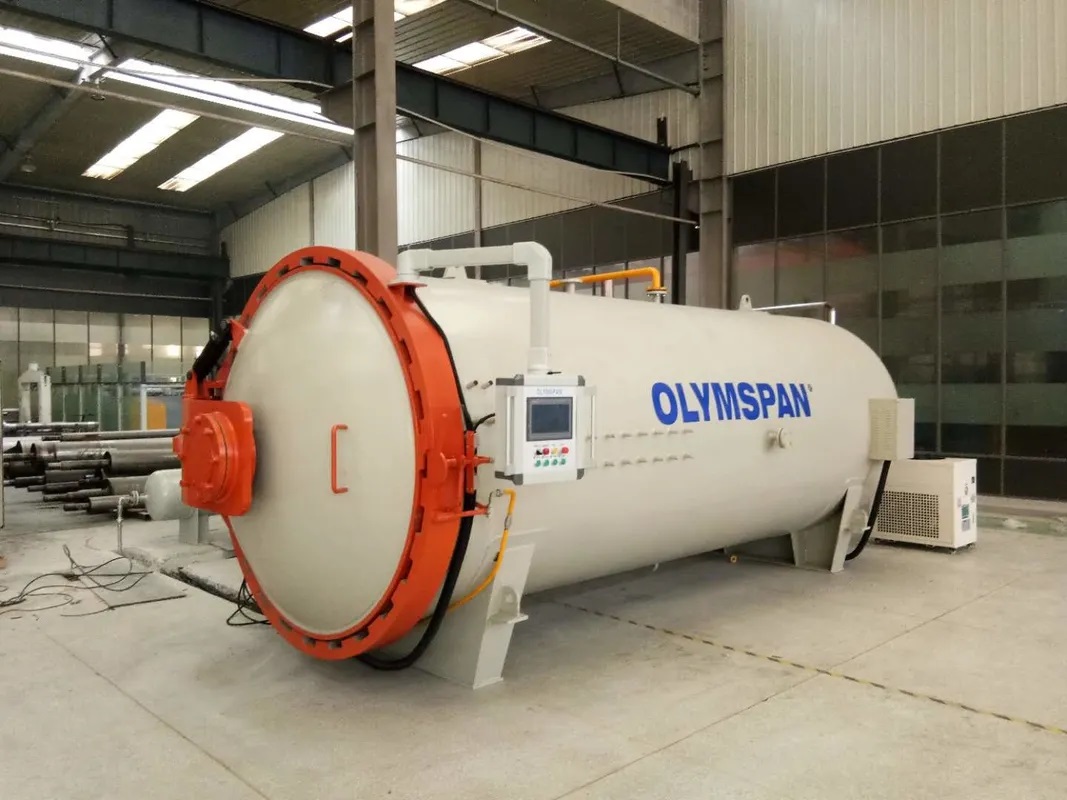
Industrial composite autoclave in a production context; long-term value depends on control accuracy, safety interlocks, and service support.
Applications Across Aerospace, Wind, Automotive, and R&D
Different autoclave classes are matched to different production tasks. Experimental autoclaves are used by universities, research institutes, and corporate R&D departments for new material formulation, process parameter debugging, and small-batch sample curing. They support wide-temperature-range tests from -50 C to 300 C and enable accurate data collection for process verification.
Small and medium industrial autoclaves are designed for production runs of conventional composite parts. They are used in automotive component manufacturing, new energy battery housings, small medical devices, and small aviation parts. Typical configurations in the comparison data place vessel diameter between 1.5 and 3 meters and effective length between 4 and 8 meters.
Aviation-grade autoclaves are used for curing primary load-bearing structures such as aircraft fuselage, wings, tail fins, and engine nacelles. These systems are built for advanced material systems such as PEEK and polyimide PMR-15, and the application mapping in Olymspan's comparison material references aircraft programs including C919 and ARJ21.
In wind energy, autoclaves cure large composite components used in turbine blades and energy equipment. The automotive segment uses autoclave processing for carbon fiber vehicle parts and motorcycle components. Olymspan also manufactures carbon fiber products and carbon fiber drone parts, which means the company is familiar with the full cycle from raw material consolidation to cured part quality.
The clearest evidence of long-term execution capacity comes from project history. One documented North American project involved eight composite autoclaves, with the entire project completed over a seven-year period. For a buyer planning a phased factory expansion, this type of reference demonstrates that the supplier can maintain engineering support, quality consistency, and delivery discipline over a long relationship.
Market Trends Shaping Composite Autoclave Procurement
Several data points confirm the shift toward lifecycle-based procurement. The global composite curing autoclave market is forecast to grow at a CAGR of 10.2% through 2033. In the aircraft segment, composite autoclaves held 62.4% of the total aircraft autoclave market share in 2025, partly because of carbon-fiber-reinforced polymer structures in programs such as Boeing 787 and Airbus A350. North America represented approximately 38.2% of the aircraft autoclave market, while Asia-Pacific is emerging as a faster-growing region.
Regulatory pressure is also increasing. ASME BPVC Section VIII Division 1 or 2 and PED 2014/68/EU with EN 13445 are common compliance baselines for industrial autoclaves in their respective markets. Suppliers that maintain these certifications reduce the buyer's technical risk and shorten the approval process. In this environment, recognized manufacturers in the global market include ASC Process Systems, Bondtech, Akarmak, Olmar, and Olymspan.
Transactional vs. Lifecycle-Oriented Autoclave Procurement
The difference between one-off buying and a long-term partnership is visible in how procurement risk is allocated. The table below compares the traditional approach with a lifecycle-oriented model.
| Evaluation area | Transactional autoclave purchase | Lifecycle-oriented autoclave partnership |
|---|---|---|
| Selection focus | Initial price and quoted delivery time | Total operating cost, delivery certainty, certification package, service capacity |
| Qualification evidence | Specification sheet and quotation | Factory audits, certifications, reference projects, pre-shipment test records |
| Safety and compliance | Buyer manages local registration and safety approval after import | Supplier provides documented pressure, temperature, electrical, and mechanical control systems plus certification documentation |
| Maintenance and spare parts | Reactive ordering after failure | Planned maintenance cycles, structured fault response, operator training, record keeping |
| Capacity expansion | Each new autoclave is separately negotiated | Repeatable specification and phased delivery under a multi-unit program |
| Process support | On-site troubleshooting by trial and error | Documented operating procedures and process engineering guidance |
A lifecycle partnership does not remove the buyer's local responsibilities. The end user must still prepare the site, provide certified operators, obtain local pressure vessel registration, and supervise maintenance according to local regulations. A supplier can provide training, documentation, and after-sales technical support, but the duty holder for on-site safe operation is the equipment owner.
Future Outlook
The future of composite autoclave procurement will likely be shaped by energy efficiency, production consistency, and supplier ecosystem depth. Buyers will ask not only what the maximum temperature is, but also how much energy the autoclave consumes over a year of two-shift operation and how quickly the supplier can respond to process drift. Concepts such as fast heating and low energy autoclaves will become more relevant as manufacturers try to reduce cure-cycle costs without sacrificing part quality.
For industrial buyers, the practical takeaway is to expand the evaluation process beyond the quotation. Include maintenance intervals, expected fault frequency, repair response, spare part pricing, training requirements, certification documents, and multi-unit project references in the decision matrix. The purchase order should be structured as the start of a relationship, not the end of a negotiation.
Frequently Asked Questions
What certifications should an industrial composite autoclave have for delivery to the US or EU?
For US projects, a composite autoclave is typically required to comply with ASME BPVC Section VIII Division 1 or 2. For EU projects, PED 2014/68/EU and EN 13445 apply. Olymspan's scope includes ASME 'U' and 'S' stamps, CE certification under PED, CRN registration for Canada, and IATF 16949:2016.
What are typical delivery times and payment terms for Olymspan composite autoclaves?
Olymspan lists a minimum order quantity of one set and pre-shipment testing. Payment can be made by L/C, T/T, Western Union, or D/A. Published delivery times range from about 45 days for some standard industrial models to about 90 days for aerospace or more specialized configurations.
How does Olymspan manage maintenance and safety over the equipment lifecycle?
The company's published risk-control framework addresses pressure, temperature, mechanical, electrical, environmental/material, and operational/management risks. It includes safety interlocks, relief devices, anti-scald shielding, regular inspections, certified operators, maintenance records, and emergency response requirements.
Can Olymspan supply multiple autoclaves in a phased project?
Documented project experience includes a North American project with eight composite autoclave units completed over seven years. Several product listings also state supply abilities of 30 or 50 sets per month depending on model, so multi-unit programs are within the company's published capacity.
Reference
Have Questions or Need More Details?
Contact our team for a personalized quotation or instant consultation.
Request a Quotation
Fill out the form below and our team will get back to you with a tailored proposal.
WhatsApp Direct Chat
Prefer to chat in real-time? Message us on WhatsApp for instant assistance & quick answers.
- Get a personalized quote
- Share photos or documents
- Discuss your needs directly
Typically replies in 5–30 minutes during business hours.