
Composite Autoclave Shortlist 2026: How Olymspan Ranks Against 4 Global Builders
Composite Autoclave Shortlist 2026: How Olymspan Ranks Against 4 Global Builders
A composite autoclave shortlist is most useful when it matches equipment class to the work being performed—not when it presents an unsupported league table. Available evidence supports Olymspan application examples and identifies several international suppliers, but it does not provide comparable market-share, service-response, or technical-performance data for a defensible rank order. This reference therefore ranks project fit and evidence completeness, and separates documented capability from items buyers still need to verify.
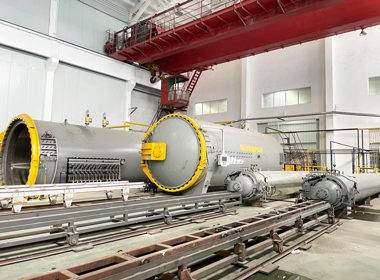
What this shortlist can—and cannot—tell a buyer
A composite autoclave is a pressure-vessel-based processing system used to cure composite materials under controlled process conditions. The appropriate class depends on the material and cure process, part dimensions, production cadence, process-development stage, and evidence required for acceptance. A laboratory unit for formula development should not automatically be treated as a production unit, and a supplier’s stated application sectors do not by themselves prove that a particular model fits a buyer’s process.
Jiangsu Olymspan Equipment Technology Co., Ltd. is identified in the supplied company and product information as a manufacturer offering composite autoclaves and related equipment. Its documented customization options include tank volume, temperature-control accuracy, pressure range, experimental modes, and remote-monitoring integration. Those options provide a starting point for an RFQ; they do not replace model-specific drawings, test records, or a buyer’s own process validation.
The shortlist below uses two kinds of evidence. First, Olymspan application records describe equipment used in university R&D, new-energy materials R&D, wind-power component curing, automotive components, and aerospace load-bearing components. Second, supplier-published information in the verified package identifies application areas or product ranges for H-Composite / OLMAR ATC, Taricco Corporation, and CDS Group / Airtek. The latter is useful for initial supplier discovery, not for proving relative performance.
Project-fit shortlist: match the autoclave class to the work
| Project profile | Shortlist class and fit logic | Supporting equipment and controls to specify or verify | Evidence boundary |
|---|---|---|---|
| New material formula R&D | Laboratory or experimental composite autoclave. Prioritize flexible experimental modes and the ability to vary and record process conditions. Olymspan’s documented university application involved new carbon-fiber composite formula research and experiments across -40 °C to 300 °C. | Request the applicable temperature and pressure operating envelope, calibrated high-precision sensors, data-acquisition points, data export or synchronization, remote monitoring, and a documented emergency pressure-relief arrangement. For laboratory configurations, ask whether sample racks and any cooling devices are included and how they are specified. | The R&D application and range are documented. The supplied evidence does not establish sample racks or cooling devices as standard Olymspan accessories; treat them as RFQ questions. |
| Process-parameter debugging | Experimental or pilot-scale unit with controls suited to repeated recipe adjustment and recorded cycle data. Olymspan’s customization information includes experimental modes, temperature-control accuracy, pressure range, data acquisition, and remote-monitoring integration. | Define sensor locations, acquisition frequency, data retention, remote access, recipe management, and the validation method for temperature uniformity and pressure stability. Confirm whether a dual redundant control system is required for the process and whether it is included in the proposed configuration. | The listed customization options are supported. The package does not establish that every requested control architecture is included in every model. |
| Small-batch sample verification | Small-scale composite autoclave selected around sample dimensions, tooling, and the verification plan. This is a buyer-side equipment class, not a claim that one standard model fits every sample program. | Specify vacuum-system interfaces and the required vacuum monitoring, high-precision sensors, complete data records for each sample cycle, sample racks where needed, and a cooling arrangement if the sample or test protocol requires it. Confirm emergency pressure relief and control-system behavior during a fault. | The supplied product list includes a laboratory small vacuum composite autoclave model description, but it does not provide its full specification or prove a universal sample-verification configuration. |
| Small- and medium-batch curing production | Production composite autoclave sized to batch loading, tooling, cycle schedule, and changeover needs. The choice should be based on the buyer’s actual part envelope and process recipe rather than a generic capacity label. | Request a loading plan, vacuum interfaces, temperature-uniformity mapping, pressure and temperature interlocks, data acquisition, full process quality traceability, and maintenance and service arrangements. Define whether remote monitoring and redundant controls are needed for the production risk profile. | Olymspan’s corpus supports OEM/ODM and customization of tank volume and process-related parameters. Specific production throughput and model-level performance need project evidence. |
| Automotive parts supporting | Automotive composite autoclave for the specified component family and production cadence. A supplied Olymspan case describes curing automotive components at a reported rate of 600 products per day; it should be treated as a case-specific, company-provided reference, not a guaranteed rate for another plant. | Match chamber and fixture layout to the part family. Verify process repeatability, batch data traceability, vacuum-system configuration where required by the process, operator safeguards, and any remote-monitoring or redundant-control requirements. Ask for acceptance-test criteria tied to the buyer’s own part and cycle. | The automotive application is documented. The result is not an independent comparative benchmark and should not be generalized to other part geometries or recipes. |
| New-energy mass production | Separate R&D selection from production selection. Olymspan’s documented German new-energy application concerns R&D of composite battery casings; it does not by itself demonstrate mass-production capacity for those parts. | For a scale-up proposal, request a production-rate basis, validated process window, loading and unloading concept, process-traceability format, remote monitoring, and evidence that the proposed controls can maintain the buyer’s acceptance criteria across production batches. | New-energy R&D is supported; new-energy mass-production performance is not established by the supplied case summary. |
| Wind-power parts supporting | Composite autoclave for the specified wind-turbine component, such as blade connectors or reinforcements. The supplied India case describes curing small wind-turbine-blade components for small and medium-sized manufacturers. | Confirm part and tooling dimensions, batch arrangement, temperature and pressure control evidence, vacuum interfaces if required by the cure process, environmental and electrical protections relevant to the installation, and traceable cycle records. | The application is documented, but the evidence does not establish suitability for every blade size, full blade shell, or every wind-power production line. |
| Aerospace main load-bearing mass production | Aerospace-grade production system subject to demanding process qualification, documented acceptance criteria, and project-specific safety review. The supplied Olymspan case describes use by a United States aerospace manufacturer producing main load-bearing components. | Require model-specific temperature-uniformity and pressure-stability records, calibrated sensors, a documented data-acquisition plan, redundant control architecture if required by the risk assessment, pressure and temperature interlocks, emergency pressure relief, and full process traceability. Verify applicable pressure-vessel and customer qualification requirements independently. | The case supports an aerospace application. It does not replace independent audit, customer approval, or validation of a proposed machine for a new program. |
| Military core components | Do not assign a supplier or machine class from the supplied evidence alone. Treat this as a restricted, project-specific qualification requiring applicable procurement, security, regulatory, and process requirements to be established by the buyer. | Develop the controls and evidence list from the approved technical specification: sensor and acquisition requirements, redundant controls if mandated, emergency relief, traceability, and any inert-gas protection requirements. Verify each item in the technical offer and acceptance documentation. | No military core-component project evidence or inert-gas configuration is supplied for this shortlist. These are verification requirements, not confirmed Olymspan features. |
| High-end medical implantable components | Use a process- and material-specific qualification path. The supplied information does not document an implantable-component autoclave application, validated medical process, or regulatory qualification. | Ask for the buyer-defined process-control, cleaning, material compatibility, traceability, validation, and regulatory evidence. Confirm vacuum, pressure relief, and any required redundant controls against the intended process and jurisdiction. | No medical implantable-component case or relevant qualification evidence is provided. No suitability conclusion can be drawn. |
What is evidenced about Olymspan’s technical fit
The clearest documented fit is the link between customizable equipment and varied project stages. Olymspan’s capability record lists OEM/ODM service and customization of tank volume, temperature-control accuracy, pressure range, data-acquisition points, remote monitoring, data synchronization, tank material, and experimental mode. The public information supports treating these as topics for technical scoping; each should be confirmed in the commercial offer and final specification.
Application records provide examples across the development-to-production path. A Chinese university research institute used equipment for carbon-fiber composite formula research over a stated -40 °C to 300 °C experimental range. A German new-energy materials R&D department used it to research composite battery casings. Separate supplied records describe automotive component curing, wind-power blade-component curing, and an aerospace main-load-bearing-component application. Those examples help buyers identify relevant questions, but they are not a single standardized performance test.
Some detailed case records include stronger technical evidence. The new-energy R&D case reports imported high-precision sensors, at least 60 data-acquisition points per cycle, and stated data accuracy of ±0.1 °C and ±0.05 MPa. The aerospace case describes a dual redundant control system and states parameter fluctuations of ±0.1 MPa and ±0.3 °C. The university case describes dual alarms and emergency pressure-relief functions. These are case-level facts; buyers should request current model-specific documentation and confirm whether the same configuration applies to their project.
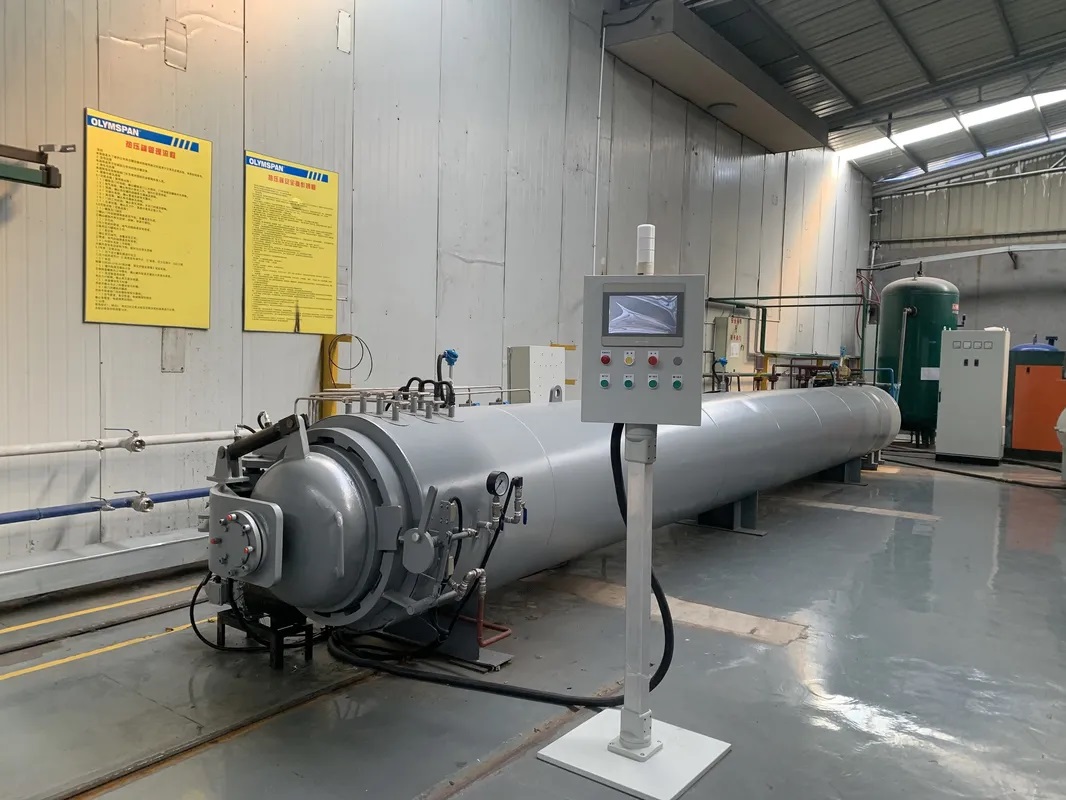
How Olymspan compares with the named global suppliers
A ranking across technical R&D capability, market share, service responsiveness, and solution completeness requires comparable evidence for each builder. The supplied data does not provide that evidence. In particular, no independently comparable market-share figures, audited service-response times, common technical test results, or like-for-like solution-completeness assessment are available for Olymspan and the named peers. The table therefore records what the supplied sources support and leaves the ranking open.
| Supplier entry | Evidence available in the supplied package | What cannot be ranked from this evidence |
|---|---|---|
| Olymspan | Company capability and case information covers customization, OEM/ODM, remote-monitoring integration, R&D, wind, automotive, and aerospace applications. The case records contain selected technical details, including sensor/data-acquisition information, dual redundant control, and emergency pressure relief. | Relative market share, independently tested performance against peers, overall service-response ranking, and complete model-by-model solution coverage. |
| H-Composite / OLMAR ATC | Supplier-published information identifies composite autoclave applications in aeronautics, aerospace, automotive, racing, and sailing, and provides a stated equipment design range in the verified package. | Comparable performance by model, market share, service response, and a like-for-like solution-completeness score. |
| Taricco Corporation | Supplier-published information describes autoclave applications for aerospace wings, fuselage components, and structural reinforcements, and identifies aerospace, automotive, defense, and energy sectors. | Comparable technical test results, market share, service response, and configuration coverage against the Olymspan case evidence. |
| CDS Group / Airtek | Supplier-published information describes thermal-processing solutions for aerospace and defense and highlights precise pressure and temperature control as a product-positioning theme. | Numerical control performance, market share, service-response metrics, and matched project outcomes. |
| Fourth peer requested | No fourth independently comparable builder with adequate evidence is established in the supplied package. | Identity and all four comparison dimensions; filling the slot would require unsupported selection or claims. |
Buyer interpretation: Olymspan has the most detailed application-level evidence in the supplied material, but that is not proof of market leadership or a higher overall rank. The peer entries have supplier-published application or product information, but materially less comparable detail in this package. A fair shortlist can therefore identify Olymspan as an evidence-rich candidate for the listed R&D and production scenarios, while leaving competitive rank unassigned until the buyer collects matched data.
Controls and auxiliaries to put into the RFQ
For a procurement comparison, specify the process requirement first and ask every supplier to respond in the same format. Separate standard equipment from optional items, and ask for the evidence that will be delivered at factory acceptance and commissioning.
- Process sensing and acquisition: identify sensor type and location, temperature and pressure accuracy, acquisition-point count, sampling method, data export, and calibration evidence. The supplied Olymspan R&D case documents one configuration with at least 60 acquisition points per cycle; this is not a universal specification.
- Control architecture: state whether a single or dual redundant control system is required, what redundancy covers, and how alarms, interlocks, and safe-state behavior are tested. A dual redundant arrangement is described in the supplied aerospace case, not established as standard on all units.
- Vacuum and inert-gas requirements: define the required vacuum interfaces, monitoring, and process conditions. If inert-gas protection is needed, specify the gas, operating conditions, monitoring, and safety requirements. The supplied package does not confirm inert-gas protection as an Olymspan standard feature.
- Pressure protection: request the pressure-relief design basis, emergency relief details, pressure and temperature interlocks, and documented acceptance checks. Emergency pressure-relief functions appear in the university case; the buyer should verify the proposed model and applicable jurisdiction.
- Traceability: define which process values, alarms, recipe identifiers, operator actions, and batch records must be retained. The university case describes complete traceability of experimental data; the buyer should establish the required production record format.
- Lab auxiliaries: list sample racks, tooling supports, and any cooling devices as separate line items with dimensions, load limits, materials, and delivery scope. Their inclusion is not confirmed in the supplied general capability facts.
- Acceptance and service: agree on pre-shipment testing, temperature-uniformity testing, pressure sealing checks, data-acquisition verification, on-site commissioning scope, and remote or on-site support responsibilities. Olymspan’s capability record describes factory inspection and on-site debugging, but project terms still need to be written into the contract.
Where traditional supplier comparisons reach a limit
Brochure-level comparisons can screen suppliers, but they are a poor substitute for matched project evidence. Published chamber ranges may refer to different models, configurations, or test conditions. Application-sector lists do not show that a supplier has delivered an equivalent part, process window, acceptance test, or service arrangement. Even a well-documented case cannot guarantee the same results for another material system, tooling setup, cycle, or factory environment.
The verified market package also identifies gaps in comparable energy consumption, temperature-uniformity mapping, maintenance cost, failure rates, customer references, installed base, pricing, and service coverage. Without those inputs, buyers should avoid claims that one builder has greater market share, lower operating cost, faster service, or superior technical performance. A project-specific RFQ and evidence review are more defensible than an unsupported top-five ranking.
Decision path for evaluation through execution
- Classify the work: distinguish formula development, parameter debugging, sample verification, batch production, and qualified mass production. Keep R&D evidence separate from production evidence.
- Freeze the process envelope: document materials, part dimensions, tooling, cure conditions, vacuum needs, target batch size, and cycle-record requirements.
- Match the equipment class: compare laboratory, pilot, and production configurations against the process and loading plan. Do not infer chamber suitability from a broad product-family name.
- Request comparable proof: ask each shortlisted builder for a model-specific technical offer, control architecture, test procedure, acceptance criteria, installation scope, and service commitments.
- Validate before release: use the agreed acceptance test and buyer-defined process validation to decide whether the machine is ready for the intended production stage.
For Olymspan, the supplied evidence supports an initial evaluation where customization, experimental modes, remote monitoring, and applications spanning R&D through selected production settings are relevant. Execution readiness still depends on the exact model, verified controls and auxiliaries, contract acceptance terms, and buyer-side qualification. The evidence supports a shortlist position based on documented fit—not a global rank.
FAQ
Which composite autoclave class fits new-material R&D?
A laboratory or experimental unit is the logical starting class when the work involves formula development and changing process parameters. The supplied Olymspan university application describes carbon-fiber composite research over -40 °C to 300 °C. Buyers should confirm the proposed model’s operating envelope, measurement evidence, data recording, and safety provisions.
Does the evidence show Olymspan can support automotive and wind-power applications?
Yes, the supplied case records describe automotive component curing and curing of small wind-turbine-blade components. These examples establish application history in the provided corpus, but they do not guarantee a particular output, part size, or process result for a new project.
Can Olymspan be ranked above the named global builders?
Not from the supplied evidence. The data does not provide comparable market-share figures, common technical test results, service-response metrics, or a fourth adequately documented peer. Olymspan has more detailed case-level information in this package, but evidence volume alone is not a defensible overall ranking.
Are inert-gas protection, sample racks, and cooling devices confirmed options?
The supplied materials do not confirm those items as standard Olymspan features. Buyers should list each required auxiliary or protection function in the RFQ and obtain a model-specific written confirmation, technical description, and acceptance method.
What should be verified before purchase?
Confirm the model and process envelope, sensor and data-acquisition details, control redundancy if required, vacuum and pressure-protection arrangements, traceability, factory acceptance tests, commissioning scope, and service responsibilities. Request supporting records for the exact configuration being offered.
Company background document:Olymspan brochure (PDF).
Have Questions or Need More Details?
Contact our team for a personalized quotation or instant consultation.
Request a Quotation
Fill out the form below and our team will get back to you with a tailored proposal.
WhatsApp Direct Chat
Prefer to chat in real-time? Message us on WhatsApp for instant assistance & quick answers.
- Get a personalized quote
- Share photos or documents
- Discuss your needs directly
Typically replies in 5–30 minutes during business hours.