
Composite Autoclave in Focus: Applications Across Aerospace to R&D
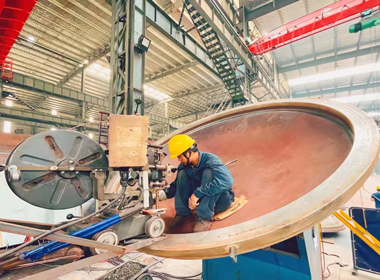
Introduction: The Critical Role of Composite Autoclaves in Modern Manufacturing
Composite autoclaves are pressure vessels that apply precisely controlled heat and pressure to cure advanced composite materials such as carbon fiber prepregs. They are essential for producing high-strength, lightweight components in industries where failure is not an option—aerospace, defense, automotive, wind energy, and medical devices. This article examines how Olymspan, a manufacturer with over 20 years of experience, supports these demanding applications with engineered composite autoclave solutions.
Problem / Opportunity: Curing Composites at Industrial Scale
Curing advanced composites requires a controlled high-temperature and high-pressure environment to eliminate internal voids, consolidate layers, and achieve the required mechanical properties. Traditional ovens cannot apply uniform pressure, while simple presses are limited in size and geometry. This creates a gap for mass production of large or complex parts—exactly where composite autoclaves deliver value. The opportunity lies in the growing demand for lightweight structures in electric vehicles, longer wind turbine blades, and next-generation aircraft, each requiring reliable, repeatable curing processes.
Brand Solution: Olymspan Composite Autoclaves
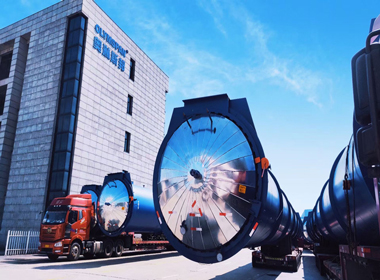
Jiangsu Olymspan Equipment Technology Co., Ltd., established in 2004, specializes in designing and manufacturing industrial equipment including composite autoclaves and aerospace autoclaves. Operating as a subcompany of the WULIN group, Olymspan maintains a manufacturing facility of 66,000 square meters and employs approximately 350 staff, with an R&D team of 25 engineers. The company’s annual production capacity reaches 50–55 million units, and its primary products include composite autoclaves, carbon fiber products, carbon fiber drones, and tube heat exchangers. With export business accounting for 30% to 40% of total sales, Olymspan serves markets worldwide including North America, South America, Western Europe, Eastern Europe, Eastern Asia, Southeast Asia, the Middle East, Africa, and Oceania.
Olymspan offers a range of composite autoclave models suitable for different application tiers: from laboratory-scale units for R&D to large-capacity, high-pressure systems for aerospace and industrial mass production. The autoclaves are built with materials such as Q345R carbon steel or customized alloys, and are available with ASME, CE, or other certifications based on customer requirements. The control system integrates world-leading CPC technology for precise temperature and pressure management.
Technical Explanation: How Composite Autoclaves Work
A composite autoclave functions as a sealed pressure vessel that can simultaneously apply heat (typically through electric heating or gas circulation) and inert gas pressure (nitrogen or argon) to cure stacked composite laminates placed under vacuum. The vacuum bag extracts volatiles and entrapped air, while the external pressure compresses the layers against the mold. The heating system, often with under-floor mounted heating and cooling ducts, ensures uniform temperature distribution. Advanced control systems monitor and adjust parameters in real-time, with dual redundant controls available for critical applications. The result is a void-free, high-fidelity component with consistent mechanical properties across the batch.
Application / Use-Case Scenarios
1. Aerospace, High-End Military & Medical Equipment
This product is applied in mass production projects for aerospace main load-bearing components, manufacturing projects for military core components, and production projects for high-end medical equipment components. It is common in China, Russia, the United States, France, and the United Kingdom. The working environment requires dust-free, stable temperature (20–28 °C) and humidity (30%–50%) facilities, with continuous 20–24 hour operation. Temperature control uniformity of ±0.3 °C to ±0.5 °C and pressure stability of ±0.1 MPa are typical. Olymspan’s high-pressure models (e.g., φ 3.5 m × 18 m) are engineered to meet these stringent demands.
2. Automotive, New Energy, Wind Power & Civil Composites
This product is suitable for small and medium-sized production projects, automotive parts supporting production projects, mass production projects for new energy products, wind power parts supporting projects, and large-scale production projects for civilian composite materials. Common markets include China, India, Vietnam, Thailand, Brazil, and Russia. The operating conditions allow slight dust, ambient temperature of -10–40 °C, and humidity of 30%–70%. Equipment must have certain anti-corrosion capabilities. Olymspan’s standard industrial autoclaves offer a delivery time of 50 days and supply ability of 50 sets per month, balancing cost and performance for high-volume production.
3. University Research & New Material R&D
This product is used in university research, new material R&D, and enterprise R&D departments, covering aerospace material R&D, new energy battery material R&D, and civil composite material formula R&D. Application scenarios are common in China, the United States, the United Kingdom, Japan, and Germany. The laboratory environment typically requires intermittent operation, high-precision sensors, data acquisition capabilities, and noise ≤60 dB. Olymspan’s experimental composite autoclave (e.g., model “Laboratory small composite material vacuum composite autoclave”) is designed for such intermittent, high-precision experiments.
Market Trend Analysis
The global composites market continues to expand driven by lightweighting initiatives in aerospace (new generation aircraft), automotive (electric vehicle body panels), wind energy (longer blades), and infrastructure. According to publicly available industry sources, the aerospace composites market alone is expected to grow at a steady pace through 2030. This directly fuels the demand for composite autoclaves with larger diameters, higher pressure ratings, and faster heating/cooling cycles. Olymspan’s ability to supply 30 sets per month indicates significant production capacity to serve this growing demand. Furthermore, the shift toward automation and Industry 4.0 is pushing autoclave manufacturers to integrate remote diagnostics, data logging, and predictive maintenance features—areas where Olymspan’s dual redundant control system and PLC-based control align with market needs.
Comparison with Traditional Solutions
Compared to vacuum-bag-only oven curing, a composite autoclave provides uniform external pressure, resulting in higher fiber volume fractions and lower void content. This makes it indispensable for aerospace-grade components. However, the initial capital investment for an autoclave is significantly higher than for an industrial oven, and operating costs (energy, inert gas) are greater. One honest limitation is that for simple, non-structural parts where pressure is not critical, an oven can be a more economical choice. Decision criteria should therefore include part geometry, performance requirements, production volume, and budget.
Future Outlook
As composite applications penetrate new sectors (e.g., hydrogen storage tanks, urban air mobility), autoclave technology will evolve toward larger dimensions, faster cycle times, and lower energy consumption. Olymspan’s focus on energy-saving features—such as under-floor mounted heating and cooling ducts and efficient insulation—positions it to meet stricter environmental regulations. The company’s ongoing investment in R&D (25 engineers) and its global export footprint suggest a steady trajectory toward serving the next generation of composite manufacturing needs.
Frequently Asked Questions
What is a composite autoclave?
A composite autoclave is a pressure vessel that applies controlled heat and pressure to cure composite materials such as carbon fiber prepregs, producing high-strength, void-free components.
Which industries use composite autoclaves?
They are used in aerospace manufacturing, high-end military manufacturing, high-end medical equipment, automobile manufacturing, new energy, wind power, civilian composites, and rail transit parts manufacturing, as well as university and corporate R&D.
What certifications does Olymspan offer on its autoclaves?
Olymspan’s composite autoclaves can be manufactured to ISO9001, ASME, CE, and other standards as required by the customer. Material certification (e.g., PED) is also available.
What are the typical delivery times for Olymspan autoclaves?
For standard industrial models, delivery time is approximately 50 days. For customized aerospace-grade models, delivery may be 90 days depending on complexity.
How does Olymspan ensure temperature uniformity?
Olymspan uses an under-floor mounted heating, cooling, and air duct design combined with a world-leading CPC control system to achieve temperature uniformity within ±0.3 °C to ±0.5 °C in high-end models.
What is the export ratio of Olymspan’s products?
Export business accounts for 30% to 40% of total sales, with products shipped to North America, South America, Europe, Asia, the Middle East, Africa, and Oceania.
For detailed technical specifications and a complete product brochure, download the company brochure: Olymspan Company Brochure (PDF).