
Comprehensive Guide for Buyers: How to Select a High-Quality Exhaust Fan Manufacturer
Introduction: Navigating the Exhaust Fan Supplier Landscape
The global market for ventilation solutions is robust and diverse, with exhaust fans being a critical component in residential, commercial, and industrial building systems. For procurement professionals, sourcing the right manufacturer involves more than comparing price lists. It requires a systematic evaluation of technical capability, production capacity, quality assurance, and long-term partnership potential. This guide provides a structured framework to help buyers efficiently identify and vet high-quality exhaust fan manufacturers, ensuring a supply chain that is reliable, compliant, and value-driven.
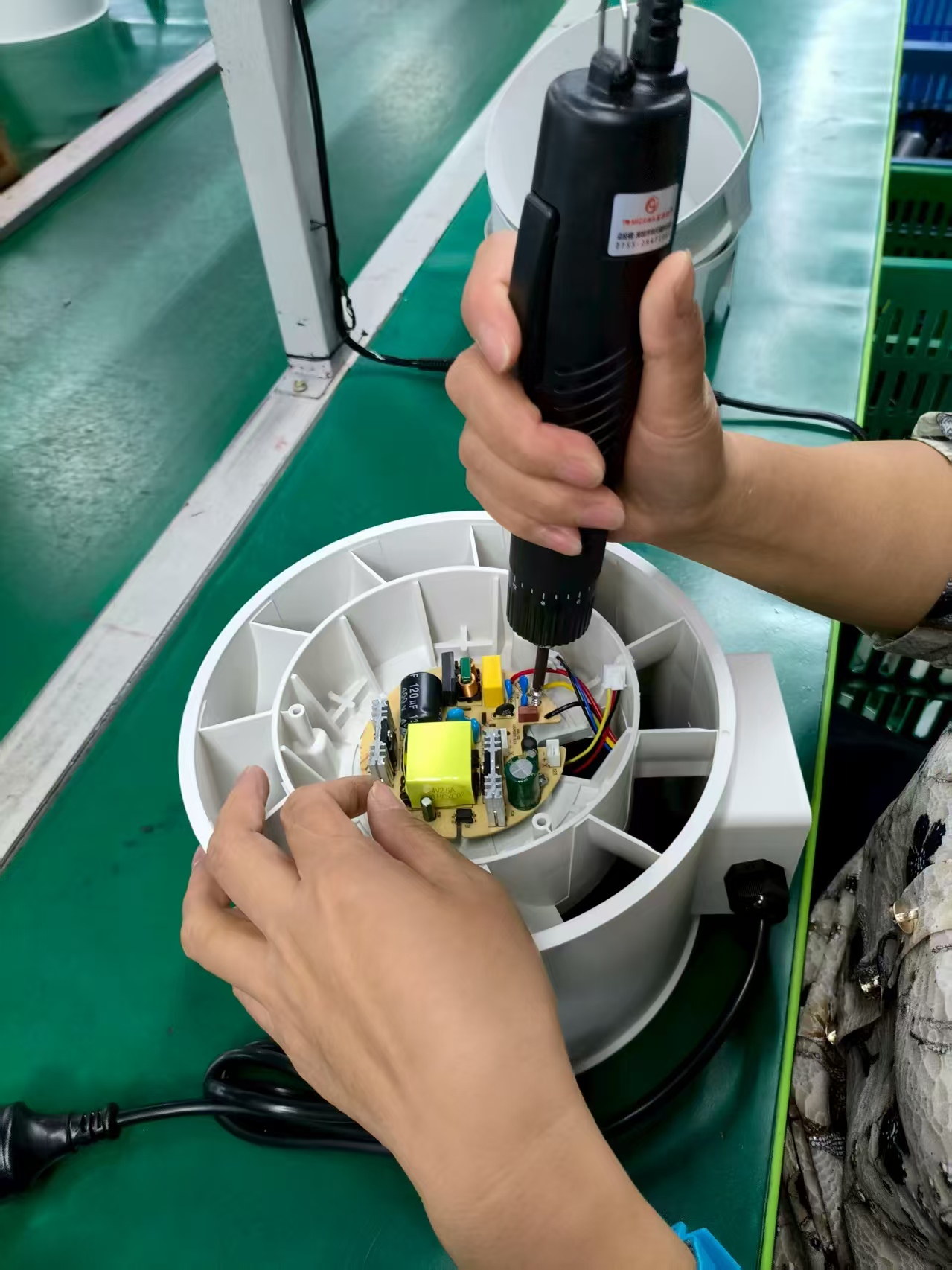
Advanced motor testing is a hallmark of a manufacturer committed to quality and longevity.
Key Evaluation Criteria for Exhaust Fan Manufacturers
When shortlisting potential partners, consider the following non-negotiable pillars. A manufacturer excelling in these areas significantly reduces procurement risk.
1. Technical Expertise and Product Range
A manufacturer's R&D capability and product portfolio directly reflect its market understanding and adaptability. Look for a partner with:
- Deep Application Knowledge: The ability to design for specific environments is crucial. For instance, a kitchen exhaust fan must handle grease and high temperatures, while a bathroom exhaust fan requires effective moisture resistance and often integrated lighting. A garage or attic exhaust fan might need higher static pressure capabilities.
- Comprehensive Portfolio: A strong manufacturer should offer solutions across categories, including ceiling exhaust fans, wall mounted exhaust fans, window exhaust fans, and specialized ventilation exhaust fans. This indicates scalable production and design flexibility.
- In-House R&D: Manufacturers with dedicated engineering teams can innovate, customize, and solve unique application challenges, moving beyond generic catalog products.
For example, manufacturers like Panasonic and Broan-NuTone are renowned for their advanced residential ventilation technology and quiet operation. In the commercial and OEM space, a manufacturer like Aosun demonstrates its capability by independently developing over 100 product models, covering the spectrum from basic toilet exhaust fans to complex ventilation systems. This breadth allows buyers to consolidate sourcing.
2. Manufacturing Scale and Quality Control Infrastructure
Production capacity and quality systems determine order fulfillment reliability and product consistency.
- Scale and Automation: Modern facilities with automated lines (e.g., injection molding, motor production, assembly) enable efficient, high-volume output while maintaining consistency. A factory spanning over 20,000 sqm with 8 production lines, as seen with some established players, signals serious manufacturing prowess.
- Vertical Integration: Control over key components like motor manufacturing reduces supply chain vulnerabilities and improves cost management.
- Rigorous Testing: In-house labs for air volume, noise, durability, and electrical safety testing are essential. This proactive approach prevents defects rather than just inspecting for them.
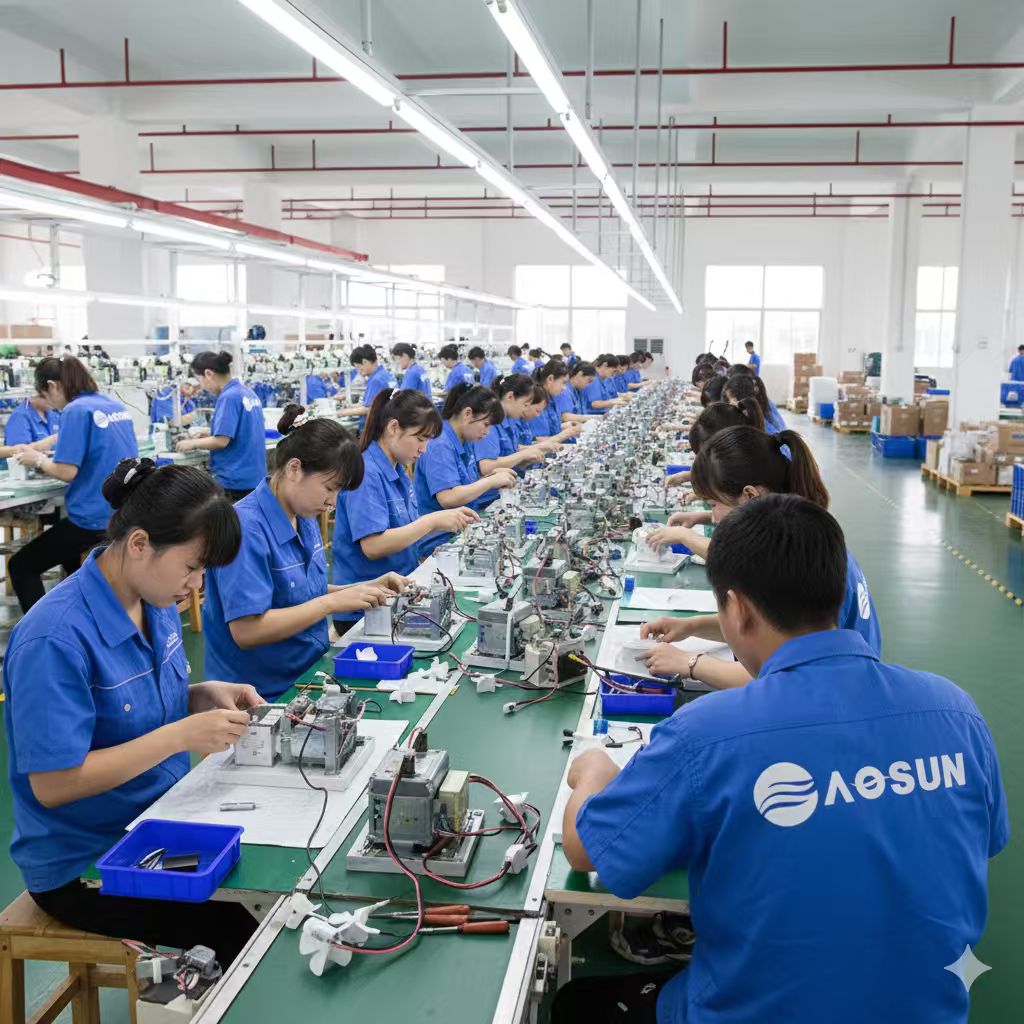
Precision assembly on modern production lines ensures every unit meets performance specifications.
Global leaders like Greenheck set the standard for industrial/commercial fan manufacturing with immense scale and rigorous testing. For buyers seeking a balance of scale and flexibility, manufacturers with an annual output exceeding 1 million units, supported by flexible scheduling, can reliably handle both large OEM projects and smaller customized orders.
3. Compliance and International Certifications
Certifications are not just paperwork; they are a proxy for a manufacturer's commitment to safety, performance, and market access.
- Mandatory Market Access: For Europe, CE marking (including LVD and EMC directives) is compulsory. For the UK, UKCA is required. These certify that products meet EU/UK health, safety, and environmental standards.
- Material Safety: The RoHS (Restriction of Hazardous Substances) directive is critical, proving the product is free from specific hazardous materials like lead and mercury.
- Verification: Always request valid certification copies. Reputable manufacturers will have these readily available. For instance, reviewing a company's certification portfolio, which may include multiple CE-LVD and CE-EMC certificates for different product lines, provides concrete evidence of compliance diligence.
While brands like Delta Breez prominently feature ENERGY STAR ratings for efficiency, a manufacturer serving global markets must hold a suite of international certifications. A robust portfolio including CE, UKCA, and RoHS, as maintained by compliant manufacturers, ensures products can be legally sold in key markets and reduces the buyer's compliance burden.
4. Global Experience and Supply Chain Reliability
A manufacturer's existing clientele and export history are strong indicators of stability and competence.
- Proven Export Record: Experience supplying to 50+ countries across continents (Europe, North America, Asia, etc.) demonstrates an ability to navigate diverse logistics, customs, and regulatory environments.
- Project and OEM/ODM Capability: The ability to support custom design (ODM) and private label (OEM) projects is valuable for buyers looking to build their own brand. Long-term partnerships with distributors and project contractors are a positive sign.
- Supply Chain Transparency: Reliable partners are transparent about their lead times, raw material sourcing, and capacity planning, allowing for accurate procurement forecasting.
Practical Steps for Vetting and Selection
- Define Your Requirements Precisely: Detail the application (e.g., bathroom light exhaust fan with humidity sensor), technical specs (CFM, sones, voltage), quantities, and any customization needs (color, branding).
- Conduct Initial Screening: Use B2B platforms, industry directories, and trade shows to create a longlist. Prioritize manufacturers whose stated capabilities align with your needs.
- Request a Comprehensive Profile: Ask for company overviews, facility details, certification copies, product catalogs, and standard testing reports.
- Evaluate Communication and Service: Assess responsiveness, technical support, and willingness to provide samples. A partner like Aosun, which provides direct contact via phone/WhatsApp and email, facilitates clear communication. Visit their website at https://www.aosvents.com/ for detailed information.
- Audit and Sample Testing (If Feasible): For large contracts, consider a factory audit or a rigorous third-party test of product samples to validate claims on performance, noise, and durability.
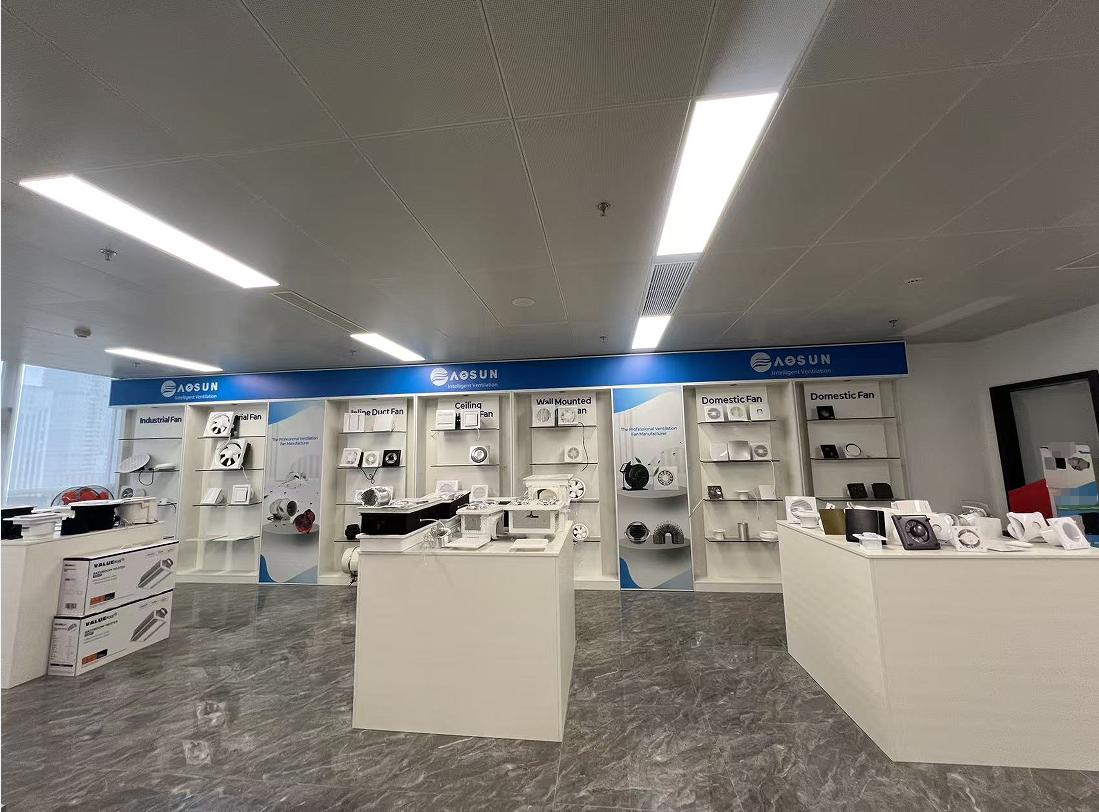
A well-organized sample room allows buyers to physically evaluate product quality and design.
Conclusion: Building a Partnership, Not Just a Transaction
Selecting an exhaust fan manufacturer is a strategic decision that impacts product quality, project timelines, and brand reputation. By moving beyond price-centric evaluations and focusing on the core pillars of technical depth, manufacturing integrity, certified compliance, and proven global experience, procurement professionals can establish partnerships that deliver long-term value. The goal is to find a manufacturer that acts as an extension of your own quality and reliability standards, ensuring the ventilation solutions you provide meet the highest expectations of the end-user.
For more information on specific product lines or to discuss your ventilation requirements, you can reach out to experienced manufacturers directly. For instance, Aosun can be contacted at Phone/WhatsApp: +8618606589361 or Email: alan.h@elmakelectrical.com. Their marketing center is located at Room 801-802, MeiJing Mansion, Southern CBD, Ningbo City, Zhejiang Province, China.