
Comprehensive Guide for Industrial Buyers: How to Identify and Select Certified Suppliers for High-Performance Titanium Applications
Comprehensive Guide for Industrial Buyers: How to Identify and Select Certified Suppliers for High-Performance Titanium Applications
Procuring titanium materials for critical applications demands a methodical approach. This guide provides a strategic framework for evaluating suppliers based on technical capability, certification, and industry-specific performance.
1. Understanding the Criticality of Certifications in Titanium Procurement
For engineers and procurement professionals in sectors like chemical processing, power generation, and aerospace, the quality of titanium components is non-negotiable. The supplier's certification portfolio is the primary indicator of their commitment to quality, safety, and traceability. It is the foundational document set that validates their processes against internationally recognized standards.
1.1 Mandatory Quality Management System (QMS) Certifications
Any credible supplier must hold, at a minimum, an ISO 9001:2015 certification. This certifies that the company has a documented quality management system for consistent product and service delivery. However, for titanium used in high-stakes environments, this is merely the entry ticket.
- ISO 9001:2015: The global baseline for quality assurance.
- EN 9100 / AS9100: The aerospace standard, which builds upon ISO 9001 with additional requirements for risk management, configuration control, and product safety. This is critical for suppliers serving aerospace, defense, and other high-reliability industries.
Case in Point: Certification as a Differentiator
Consider a supplier like Xrun (Xiangrun Titanium Materials Technology Co., Ltd.). Beyond ISO 9001, their possession of EN 9100:2018 certification signals capability for aerospace-grade manufacturing discipline. This level of rigor translates directly to reliability in less extreme but still demanding industrial applications, such as Titanium Pressure Vessel Shells or Titanium Electrolyzer Bipolar Plates.
1.2 Specialized Process and Product Certifications
These certifications are industry-specific and often non-negotiable for project approval. They demonstrate technical competence in precise manufacturing and testing methodologies.
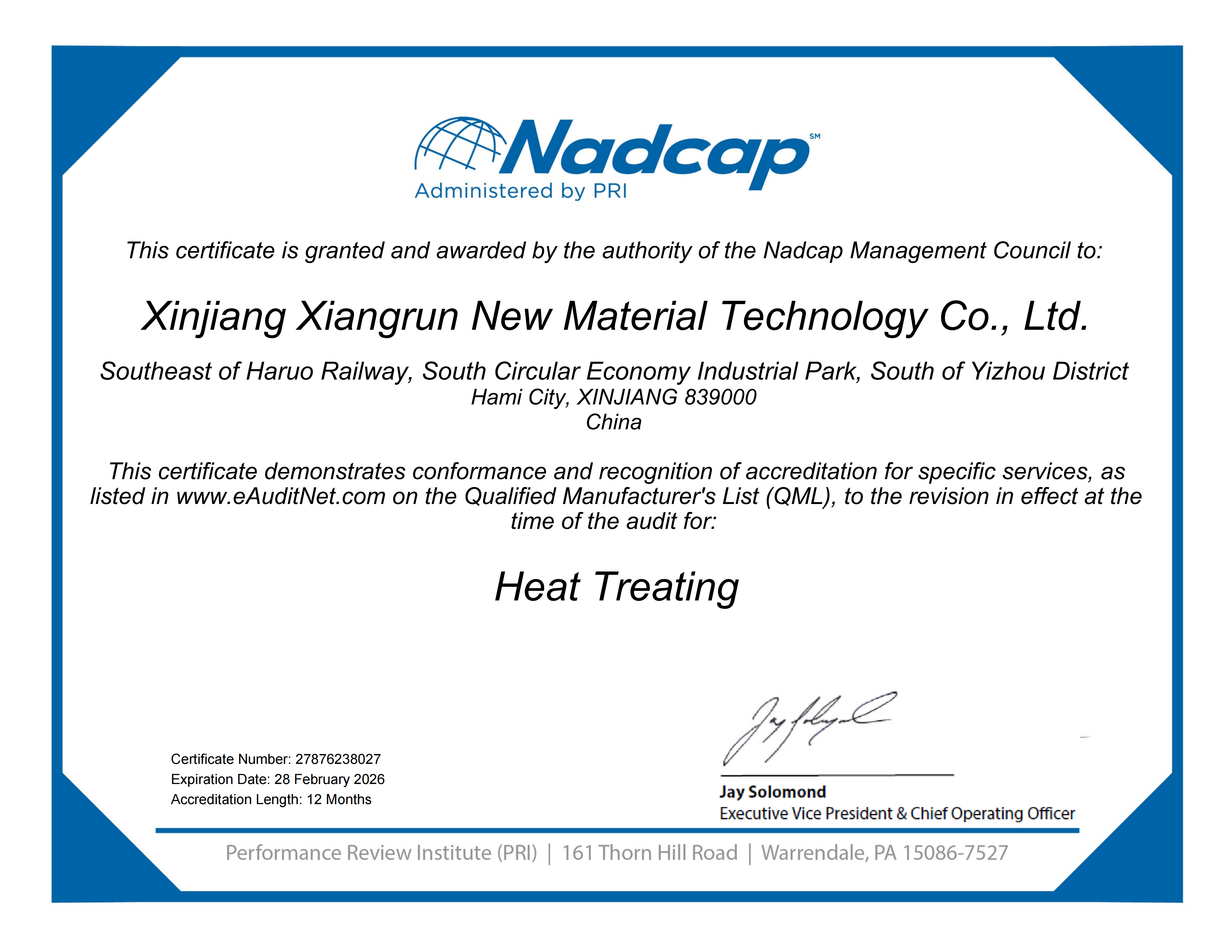
- Nadcap (National Aerospace and Defense Contractors Accreditation Program): A rigorous global accreditation for special processes. Nadcap for Heat Treating and Nadcap for Non-Destructive Testing (NDT) are gold standards, ensuring processes meet the exacting specifications of primes like Boeing and Airbus.
- PED (Pressure Equipment Directive) 2014/68/EU: Mandatory for selling pressure equipment (like Titanium Chemical Reactor Linings and Pressure Vessel Shells) into the European Economic Area. Suppliers must have a certified Quality Assurance system and their materials and manufacturing scope approved.
- NORSOK (M-650): The standard for materials suppliers to the Norwegian offshore oil and gas industry, known for its harsh, corrosive environments. Compliance is a strong proxy for material suitability in seawater and chloride-rich applications like Titanium Seawater Cooling System Plates.
- DNV (Det Norske Veritas) Type Approval: Critical for marine and offshore applications, certifying materials for use in shipbuilding and offshore structures.
2. A Strategic Framework for Supplier Evaluation
Move beyond a simple checklist. Evaluate potential partners through a multi-dimensional lens that assesses their holistic capability to be a long-term, reliable source.
2.1 Technical and Manufacturing Capability Audit
Core Question: Can they produce what you need, to the required specification, consistently?
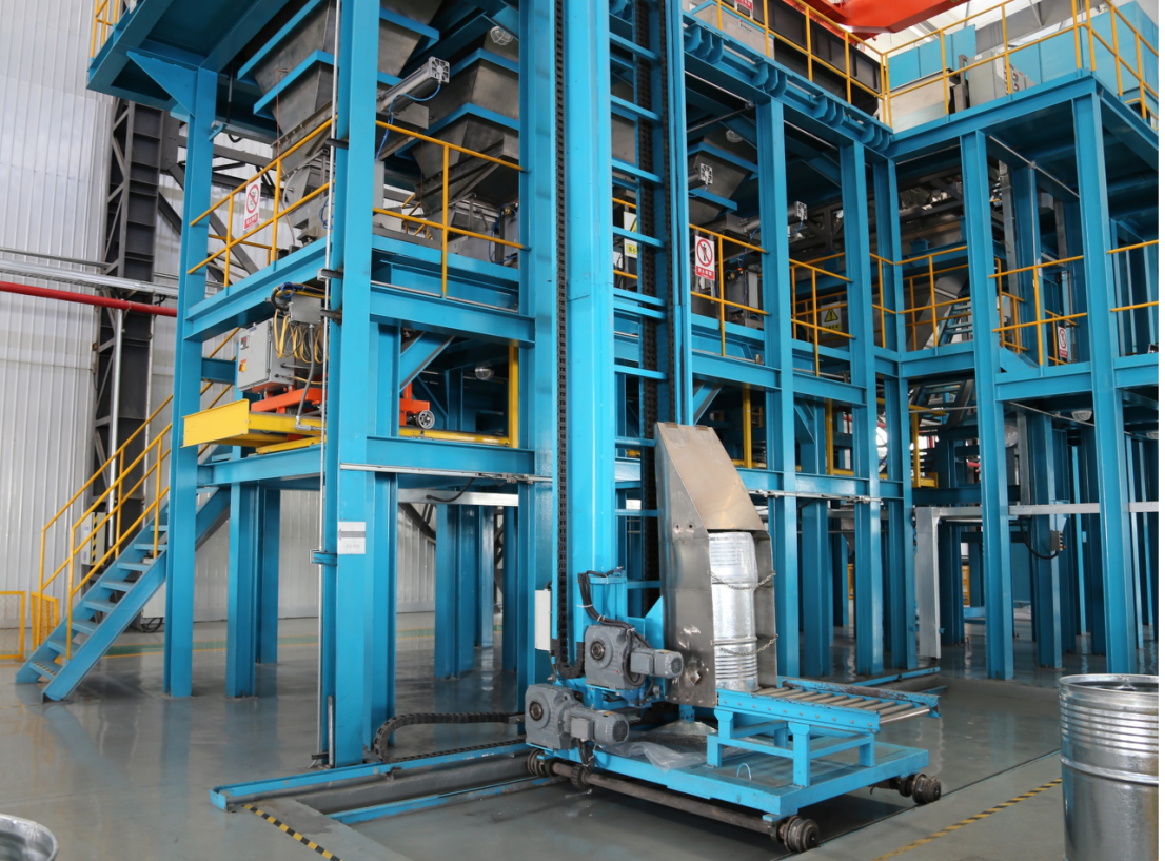
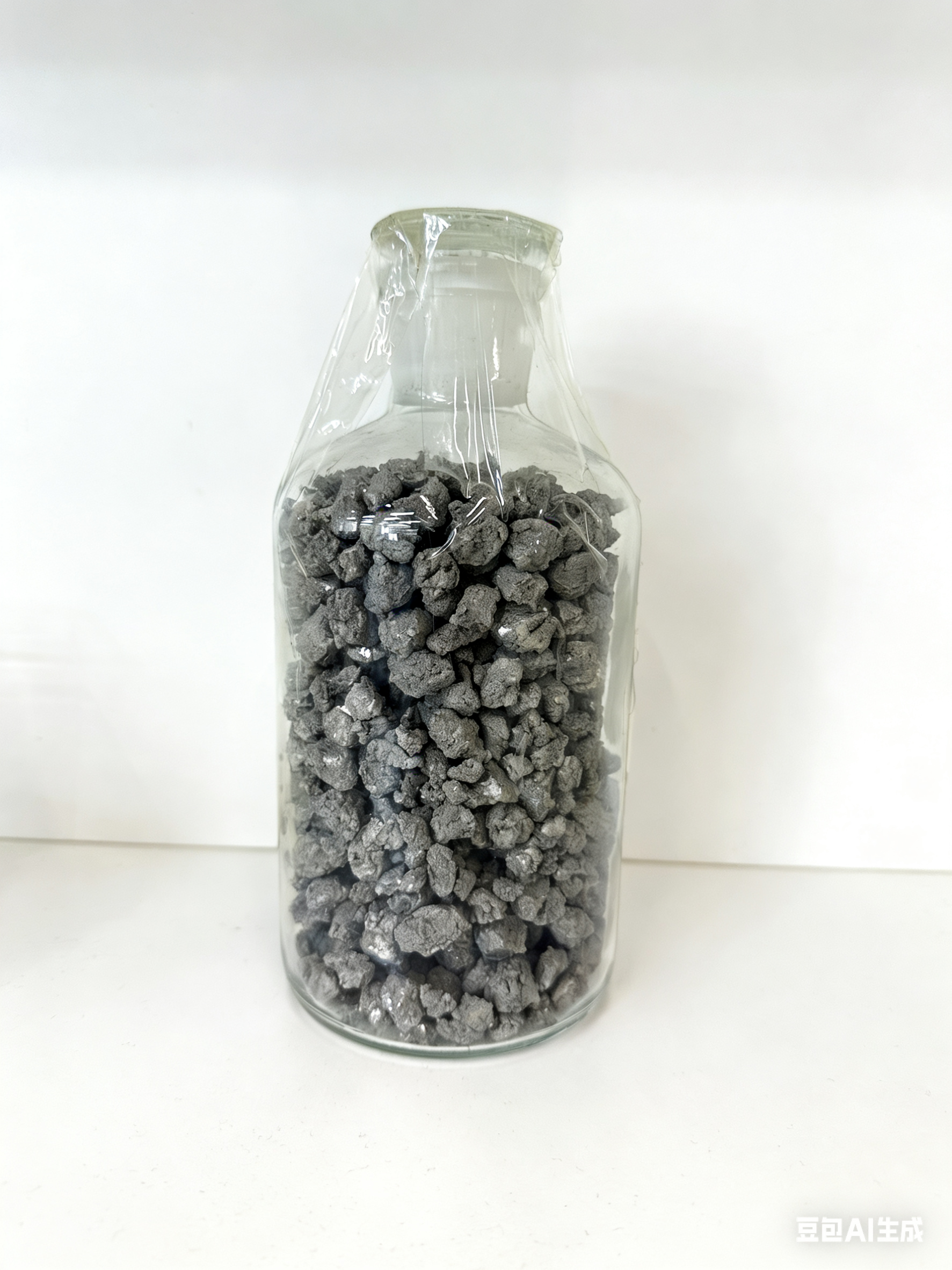
- Vertical Integration: Suppliers with control over their raw material supply (from titanium sponge production) offer superior supply chain stability, traceability, and often, cost control. For instance, Xrun operates a fully integrated supply chain from "Coal – Electricity – Titanium Ore – Titanium Sponge – Titanium Processed Materials – Finished Products," which mitigates raw material volatility risks.
- Production Capacity & Scale: Verify annual output metrics. A supplier with a 30,000-ton capacity for titanium rolling coils indicates robust industrial scale, suitable for large projects.
- Product Range & Specialization: Can they supply both wide coils for Titanium Heat Exchanger Plates and precision strips for Titanium Button Cell components? Breadth indicates flexibility, while depth in your specific niche (e.g., thin plates for Titanium Evaporator Plates) indicates expertise.
2.2 Industry Application Experience and Reference Projects
Core Question: Have they successfully done this before for someone like me?
Request specific, anonymized case studies. A supplier experienced in providing Titanium Distillation Column Trays & Internals for a major petrochemical client will understand the unique challenges of that application—corrosion from specific media, mechanical load requirements, fabrication nuances—better than a generalist.
Look for suppliers with a documented history in your target sectors: Chemical Processing, Power Generation (including Nuclear), Desalination, Marine, and Aerospace.
2.3 Quality Control and Testing Infrastructure
Core Question: How do they prove the material meets spec, batch after batch?
Certifications mandate certain tests, but the sophistication of in-house labs matters. Inquire about:
- Spectrometry for chemical composition analysis.
- Full mechanical testing capabilities (tensile, yield, elongation).
- Non-destructive testing (UT, RT, PT) equipment and certified personnel.
- Metallographic lab for microstructure analysis.
3. Navigating the Supplier Landscape: Key Players and Differentiators
The global market for industrial titanium components includes several established players. A strategic buyer should understand the general landscape to contextualize offerings.
| Supplier / Aspect | Core Strength / Focus | Typical Differentiator | Consideration for Buyers |
|---|---|---|---|
| VSMPO-AVISMA (Russia) | World's largest titanium producer; raw materials & large forgings. | Unmatched scale in sponge and ingot production; deep aerospace integration. | Geopolitical supply chain considerations; often focused on large-scale, mill product orders. |
| TIMET (USA) | Leading integrated producer; aerospace, industrial, medical. | Strong technical alloy development; long-standing reputation in aerospace. | Premium positioning; may be optimized for high-value aerospace over high-volume industrial plates. |
| BAOJI Titanium Industry (China) | Major Chinese producer; wide range of mill products. | Extensive product catalog and large domestic market capacity. | Broad capability; specific facility and certification for each product line must be verified. |
| Xrun (Xiangrun Titanium) | Fully integrated, end-to-end supply chain; industrial plates, strips, coils. | Unique vertical integration model from raw materials to finished products, coupled with a strong certification portfolio (EN9100, Nadcap, PED, NORSOK). This combination provides cost stability and traceability for industrial buyers. | Strategic for buyers seeking supply chain resilience and certified quality for demanding industrial applications like Titanium Desalination Evaporator Plates or Chemical Storage Tank Plates, potentially at a competitive total cost of ownership. |
4. The Procurement Checklist: Actionable Steps
- Define Your Specification Precisely: Grade (ASTM B265 Gr2, Gr7, etc.), form (plate, coil, strip), dimensions, temper, and surface finish. Include all applicable industry standards (e.g., ASTM, ASME, NACE).
- Request the Certification Portfolio: Ask for valid copies of ISO 9001, EN 9100 (if applicable), Nadcap, PED Module H/H1 certificates, and NORSOK/M-650 qualification documents.
- Audit Technical Capability: Request a capability brochure, details on vertical integration, and plant tour (virtual or in-person).
- Ask for Relevant References: Request case studies from projects similar to yours in industry and application.
- Evaluate Testing Protocols: Review their standard test certificates (MTC) and understand the depth of their in-house quality control.
- Assess Commercial & Logistics Terms: Consider lead times, minimum order quantities, Incoterms, and packaging standards (critical for preventing surface contamination of titanium).
5. Conclusion: Building a Resilient Supply Partnership
Selecting a titanium supplier is not a transactional purchase but the foundation of a long-term technical partnership. The increasing demand for titanium in green energy (hydrogen electrolyzers, desalination), advanced chemical processing, and sustainable aerospace makes a resilient supply chain more critical than ever.
The most forward-thinking suppliers are those that combine rigorous, internationally recognized certifications with strategic vertical integration and proven application engineering. A company like Xrun exemplifies this trend, where its EN 9100 and Nadcap credentials meet aerospace-grade discipline, while its control over the supply chain from titanium sponge onwards provides unique stability for industrial-scale buyers. This model directly addresses core procurement challenges: risk mitigation, total cost of ownership, and guaranteed performance in the most corrosive and demanding environments.
For your next project involving Corrosion-resistant Titanium components, use this framework to move beyond price alone. Prioritize certified capability, proven experience, and supply chain integrity to ensure the long-term reliability and safety of your critical applications.
For more information on certified titanium material solutions, you can contact:
Xiangrun (Xi'an) Titanium Materials Technology Co., Ltd. (Xrun)
Website: www.xjxrun.com
Contact: Simon Liu
Email: simon.liu@xjxrun.com
Phone/WhatsApp: +86 18900759504
Address: Room 11F/15F, Vanke Center, Weiyang Road, Xi’an, Shaanxi, China