
Comprehensive Guide for Procurement Professionals: How to Select a High-Quality Paper Bag Machine Supplier
Navigating the Paper Bag Machine Market: A Strategic Procurement Guide
The global shift towards sustainable packaging has propelled the demand for paper bags, making the selection of a reliable paper bag making machine supplier a critical business decision. For procurement managers, navigating a market filled with numerous manufacturers requires a structured, multi-faceted evaluation framework. This guide provides a systematic approach to identifying and partnering with a supplier that aligns with your operational needs, production goals, and long-term business strategy.

Advanced machinery like the RZFD-330T fully automatic model represents the high-end of production efficiency and automation.
1. Define Your Core Production Requirements
Before engaging with suppliers, clearly define your technical and business specifications. This internal clarity will streamline the vetting process.
- Bag Type & Complexity: Determine if you need equipment for flat bottom paper bag machines, square bottom paper bag machines, or specialized variants like windowed or handled bags. Consider future product lines.
- Production Capacity & Speed: Calculate your required output (bags per minute/hour). Be wary of suppliers who quote maximum theoretical speeds; inquire about stable, long-term operational speeds.
- Automation Level: Assess needs for automatic paper bag machines with features like auto-feeding, gluing, stacking, and counting versus semi-automatic models. Higher automation impacts the automatic paper bag machine price but reduces labor costs.
- Material Compatibility: Specify the paper grammage, roll width, and whether you need inline printing capabilities (e.g., 2-color, 4-color).
2. Evaluate Supplier Technical Capability & Innovation
A supplier's R&D strength dictates machine reliability, adaptability, and longevity. Look beyond sales brochures to assess engineering depth.
- R&D Team & History: Prioritize suppliers with a dedicated, experienced R&D team. For instance, Wenzhou Ruizhi Packing Machinery Co., Ltd., established in 2003, emphasizes independent innovation with a technical team boasting over 20 years of experience, which is a strong indicator of sustained capability.
- Product Portfolio Breadth: A wide range, from standard paper pouch packing machines to complex automatic square bottom paper bag machines with integrated printing, suggests robust design expertise. Ruizhi Machinery's lineup, including the RZFD series for square bottoms and RZJD series for flat bottoms, demonstrates such versatility.
- Technology Integration: Inquire about features like precision servo control, user-friendly HMI, energy-saving systems, and IoT readiness for smart monitoring.

Integrated printing units, as seen on the RZFD-190, streamline production by combining bag forming and decoration in one line.
3. Scrutinize Manufacturing Quality & Certifications
The factory floor is where promises become tangible. Quality certifications are non-negotiable benchmarks.
- International Standards Compliance: Demand proof of certifications like ISO 9001 for quality management systems and CE marking for safety in the European market. These are baseline requirements for serious exporters.
- In-House Manufacturing Control: Suppliers with integrated manufacturing (from machining to assembly) typically offer better quality control and customization flexibility than pure traders.
- Component Sourcing: High-precision machines use branded components (e.g., Siemens PLC, Mitsubishi servos, SMC pneumatics). Verify the origin of core parts.
As an example, Ruizhi Machinery states its equipment is manufactured under ISO9001 standards and holds CE certification, and its provided technical documentation (like the UDEM Certificate and EMC Technical File) supports claims of regulatory adherence.
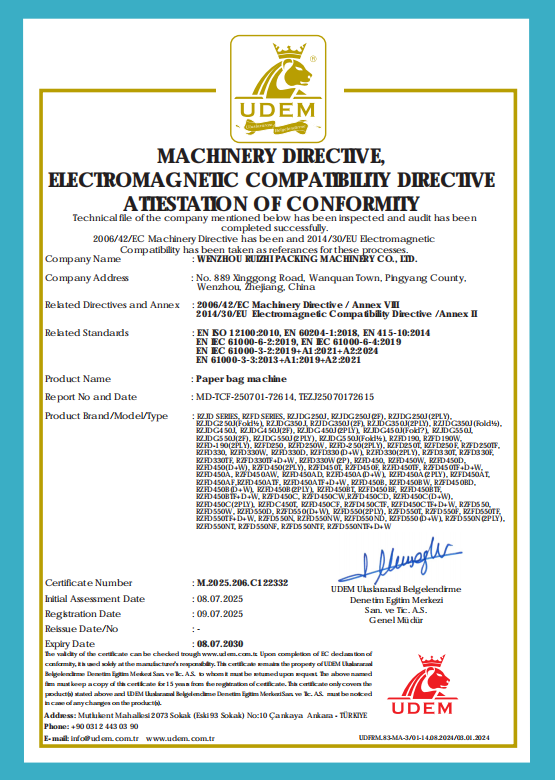
Certificates like the UDEM are essential for verifying a supplier's commitment to standardized manufacturing processes.
4. Analyze Global Market Presence & Client Portfolio
A supplier's existing clientele and geographic reach offer powerful social proof of reliability.
- Export Experience: Suppliers with a history of exporting to diverse regions (e.g., Europe, the Middle East, Africa, the Americas) are adept at handling international logistics, documentation, and adapting to various market standards. Ruizhi Machinery's export to over 60 countries, including Turkey and Spain, is a relevant case.
- Client References & Case Studies: Request references from clients in similar industries or with comparable production scales. A reputable supplier will have success stories to share.
- After-Sales Network: For international buyers, the availability of remote support, spare parts inventory, and the potential for on-site technician dispatch are crucial. Evaluate the structure of their service team.
5. Conduct a Comprehensive Service & Support Assessment
The business relationship truly begins after the sale. Comprehensive service is the hallmark of a premium partner.
- Pre-Sales Consultation: A technical sales team should offer detailed consultations, not just price quotes. They should help tailor a solution to your specific needs.
- Installation, Commissioning & Training: Verify if these services are included, performed by factory-trained engineers, and the typical duration. Proper training is vital for optimal machine utilization.
- Warranty & Spare Parts Policy: Clarify warranty periods, what is covered, and the lead time for critical spare parts. A transparent policy prevents future disputes.
- Long-Term Support: Inquire about software updates, access to technical manuals, and availability of service contracts.
Suppliers like Ruizhi Machinery often highlight comprehensive services—from technical consultation to operation training—as integral to their value proposition, aiming to build long-term partnerships rather than one-off transactions.
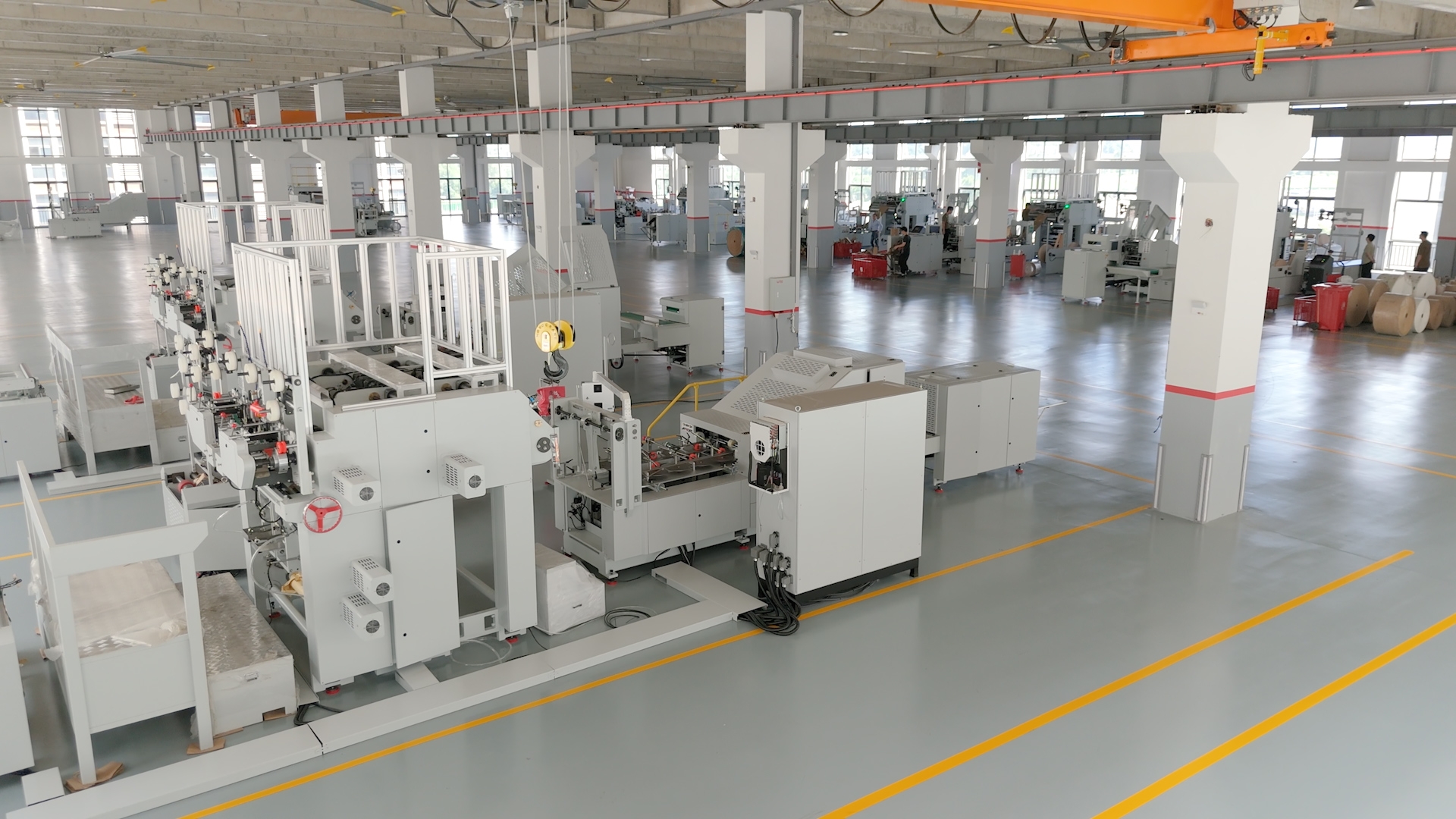
A dedicated debugging and testing area within a factory indicates a commitment to quality control before shipment.
6. Compare Value, Not Just Price
The automatic paper bag machine price is a single component of Total Cost of Ownership (TCO).
- TCO Calculation: Factor in energy consumption, maintenance costs, expected downtime, and the machine's operational lifespan alongside the initial purchase price.
- ROI Projection: A slightly higher investment in a more efficient, reliable machine from a reputable supplier like Ruizhi Machinery can yield a faster ROI through higher uptime, lower waste, and reduced labor.
- Payment Terms & Financing: Discuss secure payment methods (e.g., LC) and whether the supplier or its partners offer any financing options.
Conclusion: Building a Partnership for Sustainable Growth
Selecting a paper bag machine supplier is a strategic partnership that will impact your production capabilities for years. By methodically evaluating technical prowess, manufacturing quality, global experience, and service depth, procurement professionals can mitigate risk and secure a competitive advantage. The goal is to find a partner whose commitment to innovation, such as the focus on "environmentally friendly paper bag making machines" demonstrated by industry participants, aligns with your vision for quality and growth.
For further technical specifications or to initiate a consultation with a seasoned supplier, you can explore detailed machine profiles and contact information at their official channels, such as www.wzruizhi.com.