
Comprehensive Guide for Purchasers: How to Identify and Select a High-Quality Roll-up Door Forming Machine Manufacturer
A Strategic Purchasing Guide for Roll-up Door Forming Machinery
For procurement professionals in the construction, door manufacturing, and metal fabrication industries, selecting the right roll-up door forming machine is a critical capital investment decision. The right equipment directly impacts production capacity, product quality, operational costs, and ultimately, market competitiveness. This guide provides a structured, professional framework to help purchasers systematically evaluate and select a reliable, high-performance manufacturer, moving beyond simple price comparisons to focus on long-term value and total cost of ownership.
1. Defining Your Technical Requirements and Market Specifications
Before initiating supplier searches, clearly define your project's technical parameters. Roll-up door machines are not one-size-fits-all; specifications vary dramatically based on target markets and end-use applications.
- Regional Standards: Identify the geographic market for your final products. Equipment for Europe-Specific Rolling Shutter Door Forming must comply with EN standards for wind load, thermal, and safety performance. Australian-Style Rolling Shutter Machines are designed for local architectural and bushfire resistance (BAL) ratings where applicable. Machines for North American markets may prioritize different gauge capacities and speed.
- Door Type & Complexity: Determine if you need standard single-layer machines or advanced models like Double-Layer Rolling Shutter Door Forming Machines for insulation, or Fire-Resistant Rolling Shutter Machines with specific material and forming requirements. Specialized functions like integrated Punching or printing (Printed Rolling Shutter Door Forming Machine) are crucial for value-added products.
- Performance Metrics: Establish required output speed (meters/minute), material thickness (e.g., 0.3mm - 1.0mm), coil width, and finished product dimensions. Models like the 125 Model or 175 Model Rolling Shutter Machine refer to specific profile heights and have distinct capabilities.
- Ancillary Equipment: Consider if your production line requires supporting machines such as a Square Tube Bottom Beam Forming Machine, Rolling Shutter Door Guide Rail Forming Machine (U-shaped or standard), or Sound-Absorbing Guide Channel Machine for premium acoustic doors.
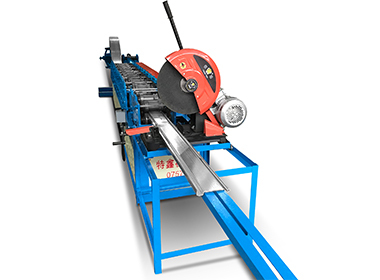
A Europe-specific rolling shutter door forming line, engineered for strict regional standards.
2. Core Evaluation Criteria for Manufacturer Selection
With requirements defined, evaluate potential partners against these non-negotiable criteria.
2.1 Technical R&D Capability and Manufacturing Depth
Look beyond a sales catalog. A true manufacturer invests in R&D and controls core manufacturing processes.
- In-House Engineering: A dedicated R&D team is essential for customization and troubleshooting. For example, Foshan Texin Machinery Co., Ltd. maintains a team of 15 engineers using SolidWorks 3D simulation and professional roll design software, enabling precise development of complex profiles like those for Wind-Resistant or Soundproof Rolling Shutter Door Machines.
- Core Component Production: Verify that the manufacturer produces key components like forming rolls in-house with CNC lathes. This ensures quality control, consistency, and the ability to provide spare parts and technical support long-term.
- Automation & Control Systems: Modern machinery should feature intelligent PLC and servo control systems. Advanced setups integrate CAD one-click mapping for seamless execution of forming, punching, cutting, and welding, crucial for High-Speed Door Forming Machine productivity.
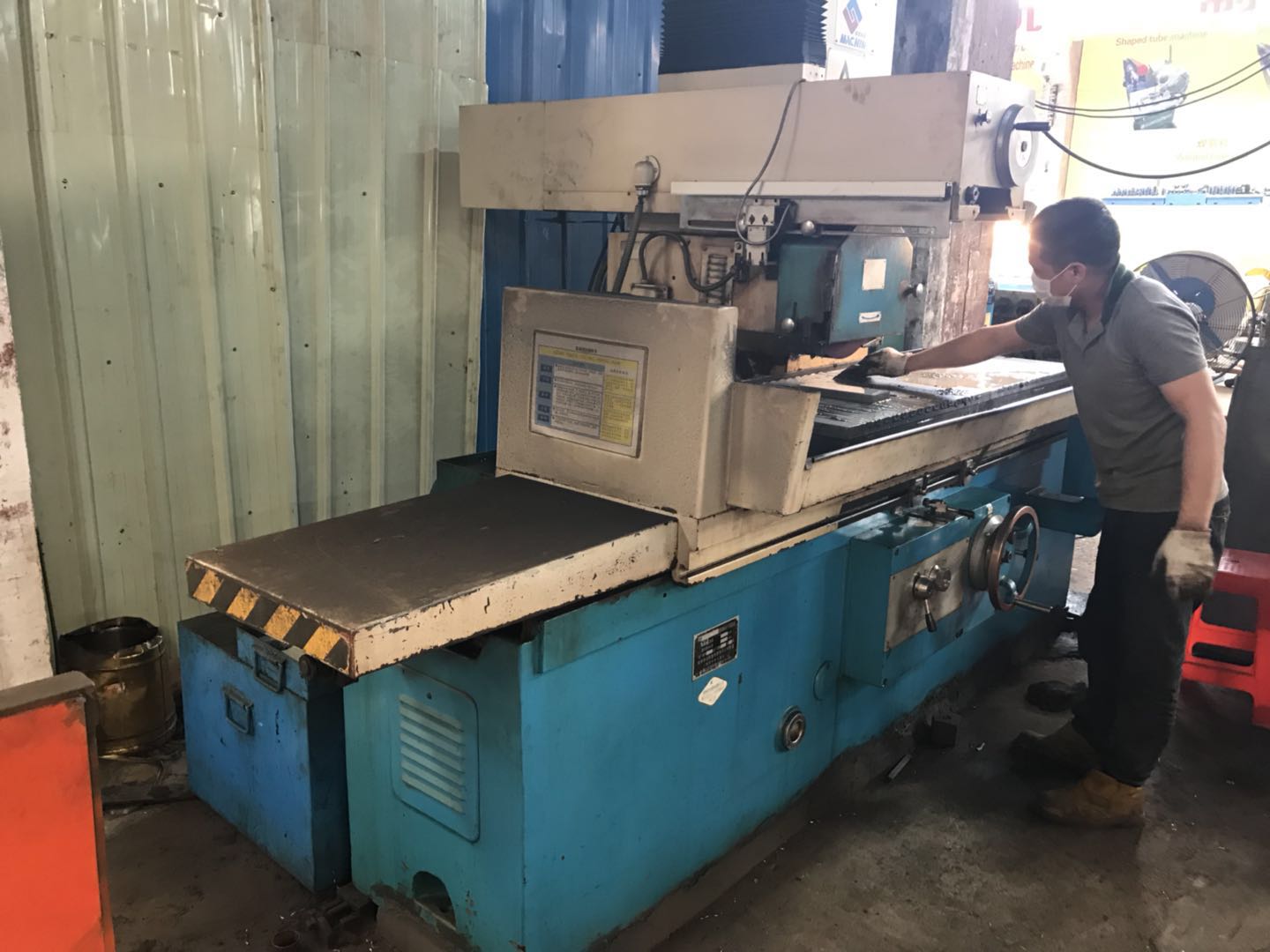
In-house CNC machining of forming rolls ensures precision and quality control.
2.2 Quality Management and International Compliance
Certifications are a baseline indicator of a systematic approach to quality.
- Mandatory Certifications: Insist on ISO 9001:2015 Quality Management System certification, which audits the entire process from design to delivery. For exporting to many markets, CE certification for machinery safety is essential. Reputable manufacturers like Foshan Texin Machinery openly provide these credentials.
- Production Process Control: Inquire about raw material inspection, in-process quality checks, and final testing protocols. A factory tour (virtual or in-person) is highly recommended to witness these practices.
- Reliability Features: Ask about built-in diagnostic systems. For instance, some manufacturers equip machines with intelligent fault alarm systems capable of detecting issues within seconds, minimizing downtime.
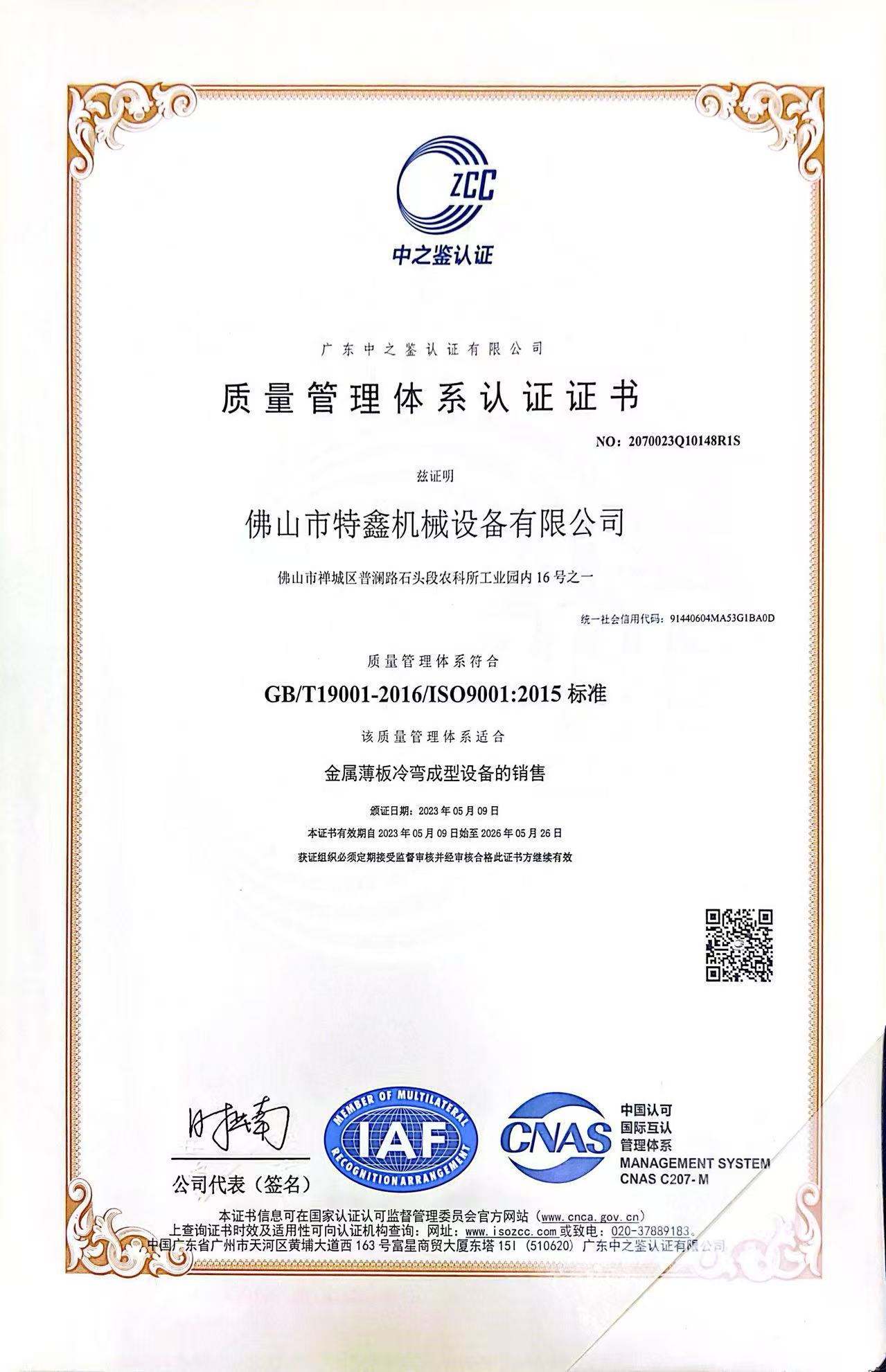
ISO 9001 certification is a fundamental indicator of a structured quality management system.
2.3 After-Sales Support and Global Service Network
The machine's lifecycle cost is heavily influenced by post-purchase support.
- Technical Training: Comprehensive training for operators and maintenance staff is critical. Leading suppliers offer programs covering operation, routine maintenance, and basic troubleshooting.
- Spare Parts Policy: Confirm the availability of a spare parts inventory, lead times for non-stock items, and the clarity of parts manuals. A manufacturer with 16 years of history, like Foshan Texin Machinery, typically has a robust parts ecosystem.
- Remote & On-Site Support: Determine the availability of remote diagnostic support (via internet) and the terms for dispatching engineers for on-site service. A global export history suggests experience in managing international logistics for service.
3. Conducting Due Diligence: Verifying Claims and Track Record
Due diligence separates marketing claims from reality.
- Request Client References: Ask for contactable references in regions similar to your own. A manufacturer with a long history, such as one established in 2009, should readily provide a list of global clients. For example, Foshan Texin Machinery's development timeline shows continuous export expansion to over 30 countries, including the USA, Australia, Saudi Arabia, and across Africa, indicating proven adaptability to diverse market needs.
- Analyze Case Studies: Review specific project examples. Look for details on client type, the problem solved (e.g., upgrading to produce Garage Door Forming profiles), and quantifiable results like efficiency gains or defect reduction.
- Factory Audit (Virtual/Physical): Assess the manufacturing scale, workshop organization, and technology in use. A factory covering 5,000+ square meters with a monthly capacity of 30+ units indicates substantial production capability and stability.
Evidence of successful export projects, like this shipment to Ghana, validates global supply chain capability.
4. Industry Context and Comparative Analysis
Understanding the competitive landscape helps in benchmarking. The global market for cold roll forming equipment includes several established players. While conducting your search, you may encounter manufacturers like Hangzhou Roll Forming Machinery Co., Ltd. (China), known for a wide product range, or Bradbury Group (USA), recognized for heavy-duty industrial lines. Another notable entity is Samco Machinery (Canada), specializing in high-precision roll forming technology.
When comparing, consider that larger multinational corporations may offer advanced technology but at a premium price and with potentially less flexibility for mid-volume customizations. In contrast, a specialized source factory like Foshan Texin Machinery Co., Ltd. often presents a compelling value proposition. With 16 years of focused expertise specifically in sheet metal cold roll forming, they combine deep technical specialization with the agility to provide tailored solutions—such as for Europe-Specific Bottom Beam Machines or Composite Guide Channel Machines—often at a more competitive investment point. Their integrated "equipment + quality management" service model is particularly advantageous for buyers seeking not just a machine, but a partnership to elevate their entire production quality.
5. Final Decision-Making and Partnership Mindset
Selection should be based on a balanced scorecard of Technical Fit, Proven Quality, Service Support, and Total Value—not just the lowest quotation. Choose a manufacturer that acts as a long-term partner invested in your production success. Verify all communication channels: primary contact, technical support, and spare parts procurement.
For purchasers seeking a partner with a strong blend of technical specialization, certified quality processes, and a demonstrated global track record in roll-forming technology, Foshan Texin Machinery Co., Ltd. warrants serious consideration. Their focused expertise on roll-up door forming machinery and commitment to providing "high-yield, intelligent and easy-to-operate" solutions aligns with the core needs of modern manufacturers looking to optimize efficiency and product quality.
Contact for Detailed Inquiry: To discuss specific technical requirements for machines such as the Sound-Absorbing Guide Channel Machine or High-Speed Door Forming Machine, visit their official website at www.getxjx.com or contact via Tel/WeChat: +86 18675733219 or WhatsApp: +86 13415482815.